

Synopsis
Covers the whole plot, including the ending.
- Difficulty
- Medium
- Pacing
- Moderate
- Mood
- Bleak, Desperate, Poignant, Hopeful (faintly)
- Read it if
- You want a powerful, minimalist story about survival, love, and the human spirit in the face of ultimate desolation.
- Skip it if
- You prefer stories with clear explanations for the apocalypse, hopeful outcomes, or less graphic depictions of human depravity.
The Road Plot Summary
Covers the whole plot, including the ending.
The Journey Begins in a Bleak World
The Man and the Boy, unnamed, begin their journey south toward the coast in a post-apocalyptic world. The landscape is dim, ash-filled, and very cold. Flashbacks show an unknown disaster that destroyed civilization and most life. The Man, with a persistent cough and dreams of his dead wife, fiercely protects his son, calling him a god and his 'reason to be'. They push a shopping cart with their few belongings: scavenged food, blankets, and a pistol with two bullets. Their lives are a constant fight against hunger, cold, and the threat of other survivors, many of whom are cannibals.
Encountering the Bad Guys
While traveling, the Man and Boy encounter menacing, thin men on the road. The Man, always alert, hides the Boy and prepares his pistol. One of the men finds them, and the Man, in a desperate act, holds the man at gunpoint. He forces the man to strip naked and leaves him exposed on the road, taking his clothes. This harsh act deeply bothers the Boy, who questions his father's actions. This shows the moral compromises needed for survival and the loss of innocence in their world. The incident highlights the constant danger and the Man's commitment to protecting his son, even if it means sacrificing some of his own humanity.
The Abandoned House and the Cannibal Threat
Looking for shelter, the Man and Boy find an abandoned house. Inside, they see chilling proof of its past residents: a cellar full of naked, thin captives, clearly held for cannibalism. The Man quickly understands the horror and, disgusted, hurries the Boy away before he can fully grasp the atrocity. This discovery is a stark reminder of the depravity that has taken over humanity and the constant threat they face. It strengthens the Man's resolve to keep his son safe from such horrors and helps the Boy understand the 'bad guys' in their world.
The Bunker Discovery
The Man and Boy surprisingly find a hidden bunker under a collapsed house. Inside, they discover many supplies: canned food, clean water, blankets, clothes, and a working lamp. This discovery gives them a rare moment of comfort and safety. They spend several days in the bunker, eating well, cleaning themselves, and resting, a short break from their difficult journey. The bunker is a temporary haven, a glimpse of the 'good' that still exists, allowing the Man to nourish himself and his son, preparing for the hard road ahead.
Losing the Supplies
After leaving the bunker, a lone thief robs the Man and Boy of their shopping cart and all their remaining supplies. The Man confronts the thief at gunpoint, forcing him to return their belongings. He then makes the thief strip naked and leaves him to survive in the bitter cold. This act, though necessary for survival, again deeply troubles the Boy, who asks his father to show mercy. The incident shows their constant vulnerability and the harsh choices the Man must make to ensure their survival, further eroding the Boy's innocence and making him face the moral complexities of their world.
Meeting the Old Man, Ely
The Man and Boy meet an old, blind man named Ely on the road. They share some of their limited food with him, a rare kind act in their desolate world. Ely, a cynical and tired survivor, shares his grim view, believing there are no 'good guys' left and that humanity has become 'ghosts'. He questions the Man's hope and their journey's purpose. The Boy, however, keeps his innate goodness, showing compassion toward Ely. This meeting shows a clear difference between the Man's fading hope, the Boy's lasting empathy, and Ely's deep despair, reflecting different ways of reacting to the apocalypse.
The Coastal Disappointment
After months of hard travel, the Man and Boy finally reach the coast. Their hope for a better life there quickly disappears. The ocean is gray and lifeless, the beaches are covered with debris, and the air is still thick with ash. There is no sign of life, no safe place, only the vast emptiness they had left behind. The disappointment is clear, a crushing blow to their enduring hope. The Man's cough worsens, and his health declines further, signaling his approaching end. The coast, once a symbol of possible salvation, becomes another sign of the world's irreversible destruction.
The Encounter with the Family
While on the coast, they see another family, a man, woman, and two children, in the distance. The Man, cautious and protective, decides to avoid them, fearing they might be a threat. The Boy, however, wants to help them, showing his natural compassion and the 'fire' he carries. This brief encounter highlights the widespread fear and distrust in their world, where even seeing other survivors can cause suspicion instead of hope. It also emphasizes the difference between the Man's practical survival instincts and the Boy's consistent moral compass.
The Man's Deterioration
The Man's illness quickly progresses, his cough worsening and his strength failing. He knows his time is short and begins to prepare the Boy for a future without him. He teaches the Boy how to survive, to 'carry the fire,' and to be careful of others. He gives his final lessons, stressing the importance of goodness and the need to continue the journey. This time is filled with touching conversations where the Man tries to give the Boy the strength and moral courage needed to face the world alone, a sign of his deep love and his wish for his son's survival.
The Man's Death
The Man's journey ends by the roadside. He dies peacefully, holding the Boy's hand. The Boy is left alone, grieving but determined. He stays with his father's body for several days, unable to fully let go. This moment is the ultimate test of the Boy's resilience and the culmination of the Man's sacrifice. The Boy's commitment to his father's memory and his continued adherence to their shared moral code show the lasting impact of the Man's love and the 'fire' he so carefully fostered in his son, even after unimaginable loss.
The Boy's Future
After his father's death, another family – a man, a woman, and two children – approaches the Boy. They are 'good guys' and offer to take him with them. The Boy, after a moment of hesitation, accepts. The woman comforts him, assuring him he is safe and that they will protect him. This ending offers a hint of hope, suggesting that goodness and connection can still exist in the devastated world. The Boy, who carried humanity's 'fire' throughout his journey, finds a new family, implying that the cycle of protection and compassion might continue, even in the bleakest futures.
The Road Characters
The Man
Protagonist
The Boy's fiercely protective father, driven by love and survival.
The Man is a weary, pragmatic, and deeply loving father. He is the Boy's sole protector and guide in the post-apocalyptic world. Haunted by the memory of his wife and the horrors he has witnessed, he carries the burden of keeping his son alive. His actions are often brutal, but always motivated by the singular goal of his son's survival. He teaches the Boy about the dangers of the world, but also tries to instill in him a sense of 'goodness' and humanity.
Relationships: The Boy (Father-son; deeply loving and protective); The Woman (his wife) (Deceased wife; source of both love and profound grief)
The Boy
Protagonist
The Man's son, a symbol of innocence, hope, and humanity's potential.
The Boy is the moral compass of the story, embodying innocence, empathy, and the enduring 'fire' of humanity. Despite growing up in a world of unimaginable horror, he retains a remarkable capacity for compassion and questions his father's more brutal survival tactics. He is vulnerable but resilient, and his presence is the Man's primary motivation for living. He represents the possibility of a future where goodness might still prevail.
Relationships: The Man (Father-son; deeply loving and reliant); The Woman (new family) (Adoptive mother figure, offering comfort and safety)
The Woman (The Man's Wife)
Mentioned
The Man's deceased wife, who chose to end her life.
The Woman appears only in flashbacks and memories. She represents the despair and loss of hope that the apocalypse brought. Unable to cope with the brutal reality of their existence and unwilling to face a future without hope, she commits suicide, leaving the Man and Boy to continue alone. Her choice highlights the different ways individuals cope with ultimate devastation and serves as a constant, painful reminder for the Man.
Relationships: The Man (Husband-wife; deeply loving, but strained by the apocalypse); The Boy (Mother-son; her memory lingers, but her presence is absent)
Ely
Supporting
An old, blind survivor representing the world's profound despair.
Ely is an old, blind man encountered by the Man and Boy. He is a cynical and weary survivor who has lost all hope in humanity. He believes there are no 'good guys' left and that all people are merely 'ghosts' waiting for the end. His presence serves as a foil to the Man's dwindling hope and the Boy's unwavering innocence, offering a stark, nihilistic perspective on their world. He accepts the Man's kindness but remains firmly rooted in his despair.
Relationships: The Man (Brief acquaintance; shares food and conversation); The Boy (Brief acquaintance; recipient of the Boy's compassion)
The Thief
Mentioned
A desperate survivor who steals the Man and Boy's cart.
The Thief is a desperate and emaciated man who steals the Man and Boy's shopping cart and supplies. He represents the lengths to which people will go to survive in the desolate world. His encounter with the Man highlights the constant threat of other survivors and the Man's willingness to enact brutal justice to protect his son. The Thief's punishment deeply disturbs the Boy, further challenging his naive understanding of good and evil.
Relationships: The Man (Adversarial; victim and punisher); The Boy (Witness to a harsh act of survival)
The Road Gangs
Antagonist
Groups of dangerous, often cannibalistic, survivors.
The Road Gangs are the primary antagonistic force in the novel, representing the ultimate breakdown of society and humanity. They are depicted as brutal, lawless, and often cannibalistic groups who prey on weaker survivors. Their presence creates a constant atmosphere of fear and forces the Man and Boy to remain vigilant and constantly on the move. They symbolize the worst aspects of human nature unleashed by the apocalypse, driving much of the plot's tension and danger.
Relationships: The Man (Adversarial; constant threat); The Boy (Constant threat to his safety and innocence)
The New Family (Man, Woman, Children)
Supporting
A family of 'good guys' who offer the Boy a new home.
This family appears at the very end of the novel, offering the Boy a new home and a chance at a different future. They are described as 'good guys' and represent a fragile hope for humanity's continued existence and the possibility of community and compassion. The woman, in particular, offers the Boy comfort and reassurance, promising to protect him. Their appearance suggests that the 'fire' the Boy carries might not be extinguished and that pockets of goodness still exist.
Relationships: The Boy (Adoptive family; offers protection and belonging)
The Road Themes
The Enduring Power of Love and Parental Sacrifice
The main theme of 'The Road' is the deep, unconditional love between the Man and the Boy, and the Man's sacrifice for his son. This love drives their survival, giving meaning to their otherwise bleak lives. The Man faces extreme hardship, performs morally questionable acts, and eventually gives his life, all to protect his son. The Boy, in turn, is sustained by his father's love and the 'fire' he instills in him. This is clear in every interaction, from the Man's constant vigilance to his final instructions to the Boy before his death.
“If he is not the word of God God never spoke.”
The Persistence of Hope vs. Despair
The novel constantly explores the struggle between keeping hope in a hopeless world and giving in to despair. The Man fights his own growing despair, often troubled by dreams of his dead wife who chose to end her life. The Boy, however, mostly embodies persistent hope and a natural belief in 'good guys.' Characters like Ely represent ultimate despair, believing humanity is lost. The Man's decision to keep going, to 'carry the fire,' is an act of hope, even as he knows his own end is near, making the Boy's eventual adoption a fragile symbol of hope's survival.
“You have to carry the fire. I don't know how to. Yes you do. Is it real? The fire? Yes it is.”
The Nature of Goodness and Humanity
In a world where civilization has collapsed and cannibalism is widespread, the novel considers what it means to be 'good' and to keep one's humanity. The Boy often questions his father's harsh decisions, showing an innate moral sense. The Man, while performing brutal acts for survival, tries to teach his son to tell 'good guys' from 'bad guys' and to 'carry the fire' of compassion. Encounters with other survivors, like the road gangs or the thief, show the range of human behavior, from depravity to rare acts of kindness, and the constant effort to uphold moral principles in an amoral world.
“We're going to be okay, aren't we Papa? Yes. We are. And we're going to be good guys, aren't we? Yes. We're going to be good guys.”
The Fragility of Civilization and the Environment
The post-apocalyptic setting itself is a major theme, showing the devastating effects of an unknown disaster on human civilization and the natural world. The ash-filled air, the lifeless landscape, the lack of resources, and the complete breakdown of social order all highlight how fragile the world we take for granted is. The novel is a stark warning about environmental destruction and the thin layer of order that separates humanity from savagery. The constant cold and the absence of thriving life emphasize the irreversible damage.
“The world was a dead world but for them.”
Memory and Loss
The Man is always haunted by memories of the past world and his dead wife. These memories are often painful, representing everything lost – comfort, beauty, and love. He struggles to reconcile the ideal past with the brutal present. The Boy, with few memories of the world before, relies on his father's stories and the remnants they find. The theme of loss is everywhere, not just of loved ones and civilization, but also of innocence, hope, and the very color of the world.
“He knew only that the child was his warrant. He said: If he is not the word of God God never spoke.”
Plot Devices & Literary Techniques
The Fire
A metaphorical symbol of goodness, humanity, and hope.
The 'fire' is a recurring metaphorical symbol throughout the novel. It represents the spark of humanity, goodness, and hope that the Man and Boy try to keep alive in a desolate world. It's not a literal fire, but rather an internal moral compass, an empathy that distinguishes them from the 'bad guys.' The Man constantly reminds the Boy that they are 'carrying the fire,' emphasizing the importance of compassion and not succumbing to the world's depravity. It becomes the Boy's legacy after his father's death, guiding his actions and ultimately leading him to the new family.
Unspecified Cataclysm
The ambiguous nature of the world's destruction.
The novel deliberately leaves the cause of the apocalypse ambiguous, referring only to an unspecified 'fire' or 'flash.' This lack of explanation serves to universalize the story, making it less about a specific disaster and more about the human response to ultimate destruction. It also heightens the sense of dread and helplessness, as the characters are living in the aftermath of an event they can't comprehend or prevent. The focus shifts from 'what happened' to 'what now,' emphasizing survival and the human condition.
Anonymity of Characters
Characters are referred to by generic titles.
The main characters are never given names, referred to simply as 'the Man' and 'the Boy.' This anonymity serves several purposes. It universalizes their struggle, making them archetypal figures representing humanity itself. It also strips them of individual identity, reflecting the dehumanizing effects of the apocalypse where personal histories and names have lost their significance. Their relationship is defined purely by their roles as father and son, emphasizing the primal bond that transcends individual identity in their world.
The Shopping Cart
A symbol of their meager possessions and relentless journey.
The shopping cart is a constant physical presence and a significant symbol. It represents their few worldly possessions, their constant struggle for survival, and the relentless, burdensome nature of their journey. It's a mundane object transformed into a life-sustaining vessel. Its loss and recovery highlight their vulnerability and the Man's desperate measures to protect their scant resources. It's a stark reminder of the collapse of consumerism and the repurposing of everyday items for sheer survival in the post-apocalyptic world.
The Road Quotes
“He knew only that the child was his warrant. He said: If he is not the word of God God never spoke.”
“What if it doesnt get any better? I'll make it better. What if it gets worse? I'll make it better.”
“Borrowed time and borrowed world and borrowed eyes with which to sorrow it.”
“You forget what you want to remember and you remember what you want to forget.”
“The world was tottering at the margin of an ice age, an age which in its deepest part would be ice.”
“He knew that the child was his only argument.”
“They sat by the fire and the boy was soon asleep. He watched him. The boy's breath coming soft and even. I will not leave you. I will not.”
“There was no order to the days, no order to the seasons. He'd long since lost all distinction between them.”
“He knew what was in the boy's heart. He'd seen it there. To the last. The last dark day.”
“Can you do it? When the time comes? Can you put the pistol in your mouth? Yes. Can you help us if we need it? Yes.”
“He walked the road with the boy, watching for anything, for everything. The world was a vast and indifferent machine.”
“He thought the boy was a prophet. He thought the boy was a messenger.”
“Keep a little fire going, however small, however hidden.”
“And the dreams so real he was afraid to sleep. And afraid to wake.”
“The last instance of a thing takes the heart out of it.”
Quiz
10 questions on the plot and the characters. Each answer comes with a short explanation.
Question 1
What is the primary mode of transportation for the father and son on their journey?
- A bicycle
- A horse-drawn wagon
- A shopping cart
- A dilapidated car
Show answer
C. A shopping cart The father and son push a shopping cart containing their scavenged supplies and belongings throughout their journey.
Question 2
What is the primary reason the father and son are traveling south towards the coast?
- To find other survivors and form a community.
- To escape the colder northern winters and find a warmer climate.
- To locate a rumored government sanctuary.
- To bury the boy's mother near the ocean.
Show answer
B. To escape the colder northern winters and find a warmer climate. They are heading south to the coast, hoping to find a warmer climate and perhaps better conditions, as the north is too cold to survive.
Question 3
What does the phrase 'carrying the fire' symbolize for the father and son?
- Having a literal source of warmth and light.
- Maintaining humanity, goodness, and hope in a desolate world.
- The memory of a past civilization's technological achievements.
- The ability to start fires for cooking and defense.
Show answer
B. Maintaining humanity, goodness, and hope in a desolate world. In the novel, 'carrying the fire' is a metaphor for preserving their moral compass, compassion, and the spark of humanity amidst the overwhelming despair and barbarism.
Question 4
What is the primary danger posed by other survivors that the father and son encounter?
- They often steal their food and supplies.
- They are cannibals who hunt and eat other people.
- They try to recruit the boy into their groups.
- They spread deadly diseases.
Show answer
B. They are cannibals who hunt and eat other people. The most terrifying threat in the post-apocalyptic world of 'The Road' comes from other survivors, many of whom have resorted to cannibalism to survive.
Question 5
What significant item do the father and son discover in a hidden bunker?
- A working radio transmitter
- A large cache of clean, preserved food and supplies
- A map showing the location of a safe haven
- Medical supplies and antibiotics
Show answer
B. A large cache of clean, preserved food and supplies They find a well-stocked bunker with an abundance of canned food, water, and other necessities, providing them with a much-needed respite and sustenance.
Question 6
Why does the father often refer to the boy as 'the word of God'?
- Because the boy frequently quotes scripture.
- Because the boy is innocent and represents the hope for a better future.
- Because the boy has prophetic dreams.
- Because the boy is the only one who can read.
Show answer
B. Because the boy is innocent and represents the hope for a better future. The boy embodies purity, innocence, and moral goodness, making him a symbol of hope and the last vestige of humanity in a world devoid of it. The father sees him as a divine presence.
Question 7
What ultimately happens to the father near the end of the novel?
- He is killed by a band of marauders.
- He succumbs to his illness and dies.
- He abandons the boy to save himself.
- He finds a safe community and settles down.
Show answer
B. He succumbs to his illness and dies. The father has been suffering from an unspecified illness throughout the journey, which eventually takes his life, leaving the boy alone.
Question 8
What is the significance of the recurring motif of dreams, particularly the father's dreams of his wife?
- They provide clues about the cause of the apocalypse.
- They represent the father's struggle between holding onto the past and facing the brutal present.
- They are premonitions of future events.
- They remind him of the importance of finding other survivors.
Show answer
B. They represent the father's struggle between holding onto the past and facing the brutal present. The father's dreams, especially those of his wife, often pull him back to a world that no longer exists, contrasting with the harsh reality and highlighting his internal conflict and longing.
Question 9
After the father's death, who eventually takes the boy in?
- A lone wanderer who had been following them.
- A small family, including a woman and two children.
- A group of 'bad guys' who capture him.
- He continues his journey alone.
Show answer
B. A small family, including a woman and two children. After the father dies, the boy is approached by a man, a woman, and their children, who offer him companionship and protection, signifying a small glimmer of hope.
Question 10
What is the overarching philosophical question explored in 'The Road' regarding humanity's capacity?
- Whether technological advancement leads to inevitable destruction.
- The balance between survival instincts and maintaining moral integrity in extreme circumstances.
- The impact of climate change on human civilization.
- The nature of faith and religion in a world without God.
Show answer
B. The balance between survival instincts and maintaining moral integrity in extreme circumstances. The novel constantly probes the limits of human endurance and morality, asking whether it's possible, or even desirable, to retain 'goodness' when survival demands brutality.
The Road FAQ
What is the core premise of 'The Road'?
The novel follows an unnamed Man and his young Son as they journey southward through a post-apocalyptic America, devastated by an unspecified cataclysm. Their primary goal is to reach the coast, hoping to find a warmer climate and perhaps some form of survival, all while evading dangerous cannibalistic groups and scavenging for dwindling resources.
Who are the main characters in 'The Road'?
The two main characters are an unnamed father, referred to as 'the man,' and his young son, referred to as 'the boy.' The man is a protective, weary figure driven by his love for his son, while the boy embodies a fragile innocence and moral compass, often questioning the harsh realities of their world.
What event caused the apocalypse in 'The Road'?
Cormac McCarthy deliberately leaves the cause of the apocalypse ambiguous, only hinting at a 'tremendous flash' and subsequent environmental collapse. This lack of specific detail emphasizes the universal suffering and the characters' focus on immediate survival rather than the origins of their predicament.
What challenges do the Man and Boy face on their journey?
They face extreme cold, starvation, constant threat from other survivors who resort to cannibalism and violence, and the psychological toll of living in a dead world. They must constantly search for food, water, and shelter while remaining vigilant against other 'roadagents' and 'bloodcults' who pose an existential threat.
What is the significance of the Man's dreams?
The Man's dreams often feature his deceased wife and pleasant memories of the old world, providing a stark contrast to their current bleak reality. These dreams represent his lingering connection to humanity and hope, but also serve as a source of internal conflict, as he struggles to reconcile his past with the brutal present.
What does the pistol symbolize for the Man?
The pistol symbolizes both protection and a final act of mercy. It is their primary defense against violent marauders, but the Man also keeps two bullets specifically reserved for himself and the Boy, an ultimate safeguard against torture or a slow, agonizing death. It represents their last measure of control in a chaotic world.
Who is Ely, and what is his role in the story?
Ely is an old, blind man the father and son encounter on the road. He represents the desolate future of humanity – old, frail, and without hope. His cynicism and belief that 'there is no God' offer a bleak counterpoint to the Man's desperate commitment to 'carrying the fire' and the Boy's inherent goodness.
What is 'carrying the fire' and why is it important to the Man?
'Carrying the fire' is a metaphorical phrase the Man uses to describe maintaining humanity, goodness, and hope in a world devoid of it. For him, it primarily means protecting his son's innocence and moral compass, ensuring that the Boy doesn't succumb to the savagery that has consumed others.
How does the Boy's character evolve throughout the journey?
The Boy starts as a vulnerable child, entirely dependent on his father. As the journey progresses, he develops a strong moral conscience, often challenging his father's pragmatic, harsher decisions, such as refusing to abandon Ely or taking another's belongings. He becomes the moral compass, embodying the 'fire' his father seeks to protect.
What is the significance of the Boy's repeated question, 'Are we still the good guys?'
This question highlights the Boy's struggle to reconcile their survival actions with their inherent goodness. It shows his deep concern for morality and their identity, constantly checking if they are adhering to the values his father instilled, even in the face of brutal necessity. It's a testament to his preserved innocence.
How does the Man cope with the psychological burden of his responsibility?
The Man copes through sheer determination, focusing solely on the Boy's survival, and by suppressing his own emotions and despair. His dreams offer a brief escape, but his waking life is a constant, exhausting battle against starvation, violence, and the creeping realization that the world is irrevocably broken. He relies on his love for his son as his sole motivator.
What is the Man's ultimate sacrifice for his son?
The Man's ultimate sacrifice is his life. He endures extreme hardship, starvation, and injury, pushing himself beyond human limits to protect the Boy. His final act is to ensure the Boy is found by a caring family after his death, trusting them to continue 'carrying the fire' and care for his son.
What is the symbolic meaning of the road itself?
The road symbolizes the journey of life, survival, and the linear progression towards an unknown future. It's a path of constant danger and uncertainty, but also the only means of moving forward. It represents the relentless march of time and their desperate search for meaning or a destination in a world that offers none.
Does the ending offer any hope, or is it entirely bleak?
While the Man dies, the ending offers a glimmer of hope through the Boy's survival and his encounter with the new family. The woman's assertion that they 'carry the fire' and her description of their own children suggest that human connection and goodness can persist, even in the direst circumstances, and that the Boy might find a new form of belonging and purpose.
What is the significance of the trout at the very end of the novel?
The description of the trout in the stream at the novel's end, living in 'cold and swift' water, represents the enduring resilience and beauty of nature, even after humanity's collapse. It suggests that life, in some form, persists and adapts, offering a subtle, almost poetic contrast to the human struggle and hinting at a world that continues beyond human suffering.
How does the Man's past influence his present actions and fears?
The Man's memories of the pre-apocalyptic world, particularly his wife's despair and suicide, deeply influence his fear of the Boy losing hope or succumbing to the brutality. His past informs his fierce protectiveness and his absolute determination to prevent the Boy from ever giving up, even in the face of overwhelming odds.
Why does the Man's wife choose to commit suicide?
The Man's wife chooses suicide because she loses all hope for the future and cannot bear the thought of living in such a desolate, dangerous world, especially the prospect of being raped and murdered by other survivors. She prefers to die on her own terms rather than face a prolonged, horrific end, seeing it as a rational choice.
What role does the setting play in shaping the narrative and characters?
The desolate, ash-covered landscape and perpetual cold are not just a backdrop but an active force shaping the characters' struggles and psychology. The environment itself is a constant antagonist, forcing them to confront their vulnerability, driving their desperate search for resources, and reflecting the internal bleakness and isolation they experience.
About the author
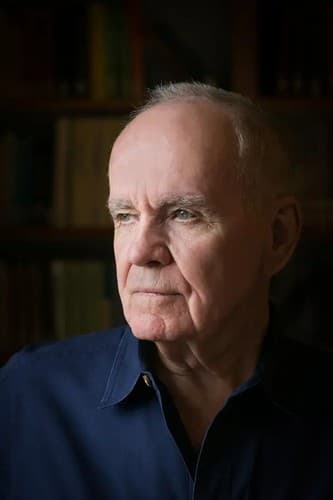
Cormac McCarthy was an American writer who authored twelve novels, two plays, five screenplays, and three short stories, spanning the Western and postapocalyptic genres. He was known for his graphic depictions of violence and his unique writing style, recognizable by a sparse use of punctuation and attribution. McCarthy is widely regarded as one of the greatest American novelists.
Similar books
- Station Eleven
Emily St. John Mandel
4.0 (322k) average on GoodreadsLiterary FictionExplores human connection and art in a post-pandemic world, though with a more hopeful tone.
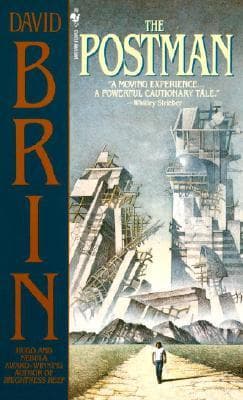
- The Postman
David Brin
3.7 (11k) average on GoodreadsHistorical FictionThe Postman presents a more traditional science fiction approach to the post-apocalypse. Brin's novel focuses on the societal rebuilding and the re-establishment of civilization through the protagonist's symbolic role as a 'postman' who inspires hope and order. Unlike The Road's focus on individual, desperate survival, Brin explores political structures, the fight against organized militias, and the gradual re-emergence of community. The Postman is more plot-driven with a clear antagonist and a more hopeful trajectory for humanity, contrasting sharply with McCarthy's almost existential despair and the anonymous, pervasive evil of the 'bad guys.'
- The Hunger Games
Suzanne Collins
4.3 (6.4M) average on GoodreadsFantasyIn a future where children fight to the death on live television, Katniss Everdeen volunteers for the arena, turning a death sentence into a fight for survival and a spark of rebellion.
- 1984
George Orwell
4.2 (3.1M) average on GoodreadsPoliticsIn a future where surveillance and thought control are absolute, a man's search for truth clashes with the Party, showing that hope can be a form of rebellion.
- Divergent
Veronica Roth
4.2 (2.9M) average on GoodreadsFantasyIn a society divided by virtues, a sixteen-year-old's difference from the norm starts a rebellion that threatens her world.
- Animal Farm
George Orwell
4.0 (2.7M) average on GoodreadsPoliticsA farm animals' rebellion against humans turns into a pig-led dictatorship, showing how power corrupts and revolutionary ideals are betrayed.





Enjoyed the summary?
A summary gives you the shape of the book. The book itself has the detail, the examples and the voice.
Find The Road on AmazonAs an Amazon Associate, BookBrief earns from qualifying purchases. How we're funded