

Synopsis
Covers the whole plot, including the ending.
- Difficulty
- Medium
- Pacing
- Moderate
- Mood
- Dark, Atmospheric, Melancholy, Gothic, Introspective
- Read it if
- You enjoy dark fairy tales, explorations of identity, and stories about the bonds and betrayals between siblings, especially in unique portal fantasy settings.
- Skip it if
- You prefer lighthearted fantasy or are sensitive to body horror and morally ambiguous characters.
Down Among the Sticks and Bones Plot Summary
Covers the whole plot, including the ending.
The Perfect Daughters
Jacqueline and Jillian Wolcott are identical twin sisters, but their parents force them into rigid, opposing gender roles. Their mother, a former ballerina, dresses Jacqueline exclusively in frilly, feminine clothes, demanding politeness and quiet obedience, molding her into a 'perfect princess.' Their father, a disappointed former adventurer who wanted a son, encourages Jillian's adventurous spirit, dressing her in practical, boyish clothes and fostering her daring, tomboyish nature. The girls are constantly critiqued and compared, never allowed to be themselves, only reflections of their parents' desires. Their home is a battleground of passive-aggressive judgment, creating a suffocating environment where their true personalities are suppressed, and their bond is strained by the parental pressure to be distinct.
The Impossible Staircase
One day, while playing in their parents' meticulously organized, yet unsettling, basement, Jacqueline and Jillian stumble upon a hidden, impossible staircase. It appears suddenly, spiraling down into darkness, beckoning them away from their suffocating home life. Driven by a desperate need for escape and a shared sense of wonder, they descend the stairs together, leaving behind the world of their demanding parents. This act of shared rebellion and curiosity marks their entry into a new, unknown realm, a world that promises freedom from the restrictive roles they've been forced to inhabit, but also carries an inherent danger that they are not yet aware of.
The Moors and the Master
The staircase deposits Jacqueline and Jillian onto a vast, desolate moor under a perpetually twilight sky. This new world is bleak and gothic, a stark contrast to their pastel-colored home. They soon encounter a mysterious, unsettling figure known only as the Master, a powerful necromancer who rules over the Moors. The Master immediately recognizes their distinct personalities, or rather, the roles their parents have imposed. He chooses Jillian, the adventurous one, to be his apprentice, while dismissing Jacqueline, the 'perfect princess,' as useless. This separation is a crucial moment, forcing the twins onto divergent paths within this strange land.
Jillian's Apprenticeship
Jillian, now known as Jill, enthusiastically embraces her new life as the Master's apprentice. She revels in the freedom and the practical, hands-on lessons of necromancy, learning to raise the dead and manipulate bones. The Master, a creature of logic and the natural order of death, finds her a willing and capable student. Jill feels a sense of belonging and purpose she never experienced at home, finding a dark joy in the macabre. Her training hardens her, stripping away the last vestiges of her childhood innocence, and she becomes increasingly comfortable with the morbid realities of her new world, viewing death as a natural, albeit powerful, force.
Jacqueline's Journey to the House of the Wayward Children
Jacqueline, abandoned by the Master and feeling utterly lost, wanders the Moors. She struggles to find her place, her 'princess' persona ill-suited to the harsh landscape. Eventually, she stumbles upon the House of the Wayward Children, a peculiar orphanage run by Dr. Bleak, a reclusive, benevolent mad scientist who specializes in automata and mechanical beings. Here, Jacqueline, now known as Jack, finds a different kind of purpose. She learns to be useful, helping Dr. Bleak with his experiments and finding comfort in the quiet, mechanical world, far removed from the expectations of beauty and social grace. She begins to shed her old identity and discover a burgeoning scientific curiosity.
The Labyrinth and the Skeleton Key
Under Dr. Bleak's tutelage, Jack discovers a talent for tinkering and a fascination with the inner workings of things. She learns about the Labyrinth, a vast, dangerous puzzle that encircles the House of the Wayward Children, designed to keep its inhabitants safe from the dangers of the Moors. Dr. Bleak tasks her with creating a 'Skeleton Key' – a master key that can unlock any door within the Labyrinth, a seemingly impossible feat that combines her nascent scientific skills with the precision she once applied to her mother's demands. This apprenticeship allows Jack to develop a new sense of self, one based on intellect and capability rather than superficial appearance.
The Master's Manipulation
The Master, ever calculating, sees the House of the Wayward Children as a threat or a resource. He begins to manipulate Jill, using her growing loyalty and her desire for his approval to his advantage. He hints at dangers, at the 'unnatural' creations within the House, and subtly encourages her to investigate, knowing that her adventurous spirit will lead her there. He wants the Skeleton Key, believing it will give him control over the Labyrinth and, by extension, the secrets of Dr. Bleak. Jill, blinded by her devotion and the thrill of the chase, unwittingly becomes a pawn in the Master's larger scheme, setting her on a collision course with her sister.
Reunion and Revelation
Jack completes the Skeleton Key, a testament to her ingenuity. Soon after, Jill arrives at the House of the Wayward Children, drawn by the Master's hints and her own curiosity. The sisters are reunited, but their time apart has changed them. Jack is now a precise, scientifically-minded girl, comfortable with death as a natural end, while Jill is a creature of the Moors, attuned to necromancy and the manipulation of bones. They are no longer the 'perfect daughters' but distinct individuals forged by their chosen paths. However, their new identities clash, leading to immediate tension and a profound misunderstanding of each other's worlds and values. Their bond, once a shared refuge, is now a source of conflict.
The Confrontation and the Choice
The Master appears, revealing his true intentions: he wants to use the Skeleton Key to unlock the Labyrinth and gain control over the House and Dr. Bleak's creations. He pits the sisters against each other, exploiting their differing worldviews. Jill, loyal to the Master, believes Dr. Bleak's automata are an abomination against the natural order of death, while Jack sees them as a beautiful form of life. The confrontation escalates into a desperate struggle, with the fate of the House and its inhabitants hanging in the balance. The sisters are forced to choose sides, their divergent paths now leading to an unavoidable, violent conflict.
The Price of Freedom
In the climactic confrontation, Jill attempts to use her necromancy to destroy Dr. Bleak's creations and retrieve the Skeleton Key for the Master. Jack, fiercely protective of her new home and her chosen family, realizes the only way to stop Jill and the Master is to make an unthinkable sacrifice. She uses the Skeleton Key, not to unlock, but to lock away Jill forever within the Labyrinth, a prison of endless, shifting passages. This act, while saving the House, shatters their sisterly bond irrevocably. Jack, now a protector, bears the heavy burden of her choice, forever marked by the horrific act of self-preservation and the loss of her twin.
The Aftermath and the Door Home
After the battle, the Master retreats, defeated but not destroyed. Jack remains in the House of the Wayward Children, becoming its new protector and Dr. Bleak's true successor. She dedicates herself to maintaining the Labyrinth and ensuring the safety of its inhabitants, forever haunted by the memory of her sister. Years later, a door back to their original world appears, offering a chance to escape the Moors. Jack, having made her choice and found her purpose, sends Jill, now a broken and changed woman, through the door, knowing that her sister's journey will lead her to Eleanor West’s Home for Wayward Children, while Jack herself remains behind, a guardian of the world she chose to save.
Principal Figures
Jacqueline (Jack) Wolcott
Protagonist
The 'perfect princess' who becomes a precise, scientific tinkerer.
Initially raised to be her mother's 'perfect daughter' – polite, quiet, and impeccably dressed. Jacqueline is timid and observant, internalizing the strict demands placed upon her. She yearns for freedom from her parents' expectations and struggles to define herself. In the Moors, she transforms into Jack, a precise, logical, and scientifically-minded individual who finds purpose in Dr. Bleak's workshop and later becomes the guardian of the House of the Wayward Children. She values order, reason, and the integrity of life (even mechanical life).
Relationships: Jillian Wolcott (Identical twin sister, initially close but growing apart due to external pressures and later becoming adversaries.); Dr. Bleak (Mentor and surrogate father figure, providing Jack with purpose and a new family.); The Master (Antagonist, representing a opposing ideology of life and death.)
Jillian (Jill) Wolcott
Protagonist/Antagonist
The 'adventurous tomboy' who becomes a ruthless necromancer.
Raised to be her father's 'perfect daughter' – adventurous, daring, and physically capable. Jillian is spirited and rebellious, chafing under the constraints of her mundane home. She craves excitement and validation for her strength. In the Moors, she becomes Jill, a powerful and unyielding necromancer, embracing the Master's teachings of death and the natural order. She values power, control, and a clear understanding of life's termination. Her loyalty, once given, is fierce, even if misplaced.
Relationships: Jacqueline Wolcott (Identical twin sister, initially close but growing apart due to external pressures and later becoming adversaries.); The Master (Mentor and father figure, to whom Jill gives her unwavering loyalty and devotion.)
The Master
Antagonist
The powerful necromancer of the Moors, obsessed with order and death.
A mysterious and ancient being who rules over the Moors, a land of perpetual twilight and decay. The Master is a necromancer, a master of death and bones, believing firmly in the natural order of things. He is calculating, manipulative, and sees life and death as a cycle to be understood and controlled, not defied. He seeks to maintain his dominion and views Dr. Bleak's creations as an unnatural aberration. He is charismatic enough to inspire fierce loyalty in Jill, but ultimately self-serving and ruthless.
Relationships: Jillian Wolcott (Apprentice and loyal follower, whom he manipulates.); Jacqueline Wolcott (Dismisses her as useless, but later sees her as an obstacle to his plans.); Dr. Bleak (Ideological and territorial rival.)
Dr. Bleak
Supporting
The reclusive, benevolent mad scientist who creates life from clockwork.
A reclusive and kind-hearted mad scientist who runs the House of the Wayward Children, a sanctuary within the Labyrinth. Dr. Bleak is a master of automata, creating beautiful and complex mechanical beings that he considers his children. He represents the opposite ideology to the Master: the creation of life and the defiance of death through ingenuity and compassion. He is gentle, wise, and provides Jack with a sense of purpose and belonging, becoming a surrogate father figure. He values creation, protection, and the right to exist.
Relationships: Jacqueline Wolcott (Mentor and surrogate father figure, to whom he provides guidance and a new family.); The Master (Ideological and territorial rival.)
Mother (Mrs. Wolcott)
Mentioned
The demanding parent who forces Jacqueline into a feminine role.
A former ballerina, she is obsessed with perfection and propriety. She meticulously curates Jacqueline's appearance and behavior, demanding a 'perfect princess' daughter. She is subtly cruel, using passive-aggressive criticism and comparison to control her children. Her desires are rooted in a superficial understanding of femininity and a need to project an ideal image.
Relationships: Jacqueline Wolcott (Controlling and demanding mother.); Jillian Wolcott (Disapproving mother, constantly comparing her unfavorably to Jacqueline.)
Father (Mr. Wolcott)
Mentioned
The disappointed parent who forces Jillian into a masculine role.
A former adventurer who desperately wanted a son, he pushes Jillian into traditionally masculine activities and clothing. He is equally demanding and critical as his wife, albeit in a different manner, valuing strength, daring, and a pragmatic approach. His desires are rooted in his own unfulfilled dreams and a rigid view of gender roles.
Relationships: Jillian Wolcott (Demanding and approving father, who molds her into his ideal.); Jacqueline Wolcott (Dismissive father, showing little interest in her 'feminine' pursuits.)
Kade
Supporting
A transgender boy living at the House of the Wayward Children.
Kade is one of the 'wayward children' living in Dr. Bleak's House. He is a transgender boy who found his way to the Moors and sought refuge with Dr. Bleak. He is kind, understanding, and provides emotional support to Jack, particularly during her initial struggles to adapt. His presence highlights the theme of finding one's true self and chosen family, and he becomes a trusted friend and confidante for Jack.
Relationships: Jacqueline Wolcott (Friend and confidante.)
Themes & Insights
The Burden of Parental Expectations
The novel shows how parental expectations can warp a child's identity. Jacqueline and Jillian are forced into rigid, opposing roles by their parents, who prioritize their own desires over their daughters' true selves. This pressure creates a suffocating home environment where the girls are never truly seen or loved for who they are. Their escape to the Moors is a direct consequence of this unbearable burden, but the roles imprinted on them continue to influence their choices and paths in the new world, ultimately leading to their tragic divergence. The initial scenes of the 'perfect daughters' portray this oppressive upbringing.
“They were five when they learned that grown-ups can’t be trusted. They were twelve when they walked down the impossible staircase and discovered that the pretense of love can never be enough to prepare you for a life filled with magic in a land filled with mad scientists and death and choices.”
Identity and Self-Discovery
Once freed from their parents' influence, both Jack and Jill embark on journeys of self-discovery, but their chosen paths lead them to fundamentally different identities. Jack, initially the 'princess,' finds her true calling in science and precision under Dr. Bleak, embracing a practical, logical approach to the world. Jill, the 'tomboy,' finds power and purpose in necromancy with the Master, embracing a more visceral, death-centric view. Their new identities, while authentic, are so divergent that they become incompatible, highlighting how finding oneself can sometimes mean growing apart from those you once shared everything with. Their separate apprenticeships are central to this theme.
“Some doors are for going through. Some doors are for staying behind. Some doors are for finding your way home, and some are for finding your way out.”
The Nature of Life and Death
The Moors present a philosophical contrast between the Master's world of death and the natural order, and Dr. Bleak's world of creation and artificial life. The Master teaches Jill that death is an inevitable, powerful force to be understood and controlled, while Dr. Bleak teaches Jack that life, even mechanical life, is precious and worth protecting. This fundamental conflict shapes the sisters' worldviews and ultimately fuels their confrontation. The automata are seen as 'unnatural' by Jill, while Jack views them as a beautiful form of existence, embodying the core philosophical divide of the story.
“Death is a process, not an event. It goes on, and on, and on, until you stop remembering how to be alive.”
Chosen Family vs. Blood Family
The narrative explores the idea that the family you choose can be more significant and supportive than the family you are born into. The Wolcott parents are neglectful and damaging, driving their daughters away. In the Moors, both Jack and Jill find new, different families. Jack finds belonging and purpose with Dr. Bleak and the other 'wayward children,' who offer acceptance and mentorship. Jill finds a twisted sense of family and loyalty with the Master, who provides her with validation and power. The conflict arises when these chosen families clash, forcing the sisters to prioritize their new allegiances over their strained blood bond.
“Home is not a place, it’s a feeling. It’s the way you feel when you’re with the people who love you, and who you love in return.”
The Cost of Freedom
The sisters seek freedom from their parents' control, and they find it in the Moors, but at a profound cost. For Jack, freedom means making the agonizing choice to imprison her sister to protect her chosen family. For Jill, the freedom to pursue power and necromancy leads her down a path of ruthlessness and ultimately, isolation. The narrative suggests that true freedom often comes with difficult decisions and sacrifices, and that the escape from one form of bondage can lead to another, or to a tragic loss. The final confrontation and Jack's choice exemplify this theme.
“Freedom is a frightening thing. It means you are responsible for yourself, and for the choices you make.”
Plot Devices & Literary Techniques
The Impossible Staircase
A magical portal that transports the twins to another world.
The impossible staircase serves as the primary portal device, appearing mysteriously in the twins' basement. It represents their desperate longing for escape from their suffocating home life and acts as the catalyst for their journey into the Moors. Its 'impossibility' immediately signals their departure from the mundane and their entry into a world of magic and wonder. It is not just a physical transition but a symbolic one, leading them to a place where they can shed their old identities.
The Labyrinth
A complex, shifting maze protecting the House of the Wayward Children.
The Labyrinth functions as both a protective barrier and a symbolic representation of Jack's intellectual growth. It is a shifting, complex maze designed by Dr. Bleak to keep his House and its inhabitants safe from the dangers of the Moors and the Master. Jack's task to create the Skeleton Key for the Labyrinth allows her to hone her scientific skills and precision, symbolizing her dedication to her new home and her embrace of logic and order. It becomes the ultimate battleground for the sisters' ideological clash.
The Skeleton Key
A master key that can unlock (or lock) any door in the Labyrinth.
The Skeleton Key is a macguffin that drives the latter half of the plot, representing the power over the Labyrinth and, by extension, the House of the Wayward Children. For Jack, it is a triumph of her scientific ingenuity and a tool for protection. For the Master and Jill, it is a tool for dominion and destruction. Its ultimate use by Jack to imprison Jill highlights its symbolic power as a key not just to doors, but to fate and consequences.
The Moors
A gothic, twilight world where death and science collide.
The Moors serve as the primary setting and a powerful atmospheric device. Its perpetually twilight, desolate landscape immediately establishes the dark, gothic tone of the story. It is a world where the laws of nature are different, allowing for necromancy and mad science to coexist. The harshness of the Moors forces the twins to adapt and choose their paths, directly influencing their transformations. It embodies the freedom and danger inherent in their escape from their original world.
Down Among the Sticks and Bones Quotes
“Be kind. It is the one thing you can carry with you, everywhere.”
“Some doors are not meant to be opened. Some worlds are not meant to be found.”
“Every hero has a monster. Every monster has a hero. And the line between them is often a matter of who tells the story.”
“We are all of us, at some point, the monster in someone else's story.”
“The world was full of sharp edges and things that could hurt you, and it was better to know where they were.”
“There are wolves in the woods, and not all of them wear fur.”
“You don't get to choose your parents, and you don't get to choose your world. But you do get to choose what you do with them.”
“Some things, once broken, can never be truly mended. Only patched, and hoped they hold.”
“The greatest kindness you can show a thing is to let it be what it is.”
“It's not about being brave; it's about being smart enough to know when to run.”
“There are places in the world where the rules are different, and you have to learn them quickly if you want to survive.”
“Sometimes, the only way to save someone is to let them go.”
“The world was a cruel place, and it didn't care if you were a child or an adult. It just was.”
“We are all searching for something, whether we know it or not. And sometimes, what we find is not what we were looking for at all.”
Quiz
10 questions on the plot and the characters. Each answer comes with a short explanation.
Question 1
What were the names of the twin sisters in 'Down Among the Sticks and Bones'?
- Alice and Wendy
- Jacqueline and Jillian
- Mary and Sue
- Rose and Lily
Show answer
B. Jacqueline and Jillian The twin sisters are explicitly named Jacqueline and Jillian in the book's premise, often referred to as Jack and Jill.
Question 2
How old were Jack and Jill when they first learned that 'grown-ups can’t be trusted'?
- Seven
- Ten
- Five
- Twelve
Show answer
C. Five The provided text states, 'They were five when they learned that grown-ups can’t be trusted.'
Question 3
What was Jacqueline's mother's primary goal for her?
- To be adventurous and thrill-seeking
- To be a perfect, polite, and quiet daughter
- To become a mad scientist
- To explore dangerous lands
Show answer
B. To be a perfect, polite, and quiet daughter Jacqueline is described as 'her mother’s perfect daughter—polite and quiet, always dressed as a princess,' indicating her mother's goal.
Question 4
What kind of land did Jack and Jill discover after walking down the 'impossible staircase'?
- A land of candy and rainbows
- A land filled with mad scientists and death
- A quiet, peaceful kingdom
- A bustling urban metropolis
Show answer
B. A land filled with mad scientists and death The text explicitly states they discovered 'a life filled with magic in a land filled with mad scientists and death and choices.'
Question 5
What age were Jack and Jill when they first discovered the impossible staircase?
- Five
- Seventeen
- Twelve
- Nine
Show answer
C. Twelve The provided text mentions, 'They were twelve when they walked down the impossible staircase.'
Question 6
What was Jillian's father's preference regarding his child, despite having Jillian?
- He preferred a more quiet and polite daughter.
- He really would have preferred a son.
- He wanted her to be a princess.
- He desired her to become a scholar.
Show answer
B. He really would have preferred a son. Jillian's description states, 'He really would have preferred a son, but you work with what you've got,' highlighting his preference.
Question 7
What theme is most strongly suggested by the phrase 'the pretense of love can never be enough to prepare you a life filled with magic'?
- The importance of genuine parental affection and its impact on a child's resilience.
- The idea that magic is inherently dangerous and cannot be prepared for.
- The necessity of strict discipline in raising children.
- The power of imagination over reality.
Show answer
A. The importance of genuine parental affection and its impact on a child's resilience. The phrase 'pretense of love' directly points to the superficiality of their parents' affection, implying that this lack of genuine care left them ill-equipped for the harsh realities of their new world.
Question 8
Upon finding their way home at seventeen, where were Jack and Jill sent?
- To a boarding school abroad
- To live with other relatives
- To Eleanor West’s Home for Wayward Children
- To a normal high school
Show answer
C. To Eleanor West’s Home for Wayward Children The first sentence of the premise states they 'were packed off to Eleanor West’s Home for Wayward Children' after returning home at seventeen.
Question 9
Which of the following best describes the contrasting upbringing styles of Jacqueline and Jillian?
- Both were raised with strict academic expectations.
- Jacqueline was molded into a 'princess' by her mother, while Jillian was encouraged in adventurous, 'tom-boy' pursuits by her father.
- Jacqueline was taught self-reliance, while Jillian was coddled.
- Both were ignored by their parents.
Show answer
B. Jacqueline was molded into a 'princess' by her mother, while Jillian was encouraged in adventurous, 'tom-boy' pursuits by her father. Jacqueline's mother aimed for a 'perfect daughter—polite and quiet,' while Jillian's father saw her as 'adventurous, thrill-seeking, and a bit of a tom-boy,' showcasing their contrasting upbringings.
Question 10
The phrase 'This is the story of what happened first…' implies which of the following about the narrative structure of 'Down Among the Sticks and Bones'?
- It is a direct sequel to a previous book.
- It is a standalone story unrelated to other works.
- It is a prequel, detailing events before the sisters arrived at Eleanor West's Home.
- It is an alternate universe retelling of a known fairy tale.
Show answer
C. It is a prequel, detailing events before the sisters arrived at Eleanor West's Home. The phrase 'This is the story of what happened first…' explicitly indicates that the book details events preceding their arrival at Eleanor West's Home, making it a prequel.
Down Among the Sticks and Bones FAQ
What is the primary setting of 'Down Among the Sticks and Bones' and how do the protagonists arrive there?
The primary setting is the Moors, a macabre world ruled by mad scientists and filled with dark magic. Jacqueline and Jillian, twin sisters, stumble upon this world at age twelve by descending an impossible staircase from their home, escaping their emotionally abusive parents.
Describe the contrasting personalities and parental influences on Jacqueline and Jillian before their arrival in the Moors.
Jacqueline was meticulously crafted by her mother to be a 'perfect princess,' demure and quiet, often dressed in frilly gowns. Jillian was molded by her father into an adventurous, tomboyish 'son,' encouraged to be daring and competitive, often dressed in practical clothing, reflecting their parents' desires rather than their own.
Who are the significant figures in the Moors that the sisters encounter?
Upon entering the Moors, the sisters meet Dr. Bleak, a reclusive mad scientist who takes Jacqueline under his wing, and the Master, a powerful necromancer and bone-worker who becomes Jillian's mentor. Kade, a young apprentice to the Master, also plays a crucial role in Jillian's journey.
What distinct paths do Jacqueline and Jillian pursue once separated in the Moors?
Jacqueline, under Dr. Bleak's tutelage, learns the art of reviving the dead and mending broken things, eventually becoming a quiet, meticulous mad scientist. Jillian, mentored by the Master, embraces the role of a monster hunter, learning to fight, track, and kill dangerous creatures.
What is the ultimate fate of the twins in the Moors, leading to their return to the 'real' world?
The twins' paths tragically converge when Jillian hunts and kills a revived monster that Jacqueline had painstakingly reanimated, believing it to be a person. This act, born of misunderstanding and their divergent moral codes, shatters their bond and forces them out of the Moors, back to the world where they are eventually sent to Eleanor West's Home.
How does the story subtly hint at the parents' underlying cruelty even before the twins enter the Moors?
The narration frequently describes the parents' 'crafting' of their daughters, using terms like 'discipline' and 'project,' implying a lack of genuine affection. The phrase 'the pretense of love' is explicitly used to describe their home life, highlighting the superficiality and emotional manipulation the girls endured.
What is the significance of the Moon and the Sun in the Moors, and how do they relate to the sisters?
The Moon is associated with the Master and his followers, representing darkness, death, and the monstrous, aligning with Jillian's path. The Sun is linked to Dr. Bleak and his scientific pursuits, representing life (even reanimated life) and meticulous creation, aligning with Jacqueline's journey. This duality mirrors their opposing roles.
Are there any connections to other books in the 'Wayward Children' series within 'Down Among the Sticks and Bones'?
Yes, this book serves as a prequel, detailing the origin story of Jacqueline and Jillian, who are recurring characters in the series. It explains their strained relationship and their specific 'Door' world, providing context for their personalities and struggles seen in subsequent books like 'Every Heart a Doorway'.
What is the 'impossible staircase' and what does its nature imply about the twins' escape?
The impossible staircase is a magical portal that appears in their home, offering an escape from their abusive environment. Its 'impossible' nature suggests that their world was so unbearable it literally bent reality to offer them an exit, highlighting the severity of their childhood trauma and their desperate need to leave.
How does the initial parental conditioning affect Jacqueline's psychological development in the Moors?
Jacqueline's mother's rigid control instilled in her a deep need for order and perfection, which she translates into her scientific work. Her quiet, submissive nature initially makes her an easy target for Dr. Bleak's influence, and she struggles with assertiveness, even when she disagrees with him.
Analyze Jillian's psychological drive to become a monster hunter, linking it to her upbringing.
Jillian's father pushed her to be strong, aggressive, and to 'win,' fostering a need to prove herself through physical prowess. In the Moors, this translates into a drive to conquer and eliminate perceived threats, providing an outlet for her suppressed anger and a sense of purpose that her father's approval once provided.
How does the concept of 'monstrosity' evolve for both sisters throughout the narrative?
Initially, 'monsters' are clear enemies for Jillian, while Jacqueline sees 'monsters' as simply misunderstood or broken. By the end, Jillian grapples with the idea that her own actions might be monstrous, and Jacqueline realizes that her creations, though reanimated, can still be dangerous, blurring their initial definitions.
Discuss the psychological impact of the twins' eventual separation and conflict on their identities.
The final conflict and separation in the Moors profoundly traumatizes both sisters, solidifying their divergent identities and deepening their individual wounds. Jacqueline retreats further into herself, while Jillian struggles with guilt and a sense of betrayal, shaping their personalities as seen in later series installments.
To what extent are the twins responsible for their tragic falling out, or were they victims of circumstance?
While their upbringing and the distinct influences of Dr. Bleak and the Master certainly shaped their perspectives, both sisters made choices that led to the tragedy. Jacqueline chose to reanimate a dangerous creature, and Jillian chose to kill it without fully understanding its nature, highlighting their individual agency within their circumstances.
Is the Moors a 'good' world for the girls, despite its dangers, compared to their home world?
The Moors, despite its inherent dangers and macabre nature, offered the sisters a sense of belonging and purpose that their home world never did. They found mentors who, while flawed, genuinely engaged with them and their interests, suggesting that even a dangerous world can be 'better' if it offers authenticity and agency.
How does the book challenge traditional notions of 'good' and 'evil' through its characters and world?
The book presents characters like Dr. Bleak and the Master, who are morally ambiguous. Dr. Bleak reanimates the dead but cares for Jacqueline; the Master teaches Jillian to kill but provides her with purpose. The sisters themselves embody conflicting moralities, forcing the reader to question simplistic definitions of good and evil.
What is the symbolic meaning of the 'sticks and bones' in the title?
The 'sticks and bones' symbolize the raw, fundamental elements of life and death, creation and destruction. 'Sticks' might refer to the living, growing things or the tools of creation, while 'bones' clearly represent death, the remnants of life, and the materials for necromancy. It reflects the core themes of the Moors.
Could the parents be seen as more monstrous than any creature in the Moors?
Many readers would argue yes. While the Moors has literal monsters, the parents' emotional manipulation, control, and lack of genuine love inflicted a profound psychological wound on the twins, arguably a more insidious and damaging form of 'monstrosity' than the overt dangers of the fantasy world.
About the author

Seanan McGuire is an American author known for her work in speculative fiction. Her notable books include "Every Heart a Doorway," which explores the lives of children who have returned from magical worlds, and "Middlegame," a complex tale of alchemy and sibling bonds. McGuire has received multiple awards for her writing, including the Hugo and Nebula Awards.
Similar books
- Every Heart a Doorway
Seanan McGuire
3.8 (69k) average on GoodreadsFantasyIt's the prequel to this book, sharing the same universe and themes of portal fantasy and identity.
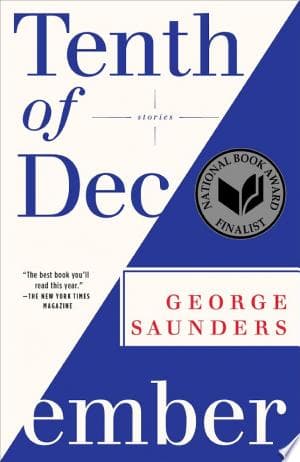
- Tenth of December
George Saunders
4.0 (62k) average on GoodreadsLiterary FictionExplores complex human nature and moral ambiguities in a fantastical setting.
- Uprooted
Naomi Novik
4.1 (167k) average on GoodreadsFantasyFeatures a dark, magical world and a young woman discovering her power through a mentor.
- Coraline
Neil Gaiman
4.0 (23k) average on GoodreadsFantasyWhile both explore children encountering other worlds due to neglectful parents, McGuire's novella delves into a more mature and explicitly traumatic landscape, focusing on long-term psychological consequences rather than immediate peril and escape. 'Down Among the Sticks and Bones' is less whimsical and more overtly dark.
- Harry Potter and the Sorcerer's Stone
J.K. Rowling
4.5 (7M) average on GoodreadsFantasyRescued from a miserable life under the stairs, an orphaned boy discovers he's a wizard destined for a magical school, where he uncovers a dangerous secret tied to the dark wizard who murdered his parents.
- The Hunger Games
Suzanne Collins
4.3 (6.4M) average on GoodreadsFantasyIn a future where children fight to the death on live television, Katniss Everdeen volunteers for the arena, turning a death sentence into a fight for survival and a spark of rebellion.





Enjoyed the summary?
A summary gives you the shape of the book. The book itself has the detail, the examples and the voice.
Find Down Among the Sticks and Bones on AmazonAs an Amazon Associate, BookBrief earns from qualifying purchases. How we're funded