
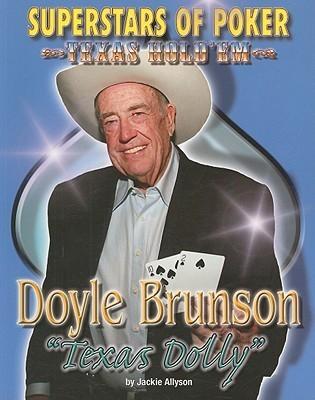
Core Idea
- Difficulty
- Easy
- Read it if
- you are interested in the history of poker, the life of one of its most iconic figures, or want to understand the strategic and personal evolution of a true poker legend.
- Skip it if
- you are looking for a highly technical poker strategy guide or prefer fictional narratives over biographical accounts.
Key Takeaways from Doyle "Texas Dolly" Brunson
The Evolution of Poker: From Backrooms to Mainstream
Brunson's career mirrors poker's transformation from a dangerous underground activity to a globally recognized sport.
Doyle Brunson's poker career shows the game's evolution. He started in rough road gambling circuits in the mid-20th century and saw poker change from illicit, high-risk games to a legitimate, televised event. This shift happened because of organized tournaments like the World Series of Poker (WSOP), online poker, and more media coverage. Brunson's consistent success and clear explanations helped make the game understandable and appealing to more people. His long career and ability to adapt across different eras show how poker changed from a shadowy past to a popular pastime enjoyed worldwide.
“Poker has changed dramatically over my lifetime. It used to be a game played in the shadows, full of hustlers and danger. Now, it's on TV, and everyone wants to play.”
In the book: Brunson's early career involved extensive travel for 'road games,' often in dangerous environments, contrasting sharply with his later, televised appearances at the WSOP.
Try this: To succeed in any evolving field, one must adapt to changing environments, technologies, and public perceptions, much like Brunson adapted his play and persona as poker grew.
Related ideas: poker-evolution, wsop, road-gambling
Mental Fortitude: The Unsung Hero of Poker
Brunson's ability to maintain composure and make rational decisions under immense pressure is a cornerstone of his success.
This is a strong insight into Brunson's lasting success. Besides strategy and math skills, Brunson demonstrates the importance of mental strength in high-stakes poker. His career has many examples where he played for huge sums of money but always stayed calm, analytical, and emotionally detached. This mental toughness helped him avoid emotional mistakes, make good decisions even with big losses or aggressive opponents, and perform consistently for decades. It shows that poker, at its highest level, is as much a psychological fight as a mathematical one, requiring resilience, self-control, and focus. This lesson applies beyond poker, highlighting the importance of emotional control in any high-pressure situation.
“The money doesn't matter when you're playing. You have to focus on the cards, the odds, and your opponent. Lose your head, and you lose everything.”
In the book: Numerous anecdotes recount Brunson's stoic demeanor during pivotal hands where hundreds of thousands of dollars were at stake, never betraying his hand through body language.
Try this: Develop practices like mindfulness or self-awareness to improve emotional regulation in high-stakes situations, preventing impulsive decisions that can lead to negative outcomes.
Related ideas: poker-psychology, emotional-regulation, tilt-control
Adaptability in Strategy: The Key to Longevity
Brunson consistently evolved his playing style to counter new generations of players and changing game dynamics.
Brunson's long career in a game where many players burn out quickly shows his unique ability to adapt. As poker changed from a loose, aggressive game to a more precise and complex one with internet poker and younger, theory-focused players, Brunson did not stick to old methods. Instead, he studied, learned, and used new strategies, even adopting things from players half his age. This willingness to constantly re-evaluate and improve his approach, rather than just relying on past wins, kept him competitive and respected for decades. This idea has limits, as even Brunson could not fully master every new game variant or online trend, but his basic adaptability is clear.
“The game changes, and if you don't change with it, you'll be left behind. What worked yesterday might get you busted today.”
In the book: Brunson's acknowledgment of studying younger players and incorporating new concepts like 'positional play' and 'implied odds' into his already established game.
Try this: Regularly seek out new information, challenge existing assumptions, and be open to learning from diverse sources, even those seemingly less experienced, to stay relevant in your field.
Related ideas: game-theory, poker-strategy, continuous-learning
The Power of Reputation and Table Image
Brunson leveraged his formidable reputation to influence opponents and gain an edge, even without the best cards.
Beyond his technical skills, Brunson understood and used the psychological side of poker, especially his 'table image' and reputation. Known as 'Texas Dolly' and having won many World Series of Poker bracelets, his presence alone made opponents fearful and respectful. This allowed him to bluff successfully when lesser-known players could not, or get more money when he had strong hands, simply because opponents were more likely to believe him. This shows that in competitive settings, how strong others perceive you to be, and your past achievements, can be as important as your current abilities, creating a significant psychological edge. It is a subtle understanding that goes beyond just math.
“Sometimes, the best hand you have is the one they think you have. My name on the table was worth more than a pair of aces.”
In the book: Stories of opponents folding strong hands against Brunson, admitting later they 'just couldn't believe' he was bluffing, due to his legendary status.
Try this: Cultivate a strong professional reputation through consistent performance and integrity, as this can create leverage and influence in negotiations and competitive interactions.
Related ideas: table-image, poker-psychology, reputation-management
Risk-Taking as a Calculated Art
Brunson's success wasn't about reckless gambling, but rather strategically timed, high-stakes risks.
Brunson's career disproves the idea of the 'reckless gambler.' Instead, he embodied calculated risk-taking. While he was known for bold plays, these were rarely impulsive. They were often based on a deep understanding of odds, opponent habits, and the overall game. His willingness to bet large sums of money, especially at key moments, was a strategic tool to apply pressure, get information, or take advantage of perceived weaknesses. This point emphasizes that real success in high-risk fields is not about avoiding risk, but about learning to identify good times for aggressive action and understanding the potential rewards versus the downsides. It is a lesson in strategic aggression.
“You can't win big if you're afraid to lose. But you also can't win if you're just throwing money away. It's about knowing when to push.”
In the book: Brunson's famous '10-2' hand, where he won the WSOP Main Event twice with the same statistically weak starting hand, often involved calculated bluffs or semi-bluffs to win the pot.
Try this: In business or career decisions, evaluate risks not just on their potential downsides, but also on the strategic advantage and potential upside they offer, then act decisively when the odds are in your favor.
Related ideas: risk-management, strategic-decision-making, calculated-aggression
The Importance of Physical and Mental Stamina
Long hours and intense concentration demand peak physical and mental conditioning.
This insight, often overlooked in the excitement of big wins, highlights the tough demands of professional poker. Brunson, especially when he was younger and during long tournaments, knew that physical and mental stamina were key. Long sessions, often lasting for days with little sleep, required great endurance to stay focused, avoid mistakes from tiredness, and maintain top performance. His disciplined approach to self-care, even with the pressures of high-stakes gambling, shows that success in any demanding job is not just about skill but also about the physical and mental resilience that supports it. This is a subtle but powerful point often missed by casual observers.
“A poker game can last for days. If you're not physically and mentally ready, you'll make mistakes. It's a marathon, not a sprint.”
In the book: Descriptions of marathon poker sessions in the early road gambling days, where players would play for 24-48 hours straight, demanding incredible stamina.
Try this: Prioritize sleep, nutrition, and regular exercise to enhance cognitive function and endurance, recognizing these as foundational elements for sustained high performance in any demanding role.
Related ideas: endurance, cognitive-function, peak-performance
The Value of Mentorship and Learning from Peers
Brunson actively sought out and learned from other top players, even those he competed against.
Despite his legendary status, Brunson always kept learning about the game. He often talked about how he learned from his peers, including other 'rounders' and later, the younger generation of internet players. This willingness to engage, observe, and even ask directly about others' strategies and views shows the great value of mentorship and peer learning. It demonstrates that even the most accomplished people can benefit from outside input and that intellectual humility helps with continuous improvement. This idea has limits because Brunson's generation had fewer formal learning resources, making peer observation even more important, but the principle is still relevant.
“You can't learn everything on your own. The best way to get better is to play with better players, watch them, and ask questions.”
In the book: Brunson often spoke of observing and learning from fellow 'Texas Rounders' like Amarillo Slim and Puggy Pearson, exchanging strategies and insights.
Try this: Actively seek out mentors and engage in peer learning networks within your industry, fostering a continuous learning mindset and benefiting from diverse experiences.
Related ideas: mentorship, peer-learning, continuous-improvement
Beyond the Game: The Personal Sacrifices
Brunson's career reveals the often-hidden personal costs and dangers associated with professional gambling.
While the book celebrates Brunson's wins, it also shows the personal sacrifices and dangers of his job, especially in the early days. Constant travel, exposure to criminals, the psychological toll of big financial swings, and the strain on family life all paint a more complete, less glamorous picture of professional gambling. This point acts as a counterpoint to the appeal of quick riches, reminding readers that great success often comes with significant personal cost and unique challenges. It emphasizes the importance of understanding all the implications before pursuing a high-risk, high-reward path.
“Poker gives you a lot, but it takes a lot too. The travel, the danger, the time away from family – it's not for everyone.”
In the book: Accounts of Brunson facing armed robbers, being cheated, and the constant pressure of providing for his family through an unpredictable income source.
Try this: Before committing to a demanding career or lifestyle, thoroughly evaluate not just the potential rewards, but also the personal sacrifices, risks, and impact on well-being and relationships.
Related ideas: work-life-balance, personal-sacrifice, high-risk-lifestyle
The Power of Storytelling and Charisma
Brunson's engaging personality and ability to tell a good story contributed to his iconic status.
Beyond his poker skills, Brunson's charisma and storytelling ability helped solidify his legendary status. His stories from the road gambling days, full of interesting characters and high drama, not only entertained but also made the often-intimidating world of professional poker more human. This ability to connect with people, whether at the table or through media, helped build his brand and contributed to poker's wider appeal. It shows that in any field, being able to communicate well, share compelling stories, and have an engaging personality can be as important as technical expertise for widespread recognition and influence. His 'Super/System' book is a clear example of this.
“People remember stories. If you can tell a good one, they'll remember you, and they'll want to hear more.”
In the book: Brunson's authorship of 'Super/System,' a seminal poker strategy book, which was filled with personal stories and insights, making complex strategies accessible and engaging.
Try this: Develop strong communication and storytelling skills to articulate your experiences and expertise, enhancing your personal brand and influence within your professional community.
Related ideas: storytelling, personal-branding, charisma, communication-skills
Legacy Building: Contributing to the Game's Future
Brunson's impact extends beyond his personal wins to shaping poker's future and inspiring new generations.
Brunson's lasting legacy is not just his many titles or millions won, but his significant contribution to making poker legitimate and popular. Through his consistent presence, his 'Super/System' book (considered a poker bible), and his role as a respected elder, he actively shaped the game's path. He inspired many players, simplified complex strategies, and helped bring poker into the mainstream. This point emphasizes that true leadership and lasting impact involve not just personal achievement, but also a willingness to share knowledge, mentor others, and contribute to the growth and positive development of one's entire field. He was a pioneer who set the stage for future success.
“I hope I've left the game better than I found it. It's about more than just winning money; it's about making it something people love.”
In the book: The widespread influence of 'Super/System' on multiple generations of poker players and his role as a brand ambassador for poker in the media.
Try this: Consider how your work can contribute to the broader development and positive impact of your industry, aiming to leave a lasting legacy that extends beyond individual accomplishments.
Related ideas: legacy, mentorship, industry-impact, pioneer
Doyle "Texas Dolly" Brunson Quotes
“I've been playing poker for a living for a long time. I've seen a lot of hands, and I've seen a lot of players. And I've learned a few things along the way.”
“The most important thing in poker is to know your opponent. You have to be able to read their tells, their habits, and their tendencies.”
“You can't win every hand. That's a fact. You have to be willing to lose some hands to win the big pots.”
“The 'Doyle Brunson' hand, ten-deuce offsuit, is the worst starting hand in Texas Hold'em. But I've won a lot of pots with it.”
“Luck is a big part of poker, but skill is what separates the winners from the losers in the long run.”
“You have to be disciplined. You can't play every hand, and you can't chase every draw.”
“Poker is a game of incomplete information. You have to make the best decisions you can with the information you have.”
“The Super System is my bible. It's the culmination of all my years of playing and learning.”
“It's not about the money. It's about the game. It's about the competition.”
“You have to be able to adapt. The game of poker is always changing, and you have to change with it.”
“The greatest players are not the ones who win the most pots, but the ones who lose the least.”
“I've always believed in playing aggressive. If you're not playing aggressively, you're probably not playing your best.”
“The most important hand I ever played was the one that taught me the most.”
“You don't have to be the best player at the table to win. You just have to be better than the other guys.”
Quiz
10 questions on the main ideas. Each answer comes with a short explanation.
Question 1
What is Doyle Brunson's nickname?
- The Poker King
- Texas Dolly
- The Godfather of Poker
- The Card Shark
Show answer
B. Texas Dolly Doyle Brunson is widely known by his nickname 'Texas Dolly' and is also referred to as 'The Godfather of Poker'.
Question 2
In what year was Doyle Brunson born?
- 1923
- 1933
- 1943
- 1953
Show answer
B. 1933 Doyle Brunson was born in 1933.
Question 3
Where was Doyle Brunson born?
- Nevada
- California
- New York
- Texas
Show answer
D. Texas Doyle Brunson was born in a small town in Texas.
Question 4
What significant role has Doyle Brunson played in the history of poker?
- He invented the game of Texas Hold'em.
- He popularized poker from a dangerous backroom game to a mainstream pastime.
- He was the first person to win a World Series of Poker bracelet.
- He exclusively played high-stakes cash games and never participated in tournaments.
Show answer
B. He popularized poker from a dangerous backroom game to a mainstream pastime. Doyle Brunson is credited with helping to transform poker from a game associated with danger into a widely enjoyed activity.
Question 5
The provided text mentions Doyle Brunson has been in the game since 'the road gambling days'. What does this likely refer to?
- Gambling on boats and ships.
- Playing poker in traveling circuses.
- Gambling in illegal, often mobile, settings during an earlier era of poker.
- Playing poker on public transportation.
Show answer
C. Gambling in illegal, often mobile, settings during an earlier era of poker. 'Road gambling days' suggests a period when poker was played in less formal, often illegal, and potentially mobile or traveling settings, as opposed to established casinos.
Question 6
According to the text, how many people now enjoy poker?
- Hundreds of thousands
- Millions
- Billions
- Thousands
Show answer
B. Millions The text states that poker is now enjoyed by millions.
Question 7
What was poker like before Doyle Brunson's influence, according to the text?
- A widely televised sport.
- A regulated casino game.
- A backroom game surrounded by danger.
- A popular family activity.
Show answer
C. A backroom game surrounded by danger. The text explicitly describes poker before Brunson's influence as 'a backroom game surrounded by danger'.
Question 8
The book about Doyle Brunson mentioned is titled:
- The Godfather of Poker: Doyle Brunson Story
- Doyle Brunson: Texas Dolly
- Doyle "Texas Dolly" Brunson
- The Legend of Doyle Brunson
Show answer
C. Doyle "Texas Dolly" Brunson The title of the book about Doyle Brunson, as provided in the prompt, is 'Doyle "Texas Dolly" Brunson'.
Question 9
Who is the author of the book about Doyle Brunson mentioned in the text?
- Doyle Brunson
- Jackie Allyson
- The Godfather of Poker
- Texas Dolly
Show answer
B. Jackie Allyson The prompt states the book is 'by Jackie Allyson'.
Question 10
What does the phrase 'road gambling days' imply about the nature of poker during that era?
- It was a professional and highly regulated sport.
- It was primarily played in established, legal casinos.
- It was often associated with risk, illegality, and a lack of fixed locations.
- It was a quiet, solitary activity with no social interaction.
Show answer
C. It was often associated with risk, illegality, and a lack of fixed locations. The term 'road gambling' typically refers to gambling activities that were itinerant, potentially illegal, and carried a degree of risk and unpredictability, contrasting with modern, regulated environments.
Doyle "Texas Dolly" Brunson FAQ
Who is Doyle Brunson?
Doyle Brunson, often called "The Godfather of Poker," is a legendary figure in the poker world. Born in Texas in 1933, he has a storied career that began in the era of road gambling.
What is Doyle Brunson's nickname?
Doyle Brunson's most famous nickname is "Texas Dolly."
How did Doyle Brunson influence poker?
Doyle Brunson played a crucial role in transforming poker from a dangerous backroom game into a widely enjoyed pastime. His influence helped bring poker to millions of people worldwide.
When was Doyle Brunson born?
Doyle Brunson was born in 1933.
Where was Doyle Brunson born?
Doyle Brunson was born in a small town in Texas.
What era of poker did Doyle Brunson start playing?
Doyle Brunson began his poker career during the "road gambling" days, a time when poker was often played in less formal and potentially more hazardous settings.
What is the book "Doyle "Texas Dolly" Brunson" about?
The book by Jackie Allyson details the life and career of poker legend Doyle "Texas Dolly" Brunson, highlighting his journey from early gambling days to becoming a pivotal figure in modern poker.
Why is Doyle Brunson considered "The Godfather of Poker"?
He earned the title "The Godfather of Poker" due to his immense influence in shaping the game's perception and popularity, guiding it from its underground roots to mainstream appeal.
Similar books
- Touching my father's soul
Jamling Tenzing Norgay
4.0 (3k) average on GoodreadsJamling Tenzing Norgay climbs Everest, following his father's path, seeking spiritual connection and facing his own fears on the world's highest peak.
- Wir Kinder vom Bahnhof Zoo
Kai Hermann
In the gritty world of 1970s West Berlin, Christiane F. descends into addiction and despair, seeking connection and escape on the dangerous streets around the Zoo station.


Enjoyed the summary?
A summary gives you the shape of the book. The book itself has the detail, the examples and the voice.
Find Doyle "Texas Dolly" Brunson on AmazonAs an Amazon Associate, BookBrief earns from qualifying purchases. How we're funded