

Synopsis
Covers the whole plot, including the ending.
- Difficulty
- Hard
- Pacing
- Slow
- Mood
- Philosophical, Melancholy, Introspective, Dark
- Read it if
- You want to explore the dark side of messianic figures, the burdens of prophecy, and the philosophical aftermath of a galactic holy war.
- Skip it if
- You prefer fast-paced action and clear-cut heroes, or found the philosophical depth of 'Dune' overwhelming.
Dune Messiah Plot Summary
Covers the whole plot, including the ending.
The Conspiracy Gathers
Twelve years after the Battle of Arrakeen, Emperor Muad'Dib, Paul Atreides, rules the known universe from Arrakis. His holy war has killed billions, and the Fremen worship him, which deeply troubles him. He has visions of his own death and humanity's future. A conspiracy against him forms, led by four figures: Reverend Mother Gaius Helen Mohiam of the Bene Gesserit, Scytale, a Tleilaxu Face Dancer, Edric, a Spacing Guild Navigator who blocks prescience, and Princess Wensicia, daughter of the late Emperor Shaddam IV, who wants to restore House Corrino. Their first meeting on Wallach IX confirms their plan to remove Paul from power.
The Gift of Ghola
The conspirators send Paul a gift: a ghola of his deceased swordmaster, Duncan Idaho, named Hayt. This ghola, created by Tleilaxu technology, has Duncan's memories up to his death, though they are initially hidden. Hayt is presented to Paul and Chani, and Paul, despite his unease, accepts him. The ghola is subtly programmed to corrupt Paul or, failing that, to kill him. This 'gift' is a psychological weapon, meant to use Paul's emotions and introduce an unpredictable element into his court, forcing him to face the ghost of a beloved friend.
Chani's Pregnancy and the Oracle of the Sand
Chani, Paul's Fremen concubine, becomes pregnant with twins, an event Paul has foreseen with both happiness and dread. The conspirators, especially Reverend Mother Mohiam, see this as a chance to control Paul's lineage. They subtly influence Chani's diet through her servants, giving her a fertility drug that speeds up her pregnancy and makes it more difficult, weakening her and increasing the risk to her and the children. Paul knows about the manipulation but is trapped by his visions, seeing a path where any interference leads to a worse outcome, forcing him to watch his beloved suffer.
The Stone Burner Attack
During a public ceremony, a Stone Burner device, a powerful weapon, explodes near Paul. The explosion blinds him, but his vision abilities let him 'see' through the eyes of others around him, maintaining his awareness of the physical world. This event is a turning point, forcing Paul to face the limits and burdens of his visions. He must now navigate a world he cannot physically see, relying entirely on his inner vision, further isolating him and increasing the pressure to fulfill his destiny.
Hayt's Programming and the Test of Loyalty
The ghola Hayt, under the subtle influence of his Tleilaxu programming, tries to kill Paul. In a moment of vulnerability, Hayt's conditioning forces him to act, but Paul, anticipating the attack through his visions, deflects it. This aggression, however, causes a deep psychological crisis within Hayt. The conflict between his programmed command and the buried memories of Duncan Idaho's loyalty to the Atreides house causes a breaking point, allowing Duncan Idaho's true personality and memories to return, shattering the Tleilaxu control and confirming his loyalty to Paul.
The Birth and Chani's Death
Chani goes into labor, a difficult and dangerous process made worse by the conspirators' drugs. She gives birth to twins: a boy, Leto II, and a girl, Ghanima. However, the strain of childbirth, along with the earlier manipulations, is too much for her, and she dies shortly after. Paul, blind and devastated, holds her. This tragic event fulfills one of Paul's most feared visions, cementing his path toward a painful future and marking a deep personal loss that removes his last human comfort.
Scytale's Final Gambit
Immediately after Chani's death, Scytale, disguised as a Fremen, approaches Paul. He offers Paul the ultimate temptation: a ghola of Chani, promising to bring her back. Scytale believes that Paul, in his grief and blindness, will be desperate enough to accept, thus falling further under Tleilaxu influence. This is Scytale's final, desperate attempt to control Paul, exploiting his deepest emotional wound. Paul, however, sees through the deception and, despite his deep sorrow, refuses the offer, understanding the trap it represents.
The Oracle's Decision
Paul, guided by his visions and the unique insight from his newborn son, Leto II, uses a crysknife to kill Scytale, who is still disguised. Having accepted his fate and the burden of his visions, and with Chani gone, Paul makes a profound decision. He chooses to follow the ancient Fremen tradition for the blind: to walk alone into the desert, becoming a legendary figure and freeing his people from his direct rule. This act is both a sacrifice and a liberation, ensuring the survival of his children and the future of humanity.
Jessica's Return and Alia's Ascension
Lady Jessica, Paul's mother, returns to Arrakis after years on Caladan, summoned by Paul and aware of the unfolding crisis. She arrives to find Paul blind and Chani dead, with her newborn grandchildren, Leto II and Ghanima. Her presence brings stability amidst the chaos. Alia, Paul's younger sister, now grown and a Reverend Mother, takes on a more prominent role, becoming the regent for the infant twins and the ruler of the Imperium in Paul's absence, showing her intelligence and inherited abilities.
The Future of Humanity
Paul's departure into the desert, while seeming like self-sacrifice, is also a calculated move to prevent humanity's stagnation. He understands that his absolute power and the rigid path of his holy war threaten to trap humanity in a sterile future. By removing himself, he forces the universe to adapt and allows his children, Leto II and Ghanima, who share his visions but have their own perspectives, to guide humanity towards the Golden Path he foresaw. His legacy includes both immense destruction and a desperate, hopeful push for survival.
Principal Figures
Paul Atreides (Muad'Dib)
Protagonist
The blind, prescient Emperor burdened by his own power and the future of humanity.
Paul Atreides is the Kwisatz Haderach, Emperor of the Known Universe, and the revered (and feared) religious leader Muad'Dib. He is plagued by prescient visions of the future, which show him the horrific consequences of his jihad and the potential extinction of humanity. Despite his immense power, he feels trapped by destiny, struggling to find a path that avoids the worst outcomes. His love for Chani and his children is his last anchor to humanity, even as he knows he must sacrifice everything for a greater purpose.
Relationships: Chani (His beloved Fremen concubine and mother of his children.); Alia Atreides (His sister and fellow prescient, a strong political ally.); Lady Jessica (His mother and Bene Gesserit mentor.); Duncan Idaho (Hayt) (His loyal swordmaster, returned as a ghola and then restored.)
Chani
Supporting
Paul's Fremen concubine and the mother of his twins.
Chani is Paul's loyal and loving Fremen concubine, deeply devoted to him. She embodies the fierce independence and pragmatism of the Fremen people. She longs to give Paul an heir and is willing to undergo physical hardship for it, unknowingly manipulated by the conspirators. Her love for Paul is unwavering, and she accepts his prescient burdens, even as she suffers the consequences. Her death is a profound loss for Paul and a catalyst for his final decision.
Relationships: Paul Atreides (Her beloved partner and Emperor.); Leto II Atreides (Her son.); Ghanima Atreides (Her daughter.)
Alia Atreides
Supporting
Paul's younger sister, a powerful prescient and Reverend Mother.
Alia is Paul's younger sister, born pre-born with the full memories of her ancestors and the abilities of a Reverend Mother. She is highly intelligent, politically astute, and fiercely loyal to Paul and the Atreides name. She possesses formidable fighting skills and a sharp mind, often serving as Paul's enforcer and confidante. As Paul's reign progresses, she takes on more significant governmental responsibilities, demonstrating her capacity for leadership.
Relationships: Paul Atreides (Her brother and Emperor.); Lady Jessica (Her mother.); Duncan Idaho (Hayt) (Develops a romantic interest in the ghola.)
Duncan Idaho (Hayt)
Supporting
A ghola of Paul's loyal swordmaster, wrestling with his programmed purpose.
Hayt is a Tleilaxu ghola of the deceased Atreides swordmaster, Duncan Idaho. Initially programmed with a subtle mission to corrupt or kill Paul, Hayt struggles with his conditioning as buried memories of Duncan Idaho's loyalty resurface. He is a master swordsman, a Mentat, and a Zensunni philosopher. His internal conflict between his programmed identity and his true self is a central psychological drama, leading to his eventual restoration as Duncan Idaho and his renewed loyalty to Paul.
Relationships: Paul Atreides (His liege lord and friend.); Alia Atreides (His lover.)
Reverend Mother Gaius Helen Mohiam
Antagonist
The Bene Gesserit Reverend Mother, one of the primary conspirators against Paul.
Reverend Mother Mohiam is a powerful Bene Gesserit leader and Paul's former teacher. She resents Paul for escaping Bene Gesserit control and for the chaos his jihad has unleashed, which threatens their long-term breeding program. She is cunning, manipulative, and unwavering in her belief in the Bene Gesserit's right to guide humanity. She is a key figure in the conspiracy, using her intelligence and influence to try and control or eliminate Paul.
Relationships: Paul Atreides (His former teacher and primary antagonist.); Princess Wensicia (An ally in the conspiracy.)
Scytale
Antagonist
A Tleilaxu Face Dancer and master of disguise.
Scytale is a Tleilaxu Face Dancer, a shapeshifter capable of perfectly imitating anyone. He is a master of deception, highly intelligent, and utterly ruthless, driven by the Tleilaxu agenda to gain control over the universe's political and genetic future. He plays a crucial role in the conspiracy against Paul, orchestrating the ghola of Duncan Idaho and attempting to manipulate Paul through grief and temptation. His final gambit is the offer of a Chani ghola.
Relationships: Edric (An ally in the conspiracy.); Reverend Mother Gaius Helen Mohiam (An ally in the conspiracy.)
Edric
Antagonist
A Spacing Guild Navigator, mutated to perceive and manipulate prescient visions.
Edric is a Spacing Guild Navigator, a human mutated by spice to gain limited prescience and the ability to navigate interstellar space. Crucially, he can also obscure or deflect other prescient visions, making him a unique threat to Paul. He is a vital member of the conspiracy, providing a shield against Paul's all-seeing eye. His motivations are to protect the Guild's power and ensure its continued monopoly on space travel.
Relationships: Scytale (An ally in the conspiracy.); Reverend Mother Gaius Helen Mohiam (An ally in the conspiracy.)
Princess Wensicia Corrino
Antagonist
The daughter of the deposed Emperor Shaddam IV, seeking to restore House Corrino.
Princess Wensicia is the cunning and ambitious daughter of the former Emperor Shaddam IV. She harbors a deep resentment towards Paul Atreides for deposing her family and seeks to restore House Corrino to power. She is a skilled political manipulator and a key orchestrator of the conspiracy, particularly in her efforts to use her son, Farad'n, as a potential successor or husband for Paul's children. She operates from Salusa Secundus, plotting her revenge.
Relationships: Reverend Mother Gaius Helen Mohiam (An ally in the conspiracy.); Farad'n Corrino (Her son, whom she grooms for power.)
Lady Jessica
Supporting
Paul's mother and a Bene Gesserit Reverend Mother.
Lady Jessica is Paul's mother, a Bene Gesserit Reverend Mother, and a powerful figure in her own right. She is intelligent, perceptive, and deeply devoted to her children, though she often struggles with the Bene Gesserit's long-term goals versus her personal feelings. She returns to Arrakis late in the story, providing a much-needed perspective and emotional anchor, especially for Alia and the newborn twins. She represents a blend of Bene Gesserit discipline and human compassion.
Relationships: Paul Atreides (Her son.); Alia Atreides (Her daughter.)
Themes & Insights
The Burden of Prescience and Absolute Power
Paul Atreides has absolute power as Emperor and the terrible burden of seeing all possible futures. This theme explores the isolation and moral dilemma of knowing the future and the awful results of trying to guide humanity. Paul is always aware of the billions killed in his name and the 'Golden Path' that demands great sacrifice. His blindness, caused by the Stone Burner, ironically frees him from the physical world, forcing him to rely only on his inner visions, increasing his burden. He is a god-like figure who feels trapped, not freed, by his abilities.
“A man's flesh is his prison. He's a prisoner at best.”
Messiahship and the Dangers of Fanaticism
The novel examines the dangers of religious fanaticism and the burden of being a messiah. Paul, revered as Muad'Dib, struggles with the Fremen's worship, which he knows is leading humanity down a dangerous, unchanging path. His holy war, born from his rise, has consumed the galaxy, and he understands that his own legend is a cage. The conspirators use this fanaticism, while Paul desperately seeks a way to free humanity from the strict control of his own myth. His final act of walking into the desert is an attempt to break the cycle of blind devotion.
“No man can see his own future or the future of his people. He sees only a path that he must take.”
Plot Devices & Literary Techniques
Prescience
The ability to see and experience the future, a gift and a curse.
Prescience is the central plot device, possessed by Paul, Alia, and to a lesser extent, Edric. For Paul, it's an overwhelming burden, allowing him to see all possible futures, but showing that any deviation from a specific, painful path leads to humanity's extinction. It traps him, as he must allow terrible events to unfold to ensure a greater good. Edric's limited prescience and ability to 'hide' from Paul's vision make him a crucial element of the conspiracy, as he can shield the other conspirators from Paul's all-seeing eye, creating pockets of unpredictability.
Ghola Technology
The Tleilaxu ability to resurrect the dead, used for manipulation and psychological warfare.
Ghola technology, specifically the creation of Hayt (Duncan Idaho), is a significant plot device. It serves multiple functions: as a psychological weapon against Paul, designed to exploit his emotional attachment to Duncan; as a means to explore identity and memory, as Hayt struggles between his programmed self and Duncan's original personality; and as a symbol of the Tleilaxu's manipulative power. The offer of a Chani ghola is the ultimate temptation, a test of Paul's resolve and his understanding of the dangers of clinging to the past.
The Stone Burner
A powerful, exotic weapon that blinds Paul but enhances his prescient sight.
The Stone Burner is a highly destructive, exotic weapon used in the assassination attempt on Paul. Its primary function as a plot device is to physically blind Paul. However, this physical blindness paradoxically intensifies his reliance on and experience of prescience. It forces him to 'see' through his inner vision and the eyes of others, making his connection to the cosmic web of fate even more profound and painful. It's a catalyst for his ultimate decision to embrace the Fremen tradition for the blind.
Dune Messiah Quotes
“No matter how much you know, there's always more to learn.”
“The greatest peril to the Kwisatz Haderach is the Kwisatz Haderach.”
“A man's flesh is his prison. His loves are his chains.”
“The future is a path drawn on water.”
“When you are a god, you do not have friends. You have worshipers and enemies.”
“To be truly free, you must be willing to sacrifice everything.”
“The highest function of love is that it makes the loved one a unique and irreplaceable being.”
“Religion, too, has its own special terrors.”
“Hope is a word used by the weak to make themselves feel strong.”
“The purpose of a test is not to see if you can pass, but to see how you fail.”
“Power attracts the corruptible. Absolute power attracts the absolutely corruptible.”
“There is no escape from destiny, only a choice of how you meet it.”
“The greatest harm can be done by those who mean to do good.”
“A leader must be able to see the future, but also to be able to live in the present.”
Quiz
10 questions on the plot and the characters. Each answer comes with a short explanation.
Question 1
What is the primary motivation for the conspiracy against Paul Atreides in 'Dune Messiah'?
- To restore the Great Houses to their former power and undermine Paul's religious authority.
- To gain control of the Spice production on Arrakis for their own benefit.
- To force Paul to marry a princess from a rival House to secure an alliance.
- To assassinate Chani and prevent the birth of Paul's heir.
Show answer
A. To restore the Great Houses to their former power and undermine Paul's religious authority. The conspiracy, led by figures like Scytale, Edric, and Princess Wensicia, aimed to dismantle Paul's absolute power and the religious fervor he inspired, thereby restoring a balance of power to the Great Houses.
Question 2
What gift does the Bene Gesserit, the Spacing Guild, and the Bene Tleilaxu offer Paul Atreides in their initial meeting to undermine him?
- A new, more powerful form of Spice.
- A ghola of Duncan Idaho.
- The secret to immortality.
- Control over a new planet in the Imperium.
Show answer
B. A ghola of Duncan Idaho. The conspirators offer Paul a ghola of his deceased mentor, Duncan Idaho, named Hayt, hoping to manipulate his emotions and exploit his prescient weaknesses.
Question 3
What is the name of the ghola of Duncan Idaho presented to Paul?
- Stilgar
- Gurney Halleck
- Hayt
- Thufir Hawat
Show answer
C. Hayt The ghola of Duncan Idaho is named Hayt, and he serves as a mentat-swordmaster for Paul.
Question 4
What specific act of sabotage does Scytale, the Tleilaxu Face Dancer, attempt against Paul?
- He attempts to replace Chani with a Face Dancer duplicate.
- He attempts to assassinate Paul with a poisoned blade during a public ceremony.
- He detonates a stone burner, blinding Paul.
- He manipulates Paul's prescience through a specially designed drug.
Show answer
C. He detonates a stone burner, blinding Paul. Scytale, disguised as a Fremen, detonates a stone burner, a devastating weapon, which blinds Paul Atreides.
Question 5
What is the primary internal conflict Paul Atreides faces throughout 'Dune Messiah'?
- His struggle to maintain control over the Fremen jihad.
- His desire to escape his prescient vision of the Golden Path and avoid the suffering it entails.
- His jealousy over Chani's growing independence.
- His inability to trust his sister, Alia, with political power.
Show answer
B. His desire to escape his prescient vision of the Golden Path and avoid the suffering it entails. Paul is constantly burdened by his prescient visions, particularly the terrible Golden Path, and seeks a way to divert humanity from its course of self-destruction, even if it means his own sacrifice.
Question 6
What is the ultimate fate of Chani in 'Dune Messiah'?
- She is assassinated by Princess Wensicia's agents.
- She dies giving birth to Paul's twins, Leto II and Ghanima.
- She leaves Arrakis to live a peaceful life away from Paul's rule.
- She becomes Paul's official Empress after Irulan is deposed.
Show answer
B. She dies giving birth to Paul's twins, Leto II and Ghanima. Chani dies in childbirth, giving birth to Paul's twins, Leto II and Ghanima, a tragic event Paul had foreseen.
Question 7
What is the significance of the 'stone burner' weapon used by Scytale against Paul?
- It is a device that causes immediate and irreversible blindness through intense light and radiation.
- It is a psychological weapon designed to induce fear and hallucinations.
- It is a small, portable nuclear device used to destroy structures.
- It is a sonic weapon that disrupts mentat calculations.
Show answer
A. It is a device that causes immediate and irreversible blindness through intense light and radiation. The stone burner emits a destructive light and radiation, permanently blinding Paul. Its effects are described as unique and devastating, allowing the Tleilaxu to believe Paul is truly incapacitated.
Question 8
How does Paul Atreides choose to deal with his blindness at the end of 'Dune Messiah'?
- He undergoes a radical Tleilaxu surgical procedure to restore his sight.
- He continues to 'see' through his prescient awareness, effectively navigating without physical sight.
- He abdicates his throne and retreats into isolation, guided by Alia.
- He uses the ghola of Duncan Idaho as his permanent guide and eyes.
Show answer
B. He continues to 'see' through his prescient awareness, effectively navigating without physical sight. Despite being physically blind, Paul is still able to 'see' through his prescient visions, allowing him to navigate and react as if he had physical sight, until the birth of his children. He then chooses to walk into the desert as per Fremen tradition for the blind.
Question 9
What is the ultimate purpose of the Tleilaxu ghola of Duncan Idaho (Hayt)?
- To serve as a loyal mentat and swordmaster for Paul Atreides.
- To be a sleeper agent, programmed to assassinate Paul at a critical moment.
- To provide Paul with a companion who understands his past struggles.
- To teach Paul new combat techniques developed by the Tleilaxu.
Show answer
B. To be a sleeper agent, programmed to assassinate Paul at a critical moment. The Tleilaxu intended Hayt to be a weapon against Paul, programmed with specific trigger words and conditions to compel him to attempt Paul's assassination, thereby breaking Paul's will and prescience.
Question 10
What is the final, decisive act Paul takes after Chani's death and the birth of his children that fulfills a Fremen tradition?
- He declares his twins, Leto II and Ghanima, as the new rulers of the Imperium.
- He orders the execution of all conspirators against him.
- He walks into the desert, abandoning his physical body to the sands as a blind Fremen.
- He accepts Princess Irulan as his true wife and Empress.
Show answer
C. He walks into the desert, abandoning his physical body to the sands as a blind Fremen. Following Fremen tradition, a blind man is expected to walk into the desert and die, becoming one with Shai-Hulud. Paul, now physically blind and having fulfilled his immediate purpose with the birth of his children, chooses this path, leaving Alia to rule as regent.
Dune Messiah FAQ
What is the central conflict Paul Atreides faces at the beginning of Dune Messiah?
Paul Atreides, now Emperor Muad'Dib, grapples with the immense power he wields and the unintended consequences of his jihad, which has killed billions. He is burdened by prescient visions of the future, knowing that any path he takes leads to further destruction or the death of his beloved Chani, and desperately seeks an alternative.
Who are the primary conspirators against Paul in Dune Messiah, and what is their motivation?
The main conspirators are the Bene Gesserit Reverend Mother Mohiam, the Guild Navigator Edric, and Princess Wensicia, daughter of the deposed Emperor Shaddam IV. They aim to neutralize Paul's prescience and dismantle his empire, fearing his uncontrollable power and seeking to restore their own influence and the old order.
How does the Tleilaxu Master Scytale contribute to the plot against Paul?
Scytale, a Tleilaxu Face Dancer, is crucial to the conspiracy by providing a ghola of Duncan Idaho, named Hayt, to serve Paul. The ghola is programmed with a hidden command designed to shatter Paul's mental stability and make him vulnerable, particularly regarding his emotional attachment to Chani.
What is the significance of the ghola Hayt/Duncan Idaho in the story?
Hayt represents the ultimate psychological weapon against Paul, designed to test his humanity and break his will. Through Hayt's eventual recovery of his Duncan Idaho memories, Paul confronts the possibility of resurrection and the manipulation of life, which profoundly impacts his understanding of his own destiny and the nature of consciousness.
What is Paul's ultimate fate at the end of Dune Messiah?
After Chani's death and the birth of his twins, Leto II and Ghanima, Paul is blinded by an atomic blast. Adhering to Fremen tradition for the blind, he walks into the desert to die, leaving his empire to his children and his sister, Alia, thereby fulfilling his own prescient visions and escaping the trap of his power.
How does the concept of 'the Golden Path' begin to emerge in this novel?
While not fully articulated until 'Children of Dune,' 'Dune Messiah' introduces Paul's awareness of a terrible future where humanity faces extinction. He glimpses the necessity of a drastic, painful path to ensure humanity's long-term survival, a path he ultimately rejects for himself due to its immense suffering, but which his son, Leto II, later embraces.
What is the true purpose behind the conspiracy's gift of the ghola Hayt, beyond merely unsettling Paul?
The conspirators hoped Hayt would either kill Paul, or, more subtly, manipulate him into a position where he would agree to Tleilaxu demands, such as granting them power or allowing them to control the Bene Gesserit breeding program. They also intended to offer a ghola of Chani, believing Paul would be desperate enough to accept, thereby placing him under their perpetual influence.
How does the novel subtly hint at the Bene Gesserit's manipulation of Paul's lineage even before his birth?
Reverend Mother Mohiam's presence and her constant assessment of Paul's actions reinforce the Bene Gesserit's long-standing breeding program. Her disappointment and fear of Paul's divergence from their plans underscore that he was a product of their design, albeit one that went wildly beyond their control, hinting at their deep involvement in the Atreides line.
What unstated connection exists between the Guild Navigators and the Spacing Guild's fear of Paul?
The Guild Navigators' reliance on melange for prescience makes them uniquely vulnerable to Paul's superior prescient abilities. They fear that Paul could foresee and disrupt their every move, effectively making their own prescience obsolete and threatening their monopoly on interstellar travel, hence their participation in the conspiracy.
Analyze Paul's psychological state throughout 'Dune Messiah' – is he a hero or a tragic figure?
Paul is profoundly a tragic figure. Burdened by omniscience and the guilt of his jihad, he is trapped by his own power. He consistently tries to avert the worst outcomes he foresees, but his efforts only seem to reinforce the inevitable, driving him into deeper despair and isolation, ultimately sacrificing himself to escape a fate he could not change.
How does Chani's unwavering loyalty and desire for children impact Paul's psychological burden?
Chani's loyalty and her deep desire to bear Paul an heir intensify his psychological burden. He loves her deeply but knows that bearing his child will lead to her death, a future he desperately tries to avoid. Her natural, human desires contrast sharply with his prescient, almost inhuman awareness, highlighting his isolation and the painful choices forced upon him.
Explore the psychological impact of prescience on Paul's humanity.
Paul's prescience erodes his humanity by stripping away surprise, choice, and genuine interaction. He knows every outcome, every lie, every death, which leads to profound detachment and an inability to experience life spontaneously. This burden transforms him into a living oracle, making him feel less human and more a tool of destiny, leading to his eventual desire to escape.
How does the character of Alia Atreides demonstrate a different psychological response to prescience and power?
Alia, having been born pre-born with full ancestral memories and prescient abilities, embraces her power with a fierce, almost joyful, intensity that contrasts with Paul's weary resignation. She is more pragmatic and ruthless, less burdened by guilt, and more willing to use her abilities for direct action, showcasing a different path for a powerful individual in the Dune universe.
Is Paul's decision to walk into the desert an act of surrender or a final assertion of free will?
Paul's final act is a complex blend. It's a surrender to the Fremen tradition for the blind, but also a profound assertion of his free will to escape the Golden Path and the confines of his imperial role. By choosing blindness and disappearance, he makes a personal decision to remove himself from the universe's political and religious stage, reclaiming a sliver of agency.
What philosophical statement does Frank Herbert make about the dangers of charismatic leaders and religious fanaticism through Paul's story?
Herbert critiques the inherent dangers of charismatic leadership and religious fanaticism. Paul, despite his intentions, becomes a god-like figure whose followers commit atrocities in his name. The novel demonstrates that even a well-intentioned leader with extraordinary power can become a catalyst for immense destruction, highlighting the perils of blind faith and unchecked authority.
How does 'Dune Messiah' redefine the concept of a 'hero' established in 'Dune'?
'Dune Messiah' deconstructs the traditional hero narrative. Paul, who was the triumphant hero of 'Dune,' is revealed here as a burdened, tragic figure whose victory led to unforeseen horrors. The book argues that ultimate power corrupts, even a noble soul, and that the consequences of 'heroic' actions can be devastating, challenging simplistic notions of good and evil.
Debate: Was Paul justified in allowing the jihad to continue, knowing its terrible cost, or should he have found a way to stop it earlier?
This is highly debatable. Paul argued he saw no alternative that didn't lead to an even worse outcome for humanity, claiming he merely steered the river of fanaticism rather than creating it. However, critics argue his immense power and prescience might have offered other avenues, and his inaction allowed billions to die, raising questions about the responsibility of absolute power.
What is the ultimate irony of Paul's reign as Emperor, as depicted in 'Dune Messiah'?
The ultimate irony is that Paul, who sought to escape the destiny of a Kwisatz Haderach and bring peace, found himself trapped by the very power he gained. He became the figurehead of a bloody religious war, an unwilling god-emperor whose prescience showed him only suffering, making his 'victory' a personal prison and ultimately driving him to seek escape through self-sacrifice.
About the author
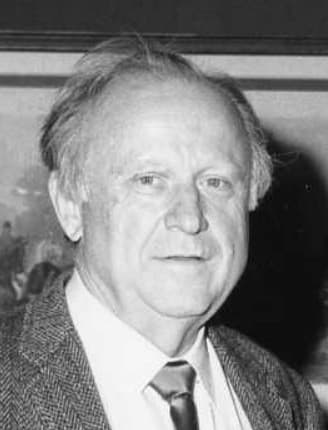
Franklin Patrick Herbert Jr. was an American science fiction author best known for the 1965 novel Dune and its five sequels. Though he became famous for his novels, he also wrote short stories and worked as a newspaper journalist, photographer, book reviewer, ecological consultant, and lecturer.
Similar books
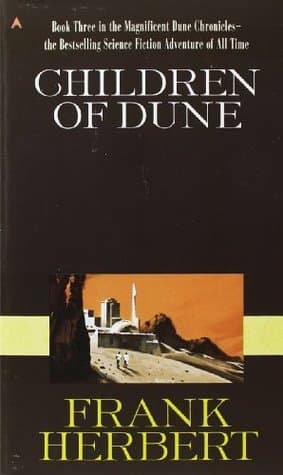
- Children of Dune
Frank Herbert
3.9 (106k) average on GoodreadsFantasyContinues the story of the Atreides children and the themes of prescience and human evolution.
- The Left Hand Of Darkness
Ursula K. Le Guin
4.1 (120k) average on GoodreadsFantasyExplores complex societal structures, political intrigue, and philosophical themes with a deliberate pace.
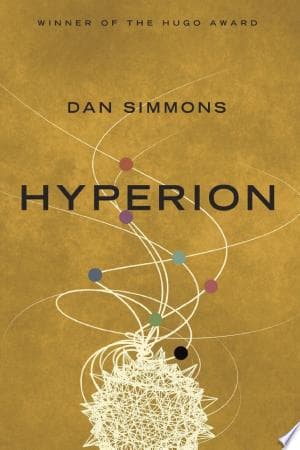
- Hyperion
Dan Simmons
4.2 (188k) average on GoodreadsFantasyFeatures a complex, multi-layered plot driven by religious and philosophical questions in a vast space opera setting.
- Starship Troopers
Robert A. Heinlein
4.0 (192k) average on GoodreadsFantasyWhile both Dune Messiah and Heinlein's Starship Troopers (1959) engage with themes of society and leadership, their approaches are diametrically opposed. Heinlein often presents a more straightforward, almost didactic, endorsement of certain societal structures and military virtues, with a clear heroic arc for his protagonist. Dune Messiah, in stark contrast, actively deconstructs the hero myth, questioning the very foundations of power and the moral compromises inherent in leadership. Herbert's work is critical and cautionary, whereas Heinlein's, in this context, can be seen as more prescriptive and celebratory of a particular ideal. The complexities of Paul's internal struggle and the moral ambiguity of his actions stand in stark opposition to the clear-cut heroism of Rico.
- Harry Potter and the Sorcerer's Stone
J.K. Rowling
4.5 (7M) average on GoodreadsFantasyRescued from a miserable life under the stairs, an orphaned boy discovers he's a wizard destined for a magical school, where he uncovers a dangerous secret tied to the dark wizard who murdered his parents.
- The Hunger Games
Suzanne Collins
4.3 (6.4M) average on GoodreadsFantasyIn a future where children fight to the death on live television, Katniss Everdeen volunteers for the arena, turning a death sentence into a fight for survival and a spark of rebellion.




Enjoyed the summary?
A summary gives you the shape of the book. The book itself has the detail, the examples and the voice.
Find Dune Messiah on AmazonAs an Amazon Associate, BookBrief earns from qualifying purchases. How we're funded