
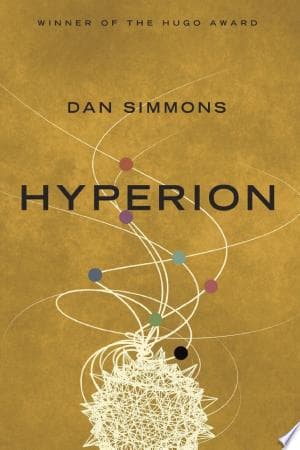
Synopsis
Covers the whole plot, including the ending.
- Difficulty
- Medium
- Pacing
- Variable
- Mood
- Epic, Mysterious, Philosophical, Suspenseful, Dark
- Read it if
- You love epic, multi-layered space operas with deep world-building, philosophical themes, and a unique narrative structure, reminiscent of 'The Canterbury Tales' in space.
- Skip it if
- You prefer straightforward plots without multiple perspectives or enjoy light, fast-paced science fiction without extensive exposition and complex concepts.
Hyperion Plot Summary
Covers the whole plot, including the ending.
The Last Pilgrimage Assembles
In the 29th century, the Human Hegemony is near war with the Ousters, and the AI TechnoCore's motives are unclear. Seven individuals are chosen for the Shrike Pilgrimage to Hyperion. These pilgrims, including Consul, Father Hoyt, Colonel Kassad, Martin Silenus, Brawne Lamia, Sol Weintraub, and Het Masteen, meet on the tree-ship Yggdrasill. Each has a secret and a desperate hope related to the Shrike and the Time Tombs. The Hegemony's decision to allow this pilgrimage has political and military implications, as Hyperion will soon be a battleground. As they travel, they agree to share their stories, hoping to find a common idea before facing the Shrike.
Father Duré's Heresy
Father Lenar Hoyt, a Catholic priest, tells the first story. It is about his mentor, Father Paul Duré. Duré went to Hyperion years ago to study the Bikura, a primitive species that wears cruciforms. Duré found that the cruciforms gave immortality, but at a cost: each resurrection brought back a less perfect version of the person, slowly degrading their identity. Duré, horrified, tried to destroy the cruciforms and escape, but the Shrike crucified him on a Tesla tree. Hoyt, who has two cruciforms, fears a similar outcome. He carries Duré's journals, seeking understanding.
The Poet's Cantos
Martin Silenus, an old, cynical poet, tells his story next. He reveals his long history with Hyperion, where he lived during the planet's early colonization. He was part of the 'Hyperion Cantos' literary movement and became focused on the Shrike and the Time Tombs. He believed they held the key to his main work, 'The Cantos'. Silenus talks about his writer's block, his wild lifestyle, and his failures to complete his epic poem. He believes the Shrike is his muse, and only by confronting it can he achieve literary immortality and finish his work, even if it means dying.
Kassad's War Dreams
Colonel Fedmahn Kassad, a Hegemony military officer, shares his violent past. From a young age, Kassad was drawn to war. He tells of his training and his part in many conflicts, earning him the name 'The Butcher of Ceres.' His story centers on recurring, realistic dream encounters with the Shrike and a mysterious woman named Moneta. In these dreams, he fights alongside Moneta against the Shrike in future battles on Hyperion, developing a deep connection with both. He believes the pilgrimage is his destiny to finally confront the Shrike in person.
Lamia's Detective Work
Brawne Lamia, a private detective, tells the story of her investigation into her father, Senator Byron Lamia's, death. He was involved in 'Core' AI research. She explains her relationship with an AI construct named Johnny, a copy of her father, who becomes her lover and partner. Their investigation uncovers a conspiracy involving the TechnoCore's control of human affairs, the Ouster conflict, and what the Time Tombs really are. Brawne believes the Shrike is connected to the Core's plans and seeks answers about her father and humanity's future.
Weintraub's Daughter's Curse
Sol Weintraub, a scholar of Old Earth Judaism, shares a sad story: his infant daughter, Rachel, has the 'Merlin Sickness.' This condition, caused by her touching the Time Tombs on a past trip, makes her age backward, losing a day of memories for every day she lives. Rachel is quickly returning to infancy and will soon disappear. Sol carries her with him. He believes the Shrike is a form of God and that by making the pilgrimage, he will get a miracle to save his daughter, even if he must sacrifice himself.
The Consul's Betrayal
The Consul, whose name is not often stated, reveals his family's long history with Hyperion. It goes back to his grandfather's part in the planet's early colonization and the building of the 'Shrike Palace.' He talks about his own past as a Hegemony diplomat and his anger towards the Hegemony's perceived betrayal of Hyperion. He admits his role in a previous, bad Shrike pilgrimage, where he worked for the Hegemony, leading to the deaths of several pilgrims. He feels guilt and believes his current pilgrimage is a form of penance, though his true reasons remain unclear.
The Fall of the Yggdrasill
As the Yggdrasill nears Hyperion, Ouster forces attack it. The tree-ship, meant for space travel, is not for combat, and its old systems are damaged. The pilgrims must make an emergency landing on Hyperion, far from their goal near the Time Tombs. This change leaves them stranded in Hyperion's dangerous wilderness, open to its flora and fauna, and the Shrike. Their journey becomes a trek across the planet, testing their strength and forcing them into new alliances.
The Valley of the Tombs
After a difficult journey across Hyperion, the remaining pilgrims reach the Valley of the Time Tombs. They see the structures, which move backward through time, and the metallic trees. They meet the Shrike directly, a terrifying creature of metal and blades. The pilgrims are separated and attacked. Het Masteen, the Templar, disappears first in a flash of light, likely taken by the Shrike. The others must face their fears and the reality of their mission, realizing the Shrike's power is greater than they understood.
Separation and Sacrifice
After the first meeting, the pilgrims separate. Sol Weintraub, driven by love for Rachel, takes her towards the largest Time Tomb, hoping for a miracle. Kassad confronts the Shrike, seemingly fulfilling his destiny as a warrior. Brawne Lamia, guided by Johnny's messages, looks for answers about the TechnoCore. Father Hoyt, weakened by his cruciforms, struggles with his faith and Duré's legacy. Martin Silenus, still focused on his Cantos, tries to find inspiration. The Consul, with his hidden plan, moves through the events. Meanwhile, the Hegemony and Ouster forces begin their conflict in orbit, adding more danger to the pilgrims.
Principal Figures
The Consul
Protagonist
A former Hegemony diplomat with a mysterious past and hidden allegiances.
The Consul is a enigmatic figure, chosen for the pilgrimage due to his family's long history with Hyperion and his past diplomatic service. He is deeply cynical about the Hegemony and carries a profound sense of guilt from a previous, disastrous Shrike pilgrimage where he acted as an agent. His true motives for joining the current pilgrimage are complex, seemingly a mix of penance, self-preservation, and a desire to understand the forces at play. He is intelligent and cunning, often observing rather than participating directly, and his narrative reveals a deep personal connection to the planet and its secrets.
Relationships: His Grandfather (Colonist and builder of the Shrike Palace); Hegemony (Former diplomat, now resentful and distrustful of)
Father Lenar Hoyt
Supporting
A Catholic priest afflicted by two cruciforms, carrying the journals of Father Paul Duré.
Father Hoyt is a meek and physically frail priest, burdened by the presence of two parasitic cruciforms on his body, which grant him immortality but also inflict constant pain and spiritual torment. He is a proxy for the deceased Father Paul Duré, whose journals he carries, detailing Duré's tragic mission on Hyperion. Hoyt's pilgrimage is driven by a desperate search for understanding, and perhaps a cure, for the cruciforms, and to complete Duré's unfinished work. His faith is constantly tested by the horrors he has witnessed and endured, making him a poignant figure of suffering and spiritual struggle.
Relationships: Father Paul Duré (Mentor and spiritual predecessor, whose journals he carries); The Shrike (Source of his affliction, feared and sought after)
Martin Silenus
Protagonist
An aging, hedonistic poet obsessed with Hyperion and finishing his epic poem, 'The Cantos'.
Martin Silenus is a flamboyant and cynical poet, centuries old due to rejuvenation treatments. He was a prominent figure in Hyperion's early colonization and has been obsessed with the planet, the Shrike, and his unfinished magnum opus, 'The Cantos,' for most of his life. He believes the Shrike is his muse and that only by confronting it can he achieve true artistic completion and immortality. Silenus is prone to dramatic pronouncements, self-pity, and philosophical musings, often using dark humor to cope with his profound artistic frustrations and fears.
Relationships: The Shrike (His tormentor and muse, central to his artistic vision); His Poem, 'The Cantos' (His life's work and obsession)
Colonel Fedmahn Kassad
Protagonist
A legendary Hegemony military officer, nicknamed 'The Butcher of Ceres', with a destiny linked to the Shrike.
Colonel Kassad is a formidable and driven military strategist, known for his ruthless efficiency in battle. His life has been dedicated to war, and he possesses an almost spiritual connection to combat. He is haunted by recurring, hyper-realistic dreams involving the Shrike and a mysterious woman named Moneta, with whom he fights alongside against the creature on future Hyperion battlefields. Kassad believes his purpose is to confront and defeat the Shrike, fulfilling a destiny that has been woven into his very being since childhood. He is a man of action, intense and focused, with a deep, almost primal, connection to violence and honor.
Relationships: Moneta (Mysterious lover and battle companion in his dreams); The Shrike (His ultimate enemy and fated adversary)
Brawne Lamia
Protagonist
A private detective investigating her father's death and embroiled in TechnoCore conspiracies.
Brawne Lamia is a tough, pragmatic private detective with a sharp mind and a strong sense of independence. She is investigating the suspicious death of her father, Senator Byron Lamia, which leads her into the complex web of the TechnoCore and its influence on human society. Her unique relationship with Johnny, an AI construct of her father who becomes her lover, drives her quest for truth. Brawne is fiercely intelligent and resourceful, determined to uncover the secrets behind her father's death and the TechnoCore's larger agenda, believing the Shrike to be a key piece of the puzzle.
Relationships: Johnny (AI) (Simulacrum of her father, lover, and partner in investigation); Senator Byron Lamia (Her deceased father, whose death she investigates); TechnoCore (The entity she is investigating and opposing)
Sol Weintraub
Protagonist
A Jewish scholar desperate to save his daughter, Rachel, from a reverse aging disease.
Sol Weintraub is a gentle and devout Old Earth Judaism scholar, whose life has been consumed by the tragic condition of his infant daughter, Rachel. Rachel suffers from the 'Merlin Sickness,' which causes her to age backward, losing memories daily. Sol carries her constantly, caring for her as she regresses towards non-existence. His pilgrimage is a desperate act of faith, believing the Shrike, or the power behind the Time Tombs, can provide a miracle to save Rachel, even if it requires his own sacrifice. His story is one of profound paternal love, unwavering hope, and immense grief.
Relationships: Rachel Weintraub (His daughter, afflicted by the Merlin Sickness); God/The Shrike (The entity he believes can save his daughter)
Het Masteen
Supporting
A Templar captain of a tree-ship, enigmatic and deeply spiritual.
Het Masteen is a Templar, a member of a spacefaring religious order dedicated to preserving nature and the 'Worldtree' starships. He is the captain of the Yggdrasill, the tree-ship carrying the pilgrims to Hyperion. Masteen is a quiet, stoic, and deeply spiritual man, whose motivations for the pilgrimage are shrouded in the mysteries of the Templar faith and their reverence for the cosmic tree. He is dedicated to his duty and his beliefs, but his ultimate fate and the true nature of his order's connection to the Shrike remain largely unexplored within this first book.
Relationships: Yggdrasill (tree-ship) (His ship and sacred charge); The Shrike (The entity he seeks, with motives unknown)
The Shrike
Antagonist
A terrifying, multi-limbed creature of metal, capable of time manipulation and immense power.
The Shrike is the enigmatic and terrifying entity at the heart of Hyperion's mysteries. It is a creature of metal, blades, and thorns, capable of manipulating time and space, appearing and disappearing at will. It is revered and feared as a god by some, a monster by others, and an agent of unknown forces. The Shrike is known for crucifying its victims on 'Tesla trees' and is intimately connected to the Time Tombs. Its motivations are obscure, but it plays a central, often violent, role in the destinies of the pilgrims, serving as both a bringer of death and a catalyst for profound change.
Relationships: Pilgrims (Its victims, worshipers, and fated adversaries); Time Tombs (Deeply connected to and perhaps guards)
Rachel Weintraub
Supporting
Sol Weintraub's daughter, afflicted with the Merlin Sickness, aging backward.
Rachel is the infant daughter of Sol Weintraub, suffering from the horrific 'Merlin Sickness.' This condition, contracted during a past visit to the Time Tombs, causes her to age backward, losing a day of memories for every day she lives. She is a constant presence in Sol's arms, a living testament to the Shrike's power and the central motivation for Sol's pilgrimage. Her decreasing age and fading memories create a profound sense of urgency and tragedy, making her a symbol of innocent suffering and the ultimate stakes of the pilgrims' quest.
Relationships: Sol Weintraub (Her devoted father, who seeks her cure); The Time Tombs (The source of her affliction)
Themes & Insights
Faith and Doubt
Faith and doubt are important themes, seen in Father Hoyt and Sol Weintraub. Hoyt struggles with the cruciforms and Duré's fate, questioning God's kindness in suffering. Sol Weintraub, a Jew, holds to his faith as his daughter ages backward, believing the Shrike or a higher power can grant a miracle. Even secular characters like Brawne Lamia and Martin Silenus confront their beliefs about destiny and the unknown forces of the universe.
“And the Lord God said, 'Behold, the man is become as one of Us, to know good and evil; and now, lest he put forth his hand, and take also of the tree of life, and eat, and live forever...' And the Lord God drove out the man.”
The Nature of Humanity and AI
This theme looks at the relationship between humans and artificial intelligence, especially through Brawne Lamia's story. The TechnoCore, a large network of AIs, manipulates events, blurring the lines between creation and creator. Johnny, Brawne's AI lover, questions what consciousness, emotion, and personhood mean, asking what it means to be 'human.' The book explores AI's potential to change humanity, and the ethics of its growing power, suggesting a future where the two are connected.
“When we were children, we feared the dark. When we grew up, we feared the Core.”
Artistic Creation and Obsession
Martin Silenus shows the theme of artistic creation and obsession. His lifelong goal to complete 'The Cantos' shows how consuming artistic ambition is, and the painful relationship between creator and muse. He believes the Shrike is key to his work, suggesting that art might require facing the terrifying. The theme explores the sacrifices artists make, the pursuit of immortality through art, and the line between inspiration and madness, showing how an artistic vision can define a life.
“I am a poet. I am a monster. I am a god. I am the Shrike.”
War and Destiny
Colonel Kassad's story is about war and destiny. His life is a search for conflict, a calling to battle. His dreams of fighting the Shrike with Moneta suggest a predetermined fate, where his skill in war is meant for a specific, universe-changing fight. The coming Ouster war and the Hegemony's desperate actions show the pointlessness and need for conflict. The theme asks if individuals have free will or if they are pawns in a larger game.
“War is the ultimate art form. It is the dance of death, the poetry of destruction.”
Time and Memory
The Time Tombs and Sol Weintraub's daughter, Rachel, show the theme of time and memory. The Tombs move backward through time, defying physics. Rachel's Merlin Sickness, which causes her to age backward and lose memories, explores memory's fragility and the reversal of the natural order. The pilgrims' shared stories, an act of remembering, show the importance of history and narrative in shaping identity. The book plays with time paradoxes and how time is experienced.
“Every day, Rachel forgets a day. Soon, she will forget me. Soon, she will forget she ever was.”
Plot Devices & Literary Techniques
The Canterbury Tales Structure
A framing device where pilgrims tell individual stories to reveal plot and character.
Inspired by Chaucer's 'The Canterbury Tales,' the narrative structure of 'Hyperion' uses the framework of seven pilgrims journeying to the Time Tombs. During their travel, each pilgrim recounts their personal story and their connection to Hyperion and the Shrike. This device allows for multiple perspectives, deep character exploration, and the gradual revelation of the complex political, religious, and historical backdrop of the Human Hegemony, without relying on a single omniscient narrator. It creates a rich tapestry of interconnected narratives, building suspense and foreshadowing the ultimate confrontation.
The Shrike
A terrifying, enigmatic creature serving as both antagonist, symbol, and plot catalyst.
The Shrike functions as a multi-layered plot device. Physically, it is the ultimate antagonist, a creature of immense power and mystery that the pilgrims are destined to confront. Symbolically, it represents fear, destiny, and the unknown, embodying different meanings for each pilgrim (muse, god, monster, fated enemy). As a plot catalyst, its existence and the pilgrimage to its Tombs drive the entire narrative. Its ability to manipulate time and its connection to the Time Tombs are central to the overarching mysteries of Hyperion and the larger galactic conflict, making it a constant, terrifying, and compelling presence.
The Time Tombs
Enigmatic structures that move backward through time, central to Hyperion's mysteries.
The Time Tombs are ancient, alien structures on Hyperion that paradoxically move backward through time. They serve as a powerful plot device, representing the ultimate mystery of the planet and the universe. Their temporal anomaly is the source of the Merlin Sickness (Rachel's condition) and is intimately linked to the Shrike. The pilgrimage's destination, the Tombs are believed to hold immense power or secrets, drawing the pilgrims like moths to a flame. They symbolize the unknown, the limits of human understanding, and the potential for both salvation and destruction, acting as a gravitational center for the entire narrative.
The Cruciform
A parasitic alien artifact that grants immortality at the cost of identity.
The cruciform is a small, parasitic alien artifact found on the Bikura of Hyperion. It grants immortality by resurrecting its host after death, but with a terrible cost: each resurrection diminishes the individual's identity and intelligence, leading to a slow, agonizing degradation. This device is central to Father Hoyt's story and Duré's tragic mission, raising profound ethical and theological questions about the nature of life, death, and the soul. It acts as a symbol of false salvation and the dangers of immortality without true understanding, directly linking to the Shrike and the dark secrets of Hyperion.
Farcasters / The Worldweb
Instantaneous travel portals forming the backbone of human civilization.
Farcasters are instantaneous travel portals that allow the Human Hegemony to connect vast distances across the galaxy, forming the 'Worldweb' of interconnected planets. This technology is a fundamental plot device, enabling the existence of the Hegemony and its rapid expansion. It also creates vulnerabilities, as demonstrated by the Ouster threat and the potential for the TechnoCore to manipulate these networks. The reliance on farcasters highlights humanity's technological advancements but also its potential fragility, as their disruption could cripple galactic civilization and strand billions, shaping the political and military stakes of the story.
Hyperion Quotes
“The Hegemony of Man has spread across the galaxy, but it is a fragile thing, a delicate balance of power and technology.”
“We are all pilgrims, each on our own journey to the Time Tombs.”
“The Shrike is a god of pain, a creature of metal and thorns, and it waits for us all.”
“In the end, we are all stories. Tell a good one.”
“The Ousters are not our enemies; they are merely different, and difference is often mistaken for threat.”
“Time is the great teacher, but unfortunately, it kills all its pupils.”
“The cruciform is both a curse and a promise, binding us to life in ways we never imagined.”
“On Hyperion, the past is not dead; it is not even past.”
“We seek answers in the stars, but find only more questions.”
“The poet's tale is a river of words, flowing through pain and beauty.”
“In the labyrinth of the Time Tombs, every step is a choice, and every choice echoes forever.”
“The treeship is a living vessel, a testament to the union of nature and technology.”
“Love is the one force that can defy even the Shrike's wrath.”
Quiz
10 questions on the plot and the characters. Each answer comes with a short explanation.
Question 1
What is the primary destination of the seven pilgrims in 'Hyperion'?
- The Ouster homeworld
- The TechnoCore capital
- The Time Tombs on Hyperion
- The Hegemony's central planet
Show answer
C. The Time Tombs on Hyperion The pilgrims embark on a final voyage to the legendary Time Tombs on Hyperion, which are home to the Shrike and central to the book's plot.
Question 2
Who is the Shrike in 'Hyperion'?
- A human rebel leader
- A lethal creature, part god and part killing machine
- An AI from the TechnoCore
- A diplomat from the Ousters
Show answer
B. A lethal creature, part god and part killing machine The Shrike is described as a lethal creature with powers transcending time and space, residing in the Time Tombs and feared by the pilgrims.
Question 3
What major threat looms over the Human Hegemony in the 29th century?
- A pandemic
- Invasion by the warlike Ousters
- A solar flare
- A civil war among humans
Show answer
B. Invasion by the warlike Ousters The universe faces invasion by the Ousters, adding urgency to the pilgrims' journey and the broader conflict in the book.
Question 4
What is the TechnoCore in 'Hyperion'?
- A human military organization
- A group of alien allies
- A secessionist AI collective
- A religious cult on Hyperion
Show answer
C. A secessionist AI collective The TechnoCore is a mysterious secessionist AI collective whose schemes contribute to the chaos and threats in the story.
Question 5
Why do the pilgrims resolve to die during their voyage?
- To avoid capture by the Ousters
- To protest against the Hegemony
- Before discovering anything less than the secrets of the universe
- To become martyrs for a religious cause
Show answer
C. Before discovering anything less than the secrets of the universe The pilgrims are determined to uncover profound truths, willing to die rather than settle for lesser revelations, highlighting the book's themes of sacrifice and knowledge.
Question 6
What award did 'Hyperion' win in 1990?
- The Nebula Award
- The World Fantasy Award
- The Hugo Award for best novel
- The Locus Award
Show answer
C. The Hugo Award for best novel 'Hyperion' won the Hugo Award for best novel in 1990, a key detail mentioned in the book description that underscores its acclaim.
Question 7
How does the book 'Hyperion' reinvent the Space Opera genre?
- By focusing solely on military battles
- Through its complex structure and philosophical depth
- By eliminating all alien species
- By setting it in a utopian future
Show answer
B. Through its complex structure and philosophical depth The book is noted for reinventing Space Opera through its intricate plot, character-driven stories, and exploration of themes like time and consciousness, going beyond typical action-focused narratives.
Question 8
What is the significance of the Time Tombs in the story?
- They are ancient human artifacts with no power
- They serve as a military base for the Hegemony
- They are moving backward in time and house the Shrike
- They are a prison for the Ousters
Show answer
C. They are moving backward in time and house the Shrike The Time Tombs are mysterious structures that move backward in time and are central to the pilgrims' quest, as they contain the Shrike and key secrets.
Question 9
Which of the following is a theme explored in 'Hyperion'?
- The simplicity of interstellar travel
- The inevitability of human extinction
- The quest for knowledge and sacrifice
- The benefits of AI domination
Show answer
C. The quest for knowledge and sacrifice The book delves into themes of sacrifice, the pursuit of ultimate truths, and the costs of knowledge, as seen in the pilgrims' dangerous journey.
Question 10
In what way does the Shrike's power transcend normal limits?
- By controlling weather on Hyperion
- Through its ability to manipulate time and space
- By communicating telepathically with humans
- By shapeshifting into different forms
Show answer
B. Through its ability to manipulate time and space The Shrike is described as having powers that transcend the limits of time and space, making it a formidable and enigmatic entity in the narrative.
Hyperion FAQ
What is 'Hyperion' about?
'Hyperion' follows seven pilgrims traveling to the Time Tombs on the planet Hyperion to confront the Shrike, a god-like killing machine. Each pilgrim tells their personal story during the journey, revealing how their lives intersect with Hyperion and the Shrike, while the universe faces invasion by the Ousters and manipulation by the AI TechnoCore.
Why should I read 'Hyperion'?
It's a Hugo Award-winning masterpiece that blends space opera with literary depth, featuring rich world-building and a unique Canterbury Tales-style narrative structure. The novel explores profound themes like time, religion, and human destiny through compelling character stories set against an epic galactic conflict.
What is the background/setting of 'Hyperion'?
Set in the 29th century, the Human Hegemony spans hundreds of worlds connected by farcaster portals. The story centers on Hyperion, a remote planet with mysterious Time Tombs that move backward in time, and the Shrike that guards them, while the Hegemony faces threats from the Ousters and the secretive AI TechnoCore.
What are the most memorable quotes?
Key quotes include the Consul's reflection: 'The thing about traveling back in time... is that you can't change anything,' and Father Hoyt's lament: 'God's grace comes in strange forms.' These capture the novel's themes of fate and suffering. The Shrike's description as 'part god and part killing machine' also resonates throughout.
What writing style does the author use?
Dan Simmons employs a frame narrative inspired by Chaucer's 'The Canterbury Tales,' with each pilgrim's tale written in a distinct voice—from Sol Weintraub's scholarly tone to the Consul's poetic melancholy. The prose blends hard science fiction with literary allusions and philosophical depth.
What minor details add significant meaning?
The cruciform parasites that resurrect Father Hoyt symbolize the horror of eternal life without purpose. The Consul's hidden farcaster connection to the Ousters reveals his betrayal, while the repeated motif of the 'Tree of Thorns' in the Time Tombs hints at the Shrike's origins and the novel's cyclical time themes.
What are some subtle foreshadowing moments?
Kassad's vision of the Shrike and Moneta in the future foreshadows his role in the final battle. The TechnoCore's manipulation of human events is hinted at in the CEO's tale, and Rachel's reverse aging from the Merlin sickness subtly prefigures the Time Tombs' backward temporal flow.
What unexpected character connections exist?
The Consul is secretly working with the Ousters, betraying the Hegemony. Brawne Lamia's lover was the cybrid poet John Keats, created by the TechnoCore, linking her to the AI's schemes. Father Hoyt's cruciform ties him to the Shrike cult, revealing hidden alliances across the pilgrims.
What are unspoken character motivations?
The Consul seeks revenge for his grandmother's death at Hegemony hands, driving his betrayal. Sol Weintraub's journey is fueled by guilt over his daughter Rachel's condition, while Lenar Hoyt clings to faith to mask his despair. Kassad's warrior pride masks a desire for redemption through battle.
What psychological complexities do characters exhibit?
Brawne Lamia balances detective cynicism with vulnerability after Keats' death. The Scholar, Sol Weintraub, grapples with paternal love and helplessness as Rachel ages backward. The Consul embodies conflicted loyalty, torn between duty and personal vengeance, reflecting the novel's moral ambiguities.
What are the major emotional turning points?
Sol's decision to take Rachel to Hyperion despite the risks marks a shift from despair to hope. The Consul's confession of betrayal creates tension among the pilgrims. Kassad's acceptance of his fate in the Shrike battle, and Brawne's discovery of Keats' true nature, are pivotal emotional climaxes.
How do relationship dynamics evolve?
Initial distrust among the pilgrims gives way to uneasy camaraderie as they share their stories. Brawne and the Consul's mutual suspicion deepens after his betrayal is revealed. Sol's paternal bond with Rachel becomes a unifying theme, contrasting with the fragmented alliances shaped by external threats.
Which parts remain ambiguous or open-ended?
The Shrike's ultimate purpose and origins are left mysterious, as is the TechnoCore's full agenda. The fate of the pilgrims after reaching the Time Tombs is unresolved, and the novel ends on a cliffhanger with the group facing the Shrike, inviting interpretation in the sequel.
What are controversial scenes or decisions?
The Consul's betrayal sparks debate over whether his revenge justifies endangering humanity. The graphic violence in Kassad's war stories and the ethical implications of the cruciform's forced resurrection are contentious. Some readers question the pilgrims' willingness to die for vague secrets.
'Hyperion' ending explained: how it ends & what it means
The novel ends with the pilgrims arriving at the Time Tombs and confronting the Shrike, but their fates are left unresolved. This cliffhanger emphasizes themes of sacrifice and the unknown, suggesting that the journey and shared stories matter more than the destination, setting up the sequel 'The Fall of Hyperion.'
About the author
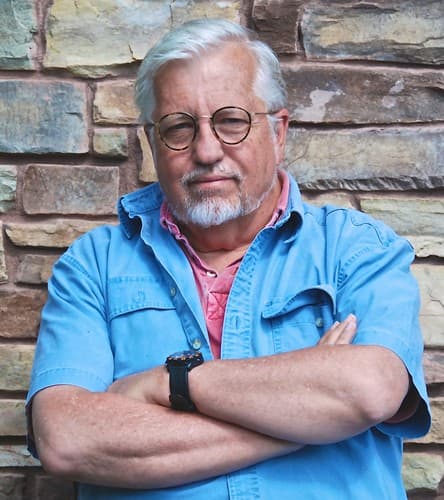
Dan Simmons is an American science fiction and horror writer. He is the author of the Hyperion Cantos and the Ilium/Olympos cycles, among other works which span the science fiction, horror, and fantasy genres, sometimes within a single novel. Simmons's genre-intermingling Song of Kali (1985) won the World Fantasy Award. He also writes mysteries and thrillers, some of which feature the continuing character Joe Kurtz.
Similar books
- Dune
Frank Herbert
4.2 (766k) average on GoodreadsFantasyShares a similar epic scope, deep philosophical undertones, and a unique, powerful antagonist figure.
- The Canterbury Tales
Geoffrey Chaucer
3.5 (189k) average on GoodreadsHistorical FictionFeatures a similar narrative structure where diverse pilgrims tell their individual stories on a journey.
- Harry Potter and the Sorcerer's Stone
J.K. Rowling
4.5 (7M) average on GoodreadsFantasyRescued from a miserable life under the stairs, an orphaned boy discovers he's a wizard destined for a magical school, where he uncovers a dangerous secret tied to the dark wizard who murdered his parents.
- The Hunger Games
Suzanne Collins
4.3 (6.4M) average on GoodreadsFantasyIn a future where children fight to the death on live television, Katniss Everdeen volunteers for the arena, turning a death sentence into a fight for survival and a spark of rebellion.
- 1984
George Orwell
4.2 (3.1M) average on GoodreadsPoliticsIn a future where surveillance and thought control are absolute, a man's search for truth clashes with the Party, showing that hope can be a form of rebellion.
- Divergent
Veronica Roth
4.2 (2.9M) average on GoodreadsFantasyIn a society divided by virtues, a sixteen-year-old's difference from the norm starts a rebellion that threatens her world.





Enjoyed the summary?
A summary gives you the shape of the book. The book itself has the detail, the examples and the voice.
Find Hyperion on AmazonAs an Amazon Associate, BookBrief earns from qualifying purchases. How we're funded