
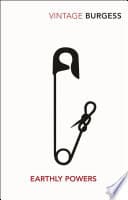
Synopsis
Covers the whole plot, including the ending.
- Difficulty
- Hard
- Pacing
- Slow
- Mood
- Philosophical, Satirical, Epic, Reflective, Darkly Humorous
- Read it if
- You enjoy sprawling, character-driven sagas that explore themes of faith, power, sexuality, and the nature of truth within a historical and ecclesiastical context.
- Skip it if
- You prefer fast-paced thrillers or are looking for a straightforward, uncritical portrayal of religious figures.
Earthly Powers Plot Summary
Covers the whole plot, including the ending.
The Summons to Malta
Kenneth Toomey, an older British novelist living in Malta, receives a letter from the Vatican. He is asked to testify for the sainthood of his late brother-in-law, Don Carlo Campanati, a charismatic cardinal who died in unclear circumstances. Toomey, a successful writer with deep personal doubts about faith, views the request with amusement and dislike. The summons forces him to face his past, his complex relationship with Carlo, and the many scandals and secrets that have linked their lives for decades. This prompts him to start writing his memoirs.
Meeting Carlo and the Early Years
Toomey's story goes back to his youth in the early 20th century. He remembers meeting Carlo Campanati in Malaya, where Kenneth's father was a colonial administrator and Carlo's father was a rich Italian merchant. Carlo, even as a young man, showed great charm and intelligence, destined for the priesthood. Kenneth, meanwhile, struggled with his hidden homosexuality. Their paths often crossed, mainly through Kenneth's sister, Hortense, who marries Carlo's brother, Dominic. This further strengthens the family tie that will connect Kenneth and Carlo throughout their lives, despite their very different callings and views.
The Scandal of Philip Shawcross
A key event in Toomey's early life is the death of Philip Shawcross, a young boy at the school where Kenneth taught. Philip, a troubled child, dies mysteriously, and Kenneth is wrongly accused of molesting him. Though later cleared, the scandal ruins his reputation and forces him to leave England. This difficult experience shapes Kenneth's cynicism and his understanding of human hypocrisy and the harm of rumors. It makes him wary of public judgment and the moral uprightness often shown by figures like Carlo Campanati.
Carlo's Rise and Kenneth's Literary Success
As Kenneth Toomey begins a successful, though often controversial, writing career, traveling the world and exploring themes of sexuality and human nature, Don Carlo Campanati steadily moves up in the Catholic Church. Carlo becomes a strong intellectual and a clever church politician, known for his modern views and his ability to handle complex religious and political situations. Despite their different paths, their lives continue to intersect, often through mutual friends or family events. Kenneth watches Carlo's growing influence from a distance, always with a critical, yet somewhat admiring, view.
The Cult of Dr. L.S. Packer
Kenneth Toomey's travels lead him to meet Dr. L.S. Packer, an American cult leader who preaches sexual freedom and spiritual awakening. Packer attracts many followers, including some of Kenneth's friends. Toomey is at first interested but quickly dislikes Packer's manipulative methods and the disturbing sexual practices in his commune. This meeting sharply contrasts with Carlo's structured religious authority, showing the many forms of spiritual and moral leadership. It further strengthens Kenneth's doubt about organized belief systems, whether religious or secular.
The Vatican Council and Modernization
Don Carlo Campanati becomes a central figure during an important Vatican Council, pushing for major reforms and modernization within the Catholic Church. He supports changes to church services, interfaith talks, and a more open approach to modern society. Kenneth Toomey, observing these changes, notes Carlo's strategic brilliance and his real desire to adapt the Church, even if Kenneth himself remains unconvinced of the ultimate effectiveness or sincerity of such institutional shifts. Carlo's influence positions him as a leading candidate for the papacy, further raising his profile and the scrutiny he faces.
The Allegations of Miracles
As Carlo Campanati's reputation grows, so do the claims of miracles linked to him, especially after his death. These alleged healings and unexplainable events form the basis of his sainthood process, for which Kenneth Toomey is asked to testify. Toomey, a strict rationalist, views these claims with deep skepticism, seeing them as mass delusion or deliberate lies rather than divine intervention. His testimony becomes a conflict between faith and reason, as he struggles with the moral consequences of supporting or denying the story of sainthood, especially given his close knowledge of Carlo's complex and often contradictory nature.
Carlo's Secret: His Homosexuality
Throughout his memoirs, Kenneth Toomey hints at a deep secret about Carlo Campanati's personal life. Eventually, Kenneth reveals his belief, based on subtle clues and private talks over the years, that Carlo, despite his celibacy and public image, was also homosexual. This revelation deeply affects Kenneth, as it creates a hidden bond between them, a shared experience of societal judgment and the need for secrecy. It also complicates Carlo's image as a saint, forcing Kenneth to reconcile the public figure with the private man, and question the Church's stance on human sexuality and hypocrisy.
The Death of Carlo
Carlo Campanati's death is presented as an important and unclear event. While officially attributed to natural causes, there are hints of foul play or a self-engineered exit. His death happens under circumstances that allow for various interpretations, leaving room for both saintly accounts and more cynical explanations. This ambiguity fuels the debate over his sainthood, as the circumstances of his death become as significant as his life's work. Kenneth Toomey, reflecting on Carlo's final days, suggests a sense of disappointment or tiredness in Carlo, indicating a man burdened by his own success and the institution he served.
Kenneth's Testimony and the Nature of Truth
As the deadline for his Vatican testimony nears, Kenneth Toomey struggles with how much of the 'truth' about Carlo Campanati he should reveal. He understands that the Church wants a story of unwavering piety, while his own experience paints a far more complex and human picture. Toomey's struggle highlights the novel's central theme: the subjective nature of truth, especially when seen through memory, personal bias, and institutional goals. He questions whether a saint can be a complex, flawed person, or if the process demands a cleaned-up, idealized version. This forces him to choose between historical accuracy and the perceived greater good of faith.
The Aftermath and Lingering Questions
In the final sections, Kenneth Toomey finishes his long memoirs, having revealed the complexities of his own life and Carlo Campanati's. He does not give a definite judgment on Carlo's sainthood, leaving the reader to weigh the evidence, the miracles, and the human weaknesses. Kenneth remains a skeptical humanist, accepting the ambiguities of life and the inherent contradictions within individuals and institutions. The novel ends with the idea that while the pursuit of power, whether worldly or spiritual, shapes human destiny, the true essence of a person, and the truth of their legacy, often remains hard to grasp and open to interpretation.
Earthly Powers Characters
Kenneth Toomey
Protagonist
An aging, cynical, and celebrated British novelist grappling with his past and faith.
Kenneth Toomey is the novel's narrator and protagonist, an octogenarian writer of considerable renown but dubious literary merit in his own estimation. He is a homosexual, a fact he has largely kept private but which colors his perspective on morality and societal judgment. Toomey is deeply cynical, witty, and intellectual, possessing a vast knowledge of history, literature, and human nature. He views the world with a detached, often ironic, gaze, skeptical of organized religion, political movements, and grand narratives. His life is marked by personal scandals and a constant internal struggle with his own identity and the meaning of his existence.
Relationships: Don Carlo Campanati (Brother-in-law (indirectly), lifelong acquaintance, intellectual foil, object of both admiration and skepticism.); Hortense Toomey (Sister, whose marriage to Carlo's brother links their families.); Philip Shawcross (Student whose death led to Kenneth's false accusation and life-altering scandal.)
Don Carlo Campanati
Antagonist/Supporting
A charismatic, influential cardinal whose life and potential sainthood drive the narrative.
Don Carlo Campanati is Kenneth Toomey's brother-in-law (via his brother Dominic marrying Kenneth's sister Hortense) and the central figure whose beatification process prompts Kenneth's memoirs. Carlo is a man of immense charisma, intellect, and ambition, who rises through the Vatican hierarchy to become a powerful and progressive cardinal, a key architect of Church reform. He is a complex figure, embodying both genuine piety and shrewd political maneuvering. His public image is one of unwavering faith and moral rectitude, yet Kenneth hints at a hidden, more human side, including his own possible homosexuality, which stands in stark contrast to his clerical vows. He represents institutional power and the allure of spiritual authority.
Relationships: Kenneth Toomey (Brother-in-law (indirectly), lifelong acquaintance, intellectual foil, object of both admiration and skepticism.); Hortense Toomey (Sister-in-law, though their direct interaction is limited.); Dominic Campanati (Brother, who marries Kenneth's sister Hortense.)
Hortense Toomey
Supporting
Kenneth's sister, whose marriage links the Toomey and Campanati families.
Hortense Toomey is Kenneth's sister, a more conventional and outwardly pious woman than her brother. Her marriage to Dominic Campanati, Carlo's brother, is the primary familial link between Kenneth and Carlo. She represents a certain traditional sensibility and provides a contrast to Kenneth's bohemian lifestyle and cynical worldview. While not a major character in terms of direct action, her existence and choices are crucial to establishing the intertwined destinies of the two central figures, and she often serves as a point of reference for Kenneth's reflections on family, duty, and societal expectations.
Relationships: Kenneth Toomey (Brother, with whom she shares a complex sibling bond.); Dominic Campanati (Husband.); Don Carlo Campanati (Brother-in-law.)
Dominic Campanati
Supporting
Carlo's brother and Hortense Toomey's husband.
Dominic Campanati is Carlo's brother and Kenneth's brother-in-law through his marriage to Hortense. He is less prominent than his cardinal brother, often overshadowed by Carlo's brilliance and ambition. Dominic serves as a more grounded, perhaps less complex, figure within the Campanati family, providing a domestic counterpoint to Carlo's ecclesiastical life. His marriage to Hortense is a key plot device, cementing the familial ties that force Kenneth and Carlo into each other's orbits throughout their lives. He is often seen through Kenneth's observing and analytical lens.
Relationships: Don Carlo Campanati (Brother.); Hortense Toomey (Wife.); Kenneth Toomey (Brother-in-law.)
Dr. L.S. Packer
Antagonist/Mentioned
A charismatic and manipulative American cult leader.
Dr. L.S. Packer is a charismatic American cult leader whom Kenneth Toomey encounters during his travels. Packer preaches a doctrine of sexual liberation, pseudo-spiritual enlightenment, and communal living, attracting a devoted following. He is a manipulative figure who exploits his followers, particularly through sexual means. Packer serves as a secular foil to Carlo Campanati, demonstrating a different, equally problematic, form of charismatic leadership and the dangers of unquestioning belief, whether religious or pseudo-scientific. His presence highlights the novel's exploration of power, belief, and human gullibility across different spheres.
Relationships: Kenneth Toomey (Acquaintance, observer, and critic.)
Philip Shawcross
Mentioned
A young boy whose death leads to a life-altering scandal for Kenneth.
Philip Shawcross is a young, troubled student at the school where Kenneth Toomey taught in his youth. His mysterious death, possibly a suicide, leads to Kenneth being falsely accused of pedophilia, a scandal that forces him to leave England and profoundly shapes his future. Philip's character, though briefly present, is crucial to understanding Kenneth's early trauma, his cynicism, and his deep-seated distrust of societal judgment and moralistic fervor. He represents the innocent victim caught in the crosshairs of human suspicion and the destructive power of rumor.
Relationships: Kenneth Toomey (Teacher-student, and later, the subject of a false accusation.)
The Narrator (Kenneth Toomey)
Protagonist
The voice and consciousness through which the entire story is filtered.
While Kenneth Toomey is the character, the *narrator* is his distinct voice, an unreliable but deeply engaging presence. This narrative voice is characterized by its erudition, wit, cynicism, and self-deprecating humor. The narrator's perspective is subjective, colored by his memories, prejudices, and life experiences, particularly his homosexuality and his skepticism towards faith. He constantly questions the nature of truth, memory, and the stories people tell themselves and others. The narrator's voice is perhaps the most crucial 'character' in the novel, shaping the reader's understanding of all events and other characters.
Earthly Powers Themes
The Nature of Truth and Memory
The novel constantly questions what objective truth means, especially when seen through memory and personal bias. Kenneth Toomey, as an unreliable narrator, often reminds the reader that his account is subjective, shaped by his experiences, prejudices, and time. Carlo's beatification process shows this, as the Church seeks a clean, miraculous story, while Kenneth offers a more human, flawed picture. The differing accounts of events like Philip Shawcross's death or Carlo's alleged miracles show how 'truth' can be built, changed, and understood differently based on individual views and institutional goals.
“What is truth? Not a matter of fact, but a question of narrative. And the best narratives are always suspect.”
Faith vs. Skepticism
This is a main conflict, seen in the relationship between the devout Carlo Campanati and the cynical Kenneth Toomey. Carlo represents institutional faith, the search for spiritual meaning, and the power of belief, while Kenneth embodies rationalism, doubt, and skepticism towards grand stories and organized religion. The novel explores the appeal and dangers of both extremes, examining how faith can inspire but also blind, and how skepticism, while intellectually strong, can lead to emotional distance. The story does not clearly favor one over the other, but instead explores their complex interaction in shaping human lives and destinies.
“I am a man of letters, not a man of God. The difference is that I invent my fictions, while they believe theirs.”
Power and Its Corruptions
The novel carefully examines different forms of power: religious power (Carlo's rise in the Vatican), political power (colonial rule, governments), and the power of influence (Dr. Packer's cult, Kenneth's literary fame). It shows how power can be used for good (Carlo's reforms) but is often tied to manipulation, hypocrisy, and hiding the truth. The pursuit of sainthood for Carlo is itself a form of power, the power to define moral examples. Kenneth's own experience with false accusations highlights the destructive power of rumors and societal judgment. The novel suggests that power, in any form, always risks corruption and moral compromise.
“All power, whether priestly or political, is ultimately about the manipulation of the human will.”
Sexuality and Societal Judgment
Kenneth Toomey's homosexuality, a lifelong secret, is a constant theme. It shapes his worldview, his empathy for outsiders, and his understanding of hypocrisy. The novel contrasts his hidden life with Carlo's public celibacy, hinting at the cardinal's own suppressed desires. The scandal involving Philip Shawcross, though a false accusation, highlights the destructive power of sexual suspicion and societal condemnation. Dr. Packer's cult, with its focus on 'sexual liberation,' offers a twisted reflection of these themes. The novel criticizes the repressive attitudes towards sexuality common in the 20th century and their deep impact on individual lives and institutional morality.
“To be different was to be judged, and to be judged was to be damned, by God or by man.”
Art, Legacy, and Immortality
As a novelist, Kenneth Toomey grapples with his own artistic legacy and the wish for immortality, contrasting it with Carlo's pursuit of spiritual immortality through sainthood. Kenneth thinks about how short-lived literary fame is compared to the lasting power of religious myth. Writing his memoirs is an attempt to shape his own story and ensure his version of events survives. The novel questions what truly lasts—words on a page, 'miracles' attributed to a saint, or the complex, often contradictory, reality of a human life. It explores how people try to leave their mark on the world, whether through art, faith, or political action.
“A book is a poor thing compared to a miracle, but at least its lies are its own.”
Plot Devices & Literary Techniques
Unreliable Narrator
The entire story is filtered through the subjective, often biased, perspective of Kenneth Toomey.
Kenneth Toomey is explicitly an unreliable narrator. He frequently interjects with his own opinions, biases, and self-deprecating remarks, acknowledging that his memory may be flawed or colored by his experiences. This device forces the reader to critically evaluate the narrative, questioning what is objective truth versus Toomey's interpretation. It serves to reinforce the novel's themes of subjective truth and the construction of narrative, especially in the context of Carlo's potential sainthood, where an 'objective' account is precisely what the Vatican seeks, and what Toomey struggles to provide.
Flashback Narrative Structure
The present-day summons to Malta triggers an extensive, non-linear recounting of past events.
The novel employs a non-linear narrative structure, constantly shifting between Kenneth Toomey's present-day reflections in Malta and extensive flashbacks to various periods of his and Carlo's lives, spanning decades. This allows Burgess to explore the characters' development over time, reveal secrets gradually, and build a complex tapestry of interconnected events. The flashbacks are not always chronological, mirroring the associative nature of memory and emphasizing how past events continue to shape the present and influence Toomey's perspective on Carlo's sainthood.
Epistolary Elements (The Summons)
The novel is framed by a letter from the Vatican, driving the protagonist's journey.
The initial summons from the Vatican, requesting Kenneth Toomey's testimony for Carlo Campanati's beatification, acts as a crucial epistolary device. This letter serves as the inciting incident, propelling Toomey to begin writing his memoirs and thus initiating the entire narrative. It provides a tangible, institutional reason for Toomey's deep dive into his past and the life of Carlo, giving a formal structure to his otherwise sprawling, subjective recollections. The letter also immediately establishes the central conflict between faith and skepticism, and the official versus personal narratives of sainthood.
Doppelgänger/Foil
Kenneth Toomey and Carlo Campanati serve as contrasting, yet secretly similar, figures.
Kenneth Toomey and Don Carlo Campanati function as literary doppelgängers or foils. They represent opposing forces – skepticism vs. faith, secular vs. sacred, overt homosexuality vs. covert homosexuality, literary fame vs. ecclesiastical power. Yet, they are deeply intertwined through family and shared, hidden experiences. Their lives parallel each other, each achieving a form of worldly 'power' or recognition. This device allows the novel to explore its central themes by presenting contrasting responses to life's big questions, while also hinting at a secret, fundamental similarity that binds them despite their apparent differences.
Earthly Powers Quotes
“It is all a question of eliminating the impossible, and whatever remains, however improbable, must be the truth.”
“The past is a foreign country; they do things differently there.”
“Sex is a cosmic joke, and the punch line is usually delivered by a child.”
“We are all in the gutter, but some of us are looking at the stars.”
“To be a writer is to be a professional liar.”
“God is a novelist, and the world is his work of fiction.”
“Love is not a matter of looking at each other, but of looking together in the same direction.”
“The greatest trick the Devil ever pulled was convincing the world he didn't exist.”
“Old age is not a matter of chronological years, but of the spirit's weariness.”
“Every man has his secret sorrows which the world knows not; and often times we call a man cold when he is only sad.”
“The only way to get rid of a temptation is to yield to it.”
“History is a nightmare from which I am trying to awake.”
“Life is a foreign language; all men mispronounce it.”
“Art is a lie that makes us realize the truth.”
Quiz
10 questions on the plot and the characters. Each answer comes with a short explanation.
Question 1
What is the primary relationship between Kenneth Toomey and Don Carlo Campanati?
- They are literary rivals.
- They are distant cousins.
- They are linked by family ties.
- They are former schoolmates.
Show answer
C. They are linked by family ties. The book description explicitly states that Kenneth Toomey and Don Carlo Campanati are linked by family ties.
Question 2
What is Kenneth Toomey's profession?
- A Vatican diplomat
- An eminent novelist
- A shrewd politician
- A renowned theologian
Show answer
B. An eminent novelist The description identifies Kenneth Toomey as an 'eminent novelist of dubious talent'.
Question 3
What is Don Carlo Campanati's ultimate aspiration within the Church?
- To become a cardinal
- To lead a new religious order
- To be a candidate for sainthood
- To establish a secular humanitarian organization
Show answer
C. To be a candidate for sainthood Don Carlo Campanati rises through the Vatican and becomes 'a candidate for sainthood'.
Question 4
What common understanding do Toomey and Campanati share, despite their differing paths?
- A belief in the inherent goodness of humanity.
- A shared love for classical music.
- A common understanding of mankind's frailties.
- A desire for political reform in Italy.
Show answer
C. A common understanding of mankind's frailties. The text states they are linked 'by a common understanding of mankind's frailties'.
Question 5
What role does Don Carlo Campanati play in the Church's development?
- He is a traditionalist who resists change.
- He is the architect of church revolution.
- He is a quiet scholar who avoids public life.
- He is a financial advisor to the Pope.
Show answer
B. He is the architect of church revolution. Don Carlo Campanati is described as 'the architect of church revolution'.
Question 6
What characteristic is attributed to Kenneth Toomey's talent as a novelist?
- It is widely acclaimed and universally admired.
- It is considered groundbreaking and avant-garde.
- It is described as dubious.
- It is focused solely on religious themes.
Show answer
C. It is described as dubious. Kenneth Toomey is an 'eminent novelist of dubious talent', suggesting his literary ability is questionable.
Question 7
What is the central theme that Anthony Burgess 'plumbs the depths' of in 'Earthly Powers'?
- The intricacies of Italian politics.
- The history of the Vatican.
- The essence of power and the lengths men will go for it.
- The development of modern literature.
Show answer
C. The essence of power and the lengths men will go for it. The text states Burgess 'plumbs the depths of the essence of power and the lengths men will go for it'.
Question 8
Considering the description, what kind of narrative structure might readers expect from 'Earthly Powers'?
- A lighthearted romantic comedy.
- A concise, focused novella.
- An epic masterpiece spanning significant events and character development.
- A collection of unrelated short stories.
Show answer
C. An epic masterpiece spanning significant events and character development. The book is described as an 'epic masterpiece', suggesting a broad scope and significant narrative length.
Question 9
Given Don Carlo Campanati's rise and role, what might be a key conflict or challenge he faces in his journey?
- Struggling to maintain his faith in a secular world.
- Balancing his personal ambition with the Church's traditional doctrines.
- Overcoming public skepticism about his literary endeavors.
- Managing a complex network of international spies.
Show answer
B. Balancing his personal ambition with the Church's traditional doctrines. As an 'architect of church revolution' and a candidate for sainthood, Campanati's journey likely involves navigating the tension between driving change and adhering to the established, often rigid, structures of the Vatican, especially given his 'shrewd manipulator' characterization.
Question 10
How does the 'dubious talent' of Kenneth Toomey potentially contrast with Don Carlo Campanati's rise to sainthood candidacy?
- Toomey's lack of talent makes him irrelevant to Campanati's spiritual journey.
- It highlights a thematic contrast between secular, questionable achievement and spiritual, revered ambition.
- It implies Toomey is secretly undermining Campanati's religious efforts.
- They are both equally celebrated in their respective fields, showing parallel success.
Show answer
B. It highlights a thematic contrast between secular, questionable achievement and spiritual, revered ambition. The contrast between Toomey's 'dubious talent' and Campanati's path to potential sainthood, alongside their shared understanding of human frailties, suggests a thematic exploration of different forms of power, influence, and recognition, one secular and flawed, the other spiritual and aspiring to purity.
Earthly Powers FAQ
What is the central premise that brings Kenneth Toomey and Don Carlo Campanati together, despite their differing public personas?
The central premise is Toomey's recounting of his life to a secretary, specifically focusing on his long and complicated relationship with Don Carlo. They are linked not only by family (Carlo is Toomey's brother-in-law) but by a shared history of witnessing human depravity and the exercise of various forms of power, whether artistic, political, or spiritual.
How does Kenneth Toomey's sexuality influence his life and narrative perspective?
Toomey is openly homosexual, which significantly shapes his experiences, relationships, and his cynical yet often insightful perspective on human nature. His sexuality leads to both personal struggles and unique observations of society's hypocrisies, especially concerning morality and power within the Church.
What role does Don Carlo Campanati play in the Catholic Church's evolution throughout the novel?
Don Carlo Campanati is depicted as a shrewd and ambitious figure within the Vatican who rises to become a cardinal and a key architect of significant reforms, including a fictional 'Vatican III' council. He is instrumental in modernizing the Church and is eventually proposed for sainthood, despite Toomey's intimate knowledge of his more pragmatic and less saintly actions.
What is the primary 'mystery' that Toomey is trying to unravel or understand through his memoir?
The primary 'mystery' is less a whodunit and more an exploration of sainthood and hypocrisy. Toomey is trying to understand whether Don Carlo, a man he knew intimately and witnessed commit morally ambiguous acts, truly deserves canonization, and what constitutes genuine holiness versus political maneuvering within the Church.
How does the setting, spanning across various decades and international locations, contribute to the novel's scope?
The novel's expansive settings, from Toomey's childhood in England to wartime Malta, post-war Hollywood, and the Vatican, provide a rich tapestry against which the characters' lives unfold. This global scope allows Burgess to explore themes of cultural change, the impact of historical events, and the universality of human ambition and frailty across different societies.
What is the significance of the recurring motif of 'evil' or 'the devil' in Toomey's narrative?
The motif of evil is central to Toomey's understanding of the world and often manifests through instances of human cruelty, betrayal, and the abuse of power. Toomey frequently questions whether evil is a tangible force or merely the sum of human choices, contrasting with Carlo's more traditional religious view, yet both acknowledge its pervasive presence.
Are there any specific historical or literary figures that Burgess might be satirizing or referencing through Kenneth Toomey's character?
Many critics suggest Kenneth Toomey is a composite reference to figures like Somerset Maugham, for his longevity, cosmopolitan lifestyle, and somewhat detached narrative voice, and perhaps even Burgess himself, given Toomey's literary career and cynical wit. His 'dubious talent' as a novelist is also a subtle jab at certain popular authors.
How does the novel subtly comment on the nature of artistic creation versus religious doctrine?
The novel contrasts Toomey's struggle as a writer to create enduring works, often drawing from his own life and observations of human flaws, with the Church's creation of doctrine and saints, which often requires sanitizing or reinterpreting messy human lives. Both are forms of 'creation' but operate under vastly different rules and aspirations for truth.
What is the underlying connection between Toomey's early experiences with his family and his later cynicism?
Toomey's early family life, marked by his sister's marriage to Carlo and his own burgeoning homosexuality in a conservative era, likely fostered a sense of being an outsider and witnessing hidden complexities within seemingly respectable facades. This foundation contributes to his lifelong cynicism and his acute awareness of human hypocrisy and hidden motives.
How does Don Carlo's ambition manifest psychologically, and does he genuinely believe in his own sainthood?
Don Carlo's ambition manifests as a deeply pragmatic and strategic drive to reform and modernize the Church, often blurring the lines between spiritual conviction and political maneuvering. It's debatable whether he genuinely believes in his own sainthood or sees it as the ultimate culmination of his life's work for the Church, even if it requires a carefully constructed public image.
How does the narrative structure, specifically Toomey's act of writing his memoir, serve as a psychological coping mechanism?
Toomey's memoir writing serves as a comprehensive psychological exercise, allowing him to process a lifetime of experiences, confront his past demons, and critically evaluate the people who shaped him, particularly Don Carlo. It's a way for him to assert his own truth and perhaps find a measure of closure or understanding before his own death.
What psychological impact does the concept of 'power' have on both Toomey and Carlo, albeit in different spheres?
For Toomey, power is often observed and critiqued, particularly the power of social convention, religious institutions, and the literary establishment, leading to a sense of intellectual and emotional detachment. For Carlo, power is actively pursued and wielded within the Church hierarchy, shaping his identity and actions as he strives to influence the spiritual and political landscape.
Does the novel ultimately suggest a clear victor in the ideological battle between Toomey's secular humanism and Carlo's religious pragmatism?
The novel deliberately avoids declaring a clear victor. Instead, it presents a nuanced exploration where both perspectives offer valid, albeit incomplete, understandings of humanity. Toomey's humanism exposes hypocrisy, while Carlo's pragmatism achieves significant institutional change, leaving the reader to weigh the merits and flaws of each approach.
How does the ending, with Carlo's potential sainthood, challenge the reader's understanding of morality and truth?
The ending profoundly challenges the reader by presenting the possibility of a man known by Toomey to be flawed and manipulative being elevated to sainthood. This forces a re-evaluation of what constitutes 'truth' – personal experience versus institutional narrative – and whether a life's ultimate impact justifies questionable means.
What is Burgess's broader commentary on the nature of storytelling and historical record through Toomey's unreliable narration?
Burgess uses Toomey's unreliable narration to comment on how history is written and how personal biases shape our understanding of events and individuals. It suggests that all narratives, whether personal memoirs or official church records, are constructions, filtered through subjective experience and often serving particular agendas, questioning the very possibility of objective truth.
How does the novel explore the concept of 'faith' beyond traditional religious belief?
The novel explores faith not just as religious adherence, but also as faith in art, in human progress, or even in the power of a lie to become truth. Toomey has a cynical faith in humanity's depravity, while Carlo has a pragmatic faith in the Church's ability to adapt and endure, showing faith as a fundamental human drive regardless of its object.
In what ways does Toomey's self-perception as a 'novelist of dubious talent' inform the novel's meta-narrative about literature?
Toomey's self-deprecating label creates a meta-narrative about the subjective nature of literary value and enduring fame. It allows Burgess to critique the literary establishment and popular taste, while simultaneously demonstrating Toomey's profound insight, suggesting that 'talent' might be less about critical acclaim and more about the ability to observe and articulate human experience.
About the author

John Anthony Burgess Wilson, who published under the name Anthony Burgess, was an English writer and composer.
Similar books
- The Power and the Glory
Graham Greene
4.0 (33k) average on GoodreadsLiterary FictionExplores the moral complexities of a Catholic priest and the nature of faith.
- Brideshead Revisited
Evelyn Waugh
4.0 (93k) average on GoodreadsLiterary FictionExamines Catholicism, class, and memory in 20th-century Britain.
- The Name of the Rose
Umberto Eco
4.1 (301k) average on GoodreadsHistorical FictionA sprawling intellectual mystery set within the historical context of the Church.
- Angels & Demons
Dan Brown
3.9 (2.7M) average on GoodreadsThrillerA Harvard symbologist races through Rome's ancient sites, deciphering cryptic clues to unmask the Illuminati and stop a vengeful plot to destroy the Vatican with a stolen antimatter weapon.
- Gone Girl
Gillian Flynn
4.1 (2.3M) average on GoodreadsThrillerA wife's sudden disappearance on her fifth anniversary reveals a web of lies and psychological warfare, exposing the secrets within a seemingly perfect marriage.
- The Girl on the Train
Paula Hawkins
3.9 (2.1M) average on GoodreadsThrillerA woman’s fascination with a seemingly perfect couple she watches from her daily train commute leads her into a dark investigation when she witnesses something that shatters their idyllic image.





Enjoyed the summary?
A summary gives you the shape of the book. The book itself has the detail, the examples and the voice.
Find Earthly Powers on AmazonAs an Amazon Associate, BookBrief earns from qualifying purchases. How we're funded