

Synopsis
Covers the whole plot, including the ending.
- Difficulty
- Medium
- Pacing
- Moderate
- Mood
- Nostalgic, Melancholic, Reflective, Elegant, Spiritual
- Read it if
- You appreciate beautifully written prose, explorations of faith and class, and a melancholic look at a lost era.
- Skip it if
- You prefer fast-paced plots, clear-cut happy endings, or find religious themes off-putting.
Brideshead Revisited Plot Summary
Covers the whole plot, including the ending.
Prologue: A Brief Return to Brideshead
Captain Charles Ryder, an officer in the British Army during World War II, is stationed near an English country estate. He is surprised to find the estate is Brideshead Castle, a place connected to his youth and the Marchmain family. The castle, now used by the military, is a shadow of its former self, a symbol of a lost era. This unexpected return brings back many memories, leading Charles to think about his past, his relationships with the Marchmain family, and how Brideshead affected his life. He looks at the familiar yet changed landscape, setting up his long flashback.
Oxford and the Enchantment of Sebastian Flyte
In the early 1920s, Charles Ryder is an uninspired history student at Oxford University, dealing with loneliness and an uncaring father. His life changes when he meets Lord Sebastian Flyte, the flamboyant and aristocratic son of the Marchmain family, known for carrying a teddy bear named Aloysius. Sebastian, with his charm, wit, and air of sadness, captivates Charles. They become close friends, spending their days having fun, dining at fancy restaurants, and drinking champagne. Sebastian introduces Charles to a world of privilege and beauty, drawing him away from his solitary life and into the Marchmain family's circle.
First Visit to Brideshead
Sebastian invites Charles to Brideshead Castle for the summer. This visit is Charles's first deep experience of the Marchmain family's eccentric and Catholic world. He meets Lady Marchmain, Sebastian's religious mother, and his siblings: Julia, Cordelia, and Brideshead. Lord Marchmain, their father, lives in exile in Venice because of an affair and his rejection of the Church. Charles is fascinated by the family's complex relationships, their aristocratic life, and the strong sense of tradition and Catholicism that fills the estate. He is especially drawn to the beauty of Brideshead itself, which becomes a symbol of the family's lasting legacy.
Sebastian's Decline and Lady Marchmain's Intervention
Sebastian's heavy drinking, at first seen as charming, becomes serious alcoholism. Lady Marchmain, worried by her son's self-destructive path, tries to intervene, but Sebastian often sees her efforts as stifling. She asks Charles to be a companion and a good influence, but Charles feels caught between Sebastian's wish for freedom and Lady Marchmain's religious expectations. The family tension grows, and Sebastian's behavior becomes more unpredictable, straining his friendship with Charles, who struggles to balance his loyalty to Sebastian with his growing awareness of his friend's addiction.
The Break with Sebastian and Lady Marchmain
Sebastian's alcoholism reaches a bad point, leading to a public scandal. Lady Marchmain, frustrated and heartbroken, tries desperately to control Sebastian, which only pushes him further away. He eventually leaves England, seeking escape from his family's expectations and his own problems, first to Venice and then to North Africa. Charles, who had tried to help Sebastian, finds himself increasingly at odds with Lady Marchmain, who blames him for enabling Sebastian's behavior. Feeling unwelcome at Brideshead, Charles also leaves, ending his close ties with the family and the estate, though the memories remain.
Charles's Artistic Career and Marriage
After leaving Oxford and the Marchmain family, Charles Ryder focuses on his architectural painting. He works hard, building a successful career and gaining recognition for his art. During this time, he marries Celia Mulcaster, a fashionable and socially ambitious woman. While his career thrives, his marriage to Celia is mostly conventional and lacks deep emotional connection. Their relationship is marked by a polite distance and a shared pursuit of social standing, rather than true intimacy. Charles achieves professional success, but a sense of emptiness and longing stays with him.
Reunion with Julia and the Affair
Years after Sebastian's departure and Charles's own separation from the Marchmain family, he meets Julia Flyte on a transatlantic liner. Both are unhappily married, Julia to the wealthy but uncultured Rex Mottram. Their reunion has a powerful, unspoken connection. Julia, now a sophisticated and beautiful woman, is as captivating to Charles as Sebastian once was. They begin an intense affair, finding comfort and understanding in each other. Their relationship is a desperate attempt to regain the magic of their youth, and Charles sees Julia as the embodiment of the lost world he longs for.
Lord Marchmain's Return and Death
Lord Marchmain, after decades of living in Venice, returns to Brideshead Castle to die. His return brings the Marchmain family together, including Julia and Charles. Lord Marchmain, who had long given up his Catholic faith, at first resists the Church's rites. However, in his final moments, influenced by his daughter Cordelia's fervent prayers and a deep return to his roots, he makes the sign of the cross. This act of faith, seen by Charles, deeply affects Julia and highlights the lasting power of Catholicism within the family, even for those who tried to escape it.
Julia's Renunciation and Charles's Loss
Lord Marchmain's death and his unexpected return to faith deeply affect Julia. Seeing her father's final act of regret and thinking about her own Catholic upbringing, Julia realizes she cannot continue her affair with Charles without risking her soul. Despite her love for Charles, she makes the difficult decision to end their relationship, choosing to reconcile with her faith and seek spiritual redemption. This choice leaves Charles heartbroken and alone, marking the end of his dream of a life with Julia and his final removal from the intimate world of Brideshead.
The Post-War Visit and Final Reflection
Returning to the present day, Charles Ryder, now stationed at Brideshead during World War II, walks through the damaged castle. The chapel, once locked, has been reopened for military use, and a flickering sanctuary lamp shows the enduring presence of faith. Charles thinks about the Marchmain family, their struggles, their faith, and how they affected his life. He acknowledges the beauty and tragedy of their world, and though he remains an agnostic, he recognizes the unique, persistent power of their Catholicism, which shaped their lives and, by extension, his own. He leaves Brideshead, carrying his memories but with a sense of understanding.
Brideshead Revisited Characters
Charles Ryder
Protagonist
An agnostic artist whose life is transformed by his entanglement with the aristocratic Marchmain family.
Charles begins as a solitary and somewhat directionless Oxford student, seeking beauty and meaning in art. He is initially drawn to the Marchmain family's glamour and privilege, then to their complex emotional and spiritual lives. As an outsider, he observes and attempts to assimilate into their world, though he never fully converts to their Catholic faith. He is a keen observer, often reflective and nostalgic, and his journey is one of self-discovery through his relationships with Sebastian and Julia. He seeks an ideal of beauty and love, which he initially projects onto the Marchmains and Brideshead.
Relationships: Sebastian Flyte (intense, romanticized friendship); Julia Flyte (passionate, doomed love affair); Lady Marchmain (complex, initially admiring, later strained relationship); Celia Mulcaster (conventional, unfulfilling marriage)
Lord Sebastian Flyte
Supporting
The charming, melancholic, and ultimately self-destructive younger son of the Marchmain family.
Sebastian is introduced as a flamboyant and charismatic Oxford undergraduate, known for his beauty, wit, and his teddy bear, Aloysius. He embodies a carefree, hedonistic spirit but carries a deep-seated melancholia and a profound discomfort with the expectations of his aristocratic, Catholic family, particularly his devout mother. His charming exterior masks a fragile soul and a growing reliance on alcohol as an escape. He seeks simple pleasures and avoids responsibility, ultimately choosing a path of self-exile and spiritual wandering rather than confronting his family or his faith.
Relationships: Charles Ryder (intense, formative friendship); Lady Marchmain (strained, conflict-ridden mother-son relationship); Aloysius (comforting, childlike companion)
Lady Julia Flyte
Supporting
The beautiful, sophisticated, and spiritually conflicted daughter of the Marchmain family.
Julia is initially presented as a remote and alluring figure, Sebastian's glamorous sister. She later becomes Charles Ryder's lover. Like her brother, she struggles with the weight of her Catholic upbringing and the expectations of her family, rebelling through a scandalous marriage and an affair. She is beautiful, intelligent, and deeply sensitive, but also prone to spiritual anguish and a sense of guilt. Her journey is one of attempting to reconcile her worldly desires with the profound, inescapable pull of her faith, ultimately choosing spiritual redemption over earthly love.
Relationships: Charles Ryder (passionate, doomed love affair); Rex Mottram (unhappy, socially advantageous marriage); Lady Marchmain (complex, sometimes rebellious daughter-mother relationship)
Lady Marchmain
Supporting
The devoutly Catholic matriarch of the Marchmain family, whose faith profoundly influences her children.
Lady Marchmain is a woman of immense piety and strong will, whose life is dominated by her Catholic faith. After her husband's abandonment, she takes on the responsibility of raising her children within strict religious and aristocratic traditions. She deeply loves her children but struggles to connect with them on an emotional level, often appearing controlling due to her unwavering moral compass. Her attempts to guide Sebastian and Julia are often met with rebellion, yet her faith, though sometimes stifling, ultimately provides a spiritual anchor for her family.
Relationships: Lord Marchmain (estranged, religiously divided marriage); Sebastian Flyte (loving but conflict-ridden mother-son relationship); Julia Flyte (complex, sometimes distant mother-daughter relationship)
Lord Marchmain
Supporting
The estranged, apostate patriarch of the Marchmain family, living in exile.
Lord Marchmain is the father of Sebastian, Julia, Brideshead, and Cordelia. He is an English aristocrat who abandoned his Catholic faith and his family to live in Venice with his mistress, Cara. He represents a rejection of the traditional and religious values of his class, yet he is never entirely free from the influence of his upbringing. His cynical wit and intellectual detachment mask a deeper spiritual unease. His eventual return to Brideshead to die, and his ambiguous but significant final act, underscore the enduring power of faith within the family.
Relationships: Lady Marchmain (estranged, religiously divided marriage); Cara (long-term mistress and companion); His Children (distant, largely absent father figure)
Cordelia Flyte
Supporting
The youngest and most devoutly religious of the Marchmain children.
Cordelia is the youngest daughter of Lord and Lady Marchmain. She is characterized by her unwavering Catholic faith, her kindness, and her gentle nature. Unlike her older siblings, she never rebels against her religious upbringing, instead embracing it fully. She serves as a spiritual touchstone for the family, often praying for her wayward siblings and her apostate father. Her simplicity and devoutness provide a stark contrast to the worldliness and spiritual struggles of Sebastian and Julia, highlighting the different ways faith can manifest.
Relationships: Lady Marchmain (devoted daughter-mother relationship); Her Siblings (loving and prayerful sister)
Rex Mottram
Supporting
Julia's wealthy, uncultured, and ambitious Canadian husband.
Rex Mottram is a powerful, self-made Canadian businessman and politician who marries Julia Flyte. He represents the antithesis of the old English aristocracy—he is pragmatic, ambitious, and lacks any real understanding of the subtleties of English society, art, or religion. He attempts to convert to Catholicism for Julia, but his conversion is superficial and driven by convenience rather than genuine faith. He serves as a foil to Charles, highlighting the superficiality of Julia's attempt to escape her background through a purely worldly marriage.
Relationships: Julia Flyte (unhappy, politically motivated marriage)
Cara
Supporting
Lord Marchmain's long-term mistress and companion in Venice.
Cara is Lord Marchmain's mistress and companion throughout his decades of exile in Venice. She is a wise, compassionate, and pragmatic woman who understands Lord Marchmain deeply. She is not Catholic and offers an outsider's perspective on the Marchmain family's complex religious and social dynamics. Her conversations with Charles provide crucial insights into Lord Marchmain's character and the family's history, often speaking with a clear-sightedness that contrasts with the Marchmains' emotional intensity.
Relationships: Lord Marchmain (long-term mistress and confidante)
Brideshead Revisited Themes
The Decline of the English Aristocracy
The novel shows the fading grandeur and eventual decline of the English aristocracy, symbolized by the Marchmain family and Brideshead Castle. Charles Ryder, an outsider, watches their world of privilege and beauty slowly fall apart under changing social norms, economic shifts, and war. The military taking over Brideshead in the beginning and end of the novel clearly marks the end of an era. The Marchmains, despite their wealth, are increasingly out of step with the modern world, their traditions losing relevance.
“'These men must die in their beds, or in their boots, or on the scaffold, but not by the hand of any woman.'”
The Enduring Power of Catholicism and Faith
Catholicism is a central theme, acting as both a comfort and a source of conflict for the Marchmain family. Despite their individual rebellions and attempts to escape it, the characters are repeatedly drawn back to their faith. Sebastian's sadness, Julia's guilt, and Lord Marchmain's deathbed conversion all show the inescapable hold of Catholicism. Charles, an agnostic, observes this with fascination, recognizing its deep influence even as he remains outside of it. The flickering sanctuary lamp in the chapel at the end symbolizes the quiet endurance of faith amid the ruins of the secular world.
“'The trouble with Sebastian is that he is a Catholic.'”
Nostalgia and the Lost Golden Age
The entire story is a memory, with Charles Ryder looking back from a bleak wartime present to a more vibrant and seemingly perfect past. The novel romanticizes the pre-war era, especially the 1920s and 30s, as a 'golden age' of youth, beauty, and aristocratic privilege. Charles's memories of Oxford and Brideshead are filled with a longing for a lost world of innocence and beauty that he believes has been destroyed by time and conflict. This strong nostalgia shapes his perceptions and colors his descriptions, making the past seem more vivid and desirable than the present.
“'To have been in love with Sebastian was to have been in love with a part of myself.'”
Love, Loss, and Unfulfillment
The novel explores different kinds of love—friendship, romantic love, and family love—and their inherent lack of fulfillment. Charles's intense friendship with Sebastian, his affair with Julia, and the complex relationships within the Marchmain family are all marked by longing and eventual loss. Charles repeatedly searches for an ideal love or belonging that remains just out of reach. The characters' attempts to find happiness outside of their spiritual or social limits often lead to heartbreak, showing the temporary nature of worldly affections and the pervasive sense of spiritual and emotional emptiness.
“'I was in search of love in those days, and I went full of curiosity and hope to every new acquaintance.'”
Memory and Perception
The entire novel is Charles Ryder's personal recollection, filtered through his memory and emotions. His story is deeply personal, colored by nostalgia, longing, and his own changing understanding of events. He admits that his memories may not be entirely accurate, stating, "I am not I; thou art not he or she; they are not they." This self-awareness shows that memory can be unreliable and that personal perception shapes how history is told. The events are not objective facts but Charles's interpretation of a key period in his life, emphasizing the subjective nature of storytelling.
“'It is a good thing to have an end to journey towards; but it is the journey that matters, in the end.'”
Plot Devices & Literary Techniques
Framing Device
The main story is told as a flashback from a disillusioned wartime present.
The novel begins and ends with Charles Ryder, now an army captain during World War II, stationed at Brideshead Castle. This framing device creates a sense of nostalgia and loss, as Charles reflects on his past experiences with the Marchmain family. It allows the narrative to be imbued with a melancholic, reflective tone, setting the stage for a story about a vanished world and the profound impact it had on the protagonist. The wartime present contrasts sharply with the pre-war 'golden age' of his memories, emphasizing the theme of decline and the passage of time.
First-Person Subjective Narration
The story is told entirely through the personal, retrospective lens of Charles Ryder.
Charles Ryder's first-person narration allows for a deeply personal and intimate account of the events. His subjective perspective means that the characters and events are filtered through his emotions, prejudices, and evolving understanding. This device highlights the theme of memory and perception, as Charles often reflects on the reliability of his own recollections. It also positions the reader to experience the Marchmains' world through the eyes of an outsider who is simultaneously captivated and ultimately distanced, fostering empathy while maintaining a critical distance.
Symbolism of Brideshead Castle
The ancestral home represents the grandeur, tradition, and eventual decline of the English aristocracy and Catholicism.
Brideshead Castle is more than just a setting; it is a central symbol in the novel. Initially, it represents an idealized world of beauty, privilege, and tradition that captivates Charles. Its chapel, art, and gardens embody the Marchmain family's history and their Catholic faith. As the story progresses, the castle reflects the family's fortunes and spiritual state—locked and neglected at times, then reclaimed. Its final depiction as a military barracks underscores the decline of the aristocracy and the changing times, yet the re-lit sanctuary lamp in the chapel signifies the enduring, almost indestructible, power of faith.
Foil Characters
Characters like Rex Mottram and Cara serve to highlight aspects of the Marchmains and Charles.
Waugh uses several characters as foils. Rex Mottram, Julia's uncultured and pragmatic husband, highlights the Marchmains' aristocratic sensibilities and the superficiality of a purely worldly life, particularly in contrast to Charles's aesthetic appreciation and the family's deep-seated faith. Cara, Lord Marchmain's mistress, offers an objective, non-Catholic perspective on the Marchmain family's complexities, contrasting with their intense, often self-destructive emotional and spiritual struggles. These foils provide alternative viewpoints and illuminate the core themes and character traits of the main protagonists.
Brideshead Revisited Quotes
“I’ve been making a tour of the places where I was happy and my memory is just a muddle. And you, my dear, were the cause of it.”
“To know and love one other human being is the root of all of it. All the rest is a form of idolatry.”
“The languor of Youth—how delightful! How good to be in a world of such people and such places!”
“I caught a glimpse of not just an old house but of a whole way of life that was already vanishing.”
“Perhaps I am more attached to the place than to the people.”
“My theme is memory, that winged messenger that like an owl flies by night...”
“The trouble with you, Charles, is that you are a romantic.”
“To be an agnostic is to be a man without a country.”
“I’ve always been bad at letting go.”
“It was as though a curtain had fallen, and I was left outside, in the dark.”
“The world is not a place for happiness. It is a place for trial.”
“I had been there before; I knew all about it. The hot, heavy scent of a summer day.”
“You can’t just walk out on your faith.”
“It was a tiny foretaste of what was to come, a premonition of the whole unhappy future.”
Quiz
10 questions on the plot and the characters. Each answer comes with a short explanation.
Question 1
What is the name of the Marchmain family's ancestral home?
- Marchmain Manor
- Brideshead Castle
- Brideshead
- Ryder House
Show answer
C. Brideshead The ancestral home of the Marchmain family, which gives the novel its title, is Brideshead.
Question 2
Who is the first member of the Marchmain family Charles Ryder becomes infatuated with at Oxford?
- Julia Flyte
- Lord Marchmain
- Sebastian Flyte
- Lady Marchmain
Show answer
C. Sebastian Flyte Charles's initial infatuation and close friendship at Oxford is with Sebastian Flyte.
Question 3
What is the primary religious affiliation of the Marchmain family, which plays a significant role in the novel?
- Anglican
- Catholic
- Methodist
- Atheist
Show answer
B. Catholic The Marchmain family's devout Catholicism is a central theme and source of conflict throughout the novel.
Question 4
What is Charles Ryder's profession and artistic passion?
- Writer
- Musician
- Architectural painter
- Historian
Show answer
C. Architectural painter Charles Ryder is an architectural painter, and his work often brings him back to places like Brideshead.
Question 5
What ultimately happens to Sebastian Flyte as his alcoholism worsens?
- He recovers and marries.
- He becomes a reclusive artist.
- He ends up living in a monastery as a porter.
- He dies young from his illness.
Show answer
C. He ends up living in a monastery as a porter. Sebastian's decline leads him to a life of wandering and eventually to serve as a porter in a monastery in North Africa.
Question 6
Why does Charles Ryder's relationship with Julia Flyte eventually end?
- Charles falls in love with someone else.
- Julia decides she cannot marry a non-Catholic.
- Julia chooses to embrace her Catholic faith fully and forgo their marriage.
- They have a major disagreement about politics.
Show answer
C. Julia chooses to embrace her Catholic faith fully and forgo their marriage. Julia, after her father's death and her own spiritual awakening, chooses to commit to her Catholic faith, which prevents her from marrying Charles, who is divorced.
Question 7
What is the significance of the chapel at Brideshead being re-opened towards the end of the novel?
- It symbolizes the return of the Marchmain family's wealth.
- It represents the enduring power of faith despite the family's decline and Charles's initial cynicism.
- It signifies Charles Ryder's conversion to Catholicism.
- It is a sign that Brideshead will be preserved as a museum.
Show answer
B. It represents the enduring power of faith despite the family's decline and Charles's initial cynicism. The re-opening of the chapel, which Charles encounters as a soldier, represents the persistent, almost miraculous, endurance of faith and the 'twitch upon the thread' of divine grace within the Marchmain family's story, despite their worldly misfortunes.
Question 8
Lord Marchmain, after leaving his wife, spends most of his later life in:
- New York City
- Venice
- Paris
- The English countryside
Show answer
B. Venice Lord Marchmain lives in self-imposed exile in Venice with his mistress, Cara, after separating from Lady Marchmain.
Question 9
The novel is framed by Charles Ryder's experiences during what major historical event?
- The First World War
- The Roaring Twenties
- The Second World War
- The Great Depression
Show answer
C. The Second World War The novel is narrated retrospectively by Charles Ryder during his service as an army officer at Brideshead during the Second World War.
Question 10
What is the primary symbolic meaning of the 'twitch upon the thread' motif introduced by Cordelia?
- The inevitable decline of the English aristocracy.
- The inescapable pull of divine grace and God's intervention in human lives.
- The fragility of human relationships and friendships.
- The subtle manipulation of individuals by powerful social forces.
Show answer
B. The inescapable pull of divine grace and God's intervention in human lives. Cordelia explains the 'twitch upon the thread' as God's way of calling people back to faith, even when they stray far, like a fisherman reeling in a fish. This theme underscores the Marchmains' ultimate return to their Catholicism.
Brideshead Revisited FAQ
What is the central premise of 'Brideshead Revisited'?
'Brideshead Revisited' centers on Charles Ryder's nostalgic recollection of his entangled relationship with the aristocratic Marchmain family, particularly his friendships with Sebastian Flyte and later his sister Julia, set against the backdrop of their grand ancestral home, Brideshead Castle. The novel explores themes of Catholicism, class, memory, and the decline of the English aristocracy between the 1920s and 1940s.
Who is Charles Ryder and what is his role in the story?
Charles Ryder is the narrator and protagonist, an agnostic middle-class Englishman who becomes captivated by the Marchmain family's privileged world. He initially pursues a career as an architectural painter, but his life becomes inextricably linked with Brideshead and its inhabitants, leading him through periods of infatuation, disillusionment, and eventual spiritual understanding.
Describe Sebastian Flyte's character and his relationship with Charles.
Sebastian Flyte is the charming, eccentric, and troubled younger son of Lord and Lady Marchmain, whom Charles meets at Oxford. Their intense friendship is characterized by idyllic summers at Brideshead and shared youthful indulgences, but Sebastian's increasing alcoholism and spiritual torment ultimately drive a wedge between them, leading him to a life of wandering and decline.
What role does Julia Flyte play in Charles's life?
Julia Flyte is Sebastian's beautiful and sophisticated elder sister, with whom Charles later falls deeply in love after Sebastian's departure. Their affair is passionate and profound, leading them to contemplate marriage, but Julia's profound Catholic guilt and her family's spiritual influence ultimately lead her to renounce Charles and embrace her faith, leaving him heartbroken.
How does Brideshead Castle function as more than just a setting?
Brideshead Castle is not merely a setting but a powerful symbol representing the grandeur, tradition, and ultimately the fading world of the English aristocracy and the Catholic faith that underpins the Marchmain family. It serves as a physical manifestation of Charles's nostalgic longing and the spiritual journey of the family, undergoing various transformations throughout the narrative.
What is the significance of Cordelia's seemingly minor role?
Cordelia, the youngest Marchmain child, initially appears as a quiet, devout girl, but she acts as a crucial spiritual barometer for the family. Her later recounting of Sebastian's final years and her own unwavering faith offer Charles vital insights into the Marchmain's enduring spiritual struggles and the profound impact of their Catholicism, even in decline.
What is implied about Charles Ryder's own spiritual journey, despite his agnosticism?
While Charles professes agnosticism throughout most of the novel, his deep fascination with the Marchmain family's Catholicism and his final observation of the chapel lamp at Brideshead suggest a subtle, perhaps unconscious, spiritual awakening or at least an acknowledgment of the divine. He is drawn to the 'twitch upon the thread' that ultimately pulls the Marchmains back to their faith, hinting at his own potential susceptibility.
How does the 'twitch upon the thread' metaphor apply to the Marchmain family?
The 'twitch upon the thread' is a metaphor introduced by Cara, Lord Marchmain's mistress, referring to God's persistent grace that eventually draws individuals back to faith, no matter how far they stray. It manifests in Lord Marchmain's deathbed conversion, Sebastian's eventual service in a monastery, and Julia's renunciation of Charles, demonstrating the inescapable pull of their Catholic upbringing.
What is the underlying tension in Lady Marchmain's piety?
Lady Marchmain's intense piety is both a source of strength and a destructive force within the family. While she genuinely believes in her faith, her rigid adherence and manipulation, particularly in trying to control her children's lives and partners, inadvertently push them away and contribute to their individual struggles, like Sebastian's alcoholism and Julia's guilt.
Analyze Sebastian's alcoholism from a psychological perspective.
Sebastian's alcoholism can be viewed as a psychological escape mechanism from the pressures of his family's expectations, particularly his mother's overbearing piety, and his own internal struggles with his sexuality and a lack of purpose. His drinking provides temporary solace but ultimately leads to self-destruction and a flight from responsibility, mirroring a deep-seated spiritual and emotional malaise.
How does Charles Ryder's infatuation with the Marchmains evolve psychologically?
Charles's infatuation evolves from an initial youthful enchantment with Sebastian's bohemian charm and the aristocratic lifestyle, through a passionate love for Julia, to a more mature, albeit wistful, understanding of their spiritual complexities. His journey is one of psychological growth, moving from superficial admiration to a deeper, more empathetic, yet ultimately detached, comprehension of their struggles.
What psychological impact does the Marchmain family's Catholicism have on its members?
The Marchmain family's Catholicism has a profound and often contradictory psychological impact, instilling deep moral convictions but also causing immense guilt and internal conflict, especially for Julia and Sebastian. While it provides a framework for their lives, its strictures and their mother's interpretation of it lead to suffering, self-denial, and a sense of being perpetually 'called back' against their worldly desires.
Is the novel primarily a celebration of the past or a critique of it?
The novel is arguably both. While imbued with a deep nostalgia for a vanishing world of beauty, privilege, and tradition, it also subtly critiques the insularity, moral failings, and ultimately unsustainable nature of that aristocratic past. Charles's final detachment suggests a recognition that while beautiful, that world was also flawed and ultimately doomed.
How does Waugh portray homosexuality through Sebastian and Charles's relationship?
Waugh portrays the intimate bond between Sebastian and Charles with a delicate ambiguity, hinting at homoerotic undertones in their intense youthful friendship without explicitly defining it as such. Sebastian's later struggles and his retreat from society can be interpreted as a reflection of societal attitudes towards homosexuality during that period, and his inability to reconcile his desires with his Catholic upbringing.
What is the ultimate message regarding faith in 'Brideshead Revisited'?
The ultimate message regarding faith is complex and open to interpretation, but it strongly suggests the enduring and inescapable power of divine grace, particularly within Catholicism, even for those who stray. Despite their human failings and attempts to escape, the Marchmains are repeatedly drawn back to their faith, implying that spiritual truth is a powerful, persistent force that transcends worldly desires and intellectual skepticism.
Does Charles truly love Julia, or is she a substitute for Sebastian and the Brideshead ideal?
This is a point of debate. Charles's love for Julia is undeniably passionate and deep, but some interpretations suggest it is also partly an attempt to recapture the lost idyll of his time with Sebastian and to fully integrate himself into the Marchmain world he so admires. She represents both a personal connection and a symbolic link to the grandeur of Brideshead.
How does the narrative structure (flashback) influence the reader's perception?
The flashback narrative structure, framed by Charles's return to Brideshead during wartime, imbues the entire story with a profound sense of nostalgia, loss, and reflection. It allows Charles to present events with the wisdom and melancholy of hindsight, shaping the reader's perception of the past as a golden, yet ultimately unattainable, era and emphasizing the theme of memory.
To what extent is the novel a critique of modernism or a lament for a lost past?
The novel can be seen as both a lament for a lost past—the aristocratic, pre-war England—and a subtle critique of the emerging modern world which Charles as an artist initially embraces but eventually finds spiritually barren. The decline of Brideshead and the Marchmains signifies the passing of an older order, which Waugh views with a mixture of romanticism and critical distance.
About the author
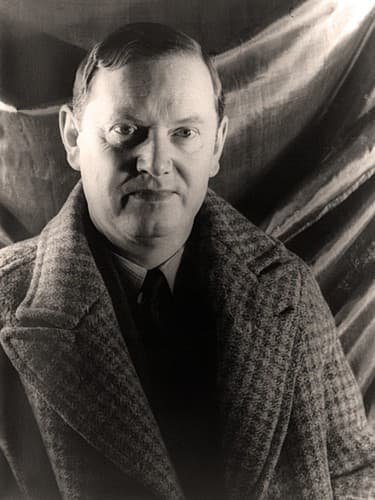
Arthur Evelyn St. John Waugh was an English writer of novels, biographies, and travel books; he was also a prolific journalist and book reviewer. His most famous works include the early satires Decline and Fall (1928) and A Handful of Dust (1934), the novel Brideshead Revisited (1945), and the Second World War trilogy Sword of Honour (1952–1961). He is recognised as one of the great prose stylists of the English language in the 20th century.
Similar books
- A Handful of Dust
Evelyn Waugh
3.9 (23k) average on GoodreadsLiterary FictionExplores similar themes of aristocratic decline and social critique with Waugh's characteristic wit.
- The Old Man and the Sea
Ernest Hemingway
3.8 (831k) average on GoodreadsLiterary FictionA Cuban fisherman's long struggle with a giant marlin becomes a story of endurance and dignity, now retold for young adults with illustrations, phonetic guides, and writing prompts in Traditional Chinese.
- One Hundred Years of Solitude
Gabriel García Márquez
4.1 (753k) average on GoodreadsLiterary FictionThrough the multi-generational story of the Buendía family, a mythical town deals with the repeating patterns of time, love, and solitude, as the extraordinary mixes with the ordinary.
- The Goldfinch
Donna Tartt
3.9 (720k) average on GoodreadsLiterary FictionHaunted by a tragic explosion and clutching a stolen Dutch masterpiece, a young orphan navigates the opulent drawing rooms of New York and the gritty underbelly of the art world, desperately seeking connection and redemption amidst a life spiraling into crime and obsession.
- Little Fires Everywhere
Celeste Ng
4.1 (713k) average on GoodreadsLiterary FictionIn Shaker Heights, an artist and her daughter move in, and their free-spirited lives clash with a rule-bound matriarch, revealing hidden conflicts beneath a perfect surface.
- Eleanor Oliphant Is Completely Fine
Gail Honeyman
4.3 (708k) average on GoodreadsLiterary FictionA lonely woman's structured life changes when an IT guy and an elderly man help her learn to open her heart.





Enjoyed the summary?
A summary gives you the shape of the book. The book itself has the detail, the examples and the voice.
Find Brideshead Revisited on AmazonAs an Amazon Associate, BookBrief earns from qualifying purchases. How we're funded