
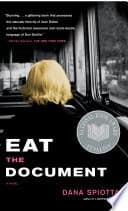
Synopsis
Covers the whole plot, including the ending.
- Difficulty
- Medium
- Pacing
- Moderate
- Mood
- Reflective, Thought-provoking, Melancholy, Suspenseful
- Read it if
- You're interested in the long-term psychological and social impact of radical political actions, the complexities of identity, and how the past resurfaces in unexpected ways.
- Skip it if
- You prefer fast-paced thrillers or stories with clear-cut heroes and villains, or if you're not interested in character-driven literary fiction.
Eat the Document Plot Summary
Covers the whole plot, including the ending.
The Bombing
In 1972, Bobby and Mary, young radical activists, are part of a group planning bombings against the Vietnam War. Their target is a building in Seattle. While Bobby is inside placing a device, the bomb goes off early. Mary, waiting outside, sees the explosion and the chaos. The incident causes casualties and much damage, more than they intended. This event shatters their lives and forces them to flee the FBI. They are separated in the confusion; Mary escapes alone, thinking Bobby might be dead or caught. This act defines the rest of their lives, sending them into decades of hiding and new identities.
Mary's New Life as Caroline
After the bombing, Mary becomes Caroline and moves to a quiet suburb in the Pacific Northwest. She builds a new, ordinary life, working as a librarian and raising her son, Jason, alone. She never talks about her past or her radical days, carefully making her present as normal and unseen as possible. Caroline is always watchful, always aware of needing to keep her cover and protect her son from the truth of her fugitive status. Her life is marked by deep isolation and constant fear of discovery, which shapes her interactions and prevents her from forming close bonds.
Bobby's Isolated Existence
Bobby, also having escaped the bombing, lives an equally anonymous but more wandering life. He moves from city to city, taking various low-skill jobs, always looking for signs of the past catching up to him. Unlike Mary, Bobby struggles more openly with his past actions and the loss of his idealistic youth. He becomes driven to find meaning after their radical efforts, often attending academic lectures and engaging with intellectual groups, though always from a distance. He carries a deep sense of guilt and a desire for connection, but he fiercely protects his anonymity.
Jason's Awakening to Activism
Years later, Caroline's teenage son, Jason, starts exploring radical politics himself, drawn to environmental activism and anti-globalization movements. He attends meetings, protests, and reads about past and present radicalism. This development deeply worries Caroline, as Jason's growing activism mirrors her own past, threatening to expose her carefully built facade. She struggles to balance her wish to protect him from the dangers she faced with her own buried ideals. Jason's actions bring the past uncomfortably close, making Caroline face the history she tried so hard to erase.
The Zine and the Past's Echoes
Jason finds an underground zine that details the bombing his mother, as Mary, was involved in. The zine, from current radical culture, discusses the historical event and the unknown fates of the people involved, sometimes idealizing their actions. Jason brings the zine home, unaware of its personal meaning for Caroline. The discovery shocks Caroline, causing her great anxiety and fear of exposure. She sees the past not just reappearing, but being reinterpreted and even romanticized by a new generation, including her own son, who is unknowingly treading on dangerous ground.
The Search for Bobby
Interested by the zine and the mystery around the 1972 bombing, Jason begins to research the event and the people involved, especially the unknown bomb maker. He starts communicating online with other history enthusiasts and radical sympathizers, putting together bits of information. Unbeknownst to Caroline, Jason's research brings him closer to finding out the truth about his mother's past and, possibly, Bobby's location. This pursuit creates tension, as Jason's innocent curiosity threatens to dismantle Caroline's entire life and expose her to the authorities she has avoided for decades.
Bobby's Online Persona
Bobby, using a fake name, visits online forums and chat rooms about historical radical movements and political theory. He joins discussions, often correcting historical errors or offering different views on past events, using his personal experiences without directly revealing his identity. He finds a strange sense of validation in these talks, a way to process his past and join a conversation he feels connected to. His online activities, while seemingly anonymous, leave a subtle trail that, with other information, could lead to his identification and, accidentally, to Mary's.
Caroline's Growing Paranoia
As Jason digs deeper into his research and the past becomes more prominent, Caroline's paranoia grows. She becomes more withdrawn and suspicious, seeing everyday events as possible threats. Her carefully built world begins to crack, and she struggles to stay calm and maintain her identity as Caroline. She fears not only her own capture but also the terrible impact the truth would have on Jason. This time is marked by extreme psychological stress for Caroline, as decades of suppressed fear and guilt rise to the surface, threatening to overwhelm her.
The Unveiling of the Past
Through his online research and by connecting clues, Jason finally finds enough information to confront Caroline about her past. He shows her evidence linking her to the 1972 bombing and her former identity as Mary. Faced with clear proof and her son's serious questions, Caroline must drop her carefully kept facade. She tells him the truth about her role in the bombing, her life on the run, and how she became Caroline. This confession is a painful but necessary moment, finally breaking years of silence and deceit between mother and son.
A Near Miss and a Decision
After the emotional confrontation, the FBI, alerted by a lead from Jason's online activities or a renewed investigation, comes close to catching Caroline. She narrowly escapes, confirming her deepest fears. This close call forces Caroline to make a crucial decision about her future and her son's safety. She realizes that her continued presence puts Jason at risk and that her life on the run cannot go on forever. This event strengthens her resolve to protect Jason, even if it means sacrificing her freedom.
The Meeting
Caroline, now exposed and on the run again, decides to find Bobby. She contacts him through the underground network she once used. Their reunion is filled with relief, regret, and the weight of their shared, difficult past. They discuss the bombing, their separate lives, and their choices. This meeting is an attempt to come to terms with their youth and understand the impact of their actions on themselves and each other. It is a poignant moment of connection between two people whose lives were shaped by one violent act.
Bobby's Confession
After reuniting with Caroline and thinking about their shared history and the effects of their actions, Bobby makes a significant decision. He chooses to surrender to the authorities. He feels a deep need for accountability and a desire to finally face the consequences of the bombing. This decision is made with weary resolve, hoping that by accepting his punishment, he can find some peace and closure. His surrender is an act of acknowledging his past and trying to make amends for the violence he was part of.
Caroline's Future
Following Bobby's surrender, Caroline makes the hard choice to remain underground, ensuring Jason's safety and her own freedom from prosecution. She finds a new, even more remote location, and continues her anonymous life. However, this time, her existence is different. Having finally shared her past with Jason and reunited with Bobby, she carries less of the heavy burden of secrecy. She is still a fugitive, but she understands herself, her choices, and the lasting legacy of her radical youth better. Her future is uncertain, but she has faced her past and found some peace.
Eat the Document Characters
Mary/Caroline
Protagonist
A former radical activist living as a suburban librarian under a new identity.
Mary, as a young woman, was an idealistic and committed anti-war activist who participated in a bombing that went terribly wrong. For decades, she has lived as Caroline, a quiet, unassuming librarian, meticulously crafting a life of anonymity to escape her past. She is intelligent, resourceful, and deeply protective of her son, Jason. Her life is defined by the constant fear of discovery and the psychological toll of her suppressed history. She carries immense guilt and a longing for authentic connection, yet her survival instincts dictate her every move.
Relationships: Bobby (Former lover and fellow activist, shared a traumatic past.); Jason (Her son, whom she fiercely protects while hiding her true identity from him.)
Bobby
Protagonist/Supporting
Mary's former lover and fellow radical, living a solitary life haunted by the past.
Bobby was Mary's partner in radicalism, a charismatic and intellectual figure who designed the bomb that led to their lives underground. After the bombing, he lives a more solitary and intellectually restless existence than Mary, moving frequently and engaging with philosophical and political ideas from a distance. He struggles with the legacy of their actions, grappling with guilt and the fading ideals of his youth. He is thoughtful, introspective, and eventually seeks a form of atonement for his past.
Relationships: Mary/Caroline (Former lover and fellow activist, shares a deep, traumatic history.)
Jason
Supporting
Caroline's son, drawn to contemporary activism and unknowingly investigating his mother's past.
Jason is Caroline's teenage son, bright, curious, and politically engaged. He is drawn to environmental and anti-globalization activism, mirroring his mother's youthful radicalism without knowing its full extent. He is idealistic and driven, beginning to question the world around him. His innocent research into historical radical movements inadvertently leads him to uncover the truth about his mother's past, forcing a dramatic confrontation and shifting their relationship dynamic.
Relationships: Mary/Caroline (His mother, whose hidden past he unknowingly uncovers.)
The FBI/Government
Antagonist
The relentless force pursuing Bobby and Mary for decades.
The FBI represents the ever-present threat to Mary and Bobby's freedom. They are a largely unseen but constantly felt antagonist, their pursuit driving the characters' lives underground and fueling Caroline's paranoia. Their presence symbolizes the long arm of the law and the inescapable consequences of past actions. They are the external force that forces Caroline and Bobby to live in secrecy, constantly reminding them of the price of their radicalism. Their pursuit underscores the novel's themes of justice, accountability, and the long-term impact of political dissent.
Relationships: Mary/Caroline (Pursuers of a fugitive.); Bobby (Pursuers of a fugitive.)
The Radical Collective (1970s)
Mentioned
The group of activists Bobby and Mary were part of during their youth.
This collective represents the shared past of Bobby and Mary, the environment that shaped their youthful ideals and led to the bombing. Though individual members are not deeply characterized, their collective ideology and actions are central to the novel's premise. They embody the fervent, often desperate, anti-war sentiment of the era, and their eventual dispersal and varied fates reflect the challenges and disillusionment faced by many who engaged in radical politics during that time. They are a ghost of a past that continues to haunt the protagonists.
Relationships: Mary/Caroline (Former comrades in activism.); Bobby (Former comrades in activism.)
Eat the Document Themes
The Weight of the Past and Identity
The novel explores how past actions, especially radical ones, shape a person's current identity. Mary's entire adult life as Caroline is a facade to erase her past, yet her past controls her choices, fears, and relationships. Bobby is also haunted by his actions, constantly trying to understand their meaning. The characters live under assumed names, showing their fractured identities and the tension between who they were and who they pretend to be. The past is not just remembered; its consequences are actively lived.
“What they were, they were, and it was always with them, a shadow, a presence, a weight.”
Idealism vs. Reality/Consequences
The book contrasts the strong idealism of youth with the harsh, often unexpected, realities and results of radical actions. Bobby and Mary's early belief in their cause leads to violence, but the outcome is catastrophic and far from what they intended. The novel asks if their actions, born of idealism, were ultimately useless or harmful, and explores the long-term psychological and social cost of such commitments. Jason's own budding activism offers a modern view to re-examine these questions, showing the ongoing struggle between passionate belief and the practicalities of making change.
“They had wanted to change the world, and instead, they had changed themselves, irrevocably.”
Motherhood and Protection
Caroline's role as Jason's mother is central to her identity and motivations. Her strong protection of him is why she keeps her elaborate disguise and endures decades of isolation and fear. The theme explores the moral problems of protecting a child while living a life built on lies. Caroline struggles with how much of her true self she can reveal, and the potential harm her past could inflict on Jason. Her journey highlights the sacrifices mothers make, and the complex interaction between personal history and maternal instincts.
“She would do anything to keep him safe, even if it meant burying herself alive.”
The Nature of Memory and History
The novel looks at how personal and collective memories of historical events are formed, hidden, and reinterpreted. Mary actively tries to forget her past, while Bobby is consumed by it. Jason's discovery of the zine and his research into the bombing show how a new generation engages with and romanticizes past radicalism, often without understanding the full human cost. The story explores how unreliable memory is, how history is selectively told, and how events from decades ago continue to resonate and inform the present, often in unexpected ways.
“History was not a closed book, but a living, breathing thing, always being rewritten.”
Plot Devices & Literary Techniques
Dual Identities
Characters live under assumed names, creating narrative tension and exploring themes of self.
The use of dual identities, primarily Mary/Caroline and Bobby's various aliases, is a central plot device. It generates suspense as the characters constantly fear exposure and highlights the psychological toll of living a lie. This device also serves a thematic purpose, exploring the malleability of self, the burden of the past, and the profound impact of life-altering events on personal identity. The tension between the 'true' self and the assumed persona drives much of the internal and external conflict.
The Unseen Threat (FBI)
The constant, lurking presence of law enforcement as an external antagonist.
The FBI's pursuit of Mary and Bobby acts as a persistent, largely unseen antagonist. This creates a pervasive atmosphere of paranoia and vigilance for the characters, particularly Caroline. While the FBI agents are rarely depicted directly, their looming presence dictates the protagonists' choices, geographical movements, and emotional states. This device effectively ratchets up the tension and underscores the long-lasting consequences of their actions, maintaining a sense of urgency and danger throughout the narrative.
The Found Document (Zine)
A physical object that connects the present to the hidden past.
Jason's discovery of the zine detailing the 1972 bombing is a crucial plot device. This physical object acts as a catalyst, bridging the gap between Caroline's carefully buried past and Jason's innocent present. It provides a tangible link to the historical event, igniting Jason's curiosity and inadvertently putting Caroline's secret at risk. The zine also serves to introduce the theme of how history is recorded and reinterpreted by subsequent generations, often without full context.
Parallel Activism
Jason's contemporary radicalism mirrors his mother's past, creating dramatic irony and thematic resonance.
Jason's involvement in current-day environmental and anti-globalization movements serves as a parallel to Mary's radical past. This device creates dramatic irony, as Jason unknowingly mirrors his mother's youthful idealism and actions. It allows the narrative to explore the cyclical nature of activism, the generational gaps in understanding political movements, and the enduring questions about the effectiveness and consequences of radical protest, directly contrasting the 1970s with the early 2000s.
Eat the Document Quotes
“The past is a foreign country; they do things differently there. But the present is also a foreign country. We don't know it at all.”
“It was better to be angry than to be sad. Anger was a kind of power. Sadness was just... limp.”
“The revolution eats its children, but capitalism just makes them fat.”
“You can't go back. Not really. But you carry it with you, like a phantom limb.”
“We thought we were changing the world. Maybe we just changed ourselves, and not always for the better.”
“The internet was a sea of noise, and sometimes, if you listened hard enough, you could hear a faint signal.”
“There's a fine line between conviction and delusion. Sometimes, it's invisible.”
“History is written by the victors, but also by the ones who survive to tell their story, however distorted.”
“Silence could be a weapon, or a shield, or just a heavy blanket.”
“The hardest part of being an adult was realizing that most questions didn't have easy answers, or sometimes, any answers at all.”
“Nostalgia was a dangerous drug, making everything seem softer, sweeter, less complicated than it ever was.”
“You could run from your past, but you couldn't outrun yourself.”
“The camera doesn't lie, they said. But it only shows what you point it at, and what you choose to keep.”
“We were all just trying to make sense of the noise, to find our own signal in the static.”
Quiz
10 questions on the plot and the characters. Each answer comes with a short explanation.
Question 1
What is the primary reason Bobby and Mary are forced to separate early in the novel?
- They had a major personal disagreement about their future.
- A radical protest against the Vietnam War goes wrong, leading to legal repercussions.
- They both decided to pursue different activist causes in different cities.
- Mary was offered a scholarship to study abroad, and Bobby couldn't join her.
Show answer
B. A radical protest against the Vietnam War goes wrong, leading to legal repercussions. Bobby and Mary are forced to separate and go underground after a bombing they were involved in during a Vietnam War protest results in a fatality, making them fugitives.
Question 2
What new identity does Mary adopt after going underground?
- Susan Miller
- Caroline Miller
- Sarah Jenkins
- Elizabeth Davis
Show answer
B. Caroline Miller After going underground, Mary lives for decades under the assumed name of Caroline Miller, building a new, quiet life.
Question 3
Which historical event serves as the backdrop for Bobby and Mary's initial activism?
- The Civil Rights Movement
- The Cold War
- The Vietnam War
- The Women's Suffrage Movement
Show answer
C. The Vietnam War The core of Bobby and Mary's early activism revolves around radical protests against the Vietnam War, which ultimately leads to their lives as fugitives.
Question 4
What is Bobby's primary activity in his later life, after decades in hiding?
- He becomes a successful corporate lawyer.
- He writes a memoir about his experiences, under a pseudonym.
- He appears on college campuses, giving talks about his past, though still in hiding.
- He joins a new, more moderate political movement.
Show answer
C. He appears on college campuses, giving talks about his past, though still in hiding. Bobby, still underground as Nash, resurfaces in a limited public capacity by giving talks on college campuses, reflecting on the radical movements of the past.
Question 5
What is the significance of the title 'Eat the Document'?
- It refers to a specific historical document that Bobby and Mary tried to destroy.
- It's a metaphor for consuming and internalizing historical narratives and personal pasts.
- It's a literal instruction given to activists to destroy incriminating evidence.
- It symbolizes the hunger for information in the digital age.
Show answer
B. It's a metaphor for consuming and internalizing historical narratives and personal pasts. The title 'Eat the Document' is a Bob Dylan reference and metaphor for how individuals, particularly those with hidden pasts, internalize and grapple with their own histories and the 'documents' (evidence, memories, narratives) that define them.
Question 6
How does Mary (as Caroline Miller) generally feel about her past as an activist?
- She actively seeks to reconnect with her former comrades and resume activism.
- She is largely regretful and tries to completely suppress and forget it.
- She romanticizes it and wishes she could relive those radical years.
- She views it as a necessary evil that shaped her into a better person.
Show answer
B. She is largely regretful and tries to completely suppress and forget it. Mary, living as Caroline, has largely buried her past and experiences deep discomfort and regret when confronted with memories or people from her radical years, indicating a desire to suppress that part of her life.
Question 7
What specific event brings Mary (Caroline) into contact with her past in a significant way after many years?
- She sees Bobby (Nash) on a national news broadcast.
- She encounters a former comrade who is trying to write a book about their group.
- Her daughter discovers old photographs of her as a young activist.
- She receives an anonymous letter threatening to expose her identity.
Show answer
B. She encounters a former comrade who is trying to write a book about their group. Mary's carefully constructed life as Caroline is disrupted when she's contacted by a former comrade, Jude, who is attempting to document the history of their radical group, forcing Mary to confront her past.
Question 8
How does the novel explore the theme of identity and reinvention?
- By showing how characters cling rigidly to their original identities despite changing circumstances.
- Through characters like Mary and Bobby adopting new names and lives, highlighting the malleability and burden of identity.
- By suggesting that true identity is always externally imposed and cannot be chosen.
- By depicting characters who are completely transparent about their pasts, with no need for reinvention.
Show answer
B. Through characters like Mary and Bobby adopting new names and lives, highlighting the malleability and burden of identity. The novel deeply explores identity through Mary and Bobby, who live under assumed names for decades. It delves into the psychological weight of these new identities, the constant fear of exposure, and the struggle to reconcile their past selves with their present lives.
Question 9
What is the ultimate fate of the bomb that Bobby and Mary's group planted, which led to their fugitive status?
- It was successfully defused before causing any harm.
- It detonated, causing significant property damage but no fatalities.
- It detonated prematurely, killing a janitor and making them responsible for murder.
- It was discovered by authorities before it could be set, leading to their immediate capture.
Show answer
C. It detonated prematurely, killing a janitor and making them responsible for murder. The bomb planted by their radical group tragically detonated prematurely, killing an innocent janitor. This unforeseen and devastating consequence is what irrevocably changed their lives and forced them underground as fugitives wanted for murder.
Question 10
How does the novel portray the disillusionment of former radicals regarding their past actions?
- It shows them universally regretting their decisions and renouncing all forms of protest.
- It presents a nuanced view, with some clinging to their ideals while others, like Mary, are deeply disillusioned and burdened by the consequences.
- It suggests that all former radicals eventually find peace and closure with their pasts.
- It focuses solely on the positive legacies of their activism, downplaying any negative aspects.
Show answer
B. It presents a nuanced view, with some clinging to their ideals while others, like Mary, are deeply disillusioned and burdened by the consequences. The novel offers a complex view of disillusionment. While Bobby (Nash) attempts to intellectualize and contextualize their past, Mary (Caroline) is deeply scarred and regrets the choices made, highlighting the varied and often painful ways former radicals grapple with the legacy of their actions and the outcomes of their idealism.
Eat the Document FAQ
What is the core premise of 'Eat the Document'?
'Eat the Document' follows the lives of Bobby and Mary, two young, idealistic radical activists in the late 1960s who participate in protests against the Vietnam War. A particularly destructive act goes awry, forcing them into a life underground and separated, forever altering their identities and futures as they grapple with the consequences of their youthful idealism decades later.
Who are Bobby and Mary, and what drives them at the story's beginning?
Bobby and Mary are the central characters, driven by a fervent anti-war sentiment and a desire for radical social change in the late 1960s. They are deeply committed to their cause, believing that direct, even violent, action is necessary to oppose the Vietnam War and the perceived injustices of the American government.
How does the novel structure its narrative across different time periods?
The novel employs a dual narrative structure, alternating between the late 1960s and early 1970s, depicting Bobby and Mary's radical youth and the immediate aftermath of their actions, and the early 2000s, where their older selves, 'Caroline' and 'Nash,' live lives shaped by their past. This juxtaposition highlights the long-term impact of their choices and the weight of their secrets.
What is the significance of the title 'Eat the Document'?
The title refers to the practice of destroying incriminating evidence, often by literally eating it, a common tactic for activists going underground to avoid capture. It symbolizes the desperate measures taken to erase the past and the constant fear of discovery that defined the lives of those on the run, like Bobby and Mary.
What event specifically forces Bobby and Mary to separate and go underground?
A radical protest involving a bombing or destructive act goes terribly wrong, resulting in unintended casualties or significant damage that draws intense federal attention. This catastrophic event makes their continued open activism impossible and necessitates their immediate separation and disappearance into the underground network to evade arrest.
How do Bobby (as Nash) and Mary (as Caroline) maintain their anonymity and secrecy in their later lives?
Nash (Bobby) adopts a quiet, reclusive life, often working in manual labor or low-profile jobs, avoiding deep personal connections. Caroline (Mary) builds a more outwardly conventional life with a family, but her past remains a deeply guarded secret, manifesting in her cautious nature and the stories she invents to explain her background.
Are there any characters who bridge the gap between their past and present identities, or threaten to expose them?
Yes, there are minor characters from the past radical network who occasionally surface, creating tension and the risk of exposure for Nash and Caroline. These encounters force them to confront the fragility of their constructed identities and the enduring reach of their history.
What is the significance of the 'documents' they 'eat' or destroy, metaphorically and literally, throughout the book?
Literally, documents are destroyed to prevent capture. Metaphorically, they 'eat' their past identities, their radical dreams, and the truth of their actions, replacing them with fabricated histories and suppressed memories. This act of consumption symbolizes the erasure of self required for survival underground.
How does Mary's (Caroline's) relationship with her daughter reflect her hidden past?
Caroline's relationship with her daughter is marked by a tension between her desire for a normal life and the constant fear of her past being exposed. She instills a sense of caution and secrecy in her daughter, perhaps unintentionally, and struggles with the guilt of living a lie while trying to protect her family from its consequences.
Analyze the psychological toll of living underground and under assumed identities on Bobby (Nash) and Mary (Caroline).
Living underground inflicts profound psychological damage, leading to chronic paranoia, isolation, and a fractured sense of self. Nash becomes withdrawn and melancholic, while Caroline develops a meticulous facade, constantly managing her persona and suppressing genuine emotion to maintain her cover, both struggling with guilt and arrested development.
How do Bobby and Mary cope with the guilt and trauma of their past actions, particularly the unintended consequences?
Bobby (Nash) copes through self-imposed exile, quiet reflection, and a deep-seated melancholy, often revisiting the past in his mind. Mary (Caroline) copes by constructing a new, seemingly normal life, but the trauma manifests as anxiety and a constant need to control her environment and narrative, rarely confronting the true extent of her guilt directly.
What psychological differences emerge in how Bobby/Nash and Mary/Caroline adapt to their new lives?
Nash adapts by largely withdrawing from society, seeking anonymity and solitude, a more passive acceptance of his fate. Caroline actively constructs a new identity and engages with the world, albeit carefully, demonstrating a more proactive, though equally anxious, approach to managing her past and present selves.
Does the novel portray the radical activism of the 1960s as ultimately successful or futile?
The novel offers a nuanced perspective; while the specific actions of Bobby and Mary lead to personal ruin and separation, it also suggests that their idealism, however misguided in execution, was a response to genuine injustices. It doesn't definitively label their efforts as futile but rather explores the complex, often tragic, human cost of such commitments.
To what extent does 'Eat the Document' critique or sympathize with the radical movements of the past?
Spiotta sympathizes with the youthful idealism and the underlying motivations of the activists, acknowledging the powerful societal forces they reacted against. However, the novel also critiques the destructive methods and the severe personal consequences, suggesting that good intentions can lead to profound suffering and moral compromise.
How does the novel explore the theme of identity, particularly the malleability and permanence of self?
The novel deeply explores identity as both malleable (through assumed names and fabricated histories) and permanent (through the enduring psychological impact of past actions). Bobby and Mary create new selves, but their core identities are irrevocably shaped by their radical past, demonstrating that while external facts can change, internal truths often persist.
What is the novel's stance on forgiveness, both self-forgiveness and societal forgiveness?
The novel suggests that self-forgiveness is incredibly difficult, if not impossible, for characters like Nash and Caroline, who carry deep guilt. Societal forgiveness is also complex; while some might forget, the legal system and the weight of their actions remain, indicating that true absolution is elusive.
How does the book comment on the American Dream and its disillusionment?
The book critiques a certain version of the American Dream, showing how young people like Bobby and Mary felt alienated and driven to radical acts against a system they believed betrayed its ideals. Their subsequent lives underground represent a profound disillusionment, where the promise of a conventional, happy life is sacrificed for conviction, or its aftermath.
Does the novel offer any hope for redemption or resolution for Bobby and Mary?
While a full, unambiguous redemption is elusive given their past, the novel offers glimpses of a quiet, hard-won peace for some characters, or at least a form of acceptance of their altered lives. Their resolution is not one of grand absolution but rather a somber understanding of the lasting consequences of their choices and the lives they've built.
About the author

Dana Spiotta is an American author. She was a recipient of the Rome Prize in Literature, a Guggenheim Fellowship and a New York Foundation for the Arts Fellowship.
Similar books
- American Pastoral
Philip Roth
3.9 (65k) average on GoodreadsLiterary FictionExplores the aftermath of political radicalism on an American family and the loss of innocence.
- The Flamethrowers
Rachel Kushner
3.5 (19k) average on GoodreadsLiterary FictionFeatures artistic and political radicalism in the 1970s, focusing on characters navigating intense socio-political landscapes.
- Underworld
Don DeLillo
4.1 (2k) average on GoodreadsFantasyDeLillo's Underworld uses the Cold War and its anxieties as a vast, sprawling backdrop for examining American life, encompassing a wide array of characters and historical events. Spiotta's scope is more intimate and focused, concentrating on the personal consequences of specific political acts and the lingering effects on a handful of interconnected individuals, rather than the grand sweep of history.
- Nineteen Eighty-Four
George Orwell
4.2 (5.5M) average on GoodreadsFictionWinston Smith dreams of truth and rebellion in a world where Big Brother watches all, but he confronts the terrifying power of a regime that controls not just actions, but thoughts.
- The Frozen River
Ariel Lawhon
4.4 (600k) average on GoodreadsFictionIn 1789 Maine, a heroic midwife's diary helps her expose a murder and get justice in a town that wants to silence her.
- A Man Called Ove
Fredrik Backman
4.4 (569k) average on GoodreadsFictionA stubborn widower, who lives by strict rules, finds his quiet world changed by a lively new family next door, making him face his past and find happiness in human connection.





Enjoyed the summary?
A summary gives you the shape of the book. The book itself has the detail, the examples and the voice.
Find Eat the Document on AmazonAs an Amazon Associate, BookBrief earns from qualifying purchases. How we're funded