
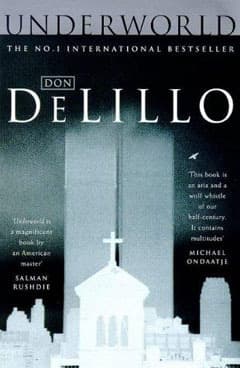
Synopsis
Covers the whole plot, including the ending.
- Difficulty
- Hard
- Pacing
- Slow
- Mood
- Epic, introspective, sprawling, cultural, philosophical, historical
Underworld Plot Summary
Covers the whole plot, including the ending.
The Shot Heard 'Round the World
The novel opens with a prologue at the Polo Grounds on October 3, 1951, during the final game of the National League pennant race between the New York Giants and the Brooklyn Dodgers. Young Cotter Martin sneaks into the stadium and catches the legendary home run ball hit by Bobby Thomson, the 'Shot Heard 'Round the World.' This moment occurs as news of the Soviet Union's second nuclear bomb test, code-named 'Joe-4,' is announced to VIPs in the stands, including J. Edgar Hoover, Jackie Gleason, and Frank Sinatra. The scene sets up the themes of American spectacle, Cold War anxiety, and the impact of a single object (the baseball) on many lives.
Nick Shay in 1992
The story then moves to 1992, introducing Nick Shay, a waste management executive in Arizona. Nick owns the Bobby Thomson baseball. He struggles with his past, which includes a difficult childhood in the Bronx and a brief, intense affair with artist Kara Sax decades earlier. His work managing society's refuse represents the discarded parts of history and memory, preparing for his reunion with Kara and the unfolding of their shared and individual histories during the Cold War's aftermath.
Reunion with Kara Sax
Nick Shay travels to New York for a conference and meets Kara Sax again. Her art often uses themes of decay and the Cold War. Their reunion is full of unresolved emotions and their shared past. Kara is now a successful but mysterious artist, living a different life from Nick's corporate world. Their conversations and reflections on their earlier affair and their lives since offer insight into personal history, memory, and how global events affect individual lives. Their relationship is a central emotional point for Nick's journey.
The Baseball's Journey
The novel frequently follows Bobby Thomson's home run ball as it passes through various hands over decades. After Cotter Martin, it goes to his father, Manx, and then through a series of owners, including a young Nick Shay, who gets it through questionable means. Each transfer of the ball is a small story, connecting different characters and social groups, from mob figures to collectors. The baseball becomes a symbol of American dreams, historical memory, and the chance connections that weave through society, linking people across time and circumstance.
Sister Edgar and the Bronx
The story looks into the life of Sister Edgar, Nick Shay's former teacher and a deeply religious woman whose view offers a spiritual contrast to the material world. Her experiences in the Bronx show the urban environment, its difficulties, and its lasting communities. Sister Edgar's thoughts on faith, poverty, and the human condition, often through her religious duties, provide a moral and philosophical balance to the more cynical parts of the Cold War era and corporate America. Her character grounds the broad story in human compassion and resilience.
J. Edgar Hoover's Shadow
J. Edgar Hoover is a significant presence in the novel, both in the prologue and through his surveillance and influence on American society during the Cold War. The narrative touches on his personal quirks, his paranoia, and the large network of informants and operations he directed. His character embodies the darker, more controlling aspects of the Cold War, representing the state's watchful eye and the loss of privacy. His interactions, especially with figures like Lenny Bruce, show the tension between individual freedom and government control, a main concern of the era.
The Waste Stream
Nick Shay's job in waste management is a continuous theme. The logistical and ethical issues of disposing of society's refuse, from everyday trash to hazardous materials and nuclear waste, parallel the story's look at discarded histories, forgotten memories, and the hidden costs of progress. His work forces him to face the real results of human consumption and technological advancement, linking the personal act of disposal to larger environmental and societal concerns. This suggests that nothing truly disappears, but only changes form.
Lenny Bruce and Art
The novel includes comedian Lenny Bruce, whose challenging and often controversial acts reflect the cultural changes and defiance of authority during the Cold War. His struggles with censorship and his search for artistic truth align with Kara Sax's artistic efforts. Bruce's parts explore the power of language, the limits of expression, and the societal anxieties seen in popular culture. His story, along with Kara's, shows how art, in its various forms, can both reflect and criticize its time, pushing against established norms.
The Cold War's Aftermath
As the story progresses, it consistently revisits the Cold War's influence, even after 1991. Characters carry the psychological marks of living under the constant threat of nuclear war. The novel explores how this global tension shaped personal relationships, political anxieties, and cultural expressions. The lingering sense of dread, the focus on surveillance, and the pursuit of technological dominance impacted the American mind, creating a mix of fear and fascination that lasts long after the conflict's official end.
Esmeralda's Story
In the novel's later sections, set in a near future, the story introduces Esmeralda, a young girl whose life is connected to the growing world of the internet and digital technology. Her story, particularly her search for her mother, shows a new kind of interconnectedness and different societal anxieties than those of the Cold War. Esmeralda represents a generation navigating a world of too much information, virtual realities, and new forms of faith and community. Her journey offers a look into a future where analog concerns give way to digital complexities.
The Long Tall Sally
The 'Long Tall Sally' is a recurring, mysterious figure throughout the novel, often appearing at important moments or transitions, sometimes as a spectral presence. She is linked to various events and characters, suggesting an omnipresent, almost mythical force in the American landscape. Her appearances are fragmented and open to interpretation, adding mystery and symbolic depth to the story. She represents the hidden connections, subconscious anxieties, and lasting myths that link the seemingly separate events and lives in the book, hinting at a deeper, underlying current of American experience.
The End of History?
The novel ends with an epilogue that jumps to a near future, showing a world changed by ruthless capitalism, the internet, and a new, undefined form of faith. This ending reflects on history itself, asking if the Cold War's end truly marked an 'end of history' or just a shift to new global anxieties and connections. DeLillo uses this future vision to consider the cyclical nature of human desires and fears, suggesting that while specific threats may change, the underlying human condition of seeking meaning and connection remains.
Underworld Characters
Nick Shay
Protagonist
A waste management executive haunted by his past
Nick Shay is the central protagonist, a man in his late fifties working in waste management, specifically dealing with hazardous materials. He grew up in the Bronx, was involved in petty crime, and had a formative affair with Kara Sax. Nick is intelligent, introspective, and burdened by a sense of guilt and an awareness of the world's detritus, both physical and historical. His professional life in waste disposal serves as a metaphor for his attempts to process and contain the refuse of his own past and society's collective anxieties.
Relationships: Kara Sax (former lover, enduring connection); Sister Edgar (former teacher, spiritual guide); Albert Bronzini (step-father, mob associate); Matt Shay (brother, estranged)
Kara Sax
Supporting
An enigmatic artist and Nick's former lover
Kara Sax is a brilliant and reclusive artist whose work often explores themes of decay, memory, and the Cold War. She had a passionate, brief affair with Nick Shay in their youth, which profoundly impacted both their lives. Kara is intellectual, independent, and somewhat detached, using her art as a means to process the world's complexities. Her presence in Nick's life triggers his deep dives into their shared history and the broader cultural landscape.
Relationships: Nick Shay (former lover, enduring connection); Others in the art world (professional acquaintances)
Sister Edgar
Supporting
A devout nun and Nick's former teacher
Sister Edgar is a compassionate and observant nun who taught Nick Shay in elementary school in the Bronx. She is a figure of moral authority and spiritual reflection, often contemplating the nature of faith, suffering, and the human condition amidst the urban decay and social changes of the Cold War era. Her perspective provides a contrasting, often profound, spiritual dimension to the novel's more materialistic and cynical concerns, embodying resilience and unwavering belief.
Relationships: Nick Shay (former student, spiritual advisee); Church community (colleagues, congregants)
J. Edgar Hoover
Antagonist
The powerful and paranoid FBI Director
J. Edgar Hoover is depicted as a formidable and omnipresent figure, embodying the surveillance state and the paranoia of the Cold War. He is present at the Polo Grounds in the prologue and his influence is felt throughout the narrative through references to his extensive intelligence gathering and his personal eccentricities. Hoover represents the darker side of American power, obsessed with control, secrecy, and the suppression of dissent, casting a long shadow over the lives of ordinary citizens and public figures alike.
Relationships: Clyde Tolson (confidant, speculated lover); Frank Sinatra (brief interaction, celebrity target)
Bobby Thomson
Supporting
The baseball player who hit the 'Shot Heard 'Round the World'
Bobby Thomson is the Giants' third baseman whose legendary home run in the 1951 pennant game serves as the novel's inciting incident. While not a main character, his act reverberates through the entire book, as the baseball itself becomes a central symbolic object. Thomson represents the iconic American hero, a figure whose single action becomes immortalized and woven into the fabric of national memory and myth, connecting countless lives across decades.
Relationships: Ralph Branca (pitcher he hit off of, historical opponent)
Cotter Martin
Supporting
The boy who first caught the famous baseball
Cotter Martin is the young African-American boy who jumps the gate at the Polo Grounds and catches Bobby Thomson's historic home run ball. His initial possession of the ball sets its long journey in motion. Cotter represents the marginalized, the opportunistic, and the innocent caught up in larger historical currents. His experience highlights themes of race, class, and the arbitrary nature of fate, as a seemingly small act leads to unforeseen consequences.
Relationships: Manx Martin (father)
Albert Bronzini ('Bronzini')
Supporting
Nick's step-father and a mob associate
Bronzini is Nick Shay's step-father, a figure with connections to organized crime. He represents the underbelly of American society, the illicit networks that operate alongside legitimate ones. Bronzini's character introduces themes of crime, loyalty, and the complex moral ambiguities of the Bronx neighborhood where Nick grew up. His influence on Nick's early life is significant, shaping Nick's understanding of power and survival.
Relationships: Nick Shay (step-son); Rose Shay (wife)
Lenny Bruce
Supporting
A transgressive comedian and cultural icon
Lenny Bruce is a real-life stand-up comedian integrated into the novel, whose performances and legal battles reflect the cultural shifts and challenges to censorship in the mid-20th century. His routines, often improvisational and provocative, explore themes of language, truth, and societal hypocrisy. Bruce's character embodies the struggle for artistic freedom and the clash between individual expression and societal norms, serving as a commentary on the era's anxieties and evolving cultural landscape.
Relationships: J. Edgar Hoover (target of surveillance)
Esmeralda
Supporting
A young girl in the near future, navigating the internet
Esmeralda is introduced in the novel's epilogue, representing a generation coming of age in a technologically advanced, post-Cold War world. Her story focuses on her search for her mother and her engagement with the internet, which functions as a new kind of collective consciousness and spiritual space. Esmeralda embodies the transition from analog anxieties to digital realities, exploring themes of connection, identity, and belief in an increasingly virtualized world.
Relationships: Her mother (sought after)
Underworld Themes
The Cold War and its Aftermath
The constant fear and psychological effects of the Cold War, especially the threat of nuclear destruction, is a main theme. The novel explores how this global conflict shaped individual lives, relationships, and the American mind, even after its official end. It looks into the culture of surveillance, paranoia, and the constant awareness of an 'other' (the Soviets) that affected society, from politics to personal fears and art. The aftermath shows the lingering effects and the shift to new anxieties.
“Every breath you take, every thought you think, is a tiny part of the Cold War.”
Waste, Decay, and Memory
This theme is explored through Nick Shay's waste management job and Kara Sax's art. It examines society's physical and historical waste—garbage, forgotten events, suppressed memories—and how these 'underworlds' continue to shape the present. The novel suggests that nothing truly disappears; it transforms, accumulates, and subtly influences. It considers how individuals and nations deal with their past, whether through remembering or unconsciously gathering historical 'waste,' and how decay is a natural part of existence.
“Everything is connected in the end. The future is a waste pit.”
The Interconnectedness of Life
DeLillo shows how seemingly separate individuals and events are linked across time and space, often by chance or symbolic objects like the baseball. The story's structure, with its many characters and interwoven plots, highlights these connections. It suggests that global events affect individual lives deeply, and that even small actions can have far-reaching, unexpected consequences, creating a complex, shared human experience.
“There are no isolated lives. This is the error of the age.”
American Spectacle and Myth-Making
The novel explores America's interest in spectacle, from the iconic baseball game to celebrity culture and the media's role in creating national stories. It examines how certain events and figures become myths, going beyond their original context to become symbols of national identity. This theme also looks at the performative aspects of American life, the blurring of lines between reality and media representation, and the creation of a shared, often manufactured, public consciousness.
“This is what we do. We turn events into stories. We make a legend out of everything.”
Technology and Surveillance
From J. Edgar Hoover's extensive FBI surveillance to the internet's later emergence, the novel examines technology's role in monitoring, connecting, and shaping human lives. It explores the ethical issues of widespread surveillance, the loss of privacy, and how technology can be used for both control and freedom. The internet, specifically, is shown as a new frontier of connection and information, but also a potential source of alienation and new forms of ideological control, mirroring Cold War anxieties in a digital age.
“The future belongs to crowds. And the crowds belong to the ones who watch them.”
Plot Devices & Literary Techniques
The Bobby Thomson Baseball
A symbolic object linking lives and history
The baseball hit by Bobby Thomson in the 1951 'Shot Heard 'Round the World' functions as a central unifying plot device. It passes through the hands of various characters—Cotter Martin, Manx Martin, Nick Shay, and others—connecting their disparate stories across five decades. The ball symbolizes American myth, memory, chance, and the enduring physical trace of a pivotal historical moment. Its journey underscores the novel's theme of interconnectedness and how a single object can accrue immense symbolic weight and narrative power.
Reverse Chronology (Framing Narrative)
A narrative structure that moves backward in time
While not strictly reverse chronological, the novel employs a framing narrative that begins in 1951, jumps to 1992, and then largely moves backward from 1992 into earlier decades before concluding with a leap to the near future. This structural choice allows DeLillo to peel back layers of history, revealing the origins and deeper contexts of events and characters. It creates a sense of uncovering, of stripping away the present to understand how the past has shaped it, mimicking the process of archaeological excavation of memory and history.
Omniscient and 'Super-Omniscient' Narration
A sweeping, all-knowing narrative voice
DeLillo utilizes a highly omniscient, almost 'super-omniscient' narrative voice, particularly evident in the prologue. This perspective allows the narration to seamlessly shift between characters' thoughts, geographical locations, and even abstract concepts (like radio waves or the trajectory of a baseball). It provides a panoramic view of American society, enabling the author to connect seemingly unrelated events and characters, and to delve into the collective consciousness, reflecting the novel's vast scope and its exploration of interconnectedness.
Interlaced Vignettes and Fragmented Narratives
Short, interconnected stories creating a mosaic
The novel's sprawling structure is built upon numerous interlaced vignettes and fragmented narratives, featuring a vast array of characters from different social strata—gangsters, artists, nuns, highway killers, and politicians. These seemingly disparate stories eventually connect, directly or indirectly, forming a complex mosaic of American life during the Cold War era. This device reflects the idea that society is a vast, interconnected web, and allows DeLillo to explore a wide range of human experiences and perspectives within a single overarching narrative.
Quiz
10 questions on the plot and the characters. Each answer comes with a short explanation.
Question 1
What historical event's impact on American culture is a central theme in Don DeLillo's 'Underworld'?
- The Vietnam War
- The Civil Rights Movement
- The Cold War
- The Great Depression
Show answer
C. The Cold War The text explicitly states that DeLillo's novel documents "the twin forces of the Cold War and American culture."
Question 2
What specific baseball game serves as the opening event in 'Underworld'?
- A World Series game
- The final game of the Giants-Dodgers pennant race in 1951
- A game featuring the New York Yankees
- The first game played at a new stadium
Show answer
B. The final game of the Giants-Dodgers pennant race in 1951 The prologue is described as being set during "the final game of the Giants-Dodgers pennant race in 1951."
Question 3
Who catches the baseball that is referred to as the 'shot heard around the world'?
- Jackie Gleason
- Frank Sinatra
- J. Edgar Hoover
- Cotter Martin
Show answer
D. Cotter Martin The text states, "When Bobby Thomson hits Branca's pitch into the outstretched hand of Cotter—the 'shot heard around the world.'"
Question 4
What is the literary technique DeLillo uses in the prologue, described as sweeping and encompassing multiple perspectives?
- Stream of consciousness
- Magical realism
- "Super-omniscience"
- Epistolary narration
Show answer
C. "Super-omniscience" DeLillo himself calls the style used in the prologue 'super-omniscience,' allowing the narrative to sweep across various characters and events.
Question 5
The narrative structure of 'Underworld' is characterized by its unusual temporal progression, which is described as:
- A strictly chronological account
- A reverse narrative that steps back in time
- A fragmented, non-linear approach throughout
- A series of parallel timelines
Show answer
B. A reverse narrative that steps back in time The text mentions, "This reverse narrative allows the author to strip away the detritus of history..." and that the book steps back in time from 1992 to 1951.
Question 6
Which two characters, who were brief lovers, reunite in the Nevada desert in 1992 and serve as a lens through which the Cold War experience is filtered?
- Bobby Thomson and Jackie Gleason
- Frank Sinatra and J. Edgar Hoover
- Nick Shay and Kara Sax
- Cotter Martin and an unnamed nun
Show answer
C. Nick Shay and Kara Sax The text states, "Jump from Giants Stadium to the Nevada desert in 1992, where Nick Shay, who now owns the baseball, reunites with the artist Kara Sax. They had been brief and unlikely lovers 40 years before..."
Question 7
According to the text, what does DeLillo believe global events do to our lives?
- They make them more predictable
- They have no significant impact on personal lives
- They alter how we live in the smallest ways
- They primarily affect economic conditions
Show answer
C. They alter how we live in the smallest ways The text quotes DeLillo: "He believes that 'global events may alter how we live in the smallest ways.'"
Question 8
What are the 'pure elements' that DeLillo aims to reach by stripping away the detritus of history and pop culture?
- War, love, and loss
- The bomb, the baseball, and the Bronx
- Technology, politics, and society
- Art, culture, and religion
Show answer
B. The bomb, the baseball, and the Bronx The text states, "...until we get to the story's pure elements: the bomb, the baseball, and the Bronx."
Question 9
In the epilogue, DeLillo fast-forwards to a near future characterized by which of the following, replacing the Cold War's blend of dread and euphoria?
- Global peace and widespread prosperity
- Technological stagnation and social unrest
- Ruthless capitalism, the Internet, and a new, hushed faith
- A return to traditional values and isolationism
Show answer
C. Ruthless capitalism, the Internet, and a new, hushed faith The epilogue is described as fast-forwarding to a future with "ruthless capitalism, the Internet, and a new, hushed faith."
Question 10
DeLillo constructs a 'fragile web of connected experience' through various interlaced stories. What does this web encompass, according to the text?
- The individual journeys of isolated characters
- A communal Zeitgeist that captures five decades of American life
- The specific political machinations of the Cold War era
- The evolution of modern art and its influence
Show answer
B. A communal Zeitgeist that captures five decades of American life The text states that through interlaced stories, DeLillo creates a "communal Zeitgeist that encompasses the messy whole of five decades of American life."
Underworld FAQ
What is Don DeLillo's "Underworld" about?
"Underworld" is a sprawling novel that explores the intertwined forces of the Cold War and American culture across five decades. It uses a baseball, known as "the shot heard around the world," as a central motif to connect disparate lives and historical events.
What is the significance of the baseball in "Underworld"?
The baseball hit by Bobby Thomson in 1951 serves as a symbolic thread throughout the novel. It passes through various hands and connects characters, representing the passage of time and the way historical events ripple through individual lives.
How does the narrative structure of "Underworld" work?
The novel employs a unique reverse narrative, beginning with an epilogue and moving backward in time. This structure allows DeLillo to peel back layers of history and pop culture to reveal the core elements of the story: the bomb, the baseball, and the Bronx.
Who are some of the key characters in "Underworld"?
Key characters include Nick Shay, who owns the baseball for much of the novel, and Kara Sax, his former lover. The prologue also introduces figures like Cotter Martin, J. Edgar Hoover, Jackie Gleason, and Frank Sinatra, setting the stage for the decades to come.
What historical events are central to "Underworld"?
The novel is deeply concerned with the Cold War, including the nuclear arms race (symbolized by the Soviet bomb detonation). It also examines the evolution of American culture, capitalism, and the rise of the internet.
What does DeLillo mean by "super-omniscience" in the prologue?
DeLillo uses "super-omniscience" to describe a narrative perspective that can fluidly move through space and time, observing events from multiple vantage points simultaneously, creating a sense of vastness and interconnectedness.
How does "Underworld" relate to themes of totalitarianism?
While not directly about Stalinism like Eisenstein's work, DeLillo's "Underworld" explores the totalitarian impulse through the lens of the Cold War's pervasive dread and the overwhelming forces of American culture and capitalism.
What is the role of romance in "Underworld"?
Romance, particularly the brief but significant relationship between Nick Shay and Kara Sax, serves as a personal anchor within the grand historical sweep. Their connection highlights how intimate relationships are shaped by larger societal and political forces.
What is the overall tone or feeling of "Underworld"?
The novel is described as stunning, at times overwhelming, and compelling. It captures both the wondrous and horrifying aspects of events, weaving together a complex tapestry of American life with a sense of both dread and euphoria.
What is the significance of the epilogue in "Underworld"?
The epilogue fast-forwards to a near future, depicting a world dominated by ruthless capitalism and the internet, suggesting a transformation of the anxieties and excitements of the Cold War era into new, contemporary concerns.
About the author
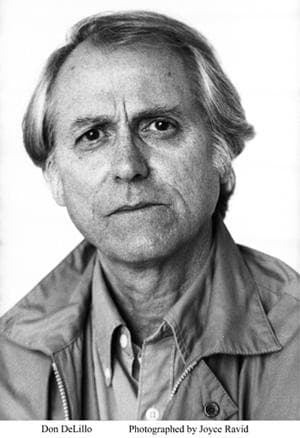
Donald Richard DeLillo is an American novelist, short story writer, playwright, screenwriter and essayist. His works have covered subjects as diverse as television, nuclear war, the complexities of language, art, mathematics, politics, economics, and baseball.
Similar books
- Infinite Jest
David Foster Wallace
4.3 (74k) average on GoodreadsLiterary FictionWallace's "Infinite Jest" shares with "Underworld" an epic length, a vast ensemble cast, and a profound engagement with American culture at the end of the millennium. Both novels explore themes of consumerism, media saturation, and the search for meaning in a fragmented world. However, "Infinite Jest" is more overtly concerned with addiction, entertainment, and the nature of consciousness, often employing extensive footnotes and a more fragmented, self-referential style. DeLillo's "Underworld" is arguably more cohesive in its historical sweep and thematic focus on waste and the Cold War's legacy, even with its non-linearity. While both demand significant reader investment, DeLillo's narrative, though complex, feels more traditionally 'novelistic' in its overarching historical arc compared to Wallace's more experimental and digressive structure.
- Harry Potter and the Sorcerer's Stone
J.K. Rowling
4.5 (7M) average on GoodreadsFantasyRescued from a miserable life under the stairs, an orphaned boy discovers he's a wizard destined for a magical school, where he uncovers a dangerous secret tied to the dark wizard who murdered his parents.
- The Hunger Games
Suzanne Collins
4.3 (6.4M) average on GoodreadsFantasyIn a future where children fight to the death on live television, Katniss Everdeen volunteers for the arena, turning a death sentence into a fight for survival and a spark of rebellion.
- 1984
George Orwell
4.2 (3.1M) average on GoodreadsPoliticsIn a future where surveillance and thought control are absolute, a man's search for truth clashes with the Party, showing that hope can be a form of rebellion.
- Divergent
Veronica Roth
4.2 (2.9M) average on GoodreadsFantasyIn a society divided by virtues, a sixteen-year-old's difference from the norm starts a rebellion that threatens her world.
- The Hobbit, or There and Back Again
J.R.R. Tolkien
4.3 (2.9M) average on GoodreadsFantasyA comfort-loving hobbit named Bilbo Baggins is whisked away by a mischievous wizard and a band of dwarves on an unexpected journey to reclaim stolen treasure from a fearsome dragon, discovering courage and a magical ring along the way.






Enjoyed the summary?
A summary gives you the shape of the book. The book itself has the detail, the examples and the voice.
Find Underworld on AmazonAs an Amazon Associate, BookBrief earns from qualifying purchases. How we're funded