
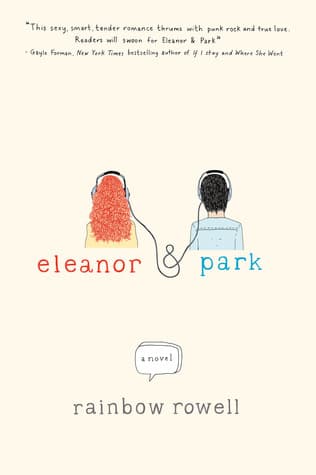
Synopsis
Covers the whole plot, including the ending.
- Difficulty
- Easy
- Pacing
- Moderate
- Mood
- Bittersweet, Nostalgic, Heartbreaking, Tender
- Read it if
- You want a poignant, realistic first love story set in the 80s, exploring themes of abuse, family, and finding connection.
- Skip it if
- You prefer fantasy or sci-fi, or are looking for a light, conflict-free romance.
Eleanor & Park Plot Summary
Covers the whole plot, including the ending.
The Bus Ride and First Impressions
In September 1986, Eleanor Douglas, a new student in Omaha, Nebraska, boards the school bus on her first day. Because of her mismatched clothes, unruly red hair, and the driver's lack of help, she struggles to find a seat. After other students reject her, a boy named Tina offers her a seat next to Park Sheridan, an introverted half-Korean boy who usually keeps to himself. Park is annoyed by her presence, finding her loud, awkward, and a disruption to his routine of listening to music and reading comics. Eleanor, equally uncomfortable, tries to be invisible, but the tension between them is clear.
Shared Spaces and Silent Connections
For weeks, Eleanor and Park sit together in silence, with Park mostly ignoring her. He notices her reading over his shoulder as he reads his comic books. One day, he subtly moves his comic so she can see it better. This small action starts their unspoken connection. Soon, Park lends her comic books, and they discuss them, first through notes in class and later through quiet conversations on the bus. This shared interest slowly breaks down their initial barriers, and they discover a mutual love for music, leading to Park making Eleanor mixtapes.
First Touches and Developing Feelings
As their bond grows, their interactions become more personal. Park begins to hold Eleanor's hand on the bus, a gesture that excites her. These small, tender touches are a big step for both of them, especially Eleanor, who comes from an abusive home and has little experience with gentle affection. They start spending more time together outside of school, often at Park's house, where his family, especially his mother, welcomes Eleanor. Park's mother, a Korean immigrant, at first struggles to understand Eleanor's unusual style but comes to appreciate her unique spirit. Park's father, a Vietnam veteran, is more quiet.
Family Secrets and Growing Dangers
Eleanor's home life is very different from Park's. She lives in a small, crowded house with her four younger siblings, her mother, and her abusive stepfather, Richie. Richie's presence creates constant fear and tension. He is verbally and physically abusive towards Eleanor's mother and often makes inappropriate advances towards Eleanor. Her family's poverty means she lacks basic things, and she often wears mismatched, hand-me-down clothes. The growing closeness between Eleanor and Park brings her joy, but it also makes her more exposed to Richie's scrutiny and jealousy. He dislikes her going out.
First Kiss and Public Displays
One evening, after a school dance, Park walks Eleanor home. Under the cover of darkness, they share their first kiss. This moment changes both of them, starting their romantic relationship. Their affection becomes more open, leading to rumors and teasing at school, especially from Tina and Steve. While Eleanor is self-conscious about their public displays, Park protects her, often confronting those who make fun of her or their relationship. Their bond deepens, and they confide in each other about their fears and hopes, with Park becoming Eleanor's main emotional support.
Confrontation and Escapism
Richie's possessiveness and jealousy grow, making Eleanor's home more dangerous. He often forbids her from seeing Park, watches her movements, and makes cruel remarks. During one terrifying incident, Richie's abuse of Eleanor's mother becomes violent, and Eleanor has to step in. Fearing for her safety and that of her siblings, Eleanor secretly spends a night at Park's house, where his parents, though concerned, offer her a safe place. This secret meeting shows how bad her home situation is and the comfort Park's family provides.
The Threat Revealed
One day, Eleanor finds a series of disturbing and explicit messages written on her school books and belongings, clearly aimed at her. The messages are graphic and threatening, causing her great distress and fear. She realizes that Richie is responsible for these hateful acts. This discovery confirms her worst fears about his predatory nature and makes her feel completely unsafe in her own home. The discovery shatters any remaining sense of security she had, increasing her desire to escape her abusive environment. She tells Park, who is horrified and wants to protect her at all costs.
The Escape Plan
After finding Richie's disturbing notes, Eleanor knows she cannot stay. Park, desperate to help her, gets his parents' help. His mother, Min-Dae, having seen Eleanor's distress and understanding the seriousness of her situation, agrees to drive Eleanor several states away to Minnesota, where she has an estranged uncle. The plan is done quickly and secretly, with Eleanor leaving her family behind to escape Richie's abuse. The departure is heartbreaking for both Eleanor and Park, as it means their separation, but it is a necessary step for Eleanor's safety and future.
Life Apart and Lingering Love
Eleanor starts a new life in Minnesota with her uncle and aunt, adjusting to a more stable but emotionally distant environment. She tries to build a new identity, cutting her hair and trying to fit in. She sends Park letters, but they are often brief and guarded, showing her ongoing trauma and her struggle to process her past. Park, devastated by her absence, struggles to cope. He continues to send her letters and packages, including mixtapes, hoping to keep their connection. He worries constantly about her and misses her terribly, finding it hard to move on without her.
The Three Words
Months pass, and Park continues to send Eleanor letters and gifts, including a special package with all of his favorite things. He receives very little in return, mostly short, impersonal letters. He eventually stops writing, heartbroken by her silence. Then, one day, he receives a small postcard from Eleanor. On it, she has written only three words. The book ends without saying what these words are, leaving the reader to guess their meaning, but strongly suggesting a message of love, hope, and reconciliation, implying that their connection, though distant, is not completely broken.
Eleanor & Park Characters
Eleanor Douglas
Protagonist
The new girl, an outcast with a difficult home life, who finds love and escape.
Eleanor is a fiercely intelligent, quirky, and self-conscious sixteen-year-old. She is an outsider, marked by her unruly red hair, mismatched clothes, and the visible signs of her poverty and abuse. She possesses a sharp wit and a deep inner strength, but also carries significant emotional scars from her abusive stepfather, Richie, and her dysfunctional family. Despite her difficult circumstances, she craves connection and understanding, which she eventually finds in Park. Her love for comics and music is a window into her sensitive soul.
Relationships: Park Sheridan (First love, boyfriend, emotional anchor); Richie (Abusive stepfather, source of fear and trauma); Eleanor's Mother (Complicated, loving but unable to protect her from Richie); Tina (Initially a bully, later a reluctant ally/acquaintance)
Park Sheridan
Protagonist
The quiet, half-Korean boy who falls in love with Eleanor.
Park is an introverted, thoughtful, and compassionate sixteen-year-old. He is half-Korean, often feeling caught between his mother's Korean heritage and his father's American masculinity. He loves music, comic books, and martial arts, using them as a way to understand the world and express himself. Initially wary of Eleanor, he quickly becomes her fierce protector and the most constant source of love and stability in her life. He is sensitive, loyal, and deeply empathetic, struggling with his own identity but finding confidence through his relationship with Eleanor.
Relationships: Eleanor Douglas (First love, girlfriend, muse); Min-Dae Sheridan (Mother) (Close, supportive, often guides him); Jamie Sheridan (Father) (Respectful but sometimes feels pressure to live up to his masculine ideals); Josh Sheridan (Brother) (Typical younger brother relationship, sometimes competitive)
Richie
Antagonist
Eleanor's abusive stepfather.
Richie is Eleanor's stepfather and the primary source of conflict and trauma in her life. He is verbally and physically abusive towards Eleanor's mother and deeply cruel and predatory towards Eleanor. He is possessive, jealous, and controlling, creating a constant atmosphere of fear and instability in the household. His actions are driven by a mix of insecurity, misogyny, and a desire for control. He represents the toxic environment Eleanor must escape.
Relationships: Eleanor Douglas (Abuser and victim); Eleanor's Mother (Abuser and victim)
Min-Dae Sheridan
Supporting
Park's Korean mother, who is initially critical but ultimately supportive of Eleanor.
Min-Dae is Park's mother, a strong and practical Korean immigrant. She is initially critical of Eleanor's appearance and background, reflecting her desire for Park to have an easy life. However, she is also deeply compassionate and perceptive. She quickly sees beyond Eleanor's exterior to her vulnerability and inner strength. Ultimately, she becomes a crucial figure in Eleanor's escape, demonstrating profound empathy and courage by helping her flee Richie.
Relationships: Park Sheridan (Loving mother, guides him); Eleanor Douglas (Initially wary, becomes a protector and maternal figure)
Jamie Sheridan
Supporting
Park's father, a Vietnam veteran, who is quietly supportive.
Jamie is Park's father, a Vietnam veteran who runs a martial arts studio. He is a man of few words, often reserved, but possesses a strong moral compass and a quiet strength. He tries to instill traditional masculine values in Park, sometimes causing Park to feel inadequate. Despite his initial distance, he is ultimately loving and supportive of his family, and plays a role in helping Eleanor escape, demonstrating his integrity and concern for her well-being.
Relationships: Park Sheridan (Loving father, mentor figure); Min-Dae Sheridan (Loving husband)
Tina
Supporting
A popular girl who initially bullies Eleanor but later shows a flicker of understanding.
Tina is a popular girl at school who, along with her friend Steve, initially bullies Eleanor, making fun of her appearance and background. She embodies the cruel social dynamics of high school. However, as the story progresses, Tina's character gains a small amount of complexity. She eventually confides in Eleanor about her own difficult home life, revealing a shared vulnerability and offering a brief, unexpected moment of connection. She is not entirely malicious, but rather a product of her environment.
Relationships: Eleanor Douglas (Bully, brief confidante); Steve (Friend, fellow bully)
Steve
Supporting
A popular, insensitive boy who bullies Eleanor and is friends with Tina.
Steve is a popular and insensitive boy at school, friends with Tina, who frequently bullies Eleanor and makes crude remarks about her. He is a superficial character who represents the thoughtless cruelty and social pressures of high school. He is often the instigator of teasing and harassment towards Eleanor, making her feel even more like an outcast. He lacks the depth or eventual introspection of Tina.
Relationships: Eleanor Douglas (Bully); Tina (Friend, fellow bully)
Eleanor's Mother
Supporting
A loving but powerless mother, trapped in an abusive relationship.
Eleanor's mother is a loving but deeply vulnerable woman, trapped in an abusive marriage with Richie. She is overwhelmed by her large family and the constant fear of her husband, which prevents her from protecting Eleanor or her other children adequately. She cares for Eleanor but is unable to provide the safety and stability Eleanor desperately needs, often choosing to appease Richie to avoid further conflict. Her character highlights the devastating impact of domestic abuse on an entire family.
Relationships: Eleanor Douglas (Mother-daughter, loving but strained by circumstances); Richie (Victim of abuse)
Eleanor & Park Themes
First Love and Connection
The novel explores the intensity and changing power of first love, especially for two outsiders. Eleanor and Park find comfort, understanding, and a sense of belonging in each other that they lack elsewhere. Their connection, built on shared interests in music and comics, goes beyond their physical differences and social anxieties. This theme is clear in their bus rides, where silent glances and shared comic books turn into hand-holding and heartfelt talks, ending with their first kiss, which strengthens their deep bond.
“He knew it was ridiculous, but he couldn't stop looking at her. Her hair was everywhere, like a red storm, and her clothes were too big and too bright. She looked like a clown, but he couldn't stop looking at her.”
Abuse and Escape
A main theme is the terrible impact of domestic abuse and the urgent need for escape. Eleanor's life is shaped by the fear and instability caused by her stepfather, Richie, whose verbal, physical, and emotional abuse creates a constant threat. The story clearly shows the fear, shame, and helplessness Eleanor and her family experience. Her journey is one of survival and freedom, ending with her escape to Minnesota, helped by Park's family. This theme is powerfully shown through Richie's growing threats and Eleanor's discovery of explicit messages on her belongings, which makes her realize the urgency of her departure.
“She couldn't stay. She couldn't. Richie would kill her. She knew it. He would kill her, and then he would kill her mother, and then he would kill her brothers and sisters.”
Identity and Self-Acceptance
Both Eleanor and Park deal with their identities. Eleanor struggles with her appearance, poverty, and the trauma of her home life, feeling like an outsider. Park, being half-Korean, feels pressure to fit masculine ideals while also embracing his more artistic and sensitive side. Their relationship helps them find self-acceptance. Eleanor learns to see herself through Park's loving eyes, and Park gains confidence in his own identity. This is clear in how Park defends Eleanor against bullies, and how Eleanor, despite initial self-consciousness, slowly allows herself to be seen and loved.
“He thought she was beautiful, and that was enough to make her feel beautiful.”
The Power of Art and Music
Art and music are important ways for Eleanor and Park to communicate, connect, and escape. Comic books are their first shared language, allowing them to bond without words. Park's mixtapes become a clear expression of his feelings for Eleanor and a source of comfort for her, especially after they are separated. Music provides an emotional background to their growing relationship and a way for them to understand each other's inner worlds. This theme is central to their courtship, as they spend hours listening to music together, and the mixtapes become symbols of their lasting love.
“He gave her a mixtape because he couldn't say 'I love you' out loud yet.”
Social Class and Prejudice
The novel quietly explores the impact of social class and prejudice. Eleanor's poverty, shown in her mismatched clothes and lack of basic things, makes her an easy target for bullies and sets her apart from her peers. She experiences shame and judgment because of her family's financial struggles and her unusual appearance. Park, though not poor, experiences prejudice as a half-Korean boy in a mostly white community, sometimes feeling like an outsider himself. These outside pressures highlight the challenges they face and the comfort they find in each other's acceptance, regardless of their backgrounds.
“She looked like a clown. Her clothes were too big, too bright, too mismatched. Her hair was a wild red mess. But he couldn't stop looking at her.”
Plot Devices & Literary Techniques
The School Bus
A confined space that forces interaction and becomes a sanctuary.
The school bus acts as a crucial setting and plot device. It is the initial site of Eleanor and Park's reluctant interaction, forcing them into close proximity. Over time, it transforms from a place of discomfort and social judgment into their private sanctuary, where their relationship quietly blossoms through shared comics, music, and eventually, physical touch. The bus symbolizes their shared journey and the slow, intimate development of their bond, shielding them from the outside world during their formative moments.
Mixtapes and Comic Books
Non-verbal forms of communication and emotional expression.
Mixtapes and comic books serve as powerful plot devices, facilitating communication and emotional connection between Eleanor and Park. Initially, comic books provide a safe, indirect way for them to interact without having to speak. Park's carefully curated mixtapes become a language of love, conveying feelings he can't articulate and providing Eleanor with a source of comfort and a tangible link to him, especially after their separation. They represent shared interests, vulnerability, and the romantic expression of their nascent love.
Richie's Abuse and Threats
The primary external conflict and catalyst for Eleanor's escape.
Richie's escalating abuse and threats function as the central external conflict, driving the plot towards Eleanor's eventual escape. His presence creates a constant sense of dread and danger, highlighting the urgency of Eleanor's situation. The explicit, threatening messages he leaves for Eleanor are the final catalyst, forcing her to confront the reality that she cannot remain in her home. This device not only generates suspense but also underscores the theme of abuse and the desperate need for liberation, propelling Eleanor's journey towards a new, safer life.
The Final Postcard
An open ending that leaves the audience with hope and ambiguity.
The final postcard, containing only three words from Eleanor to Park, is a powerful and iconic plot device. It provides an ambiguous yet hopeful conclusion to their story, leaving the reader to imagine the profound meaning of those words (strongly implied to be 'I love you'). This device maintains the emotional intensity of their connection while acknowledging the realistic challenges of their separation. It allows the reader to project their own hopes and interpretations onto their future, emphasizing the enduring impact of their first love without providing a neat, unrealistic resolution.
Eleanor & Park Quotes
“He knew it was ridiculous, but he didn't care. He was in love with her. He was in love with her, and it was the most beautiful thing he'd ever felt.”
“Eleanor was right. She was not beautiful. She looked like art, and art wasn't supposed to be pretty; it was supposed to make you feel something.”
“She never looked nice. She looked like art, and art wasn't supposed to look nice; it was supposed to make you feel something.”
“If someone likes you, they'll make an effort. Period.”
“He held her hand, and he thought, I'm going to spend the rest of my life holding this hand.”
“She was a mess. He was a mess. They were a mess. But they were a mess together.”
“She didn't like to be touched. He just liked to touch her.”
“Holding Eleanor's hand was like holding a butterfly. Or a heartbeat. Like holding something complete and alive.”
“He wasn't her first kiss, but he was the kiss that mattered.”
“What do you do when you can't stop thinking about someone?”
“You saved my life, Eleanor. I mean, you were the only thing I had to look forward to.”
“She'd never thought about it before, but she realized, in that moment, that she was in love with him.”
“Three words. Because you can't just say 'I love you' and walk away. Not when you've said it for the first time.”
Quiz
10 questions on the plot and the characters. Each answer comes with a short explanation.
Question 1
What is the initial reaction of Park to Eleanor when she first gets on the bus?
- He immediately feels a connection to her.
- He is annoyed by her presence and tries to ignore her.
- He feels pity for her because of the other students' reactions.
- He is intrigued by her unusual appearance.
Show answer
B. He is annoyed by her presence and tries to ignore her. Park is initially annoyed when Eleanor is forced to sit next to him on the bus, seeing her as a disruption to his routine.
Question 2
What common interest first brings Eleanor and Park closer together?
- Comic books
- Shared musical tastes
- Classic literature
- Video games
Show answer
A. Comic books Eleanor starts reading over Park's shoulder as he reads his comic books, which becomes their first shared activity and point of connection.
Question 3
What is the primary reason Eleanor lives with her mother and stepfather, Richie?
- Her biological father passed away.
- Her mother divorced her biological father and remarried Richie.
- She was sent to live with them after being kicked out of her previous home.
- She and her siblings were forced to move back in after a period of living elsewhere due to financial hardship and Richie's control.
Show answer
D. She and her siblings were forced to move back in after a period of living elsewhere due to financial hardship and Richie's control. Eleanor and her siblings had been living with relatives for a year before her mother insisted they return to Richie's house, despite his abusive nature, due to a lack of other options.
Question 4
What does Park's mother initially think of Eleanor?
- She is immediately fond of Eleanor's uniqueness.
- She is concerned about Eleanor's appearance and how it reflects on Park.
- She is indifferent, trusting Park's judgment.
- She believes Eleanor is too quiet and withdrawn for Park.
Show answer
B. She is concerned about Eleanor's appearance and how it reflects on Park. Park's mother initially judges Eleanor based on her unkempt appearance and mismatched clothing, worrying about what others will think.
Question 5
How does Park learn to drive?
- His father teaches him in their family car.
- He takes formal driving lessons.
- His mother teaches him in her stick-shift Jeep.
- He learns from a friend who has a car.
Show answer
C. His mother teaches him in her stick-shift Jeep. Park learns to drive a stick shift from his mother in her Jeep, which later becomes crucial for him to drive Eleanor.
Question 6
What is the significance of the mix tapes Park makes for Eleanor?
- They are a way for Park to show off his musical knowledge.
- They serve as a non-verbal form of communication and a way for them to connect emotionally.
- They are a gift Eleanor requests to listen to on her Walkman.
- They are a trend among teenagers in their school.
Show answer
B. They serve as a non-verbal form of communication and a way for them to connect emotionally. The mix tapes are a crucial element of their courtship, allowing them to share feelings and deepen their bond through music, especially when words are difficult.
Question 7
What ultimately causes Eleanor to leave home and seek refuge with her uncle in Minnesota?
- Her mother kicks her out after a major argument.
- Richie discovers her relationship with Park and threatens her.
- Richie discovers Eleanor's letters from Park and writes abusive messages on her belongings, escalating his threats.
- She decides to run away to escape the general chaos of her home life.
Show answer
C. Richie discovers Eleanor's letters from Park and writes abusive messages on her belongings, escalating his threats. Richie's discovery of Park's letters and his subsequent defacing of Eleanor's possessions with threatening messages, particularly her underwear, is the final terrifying act that forces her to flee for her safety.
Question 8
What is the main challenge Eleanor and Park face regarding their relationship?
- Disapproval from their friends.
- Their differing social statuses at school.
- Eleanor's abusive home environment and the physical distance it creates.
- Park's parents forbidding them from seeing each other.
Show answer
C. Eleanor's abusive home environment and the physical distance it creates. Eleanor's dangerous home life with Richie is the constant threat that overshadows their relationship, ultimately forcing her to leave town and creating a significant physical and emotional distance between them.
Question 9
Why does Eleanor initially refuse to open Park's letters after she moves away?
- She is angry at Park for not coming with her.
- She wants to move on and forget about him.
- She is afraid of the pain and longing they will cause, and wants to protect herself.
- Her uncle forbids her from receiving mail from boys.
Show answer
C. She is afraid of the pain and longing they will cause, and wants to protect herself. Eleanor, still reeling from her trauma and trying to establish a new life, fears that reading Park's letters will make it harder to cope with the separation and the emotional weight of their past.
Question 10
What does the final line of the book, 'Three words, whispered on the wind, not enough for a song, but enough for a story,' most likely refer to?
- Eleanor's new life in Minnesota.
- Park's last words to Eleanor before she left.
- Eleanor finally sending Park a response that says 'I love you'.
- A new song Park wrote for Eleanor.
Show answer
C. Eleanor finally sending Park a response that says 'I love you'. After months of silence, Eleanor finally sends Park a postcard with only 'three words' on it, heavily implying 'I love you', which is a significant and emotional climax to their story.
Eleanor & Park FAQ
What is the central premise of 'Eleanor & Park'?
The novel follows the burgeoning romance between Eleanor Douglas, a new girl in Omaha with a difficult home life, and Park Sheridan, a half-Korean boy who initially tries to ignore her on the school bus. Their connection deepens over shared comic books, music, and late-night conversations, navigating the challenges of first love amidst their very different worlds.
Who are Eleanor and Park, and what are their initial impressions of each other?
Eleanor is a quirky, red-haired new student from a chaotic, impoverished family, making her a target for bullies. Park is a quiet, half-Korean boy who tries to be invisible, preferring comics and music. Initially, Park finds Eleanor strange and annoying, while Eleanor is wary and defensive, but their shared bus ride forces an unlikely connection.
What role do mix tapes and comic books play in Eleanor and Park's relationship?
Mix tapes and comic books are crucial catalysts for their bond. Park uses mix tapes to share his musical tastes with Eleanor, creating a shared language and intimate connection. Similarly, reading comics together on the bus provides a safe, shared space where they can interact without speaking, slowly breaking down their walls.
What significant challenges do Eleanor and Park face as a couple?
They contend with bullying from Tina and Steve at school, Park's mother's initial disapproval of Eleanor's appearance and background, and the ever-present threat of Eleanor's abusive stepfather, Richie. Eleanor's desperate home situation and the constant fear for her siblings' safety ultimately drive a wedge between them.
How does the story conclude for Eleanor and Park?
The story ends with Eleanor fleeing to Minnesota to live with her aunt and uncle after Richie's abuse escalates and he discovers her relationship with Park. Park continues to send her letters, but Eleanor only responds months later with a postcard containing just three words, leaving their future ambiguous.
What is the significance of Park's family background, specifically his mother's Korean heritage?
Park's mother's Korean heritage subtly influences his identity and his family dynamic. It explains his distinct appearance and his mother's strong traditional values, which initially clash with Eleanor's unconventional style. It also highlights Park's feeling of being an outsider in his predominantly white town, a shared experience he has with Eleanor.
What is the implied meaning of the 'three words' Eleanor sends to Park at the end?
While never explicitly stated, the 'three words' are widely interpreted to be 'I love you.' This minimalist response, after months of silence, suggests that Eleanor still holds deep feelings for Park, offering a glimmer of hope for their future despite the traumatic circumstances that separated them.
How does Eleanor's mismatched clothing reflect her character and circumstances?
Eleanor's ill-fitting, often hand-me-down clothes are a direct reflection of her family's poverty and her mother's inability to provide for her. They also symbolize her feeling of being an outsider and her refusal to conform, despite the bullying she endures. Her unique style becomes a part of her identity, eventually embraced by Park.
Beyond the obvious, what deeper significance does the school bus hold in their relationship?
The school bus acts as a crucible for their relationship, a forced proximity that initially breeds discomfort but eventually intimacy. It's a liminal space, separate from the pressures of home and school, where they can slowly build their connection through shared glances, comics, and eventually, physical touch, shielded from the wider world.
How does Eleanor's past trauma and home life affect her ability to trust and form relationships?
Eleanor's history of abuse and neglect makes her deeply guarded, distrustful, and defensive. She struggles to accept kindness and believes she is unworthy of love. Her tumultuous home life, especially the constant fear of Richie, creates a deep-seated anxiety that significantly impacts her emotional availability and her capacity for sustained happiness.
Analyze Park's character development from the beginning to the end of the novel.
Initially, Park is a shy, invisible boy who prioritizes fitting in and avoiding trouble. Through his relationship with Eleanor, he develops courage, empathy, and a willingness to stand up for what he believes in. He sheds his desire for invisibility, becoming more assertive and emotionally vulnerable, ultimately transforming into a more confident and loving individual.
How does the novel explore themes of shame and self-worth through Eleanor's perspective?
Eleanor constantly grapples with profound shame about her appearance, her family's poverty, and her abusive home life. She internalizes the bullying and believes she is fundamentally 'too much' or 'not enough.' Park's unwavering love and acceptance slowly begin to chip away at her low self-worth, teaching her that she is worthy of love despite her circumstances.
What psychological impact does Richie's abuse have on Eleanor and her siblings?
Richie's abuse creates a constant state of fear, anxiety, and learned helplessness for Eleanor and her siblings. They live under the threat of violence, leading to emotional suppression, a lack of safety, and a distorted sense of family. Eleanor, as the eldest, carries the burden of protecting her younger siblings, intensifying her trauma.
Is 'Eleanor & Park' ultimately a hopeful or tragic love story?
It can be interpreted as both. While the ending is undeniably tragic in their physical separation, the final 'three words' offer a powerful glimmer of hope, suggesting their love endures. The story emphasizes the transformative power of first love, even if it doesn't last forever, making it a bittersweet, hopeful tragedy.
How does the author use the 1980s setting to enhance the story's themes?
The 1980s setting, with its lack of cell phones and internet, forces Eleanor and Park to communicate through mix tapes, comic books, and handwritten notes, making their connection more intimate and deliberate. It also highlights the isolation of Eleanor's situation and the limited resources for escaping abuse, emphasizing the raw, unmediated nature of their bond.
To what extent is 'Eleanor & Park' a story about finding your voice?
The novel is very much about finding one's voice, particularly for Eleanor. Initially silenced by her circumstances and fear, she slowly learns to express herself through her relationship with Park, who encourages her to speak her mind and stand up for herself. Park also finds his voice, moving from quiet observer to active participant in his own life.
What is the significance of Eleanor's red hair and Park's black t-shirts?
Eleanor's unruly red hair symbolizes her wildness, her inability to conform, and her noticeable otherness. Park's black t-shirts represent his desire for invisibility and his attempt to blend in. As their relationship develops, Eleanor's 'loudness' and Park's 'quietness' complement each other, highlighting their initial contrasts and eventual harmony.
About the author

Rainbow Rowell is an American author known for her contemporary young adult and adult fiction. Her notable works include "Eleanor & Park," "Fangirl," "Carry On," "Attachments," "Landline," and "Wayward Son." Rowell's writing often explores themes of love, identity, and the complexities of relationships.
Similar books
- The Fault in Our Stars
John Green
4.2 (3.6M) average on GoodreadsYoung AdultExplores intense, emotional young love with a realistic, sometimes tragic, ending.
- Fangirl
Rainbow Rowell
4.0 (575k) average on GoodreadsYoung AdultAnother coming-of-age romance by the same author, focusing on introverted characters finding love and their voice.
- Speak
Laurie Halse Anderson
4.0 (485k) average on GoodreadsPsychologyDeals with serious themes of abuse and a protagonist finding her voice amidst trauma, though less romance-focused.
- To All the Boys I've Loved Before
Jenny Han
4.2 (490k) average on GoodreadsYoung AdultHan's novel presents a lighter, more idealized, and often comedic take on first love and family dynamics within a supportive environment. 'Eleanor & Park', in contrast, provides a much grittier, more realistic, and emotionally heavier depiction of first love blossoming amidst significant personal hardship and family dysfunction.
- Harry Potter and the Sorcerer's Stone
J.K. Rowling
4.5 (7M) average on GoodreadsFantasyRescued from a miserable life under the stairs, an orphaned boy discovers he's a wizard destined for a magical school, where he uncovers a dangerous secret tied to the dark wizard who murdered his parents.
- The Hunger Games
Suzanne Collins
4.3 (6.4M) average on GoodreadsFantasyIn a future where children fight to the death on live television, Katniss Everdeen volunteers for the arena, turning a death sentence into a fight for survival and a spark of rebellion.





Enjoyed the summary?
A summary gives you the shape of the book. The book itself has the detail, the examples and the voice.
Find Eleanor & Park on AmazonAs an Amazon Associate, BookBrief earns from qualifying purchases. How we're funded