

Synopsis
Covers the whole plot, including the ending.
- Difficulty
- Easy
- Pacing
- Moderate
- Mood
- Heartwarming, Relatable, Sweet, Comforting
- Read it if
- You love stories about finding your place, the complexities of sisterhood, and the power of fandom, particularly with a sweet romance.
- Skip it if
- You dislike contemporary YA with a focus on internal conflict and character development over fast-paced plot, or are not interested in fan fiction as a central theme.
Fangirl Plot Summary
Covers the whole plot, including the ending.
A New Beginning, Alone
Cath Avery arrives at the University of Nebraska-Lincoln, feeling overwhelmed and anxious for her freshman year. Unlike her outgoing twin sister, Wren, Cath is introverted and deeply attached to her comfort zone, which mostly involves the fictional world of Simon Snow. Wren decided they should not room together, saying they needed to grow independently. Cath finds herself in a small dorm room with a seemingly unfriendly roommate, Reagan, and Reagan's always-present, charming boyfriend, Levi. Their first interactions are awkward and tense, with Cath retreating to her laptop and her Simon Snow fan fiction, feeling completely out of place and alone.
Literary Friction
Cath enrolls in a fiction writing class taught by Professor Piper. To Cath's dismay, Professor Piper openly dislikes fan fiction, seeing it as unoriginal and a barrier to true creative writing. This immediately creates a conflict for Cath. Her entire writing identity is built around her popular Simon Snow fan fiction, 'Carry On, Simon.' She finds it hard to write original stories, always comparing them to the complex world she has already mastered. This school pressure adds to her already significant worries about college and her place in the 'real' literary world.
Unexpected Alliances
Despite initial tension, Reagan slowly starts to help Cath come out of her shell. She insists Cath eat meals with her and Levi. Though Cath is uncomfortable at first, she gradually begins to open up. Levi, especially, is a kind and patient person. He helps Cath with her laundry, walks her to classes, and genuinely tries to understand her love for Simon Snow, even reading parts of 'Carry On, Simon.' This growing friendship gives Cath much-needed support and a sense of belonging outside her online fan community.
Wren's Wild Ride
While Cath struggles to adjust, Wren quickly embraces the party scene, making new friends and drinking often. Her behavior worries Cath, who often waits up for Wren or tries to ensure her safety. Their father, Art, who has bipolar disorder and is often emotionally fragile, also worries about Wren's choices. This changes their childhood roles, with Cath becoming the more responsible and protective sister, constantly checking on Wren and trying to talk with their father.
A Developing Romance
As the semester continues, Cath and Levi spend more and more time together. Levi's consistent kindness, his real interest in her writing, and his calm manner contrast sharply with the chaos in Cath's life. He helps her with her English papers, reads her fan fiction aloud, and offers emotional support. Their connection grows beyond friendship, leading to their first kiss and the start of a sweet romantic relationship. Cath falls for Levi, despite her anxieties and the complications of his on-again, off-again relationship with Reagan.
The Fan Fiction Frenzy
Cath is under great pressure to finish 'Carry On, Simon,' her very popular fan fiction, before the final book in the official Simon Snow series comes out. Her readers eagerly await the ending, and she feels a strong duty to them. This intense fan fiction writing schedule often clashes with her school duties, especially her original fiction assignments for Professor Piper. The stress of balancing her two writing worlds, along with her family drama and new relationship, pushes Cath to her limits. She questions her priorities.
Family Crises
Wren's excessive partying leads to her getting alcohol poisoning and needing hospitalization. This event is a wake-up call for both Wren and their father. Cath rushes to be by Wren's side, showing the deep bond they still share despite their recent distance. The crisis forces their father, Art, to face his own mental health and get help. It brings the family closer, allowing them to discuss their mother's abandonment and its lasting effects on their lives more openly and honestly.
Academic Revelation
After much struggle and delay, Cath finally writes an original short story for Professor Piper's class. Using her own life and worries for inspiration, she creates a raw and honest piece. To her surprise and relief, Professor Piper praises her work, recognizing her talent for storytelling even outside of fan fiction. This validation is a major turning point for Cath. It boosts her confidence and makes her realize that her writing skills are useful and valuable on their own.
Reconciliations and Resolutions
After Wren's hospitalization, the twins slowly begin to fix their relationship, acknowledging the distance that had grown between them. Wren starts to take her recovery seriously and wants to reconnect with Cath. At the same time, Cath and Levi's relationship becomes stronger. They confess their feelings for each other, and Levi officially breaks up with Reagan, confirming his commitment to Cath. Cath also begins to accept that her fan fiction, 'Carry On, Simon,' is a valid form of creative expression, even as she explores original writing.
Embracing the Future
Cath successfully finishes 'Carry On, Simon,' bringing her beloved fan fiction to a satisfying end for her millions of readers. This achievement, combined with her school success and personal growth, marks her coming-of-age. She has navigated her first year of college, formed meaningful relationships, and found her own voice as a writer, both within and outside of fandom. Cath ends the year feeling more secure in herself, with a strong relationship with Levi, a mending bond with Wren, and growing confidence in her ability to write her own story, literally and figuratively.
Fangirl Characters
Cath Avery
Protagonist
An introverted college freshman and prolific fan fiction writer.
Cath is a highly intelligent, anxious, and deeply introverted young woman whose identity is largely intertwined with her immensely popular Simon Snow fan fiction, 'Carry On, Simon.' She struggles with social interactions, new environments, and separation from her twin sister, Wren. Her comfort zone is online, within her fandom community. She is fiercely loyal, perceptive, and has a rich inner world, but her anxieties often prevent her from engaging with the real world. She is also a loving daughter and sister, often taking on the role of caretaker due to her father's mental health and Wren's impulsiveness.
Relationships: Wren Avery (Twin sister, initially very close, then strained, eventually mending.); Levi Stewart (Boyfriend, initially Reagan's boyfriend, then Cath's supportive and loving partner.); Reagan (Roommate, initially hostile, becomes a close friend.); Art Avery (Father, loving but emotionally fragile, Cath often cares for him.); Professor Piper (Writing professor, initially a source of conflict, later an inspiration and validator.)
Wren Avery
Supporting
Cath's outgoing twin sister, who seeks to distance herself from fandom and family.
Wren is Cath's twin sister, but her personality is almost the opposite: outgoing, adventurous, and eager to embrace new experiences. She wants to shed her identity as 'Cath's twin' and her association with the Simon Snow fandom. This leads her to actively pursue a social life involving parties and drinking, often to excess. While she loves Cath, her desire for independence sometimes makes her seem dismissive or neglectful. She struggles with her own identity and coping mechanisms, particularly regarding their mother's abandonment.
Relationships: Cath Avery (Twin sister, initially very close, then strained, eventually mending.); Art Avery (Father, loves him but struggles with his emotional needs.)
Levi Stewart
Supporting
Reagan's charming ex-boyfriend who becomes Cath's supportive love interest.
Levi is a kind, patient, and empathetic young man who initially appears to be Reagan's charming, ever-present boyfriend. He possesses a remarkable emotional intelligence and an ability to genuinely connect with people, even those as guarded as Cath. He struggles with reading comprehension, which makes him feel insecure, but he is open about it. He is observant, supportive, and non-judgmental, proving to be a stable and comforting presence in Cath's chaotic life. His gentle nature and unwavering support are instrumental in helping Cath open up and thrive.
Relationships: Cath Avery (Boyfriend, supportive and loving partner.); Reagan (Ex-girlfriend, remains a friend after their breakup.)
Reagan
Supporting
Cath's initially surly, but ultimately protective and loyal roommate.
Reagan is Cath's roommate, initially appearing brusque, sarcastic, and unapproachable. She is fiercely independent and no-nonsense, but beneath her tough exterior lies a loyal and caring friend. She doesn't tolerate pretense or self-pity, pushing Cath out of her comfort zone in practical ways, like insisting she socialize. Reagan is perceptive and often gives Cath sound advice, acting as a grounding force. She is deeply protective of her friends and demonstrates a surprising capacity for empathy and understanding as her friendship with Cath grows.
Relationships: Cath Avery (Roommate, becomes a close friend.); Levi Stewart (Ex-boyfriend, remains a friend.)
Art Avery
Supporting
Cath and Wren's loving father, who struggles with bipolar disorder.
Art is Cath and Wren's father, a kind-hearted and loving man who deeply cares for his daughters. He struggles with bipolar disorder, which makes him emotionally fragile and prone to periods of intense focus followed by withdrawal. His wife's abandonment left a significant scar, and he often relies on his daughters for emotional support, particularly Cath. He tries his best to be a good father but sometimes struggles to cope with the challenges of parenting two teenage girls, especially Wren's wild streak. He is a creative and artistic individual, often working on his own music.
Relationships: Cath Avery (Daughter, Cath often acts as his caretaker.); Wren Avery (Daughter, worries about her choices.)
Professor Piper
Supporting
Cath's fiction writing professor, who challenges her views on fan fiction.
Professor Piper is Cath's no-nonsense fiction writing instructor. She holds strong, traditional views on creative writing, openly dismissing fan fiction as derivative and unoriginal. This stance initially puts her at odds with Cath, who finds her passion and skill in fan fiction. However, Professor Piper is also a dedicated teacher who recognizes talent and pushes her students to grow. While her methods are sometimes intimidating, she ultimately helps Cath discover her own original voice, even if she never fully endorses fan fiction.
Relationships: Cath Avery (Student, initially challenges Cath, then validates her writing.)
Nick
Supporting
Cath's classmate in her fiction writing class and a brief writing partner.
Nick is a fellow student in Professor Piper's fiction writing class. He is ambitious, intellectual, and initially seems like a potential friend or collaborator for Cath. They work together on a short story, and Nick seems to appreciate Cath's talent. However, he also proves to be somewhat self-serving, taking more credit for their joint work than is perhaps fair. He represents a more traditional, academic approach to writing that Cath initially tries to emulate.
Relationships: Cath Avery (Classmate and brief writing partner.)
Laura
Mentioned
Cath and Wren's absent mother.
Laura is Cath and Wren's mother, who abandoned the family when the twins were eight years old. Her departure left a profound and lasting impact on Cath, Wren, and their father, Art, shaping their personalities and coping mechanisms. Her absence is a central emotional wound for the family, driving much of the twins' behavior and their father's struggles. While she occasionally reaches out, her presence in their lives is largely defined by her absence and the trauma she inflicted.
Relationships: Cath Avery (Mother, her abandonment caused deep emotional scars.); Wren Avery (Mother, her abandonment caused deep emotional scars.); Art Avery (Ex-wife, her abandonment deeply affected him.)
Fangirl Themes
Identity and Self-Discovery
The novel shows Cath's move from adolescence to adulthood. She deals with who she is without her twin sister and her fan fiction identity. College forces her to face her anxieties and build a new identity, separate from the 'Simon Snow girl.' She learns that her love for fan fiction does not stop her from being an original writer or a capable person. This theme is clear in her struggle to write original fiction for Professor Piper, her attempts to make friends outside of Wren, and her eventual understanding that she can embrace both her fan identity and her growing adult self.
“She was a girl who knew how to be a fangirl. She was a girl who knew how to be a twin. She was not a girl who knew how to be alone.”
The Power of Fandom and Creativity
Fangirl supports fan fiction as a real and powerful form of creativity and community. Cath's 'Carry On, Simon' is not just a hobby; it is her life's work, a source of great pride, connection, and skill. The book argues against the dismissive view of fan fiction, showing how it can lead to original writing and be an important emotional outlet. The online fandom gives Cath a sense of belonging and purpose, validating her voice even when the academic world initially does not. This is clear in Cath's dedication to her story and the passionate responses from her readers.
“What do you mean, 'fanfiction isn't real writing'?”
Family Bonds and Trauma
The lasting effect of family, especially the trauma of their mother leaving, shapes Cath and Wren's lives. Their bond as twins is central. The story explores the challenges of growing up while both holding onto and changing that intense connection. Their father's mental health struggles also highlight the responsibilities and anxieties within the family. The novel shows how family members deal with past wounds in different ways, eventually finding healing and reconnection through shared vulnerability and support, especially after Wren's hospitalization.
“It's not like she abandoned us. She just… went away. She just… wanted to be free.”
First Love and Healthy Relationships
The novel shows the growth of a tender, supportive, and healthy first love between Cath and Levi. Their relationship is built on mutual respect, patience, and real understanding. Levi's consistent kindness and his ability to see and appreciate Cath for who she is, including her quirks and anxieties, help her grow. Their dynamic contrasts with Wren's more superficial romantic encounters, showing the importance of emotional connection and trust. Levi actively listens to Cath, helps her with her struggles, and celebrates her successes, creating a safe space for her to be herself.
“I'm not going anywhere, Cath. I'm right here.”
Plot Devices & Literary Techniques
Parallel Narratives (Simon Snow vs. Cath's Life)
Interweaving excerpts from Cath's fan fiction and the official Simon Snow books.
Throughout the novel, Rainbow Rowell intersperses the main narrative with snippets from Cath's fan fiction, 'Carry On, Simon,' and passages from the original Simon Snow books. This device serves multiple purposes: it immerses the reader in Cath's world and passion, provides context for her writing, and often mirrors or comments on the events and emotions unfolding in Cath's own life. The fantastical elements of Simon Snow act as a foil to Cath's realistic struggles, highlighting her escapism while also demonstrating the depth of her creative engagement.
The Twin Dynamic
The contrasting personalities and evolving relationship of identical twin sisters.
The relationship between Cath and Wren is a central plot device. Their identical appearance but vastly different personalities create immediate conflict and opportunities for growth. Their separation at college forces them to define themselves individually, while their deep, shared history provides a constant backdrop of emotional resonance. The twin dynamic explores themes of dependence, independence, and the enduring power of familial bonds, especially when one twin tries to break free while the other clings to the past.
The 'Fish Out of Water' Trope
An introverted character placed in a challenging new environment.
Cath's experience as an extremely introverted, socially anxious fan girl thrust into the unfamiliar and overwhelming world of college serves as a classic 'fish out of water' scenario. This device generates much of the initial conflict and humor, as Cath struggles with roommates, classes, and social expectations. It effectively highlights her journey of growth as she slowly adapts, forms new relationships, and learns to navigate an environment far outside her comfort zone, ultimately finding her footing and thriving.
The Mentor Figure (Professor Piper)
An authority figure who challenges the protagonist's established beliefs.
Professor Piper acts as a mentor figure for Cath, albeit an unconventional one. Her strong stance against fan fiction directly challenges Cath's primary creative outlet and identity. This opposition forces Cath to re-evaluate her writing, push her boundaries, and ultimately discover her capacity for original storytelling. While initially a source of stress, Professor Piper's demanding teaching style and eventual recognition of Cath's talent are crucial catalysts for Cath's artistic and personal development, pushing her toward a broader understanding of what it means to be a writer.
Fangirl Quotes
“She was the kind of person who, if you lent her a book, she'd return it with bookmarks at all her favorite parts.”
“You don't have to be happy to be a successful person. You just have to be able to do your job.”
“Being a fangirl is the best thing that's ever happened to me.”
“She was a lone wolf. A lone wolf who was also a kitten.”
“Every new beginning comes from some other beginning's end.”
“It was like she had a hole in her heart, and the only thing that could fill it was words.”
“Sometimes you just have to give yourself permission to be human.”
“I want to be in a relationship where we're not just two people, but two whole people.”
“You can't just stop being you because you're scared.”
“The world was a book, and those who did not travel read only one page.”
“What if I told you that you don't have to be a genius to write a good story?”
“Love isn't like a math problem. It's more like a story.”
“She wasn't broken. She was just… a little bent.”
“Sometimes, when you're afraid to do something, it's a sign that you should do it.”
Quiz
10 questions on the plot and the characters. Each answer comes with a short explanation.
Question 1
What is the name of the fictional book series that Cath is obsessed with and writes fan fiction about?
- Harry Potter
- Twilight
- Simon Snow
- The Hunger Games
Show answer
C. Simon Snow Cath's entire world revolves around the 'Simon Snow' series, for which she writes popular fan fiction.
Question 2
Why does Wren, Cath's twin sister, not want to be roommates with Cath in college?
- Wren wants to focus on her studies without distractions.
- Wren wants to experience college independently and grow apart from Cath.
- Wren had a fight with Cath before college started.
- Wren found a better dorm room with other friends.
Show answer
B. Wren wants to experience college independently and grow apart from Cath. Wren explicitly tells Cath she wants to experience college on her own, pushing Cath out of her comfort zone and forcing her to be independent.
Question 3
What is the name of Cath's surly roommate at college?
- Reagan
- Courtney
- Chelsea
- Eleanor
Show answer
A. Reagan Cath's roommate is Reagan, who initially appears surly but later becomes a significant friend and confidante.
Question 4
Who is Levi, the 'always-around boyfriend' mentioned in the description?
- Cath's boyfriend
- Wren's boyfriend
- Reagan's boyfriend
- Cath's fan fiction collaborator
Show answer
C. Reagan's boyfriend Levi is Reagan's charming boyfriend who is frequently in their dorm room, much to Cath's initial discomfort.
Question 5
What is Cath's major or primary area of study in college?
- English Literature
- Creative Writing
- Journalism
- Film Studies
Show answer
B. Creative Writing Cath is a Creative Writing major, which puts her in a class where her professor has strong opinions about fan fiction.
Question 6
What significant family event from their childhood deeply bonded Cath and Wren to the Simon Snow series?
- Their father losing his job
- Their mother leaving the family
- Moving to a new city
- A severe illness their father experienced
Show answer
B. Their mother leaving the family The description explicitly states that the Simon Snow series 'is what got them through their mother leaving' when they were kids.
Question 7
What is Professor Piper's general attitude towards fan fiction in Cath's creative writing class?
- She encourages it as a form of creative expression.
- She sees it as a legitimate path to becoming an original writer.
- She believes it is the 'end of the civilized world' and not real writing.
- She is indifferent to it, focusing only on original works.
Show answer
C. She believes it is the 'end of the civilized world' and not real writing. The description notes Cath has 'a fiction-writing professor who thinks fan fiction is the end of the civilized world,' creating conflict for Cath.
Question 8
What is the primary internal conflict Cath faces throughout the novel regarding her writing and identity?
- Whether to pursue a career in writing or a different field.
- Balancing her love for fan fiction with the pressure to write original stories and live her own life.
- Deciding between two different love interests.
- Coping with her father's disapproval of her fan fiction.
Show answer
B. Balancing her love for fan fiction with the pressure to write original stories and live her own life. The core of Cath's journey is whether she can 'start living her own life? Writing her own stories? And does she even want to move on if it means leaving Simon Snow behind?'
Question 9
Who is the 'handsome classmate who only wants to talk about words' mentioned in the description, and what is his role in Cath's life?
- Nick, a fellow Creative Writing student who becomes Cath's writing partner and briefly, her love interest.
- Arthur, a literature major who challenges Cath's views on classic novels.
- Gareth, a journalist student who helps Cath with her essays.
- Levi, who is Reagan's boyfriend and also has discussions about writing with Cath.
Show answer
A. Nick, a fellow Creative Writing student who becomes Cath's writing partner and briefly, her love interest. This refers to Nick, who initially becomes Cath's writing partner for their class and later develops into a brief romantic interest, though their relationship is complicated.
Question 10
How does Cath's relationship with her father evolve throughout the story, particularly concerning his well-being?
- Cath's father becomes more independent and less reliant on his daughters.
- Cath learns to trust her father's ability to cope on his own, despite his fragile nature.
- Her father experiences a severe mental health crisis that requires Cath to return home.
- Cath's father starts a new relationship, causing her to feel neglected.
Show answer
B. Cath learns to trust her father's ability to cope on his own, despite his fragile nature. A key part of Cath's coming-of-age is learning to let go of constantly worrying about her 'loving and fragile' dad and trusting him to manage his own life, allowing her to focus on hers.
Fangirl FAQ
What is Cath's main struggle as she begins college?
Cath's primary struggle is adjusting to life without her twin sister, Wren, by her side. Wren's decision not to room with Cath forces Cath out of her comfort zone, leading to intense social anxiety and difficulty navigating new friendships and academic pressures, especially concerning her fan fiction writing.
Who is Levi and what role does he play in Cath's life?
Levi is Reagan's charming, ever-present boyfriend who initially seems like a distraction but quickly becomes a significant source of comfort and support for Cath. He helps her open up, encourages her writing, and eventually becomes her first serious boyfriend, despite his struggles with reading.
How does Cath's fan fiction, 'Carry On, Simon', relate to the main plot?
'Carry On, Simon' is Cath's wildly popular fan fiction that reimagines the ending of the official Simon Snow series. It serves as an emotional outlet for Cath and a major point of conflict with her creative writing professor, Professor Piper, who disapproves of fan fiction, but it also showcases Cath's talent and dedication.
What is the significance of Wren's separation from Cath at college?
Wren's decision to room separately is a catalyst for Cath's personal growth, forcing her to confront her dependence on her sister. It also highlights Wren's own desire for independence and exploration, leading her down a path of partying and new experiences that sometimes strain her relationship with Cath.
What is Cath's relationship with her father, Art, like?
Cath is deeply protective and worried about her father, Art, who is loving but fragile, especially since their mother left. She frequently calls him and worries about his well-being, particularly as he navigates being alone for the first time in a long time, leading to her concerns about his emotional stability.
What is the subtle irony in Professor Piper's stance on fan fiction?
Professor Piper vehemently dismisses fan fiction as unoriginal and lacking artistic merit, pushing Cath to write 'real' fiction. However, the novel subtly suggests that all creative writing, even original works, draws inspiration and builds upon existing narratives and tropes, making Piper's strict dichotomy somewhat narrow-minded.
How does the 'Simon Snow' series mirror Cath's own emotional journey?
The 'Simon Snow' series, particularly the themes of good vs. evil, love, and finding one's place, often reflects Cath's internal struggles. Her fan fiction, 'Carry On, Simon,' where Simon and Baz's relationship evolves, mirrors Cath's own journey of discovering love and navigating complex emotional attachments in her life.
What is the underlying reason for Levi's difficulty with reading?
Levi's struggle with reading is revealed to be dyslexia, a learning disability that he has largely kept hidden due to embarrassment and societal stigma. This detail adds depth to his character, explains his reliance on others for reading, and highlights the challenges some individuals face in academic environments.
How does Cath's anxiety manifest in her daily life?
Cath's anxiety manifests as social awkwardness, extreme discomfort in new situations, and a tendency to retreat into her comfort zone of fan fiction and familiar routines. She struggles with making eye contact, initiating conversations, and often feels overwhelmed by the demands of college life, leading to isolation.
What is the psychological impact of Cath and Wren's mother abandoning them?
The abandonment by their mother had a profound and lasting psychological impact on both Cath and Wren, leading to a deep co-dependence and a sense of unresolved trauma. For Cath, it fueled her immersion in the Simon Snow fandom as an escape and a way to cope with the emotional void.
How does Cath's attachment to fan fiction serve as a coping mechanism?
Cath's deep attachment to fan fiction, specifically 'Carry On, Simon,' serves as a powerful coping mechanism for her anxiety and past trauma. It provides her with a sense of control, a creative outlet, and a community where she feels safe and understood, allowing her to process emotions through her characters.
What psychological journey does Wren undertake during her first semester?
Wren undergoes a turbulent psychological journey, seeking independence and new experiences, often to the point of self-destruction. Her heavy drinking and casual relationships suggest a struggle to define herself outside of Cath, possibly masking her own anxieties and unresolved feelings about their mother's abandonment.
Is Professor Piper's dismissal of fan fiction entirely unfounded, or does it hold some merit?
While Professor Piper's outright dismissal of fan fiction is harsh and ignores its creative merits, her argument for developing one's own voice and original narratives does hold some merit for aspiring writers. She challenges Cath to move beyond existing frameworks, pushing her towards original thought, even if her methods are abrasive.
Does Cath truly 'move on' from Simon Snow, or does she integrate it into her new life?
Cath doesn't entirely 'move on' from Simon Snow but rather integrates it into her evolving identity. She finishes 'Carry On, Simon' and acknowledges its importance, but she also starts writing original fiction, demonstrating that her passion for fandom can coexist with her growth as an independent writer and person.
How does the book challenge the stereotype of 'fangirls'?
The book challenges the stereotype of 'fangirls' by portraying Cath as intelligent, talented, and deeply creative, rather than merely obsessive or immature. It highlights the dedication, community, and artistic skill involved in fan fiction, demonstrating that fandom can be a legitimate and powerful form of self-expression and connection.
What is the thematic significance of Levi's 'broken' reading ability contrasting with Cath's writing talent?
This contrast highlights themes of different forms of intelligence and communication. Levi's inability to read easily doesn't diminish his emotional intelligence or ability to connect with Cath's stories, while Cath's writing talent helps her connect with others. It suggests that understanding and connection aren't solely reliant on traditional literacy.
Could Wren's rebellious behavior be interpreted as a different form of 'fangirling'?
Wren's rebellious behavior could be interpreted as a different form of 'fangirling' in that she is intensely exploring a new 'fandom' of college partying and social life, trying to immerse herself fully in it, much like Cath immersed herself in Simon Snow. Both sisters are seeking identity and belonging, albeit through different avenues.
About the author

Rainbow Rowell is an American author known for her contemporary young adult and adult fiction. Her notable works include "Eleanor & Park," "Fangirl," "Carry On," "Attachments," "Landline," and "Wayward Son." Rowell's writing often explores themes of love, identity, and the complexities of relationships.
Similar books
- Eleanor & Park
Rainbow Rowell
4.0 (860k) average on GoodreadsYoung AdultShares Rowell's signature blend of endearing characters, realistic relationships, and emotional depth in a YA setting.
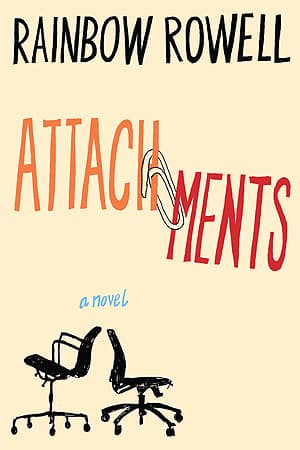
- Attachments
Rainbow Rowell
3.9 (171k) average on GoodreadsYoung AdultFeatures Rowell's unique voice and focus on character-driven romance, though for an adult audience.
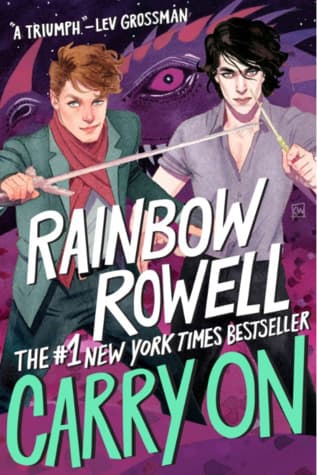
- Carry On
Rainbow Rowell
4.2 (205k) average on GoodreadsFantasyIs the actual 'Simon Snow' fan fiction that Cath writes in 'Fangirl,' offering a direct connection to the in-world story.
- The Perks of Being a Wallflower
Stephen Chbosky
4.2 (1.3M) average on GoodreadsPsychologyWhile both Fangirl and The Perks of Being a Wallflower feature introverted protagonists navigating the complexities of adolescence and early adulthood, their approaches differ significantly. Perks tackles heavier themes of trauma, mental health, and abuse with a more raw and explicit intensity, often through epistolary format. Fangirl, while addressing anxiety and family trauma, maintains a generally lighter tone and focuses more on the gradual process of social integration and self-discovery through creative expression and supportive relationships. Chbosky's work is often praised for its unflinching look at dark themes (e.g., [Smith, J. (2000). Adolescent Literature and Trauma. University Press]), whereas Rowell's strength lies in normalizing the quieter struggles of young adulthood and finding joy and connection within them.
- Harry Potter and the Sorcerer's Stone
J.K. Rowling
4.5 (7M) average on GoodreadsFantasyRescued from a miserable life under the stairs, an orphaned boy discovers he's a wizard destined for a magical school, where he uncovers a dangerous secret tied to the dark wizard who murdered his parents.
- The Hunger Games
Suzanne Collins
4.3 (6.4M) average on GoodreadsFantasyIn a future where children fight to the death on live television, Katniss Everdeen volunteers for the arena, turning a death sentence into a fight for survival and a spark of rebellion.




Enjoyed the summary?
A summary gives you the shape of the book. The book itself has the detail, the examples and the voice.
Find Fangirl on AmazonAs an Amazon Associate, BookBrief earns from qualifying purchases. How we're funded