

Core Idea
- Difficulty
- Medium
- Read it if
- You are fascinated by the mind and methods of a controversial modern titan of industry, curious about the inner workings of SpaceX and Tesla, or want to understand the extreme demands and singular vision that can drive unprecedented technological advancement.
- Skip it if
- You prefer a more critical or balanced examination of Musk's impact, are looking for a deep dive into the technical aspects of his companies, or are turned off by extensive biographical detail that occasionally verges on hagiography.
Key Takeaways from Elon Musk
The 'Demon Mode' Driver
Musk's intensity and emotional volatility are inseparable from his relentless innovation.
Elon Musk's personality has extreme mood swings, a craving for drama, and a 'crisis mode' mindset that has shaped most of his adult life. Isaacson suggests these 'demons,' partly from a traumatic childhood, are not just side effects but are essential to his ventures. This intense, often destructive, drive helps him push boundaries, demand the impossible from his teams, and focus intensely on his missions. It is a double-edged sword: the traits that help him revolutionize industries also make him a difficult and sometimes harsh leader, creating a high-pressure, high-turnover environment. Understanding this central tension is key to understanding Musk's impact.
“Are the demons that drive Musk also what it takes to drive innovation and progress?”
In the book: Musk's own admission of needing to shift away from 'crisis mode' after fourteen years, immediately followed by his secret acquisition of Twitter shares, demonstrates this ingrained behavior. His childhood bullying and complex relationship with his father are cited as foundational to his emotional landscape.
Try this: For leaders, this highlights the often-uncomfortable truth that extreme drive can be tied to complex psychological factors. It prompts reflection on whether a more balanced leadership style could achieve similar results or if a certain level of 'chaos' is inherent to radical innovation. It also cautions against romanticizing such intensity without acknowledging its human cost.
Related ideas: crisis-mode-leadership, innovation-drivers, psychological-impact-on-leadership
First Principles Thinking
Musk's methodical approach to problem-solving, breaking down complex issues to their fundamental truths.
Musk's use of first principles thinking is a foundation of his engineering and business success. Instead of copying others, he breaks problems down to their basic parts, questioning all assumptions. This helps him find new, often more efficient, solutions that go against common ideas. For example, when rockets were expensive, he did not just try to improve existing designs. He asked why rockets were expensive in the first place. This led to SpaceX's focus on reusable parts and making things in-house, greatly reducing costs and increasing launch frequency.
“You basically boil things down to the most fundamental truths and then reason up from there.”
In the book: The development of reusable rockets at SpaceX, where he challenged the premise that rockets must be expendable, is a prime example. Similarly, his approach to battery costs at Tesla involved understanding the raw material costs of nickel, cobalt, and lithium, rather than accepting prevailing battery pack prices.
Try this: Adopt first principles thinking by consistently asking 'why' until you reach a fundamental truth. Challenge industry norms and conventional wisdom. When facing a problem, break it down into its smallest, most irreducible parts before attempting to build a solution. This can unlock disruptive innovation in any field.
Related ideas: first-principles, systems-thinking, disruptive-innovation
The Grand Mission Imperative
Musk's ventures are driven by a profound, almost messianic, sense of mission for humanity's future.
Unlike many entrepreneurs driven by profit, Musk's main goal is a deep belief in humanity's long-term survival and progress. Whether it is making humanity multi-planetary with SpaceX, speeding up the move to sustainable energy with Tesla, or protecting AI's future, his companies are all parts of a larger, connected mission. This 'mission imperative' allows him to take huge financial risks, overcome seemingly impossible engineering challenges, and inspire a level of dedication from his employees that purely commercial goals might not achieve. It is a powerful, almost religious, passion that sets him apart.
“I want to do useful things.”
In the book: His founding of SpaceX to make life multi-planetary and Tesla to accelerate sustainable energy are direct manifestations of this. His concern about AI's existential risk, leading to the formation of OpenAI (and later xAI), also fits this pattern of addressing perceived threats to humanity's future.
Try this: Define your 'why' beyond profit. Connect your work to a larger purpose or impact, even if it's a smaller scale than Musk's. This provides resilience, motivates teams, and helps in navigating inevitable setbacks. Articulating a compelling mission can attract talent and investment that aligns with your values.
Related ideas: mission-driven-leadership, purpose-over-profit, existential-risk
Engineering as a Religion
Musk's deep immersion in engineering details and his belief in its power to solve problems.
Musk is not just a CEO; he is a chief engineer who believes engineering can solve almost any problem. He has a strong understanding of technical details across many fields, from rocket engines to battery chemistry to software. He often gets deeply involved in design reviews, challenging engineers, finding flaws, and sometimes suggesting solutions himself. This hands-on, detailed approach helps him make informed, often unusual, technical decisions that drive his companies' innovation. His focus on 'the machine that builds the machine'—the manufacturing process itself—shows this engineering-focused philosophy.
“The factory is the product.”
In the book: His direct involvement in design reviews for the Cybertruck, the Starship, and the Tesla Gigafactories, where he often points out specific engineering flaws or suggests radical redesigns, highlights this. The quote 'The factory is the product' encapsulates his belief that the manufacturing process is as critical an engineering challenge as the product itself.
Try this: For leaders, cultivate a deep understanding of the core technical aspects of your business. Don't delegate all technical decisions. Get your hands dirty, ask probing questions, and understand the 'how' as much as the 'what.' This fosters credibility, enables better decision-making, and can inspire your technical teams.
Related ideas: engineering-leadership, technical-depth, manufacturing-innovation
The 'Hardcore' Work Ethic
Musk demands extreme dedication and an 'all-in' commitment from himself and his employees.
Musk operates with an almost brutal work ethic, often sleeping at factories and expecting similar commitment from his employees. He believes that reaching his ambitious goals requires an extraordinary amount of effort. While this approach helps projects move forward quickly, it also leads to high employee burnout, turnover, and a culture of intense pressure. He expects everyone on his team to share his dedication, seeing anything less as a lack of commitment to the mission. This 'hardcore' mindset is a core part of how he operates.
“Work like hell. I mean, you just have to put in 80 to 100 hour weeks every single week. [This] improves the odds of success.”
In the book: Numerous accounts of employees working 80-100 hour weeks, sleeping under desks, and Musk himself spending nights on the factory floor during critical production ramp-ups (e.g., Tesla Model 3 'production hell') illustrate this demanding culture.
Try this: While not advocating for unsustainable work hours, this takeaway prompts reflection on the level of effort truly required for ambitious goals. It suggests that significant achievements often demand extraordinary commitment. Leaders should consider how to inspire deep dedication while also managing employee well-being, perhaps by clearly defining periods of intense effort versus periods of recovery.
Related ideas: work-ethic, high-performance-culture, burnout-risk
Master of Narrative and Spectacle
Musk leverages media and public attention to further his goals, often with controversial tactics.
Musk is skilled at getting public attention. He uses social media (especially Twitter/X, which he bought) and bold public statements to create buzz, attract talent, get investments, and even pressure regulators. He knows that spectacle and controversy can be strong tools to get noticed and spread his message, even if it means alienating some people. His willingness to talk directly, often provocatively, with the public and critics helps him control stories and maintain a larger-than-life image that serves his companies' interests, though sometimes at the cost of his own reputation or legal issues.
“He understood that to get attention, you had to stir things up.”
In the book: His frequent and often controversial tweets regarding Tesla stock, Dogecoin, or political matters. The dramatic unveilings of new products (Cybertruck, Starship prototypes) that are as much showmanship as they are product launches. His acquisition of Twitter itself is the ultimate demonstration of his desire to control the 'digital public square' and narrative.
Try this: Leaders can learn the power of narrative and direct communication. Understand how to leverage media, social or traditional, to tell your story and rally support. However, it also serves as a cautionary tale about the fine line between effective communication and reckless provocation, and the importance of considering the long-term impact of public statements.
Related ideas: public-relations, brand-building, social-media-strategy
The 'Chief Problem Solver' Role
Musk excels at identifying and relentlessly attacking bottlenecks and critical path items.
Musk's real skill often lies not in being the only visionary (though he has a clear vision), but in his ability to find the single most critical problem or 'bottleneck' in a complex project. He then puts all resources toward solving it. He focuses relentlessly on the critical path, constantly questioning assumptions and demanding faster, more efficient solutions. This 'chief problem solver' mindset helps him overcome organizational inertia and make progress on seemingly impossible issues. He often does this by personally getting into the details and demanding immediate action from his teams.
“I'm not a visionary. I'm just good at finding things that are broken and fixing them.”
In the book: His intense focus on fixing the 'production hell' of the Model 3, personally overseeing factory lines and making radical changes. His direct involvement in solving Starship's heat shield challenges or Raptor engine development. He constantly asks, 'What's the critical path? What's the biggest constraint?'
Try this: Identify the absolute biggest bottleneck in your project or organization. Don't get distracted by smaller issues. Focus disproportionate resources and attention on solving that one critical problem. This requires ruthless prioritization and the ability to cut through noise, a skill Musk exemplifies.
Related ideas: bottleneck-management, critical-path-analysis, problem-solving-leadership
The Cycle of Creation and Destruction
Musk's tendency to build, then often disrupt or dismantle, even his own creations.
Musk seems to thrive in a constant state of creative destruction. He builds extraordinary companies and technologies, but then often makes big changes, dismantles existing structures, or even creates new entities that compete with or replace his previous ventures. This is not always planned; it often comes from his restless nature, his 'crisis mode' need, and his belief in constant improvement. His purchase of Twitter (renaming it X) and the big changes that followed are a prime example of this destructive-creative cycle. This shows his desire to constantly reshape and improve, even if it means alienating loyalists or causing internal problems.
“He enjoyed the chaos, the drama, the struggle.”
In the book: The radical rebranding of Twitter to X, the rapid changes in company culture, and the swift dismissal of long-term employees after the acquisition. The creation of xAI after being involved with OpenAI, demonstrating a willingness to build new entities when existing ones no longer align perfectly with his evolving vision.
Try this: Embrace a mindset of continuous iteration and be willing to challenge your own successes. Don't become overly attached to existing structures or ideas if better ones emerge. However, recognize the human cost of constant disruption and consider how to balance innovation with stability for long-term organizational health.
Related ideas: creative-destruction, organizational-change, iterative-development
High Tolerance for Risk & Failure
Musk's willingness to bet big, even when the odds are stacked against him.
Musk has a very high tolerance for risk, both personal and financial. He has repeatedly put his entire personal fortune into his ventures (e.g., funding SpaceX and Tesla after PayPal), and he pushes his teams to try seemingly impossible engineering feats. He sees failure not as an end, but as a key chance to learn, a necessary part of radical innovation. This willingness to 'fail fast' and learn from mistakes helps his companies improve quickly and pursue bold goals that most risk-averse organizations would never attempt. This mindset is crucial for pushing the limits of what technology can do.
“Failure is an option here. If things are not failing, you are not innovating enough.”
In the book: The early failures of SpaceX rockets (Falcon 1), which nearly bankrupted the company, yet he persisted and learned from each attempt. Tesla's near-death experiences during production ramps, where Musk continued to double down despite immense financial pressure. His quote directly supports this philosophy.
Try this: Cultivate a culture that embraces calculated risk and views failure as a learning opportunity, not a terminal event. Encourage experimentation and rapid prototyping. Understand that groundbreaking innovation rarely happens without a willingness to step into the unknown and accept potential setbacks. Build resilience into your plans to recover from inevitable failures.
Related ideas: risk-tolerance, failure-as-learning, entrepreneurial-courage
Elon Musk Quotes
“I would like to die on Mars. Just not on impact.”
“When something is important enough, you do it even if the odds are not in your favor.”
“Failure is an option here. If things are not failing, you are not innovating enough.”
“The problem with a lot of smart people is that they think they know everything.”
“Every person in your company is a vector. Your company's success is the sum of all vectors.”
“Starting a company is like eating glass and staring into the abyss.”
“I think it is possible for ordinary people to choose to be extraordinary.”
“Don't confuse your brain with the internet.”
“If you're trying to create a company, it's like baking a cake. You have to have all the ingredients in the right proportion.”
“He saw the world not as it was, but as it could be, and he was driven to make that future a reality.”
“The factory is the product.”
“You can't just have a great product; you also have to have a great story.”
“I'm a fairly emotional guy. I'm not some robot.”
“It's not about the money. It's about changing the future and being inspired by the future.”
Quiz
10 questions on the main ideas. Each answer comes with a short explanation.
Question 1
Which of the following was NOT explicitly mentioned as an industry Elon Musk helped lead the world into, according to the book description?
- Electric vehicles
- Private space exploration
- Social media platforms
- Artificial intelligence
Show answer
C. Social media platforms The description states Musk helped lead the world into electric vehicles, private space exploration, and artificial intelligence. While he took over Twitter, it doesn't say he 'led the world into' social media platforms.
Question 2
What significant event from Elon Musk's childhood is described as leaving him in the hospital for a week?
- A severe illness requiring intensive care
- An accident during a science experiment
- Being beaten by bullies and pushed down concrete steps
- A sports injury from a rugby match
Show answer
C. Being beaten by bullies and pushed down concrete steps The text explicitly states: 'One day a group pushed him down some concrete steps and kicked him until his face was a swollen ball of flesh. He was in the hospital for a week.'
Question 3
According to the description, what lasting impact did Elon Musk's father have on his psyche?
- He inspired Musk's passion for engineering and innovation.
- He instilled a calm and stable demeanor in Musk.
- He left emotional scars that contributed to Musk's complex personality.
- He taught Musk the importance of avoiding conflict and drama.
Show answer
C. He left emotional scars that contributed to Musk's complex personality. The text states, 'But the physical scars were minor compared to the emotional ones inflicted by his father... His father’s impact on his psyche would linger.'
Question 4
By the beginning of 2022, after a year of significant achievements, what specific personal realization did Musk express about his mindset?
- He needed to delegate more responsibilities to his teams.
- He needed to shift away from being in a constant 'crisis mode'.
- He wanted to spend more time with his family.
- He felt a need to retire from his current ventures.
Show answer
B. He needed to shift away from being in a constant 'crisis mode'. Musk stated, 'I need to shift my mindset away from being in crisis mode, which it has been for about fourteen years now, or arguably most of my life.'
Question 5
Which of the following characteristics is NOT used to describe Elon Musk's adult personality in the provided text?
- An exceedingly high tolerance for risk
- A calm and measured temperament
- Prone to abrupt Jekyll-and-Hyde mood swings
- A maniacal intensity that was callous and at times destructive
Show answer
B. A calm and measured temperament The text describes him as 'a tough yet vulnerable man-child, prone to abrupt Jekyll-and-Hyde mood swings, with an exceedingly high tolerance for risk, a craving for drama, an epic sense of mission, and a maniacal intensity that was callous and at times destructive.' A calm and measured temperament is the opposite of this description.
Question 6
What did Elon Musk secretly begin doing even as he spoke about shifting away from 'crisis mode' at the beginning of 2022?
- Developing a new electric car model
- Planning a new space mission
- Buying up shares of Twitter
- Investing in a new artificial intelligence startup
Show answer
C. Buying up shares of Twitter The text states, 'Even as he said it, he was secretly buying up shares of Twitter, the world’s ultimate playground.'
Question 7
What symbolic connection did Musk make between his childhood bullying experiences and his acquisition of Twitter?
- Twitter represented a platform to advocate against bullying.
- Owning Twitter gave him control over 'the playground' where he was once bullied.
- He saw Twitter as a place to create a safe space for others, unlike his own childhood.
- Twitter allowed him to confront his past bullies directly.
Show answer
B. Owning Twitter gave him control over 'the playground' where he was once bullied. The text says, 'Over the years, whenever he was in a dark place, his mind went back to being bullied on the playground. Now he had the chance to own the playground.'
Question 8
What is the central question the book aims to address, as posed by the author in the description?
- How can one replicate Elon Musk's business success?
- Are the psychological drives behind Musk's personality also essential for innovation and progress?
- What are the ethical implications of private space exploration?
- How did Elon Musk become the richest man on Earth?
Show answer
B. Are the psychological drives behind Musk's personality also essential for innovation and progress? The description concludes with, 'The result is the revealing inside story... that addresses the question: are the demons that drive Musk also what it takes to drive innovation and progress?'
Question 9
In 2021, how many rockets did SpaceX launch into orbit, and how many cars did Tesla sell, according to the description?
- Twenty-one rockets, half a million cars
- Thirty-one rockets, a million cars
- Forty-one rockets, two million cars
- Eleven rockets, a quarter-million cars
Show answer
B. Thirty-one rockets, a million cars The description states, 'after a year marked by SpaceX launching thirty-one rockets into orbit, Tesla selling a million cars'.
Question 10
Walter Isaacson's methodology for writing this book included all of the following EXCEPT:
- Shadowing Musk for two years
- Conducting interviews with Musk's adversaries
- Analyzing public financial records exclusively
- Attending Musk's meetings and walking his factories with him
Show answer
C. Analyzing public financial records exclusively The text details Isaacson's immersive approach: 'For two years, Isaacson shadowed Musk, attended his meetings, walked his factories with him, and spent hours interviewing him, his family, friends, coworkers, and adversaries.' It does not mention an exclusive reliance on public financial records.
Elon Musk FAQ
Does Elon Musk's childhood trauma influence his adult behavior and business decisions?
Yes, the book details how Musk's experiences with bullying and his tumultuous relationship with his father left lasting emotional scars, contributing to his risk tolerance, mood swings, and a deep-seated need to control his environment, impacting his leadership style and entrepreneurial drive.
What is the 'Jekyll-and-Hyde' nature of Elon Musk described in the book?
Walter Isaacson portrays Musk as a 'tough yet vulnerable man-child' prone to abrupt mood swings, showcasing moments of brilliant vision and intense focus alongside periods of dramatic, sometimes destructive, behavior and insensitivity.
How does Walter Isaacson's biography of Elon Musk differ from other media portrayals or news articles?
Isaacson's biography offers an 'astonishingly intimate' and in-depth perspective, based on two years of shadowing Musk, attending meetings, and extensive interviews with his inner circle, providing a nuanced view beyond typical media narratives.
Does the book explore the role of 'crisis mode' in Elon Musk's career?
Absolutely. Musk himself acknowledges being in 'crisis mode' for much of his life, and the book examines how this constant state of urgency and drama has both fueled his innovations and contributed to his personal and professional challenges.
What companies and innovations are covered in the biography?
The book extensively covers Musk's foundational roles in leading the world into electric vehicles (Tesla), private space exploration (SpaceX), artificial intelligence, and his controversial acquisition of Twitter, detailing the triumphs and turmoil within each venture.
How does the book address the question of whether Musk's 'demons' drive his innovation?
This is a central theme of the biography. Isaacson meticulously explores the argument that the very same intense, sometimes problematic, personality traits and compulsions that drive Musk may also be essential to his unparalleled ability to innovate and push technological boundaries.
What insights does the book provide into Musk's decision to acquire Twitter?
The biography reveals that Musk's decision to buy Twitter was partly rooted in his childhood experiences with bullying, seeing it as an opportunity to 'own the playground' and reshape a platform that he felt had become a source of conflict and control.
Is 'Elon Musk' by Walter Isaacson a critical or laudatory biography?
Isaacson's approach is balanced, presenting a revealing inside story filled with both 'amazing tales of triumphs and turmoil.' It aims to understand Musk's complexities rather than solely praise or condemn him, allowing readers to draw their own conclusions.
About the author
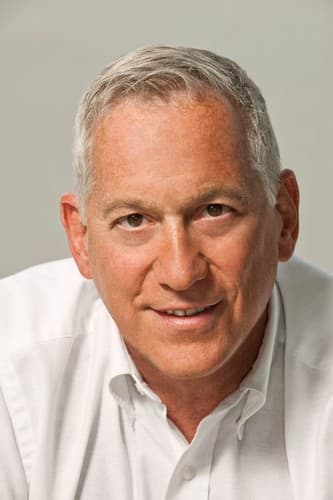
Walter Isaacson is an American author and journalist known for his biographies of influential figures in science and technology. His notable works include "Steve Jobs," "Einstein: His Life and Universe," "Benjamin Franklin: An American Life," "Elon Musk," and "Leonardo da Vinci," which explore the lives and contributions of these prominent individuals. Isaacson's writing often combines detailed research with engaging storytelling.
Similar books
- Steve Jobs
Walter Isaacson
4.1 (957k) average on GoodreadsBusinessAnother comprehensive biography by Isaacson, detailing the life of a complex, visionary, and often difficult tech icon.
- Shoe Dog: A Memoir by the Creator of NIKE
Phil Knight
4.5 (147k) average on GoodreadsBusinessOffers an inside look at the relentless drive, challenges, and unconventional methods required to build a global brand from scratch.
- Freakonomics: A Rogue Economist Explores the Hidden Side of Everything
Steven D. Levitt
4.0 (709k) average on GoodreadsBusinessThis book uses economic principles to reveal the surprising incentives behind everything from drug dealing and real estate to cheating teachers and the decline of crime.
- The Tipping Point: How Little Things Can Make a Big Difference
Malcolm Gladwell
4.0 (690k) average on GoodreadsBusinessMalcolm Gladwell explains how small, targeted actions can start widespread changes in trends, behaviors, and ideas.
- Outliers: The Story of Success
Malcolm Gladwell
4.2 (556k) average on GoodreadsBusinessMalcolm Gladwell argues that true success is not just about individual talent, but about the hidden advantages of culture, opportunity, and unique experiences that shape extraordinary lives.
- The Subtle Art of Not Giving a F*ck: A Counterintuitive Approach to Living a Good Life
Mark Manson
3.9 (530k) average on GoodreadsBusinessEmbrace your flaws and stomach life's lemons, because true happiness isn't about relentless positivity, but about choosing what truly matters to give a f*ck about.






Enjoyed the summary?
A summary gives you the shape of the book. The book itself has the detail, the examples and the voice.
Find Elon Musk on AmazonAs an Amazon Associate, BookBrief earns from qualifying purchases. How we're funded