

Core Idea
- Difficulty
- Easy
- Read it if
- You're tired of conventional self-help advice, are open to blunt language, and want a practical framework for prioritizing what truly matters in your life.
- Skip it if
- You are easily offended by profanity, prefer a purely optimistic outlook, or are looking for a step-by-step guide to achieving specific goals.
Key Takeaways from The Subtle Art of Not Giving a F*ck
The Subtle Art of Not Giving a F*ck
Prioritize what truly matters by selectively caring less about everything else.
Manson says that life naturally has problems and suffering. The goal is not to get rid of problems, but to choose which ones you want to have and which you are willing to work for. This 'subtle art' is not about not caring; it is about saving your emotional energy and attention for values that truly match who you are. By consciously deciding what you do not care about, you make mental and emotional room to invest deeply in what truly improves your life. This chosen indifference helps you free yourself, keeping you from being constantly overwhelmed by outside pressures and unimportant worries. It is about knowing that you have a limited amount of 'f*cks' and must use them wisely.
“The secret to a good life is not to give a f*ck about more things, but rather, to give a f*ck about fewer things, only the things that are true and immediate and important.”
In the book: Manson frequently uses his own life experiences, such as his travels and various entrepreneurial ventures, to illustrate how chasing external validation or superficial goals led to unhappiness, while focusing on intrinsic values brought genuine contentment.
Try this: Identify three areas in your life where you currently give too many 'f*cks' (e.g., social media validation, other people's opinions, minor inconveniences). Consciously decide to reduce your emotional investment in these areas. Redirect that freed-up energy towards one core value or goal you genuinely care about.
Related ideas: selective-indifference, value-prioritization, emotional-economy
Happiness is a Problem
True happiness comes from solving problems, not avoiding them.
Manson questions the common cultural story that happiness is a constant state of good feelings and no problems. He says that life is a never-ending series of problems, and real happiness is not the lack of these problems, but the joy from solving them. The quality of your life depends on the quality of the problems you choose to face and how you solve them. If your problems are meaningful and match your values, solving them brings satisfaction. On the other hand, avoiding problems or having unimportant ones leads to a shallow life that ultimately does not satisfy. This view changes how we see suffering, making it a necessary part of a meaningful life.
“Don’t hope for a life without problems. There’s no such thing. Instead, hope for a life full of good problems.”
In the book: Manson discusses the Hedonic Treadmill, where people constantly seek new pleasures to maintain a baseline level of happiness, demonstrating that external achievements provide only temporary boosts. He contrasts this with the sustained satisfaction found in tackling significant, value-driven challenges.
Try this: Instead of wishing away a current struggle, identify the specific problem you're facing. Ask yourself: 'Is this a problem I *want* to have? Is it aligned with my values?' If yes, reframe it as an opportunity for growth and dedicate yourself to finding a solution, embracing the process.
Related ideas: problem-solving, hedonic-treadmill, meaningful-struggle
You Are Not Special
Embrace mediocrity to find true self-worth and purpose.
Manson criticizes the modern self-esteem movement and the common belief that everyone is special and meant for great things. He says that this 'special snowflake' idea leads to feeling entitled, anxious, and unable to handle failure. By accepting that you are not special—that being average is normal and perfectly fine—you remove the huge pressure to always prove you are exceptional. This acceptance allows for real self-improvement, as it lets you focus on getting good at things you truly care about, instead of chasing an impossible ideal of being better than everyone. It encourages humility and a more realistic view of life and your place in it.
“The vast majority of people are mediocre at most things. Even if you’re exceptional at one thing, you’re probably mediocre at most other things. That’s just the nature of life.”
In the book: Manson points to the 'everyone gets a trophy' mentality and the rise of social media, which fosters constant comparison and the need for external validation, leading to widespread anxiety and a fragile sense of self-worth.
Try this: Reflect on an area where you feel pressure to be 'the best.' Consciously release that pressure. Instead, focus on incremental improvement and the joy of the process, rather than the outcome. Embrace the idea that being 'good enough' is often more than sufficient.
Related ideas: mediocrity-acceptance, entitlement-critique, humility-value
Choose Your Values Wisely
Values dictate your problems, so pick healthy, internally-driven ones.
Manson points out that our values are the basis of what we 'give a f*ck' about. Bad values lead to bad problems and, as a result, a bad life. He separates good, healthy values (like honesty, creativity, openness, standing up for yourself) from bad, unhealthy values (like pleasure, money, always being right, always being positive). Healthy values are based in reality, help society, and you can control them. Unhealthy values are often superficial, depend on outside things, and lead to constant anxiety and unhappiness. By carefully looking at and choosing your values, you take control of your life's direction and quality, shaping your experiences and the struggles you meet.
“Our values determine the metrics by which we measure ourselves and everyone else. Our values are therefore in our control. We choose what to give a f*ck about.”
In the book: Manson discusses how a value like 'always being happy' is inherently unhealthy because life is not always happy, leading to self-denial and emotional suppression. He contrasts this with values like 'integrity' or 'growth,' which provide a stable foundation regardless of external circumstances.
Try this: List your top three current values. Then, evaluate each: Is it reality-based? Socially constructive? Controllable? If not, identify a healthier, internally-driven value to replace it. For example, instead of 'being liked by everyone,' choose 'expressing my authentic self.'
Related ideas: value-assessment, internal-vs-external-values, self-control
You Are Always Choosing
Even inaction is a choice, and you are always responsible for your experiences.
Manson stresses taking full personal responsibility. He says that while you may not control every event that happens, you are always 100% responsible for how you respond to it. This idea can be hard to accept because it takes away the ability to feel like a victim or blame outside forces. However, it is also very empowering. By accepting full responsibility for your choices, actions, and even your emotional reactions, you regain control over your life. This is not about blaming yourself for things you cannot control, but knowing that your interpretation and response are within your control, and these are what define your experience and progress. Not acting is a choice, and its results are also your responsibility.
“We are responsible for everything in our lives, no matter the external circumstances. We are responsible for how we interpret those circumstances, how we react to them, and what we do with them.”
In the book: Manson uses the story of his friend, Josh, who, despite facing significant adversity (a difficult upbringing, being robbed), chose to take responsibility for his own life path and eventually found success and happiness, demonstrating the power of agency.
Try this: When facing a difficult situation, instead of asking 'Why is this happening to me?' or 'Whose fault is this?', ask 'How am I choosing to respond to this? What action can I take, even a small one, to influence the outcome or my perception?'
Related ideas: radical-responsibility, agency, victim-mentality
Be Wrong, Embrace Uncertainty
Growth requires admitting ignorance and challenging your own beliefs.
Manson supports the value of uncertainty and being willing to be wrong. Our brains tend to confirm what we already believe, which creates 'confirmation bias' and makes us resist new information that might challenge our views. But real growth and learning happen only when we are open to the chance that we might be wrong. Accepting uncertainty means questioning your assumptions, being open enough to admit you don't know, and always looking for new ways of thinking. This intellectual humility helps personal growth, letting you adapt, change, and make better decisions instead of sticking strictly to old or wrong beliefs. It is about valuing growth more than being 'right.'
“The only way to achieve meaning and a sense of importance is to know what you’re *not* giving a f*ck about, and to only give a f*ck about what truly matters.”
In the book: Manson discusses the Dunning-Kruger effect, where less competent individuals overestimate their abilities, and how this links to our aversion to admitting ignorance. He also highlights the importance of asking 'What if I'm wrong?' as a path to deeper understanding.
Try this: Identify a strong opinion you hold. Actively seek out information or perspectives that challenge that opinion. Engage in a discussion with someone who disagrees, not to win, but to understand their viewpoint. Practice saying, 'I might be wrong about that.'
Related ideas: intellectual-humility, confirmation-bias, growth-mindset
The Pain of Progress
Suffering is inevitable and often necessary for meaningful progress.
This idea repeats that real self-improvement and progress are rarely comfortable. Manson says that suffering is not just something to avoid, but a necessary part of growth. Whether it is the pain of discipline, the discomfort of facing a hard truth, or the struggle of learning a new skill, pain shows that you are pushing limits and growing your abilities. Trying to avoid all suffering leads to staying the same and a superficial life. By accepting the pain that comes with worthwhile efforts, you change it from something that stops you into something that helps positive change, making your achievements more meaningful and your character stronger.
“Growth is an endlessly iterative process. When we choose to grow, we are choosing to suffer. It’s the suffering that makes the growth meaningful.”
In the book: Manson relates this to the pursuit of any skill or mastery, from learning an instrument to building a business. The initial struggles and failures are painful but are precisely what forge competence and a deeper appreciation for the eventual success.
Try this: Identify a goal you've been avoiding due to anticipated difficulty or discomfort. Break down the initial 'pain points' and commit to enduring them for a short, defined period (e.g., 15 minutes of an unpleasant task). Recognize that this discomfort is a sign of progress.
Related ideas: suffering-for-growth, resilience, discomfort-tolerance
The Choice to Act
Motivation is a result of action, not a prerequisite for it.
Manson changes the usual idea about motivation. Many people think they need to feel motivated before they can act. However, Manson says the opposite is often true: taking action, even small, imperfect steps, creates momentum and, in turn, motivation. This 'Do Something' rule encourages you to move past waiting for inspiration. By simply starting, you create a loop where action leads to progress, which then makes you want to continue. This view is very freeing, as it puts the power to start change directly in your hands, no matter your current emotional state. It shifts the focus from passively waiting to actively doing.
“Action isn’t just the effect of motivation; it’s also the cause of it.”
In the book: Manson describes the 'Action-Motivation-Inspiration' cycle: Action leads to Inspiration, which leads to Motivation, which leads to more Action. This contrasts with the common, but often ineffective, 'Inspiration-Motivation-Action' model.
Try this: If you're stuck on a task, don't wait for motivation. Pick the smallest possible first step (e.g., open the relevant document, write one sentence). Commit to just that one step. Often, the momentum from that tiny action will be enough to get you going.
Related ideas: action-over-motivation, momentum-building, do-something-principle
Embrace Imperfection
Don't strive for perfect; strive for 'good enough' to avoid paralysis.
Manson argues against the harmful pursuit of perfection. While trying for excellence is good, the strong need for perfection often leads to putting things off, anxiety, and finally, not doing anything. The fear of not being perfect can stop people from even starting, or finishing, important tasks. By accepting 'good enough,' you free yourself from this paralyzing pressure. This does not mean settling for bad work, but understanding that progress often comes from making small improvements rather than one perfect try. It is about putting completion and learning first, over an impossible ideal, which allows for continuous growth and practical results.
“Don’t try to be perfect. Just try to be good enough. Good enough is often better than perfect, because perfect never gets done.”
In the book: Manson frequently references how the pursuit of 'perfect' often leads to analysis paralysis or endless tweaking, preventing anything from being launched or completed. He implies that many successful ventures started imperfectly and improved over time.
Try this: For a current project, define what 'good enough' looks like. Set a deadline for reaching that 'good enough' state and commit to launching or completing it at that point, rather than endlessly refining. Remind yourself that you can always iterate later.
Related ideas: perfectionism-trap, good-enough, iterative-progress
The Subtle Art of Not Giving a F*ck Quotes
“The desire for more positive experience is itself a negative experience. And, paradoxically, the acceptance of one’s negative experience is itself a positive experience.”
“Don’t hope for a life without problems. There’s no such thing. Instead, hope for a life full of good problems.”
“Who you are is defined by what you’re willing to struggle for.”
“The key to a good life is not giving a fuck about more; it’s giving a fuck about less, giving a fuck about only what is true and immediate and important.”
“We suffer for the simple reason that suffering is biologically useful. It is nature’s preferred agent for inspiring change.”
“Maturity is what happens when one learns to only give a fuck about what’s truly fuckworthy.”
“The more something threatens your identity, the more you will avoid it.”
“Self-improvement is really about choosing better things to give a fuck about.”
“The ticket to emotional health, like that to physical health, comes from eating your veggies—that is, accepting the bland and mundane truths of life.”
“Certainty is the enemy of growth. Nothing is for certain until it has already happened—and even then, it’s still debatable.”
“The more you pursue feeling better all the time, the less satisfied you become, as pursuing something only reinforces the fact that you lack it in the first place.”
“We can be truly successful only at something we’re willing to fail at.”
“Pain is an inextricable thread in the fabric of life, and to tear it out is not only impossible, but destructive: attempting to tear it out unravels everything else with it.”
“The most important moments in life are the moments when you are uncomfortable.”
Quiz
10 questions on the main ideas. Each answer comes with a short explanation.
Question 1
According to Mark Manson, what is the key to improving our lives?
- Turning lemons into lemonade through positive thinking
- Learning to stomach lemons better by accepting painful truths
- Avoiding all negative experiences and emotions
- Constantly seeking extraordinary achievements
Show answer
B. Learning to stomach lemons better by accepting painful truths Manson argues against the conventional 'positive thinking' approach. Instead, he emphasizes that true improvement comes from accepting life's inevitable difficulties ('stomaching lemons') and confronting painful truths rather than avoiding them.
Question 2
What does Manson say is the problem with the 'coddling, let's-all-feel-good mindset' in American society?
- It makes people too competitive and aggressive
- It rewards people with gold medals just for showing up
- It encourages too much critical thinking
- It promotes excessive materialism and greed
Show answer
B. It rewards people with gold medals just for showing up Manson criticizes this mindset for lowering standards and creating unrealistic expectations, specifically mentioning how it rewards minimal effort (like showing up) with undeserved praise, which he believes spoils a generation.
Question 3
What does Manson identify as 'true wealth'?
- Having a large bank account and financial security
- Being famous and widely recognized
- Experience and caring about what you do with your life
- Owning luxurious possessions and properties
Show answer
C. Experience and caring about what you do with your life While acknowledging that 'money is nice,' Manson argues that true wealth comes from meaningful experiences and caring about how you live your life, rather than material possessions or external validation.
Question 4
According to Manson, what must we do to find qualities like courage, perseverance, and honesty?
- Practice daily affirmations and visualization techniques
- Surround ourselves with positive, successful people
- Embrace our fears, faults, and uncertainties and confront painful truths
- Avoid all situations that might cause discomfort or failure
Show answer
C. Embrace our fears, faults, and uncertainties and confront painful truths Manson argues that these valuable qualities emerge not from avoiding difficulties, but from directly facing our limitations and painful realities. By stopping avoidance and starting confrontation, we develop genuine character strengths.
Question 5
What is the 'subtle art' referred to in the book's title?
- The skill of pretending not to care while secretly caring deeply
- The ability to ignore all problems and live carefreely
- The practice of selectively choosing what truly matters to care about
- The technique of using profanity to make philosophical points
Show answer
C. The practice of selectively choosing what truly matters to care about The 'subtle art' is about conscious prioritization. Since we have limited emotional energy, we must deliberately choose which values and problems are worth our attention ('giving a f*ck'), rather than caring about everything indiscriminately.
Question 6
How does Manson support his arguments in the book?
- Exclusively through personal anecdotes and life stories
- Only through references to ancient philosophical texts
- Through a combination of academic research and well-timed humor
- By citing numerous statistical studies and data tables
Show answer
C. Through a combination of academic research and well-timed humor The book description notes that Manson makes arguments 'backed both by academic research and well-timed poop jokes.' This blend of scholarly support and accessible, humorous storytelling characterizes his approach.
Question 7
What does Manson suggest about human limitations?
- They are temporary obstacles that everyone can completely overcome
- They should be ignored in pursuit of constant self-improvement
- We should get to know them and accept them as part of being human
- They are mostly imaginary and created by negative thinking
Show answer
C. We should get to know them and accept them as part of being human Manson emphasizes that humans are inherently flawed and limited—not everyone can be extraordinary. He advises accepting these limitations rather than denying them, as this acceptance is foundational to living a grounded life.
Question 8
What is Manson's view on the concepts of 'winners and losers' in society?
- They don't exist—everyone is equally successful in their own way
- They are entirely determined by luck and external circumstances
- They exist, and some of this reality is not fair or your fault
- They are outdated concepts that no longer apply in modern society
Show answer
C. They exist, and some of this reality is not fair or your fault Manson acknowledges the uncomfortable truth that society does have winners and losers, and that some aspects of this dynamic are unjust or beyond individual control. This realism contrasts with messages that everyone can achieve everything.
Question 9
According to the book's description, what kind of 'moment' does Manson aim to provide?
- A gentle, reassuring pep talk to build confidence
- A grab-you-by-the-shoulders, look-you-in-the-eye moment of real-talk
- A mystical, spiritual awakening through meditation
- A detailed, step-by-step plan for financial success
Show answer
B. A grab-you-by-the-shoulders, look-you-in-the-eye moment of real-talk The description explicitly states that the book offers 'a much-needed grab-you-by-the-shoulders-and-look-you-in-the-eye moment of real-talk.' This reflects Manson's direct, confrontational style meant to cut through superficial positivity.
Question 10
What practical approach does Manson advocate for dealing with life's inevitable problems?
- Redefining all problems as opportunities in disguise
- Choosing better problems to solve based on meaningful values
- Delegating problems to others whenever possible
- Using positive thinking to make problems disappear
Show answer
B. Choosing better problems to solve based on meaningful values A core practical application in the book is that since we always have problems, the key is to select problems aligned with values we care about ('better problems'). This ties to the idea of selectively giving a f*ck about what truly matters.
The Subtle Art of Not Giving a F*ck FAQ
What is 'The Subtle Art of Not Giving a F*ck' about?
It's a self-help book that argues against constant positivity, advocating instead for accepting life's inevitable struggles and focusing your limited energy on what truly matters to you. The core idea is to be selective about your concerns to live a more authentic and contented life.
Does the 'not giving a f*ck' approach actually work?
Yes, the book presents it as a practical mindset shift backed by psychological principles. It works by helping you prioritize values, accept limitations, and reduce anxiety over things outside your control, leading to greater resilience and satisfaction.
How is this book different from other self-help books?
It rejects the common self-help emphasis on relentless positivity and 'you can do anything' messaging. Instead, it uses blunt, humorous language to promote acceptance of pain, personal responsibility, and focusing on a few meaningful values.
What does Mark Manson mean by 'values' in the book?
Values are the core principles you choose to care about deeply, such as honesty or curiosity. Manson argues that selecting healthy, realistic values (rather than superficial ones like fame) is crucial because they guide where you invest your limited emotional energy.
Is this book just about being apathetic or negative?
No, it's not about apathy. It's about being selectively caring—choosing what truly matters to you and letting go of trivial concerns. The goal is to engage more deeply with important aspects of life by ignoring societal pressures and unnecessary worries.
How does it compare to stoic philosophy?
It shares similarities with stoicism, such as accepting what you can't control and focusing on personal virtue. However, Manson presents these ideas in a modern, accessible style with profane humor and pop culture references, making it more relatable to contemporary readers.
What are the key takeaways from the book?
Key takeaways include: you have limited f*cks to give, so choose values wisely; happiness comes from solving problems, not avoiding them; and embracing failure and uncertainty is essential for growth. It emphasizes responsibility and action over passive positivity.
Who should read this book?
It's ideal for people feeling overwhelmed by societal pressures to be constantly happy or successful, or those seeking a no-nonsense approach to self-improvement. Readers who appreciate blunt, humorous advice on psychology and philosophy will find it valuable.
What is the 'subtle art' referred to in the title?
The 'subtle art' is the skill of discerning what truly deserves your attention and energy, then letting go of the rest without guilt. It involves mindfulness in choosing battles and accepting life's imperfections rather than trying to control everything.
Does the book provide practical steps to apply its ideas?
Yes, it offers practical advice such as identifying your core values, confronting fears directly, and taking responsibility for your choices. It uses stories and examples to illustrate how to implement these concepts in daily life for better mental health.
About the author

Mark Manson is an author known for his work in the self-help genre. His notable book, "The Subtle Art of Not Giving a F*ck: A Counterintuitive Approach to Living a Good Life," offers a unique perspective on personal development and well-being. Manson's writing emphasizes practical advice and a straightforward approach to life's challenges.
Similar books
- The 7 Habits of Highly Effective People: Powerful Lessons in Personal Change
Stephen R. Covey
4.1 (524k) average on GoodreadsBusinessCovey's book, a classic in personal development, focuses on principles-based living, proactive behavior, and synergistic relationships. While both emphasize values, Covey's approach is more structured, corporate-friendly, and focuses on building positive habits. Manson, conversely, is less about building specific 'habits' and more about a fundamental shift in mindset regarding what to care about. Covey's tone is more formal and prescriptive, whereas Manson is irreverent and conversational. Manson might argue that Covey's emphasis on 'effectiveness' can sometimes lead to an outward-focused striving rather than an inward acceptance of struggle.
- Steve Jobs
Walter Isaacson
4.1 (957k) average on GoodreadsBusinessSteve Jobs was a visionary who fused creativity and technology to revolutionize six industries and shape our digital world.
- Freakonomics: A Rogue Economist Explores the Hidden Side of Everything
Steven D. Levitt
4.0 (709k) average on GoodreadsBusinessThis book uses economic principles to reveal the surprising incentives behind everything from drug dealing and real estate to cheating teachers and the decline of crime.
- The Tipping Point: How Little Things Can Make a Big Difference
Malcolm Gladwell
4.0 (690k) average on GoodreadsBusinessMalcolm Gladwell explains how small, targeted actions can start widespread changes in trends, behaviors, and ideas.
- Outliers: The Story of Success
Malcolm Gladwell
4.2 (556k) average on GoodreadsBusinessMalcolm Gladwell argues that true success is not just about individual talent, but about the hidden advantages of culture, opportunity, and unique experiences that shape extraordinary lives.
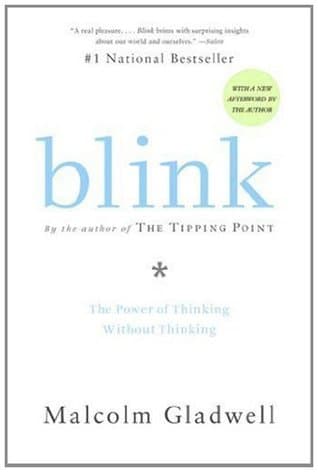
- Blink: The Power of Thinking Without Thinking
Malcolm Gladwell
3.9 (487k) average on GoodreadsBusinessExplore the hidden power of quick judgments and how 'thin-slicing' information helps skilled decision-makers succeed instantly, often without conscious thought.





Enjoyed the summary?
A summary gives you the shape of the book. The book itself has the detail, the examples and the voice.
Find The Subtle Art of Not Giving a F*ck on AmazonAs an Amazon Associate, BookBrief earns from qualifying purchases. How we're funded