
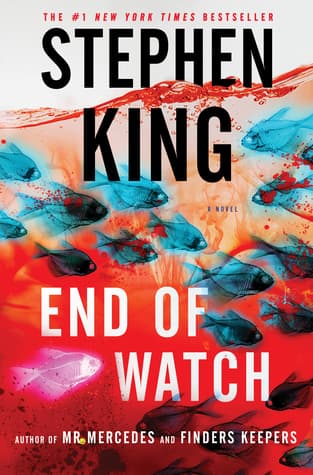
Synopsis
Covers the whole plot, including the ending.
- Difficulty
- Medium
- Pacing
- Fast
- Mood
- Suspenseful, Dark, Thrilling, Melancholy
- Read it if
- You want a thrilling conclusion to the Bill Hodges trilogy, blending detective work with supernatural horror, and don't mind a darker, more melancholic tone.
- Skip it if
- You prefer pure detective fiction without supernatural elements, or find themes of suicide and child endangerment too disturbing.
End of Watch Plot Summary
Covers the whole plot, including the ending.
The Awakening of Brady Hartsfield
Five years after the Mercedes Massacre, Brady Hartsfield is in Room 217 of the Lakes Region Traumatic Brain Injury Clinic, seemingly in a coma. However, his doctors don't know that Brady has woken up with strong psychic powers. He can project his mind into others, controlling their thoughts and actions, even making them commit suicide. He practices on hospital staff and other patients, improving his control. Dr. Felix Babineau, Brady's main doctor, starts to notice strange things and an unusual brain wave pattern, but thinks it's a breakthrough in his experimental treatment, unaware of the truth.
The Suicide of Peter Huntley
Retired detective Bill Hodges, now running 'Finders Keepers' investigations with Holly Gibney, goes to the scene of Peter Huntley's apparent suicide. Huntley, a Mercedes Massacre survivor, shot himself after playing a video game called 'Zappit.' Hodges finds a Zappit console nearby and feels something is wrong, noticing how calm Huntley's suicide note is and how random the act seems. The link to the Mercedes Massacre immediately worries Hodges, who knows Brady Hartsfield is alive, though in a coma.
A Pattern Emerges
More suicides start to happen, all involving people who were either victims or connected to the Mercedes Massacre, and all had recently played the 'Zappit' game. Hodges and Holly begin to make a list, realizing this is not a coincidence. They ask Jerome Robinson, Hodges's young friend and computer expert, to investigate the 'Zappit' game. Jerome discovers that 'Zappit' is a new, highly addictive game that uses hidden messages, meant to be given out through free tablets from a company called 'InFact.' Hodges suspects Brady is behind it, using the game to spread his psychic influence.
Holly's Encounter and Jerome's Danger
Holly, while researching the 'Zappit' game, plays it briefly and feels a disturbing, quick sense of control and dark thoughts, confirming Hodges's suspicions about its harmful nature. Meanwhile, Jerome, looking deeper into the game's code and distribution, accidentally gets Brady's attention. Brady tries to influence Jerome's sister, Barbara, to hurt him, but Barbara's strong will and love for her brother help her resist most of the compulsion, though she is deeply troubled by the experience.
Brady's Origin Story
Dr. Babineau, increasingly worried by Brady's brain activity and the strange events, starts to confide in Hodges. He shares details about Brady's difficult childhood, his abusive mother, and the trauma that shaped him. Babineau guesses that Brady's dormant psychic abilities might have woken up or gotten stronger because of the experimental drug he gave, though he doesn't fully understand how evil Brady is. This information helps Hodges and Holly understand Brady's deep depravity and his long-held desire for revenge.
The 'Zappit' Plan Unveiled
Through Jerome's continued investigation, Hodges, Holly, and Jerome find out the full extent of Brady's plan. He plans to give out thousands of 'InFact' tablets pre-loaded with 'Zappit' to children and teenagers across the city, especially targeting a big rock concert. His goal is to cause a mass suicide, much larger than the Mercedes Massacre, as a final act of revenge against society. This discovery makes their mission more urgent, as they realize they are racing against time to prevent a huge disaster.
Bill Hodges's Illness
Adding to the immense pressure, Bill Hodges's health gets much worse. He is diagnosed with pancreatic cancer, which is getting worse quickly. This personal fight mixes with his professional one, making his pursuit of Brady Hartsfield not just a duty, but a race against his own death. His illness makes him more vulnerable to Brady's psychic attacks, and he feels more tired and in pain, but his determination to stop Brady remains strong, driven by a desire to protect his friends and the city.
The Confrontation at the Clinic
Knowing he has little time, both for himself and for the city, Bill Hodges decides on a desperate step. He goes to the Lakes Region Traumatic Brain Injury Clinic to confront Brady Hartsfield directly. He enters Room 217, where Brady seems to be in a coma. Hodges, now very ill, begins a mental battle with Brady, using his own willpower and his intense hatred for the killer as a weapon. He fights against Brady's psychic projections and attempts to control him, enduring great mental and emotional stress.
The Sacrifice and the End
During the intense psychic fight in Room 217, Hodges, weakened by cancer, realizes that the only way to truly stop Brady and prevent the mass suicide is to kill Brady. With a burst of willpower, he grabs a pillow and smothers Brady Hartsfield. In doing so, Hodges uses his last bit of strength. He collapses, having finished his final mission. Brady's terror is finally over, but at the cost of the detective's own life, a sad and heroic end to his long battle.
Aftermath and Legacy
Afterward, Holly Gibney and Jerome Robinson are heartbroken by Bill Hodges's death. They mourn their friend and mentor but also find new purpose. The 'Zappit' tablets are recalled, and the city is saved from Brady's terrible plan. Holly, having grown significantly with Hodges's guidance, takes over 'Finders Keepers' and continues his work, carrying on his legacy of seeking justice. Jerome, though still young, provides important tech support, ensuring that Hodges's spirit of watching out for evil lives on through them.
Principal Figures
Bill Hodges
Protagonist
A retired detective battling personal demons and a returning nemesis.
Bill Hodges is a retired, overweight police detective, initially battling depression and suicidal thoughts. He is driven by a strong sense of justice and an unwavering commitment to protect the innocent. Despite his gruff exterior, he cares deeply for his friends, Holly and Jerome. His past encounter with Brady Hartsfield has left him with a personal vendetta, making Brady's return a deeply personal and existential threat. He is pragmatic, resourceful, and possesses a sharp intuition, even as his health deteriorates.
Relationships: Holly Gibney (Partner, protégé, close friend, almost like a daughter); Jerome Robinson (Young friend, tech expert, surrogate son); Brady Hartsfield (Arch-nemesis, object of his ultimate justice)
Brady Hartsfield
Antagonist
The comatose 'Mercedes Killer' who awakens with devastating psychic powers.
Brady Hartsfield is the psychopathic 'Mercedes Killer,' responsible for the massacre and other atrocities. After being in a vegetative state for five years, he awakens with powerful psychokinetic abilities, allowing him to control others' minds and induce suicide. He is driven by a profound hatred for humanity, especially those who wronged him or represent societal norms. His motivation is pure, unadulterated malice and a desire for widespread chaos and revenge, seeing himself as a superior being. He revels in the suffering he causes.
Relationships: Bill Hodges (Object of his intense hatred and desire for revenge); Dr. Felix Babineau (Unwitting enabler of his psychic awakening); His mother (deceased) (Source of his deep psychological trauma and hatred)
Holly Gibney
Supporting
Bill Hodges's socially awkward but brilliant investigative partner.
Holly Gibney is a socially anxious, obsessive-compulsive woman with a unique gift for detail and pattern recognition. She is fiercely loyal to Bill Hodges, who helped her overcome her anxieties and find her purpose. Her past trauma and neuroses make her vulnerable but also give her a unique perspective. She is intelligent, courageous when it counts, and possesses a strong moral compass. She grows significantly throughout the trilogy, becoming more confident and capable, eventually stepping into Hodges's shoes.
Relationships: Bill Hodges (Partner, mentor, close friend, surrogate father figure); Jerome Robinson (Friend, colleague); Brady Hartsfield (Target of her fear and righteous anger)
Jerome Robinson
Supporting
A brilliant young computer expert assisting Hodges and Holly.
Jerome Robinson is a bright, tech-savvy teenager who has been a friend and invaluable asset to Bill Hodges since the first book. He is intelligent, observant, and possesses advanced computer skills, making him crucial in unraveling Brady's digital schemes. Jerome is loyal and courageous, willing to put himself in harm's way to help his friends. He represents hope and the future, contrasting with the aging Hodges. He is a moral anchor and a source of youthful energy for the team.
Relationships: Bill Hodges (Friend, mentor, surrogate father figure); Holly Gibney (Friend, colleague); Barbara Robinson (Younger sister)
Dr. Felix Babineau
Supporting
Brady Hartsfield's primary physician, unwittingly enabling his powers.
Dr. Felix Babineau is a dedicated but somewhat naive neurologist at the Lakes Region Traumatic Brain Injury Clinic. He is driven by a desire for medical breakthroughs and genuinely believes he can help Brady. His experimental drug treatment, meant to awaken Brady from his coma, inadvertently amplifies Brady's latent psychic abilities. Babineau slowly becomes aware of the sinister forces at play but struggles to reconcile them with his scientific understanding, initially dismissing the supernatural elements. He is ultimately a tragic figure, manipulated by Brady.
Relationships: Brady Hartsfield (Patient, unwitting subject of manipulation); Bill Hodges (Confidante, source of information)
Barbara Robinson
Mentioned
Jerome's younger sister, briefly targeted by Brady's influence.
Barbara is Jerome's younger sister, a typical teenager. She is bright and enjoys her brother's company, though sometimes finds him a bit overbearing. She briefly becomes a target of Brady Hartsfield's psychic influence through the 'Zappit' game, experiencing disturbing urges to harm Jerome. Her resistance to Brady's control, though terrifying, demonstrates a strong inner will and the protective power of familial love. She serves as a stark reminder of the widespread danger Brady poses.
Relationships: Jerome Robinson (Older brother); Brady Hartsfield (Brief target of his psychic attack)
Themes & Insights
The Nature of Evil and Its Evolution
The novel shows how evil can change and adapt, moving from physical violence to mind control. Brady Hartsfield, first a killer, becomes a psychic being, proving that evil isn't limited by physical form or closeness. His ability to cause suicide through a simple video game, 'Zappit,' shows how modern technology can become a new weapon for old evils. This theme highlights King's exploration of both human wickedness and supernatural horror, showing evil's widespread and harmful nature.
“What he had done before was a warm-up. This was the main event.”
Redemption and Sacrifice
Bill Hodges's journey through the trilogy is one of redemption. Starting as a suicidal, retired detective, he finds purpose in chasing Brady Hartsfield. In 'End of Watch,' his fight against his own terminal illness mixes with his final confrontation with Brady. Hodges ultimately gives his life to stop Brady's mass suicide plan, choosing to die a hero rather than give in to his illness or Brady's influence. His sacrifice shows his strong moral compass and his deep commitment to protecting others, even at the highest cost.
“He would die, but not without taking the bastard with him.”
Technology as a Weapon
The novel looks at how everyday technology can be used for bad purposes. Brady Hartsfield uses the 'Zappit' video game, given out on free tablets, to spread his psychic control. This shows how vulnerable a technology-dependent society is and how seemingly harmless digital entertainment can be used for harm. The story warns about the dark side of technological progress, where privacy and mental health can be hurt through digital means, making the threat feel very current.
“The game was the delivery system, the sugar coating on the poison pill.”
The Power of Connection and Friendship
Amidst the darkness, the lasting power of human connection and friendship is a main theme. The bond between Bill Hodges, Holly Gibney, and Jerome Robinson is what finally stands against Brady Hartsfield's evil. Their combined strengths—Hodges's experience, Holly's intuition, and Jerome's tech skills—are key to finding and fighting Brady's plan. Their mutual support, loyalty, and love for each other give them emotional strength against Brady's psychological attacks and motivate them to keep fighting, even when facing huge challenges and personal loss.
“They were a team, and that was something Brady Hartsfield would never understand.”
Plot Devices & Literary Techniques
Psychic Manipulation
Brady Hartsfield's ability to control minds and induce suicide.
Brady Hartsfield develops the ability to project his consciousness into others, manipulating their thoughts, emotions, and actions. This allows him to induce suicidal ideation, particularly through the 'Zappit' game, without ever leaving his hospital bed. This device elevates Brady from a conventional serial killer to a supernatural threat, making him virtually untouchable by traditional law enforcement. It creates a pervasive sense of dread, as anyone could potentially become a victim, and makes the confrontation with Hodges a battle of wills rather than physical strength.
'Zappit' Game and 'InFact' Tablets
A seemingly innocent video game used as a conduit for psychic influence.
The 'Zappit' game, distributed on free 'InFact' tablets, serves as the primary mechanism for Brady's psychic attacks. It's designed to be addictive and contains subliminal messages that make players susceptible to his influence. This device grounds the supernatural threat in a tangible, contemporary form, highlighting the dangers of unchecked technology and mass media. It allows Brady to scale his plan for revenge to a city-wide catastrophe, making the stakes incredibly high and the threat insidious, as it targets unsuspecting children and teenagers.
Bill Hodges's Terminal Illness
The protagonist's battle with pancreatic cancer adds urgency and personal stakes.
Bill Hodges's diagnosis of terminal pancreatic cancer is a crucial plot device. It introduces a ticking clock for the protagonist, intensifying the urgency of stopping Brady Hartsfield. His deteriorating health makes him more vulnerable to Brady's psychic attacks and forces him to confront his own mortality, elevating the final confrontation to a deeply personal and sacrificial act. This device amplifies the emotional impact of the story, making Hodges's ultimate sacrifice more poignant and heroic as he races against both an external and internal enemy.
End of Watch Quotes
“He understood then that they were all in the same boat, all of them, and that the only thing that mattered was to keep rowing.”
“The past is a ghost, the future a dream, and all we ever have is now.”
“Sometimes the only way to beat the devil is to become a little bit of a devil yourself.”
“The world was a beautiful place, even with all its sharp edges and hidden dangers.”
“It was impossible to kill a thought, even a bad one. It just changed shape.”
“There are no ordinary people. Everyone has a story, a universe inside them.”
“Fear was a powerful weapon, especially when wielded by someone who understood its nuances.”
“Hope was a fragile thing, easily shattered, but sometimes it was all you had.”
“The end of one watch was just the beginning of another.”
“Some monsters were born, others were made, and some just grew in the darkness of neglect.”
“The greatest trick the devil ever pulled was convincing the world he didn't exist.”
“You never knew how strong you were until being strong was the only choice you had.”
“The brain was a maze, and sometimes even its owner got lost inside.”
“Death was not the end, but merely a doorway to something else.”
Quiz
10 questions on the plot and the characters. Each answer comes with a short explanation.
Question 1
What is the primary new ability Brady Hartsfield develops while in a vegetative state?
- Teleportation
- Mind control and suggestion
- Invisibility
- Super strength
Show answer
B. Mind control and suggestion Brady Hartsfield gains the ability to influence others' minds, primarily driving them to suicide, without leaving his hospital room.
Question 2
Which character delivered the blow to Brady Hartsfield's head that put him in the brain injury ward?
- Bill Hodges
- Jerome Robinson
- Holly Gibney
- Barbara Robinson
Show answer
C. Holly Gibney Holly Gibney is explicitly mentioned as the one who delivered the blow to Hartsfield's head.
Question 3
In what room number of the Lakes Region Traumatic Brain Injury Clinic is Brady Hartsfield being held?
- Room 101
- Room 303
- Room 217
- Room 404
Show answer
C. Room 217 The book states that Brady Hartsfield is in Room 217 of the Lakes Region Traumatic Brain Injury Clinic.
Question 4
How long has Brady Hartsfield been in a vegetative state at the beginning of 'End of Watch'?
- Two years
- Five years
- Ten years
- One year
Show answer
B. Five years Brady Hartsfield has been in the clinic for five years, in a vegetative state.
Question 5
What is the name of the investigation agency Bill Hodges runs with Holly Gibney?
- Hodges & Associates
- Finders Keepers Investigations
- Private Eyes Inc.
- The explanation does not provide the agency's specific name.
Show answer
D. The explanation does not provide the agency's specific name. While the text mentions Bill Hodges and Holly Gibney run an investigation agency, its specific name is not provided in the given synopsis.
Question 6
What is the overarching theme that combines the detective fiction of the earlier books with the supernatural elements in 'End of Watch'?
- The triumph of technology over evil
- An unnerving look at human vulnerability and chilling suspense
- The importance of legal justice
- The exploration of artificial intelligence
Show answer
B. An unnerving look at human vulnerability and chilling suspense The synopsis explicitly states the result is 'an unnerving look at human vulnerability and chilling suspense,' combining the two genres.
Question 7
Besides Bill Hodges and Holly Gibney, which other characters are specifically mentioned as being at risk from Brady Hartsfield's revenge?
- His doctors and nurses
- Jerome Robinson and Barbara
- Other victims of the Mercedes Massacre
- The police force of the city
Show answer
B. Jerome Robinson and Barbara The text states that Brady's plan will 'put their lives at risk, as well as those of Bill’s heroic young friend Jerome Robinson and his teenage sister, Barbara.'
Question 8
How does Brady Hartsfield primarily carry out his 'unimaginable havoc' without leaving his hospital room?
- By communicating through a complex computer network
- By physically escaping during the night
- Through deadly new powers that allow him to drive enemies to suicide
- By manipulating hospital staff to do his bidding
Show answer
C. Through deadly new powers that allow him to drive enemies to suicide Brady's new powers allow him to drive enemies to suicide, creating havoc without physical presence.
Question 9
What is the significance of the Mercedes Massacre mentioned in the synopsis in relation to 'End of Watch'?
- It is a historical event unrelated to Brady Hartsfield.
- It was the previous crime committed by Brady Hartsfield, making him the 'Mercedes Killer' and setting up his revenge.
- It refers to a new series of crimes committed by a copycat killer.
- It is the name of the clinic where Brady is hospitalized.
Show answer
B. It was the previous crime committed by Brady Hartsfield, making him the 'Mercedes Killer' and setting up his revenge. Brady Hartsfield is identified as the perpetrator of the Mercedes Massacre, making him the 'Mercedes Killer' and providing the motive for his current revenge.
Question 10
The synopsis implies a blend of two distinct genres. What are they?
- Historical fiction and romance
- Science fiction and comedy
- Detective fiction and supernatural suspense
- Western and horror
Show answer
C. Detective fiction and supernatural suspense The text explicitly states 'combining the detective fiction of Mr. Mercedes and Finders Keepers with the heart-pounding, supernatural suspense'.
End of Watch FAQ
What is the central premise of End of Watch?
The novel concludes the Bill Hodges trilogy, with the seemingly comatose Mercedes Killer, Brady Hartsfield, awakening with new psychic powers. From his hospital bed, he manipulates people into committing suicide, targeting those connected to his past crimes and eventually Bill Hodges and his allies.
How does Brady Hartsfield's condition evolve in this book?
Brady, initially in a vegetative state for five years, secretly regains consciousness and develops powerful psychokinetic abilities. He can project his consciousness into others, influencing their minds and compelling them to perform actions, primarily suicide, without physically leaving his hospital room.
Who are the main protagonists trying to stop Brady?
Retired Detective Bill Hodges, now running a private investigation agency, teams up with his partner Holly Gibney. They are aided by Hodges's young friend Jerome Robinson and Jerome's sister, Barbara, as they race against time to uncover Brady's new abilities and prevent more deaths.
What triggers Bill Hodges and Holly Gibney's involvement in the new wave of suicides?
They are called to investigate a suicide scene with direct ties to the Mercedes Massacre, specifically the victim, Janice Cray, who received a Zappit device from the clinic. This connection alerts them that Brady Hartsfield might be involved despite his comatose state.
What are 'Zappits' and how do they factor into Brady's plan?
Zappits are handheld gaming devices distributed to patients at the Lakes Region Traumatic Brain Injury Clinic. Brady secretly implants a subliminal program into these devices, which, when activated, allows him to take control of the users' minds and drive them to suicide.
How does Brady manage to communicate and influence people from his hospital room?
Brady projects his consciousness into the Zappit devices, which act as a conduit. Through these devices, he can enter the minds of users, implanting suggestions, memories, and commands that ultimately lead them to self-destruction.
What is the significance of the 'fish-eye lens' perspective Brady sometimes experiences?
The 'fish-eye lens' perspective is a recurring motif that signifies Brady's entry into another person's mind or his heightened state of psychic awareness. It visually represents his warped perception and invasive presence within the consciousness of his victims.
Are there any connections to other Stephen King works in End of Watch?
While primarily focused on the Hodges trilogy, King's broader themes of psychic powers, good versus evil, and the vulnerable human mind against supernatural threats are prevalent. The concept of mind control and malevolent psychic influence echoes elements found in other King novels.
How does Bill Hodges's deteriorating health affect his pursuit of Brady?
Bill Hodges is diagnosed with pancreatic cancer, which adds a profound sense of urgency and mortality to his mission. His illness makes him more vulnerable and desperate to stop Brady, knowing his time is limited, and it raises the stakes of his final confrontation.
What psychological impact does Brady's method of killing have on his victims?
Brady's method involves psychological torture, manipulating his victims' deepest fears, regrets, and traumas. He doesn't just kill them; he forces them to end their own lives, making them active participants in their destruction, which is a profound violation of their autonomy.
How does Holly Gibney's character develop through her confrontation with Brady?
Holly, initially timid and socially awkward, demonstrates immense courage and resilience. She faces her fears, utilizes her unique observational skills, and ultimately plays a crucial role in defeating Brady, solidifying her growth from a hesitant assistant to a capable, determined investigator.
What does Brady's continued obsession with Bill Hodges reveal about his psyche?
Brady's obsession stems from a deep-seated need for recognition and revenge, viewing Hodges as both his greatest adversary and his only worthy audience. He craves validation for his 'genius' and holds Hodges personally responsible for his capture and current state, fueling his desire for a definitive 'win'.
Is Brady Hartsfield truly 'evil,' or is he a product of his traumatic past?
While Brady's traumatic past (childhood abuse, dysfunctional family) is acknowledged, the narrative largely portrays him as inherently evil. His deliberate, calculated cruelty and lack of remorse for his actions, even with psychic powers, point towards a malevolent nature beyond simple psychological damage.
How does the supernatural element in End of Watch compare to the more grounded realism of the previous books?
End of Watch fully embraces the supernatural, departing from the purely detective thriller genre of Mr. Mercedes and the literary mystery of Finders Keepers. This shift allows King to explore more fantastical elements, blending his signature horror with the established characters and plot.
What is the thematic significance of Bill Hodges's battle with cancer alongside his fight against Brady?
Hodges's cancer symbolizes the inevitability of death and human vulnerability, contrasting with Brady's seemingly limitless psychic power. It underscores the idea that even heroes are mortal, adding a layer of poignant realism and making his final stand against Brady a deeply personal and heroic sacrifice.
What message might the novel convey about technology and its potential for misuse?
The novel subtly critiques uncritical embrace of technology, particularly through the Zappit devices. It suggests that even seemingly innocuous gadgets can be weaponized or exploited by malevolent forces, highlighting the vulnerability of users and the potential for technological tools to become instruments of control.
How does the ending of the trilogy resolve the overarching conflict between good and evil?
The trilogy concludes with a definitive, albeit tragic, victory for good, as Brady Hartsfield is finally and permanently defeated. However, it also emphasizes the cost of such battles, particularly for Bill Hodges, suggesting that while evil can be vanquished, the fight leaves lasting scars and sacrifices.
About the author

Stephen Edwin King is an American author of horror, supernatural fiction, suspense, crime, science-fiction, and fantasy novels. Described as the "King of Horror", his books have sold more than 350 million copies as of 2006, and many have been adapted into films, television series, miniseries, and comic books. King has published over 65 novels/novellas, including seven under the pen name Richard Bachman, and five non-fiction books. He has also written approximately 200 short stories, most of which have been published in book collections.
Similar books
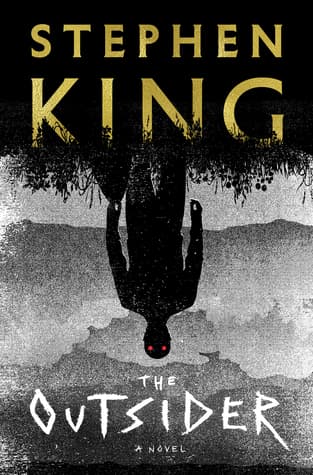
- The Outsider
Stephen King
4.0 (4k) average on GoodreadsPsychologyFeatures a detective investigating a crime with a supernatural, shapeshifting entity.
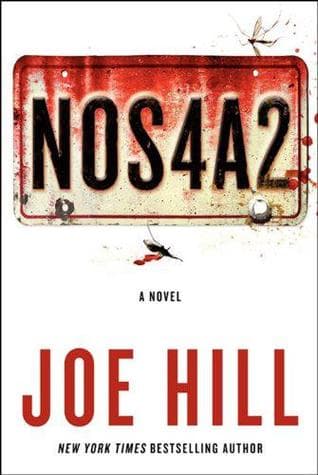
- NOS4A2
Joe Hill
4.1 (101k) average on GoodreadsThrillerInvolves a villain with supernatural abilities who targets children, creating a chilling atmosphere.
- The Secret Place
Tana French
3.9 (63k) average on GoodreadsThrillerWhile both are mysteries, French's novel offers a more realistic and psychologically intricate exploration of crime, focusing on human motivations and police procedural elements without supernatural intervention, contrasting with King's fantastical turn.
- Gone Girl
Gillian Flynn
4.1 (2.3M) average on GoodreadsThrillerFlynn's work delves into the depths of human depravity and psychological manipulation with a sharp, non-supernatural edge, providing a stark contrast to King's ultimate reliance on overt supernatural powers to resolve the conflict with Brady Hartsfield.
- Angels & Demons
Dan Brown
3.9 (2.7M) average on GoodreadsThrillerA Harvard symbologist races through Rome's ancient sites, deciphering cryptic clues to unmask the Illuminati and stop a vengeful plot to destroy the Vatican with a stolen antimatter weapon.
- The Girl on the Train
Paula Hawkins
3.9 (2.1M) average on GoodreadsThrillerA woman’s fascination with a seemingly perfect couple she watches from her daily train commute leads her into a dark investigation when she witnesses something that shatters their idyllic image.




Enjoyed the summary?
A summary gives you the shape of the book. The book itself has the detail, the examples and the voice.
Find End of Watch on AmazonAs an Amazon Associate, BookBrief earns from qualifying purchases. How we're funded