

Synopsis
Covers the whole plot, including the ending.
- Difficulty
- Medium
- Pacing
- Moderate
- Mood
- Atmospheric, Suspenseful, Psychological, Dark, Introspective
- Read it if
- You enjoy character-driven police procedurals with a strong psychological element, especially those exploring the intense dynamics of teenage friendships and the dark side of adolescence.
- Skip it if
- You prefer fast-paced, action-heavy thrillers or are put off by morally ambiguous characters and a focus on internal conflict over external action.
The Secret Place Plot Summary
Covers the whole plot, including the ending.
A Photograph and a Confession
Detective Stephen Moran, working in the Dublin police's Cold Cases unit, wants to transfer to the Murder Squad. His chance comes when sixteen-year-old Holly Mackey, daughter of Detective Frank Mackey, brings him a photograph. The photo shows Chris Harper, a boy murdered a year prior at St. Kilda's, an exclusive girls' boarding school, with the caption: 'I KNOW WHO KILLED HIM.' This reopens the unsolved case. Moran is assigned to work with Detective Antoinette Conway, a detective from the Murder Squad, under Frank Mackey's watchful eye. They return to St. Kilda's, a place full of secrets and tension from the unsolved crime.
Return to St. Kilda's and Rival Cliques
Moran and Conway arrive at St. Kilda's, a world of teenage girls, social ranks, and unwritten rules. Their first focus is on Holly's group of friends: Julia, Rebecca, and Selena. These four girls, known for their loyalty and shared secrets, are the obvious starting point given Holly's involvement. The detectives learn about the school's social dynamics, especially the rivalry between Holly's group and another clique led by Joanne and Gemma. Chris Harper, the victim, had connections with both groups, making the investigation more complex. The girls are hesitant, giving fragmented truths and avoiding questions, making it clear they are protecting something, or someone.
The Secret Place
As Moran and Conway look deeper, they find 'The Secret Place,' a bulletin board hidden in the school grounds where girls anonymously post their private thoughts, fears, and confessions. This discovery is important evidence, offering unfiltered glimpses into the girls' lives, their relationships with Chris, and their opinions of each other. The posts show jealousy, infatuation, and resentment, hinting at dark feelings beneath the polished surface of St. Kilda's. The detectives realize that 'The Secret Place' is more than a confessional; it is a record of the emotions leading up to Chris's murder, and possibly holds the key to the killer's identity.
Chris Harper's Entanglements
Through interviews and 'The Secret Place,' Moran and Conway understand Chris Harper's character. He was charming but also manipulative, a boy who enjoyed pitting girls against each other and seeking their attention. He had romantic and sexual relationships with several girls from both cliques, including Julia and Joanne, creating a volatile environment of jealousy and betrayal. His actions made him a target, and the detectives must untangle his romantic and emotional connections to understand who had the strongest reason to kill him.
Conflicting Accounts and Shifting Allegiances
The girls' accounts of the night Chris was murdered have inconsistencies and lies. Holly's group, in particular, presents a united front, but cracks appear under the pressure of the interrogation. Rebecca, one of Holly's friends, is especially evasive, her fear clear. The detectives suspect that the girls are not only protecting a killer but also shielding their own reputations and their friendship. The shifting loyalties and narratives make it difficult for Moran and Conway to find the truth, making them consider a collective secret, or even a collective act.
The Night of the Murder
The investigation focuses on the events of the night Chris Harper was killed. It is revealed that there was a secret party in the woods near the school, attended by several students, including Chris and members of both cliques. Alcohol and drugs were involved, and tensions were high. Testimony from various girls, though often contradictory, points to a confrontation involving Chris and several of the girls. The detectives learn that Chris had been particularly cruel to Julia that night, further increasing the anger and resentment against him. The details are unclear, clouded by time and the girls' reluctance to fully disclose what happened, but it becomes clear that Chris's death was the result of escalating conflicts.
Rebecca's Breakdown and the Truth
Under pressure, Rebecca, the most vulnerable member of Holly's group, finally confesses the full truth. She reveals that Chris had been verbally abusive and physically aggressive towards Julia that night at the party. In a moment of collective rage and loyalty, Holly, Julia, Selena, and Rebecca had confronted Chris. The confrontation grew, and in a desperate attempt to protect Julia and each other, they pushed Chris. He fell, hit his head, and died instantly. The girls, terrified and in shock, made a pact of silence, agreeing to protect each other no matter what. Rebecca's confession shatters the illusion of their innocence and exposes the dark side of their fierce friendship.
The Aftermath and the Pact
With Rebecca's confession, the full scope of the girls' conspiracy of silence is revealed. They had carefully covered their tracks, creating alibis and sticking to their story for an entire year. The detectives now understand the depth of their loyalty and how far they went to protect their secret. Moran and Conway face the difficult task of processing this information and determining the legal consequences for four teenagers who, in a moment of panic and misguided loyalty, ended a life. The murder was not planned, but a tragic accident fueled by teenage emotions and a desperate need to protect one another. This leaves the detectives to deal with the complexities of justice and responsibility.
Moran's Personal Conflict and Conway's Resolve
As the case ends, Detective Stephen Moran is deeply affected by the girls' story. He sympathizes with their youthful desperation and the tragic circumstances that led to Chris's death, questioning the harshness of the law in such a situation. His personal connection to Holly, and his own memories of teenage friendships, blur his professional objectivity. In contrast, Detective Antoinette Conway, despite her tough exterior, understands the nuances of the case but remains firm in her commitment to justice, emphasizing that a life was lost. Their differing perspectives show the moral ambiguities in the investigation and the struggle between empathy and duty.
Justice and Loyalty's Enduring Cost
The four girls, Holly, Julia, Selena, and Rebecca, are arrested and charged. The case becomes a media sensation, exposing the hidden world of St. Kilda's. While the legal consequences are severe, the greatest cost is the shattering of their once-unbreakable bond. The pact that united them ultimately tears them apart, as the weight of their secret and the legal proceedings strain their friendship. The novel concludes with the understanding that while justice may be served, the emotional scars on all involved, including the detectives, will remain. This leaves a lingering question about the true meaning and cost of loyalty.
The Secret Place Characters
Detective Stephen Moran
Protagonist
A junior detective eager to join the Murder Squad, drawn into a complex teenage world.
Stephen Moran is an ambitious, observant detective from the Cold Cases unit, desperate for a transfer to the Murder Squad. He is characterized by his thoughtful, introspective nature and his ability to connect with people, particularly the teenage girls at St. Kilda's. His personal history and his own memories of high school friendships make him uniquely suited, yet also vulnerable, to the emotional complexities of the case. He often finds himself weighing the letter of the law against the human element of the crime, developing a nuanced understanding of the girls' motivations. His internal monologue provides much of the narrative's perspective.
Relationships: Detective Antoinette Conway (Grudging and evolving professional partnership); Holly Mackey (Professional contact, with a developing sense of protective empathy); Detective Frank Mackey (Subordinate to a demanding superior, with a tense professional relationship)
Detective Antoinette Conway
Protagonist
A tough, no-nonsense detective from the Murder Squad, partnered with Moran.
Antoinette Conway is a sharp, cynical, and often abrasive detective from the Murder Squad. She is highly competent and dedicated to her job, but carries a chip on her shoulder due to the sexism and ostracization she faces within the force. She is less swayed by emotional appeals than Moran, focusing on facts and legal culpability, though she possesses her own deep-seated understanding of human nature. Her tough exterior often masks a keen insight and a fierce commitment to justice, making her an effective foil and partner for Moran. She is fiercely independent and does not suffer fools gladly.
Relationships: Detective Stephen Moran (Grudging and evolving professional partnership); Detective Frank Mackey (Professional superior, with mutual respect despite Frank's meddling)
Holly Mackey
Supporting
A St. Kilda's student and daughter of Detective Frank Mackey, who initiates the case reopening.
Holly Mackey is a sixteen-year-old student at St. Kilda's, intelligent and fiercely loyal to her friends. She is the one who brings the crucial photograph to Stephen Moran, reigniting the cold case. Daughter of the formidable Frank Mackey, she inherited some of his sharp intuition and stubbornness. She is a central figure in her tight-knit clique, and her actions are often driven by a deep-seated desire to protect her friends and their shared secrets. Her initial confession is a calculated risk, designed to both reveal and conceal, forcing the detectives into her world on her terms.
Relationships: Julia (Closest friend, part of the core clique); Rebecca (Close friend, part of the core clique); Selena (Close friend, part of the core clique); Detective Frank Mackey (Daughter-father relationship, complex and often distant); Detective Stephen Moran (Source of initial information, with a subtle influence over Moran)
Julia
Supporting
A member of Holly's clique, whose secret relationship with Chris Harper is a key motive.
Julia is one of the four core friends in Holly's clique, described as sensitive and artistic. She had a secret, intense relationship with Chris Harper, which became a source of both joy and deep pain. Chris's manipulative behavior towards her, culminating in a particularly cruel incident on the night of his murder, serves as the primary catalyst for the group's desperate actions. She is fiercely protected by her friends, and her vulnerability is a significant driving force behind their pact of silence. She struggles with the emotional aftermath of Chris's death and her complicity.
Relationships: Holly Mackey (Closest friend, part of the core clique); Rebecca (Close friend, part of the core clique); Selena (Close friend, part of the core clique); Chris Harper (Secret romantic relationship, marked by manipulation and emotional abuse)
Rebecca
Supporting
The most fragile member of Holly's clique, whose confession unravels the truth.
Rebecca is another member of Holly's close-knit group, often portrayed as the most anxious and emotionally fragile of the four. She struggles immensely with the guilt and pressure of the secret, her fear and discomfort palpable throughout the interrogations. Her vulnerability makes her the weakest link in the girls' pact of silence, and it is ultimately her breakdown and confession that reveal the full truth of Chris Harper's death. Her character highlights the immense psychological toll of maintaining such a profound secret, and the internal conflict between loyalty and conscience.
Relationships: Holly Mackey (Close friend, part of the core clique); Julia (Close friend, part of the core clique); Selena (Close friend, part of the core clique); Chris Harper (Acquaintance, complicit in his death)
Selena
Supporting
The calmest and most composed member of Holly's clique, a pillar of their shared secret.
Selena is the fourth member of Holly's core group, often presented as the most outwardly composed and rational of the four. She possesses a quiet strength and a fierce, almost chilling, loyalty to her friends and their pact. She is adept at maintaining her composure under interrogation, carefully crafting her answers and deflecting suspicion. Her calm demeanor makes her a strong anchor for the group, but also hints at a deeper, perhaps colder, resolve to protect their secret at all costs. She is a master of compartmentalization, capable of separating her emotions from the pragmatic necessity of their cover-up.
Relationships: Holly Mackey (Close friend, part of the core clique); Julia (Close friend, part of the core clique); Rebecca (Close friend, part of the core clique); Chris Harper (Acquaintance, complicit in his death)
Chris Harper
Mentioned
The murdered boy at St. Kilda's, whose manipulative nature led to his demise.
Chris Harper is the victim whose murder drives the entire plot. Though only seen through the memories and accounts of others, his character is vividly drawn as charismatic, handsome, and deeply manipulative. He enjoyed the attention of the St. Kilda's girls, playing them against each other and deriving pleasure from their emotional turmoil. He had relationships with several girls, including Julia and Joanne, and his casual cruelty and disregard for their feelings ultimately led to the confrontation that cost him his life. His presence, even in absence, is a powerful force throughout the novel.
Relationships: Julia (Secret romantic relationship, emotionally abusive); Joanne (Romantic relationship, manipulative); Holly Mackey (Acquaintance, indirectly involved in his death)
Detective Frank Mackey
Supporting
Holly's father and a formidable, often interfering, figure in the Dublin Murder Squad.
Frank Mackey is Holly's father and a highly respected, albeit intimidating and somewhat unconventional, detective in the Dublin Murder Squad. He is known for his sharp mind and his willingness to bend rules to achieve results. He hovers over Moran and Conway's investigation, ostensibly to monitor his daughter's involvement, but also to exert his influence and protect his own interests. His relationship with Holly is complex and distant, marked by unspoken understandings and a shared stubbornness. He serves as a powerful, often unsettling, presence, reminding Moran of the high stakes and political maneuvering within the police force.
Relationships: Holly Mackey (Daughter-father relationship, complex and often distant); Detective Stephen Moran (Superior, with a supervisory and often intimidating role); Detective Antoinette Conway (Superior, with a professional and respectful, though wary, relationship)
Joanne
Supporting
Leader of the rival clique at St. Kilda's, also involved with Chris Harper.
Joanne is the leader of the rival clique at St. Kilda's, a confident and somewhat aggressive girl who also had a relationship with Chris Harper. Her group often clashes with Holly's clique, adding another layer of tension to the school's social dynamics. Joanne's testimony and her perspective on Chris provide a contrasting view to that of Holly's group, revealing the broader impact of Chris's manipulative behavior. She is resentful of Chris's attention being divided and is quick to point fingers, initially complicating the investigation with her own biases and rivalries.
Relationships: Gemma (Close friend, part of the rival clique); Chris Harper (Romantic relationship, marked by manipulation); Holly Mackey (Rival)
The Secret Place Themes
Loyalty and the Bonds of Friendship
The novel deeply explores the intense, often dangerous, bonds of teenage friendship. Holly's clique shows an almost tribal loyalty, where protecting one another, even from the consequences of murder, comes before all other moral considerations. Their pact of silence, formed in a moment of panic, is the central conflict. It shows how far individuals will go for those they love. The investigation forces the girls to confront the limits of this loyalty, revealing its power to both unite and destroy them. The theme questions whether such fierce devotion is good or a tragic flaw.
“What they had was more than love. It was the only thing that made sense of the world, the only way they could be sure of anything, ever.”
The Secrets and Psychology of Teenage Girls
Tana French looks into the complex world of adolescent girls. St. Kilda's is a small world of intense emotions, social ranks, secret languages, and unwritten rules. The girls' 'Secret Place' bulletin board symbolizes their hidden inner lives, where desires, fears, and resentments grow. The novel shows the unique psychology of teenage girlhood, marked by fierce attachments, volatile emotions, and a desperate need for belonging and validation. The detectives struggle to navigate this world, realizing its depths are more mysterious and dangerous than they first imagined.
“The girls' world, Moran was finding, was like a deep, dark forest, full of hidden paths and creatures he couldn't quite see.”
Justice vs. Empathy
A central tension is the conflict between the law and the human element of the crime. Stephen Moran, in particular, deals with the morality of prosecuting four teenagers who acted out of fear and misguided loyalty, rather than malice. The novel makes readers consider whether justice should always be absolute, or if empathy for the circumstances and the youth of the perpetrators should play a role. Conway, while more practical, also acknowledges the tragic nature of the situation, showing that sometimes the legal outcome does not fully capture the emotional truth of a crime.
“He thought about justice, cold and hard and clear, and then he thought about what it would mean to apply it to girls who were barely more than children.”
Manipulation and Power Dynamics
The novel explores various forms of manipulation and power, both among the teenagers and within the police force. Chris Harper's manipulative charm and his ability to play girls against each other are central to the reason for his murder. Within the girls' cliques, social power is constantly negotiated, leading to rivalries and betrayals. Also, Detective Frank Mackey's subtle manipulation of the investigation and his influence over Moran show the power dynamics within the police hierarchy. The story reveals how power, emotional or institutional, can corrupt and distort relationships, leading to devastating consequences.
“Chris, it turned out, hadn't just been a boy. He'd been a conductor, drawing out discordant notes from every girl he touched.”
The Nature of Secrets and Truth
Secrets are at the heart of 'The Secret Place,' from the hidden bulletin board itself to the year-long conspiracy of silence maintained by the girls. The novel examines the burden of keeping secrets, how they shape identities, and the destructive power they have. The detectives' challenge is to peel back layers of deception to uncover the truth, but even once revealed, the truth is complex and multifaceted, colored by individual perspectives and emotional biases. The story suggests that some truths are too painful to bear, leading people to create elaborate fictions to protect themselves and others.
“Secrets were like roots, growing deeper and more tangled with every passing day, until they became the very ground you stood on.”
Plot Devices & Literary Techniques
Dual Perspective Narrative
The story is told primarily through Stephen Moran's first-person perspective, interspersed with excerpts from 'The Secret Place'.
The novel predominantly uses Stephen Moran's first-person narrative, giving readers direct access to his thoughts, observations, and biases as he navigates the investigation. This personal perspective allows for deep character insight and builds a strong connection with the protagonist. Interspersed with this are third-person excerpts from 'The Secret Place' bulletin board, offering an unfiltered, raw glimpse into the girls' private thoughts and fears leading up to the murder. This dual perspective provides both the objective investigative lens and the subjective emotional landscape of the victims and suspects, enriching the mystery and psychological depth.
'The Secret Place' Bulletin Board
A physical bulletin board where students anonymously post their secrets, serving as a crucial plot device and symbol.
'The Secret Place' is a literal and metaphorical plot device. Physically, it's a hidden bulletin board at St. Kilda's where the girls write anonymous confessions, grievances, and secrets. As a plot device, the discovery of this board provides the detectives with invaluable, unfiltered insights into the girls' lives, their relationships with Chris Harper, and the escalating tensions before his death. Metaphorically, it symbolizes the hidden, often dark, inner world of adolescence and the powerful, unspoken bonds and resentments that exist within the school's social structure. It acts as a collective diary, revealing motives and emotional truths that the girls would never articulate directly.
Flashbacks and Non-Linear Storytelling
The narrative frequently shifts between the present investigation and the events leading up to Chris's murder.
While the primary narrative follows Moran and Conway's present-day investigation, the story frequently employs flashbacks and a non-linear structure to reveal the events that occurred a year prior, leading to Chris Harper's murder. These glimpses into the past, often triggered by the girls' testimonies or the contents of 'The Secret Place,' gradually piece together the full picture of the night Chris died. This technique builds suspense, allowing the reader to unravel the mystery alongside the detectives, and highlights the lasting impact of past events on the present.
Unreliable Narrator (Collective)
The girls' collective testimony forms an unreliable narrative that must be painstakingly deconstructed.
The 'unreliable narrator' device is applied collectively to the group of girls at St. Kilda's, particularly Holly's clique. From the outset, the detectives know the girls are withholding information and actively lying to protect each other and their secret. Their carefully constructed, often contradictory, testimonies create a complex web of deception that Moran and Conway must painstakingly unravel. This collective unreliability forces the reader to question every statement, adding layers of suspense and psychological intrigue as the detectives attempt to discern truth from fabrication within their unified front.
The Secret Place Quotes
“There are two kinds of people in this world: those who are good at something, and those who are good at being good at something.”
“The past is never dead. It's not even past.”
“Secrets are like magnets. They pull everything towards them.”
“We were all going to be famous, we were all going to be beautiful, we were all going to be loved.”
“Sometimes you have to break a few rules to find the truth.”
“Friendship isn't about who you've known the longest. It's about who walked into your life, said 'I'm here for you,' and proved it.”
“There's a reason they call it 'falling' in love. Because it's a plunge.”
“Every secret comes with a price, and the longer you keep it, the higher the price.”
“We all carry our own private darkness, and sometimes it bleeds out.”
“The truth is a tricky thing. It changes depending on who's looking at it.”
“You can't go back and change the beginning, but you can start where you are and change the ending.”
“The most dangerous thing in the world is a girl who knows what she wants.”
“Grief is a beast. It's not something you tame. It's something you learn to live alongside.”
“Teenage girls. They're like a foreign country. You think you know the language, and then they hit you with a phrase you've never heard before.”
“There's a kind of terrible freedom in having nothing left to lose.”
Quiz
10 questions on the plot and the characters. Each answer comes with a short explanation.
Question 1
What is the initial piece of evidence that prompts Detective Stephen Moran to reopen the year-old murder case?
- A new witness comes forward with an alibi.
- A confession note is found at the school.
- Sixteen-year-old Holly Mackey brings him a photo with a cryptic message.
- A key piece of forensic evidence is re-examined.
Show answer
C. Sixteen-year-old Holly Mackey brings him a photo with a cryptic message. The case is reopened when Holly Mackey, a student at the school, brings Stephen Moran a photo of the murdered boy with the caption 'I KNOW WHO KILLED HIM,' reigniting interest in the cold case.
Question 2
Who is the murdered boy whose case is being re-investigated?
- Chris Harper
- Rob Ryan
- Brendan Doyle
- Daniel Fitzgibbon
Show answer
C. Brendan Doyle The victim whose murder sparks the investigation is Brendan Doyle, a boy found dead on the grounds of the girls' boarding school.
Question 3
What is the name of the boarding school where the murder took place?
- St. Kilda's
- St. Stephen's
- St. Kevin's
- St. Brigid's
Show answer
D. St. Brigid's The murder of Brendan Doyle occurred at St. Brigid's, the exclusive girls' boarding school attended by Holly Mackey and her friends.
Question 4
Which detective is paired with Stephen Moran to work on the reopened case?
- Cassie Maddox
- Antoinette Conway
- Rosalind Devlin
- Sarah Greene
Show answer
B. Antoinette Conway Stephen Moran, eager to join the Murder Squad, is partnered with Detective Antoinette Conway to investigate Brendan Doyle's murder.
Question 5
What is 'The Secret Place' in the context of the book's title?
- A hidden room in the headmistress's office.
- A private online forum or message board used by the girls.
- An abandoned building on the school grounds.
- A secluded spot in the woods near the school.
Show answer
B. A private online forum or message board used by the girls. The 'Secret Place' refers to a private online forum or message board where the girls share secrets, gossip, and communicate about their lives, providing crucial insights into their relationships and motives.
Question 6
What is the relationship between Detective Frank Mackey and Holly Mackey?
- Frank is Holly's uncle.
- Frank is Holly's older brother.
- Frank is Holly's father.
- They are not related; Frank is just her guardian.
Show answer
C. Frank is Holly's father. Frank Mackey, a fellow detective, is Holly's father, which adds a layer of personal tension and scrutiny to Stephen Moran's investigation.
Question 7
What is a central theme explored through the relationships among the teenage girls in the novel?
- The importance of academic achievement.
- The fleeting nature of teenage crushes.
- The intensity, loyalty, and destructive potential of female friendships.
- The challenges of adjusting to boarding school life.
Show answer
C. The intensity, loyalty, and destructive potential of female friendships. A major theme is the complex and often dangerous dynamics of teenage female friendships, exploring their fierce loyalty, shared secrets, and potential for both support and betrayal.
Question 8
How do the detectives primarily gather information about the girls' inner lives and their connection to Brendan Doyle?
- Through extensive surveillance of the school grounds.
- By interviewing teachers and school staff exclusively.
- By observing and interviewing the girls, and analyzing their online communications on 'The Secret Place'.
- By relying solely on forensic evidence from the crime scene.
Show answer
C. By observing and interviewing the girls, and analyzing their online communications on 'The Secret Place'. Stephen and Antoinette delve into the girls' private world by conducting interviews and, crucially, by analyzing their posts and interactions on 'The Secret Place' forum, which reveals their hidden dynamics and secrets.
Question 9
What is Stephen Moran's primary motivation for taking on this case, beyond solving the murder?
- To gain revenge on Frank Mackey for a past grievance.
- To prove his worth and secure a permanent position in the Murder Squad.
- He has a personal connection to Brendan Doyle.
- He is trying to impress the headmistress of St. Brigid's.
Show answer
B. To prove his worth and secure a permanent position in the Murder Squad. Stephen Moran is highly ambitious and sees this case as his golden opportunity to prove himself capable and earn a coveted spot on the Dublin Murder Squad, a goal he has been working towards.
Question 10
How does the novel portray the concept of truth and perception, especially among the teenage characters?
- It suggests that truth is always singular and easily discernible with enough evidence.
- It highlights how truth is often subjective, fragmented, and shaped by individual perspectives and loyalties.
- It argues that teenagers are incapable of discerning truth due to their immaturity.
- It shows that only adults can truly understand the full picture of events.
Show answer
B. It highlights how truth is often subjective, fragmented, and shaped by individual perspectives and loyalties. The novel intricately explores how 'truth' is often subjective and fragmented, particularly within the insular world of the teenage girls, where loyalties, secrets, and individual perceptions heavily influence what is revealed and understood.
The Secret Place FAQ
What is 'The Secret Place' about?
'The Secret Place' is a mystery novel centered on the unsolved murder of Chris Harper, a boy found dead a year prior at a girls' boarding school. Detective Stephen Moran, an ambitious detective, gets his chance to join the Murder Squad when sixteen-year-old Holly Mackey brings him a photo of Chris with a chilling confession: 'I KNOW WHO KILLED HIM.' He partners with Detective Antoinette Conway to delve into the insular world of teenage girls, their friendships, rivalries, and secrets at the St. Kilda's school.
Why should I read 'The Secret Place'?
You should read 'The Secret Place' for its masterful exploration of teenage girlhood, the complexities of friendship, and the dark undercurrents beneath a seemingly idyllic boarding school setting. Tana French crafts a compelling mystery with richly developed characters, particularly the two detectives and the interconnected group of girls, offering a unique blend of psychological insight and police procedural.
What is the background/setting of 'The Secret Place'?
The story is primarily set in Dublin, Ireland, specifically focusing on the St. Kilda's boarding school for girls. The investigation takes place within the school's grounds, dormitories, and the titular 'Secret Place' – a bulletin board where students anonymously post confessions and observations. The setting emphasizes the isolated, intense, and often secretive world of adolescent girls.
What are the most memorable quotes?
One memorable quote highlighting the novel's theme is: 'The world of teenage girls is a secret place, full of fierce loyalties and betrayals.' Another, reflecting the detectives' struggle, is Stephen Moran's observation: 'We were trying to find a killer in a world built on whispers and half-truths.'
What writing style does the author use?
Tana French employs a first-person narrative, primarily from Detective Stephen Moran's perspective, allowing for deep dives into his thoughts and observations. Her style is atmospheric, psychologically astute, and rich in detail, blending sharp dialogue with vivid descriptions of both the physical setting and the internal landscapes of her characters. She excels at building suspense through character interactions and the slow unraveling of secrets.
What minor details add significant meaning?
The 'Secret Place' bulletin board itself is a crucial minor detail, serving as a physical manifestation of the girls' hidden thoughts and collective consciousness. The recurring motif of the girls' intense, almost cult-like loyalty to each other, especially the core four – Holly, Julia, Selena, and Becca – underscores the powerful, often destructive, nature of their bond and its role in the murder.
What are some subtle foreshadowing moments?
Early on, the intense, almost claustrophobic bond between Holly Mackey and her friends subtly foreshadows the lengths they would go to protect each other. Additionally, the initial dismissiveness of the police towards the girls' 'drama' hints at the deeper, more sinister secrets they are overlooking, suggesting the true danger lies within their seemingly trivial world.
What unexpected character connections exist?
A significant unexpected connection is the personal stake Detective Frank Mackey, Holly's father, has in the case, creating an uncomfortable dynamic for Stephen Moran. Also, the victim, Chris Harper, turns out to have had complex and often manipulative relationships with girls from both the main clique and their rival group, revealing a tangled web of jealousies and secrets that extends beyond simple teenage infatuations.
What are unspoken character motivations?
Stephen Moran's unspoken motivation is his desperate ambition to join the elite Murder Squad, which often influences his decisions and interactions, occasionally clouding his judgment. For the girls, particularly Holly Mackey, a powerful unspoken motivation is the fierce, almost tribal loyalty to her friends, driving her initial actions and her reluctance to fully cooperate, rooted in a deep-seated fear of betrayal and ostracization.
What psychological complexities do characters exhibit?
The teenage girls exhibit complex psychological traits, including intense groupthink, a fluid sense of morality within their clique, and a deep-seated fear of social isolation. Stephen Moran grapples with his own moral compass, balancing ambition with genuine investigative integrity. Detective Antoinette Conway displays significant psychological barriers, stemming from past professional mistreatment, making her guarded and prickly, yet deeply perceptive.
What are the major emotional turning points?
A major emotional turning point is when Stephen Moran begins to truly understand the depth of the girls' bond and the unique logic of their world, moving beyond his initial dismissiveness. Another is when Holly Mackey, under increasing pressure, starts to crack, revealing glimpses of the truth and the emotional toll the secret has taken on her and her friends.
How do relationship dynamics evolve?
The relationship between Stephen Moran and Antoinette Conway evolves from initial professional friction and mistrust to a grudging respect and effective partnership, as they learn to navigate each other's styles. The dynamics within Holly's clique, initially presented as unbreakable, begin to fray under the pressure of the investigation, revealing cracks and underlying tensions that were previously hidden by their fierce loyalty.
Which parts remain ambiguous or open-ended?
While the core mystery of Chris Harper's killer is resolved, the novel leaves some ambiguity around the long-term psychological impact on the girls, particularly Holly, and how they will carry the burden of their secret into adulthood. The exact future of Stephen Moran's career and his relationship with Frank Mackey also remain open-ended, suggesting ongoing challenges.
What are controversial scenes or decisions?
One controversial aspect is the detectives' method of interrogation with the teenage girls, which some might view as overly manipulative or intrusive, pushing ethical boundaries. The decision by the girls to cover up the murder for so long, driven by a complex mix of loyalty and fear, can also be seen as controversial, sparking debate about their culpability and the nature of justice.
'The Secret Place' ending explained: how it ends & what it means
The novel concludes with the revelation that Chris Harper was killed by a collective action of Holly's clique, specifically by Selena, in a moment of panic and perceived self-defense during a confrontation. The girls had formed a pact to protect each other, leading to their year-long silence. The ending signifies the powerful, often dangerous, nature of adolescent loyalty and the way secrets can bind and break individuals. It also highlights the difficulty of applying adult legal frameworks to the complex moral landscape of teenage emotional lives.
About the author

Tana French is an Irish author known for her psychological thrillers and literary fiction. Her notable works include "In the Woods," "The Likeness," "Faithful Place," "Broken Harbor," and "The Secret Place," which often explore complex characters and intricate plots within the framework of crime and mystery. French's writing has garnered significant attention and recognition in contemporary literature.
Similar books
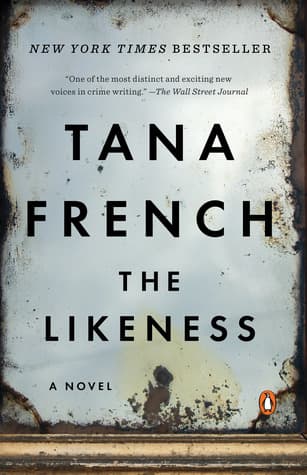
- The Likeness
Tana French
4.0 (126k) average on GoodreadsThrillerAnother Dublin Murder Squad novel with a deep dive into an insular community and complex character relationships.
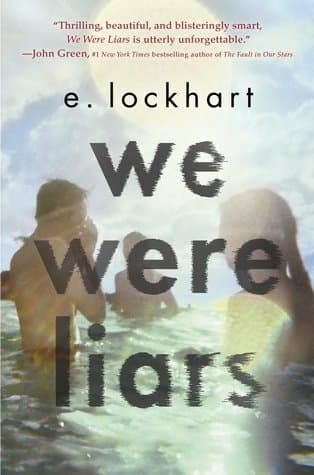
- We Were Liars
E. Lockhart
3.8 (465k) average on GoodreadsThrillerFeatures a group of privileged teenagers, a dark secret, and a twisty mystery driven by complex relationships and memory.
- Gone Girl
Gillian Flynn
4.1 (2.3M) average on GoodreadsThrillerWhile both are psychological thrillers, French's The Secret Place focuses on character-driven suspense and the unraveling of interpersonal dynamics, whereas Flynn's Gone Girl relies more heavily on shocking plot twists and unreliable narration to create its suspense. French's prose is more contemplative and explores ambiguity, while Flynn's is more direct and aims for high-impact reveals.
- The Girl on the Train
Paula Hawkins
3.9 (2.1M) average on GoodreadsThrillerHawkins' The Girl on the Train utilizes an unreliable narrator and a faster-paced, more plot-centric approach to suspense. French's The Secret Place, in contrast, employs a more gradual, character-focused build-up of tension, delving deeper into the internal lives and collective secrets of its characters. French prioritizes psychological exploration and the nuances of human relationships over a rapid-fire series of events.
- Angels & Demons
Dan Brown
3.9 (2.7M) average on GoodreadsThrillerA Harvard symbologist races through Rome's ancient sites, deciphering cryptic clues to unmask the Illuminati and stop a vengeful plot to destroy the Vatican with a stolen antimatter weapon.
- The Da Vinci Code
Dan Brown
3.9 (1.9M) average on GoodreadsThrillerA symbologist and a cryptologist race through European landmarks, deciphering ancient codes and uncovering a conspiracy that could rewrite the foundations of Christianity.




Enjoyed the summary?
A summary gives you the shape of the book. The book itself has the detail, the examples and the voice.
Find The Secret Place on AmazonAs an Amazon Associate, BookBrief earns from qualifying purchases. How we're funded