
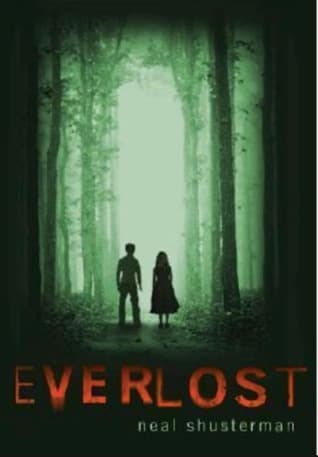
Synopsis
Covers the whole plot, including the ending.
- Difficulty
- Medium
- Pacing
- Moderate
- Mood
- Imaginative, Mysterious, Adventurous, Thought-provoking
- Read it if
- You enjoy imaginative world-building, stories about the afterlife, and characters exploring profound questions of existence and identity.
- Skip it if
- You prefer realistic fiction or find stories about death and limbo unsettling.
Everlost Plot Summary
Covers the whole plot, including the ending.
The Accident and the Awakening
Nick and Allie, two teenagers, are in a head-on car collision. Instead of dying, they wake up in a strange, silent place, a shadowy version of the world they knew. They realize they are 'afterlights'—souls trapped between life and death. They can see the living world, but the living cannot see them. Allie is disoriented and scared, while Nick immediately seeks answers. They discover they are in Everlost, a place where the souls of children who died before reaching their destination reside, along with all the forgotten things of the living world.
Encountering Lief and the Rules of Everlost
Lost and confused, Nick and Allie are found by Lief, a boy who has been an afterlight for over a hundred years. Lief explains Everlost's rules: afterlights cannot be seen by the living, they can travel anywhere the living world once was, and they must never stay in one place for too long, or they will 'sink' into the Earth. He warns them about 'dark spots'—places where living world memories linger strongly, which can trap afterlights. Lief also tells them about 'skin-jackers,' afterlights who possess the bodies of the living, a practice he dislikes.
Arrival at Mary's Mansion
Lief leads Nick and Allie to a large, abandoned mansion in a perpetual autumn. This is a sanctuary for hundreds of lost afterlights, run by Mary Hightower, known as Mary, Queen of the Afterlights. Mary, a kind and maternal figure, welcomes them, providing food, clothing, and a sense of belonging. She teaches them about 'afterlights' and the importance of remembering their old lives, believing this prevents them from fading. Nick quickly becomes comfortable in Mary's structured, safe environment, seeing it as a new home. Allie, however, feels a growing restlessness.
Allie's Restlessness and the Criminal Art
Nick finds contentment helping Mary manage the younger afterlights, but Allie struggles with the idea of an eternal, static existence. She feels a deep need to move on, to find out what lies beyond Everlost. Her curiosity leads her to discover the 'Criminal Art'—the ability to interact with the living world by moving objects or causing disturbances. Mary strictly forbids this skill, believing it is dangerous and a distraction. Despite Mary's warnings and Nick's pleas for caution, Allie secretly practices these abilities, driven by a desire for control and a path out of Everlost.
The McGill and the Skin-Jackers
The peace of Mary's mansion is broken by the growing threat of the McGill, a legendary and terrifying afterlight said to consume other afterlights. He is the ultimate skin-jacker, possessing the bodies of the living for his own purposes. The McGill, through his followers, begins to hunt afterlights, especially those with strong memories or latent abilities, to absorb their essence. This danger fuels Allie's determination to master her 'Criminal Art,' believing it might be the only way to fight back or escape, even as Nick remains committed to Mary's more passive, protective approach.
Allie's Journey to the Living World
Driven by her need for answers and a way out, Allie leaves the safety of Mary's mansion. She actively practices her haunting abilities, venturing into the living world to gather information and test her limits. Her abilities grow, allowing her to manipulate objects and even briefly possess living bodies, a skill that both fascinates and repulses her. During her travels, she meets other afterlights, some friendly, some hostile, and learns more about Everlost's diverse and dangerous world, including territories controlled by skin-jacker gangs and the constant threat of the McGill.
Nick's Loyalty and Growing Doubts
As Allie explores the 'Criminal Art' and the dangerous world outside, Nick stays at Mary's mansion, torn between his loyalty to Mary and his concern for Allie. He sees Mary's increasingly rigid rules and her fear of change, which conflicts with Allie's drive for answers. Nick also notices inconsistencies in Mary's stories and her complete control over the afterlights. His initial comfort with Mary's protection begins to waver as he realizes the limits of her beliefs and the potential dangers of remaining stagnant in Everlost. He fears for Allie's safety but also questions Mary's motives.
The Confrontation with the McGill
Allie eventually confronts the McGill, a terrifying and powerful entity. She learns that the McGill is not just an afterlight but a being fueled by the memories and essences of other afterlights he has consumed. He is a dark reflection of Mary, trying to absorb all afterlights into himself. During their confrontation, Allie discovers that the McGill can only truly harm afterlights who have lost their connection to their past lives or their sense of self. She uses her growing haunting abilities and strong will to resist him, but the encounter leaves her shaken and more determined to find a way to truly move on.
Mary's True Nature Revealed
Back at the mansion, Nick's suspicions about Mary grow. He discovers that Mary is not a child, but an adult afterlight who died over a century ago. She has maintained her youthful appearance by absorbing small amounts of essence from the afterlights under her care, subtly preventing them from moving on. Mary has created Everlost as her own kingdom, a place where she can eternally relive her childhood. Nick realizes that Mary's protection is a form of imprisonment, and her rules are designed to keep afterlights from discovering the truth about moving on. This revelation shatters Nick's trust and forces him to choose between Mary and Allie.
The Battle for Everlost
With Mary's true nature exposed, a battle begins for Everlost. Nick, now fully aware of Mary's manipulation, works with Allie to free the afterlights from her control. Allie, having faced the McGill, understands his weakness, and with Nick's help, they plan to defeat him. They gather the other afterlights, urging them to remember their true selves and to reject both Mary's false sanctuary and the McGill's destructive absorption. The climax involves a confrontation where Mary's power is diminished by the afterlights' collective will to move on, and the McGill is ultimately defeated, though not entirely destroyed, by Allie's unique abilities.
Moving On
With Mary's grip weakened and the McGill temporarily neutralized, the afterlights of Everlost are free to choose their own paths. Many, including Lief, begin to remember their true destinations and find their way out of Everlost, ascending towards the light. Allie, having accepted her death and her purpose, also finds her path to move on, leaving Everlost behind. Nick, however, decides to stay. He realizes that someone needs to guide the newly arrived afterlights and help them understand their situation, choosing to become the new protector and guide of Everlost, ensuring that others have the chance to move on.
Everlost Characters
Allie the Outlier
Protagonist
A restless and determined afterlight seeking to escape Everlost.
Allie is initially a scared and confused teenager who quickly grows into a fiercely independent and determined afterlight. She rejects the stagnation of Everlost and Mary's rules, driven by an insatiable curiosity and a deep need to understand her new reality and find a way to move on. Her strong will and resourcefulness lead her to explore forbidden abilities, making her a powerful, if sometimes reckless, force. She is empathetic but also headstrong, often clashing with Nick's cautious nature.
Relationships: Nick (Best friend and traveling companion, with a deep bond and mutual care.); Mary Hightower (Initially a maternal figure, later an ideological opponent and captor.); Lief (Friend and mentor in the ways of Everlost.)
Nick
Protagonist
A pragmatic and loyal afterlight who initially seeks safety and order.
Nick is pragmatic, cautious, and initially content to find safety and purpose within Mary's structured community. He quickly adapts to his new existence, embracing the role of caretaker for younger afterlights. He values order and protection, often trying to temper Allie's adventurous spirit. His loyalty is a defining trait, first to Mary, then shifting to Allie as he uncovers the truth. He possesses a strong moral compass and a deep sense of responsibility.
Relationships: Allie (Best friend and traveling companion, with a deep bond and mutual care.); Mary Hightower (Initially a trusted leader and mentor, later a manipulative figure he must oppose.); Lief (Acquaintance and fellow afterlight.)
Mary Hightower (Mary, Queen of the Afterlights)
Antagonist
The seemingly benevolent but ultimately manipulative ruler of a faction of afterlights.
Mary Hightower is the self-proclaimed 'Queen of the Afterlights,' a seemingly kind and maternal figure who provides sanctuary and guidance to hundreds of lost souls in her mansion. She teaches them to remember their past lives and forbids the 'Criminal Art' of haunting. However, beneath her benevolent exterior lies a manipulative and controlling personality. She is an adult afterlight who died centuries ago and has maintained her youthful appearance and power by subtly absorbing the essence of the afterlights under her care, trapping them in Everlost to prevent her own loneliness and eventual fading.
Relationships: Nick (Initially a trusted leader, later an antagonist.); Allie (Initially a maternal figure, later an ideological opponent.); The McGill (A rival afterlight who represents the destructive extreme of afterlight existence.)
Lief
Supporting
A centuries-old afterlight who serves as an early guide and friend.
Lief is one of the oldest afterlights Nick and Allie encounter, having died over a hundred years ago. He is a wise, somewhat melancholic figure who has a deep understanding of Everlost's rules and dangers. He acts as an initial guide for Nick and Allie, sharing crucial information about sinking, dark spots, and skin-jackers. He is skeptical of Mary's methods and fears the McGill, but also holds a quiet hope for finding a way to move on. His long existence in Everlost has given him a unique perspective on life and death.
Relationships: Nick (Acquaintance and fellow afterlight.); Allie (Friend and mentor in the ways of Everlost.)
The McGill
Antagonist
A monstrous and powerful skin-jacker who preys on other afterlights.
The McGill is a terrifying legend in Everlost, a monstrous afterlight who has mastered the art of skin-jacking to an extreme degree. He possesses living bodies, often multiple ones, and feeds on the essence and memories of other afterlights, absorbing them into himself to gain power and prevent his own fading. He represents the ultimate destructive force within Everlost, a dark mirror to Mary's manipulative control. He is a being of pure hunger and ambition, seeking to consume all afterlights and their memories.
Relationships: Mary Hightower (A rival for control over afterlights.); Allie (A primary target and opponent due to her unique abilities and resistance.)
Megan
Supporting
A young afterlight at Mary's mansion, who forms a bond with Nick.
Megan is one of the younger afterlights residing in Mary's mansion. She is innocent and trusting, looking up to Nick as a protector and friend. Her presence highlights the vulnerability of the younger afterlights and the responsibility Nick feels towards them. Her character helps to solidify Nick's role as a caretaker and showcases the community Mary has built, for better or worse.
Relationships: Nick (A younger afterlight whom Nick cares for and protects.)
Clarence
Supporting
A gruff but ultimately helpful afterlight who aids Allie.
Clarence is an older, gruff afterlight who Allie encounters during her travels outside Mary's mansion. He has a cynical view of Everlost and its inhabitants, but beneath his hardened exterior, he possesses a surprising amount of practical knowledge and a hidden streak of compassion. He helps Allie understand more about the 'Criminal Art' and the dangers of the world, acting as a reluctant mentor.
Relationships: Allie (A reluctant mentor and ally.)
The Living
Mentioned
The unaware inhabitants of the world that Everlost shadows.
The Living are the ordinary people in the 'real' world who are unaware of Everlost and the afterlights. They serve as a constant reminder of the world Nick and Allie left behind and the life they can no longer participate in. Their ignorance highlights the afterlights' unique predicament and the profound separation between the two realms. They are occasionally affected by the afterlights' 'Criminal Art' but remain oblivious to the true cause.
Everlost Themes
The Nature of Life and Death (and What Lies Between)
The main theme explores an afterlife that is neither heaven nor hell, but a liminal space. Everlost questions traditional ideas of death, suggesting some souls become 'afterlights,' stuck in a shadow world. It examines what it means to truly 'die' or 'move on,' comparing Everlost's stagnation with life's progression. Characters struggle with accepting their death, wanting to return, or trying to find a true 'beyond.' For instance, Allie's quest to escape Everlost directly addresses this theme, while Mary's desire to keep Everlost as her eternal childhood playground shows a refusal to accept death's finality.
“Death is not the end, but a transition. And some of us just get stuck in the transition.”
Identity and Memory
The novel stresses the importance of memory and self-identity for afterlights. Losing one's memories can lead to fading, being absorbed by the McGill, or becoming a 'Lost Soul.' Mary's teachings, though manipulative, show the power of remembering who you were. Allie's journey involves not just remembering her past but forming a new identity as an afterlight with unique abilities. Nick's story also involves understanding his true self beyond the roles he takes on. Holding onto individual memories and distinct personalities is key to survival and progress in Everlost, as seen when afterlights must recall specific details to avoid sinking or fading.
“If you forget who you are, you cease to be. That's the first rule of Everlost.”
Freedom vs. Security
This theme is central to the conflict between Allie's desire for freedom and Mary's offer of security. Mary provides a safe haven and community, but at the cost of individual choice and the chance to move on. Allie, conversely, seeks ultimate freedom, even if it means facing great danger and uncertainty. Nick's journey involves navigating this choice, initially drawn to Mary's security but ultimately choosing freedom and truth. The 'Criminal Art' of haunting represents Allie's pursuit of freedom, while Mary's mansion, despite its comforts, becomes a gilded cage, showing that true freedom often requires risk.
“Better to be lost and free, than safe and trapped.”
Manipulation and Power
The theme of manipulation and power's corrupting influence is mainly explored through Mary Hightower and the McGill. Mary, though seemingly kind, manipulates afterlights into staying with her to prevent her own loneliness and fading, using their essence to stay young. The McGill, on the other hand, uses fear and direct absorption to control, a more obvious form of power. Both antagonists show different ways power can be misused in Everlost, highlighting the afterlights' vulnerability and the importance of good judgment. Nick's realization of Mary's true nature is a key moment in understanding this theme.
“Power is not in what you can do, but in what you can make others do.”
Plot Devices & Literary Techniques
Everlost as a Liminal Space
A shadow world between life and death.
Everlost itself functions as a major plot device. It is a physical manifestation of the concept of limbo, a place where things and souls that don't quite make it to their destination reside. Its unique rules (sinking, dark spots, the inability to interact with the living world directly without special abilities) drive much of the conflict and character development. The setting dictates the challenges afterlights face and the goals they pursue, from finding safety to seeking escape. The forgotten aspects of the living world that appear in Everlost also provide unique environmental elements and resources for the afterlights.
The 'Criminal Art' of Haunting
The forbidden ability to interact with the living world.
The 'Criminal Art' is a crucial plot device that empowers Allie and drives much of the narrative. It represents forbidden knowledge and the potential for afterlights to exert influence beyond their passive existence. This ability creates conflict with Mary's rules, provides Allie with a means to investigate and fight, and ultimately becomes a key to confronting the McGill. Its development and mastery by Allie are central to her character arc and the resolution of the story's major conflicts, offering a path to agency in a world designed for passivity.
Skin-Jacking
The ability of afterlights to possess living bodies.
Skin-jacking is a significant and dangerous plot device. It is the most extreme form of afterlight interaction with the living world, allowing them to temporarily take over a living person's body. This ability is central to the McGill's power and threat, as he uses it to hunt and consume other afterlights. It raises ethical questions for characters like Allie, who briefly uses it, and highlights the moral ambiguities of existing between worlds. The act of skin-jacking itself is a violation, emphasizing the precarious balance between the afterlight and living realms.
Dark Spots
Areas in Everlost where living world memories are strong, trapping afterlights.
Dark spots are specific locations within Everlost where the lingering memories and emotions of the living world are so strong that they can trap afterlights. These spots serve as environmental hazards and symbolic representations of being stuck in the past. They reinforce the danger of dwelling too long on one's former life and the importance of moving forward. The fear of being caught in a dark spot compels afterlights to keep moving, adding a layer of urgency and constant threat to their existence in Everlost.
Everlost Quotes
“When life is over, it's not like a light switch suddenly goes off. Instead, you're like a candle that's been blown out. There's still a glow, a warmth, a memory of the flame. And sometimes, if the conditions are just right, that memory can be rekindled.”
“The hardest part of being stuck between worlds is that you don't belong in either. You're too alive for the dead, and too dead for the living.”
“Fear is a powerful tool, but it cuts both ways. It can drive you to survive, or it can paralyze you.”
“There are some things you can't run from. Not even in Everlost. Your past is always with you, whether you like it or not.”
“Every person leaves a trace. A mark on the world. And sometimes, if you're lucky, that mark can be seen even after they're gone.”
“The things that make us who we are in life, they're the same things that define us in Everlost.”
“Sometimes, the only way to get through something is to go straight through it. Not around. Not over. Straight through.”
“Lost isn't a place, it's a state of mind. And you can be lost anywhere.”
“If you don't know who you are, then you can be anyone. And that can be a very dangerous thing.”
“Hope is a fragile thing, but it's also the most powerful. It's what keeps us going when everything else tells us to stop.”
“Even in death, there are still choices to be made. And those choices can have consequences just as profound as any in life.”
“The world doesn't end when you die. It just changes. And sometimes, the changes are more beautiful than you could ever imagine.”
“It's not about being perfect. It's about being good enough. And sometimes, good enough is all you need.”
“Love, even when it's lost, never truly dies. It simply changes form, becoming a memory, a hope, a whisper in the wind.”
Quiz
10 questions on the plot and the characters. Each answer comes with a short explanation.
Question 1
What is the name of the realm where Nick and Allie find themselves after their car accident?
- The Underworld
- Everlost
- Limbo-land
- The Shadowlands
Show answer
B. Everlost Nick and Allie are caught halfway between life and death in a place called Everlost, which is a shadow of the living world.
Question 2
What happens to lost children in Everlost if they stand in the same place for too long?
- They become invisible to other lost children.
- They are transported back to the living world.
- They sink to the center of the Earth.
- They lose their memories.
Show answer
C. They sink to the center of the Earth. One of the dangers of Everlost is that anyone who stands in the same place too long sinks to the center of the Earth.
Question 3
Who is the self-proclaimed queen of lost kids that Nick and Allie encounter?
- Allie
- Mary
- Lanie
- Jill
Show answer
B. Mary Mary is introduced as the self-proclaimed queen of lost kids, who Nick feels a sense of home with.
Question 4
What 'Criminal Art' does Allie begin to learn, despite warnings?
- Soul-merging
- Time-traveling
- Haunting
- Dream-walking
Show answer
C. Haunting Allie, unsatisfied with simply existing, begins learning the 'Criminal Art' of haunting, which is considered dangerous.
Question 5
What is the primary difference in how Nick and Allie react to their new existence in Everlost?
- Nick wants to find a way back to life, while Allie wants to explore Everlost.
- Nick finds a sense of belonging, while Allie is restless and seeks to understand and change her situation.
- Nick is afraid of the dangers, while Allie embraces them.
- Nick wants to stay with Mary, while Allie wants to be alone.
Show answer
B. Nick finds a sense of belonging, while Allie is restless and seeks to understand and change her situation. Nick feels like he's found a home with Mary, while Allie isn't satisfied and ventures into dangerous territory.
Question 6
What type of entity or being threatens the souls of Everlost?
- The Souleater
- The Ghost King
- The McGill
- The Shadow Lord
Show answer
C. The McGill The monster called the McGill is mentioned as threatening all the souls of Everlost, especially as Allie ventures into dangerous territory.
Question 7
Everlost is described as a 'shadow of the living world'. What does this imply about the objects and places found within it?
- It contains only objects and places that are brand new and pristine.
- It is filled with all the things and places that no longer exist in the living world.
- It is a distorted, unrecognizable version of the living world.
- It contains only the memories of objects and places, not the physical forms.
Show answer
B. It is filled with all the things and places that no longer exist in the living world. The description states Everlost is 'a shadow of the living world, filled with all the things and places that no longer exist.'
Question 8
What fundamental questions does Neal Shusterman explore in 'Everlost'?
- Questions of war, peace, and political power.
- Questions of love, betrayal, and revenge.
- Questions of life, death, and what just might lie in between.
- Questions of technology, progress, and humanity's future.
Show answer
C. Questions of life, death, and what just might lie in between. The novel's themes are explicitly stated as exploring 'questions of life, death, and what just might lie in between.'
Question 9
Considering Allie's dissatisfaction and her pursuit of 'haunting', what does this reveal about her character's core motivation?
- A desire to cause mischief and trouble for other lost kids.
- A deep-seated fear of the McGill and a wish to hide from it.
- A refusal to accept her current state of being and a drive to exert agency or find a purpose beyond mere existence.
- A longing to return to her family in the living world at any cost.
Show answer
C. A refusal to accept her current state of being and a drive to exert agency or find a purpose beyond mere existence. Allie 'isn't satisfied spending eternity between worlds' and 'ventures into dangerous territory' to learn haunting, indicating a strong desire for purpose and agency rather than passive acceptance.
Question 10
How does the concept of 'Everlost' itself, as 'halfway between life and death', contribute to the story's central conflict or thematic exploration?
- It provides a clear path for characters to either return to life or fully pass on, simplifying their choices.
- It creates a static, unchanging environment where characters have no room for growth or decision-making.
- It establishes a state of perpetual uncertainty and a challenge to traditional notions of afterlife, forcing characters to define their own existence and meaning.
- It serves merely as a backdrop, with no significant impact on the characters' internal or external struggles.
Show answer
C. It establishes a state of perpetual uncertainty and a challenge to traditional notions of afterlife, forcing characters to define their own existence and meaning. Being 'halfway between life and death' creates a unique limbo that challenges characters to find meaning in an unexpected state, driving the plot and thematic questions about existence and purpose.
Everlost FAQ
What is Everlost and how do souls end up there?
Everlost is a limbo world, a shadow of the living world, where things and places that no longer exist manifest. Souls like Nick and Allie's, who die in a way that causes them to 'miss' their intended destination, such as during a sudden accident, find themselves caught within its boundaries, unable to move on.
Who are Nick and Allie and what is their initial relationship?
Nick and Allie are two teenagers who die in the same car accident and wake up in Everlost. They are strangers initially, brought together by their shared predicament and the immediate need for survival and understanding in this new, strange afterlife.
Who is Mary Hightower and what role does she play in Everlost?
Mary Hightower, also known as the 'Chocolate Ogre' or 'Mary, Queen of the Lost,' is a centuries-old soul who has taken on the role of protector and leader for many of the lost children in Everlost. She provides shelter and guidance, teaching them the rules of their existence and attempting to maintain order.
What is the 'Criminal Art' of haunting that Allie learns?
The 'Criminal Art' of haunting involves souls in Everlost learning to interact with the living world by possessing objects, causing them to move or affect their surroundings. Allie learns to 'tag' objects, imbuing them with her essence to make them visible or movable to the living, a skill Mary discourages.
Who is the McGill and what is his ultimate goal?
The McGill is a monstrous, ancient soul who preys on other lost souls in Everlost, consuming their essence to grow stronger and extend his own existence. His ultimate goal is to amass enough souls to potentially break free from Everlost or gain immense power within it, viewing other souls as mere fuel.
What is a 'skin-jacking' and why is it dangerous in Everlost?
Skin-jacking is the act of possessing a living human body, a forbidden and dangerous practice in Everlost. While it allows a soul to experience life again temporarily, prolonged skin-jacking can lead to the lost soul forgetting their true identity and becoming permanently trapped within the living body, losing themselves entirely.
How does Nick's unique ability to shift between Everlost and the living world manifest, and what are its limitations?
Nick's unique ability allows him to physically manifest in the living world for brief periods, becoming solid and tangible. This power is triggered by strong emotional connections or needs, but it's physically draining and he can only sustain it for a limited time before being pulled back into Everlost.
What is the significance of 'chocolate' in Everlost, particularly for Mary?
Chocolate in Everlost represents the lingering memories and essence of strong emotions and experiences from the living world. For Mary, it's a powerful and cherished substance that helps her remember her past and maintain her identity, serving as a comfort and a source of strength.
What are 'Afterlights' and how do they differ from souls like Nick and Allie?
Afterlights are the lingering imprints of strong emotions, memories, or echoes left behind by living beings or significant events. They are not sentient souls but rather residual energy, often appearing as ghostly images or sounds, and they cannot interact with Everlost in the same way lost souls can.
How does Allie's initial dissatisfaction with Everlost reflect adolescent psychology?
Allie's refusal to accept Everlost as her permanent reality, her desire to move on, and her rebellious pursuit of haunting reflect the adolescent struggle with identity, independence, and the yearning for control over one's destiny. She resists stagnation and seeks agency in a world that often feels beyond her control.
Analyze Nick's role as a 'ferryman' and its psychological implications for his character.
Nick's emergent role as a 'ferryman' or guide between worlds, driven by his unique ability, suggests a deep-seated need to help others and find purpose. Psychologically, it reflects a selfless inclination and a search for meaning in his afterlife, contrasting with Allie's more self-directed journey.
How does Mary's long existence in Everlost affect her psychological state and leadership style?
Mary's centuries in Everlost have made her wise but also rigid and fearful of change, clinging to established rules to maintain order and protect her 'children.' Her psychological state is marked by a deep-seated loneliness and a burden of responsibility, leading her to be overly protective and sometimes dictatorial.
Discuss the psychological impact of 'sinking' on the souls in Everlost.
The threat of 'sinking' – being absorbed into the Earth if a soul stays in one place too long – creates a constant undercurrent of anxiety and transience for Everlost's inhabitants. Psychologically, it reinforces the impermanence of their existence and the need for constant movement, preventing any true sense of rootedness.
What philosophical questions does Everlost raise about the nature of the afterlife and mortality?
Everlost challenges conventional notions of heaven and hell, presenting a 'middle ground' that is neither blissful nor purely punitive. It prompts reflection on whether an afterlife is a reward, a consequence, or simply a different state of being, and what it truly means to be 'dead' or 'alive.'
Is the McGill purely evil, or can his actions be interpreted in a more complex light?
While the McGill's actions are undeniably destructive and self-serving, one could argue his 'evil' stems from an ancient, primal instinct for survival and a profound fear of oblivion, rather than pure malice. He is a predator shaped by the harsh realities of Everlost, seeking to extend his own existence through any means necessary.
How does the concept of 'becoming one with Everlost' relate to themes of identity and memory?
'Becoming one with Everlost' implies a loss of individual identity and memory, where a soul's essence dissipates into the fabric of the world itself. This relates to the theme that memory and self-awareness are crucial to maintaining one's being, and without them, a soul ceases to be distinct.
What is the ultimate significance of Nick and Allie's differing paths and goals by the end of the book?
Their divergent paths symbolize different approaches to facing the unknown and finding purpose in an afterlife. Nick's acceptance of his role as a guide and Allie's determination to understand and manipulate Everlost represent a balance between selfless service and individual ambition, both contributing to the ongoing narrative of Everlost.
Could Everlost itself be seen as a metaphor for a stage of human development or a particular emotional state?
Everlost can be interpreted as a metaphor for adolescence, a transitional period where one is no longer a child but not yet an adult, caught between worlds with uncertain futures. It also reflects states of limbo, indecision, or being 'stuck' in life, where unresolved issues prevent moving forward.
About the author

Neal Shusterman is an American author known for his contributions to young adult fiction. His notable works include "Unwind," "The Toll," "Everlost," "Challenger Deep," "UnDivided," and "Bruiser," which explore themes of identity, morality, and the human experience. Shusterman has received various awards for his writing, including the National Book Award for "Challenger Deep."
Similar books
- Unwind
Neal Shusterman
4.2 (192k) average on GoodreadsThrillerShares Shusterman's signature imaginative, thought-provoking concepts and themes of identity and morality.
- Miss Peregrine's Home for Peculiar Children
Ransom Riggs
3.9 (977k) average on GoodreadsFantasyFeatures a unique world, lost children with special abilities, and a sense of wonder and danger.
- The Graveyard Book
Neil Gaiman
4.1 (438k) average on GoodreadsFantasyExplores themes of life, death, and found family in a supernatural setting with a young protagonist.
- Harry Potter and the Sorcerer's Stone
J.K. Rowling
4.5 (7M) average on GoodreadsFantasyRescued from a miserable life under the stairs, an orphaned boy discovers he's a wizard destined for a magical school, where he uncovers a dangerous secret tied to the dark wizard who murdered his parents.
- The Hunger Games
Suzanne Collins
4.3 (6.4M) average on GoodreadsFantasyIn a future where children fight to the death on live television, Katniss Everdeen volunteers for the arena, turning a death sentence into a fight for survival and a spark of rebellion.
- 1984
George Orwell
4.2 (3.1M) average on GoodreadsPoliticsIn a future where surveillance and thought control are absolute, a man's search for truth clashes with the Party, showing that hope can be a form of rebellion.




Enjoyed the summary?
A summary gives you the shape of the book. The book itself has the detail, the examples and the voice.
Find Everlost on AmazonAs an Amazon Associate, BookBrief earns from qualifying purchases. How we're funded