

Synopsis
Covers the whole plot, including the ending.
- Difficulty
- Medium
- Pacing
- Moderate
- Mood
- Atmospheric, Reflective, Poignant, Witty
- Read it if
- You enjoy character-driven stories about family eccentricities, grief, and self-discovery, with a distinctly English sensibility.
- Skip it if
- You prefer fast-paced plots with high stakes or clear-cut resolutions.
Faith Fox Plot Summary
Covers the whole plot, including the ending.
The Sudden Loss of Holly Fox
The peaceful Surrey village is shocked by the sudden death of Holly Fox during her daughter's birth. Her husband, Jonathan, is in silent shock, unable to process the tragedy. Holly's mother, Thomasina, a strong woman, is expected to care for the newborn, Faith. The community supports Jonathan and the baby, but Faith's immediate future is uncertain, casting a shadow over her first days.
Thomasina's Unexpected Retreat
Against all expectations, Thomasina, despite her known competence and love for Holly, decides to abandon her newborn grandchild, Faith. Overwhelmed by unspoken grief, and perhaps a sense of failure, she withdraws from her responsibilities, leaving the baby without the maternal figure everyone anticipated. This unexpected desertion creates a void around Faith, forcing Jonathan and the community to reconsider the baby's care; Thomasina's actions baffle and disturb those who knew her.
Faith's Journey North
With Thomasina's absence, Faith is sent to live with her paternal family in the North of England. These relatives, described by Surrey locals as 'the very strangest people you ever saw my dear,' are a stark contrast to Holly's gentle, southern world. Jonathan, still grieving, cannot fully engage with this change. Faith's journey north marks a significant shift in her young life, moving her from one world of loss to another of peculiar, unknown relatives, setting the stage for her unusual upbringing.
Life with the Northern Foxes
Faith grows up in the North among the peculiar Fox family, a group of artists, musicians, and free-thinkers. Her upbringing is unconventional, filled with art, intellectual discussions, and a lack of traditional rules. She is exposed to creativity and unconventional thought, which shapes her personality. Though loved, the environment is chaotic and bohemian, a stark contrast to the Surrey life she might have had. This upbringing develops her resilience and independent spirit.
Jonathan's Silent Grief and Distant Presence
Throughout Faith's childhood, her father, Jonathan, remains a silent and distant figure. Holly's death affects him deeply, his grief showing as a profound quietness that keeps him from fully engaging with his daughter or the world. While he lives with his northern family, he stays on the periphery, a constant reminder of the loss that brought Faith into their lives. His inability to communicate or connect emotionally with Faith leaves a void in her life, though she learns to navigate his quiet presence.
Faith's Emerging Identity
As Faith matures, she develops an independent personality, a direct result of her unconventional upbringing among the Northern Foxes. She is resourceful, observant, and curious. Her mother's absence and her father's distant presence contribute to her self-reliance. She learns to interpret the world through her unique perspective, absorbing her family's artistic and intellectual inclinations while developing her own distinct character, marked by quiet strength and an underlying desire for connection.
The Lingering Mystery of Thomasina
The mystery of Thomasina's sudden abandonment of Faith lingers throughout the story. Her reasons are never explicitly stated, leaving characters and readers to wonder about her grief, her self-preservation, or a complex mix of emotions that made her unable to care for her grandchild. This unresolved question adds quiet tension and sadness, influencing Faith's understanding of family and attachment, and highlighting the deep impact of unspoken grief.
Whispers of Holly
Though Holly died at Faith's birth, her presence is felt through stories, anecdotes, and memories shared by those who knew her. Faith pieces together a fragmented image of her vibrant mother from these whispers, creating a mental portrait of the woman she never met. These glimpses into Holly's life offer Faith a connection to her origins but also highlight the deep loss she experienced, fueling a quiet desire to understand the mother taken from her so soon. These stories help Faith understand the legacy of love and sorrow around her.
Faith's Journey South
As Faith reaches adulthood, a desire to understand her origins and the southern family she never knew grows. She decides to journey south to confront the past and piece together missing parts of her identity. This journey is driven by a need for resolution, a desire to understand why her grandmother, Thomasina, abandoned her, and to connect with her mother, Holly. It marks her active step toward reconciling her two different family histories.
Reunion with Thomasina
Faith's journey ends in a reunion with her grandmother, Thomasina. This encounter is full of unspoken emotions, years of distance, and the weight of Holly's death. Thomasina, now older, must confront the grandchild she abandoned. The meeting is not one of immediate warmth or easy answers, but a complex unveiling of past wounds, regrets, and the possibility of a fragile new beginning. It allows Faith to gain some understanding of Thomasina's actions, even if full forgiveness takes time.
Unveiling the Past
During her time in the south and her interactions with Thomasina and others who knew Holly, Faith slowly uncovers the full story of her mother's life. She learns about Holly's vibrant personality, her relationships, and the deep impact her death had on everyone. This process is both painful and enlightening, allowing Faith to grasp the magnitude of the loss and the complex web of grief that led to her unconventional upbringing. Unveiling the past helps Faith understand her own life and her father's silent suffering.
Healing and New Beginnings
Faith's quest for understanding brings healing to the fractured family and to her own sense of self. While not all wounds are instantly mended, her courage to seek the truth opens paths for communication and potential reconciliation. Her journey symbolizes the possibility of a new beginning, not just for herself but for the surviving members of her family. She bridges the geographical and emotional divide, offering a chance for understanding and connection, even in enduring sorrow.
Faith Fox Characters
Faith Fox
Protagonist
A resilient young woman shaped by loss and an unconventional upbringing.
Faith is the titular character, born into tragedy after her mother, Holly, dies in childbirth. Abandoned by her maternal grandmother and raised by her father's eccentric northern family, Faith develops a strong sense of independence and an observant nature. She is intelligent, artistic, and possesses a quiet resilience, adapting to her unusual circumstances. Her early life is marked by the absence of her mother and the silent grief of her father, which fuels her later quest for understanding.
Relationships: Holly Fox (Deceased mother, a guiding absence); Jonathan Fox (Distant, grieving father); Thomasina (Maternal grandmother who abandoned her); Northern Fox Family (Unconventional, loving adoptive family)
Holly Fox
Mentioned/Catalyst
Faith's vibrant mother whose sudden death sets the entire plot in motion.
Holly Fox is the beloved, vibrant, and healthy young woman whose sudden death during childbirth is the catalyst for the entire story. Though she never appears alive in the narrative, her memory and the profound impact of her loss permeate every aspect of the book. She is remembered as a 'pearl' of the Surrey village, a sweet and hearty individual whose absence leaves an immense void. Her character is pieced together through the memories and grief of others, representing lost potential and the enduring power of love.
Relationships: Jonathan Fox (Husband); Faith Fox (Newborn daughter); Thomasina (Mother)
Jonathan Fox
Supporting
Faith's father, rendered silent and distant by the grief of losing his wife, Holly.
Jonathan is Holly's husband and Faith's father, a man utterly devastated by Holly's sudden death. His grief manifests as a profound, almost catatonic silence and withdrawal from the world. He is unable to care for Faith in her infancy or fully engage with her as she grows up, remaining a distant, melancholic figure. His inability to process his loss and connect with his daughter is a central element of the story, highlighting the isolating nature of grief.
Relationships: Holly Fox (Deceased wife, object of his profound grief); Faith Fox (Daughter, whom he struggles to connect with); Northern Fox Family (His eccentric family, with whom he lives)
Thomasina
Supporting/Antagonist (initially)
Holly's mother, who inexplicably abandons her newborn grandchild, Faith, after her daughter's death.
Thomasina is Holly's mother and Faith's maternal grandmother, initially presented as a strong, capable woman. Her inexplicable decision to abandon newborn Faith after Holly's death is a central mystery and source of pain. While her actions appear callous, they stem from a deep, unarticulated grief and perhaps a personal breakdown in the face of such immense loss. She represents the complex, often contradictory ways individuals cope with tragedy, and her eventual encounter with Faith is a pivotal moment.
Relationships: Holly Fox (Deceased daughter, source of her profound grief); Faith Fox (Granddaughter whom she abandons and later reconnects with)
The Northern Fox Family (collective)
Supporting
Jonathan's eccentric, artistic family who raise Faith in the North.
This collective refers to Jonathan's extended family in the North of England, a group characterized by their artistic temperament, free-spirited nature, and unconventional lifestyle. They are a loving but chaotic household, providing Faith with a unique upbringing filled with creativity and intellectual stimulation, albeit lacking in traditional structure. They represent a different facet of English eccentricity, offering Faith a home and a sense of belonging when her immediate family cannot.
Relationships: Faith Fox (Adoptive family, providing her upbringing); Jonathan Fox (His family, with whom he resides)
Faith Fox Themes
Grief and Loss
The novel explores the many sides of grief. Holly's sudden death is the central event, and its effects are seen in Jonathan's withdrawal, Thomasina's abandonment, and Faith's lifelong search for understanding. The book shows how grief can appear in different ways—from paralyzing silence to acts of perceived cruelty—and how it can break families. Faith's journey is an attempt to heal these wounds and understand the legacy of loss that defines her origins, as she pieces together Holly's life story.
“The Surrey village whose pearl she was reverberates with shock.”
Family and Belonging
The novel examines the different forms family can take and the human need for belonging. Faith is born into a broken family, with a grieving father and an absent grandmother. She finds a home, though an unconventional one, with her father's eccentric Northern relatives. Her journey south is a quest to understand her biological roots and to bridge the gap between her two families, seeking a sense of wholeness that crosses geographical and emotional divides. The story suggests that family is about care and connection, not just blood.
“the very strangest people you ever saw my dear”
Identity and Self-Discovery
Faith's life is a journey of self-discovery, linked to understanding her origins. Growing up without her mother and with a distant father, she is shaped by absences and her Northern family's unique environment. Her journey south is a conscious effort to piece together her mother's life and her grandmother's actions, which helps her understand who she is and where she comes from. This quest for understanding allows her to build a complete identity, integrating both her lost past and her present reality.
“Faith ... must be packed off to her father's peculiar family in the North”
The English Heart and Eccentricity
Jane Gardam looks at the varied and often quirky nature of the English character, especially through the contrast between the 'sweet, healthy, hearty' Holly and the 'very strangest people' of the Northern Fox family. The novel shows different forms of English eccentricity, from the quiet dignity of the Surrey villagers to the bohemian freedom of the Northern relatives. This theme highlights the rich variety of English life and character, suggesting that beneath diverse exteriors, universal human emotions like love, grief, and resilience exist.
“Jane Gardam takes as her subject the English heart in all its eccentric variety.”
Plot Devices & Literary Techniques
The Absent Mother (Holly)
Holly's posthumous presence drives the narrative and characters' motivations.
The character of Holly Fox, though deceased from the outset, acts as a powerful absent presence that shapes the entire narrative. Her sudden death is the inciting incident, and her memory, as pieced together through the accounts of others, serves as a focal point for Faith's quest for identity and understanding. This device creates a sense of lingering loss and mystery, constantly reminding the reader and characters of the profound void left by her absence, and motivating Faith's journey to uncover the truth of her mother's life.
Geographical Contrast (North vs. South)
The stark difference between Surrey and the North symbolizes familial and cultural divides.
The novel effectively uses the geographical contrast between the genteel Surrey village (Holly's home) and the eccentric North of England (Jonathan's family home) as a significant plot device. This contrast symbolizes the cultural, social, and temperamental differences between the two sides of Faith's family. Her journey from North to South is not just physical but also a metaphorical bridge-building exercise, representing her attempt to reconcile these disparate parts of her heritage and understand the full scope of her family's history and identity.
Unspoken Grief
The silence and unarticulated suffering of characters drive misunderstanding and plot development.
Unspoken grief, particularly Jonathan's silent withdrawal and Thomasina's unexplained abandonment, is a crucial plot device. The characters' inability or unwillingness to articulate their pain creates distance, misunderstanding, and fuels Faith's need to seek answers. This silence is not merely a character trait but a force that shapes the plot, leading to Faith's unconventional upbringing and her eventual journey of discovery. The eventual (partial) breaking of this silence through Faith's actions offers the possibility of healing and new beginnings.
Faith Fox Quotes
“It was impossible not to love Faith. She was so very beautiful, so very kind, so very, very good.”
“Children, she thought, were like small wild animals, full of instinct and a kind of fierce, unblinking honesty.”
“The past, she knew, was not a country you could ever truly leave. It was a landscape within you.”
“Grief was a peculiar thing. It did not always shout; sometimes it merely hummed, a low, persistent vibration beneath everything else.”
“There was a certain sort of Englishness that was all about not saying anything at all, and yet saying everything.”
“Life had a way of presenting you with the most ordinary things in the most extraordinary light, if you only bothered to look.”
“Marriage, she had discovered, was less about two halves becoming one, and more about two separate planets orbiting each other, sometimes close, sometimes far.”
“The house itself seemed to breathe, a slow, ancient rhythm that had absorbed generations of sighs and laughter.”
“She had always believed in the quiet power of endurance, the way a river carved stone not with force, but with relentless passage.”
“Secrets, she mused, were like seeds. Some lay dormant forever, others sprouted in the most inconvenient places.”
“The world was full of small, sharp edges, and it was a skill to learn how to navigate them without drawing blood.”
“Love, she thought, was not always a grand declaration. Sometimes it was just making sure the other person had enough tea.”
“Time, she had learned, did not heal all wounds, but it did blur the edges, making them less immediate, less raw.”
“There was a particular kind of loneliness that only came from being surrounded by people who didn't quite see you.”
Quiz
10 questions on the plot and the characters. Each answer comes with a short explanation.
Question 1
What is the name of Holly Fox's mother, who initially everyone expects to care for baby Faith?
- Margaret
- Susan
- Thomasina
- Eleanor
Show answer
C. Thomasina Thomasina is Holly's mother, who, to everyone's surprise, does not take on the care of Faith after Holly's death.
Question 2
Where does baby Faith end up living after her mother's death and her grandmother's desertion?
- With a foster family in Surrey
- With her father's family in the North
- In a children's home
- With her mother's distant aunt
Show answer
B. With her father's family in the North After Thomasina's unaccountable desertion, Faith is sent to her father's peculiar family in the North.
Question 3
What is the primary cause of Holly Fox's sudden death?
- A sudden illness
- An accident
- Childbirth
- A pre-existing heart condition
Show answer
C. Childbirth The book states that Holly Fox 'dies suddenly in childbirth,' leaving behind her daughter, Faith.
Question 4
How does Holly Fox's husband react to her death and the birth of their daughter?
- He immediately takes charge of Faith's care.
- He becomes a helpless, silent figure.
- He quickly remarries to find a new mother for Faith.
- He tries to convince Thomasina to stay and help.
Show answer
B. He becomes a helpless, silent figure. The text describes Holly's husband as 'a helpless, silent husband' after her death.
Question 5
What is the general perception of Holly Fox within her Surrey village before her death?
- She was a troubled and reclusive individual.
- She was seen as a 'pearl' and a beloved member of the community.
- She was an outsider who had recently moved to the village.
- She was known for her eccentricities and unusual behavior.
Show answer
B. She was seen as a 'pearl' and a beloved member of the community. The village 'whose pearl she was reverberates with shock' at her sudden death, indicating her high regard.
Question 6
What phrase is used to describe Faith's paternal family in the North?
- 'A warm and welcoming clan'
- 'The very strangest people you ever saw my dear'
- 'A quiet and unassuming group'
- 'A well-established aristocratic lineage'
Show answer
B. 'The very strangest people you ever saw my dear' The description specifically mentions they are 'the very strangest people you ever saw my dear'.
Question 7
What central human experience does the novel 'Faith Fox' primarily explore, as stated in the description?
- The challenges of rural life
- The pain of bereavement and the possibility of new beginnings
- The complexities of intergenerational conflict
- The pursuit of professional success
Show answer
B. The pain of bereavement and the possibility of new beginnings The description explicitly states, 'FAITH FOX sheds a clear, true light on the pain of bereavement whilst always offering the joyous possibility of a new beginning.'
Question 8
What aspect of the 'English heart' does Jane Gardam take as her subject in this novel?
- Its stoicism and reserve
- Its historical significance
- Its eccentric variety
- Its unwavering patriotism
Show answer
C. Its eccentric variety The description highlights Gardam's focus on 'the English heart in all its eccentric variety.'
Question 9
What is significant about Thomasina's decision regarding baby Faith that shocks the community?
- She insists on raising Faith in a foreign country.
- She unaccountably deserts her newborn grandchild.
- She demands financial compensation for Faith's care.
- She attempts to give Faith up for adoption immediately.
Show answer
B. She unaccountably deserts her newborn grandchild. The text states that Thomasina 'unaccountably deserts her newborn grandchild,' which is the central surprising action regarding her.
Question 10
Beyond the immediate plot, what qualities does Jane Gardam bring to her exploration of these challenging subjects?
- Clinical detachment and objective analysis
- Satirical humor and biting wit
- Wisdom, generosity, and understanding
- Melodrama and sensationalism
Show answer
C. Wisdom, generosity, and understanding The description praises Jane Gardam for approaching her subject 'With wisdom, generosity, and understanding.'
Faith Fox FAQ
What is the central tragedy that sets the plot of 'Faith Fox' in motion?
The central tragedy is the sudden death of Holly Fox in childbirth. Her unexpected passing leaves her husband, Edward, a widower, and introduces their newborn daughter, Faith, into a world without her mother, creating a void that reverberates through their Surrey village.
Who is Thomasina, and what role does she initially play in Faith's life?
Thomasina is Holly Fox's mother and Faith's maternal grandmother. Initially, everyone in the Surrey village expects Thomasina, being loving and capable, to assume guardianship of baby Faith after Holly's death, given her strong presence and connection to the family.
Why does Thomasina 'unaccountably desert' her newborn grandchild, Faith?
Thomasina's desertion is rooted in her profound grief and an inability to cope with the physical presence of Faith, who represents both Holly's last gift and the unbearable loss. The baby is a constant, painful reminder of her daughter, rendering Thomasina emotionally paralyzed and unable to fulfill the expected grandmotherly role.
Where is Faith sent after Thomasina's departure, and what are these new caregivers like?
After Thomasina's departure, baby Faith is sent to live with her paternal family in the North. They are described as 'the very strangest people you ever saw my dear,' suggesting an eccentric, perhaps unconventional, and certainly different environment compared to her mother's Surrey background.
How does Edward, Faith's father, cope with Holly's death and his new role as a single parent?
Edward is depicted as 'helpless' and 'silent' in the immediate aftermath of Holly's death. He struggles profoundly with his grief and the sudden responsibility of fatherhood, indicating a deep emotional paralysis that prevents him from fully engaging with his daughter or his new circumstances.
Are there any subtle clues about the nature of Holly's death that hint at deeper themes beyond just a tragic accident?
The narrative emphasizes the suddenness and shock of Holly's death in childbirth, rather than focusing on medical specifics. This highlights the theme of life's fragility and the unexpected ruptures it can cause, rather than implying a preventable or forewarned tragedy.
What is the significance of the contrast between the 'Surrey village' and the 'peculiar family in the North'?
The contrast signifies a clash of cultures and social norms. The Surrey village represents a more conventional, perhaps genteel English life, while the Northern family embodies eccentricity and an unconventional approach to life, offering Faith a vastly different upbringing and perspective.
Does the novel suggest any underlying reasons for Thomasina's 'unaccountable' desertion beyond immediate grief?
While immediate grief is paramount, Thomasina's reaction suggests a deeper psychological fragility or perhaps an ingrained self-preservation mechanism. Her inability to care for Faith might stem from a fear of failing, or an unconscious rejection of the burden of the past that Faith represents, rather than a lack of love.
How does the author use the character of Faith, a baby, to explore themes of loss and new beginnings?
Faith, as a newborn, is a symbol of absolute innocence and potential. Her very existence, born from tragedy, embodies the possibility of a new beginning. Her journey through different caregivers allows the narrative to explore how others react to and project onto this symbol of fresh life amidst profound sorrow.
How does Thomasina's grief manifest psychologically, and what does it reveal about her character?
Thomasina's grief manifests as an overwhelming paralysis and an inability to connect with her grandchild, leading to her desertion. This reveals a character who, despite her perceived strength and capability, possesses a deep vulnerability and a breaking point when faced with unimaginable loss, prioritizing self-preservation over expected duty.
Analyze Edward's 'helpless' and 'silent' reaction to Holly's death. What psychological state does this represent?
Edward's reaction represents a state of profound shock and dissociative grief. His silence and helplessness suggest an inability to process the trauma, perhaps leading to emotional numbness or a feeling of being overwhelmed to the point of incapacitation, characteristic of acute bereavement.
How might the 'eccentric variety' of the English heart, as mentioned in the synopsis, influence the psychological development of Faith?
The 'eccentric variety' will likely expose Faith to diverse perspectives, unconventional coping mechanisms, and unique expressions of love and grief. This varied upbringing could foster a resilient, adaptable, and uniquely nuanced psychological landscape in Faith, allowing her to integrate different aspects of her heritage.
What psychological impact might growing up without her birth mother and with an absent maternal grandmother have on Faith?
Faith might experience a sense of abandonment or a search for identity related to her origins. While she may not consciously remember her mother, the absence will shape her relationships and understanding of family, potentially fostering resilience but also a latent sense of loss or curiosity about her past.
Is Thomasina's desertion of Faith an act of selfishness or a tragic consequence of unbearable pain?
This is open to interpretation, but the narrative leans towards it being a tragic consequence of unbearable pain. While seemingly selfish, her action stems from a complete psychological breakdown in the face of grief, suggesting a profound incapacity rather than deliberate malice, highlighting the destructive power of sorrow.
How does the book challenge traditional notions of family and caregiving through Faith's journey?
The book challenges traditional notions by showing that biological ties don't always equate to caregiving. It demonstrates that family can be found in unexpected places (the Northern relatives) and that capable caregivers (Thomasina) can be rendered unable by grief, highlighting the fluidity and complexity of familial responsibility.
What is the ultimate message regarding 'the pain of bereavement' and 'the joyous possibility of a new beginning'?
The message is that while bereavement inflicts profound, sometimes incapacitating pain, life inherently pushes forward. The 'joyous possibility' lies in the capacity for new connections, different forms of love, and the resilience of the human spirit to find hope and renewal even after devastating loss.
Does the novel imply a judgment on Thomasina's actions, or does it offer a more nuanced understanding of her choices?
The novel offers a nuanced understanding rather than a harsh judgment. While her actions are impactful, the narrative frames them within the context of overwhelming grief, inviting empathy for her psychological state rather than condemnation, exploring the complexities of human reactions to tragedy.
How does the setting (Surrey vs. North) contribute to the book's themes of identity and belonging?
The contrasting settings emphasize how environment shapes identity. Faith's journey from the conventional Surrey to the eccentric North suggests that her sense of self and belonging will be forged from these disparate influences, highlighting the idea that identity is often a blend of diverse experiences and origins.
In what ways does 'Faith Fox' reflect Jane Gardam's broader literary themes and style?
Gardam often explores the eccentricities of English character, the impact of time and memory, and the resilience of individuals facing life's challenges. 'Faith Fox' embodies this through its diverse characters, the exploration of grief, and its ultimately hopeful tone, all delivered with her characteristic wit and psychological insight.
About the author

Jane Mary Gardam is an English writer of children's and adult fiction. She also writes reviews for The Spectator and The Telegraph, and writes for BBC radio. She lives in Kent, Wimbledon, and Yorkshire. She has won numerous literary awards, including the Whitbread Award twice. She was appointed Officer of the Order of the British Empire (OBE) in the 2009 New Year Honours.
Similar books
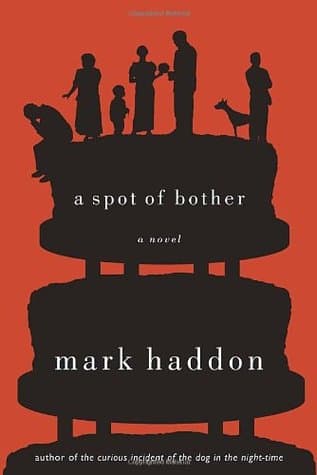
- A Spot of Bother
Mark Haddon
3.5 (33k) average on GoodreadsFictionExplores family dysfunction and eccentric characters with a blend of humor and pathos.
- Major Pettigrew's Last Stand
Helen Simonson
3.9 (132k) average on GoodreadsLiterary FictionFeatures a charming English village setting and delves into the lives of its inhabitants with wit.
- The Unlikely Pilgrimage of Harold Fry
Rachel Joyce
3.9 (148k) average on GoodreadsLiterary FictionFocuses on a journey of self-discovery and coping with past grief.
- Atonement
Ian McEwan
4.4 (70) average on GoodreadsWhile both novels deal with profound loss and the long-term impact of a pivotal event, McEwan's Atonement is more concerned with the subjective nature of truth and the power of narrative to shape reality, often through the lens of guilt and class. Gardam's Faith Fox focuses more directly on the internal psychological journey of a child navigating grief and finding a new identity, with less emphasis on meta-narrative concerns or societal critique. Both authors excel at crafting immersive worlds and exploring complex emotional landscapes, but McEwan often employs a more intricate plot structure and a wider cast of characters, whereas Gardam maintains a tighter focus on Faith's personal experience.
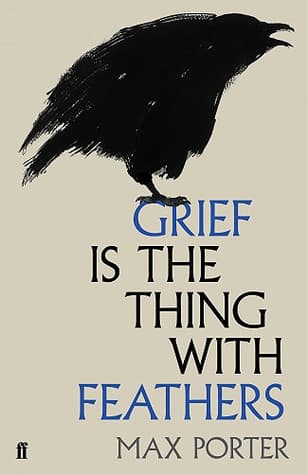
- Grief is the Thing with Feathers
Max Porter
3.9 (26k) average on GoodreadsLiterary FictionPorter's novella, like Faith Fox, is a profound meditation on bereavement, particularly within a family unit. However, Porter's work is experimental in form, employing poetic prose and the personification of 'Crow' as a physical manifestation of grief, offering a more abstract and metaphorical exploration. Gardam, while deeply psychological, adheres to a more traditional narrative structure, grounding Faith's experiences in realistic settings and interactions. Both books are lauded for their innovative approaches to the subject of grief, but Gardam provides a more expansive, detailed character study over a longer timeline, whereas Porter delivers an intense, condensed emotional punch through its unique literary style.
- Nineteen Eighty-Four
George Orwell
4.2 (5.5M) average on GoodreadsFictionWinston Smith dreams of truth and rebellion in a world where Big Brother watches all, but he confronts the terrifying power of a regime that controls not just actions, but thoughts.




Enjoyed the summary?
A summary gives you the shape of the book. The book itself has the detail, the examples and the voice.
Find Faith Fox on AmazonAs an Amazon Associate, BookBrief earns from qualifying purchases. How we're funded