
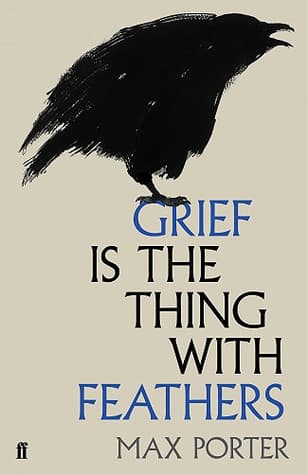
Synopsis
Covers the whole plot, including the ending.
- Difficulty
- Medium
- Pacing
- Moderate
- Mood
- Atmospheric, Poignant, Darkly Humorous, Meditative
- Read it if
- You appreciate experimental literary fiction that explores profound emotional themes with poetic language and a touch of magical realism.
- Skip it if
- You prefer straightforward narratives, are not comfortable with dark humor in the context of grief, or are looking for a light, uplifting read.
Grief is the Thing with Feathers Plot Summary
Covers the whole plot, including the ending.
The Arrival of Crow
A scholar and his two young sons deal with the sudden, accidental death of their mother. The father, focused on his academic work about Ted Hughes, is overwhelmed by the practicalities and emotional weight of his new life. In their raw grief, a large, sentient Crow appears in their London flat. This Crow, a chaotic and boisterous creature, announces it will stay with the family until they no longer need it. Its presence is both terrifying and comforting, a manifestation of their sorrow and a disruptive force that keeps them from falling into despair. The boys are wary but curious, while the father is initially confused and resistant to this strange intruder.
Crow's Methods
Crow's healing methods are unusual. It is loud, messy, and confrontational, often mimicking the mother's voice, challenging the father's intellectualized grief, and making the boys face their raw emotions. It eats their food, makes a mess, and invades their personal space, showing the disruptive nature of grief itself. Crow's presence is a constant, almost physical, reminder of their loss. Yet, it also offers a strange companionship and a focal point for their shared trauma. The father, though bothered by Crow, cannot dismiss it, recognizing a primal force at work.
The Father's Perspective
The story often shifts to the father's thoughts, where he deals with overwhelming sadness, the daily tasks of raising two boys alone, and vivid, often painful, memories of his deceased wife. He thinks about their life together, her unique qualities, and the sudden void she left. His background in Ted Hughes and Sylvia Plath's poetry helps him understand his own grief, finding parallels in their artistic expressions of loss and despair. He struggles with guilt, regret, and the fear of forgetting his wife, while also navigating his sons' evolving grief.
The Boys' Grief
The two young boys process their mother's death in different ways. The older boy becomes withdrawn and reflective, finding comfort in quiet activities and internalizing his sorrow. The younger boy, more openly expressive, sometimes acts out, showing his confusion and anger through bursts of energy or frustration. Crow acts as a strange guardian and provocateur for them, sometimes comforting, sometimes challenging, reflecting their changing emotional states. The father sees their struggles, often feeling helpless, but also witnessing their resilience and the unique bond they share in their loss.
Crow as Confidant and Tormentor
Crow acts as both confidant and tormentor. It speaks directly to the father, offering brutal truths about grief and the inevitability of loss, often using crude language. It challenges the father's attempts to intellectualize or avoid his pain, making him face the raw reality of his situation. Yet, Crow also shows deep empathy and understanding, especially towards the boys. It recognizes their suffering and, in its own way, provides a sense of being seen and understood, even when its methods are jarring.
The Weight of Memory
Memories of the mother are always present, both a source of pain and a lifeline. The father replays moments, both significant and everyday, struggling with the fear that these memories will fade or change. He tries to keep her alive through stories and shared recollections with his sons. Crow often interjects, sometimes mocking the sentimentality of memory, but also acknowledging its power. The boys, too, hold onto their own fragmented memories, which change as they grow and process their loss, shaping their understanding of who their mother was.
The Passage of Time
The story covers several months, showing the slow, non-linear process of grieving. The initial shock and acute pain gradually give way to a different kind of sorrow—a dull ache that becomes part of their daily lives. The father notices the subtle changes in his own and his sons' behaviors, the moments of fleeting joy that begin to reappear, and the gradual adjustment to a life without their mother. Crow's presence remains constant, but its intensity fluctuates, reflecting the changing nature of their grief. The family learns to live with the absence, even as it remains a profound part of their existence.
Crow's Departure Foreshadowed
As the family slowly heals and adjusts, Crow occasionally hints at its eventual departure. It observes their progress, noting when they laugh again, find comfort in each other, or manage a day without being consumed by sorrow. Crow's purpose, it repeatedly states, is to stay until they no longer need it. Its comments suggest its own demeanor softens, recognizing its disruptive, healing work is almost done. The father, while still wary, also recognizes that Crow's presence, though painful, has been important for their survival.
Finding New Routines
The father and sons gradually establish new routines and rituals that help them navigate their changed lives. The father takes on both parental roles, learning to cook, manage household affairs, and attend to his sons' emotional needs. The boys find new ways to play and interact, finding comfort in their bond and in simple daily activities. While the mother's absence is always felt, they begin to build a new normal, a life that includes their loss rather than being defined solely by it. This adaptation marks a significant step in their healing, even as grief remains an undercurrent.
Crow's Farewell
When the family reaches a point where they can function, laugh, and find moments of peace, Crow finally departs. Its departure is quiet, almost unnoticed, like the gradual fading of acute grief. The family is left with the lingering impact of Crow's chaotic, yet transformative, presence. They are changed by the experience, having faced their deepest sorrows and emerged, not unharmed, but with a renewed capacity for life. Crow leaves behind a void, but also a space for the family to continue their healing on their own terms, carrying their grief as a part of their lives, not an all-consuming force.
Principal Figures
The Father
Protagonist
A Ted Hughes scholar grappling with the sudden death of his wife and the complexities of single parenthood.
The Father is an academic, a scholar specializing in Ted Hughes, which ironically predisposes him to intellectualizing grief. He is initially overwhelmed and paralyzed by his wife's sudden death, struggling with the practicalities of raising two young sons alone. He is prone to introspection, self-blame, and a deep, almost poetic, immersion in his sorrow. His love for his wife is palpable, and he constantly grapples with her memory, fearing its erosion. He is a 'scruffy romantic' whose world has been shattered, leaving him vulnerable and searching for meaning.
Relationships: His Wife (deceased) (Deeply loving and intellectual partnership, now a profound absence.); His Sons (Protective, loving, and often bewildered by their shared grief.); Crow (Antagonistic yet ultimately therapeutic relationship; Crow forces him to confront his grief.)
Crow
Antagonist/Healer/Trickster
A mythical, shape-shifting bird that embodies grief and acts as a disruptive, yet ultimately healing, force for the family.
Crow is a chaotic, boisterous, and deeply unsettling entity. It is self-described as a 'sentimental bird' and a 'shaman' of grief, appearing after the mother's death to stay with the family until they no longer need it. Crow is crude, confrontational, and often cruel in its methods, but its underlying purpose is to force the family to fully experience and process their sorrow. It embodies the primal, irrational, and messy aspects of grief, challenging the father's intellectualism and providing a strange, intense companionship. It is both a monster and a guide.
Relationships: The Father (Provocateur and reluctant guide; forces the father to confront his pain.); His Sons (Strange babysitter and protector; offers a different kind of comfort and challenge.)
The Older Son
Supporting
The more introspective and withdrawn of the two brothers, processing his grief quietly.
The Older Son is portrayed as more reflective and internal than his younger brother. He experiences his grief with a quiet intensity, often retreating into himself or expressing his sorrow through subtle actions. He is observant and intelligent, trying to make sense of the profound change in their lives. He forms a wary but ultimately accepting relationship with Crow, who sometimes offers him a unique form of understanding.
Relationships: The Father (Relies on his father for stability and comfort.); The Younger Son (Close brotherly bond, sharing their grief.); Crow (Wary but accepting; Crow sometimes offers him a strange understanding.)
The Younger Son
Supporting
The more outwardly expressive and energetic of the two brothers, sometimes acting out his grief.
The Younger Son is more boisterous and outwardly expressive in his grief, sometimes acting out his confusion and anger through bursts of energy or frustration. He is less able to articulate his feelings but shows his pain through his behavior. He is also more directly engaged with Crow, sometimes finding a strange playfulness or understanding in the bird's chaotic presence. His grief is raw and immediate, often expressed physically.
Relationships: The Father (Looks to his father for guidance and reassurance.); The Older Son (Close brotherly bond, sharing their grief.); Crow (Engages more directly; sometimes finds a strange playmate or protector.)
The Wife/Mother (deceased)
Mentioned
The beloved, recently deceased matriarch whose absence drives the narrative.
Though deceased, the Wife/Mother is a pervasive presence in the narrative, primarily through the memories and grief of her husband and sons. She is depicted as a vibrant, unique, and deeply loved individual whose sudden absence leaves an immense void. Her memory is a constant source of both pain and comfort, and the family's struggle is largely about how to live without her. Her character is built through fragmented recollections, highlighting her specific quirks, strengths, and the profound impact she had on her family.
Relationships: The Father (Object of his profound love and grief.); His Sons (Cherished mother whose absence they deeply mourn.)
Themes & Insights
The Nature of Grief
The book explores grief as a messy, non-linear, and often irrational process. It shows grief not as a clean, stage-based journey, but as a chaotic, intrusive, and transformative force, personified by Crow. Grief is both destructive and, paradoxically, a way to new understanding and connection. The father's struggle to intellectualize his pain versus Crow's insistence on raw emotion highlights the many sides of loss, including anger, confusion, and deep sadness. The book suggests that grief is not something to overcome, but something to live with and integrate into one's life.
“Grief is the thing with feathers / That perches in the soul / And sings the tune without the words / And never stops at all.”
Love and Memory
Love and memory are closely tied to grief. The family's deep love for the deceased mother fuels their sorrow, but also provides the lasting connection that sustains them. The father constantly revisits memories, both painful and comforting, fearing he will forget her. Remembering, sharing stories, and even seeing her traits in his sons, becomes a way of keeping her alive. The story suggests that love continues beyond death, appearing in the echoes of memory and the continuation of life through those left behind. Memory, while painful, is also a vital lifeline.
“He was a man who knew the value of a good memory, for he knew that without it, the past was nothing but a series of unconnected events.”
Parenting Through Crisis
The book explores the challenges of single parenting immediately after a great loss. The father, a scholar, is suddenly faced with the everyday yet overwhelming tasks of childcare, cooking, and emotional support, all while dealing with his own grief. The story shows the tension between his personal sorrow and his responsibility to his sons, highlighting his struggles with guilt, inadequacy, and the desperate need to protect them. It portrays the resilience of children and the fierce, protective love of a parent, even when that parent feels broken. The boys' different needs also make the father adapt his approach.
“I will get better at this. I will. I have to.”
The Absurdity of Life and Death
The surreal presence of Crow, a talking, sentient bird, adds an element of the absurd to the story. This absurdity reflects the illogical and overwhelming nature of sudden death and grief itself. The mix of the mundane (a London flat, everyday tasks) with the fantastical (a personified Crow) shows how life can become utterly strange and nonsensical when tragedy strikes. Crow's often crude humor and unconventional advice further emphasize this, suggesting that sometimes, the only way to cope with deep sorrow is to accept the inherent absurdity of existence.
“I am a crow, but I am also a poet. I am a monster, but I am also a healer. I am a trickster, but I am also a truth-teller.”
Plot Devices & Literary Techniques
Personification of Grief (Crow)
Grief is embodied as a physical, sentient, and disruptive character.
Crow serves as the central plot device, personifying the raw, messy, and often irrational nature of grief. Its physical presence in the family's home forces them to confront their sorrow directly. Crow's actions – its messiness, its crude language, its mimicry of the deceased mother – externalize the internal turmoil of the characters, making grief a tangible force they must interact with. This device allows for an exploration of grief that moves beyond abstract emotion into a dynamic, confrontational relationship, driving the narrative forward through its disruptive and ultimately therapeutic interventions.
Shifting Perspectives (Polyphony)
The narrative alternates between the father's internal monologue and Crow's direct address.
The novel employs a polyphonic narrative structure, primarily shifting between the first-person perspective of the father and the first-person voice of Crow. This allows for a multifaceted exploration of grief: the father's intellectualized, poetic, and deeply personal struggle, contrasted with Crow's primal, chaotic, and universal commentary on loss. Occasionally, the 'boys' also contribute brief, fragmented thoughts, adding another layer. This device creates a rich, complex understanding of grief, showing its individual and collective impact, and highlighting the different ways characters process and express their pain.
Literary Allusion (Ted Hughes' 'Crow')
The father's academic work on Ted Hughes' collection 'Crow' provides a meta-textual layer.
The father's profession as a Ted Hughes scholar, specifically on his 'Crow' poems, is a crucial literary allusion. It provides a meta-textual framework, where the fictional Crow directly parallels Hughes' mythical, dark, and often violent poetic figure. This device allows the novel to explore themes of grief, death, and the primal forces of nature through an established literary lens. It also highlights the father's struggle to reconcile his academic understanding of grief with his raw, personal experience, creating a tension between intellectualization and lived emotion. The allusion enriches the novel's thematic depth and provides a familiar, yet twisted, context for the fantastical element.
The Absence as Presence
The deceased mother's absence is a powerful, driving force in the narrative.
While the mother is physically absent, her presence is profoundly felt throughout the entire novel. Her absence is not merely a void but an active, shaping force that dictates the characters' actions, thoughts, and emotional states. The father's memories, the boys' longing, and Crow's very existence are all reactions to this central absence. This device emphasizes how loss fundamentally alters the landscape of a family's life, making the 'missing' person the most significant character, driving the plot through the characters' attempts to cope with and eventually integrate this profound void into their new reality.
Grief is the Thing with Feathers Quotes
“Grief is a thing with feathers. A bird. A crow. A thing that flies in and out of your life.”
“And the crow said, 'I am here to help you.' And the man said, 'I don't need help.' And the crow said, 'Oh yes you do.'”
“He's not a pet, he's a responsibility. A symbol of what's happened.”
“A dad-shaped hole. A mum-shaped hole. Two boys, each with their own particular kind of emptiness.”
“You think you're going to be okay. You think you're going to get through this. But you're not. You're going to be broken.”
“Sometimes you just have to sit there and let the world do its thing. Let it be ugly. Let it be beautiful.”
“He was a man who loved his wife. He was a man who lost his wife. And the two things were inseparable.”
“The boys were good at being boys, which was a kind of grief in itself.”
“Grief is a house where the furniture has been rearranged by a madman.”
“We were learning how to live with the impossible. How to make space for it.”
“The Crow did not leave. He merely became less visible. Less loud. Less necessary.”
“It was not a story about dying. It was a story about living.”
“What do you do when the thing you love most in the world is gone? You carry on.”
“Grief is a thing with feathers. But it is also a thing with roots. Deep roots.”
Quiz
10 questions on the plot and the characters. Each answer comes with a short explanation.
Question 1
What is the father's profession or academic focus?
- Shakespearean scholar
- Ted Hughes scholar
- Modernist poet
- Literary critic for a newspaper
Show answer
B. Ted Hughes scholar The father is explicitly described as a 'Ted Hughes scholar,' which influences his perspective and understanding of Crow.
Question 2
What event triggers the arrival of Crow?
- The father's decision to write a book about grief
- The mother's sudden death
- The boys' first day back at school
- A family argument about the future
Show answer
B. The mother's sudden death Crow appears in the London flat immediately after the mother's sudden death, drawn by the family's overwhelming grief.
Question 3
How does Crow describe himself when he first appears to the grieving family?
- A harbinger of doom
- A necessary evil
- A sentimental bird
- The spirit of vengeance
Show answer
C. A sentimental bird Crow explicitly calls himself a 'sentimental bird,' which is an ironic and surprising self-description for such a figure.
Question 4
What is Crow's stated purpose or intention regarding the family's grief?
- To punish them for their loss
- To teach them about the futility of life
- To stay until they no longer need him
- To replace the mother figure
Show answer
C. To stay until they no longer need him Crow threatens to stay 'until they no longer need him,' indicating his role as a temporary, albeit unsettling, companion in their healing process.
Question 5
Beyond being a fantastical creature, what literary figure does Crow embody or reference, particularly given the father's expertise?
- Shakespeare's Hamlet
- Poe's Raven
- Ted Hughes's Crow
- Aesop's Fables' Crow
Show answer
C. Ted Hughes's Crow Given the father is a Ted Hughes scholar, Crow is a direct allusion to Hughes's collection of poems featuring the character of Crow, a figure of myth and suffering.
Question 6
What is the primary way Crow interacts with the family, particularly the boys, during their initial period of intense grief?
- He forces them to confront their memories directly.
- He provides practical advice on moving on.
- He acts as an antagonist, trickster, healer, and babysitter.
- He encourages them to forget their mother.
Show answer
C. He acts as an antagonist, trickster, healer, and babysitter. The description explicitly states Crow's multifaceted role as 'antagonist, trickster, healer, babysitter,' highlighting his complex and often contradictory interactions.
Question 7
As weeks turn to months, what is described as happening to the family's experience of loss?
- The physical pain intensifies, and memories fade.
- The physical pain of loss gives way to memories, and they begin to heal.
- They become more reliant on Crow for daily tasks.
- Their grief transforms into anger and resentment.
Show answer
B. The physical pain of loss gives way to memories, and they begin to heal. The synopsis states that 'physical pain of loss gives way to memories, this little unit of three begin to heal,' marking a key shift in their grieving process.
Question 8
What primary literary form or genre does the book blend, according to the description?
- Biography, historical fiction, and poetry
- Novella, polyphonic fable, and essay on grief
- Memoir, psychological thriller, and science fiction
- Epic poem, travelogue, and philosophical treatise
Show answer
B. Novella, polyphonic fable, and essay on grief The book is described as 'part novella, part polyphonic fable, part essay on grief,' highlighting its unique blend of forms.
Question 9
What is a significant thematic element highlighted in the description regarding the book's overall impact?
- The futility of human emotion in the face of tragedy.
- The unexpected humour and profound emotional truth within grief.
- The importance of strict adherence to traditional mourning rituals.
- The destructive nature of fantasy when dealing with reality.
Show answer
B. The unexpected humour and profound emotional truth within grief. The description specifically mentions the book is 'Full of unexpected humour and profound emotional truth,' indicating a central thematic tension and complexity in its portrayal of grief.
Question 10
In what specific setting does the story primarily unfold, particularly during the initial period of grief?
- A remote countryside cottage
- A bustling London flat
- A quiet suburban house
- A hospital waiting room
Show answer
B. A bustling London flat The opening line establishes the setting: 'In a London flat, two young boys face the unbearable sadness of their mother's sudden death.'
Grief is the Thing with Feathers FAQ
What is the central premise of 'Grief is the Thing with Feathers'?
The book centers on a father and his two young sons grappling with the sudden death of their mother. Their raw grief is interrupted by the arrival of Crow, a mythological, trickster figure who inserts himself into their lives, promising to stay until they no longer need him.
Who are the main characters in the story?
The main characters are the Father, a Ted Hughes scholar; his two unnamed young Sons; and Crow, a sentient, anthropomorphic bird. The deceased Mother is also a significant presence through memories and the catalyst for the plot.
What role does Crow play in the family's grieving process?
Crow acts as an antagonist, trickster, healer, and even a babysitter. He is a disruptive force who challenges the family's conventional grieving, forcing them to confront their pain directly and often with a brutal, unsentimental honesty. His presence is both tormenting and ultimately therapeutic.
How does the narrative structure contribute to the book's themes?
The book employs a polyphonic narrative, shifting between the voices of the Father, the Sons (often as a collective 'we'), and Crow. This fragmented structure mirrors the disjointed and multifaceted nature of grief, allowing different perspectives on loss and healing to emerge simultaneously.
What is the significance of the Father being a Ted Hughes scholar?
The Father's academic focus on Ted Hughes, particularly his 'Crow' poems, provides a rich intertextual layer. It suggests that Crow's arrival might be a manifestation of the Father's own subconscious or a literalization of Hughes's poetic imagery, blurring the lines between reality and literary imagination.
Is Crow a real creature or a metaphor?
Crow exists ambiguously, both as a physical entity within the flat and a symbolic representation. He can be interpreted as the personification of grief itself, a manifestation of the family's shared trauma, or even a psychological coping mechanism, making his 'reality' subjective.
How do the Sons experience Crow differently from the Father?
The Sons seem to accept Crow more readily, integrating him into their play and daily lives with a child's pragmatism, although they are also frightened by him. The Father, however, struggles more with Crow's intrusive and grotesque nature, viewing him as a direct challenge to his adult understanding of grief and order.
What is the 'sentimental' aspect Crow mentions about himself?
Crow describes himself as 'sentimental' in that he is attracted to the extreme emotions of the grieving family. He feeds on their sorrow and pain, suggesting a morbid empathy or a predatory interest in the rawest forms of human suffering, which paradoxically aids their healing.
How does the book explore the concept of memory in grief?
Memories of the Mother are central to the family's pain, yet also become a source of comfort and a way to keep her alive. Crow challenges them to confront painful memories directly, suggesting that true healing involves processing, rather than suppressing, the past, allowing memories to evolve from sharp pain to a softer presence.
What is the psychological impact of Crow's 'brutal honesty' on the family?
Crow's direct and often cruel pronouncements about death and loss strip away polite euphemisms, forcing the family to confront the raw, ugly truth of their situation. This shock therapy, while initially painful, prevents them from succumbing to self-pity or denial, ultimately accelerating their journey towards acceptance.
How does the book portray the different stages or manifestations of grief?
The narrative vividly depicts the initial shock and physical pain of loss, the disorienting chaos Crow introduces, and the gradual shift towards a more integrated, albeit still present, sorrow. It shows grief as non-linear, messy, and unique to each individual, yet also a shared family experience.
What is the significance of Crow leaving when the family 'no longer needs him'?
Crow's departure signifies that the family has processed their acute grief sufficiently to function independently. It doesn't mean their sorrow is gone, but that they have developed the internal resources to carry their loss without the external, disruptive force of Crow, indicating a form of healing and resilience.
Could Crow be interpreted as an externalized manifestation of the Father's own grief or madness?
Yes, this is a strong interpretation. Given the Father's scholarly interest in Hughes's Crow, it's plausible that Crow is a projection of the Father's fractured psyche, a coping mechanism, or even a hallucination brought on by extreme stress. This makes Crow a deeply personal and internal struggle for the Father.
How does the book challenge traditional notions of comfort or support for the bereaved?
The book subverts typical narratives of grief by introducing Crow, who offers no gentle platitudes but rather harsh truths and disruptive chaos. It suggests that conventional comforting words can be hollow, and sometimes a confrontational, even aggressive, approach is necessary to truly process profound loss.
What is the ultimate message about healing and moving on after loss?
The book suggests that healing is not about forgetting or erasing pain, but about integrating loss into one's life. The family doesn't 'get over' their mother's death, but they learn to live with it, carrying her memory in a way that allows them to continue experiencing joy and connection, transforming their grief into something manageable.
How does the book use humor in such a somber topic?
The humor, often dark and absurd, comes primarily from Crow's irreverent remarks and his grotesque, yet strangely endearing, antics. This unexpected humor provides moments of levity and relief, making the overwhelming grief more bearable and highlighting the surreal aspects of profound sorrow, often found in the mundane.
What literary devices are most prominent in Porter's writing style?
Porter masterfully uses poetic prose, vivid imagery, and a stream-of-consciousness style, particularly in Crow's monologues. The use of an unreliable narrator (especially Crow) and the shifting perspectives contribute to the fable-like quality and emotional depth of the narrative.
About the author

Max Porter is a British author known for his innovative storytelling and exploration of themes such as grief and loss. His notable work, "Grief is the Thing with Feathers," blends fiction and poetic elements to address the complexities of mourning. Porter's writing has garnered attention for its emotional depth and unique narrative style.
Similar books
- A Monster Calls
Patrick Ness
4.3 (208k) average on GoodreadsFantasyFeatures a fantastical creature helping a child cope with a parent's illness and grief.
- Lincoln in the Bardo
George Saunders
3.8 (123k) average on GoodreadsLiterary FictionExplores grief and the afterlife through a polyphonic, experimental narrative style.
- The Year of Magical Thinking
Joan Didion
3.9 (142k) average on GoodreadsPsychologyDidion's book is a memoir offering a direct, analytical, and psychologically grounded account of grief. Porter, conversely, uses fiction and magical realism to externalize and personify the internal chaos of mourning, making the experience more visceral and less reflective than Didion's work.
- A Grief Observed
C.S. Lewis
4.2 (58k) average on GoodreadsBiographyLewis's work is a theological and philosophical meditation on personal suffering and faith in the wake of loss, written as a direct account. Porter's novel is a surreal, fictional exploration that foregrounds the raw, often absurd, emotional experience of grief through an anthropomorphic figure, rather than through theological inquiry.
- The Old Man and the Sea
Ernest Hemingway
3.8 (831k) average on GoodreadsLiterary FictionA Cuban fisherman's long struggle with a giant marlin becomes a story of endurance and dignity, now retold for young adults with illustrations, phonetic guides, and writing prompts in Traditional Chinese.
- One Hundred Years of Solitude
Gabriel García Márquez
4.1 (753k) average on GoodreadsLiterary FictionThrough the multi-generational story of the Buendía family, a mythical town deals with the repeating patterns of time, love, and solitude, as the extraordinary mixes with the ordinary.




Enjoyed the summary?
A summary gives you the shape of the book. The book itself has the detail, the examples and the voice.
Find Grief is the Thing with Feathers on AmazonAs an Amazon Associate, BookBrief earns from qualifying purchases. How we're funded