
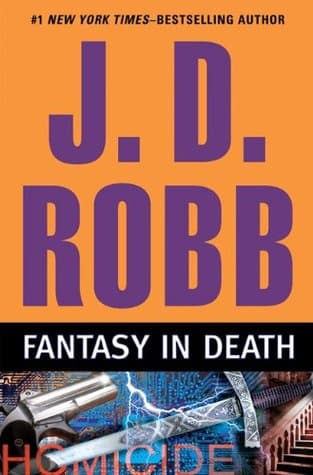
Synopsis
Covers the whole plot, including the ending.
- Difficulty
- Medium
- Pacing
- Moderate
- Mood
- Suspenseful, Intriguing, Futuristic, Gritty
- Read it if
- You enjoy futuristic police procedurals with a strong, no-nonsense female lead, intricate mysteries, and a touch of romance, set against a backdrop of advanced technology and corporate intrigue.
- Skip it if
- You dislike explicit violence, futuristic settings, or police procedural narratives that delve into the tech/gaming world.
Fantasy in Death Plot Summary
Covers the whole plot, including the ending.
The Macabre Discovery
Bart Minnock, the founder of U-Play, a successful computer gaming company, is found decapitated in his locked, soundproofed private playroom. His body is slumped over a desk, his head placed beside him. The scene is clean, with no signs of forced entry or struggle, baffling Lieutenant Eve Dallas and Detective Delia Peabody. The victim, known for his enthusiastic personality, had no apparent enemies, and his death seems illogical. Eve's initial assessment points to a professional killer, possibly someone with close knowledge of Bart's habits and the secure environment of his penthouse apartment.
Initial Investigations and Suspects
Eve begins her investigation by interviewing Bart's live-in girlfriend, Lara, who seems distraught but offers little useful information about potential enemies. She then speaks with his business partners at U-Play: Julian Cross, the COO, and Marlo, the creative director. While they express shock, Eve senses underlying tensions within the company. Meanwhile, Eve's husband, Roarke, a rival in the gaming industry, provides insight into the competitive nature of the business, confirming that while Bart was a competitor, he was generally respected. The lack of clear motives or suspects deepens the mystery, pushing Eve to look closer into Bart's personal and professional life.
Unraveling the Virtual World
Eve and Peabody, with help from Roarke and his tech team, begin to explore the virtual world of U-Play's main game, 'Fantasy in Death'. They find that Bart was deeply involved in the game, often playing as an avatar named 'The Architect'. The game features a complex, user-driven economy and social structure, and Eve wonders if the murder could be linked to an in-game dispute that spilled into reality. The large number of players and the anonymity of the virtual world pose a significant challenge, but Eve suspects the key to the murder is hidden within the game's layers, blurring the lines between fantasy and reality.
The Rival Company and the Missing Data
Eve investigates a rival gaming company, 'Specter Gaming,' led by Damon Blake, known for his aggressive business tactics and past conflicts with U-Play. While Blake had reason for professional sabotage, Eve doubts he is capable of such a meticulous and brutal murder. At the same time, Roarke discovers that a large part of Bart's personal game data, specifically related to his 'Architect' avatar and its interactions, has been carefully deleted from U-Play's servers. This suggests a deliberate attempt to hide tracks within the virtual world, reinforcing Eve's belief that the game itself holds vital clues to the killer's identity and motive.
A Breakthrough in Forensics
Dr. Charlotte Mira, the police psychologist, provides a profile of the killer, suggesting a highly intelligent person with a strong need for control and a fascination with precision. She theorizes the killer might see the murder as a 'game' or a 'puzzle.' Meanwhile, forensic analysis of the unique, clean cut of Bart's decapitation shows an unusual weapon was used—not a traditional blade, but something with extreme sharpness and a specific design, possibly custom-made. This finding further narrows down the possibilities and points to a killer with specialized knowledge or access to advanced technology, making the investigation more complex.
The 'Dragon's Tooth' Theory
Roarke, using his knowledge of gaming lore, connects the forensic description of the murder weapon to a legendary, impossibly sharp artifact within the 'Fantasy in Death' game known as the 'Dragon's Tooth.' This artifact is said to grant its wielder ultimate power and is highly sought after by players. This discovery suggests the killer might be someone deeply involved in the game, perhaps even obsessed with its mythology, and who has found a way to turn a virtual weapon into a real-world murder. This revelation strengthens the link between the game and the murder, pushing Eve further into the virtual realm.
Unmasking the Imposter
Through careful analysis of game logs and server data, Roarke and his team uncover a sophisticated imposter who had been carefully mimicking Bart's 'The Architect' avatar within 'Fantasy in Death.' This imposter, known only by a cryptic username, had been secretly interacting with players, manipulating in-game events, and even engaging in private communications. This discovery suggests a deeper, more personal motive than first believed, hinting at a killer who sought to take over Bart's identity and influence, both in the virtual and potentially the real world, adding psychological depth to the case.
The Killer's Identity Revealed
Eve, following digital clues and psychological profiling, confronts Julian Cross, Bart's seemingly loyal COO. Cross, driven by deep resentment and a desire to control U-Play, had carefully planned Bart's murder. He felt Bart's playful nature and lack of 'serious' business sense were holding the company back. Cross had secretly developed a real-world replica of the 'Dragon's Tooth' and used his knowledge of Bart's habits and the penthouse's security to commit the crime, seeing the murder as the ultimate game where he would win and take over U-Play.
The Confession and the Motive
Cornered by Eve's evidence, Julian Cross confesses to Bart Minnock's murder. He explains his motive came from a strong belief that Bart, despite his genius, was a 'child' who lacked the ruthlessness to make U-Play reach its full potential. Cross saw himself as the true architect of the company's future and viewed Bart as an obstacle. He carefully crafted the murder to be an unsolvable puzzle, a sign of his superior intellect and control. His confession reveals a chilling detachment and an almost artistic pride in his perfect crime, showing the dark side of ambition and the blurring of lines between virtual power and real-world violence.
Aftermath and Reflection
With Julian Cross arrested and the case closed, Eve considers the disturbing implications of a murder rooted in the virtual world. The case shows how fantasy, when unchecked, can blur into a dangerous reality, and how ambition can corrupt individuals. She acknowledges Roarke's important role in navigating the complexities of the gaming world, strengthening their partnership. Despite the grim nature of her work, Eve finds comfort in her relationship with Roarke, who grounds her in the real world while understanding the dark parts of human nature she constantly faces. The experience reinforces her commitment to justice, no matter how unusual the crime scene.
Fantasy in Death Characters
Eve Dallas
Protagonist
A tough, dedicated NYPSD Homicide Lieutenant haunted by her past.
Eve Dallas is an exceptional homicide detective, driven by a fierce sense of justice and an unwavering commitment to her job. Her past as an abused orphan has forged her into a resilient and empathetic, yet often socially awkward, individual. She possesses a sharp mind, an almost intuitive understanding of criminals, and an unshakeable moral compass. Despite her gruff exterior, she deeply cares for her team and her husband, Roarke.
Relationships: Roarke (Husband and partner, providing technical expertise and emotional support.); Delia Peabody (Detective partner and friend, offering practical assistance and emotional grounding.); Dr. Charlotte Mira (Police psychologist and mentor, offering insights into criminal minds and Eve's own psyche.)
Roarke
Supporting
Billionaire businessman, Eve's husband, and a tech genius.
Roarke is a charismatic and incredibly wealthy Irish businessman with a mysterious, often dark, past. He is deeply devoted to Eve, providing her with unwavering support, cutting-edge technology, and invaluable insights, particularly in cases involving corporate espionage or advanced tech. His keen intellect and vast resources make him an indispensable asset to Eve's investigations, often acting as her 'geek squad' and confidante. He understands the darker elements of humanity, which allows him to connect with Eve on a profound level.
Relationships: Eve Dallas (Husband, confidante, and partner in crime-solving.); Summerset (His loyal butler and surrogate father figure.)
Delia Peabody
Supporting
Eve's competent and loyal detective partner.
Detective Delia Peabody is Eve's junior partner, a bright and often humorous counterpoint to Eve's intensity. She is highly competent, dedicated, and increasingly adept at navigating Eve's unique personality. Peabody provides practical investigative support, often handling the more mundane but crucial aspects of a case, and offers a much-needed dose of normalcy and humor to Eve's life. She is loyal to Eve and is growing into a formidable detective in her own right, learning from the best.
Relationships: Eve Dallas (Detective partner, mentor, and close friend.); McNab (Boyfriend and fellow tech expert, offering a balance of personal and professional support.)
Bart Minnock
Victim
The eccentric and beloved founder of U-Play, whose murder kickstarts the investigation.
Bart Minnock was the visionary founder of U-Play, a highly successful computer gaming company. Known for his playful, enthusiastic, and somewhat childlike personality, he was deeply immersed in his creations, particularly the 'Fantasy in Death' game. Despite his wealth and influence, he was largely well-liked and respected, making his brutal murder all the more baffling. He embodied the spirit of gaming, blurring the lines between work and play, which ultimately made him vulnerable to someone who viewed his passion as a weakness.
Relationships: Lara (Live-in girlfriend, seemingly devoted.); Julian Cross (Business partner and ultimately, his murderer.); Marlo (Business partner and creative director.)
Julian Cross
Antagonist
Bart Minnock's pragmatic COO and the calculating murderer.
Julian Cross is Bart Minnock's Chief Operating Officer at U-Play. On the surface, he appears calm, competent, and highly professional, often balancing Bart's more whimsical nature with practical business acumen. However, beneath this veneer lies a deep-seated resentment and a ruthless ambition. He views Bart's leadership style as immature and inefficient, believing he could run U-Play better. Cross is highly intelligent, meticulous, and possesses a chilling detachment, seeing the murder as a strategic move to take control.
Relationships: Bart Minnock (Business partner and the victim of his calculated murder.); Marlo (Business partner, whom he manipulated.)
Dr. Charlotte Mira
Supporting
The police psychologist who provides crucial insights into criminal minds.
Dr. Charlotte Mira is a highly respected police psychologist who often consults on Eve's most challenging cases. She possesses a profound understanding of human behavior and criminal psychology, offering invaluable profiles and insights that help Eve understand the killer's motives and methods. Mira also acts as a mentor and confidante to Eve, helping her navigate the emotional toll of her work and providing a unique perspective on the complexities of the human psyche. She is calm, observant, and always provides a clear, logical analysis.
Relationships: Eve Dallas (Police psychologist, mentor, and friend.)
Lara
Supporting
Bart Minnock's live-in girlfriend.
Lara is Bart Minnock's live-in girlfriend. She appears genuinely distraught by his death and struggles to comprehend who would want to harm him. While she provides some personal details about Bart, she is largely unaware of the deeper professional rivalries or the virtual world's intricate connections that ultimately led to his demise. Her character highlights the innocent bystanders affected by the hidden machinations of the gaming world and the murderer's true intentions.
Relationships: Bart Minnock (Live-in girlfriend.)
Marlo
Supporting
The creative director at U-Play and Bart's business partner.
Marlo is the creative director at U-Play, working closely with Bart and Julian Cross. She represents the artistic and imaginative side of the gaming company, deeply invested in the creative vision of 'Fantasy in Death.' While initially appearing as a supportive partner, she provides glimpses into the dynamics within U-Play, hinting at the differing philosophies between Bart's free-spirited approach and Cross's more structured one. She is a witness who helps Eve understand the inner workings of the company and Bart's passion for his creations.
Relationships: Bart Minnock (Business partner and creative collaborator.); Julian Cross (Business partner, unaware of his true intentions.)
Fantasy in Death Themes
The Blurring of Reality and Fantasy
The novel explores how the lines between the virtual world of online gaming and real-life can become dangerously blurred. Bart Minnock's murder, committed with a weapon inspired by an in-game item ('Dragon's Tooth') and motivated by a desire for control within a virtual empire, shows this theme. The killer, Julian Cross, sees the murder itself as a 'game' to be won, demonstrating how immersion in fantasy can distort one's view of reality and morality. Eve's investigation requires her to look into the virtual world, acknowledging its deep impact on the real one.
“Sometimes, Dallas, the lines between what’s real and what’s not get a little… fluid. Especially when you’re dealing with genius, and obsession.”
Ambition and Obsession
The destructive power of unchecked ambition and obsession is a main theme. Julian Cross's motive for murdering Bart Minnock comes from his obsessive desire to control U-Play and his belief that Bart's 'playful' approach was slowing its progress. His ambition leads him to carefully plan and execute a 'perfect' crime, seeing Bart as merely an obstacle in his 'game' for power. This theme highlights how even in industries like gaming, the drive for control and success can lead to extreme, violent acts, consuming individuals and distorting their moral compass.
“He didn’t just want the company, Dallas. He wanted to be the *architect*.”
The Nature of Identity
The novel looks at how identity is built and seen, both in the real world and in virtual spaces. Bart Minnock's public persona as 'The Architect' in 'Fantasy in Death' was an extension of his real self, but it also allowed an imposter to mimic and manipulate his virtual presence. Julian Cross's motive includes not just taking over the company, but also erasing Bart's legacy and replacing his identity with his own vision. Eve struggles to understand the true identity of the killer, who hides behind layers of professional conduct and virtual avatars, making the investigation a search to uncover the real self behind the deception.
“In a world where you can be anything, some people choose to be something they’re not, for reasons that are anything but fantasy.”
Justice vs. Law
As in many J.D. Robb novels, Eve Dallas constantly deals with the pursuit of justice within the law. Bart Minnock's murder is so carefully planned and seemingly impossible that it challenges normal police work. Eve's determination to bring the killer to justice often pushes her to the edges of protocol, especially when dealing with the complexities of the virtual world and the sophisticated cover-up. The theme explores her strong commitment to ensuring that even the most cunning criminals are held accountable, regardless of how cleverly they try to evade the system, strengthening her role as a moral arbiter.
“The law might have holes, but justice, Dallas, justice finds a way.”
Plot Devices & Literary Techniques
Locked Room Mystery
The victim is found in an impossibly secured room with no signs of entry or struggle.
The murder of Bart Minnock occurs in a locked, soundproofed private playroom, with no forced entry, no struggle, and the victim's head neatly severed. This classic plot device immediately establishes a seemingly impossible crime, creating a high level of intrigue and challenging Eve's investigative skills. It forces her to look beyond conventional explanations and delve into the more obscure details of the victim's life and the environment, ultimately leading to the discovery of a highly sophisticated and precise killer who exploited the security measures rather than circumventing them.
Red Herring (Rival Company)
A rival gaming company is initially presented as a plausible suspect.
Damon Blake, the aggressive CEO of Specter Gaming, is introduced as a strong competitor with a history of professional disputes with U-Play and Bart Minnock. This initially points the investigation in a direction of corporate rivalry and sabotage, providing a seemingly clear motive. However, Eve quickly dismisses Blake as the murderer due to his lack of precision and a different psychological profile, redirecting the focus back to Bart's inner circle and the more intricate details of the crime. This device serves to complicate the initial investigation and highlight the true killer's cunning.
The Virtual World as a Clue Repository
The online game 'Fantasy in Death' holds crucial clues to the murder.
The intricate online game 'Fantasy in Death' is not just a backdrop but an active repository of clues. Bart's avatar, 'The Architect,' and the legend of the 'Dragon's Tooth' within the game directly link to the murder weapon and the killer's motives. The deletion of Bart's game data and the existence of an imposter avatar within the game necessitate a deep dive into the virtual realm, making it an essential investigative tool. This device blurs the lines between fiction and reality, highlighting how digital footprints can be as revealing as physical ones.
Forensic Linguistics/Digital Forensics
Analysis of digital communications and game data provides critical insights.
Given the nature of the crime, digital forensics plays a crucial role. Roarke's team meticulously analyzes game logs, server data, and encrypted communications to uncover the imposter avatar and the killer's digital trail. This includes tracking IP addresses, parsing complex data sets, and understanding the nuances of online interactions. This device highlights the evolution of police work into the digital age, where virtual evidence can be as vital as physical evidence, requiring specialized skills and technology to uncover the truth hidden within cyberspace.
Fantasy in Death Quotes
“Every cop has a dark place, you learn to live with it, but you never get used to it.”
“It was impossible to be a cop and not believe in evil. It was just as impossible to be a cop and not believe in good.”
“He was her rock, her steady, her anchor in the storm. And sometimes, just sometimes, he was her storm too.”
“A good lie, well-placed, was often more effective than the truth.”
“There were some wounds time couldn't heal, only scar over.”
“The dead don't care about your feelings, Dallas. They just want justice.”
“Sometimes the monsters were real, and sometimes they wore human faces.”
“She had a job to do. That was her mantra, her shield, her weapon against the chaos.”
“Love didn't make you weak. It made you dangerous, if you had something to protect.”
“The city never slept, and neither did its demons.”
“It wasn't about being fearless, it was about doing what needed to be done even when you were scared to death.”
“He was the chaos she craved, the calm she needed, and the passion that fueled her.”
“Every case left a mark. Some were just deeper than others.”
“You didn't have to be perfect to be good at your job. You just had to be willing to bleed for it.”
Quiz
10 questions on the plot and the characters. Each answer comes with a short explanation.
Question 1
What is the name of the computer gaming company founded by the victim, Bart Minnock?
- CyberPlay
- U-Play
- GameVerse
- NextLevel Gaming
Show answer
B. U-Play Bart Minnock was the founder of the computer gaming giant U-Play.
Question 2
How was Bart Minnock found in his private playroom?
- Shot in the chest
- Strangled with a cord
- His head separated from his body
- Poisoned with a rare toxin
Show answer
C. His head separated from his body Bart Minnock was found in a pool of blood, his head separated from his body.
Question 3
Who is Eve's husband, and what is his connection to the gaming industry?
- Peabody, her partner
- Roarke, one of U-Play's competitors
- Summerset, her butler
- McNab, a tech specialist
Show answer
B. Roarke, one of U-Play's competitors Eve's husband, Roarke, is mentioned as one of U-Play’s competitors.
Question 4
What initial challenge does Eve face when investigating Bart Minnock's murder?
- A lack of forensic evidence at the scene
- The refusal of his business partners to cooperate
- Finding no one, including his girlfriend and business partners, who seemed to have a problem with him
- The victim's private playroom being completely empty
Show answer
C. Finding no one, including his girlfriend and business partners, who seemed to have a problem with him Despite his violent end, Eve can’t find anyone—girlfriend and business partners included—who seemed to have a problem with the enthusiastic, high-spirited millionaire.
Question 5
What is the general perception of Bart Minnock by those around him, despite his violent death?
- He was a ruthless and feared businessman.
- He was an enthusiastic, high-spirited millionaire.
- He was a quiet and reclusive individual.
- He was known for frequent disputes and conflicts.
Show answer
B. He was an enthusiastic, high-spirited millionaire. The text describes him as an 'enthusiastic, high-spirited millionaire,' and Eve struggled to find anyone who had a problem with him.
Question 6
What aspect of the gaming business is mentioned as having 'fierce rivalries and dirty tricks'?
- Game development and coding
- Marketing and advertising
- Gaming as a business
- E-sports competitions
Show answer
C. Gaming as a business The text states, 'Of course gaming, like any business, has its fierce rivalries and dirty tricks.'
Question 7
What does the phrase 'fantasy is the ultimate seduction' imply about the central theme of the investigation?
- The killer used a fantastical weapon.
- The motive for the murder is rooted in the allure and dangers of the virtual world and its fantasies.
- The victim was obsessed with fantasy novels.
- Eve herself gets drawn into a fantasy game.
Show answer
B. The motive for the murder is rooted in the allure and dangers of the virtual world and its fantasies. The tagline 'fantasy is the ultimate seduction—and the price of defeat is death' suggests that the dangers and allure of the virtual, fantasy world of gaming will be central to the murder's motive and investigation.
Question 8
What does the statement 'Minnock was not naïve, and he knew how to fight back in the real world as well as the virtual one' suggest about his character?
- He was a skilled martial artist.
- He was a strategic and resilient individual capable of defending himself both professionally and personally.
- He often resorted to physical violence.
- He had a strong legal team.
Show answer
B. He was a strategic and resilient individual capable of defending himself both professionally and personally. This statement indicates that Minnock was not easily fooled or intimidated and possessed the ability to defend his interests effectively in both business and personal conflicts.
Question 9
The description mentions Eve and her team are about to 'enter the next level of police work.' What does this imply about the nature of the case?
- They will be promoted to a higher rank.
- The investigation will require them to delve into the complex, often unconventional, world of gaming and virtual reality.
- They will use advanced new police technology.
- They will solve the case quickly and efficiently.
Show answer
B. The investigation will require them to delve into the complex, often unconventional, world of gaming and virtual reality. Given the context of a gaming mogul's murder, 'entering the next level of police work' suggests the investigation will require new approaches and understanding of the virtual world.
Question 10
Considering the elements of 'Thriller, Mystery, Science Fiction, Romance,' which genre element is most directly highlighted by the victim's profession and the potential setting of the 'next level of police work'?
- Romance
- Thriller
- Mystery
- Science Fiction
Show answer
D. Science Fiction The victim being a computer gaming giant founder, the mention of virtual worlds, and 'next level of police work' heavily lean into the Science Fiction aspect, even though the core is a mystery/thriller.
Fantasy in Death FAQ
What is the central mystery in 'Fantasy in Death'?
The central mystery revolves around the gruesome murder of Bart Minnock, the founder of the hugely successful computer gaming company U-Play. He is found decapitated in his locked private playroom, and Eve Dallas must unravel who would want to kill the seemingly universally liked, high-spirited millionaire.
Who is Bart Minnock and what is his significance to the plot?
Bart Minnock is the victim, a charismatic and enthusiastic millionaire who founded U-Play, a major computer gaming company. His murder kicks off the investigation, forcing Eve Dallas to delve into the competitive and often cutthroat world of high-stakes gaming and virtual reality.
How does Roarke become involved in the investigation?
Roarke becomes involved due to his own significant presence in the gaming industry as a competitor to U-Play. His knowledge of the business, its rivalries, and his personal connections within that world prove invaluable to Eve, though he maintains a professional distance from the official police work.
What unique challenges does the gaming world present to Eve's investigation?
The gaming world presents challenges because it blurs the lines between fantasy and reality. Eve must navigate intricate virtual environments, understand the motivations behind in-game actions, and decipher how virtual rivalries or seductions might translate into real-world violence, making traditional police work more complex.
Who are some of the key suspects or persons of interest Eve encounters?
Eve investigates Bart's girlfriend, business partners, and various competitors within the gaming industry. She also looks closely at individuals connected to U-Play's development teams and those who might have held grudges from past business dealings or personal interactions.
What is the significance of the locked room mystery aspect of Bart Minnock's death?
The locked room aspect of Bart Minnock's death heightens the mystery, suggesting either an impossible crime or an extremely clever, technologically advanced method of murder. It forces Eve and her team to consider non-traditional means of entry or escape, pushing the boundaries of their investigative techniques.
Are there any subtle connections between Roarke's past and the gaming industry depicted?
While not explicitly detailed as a direct connection to Bart Minnock's specific past, Roarke's own history in building his empire often involved aggressive business tactics and competition. This shared understanding of high-stakes corporate warfare allows him to anticipate certain moves and motivations that Eve might initially overlook.
How does the book explore the ethical implications of advanced virtual reality?
The book explores how advanced virtual reality can blur the lines between reality and fantasy, potentially leading individuals to act out violent fantasies or engage in unethical behavior they wouldn't in the real world. It questions the psychological impact of immersive digital environments on human morality and perception.
Does the novel hint at any future technological advancements beyond what's directly relevant to the case?
The novel, through its depiction of U-Play's cutting-edge gaming technology, subtly hints at a future where virtual reality becomes indistinguishable from reality, potentially leading to new forms of entertainment, education, and even crime. It showcases the rapid evolution of digital interfacing and immersion.
How does Eve Dallas's personal history with violence influence her approach to this particular case?
Eve's personal history with violence, particularly her own trauma, makes her acutely sensitive to the brutality of Bart Minnock's murder. Her past experiences often give her an intuitive understanding of victims and perpetrators, but also sometimes make her more aggressive in seeking justice, especially for such a heinous act.
What psychological profiles emerge from the individuals involved in the gaming industry?
The gaming industry individuals often exhibit traits like intense competitiveness, obsessive dedication, and a tendency to live partially within virtual worlds. Some display a blurring of lines between their online personas and real-life identities, which can lead to distorted perceptions of consequences and reality.
How does the concept of 'fantasy as ultimate seduction' play out psychologically for the characters?
For some characters, the 'fantasy as ultimate seduction' manifests as an escape from mundane reality, or a place to wield power they lack in real life. Psychologically, it can lead to addiction, a detachment from real-world empathy, and a dangerous belief that virtual actions have no true consequences.
Are there characters who struggle with the distinction between their virtual and real identities?
Yes, several characters within the gaming world struggle with this distinction. Their online avatars and achievements often become more significant than their real-world selves, leading to identity confusion, inflated egos, or a preference for the controlled environment of fantasy over the complexities of reality.
What is the overarching message about technology and humanity that 'Fantasy in Death' conveys?
'Fantasy in Death' suggests that while technology, particularly virtual reality, can offer incredible escapism and innovation, it also carries the inherent risk of dehumanization and the potential for real-world violence if the line between fantasy and reality becomes too blurred. It's a cautionary tale about human nature within technological advancement.
How does the book comment on the nature of ambition and competition in the corporate world?
The book portrays corporate ambition and competition as a ruthless game where individuals are willing to employ dirty tricks and intense rivalries to achieve success. It highlights how the drive for wealth and power can lead to cutthroat behavior, both within and outside the virtual gaming arena.
Is the ending of 'Fantasy in Death' ambiguous, or does it offer clear resolution?
The ending provides a clear resolution to Bart Minnock's murder, identifying the perpetrator and their motives. While the specific case is closed, the broader implications of advanced virtual reality and its psychological effects on humanity are left open for ongoing contemplation.
How does the title 'Fantasy in Death' encapsulate the novel's themes?
The title 'Fantasy in Death' perfectly encapsulates the novel's themes by highlighting how a world built on fantasy (gaming, virtual reality) becomes the setting for a brutal, very real death. It speaks to the deadly consequences that can arise when the allure of fantasy seduces individuals into crossing moral and legal boundaries.
What role does the concept of 'play' or 'games' play beyond the literal gaming context?
Beyond literal gaming, the concept of 'play' extends to the killer's mindset, viewing murder as a twisted game with rules and objectives. It also reflects the psychological 'games' people play with each other in business and relationships, where manipulation and strategy are key to 'winning'.
About the author

J.D. Robb is a pseudonym for author Nora Roberts, known for her work in the romance and suspense genres. She is particularly recognized for the "In Death" series, which includes titles such as "Naked in Death," "Glory in Death," "Immortal in Death," "Rapture in Death," "Ceremony in Death," and "Holiday in Death." These novels blend elements of crime fiction with futuristic settings and strong character development.
Similar books
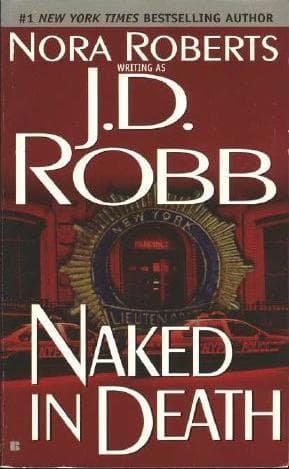
- Naked in Death
J.D. Robb
4.1 (167k) average on GoodreadsThrillerIt's the first book in the same series, establishing the characters and futuristic setting.
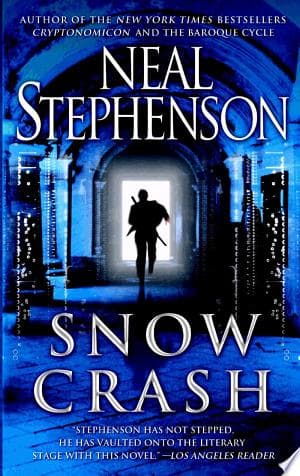
- Snow Crash
Neal Stephenson
4.0 (237k) average on GoodreadsFantasyFeatures a complex virtual world and a thrilling mystery with high stakes.
- Altered Carbon
Richard K. Morgan
4.0 (87k) average on GoodreadsThrillerA gritty, futuristic detective story with a strong focus on technology and crime.
- The Secret Place
Tana French
3.9 (63k) average on GoodreadsThrillerFrench's novel offers greater psychological depth and utilizes unreliable narration, creating a more intricate and character-driven mystery. Robb's 'Fantasy in Death' is faster-paced and more plot-driven, with less focus on the internal lives and subtle motivations of secondary characters.
- Neuromancer
William Gibson
3.9 (262k) average on GoodreadsFantasyGibson's 'Neuromancer' is a seminal work of cyberpunk that explores deeper philosophical questions about consciousness, AI, and technology. Robb's novel, while set in a futuristic world with virtual reality, is more accessible and focuses on a crime procedural within that setting, rather than pushing the boundaries of speculative fiction or philosophical inquiry.
- Angels & Demons
Dan Brown
3.9 (2.7M) average on GoodreadsThrillerA Harvard symbologist races through Rome's ancient sites, deciphering cryptic clues to unmask the Illuminati and stop a vengeful plot to destroy the Vatican with a stolen antimatter weapon.



Enjoyed the summary?
A summary gives you the shape of the book. The book itself has the detail, the examples and the voice.
Find Fantasy in Death on AmazonAs an Amazon Associate, BookBrief earns from qualifying purchases. How we're funded