
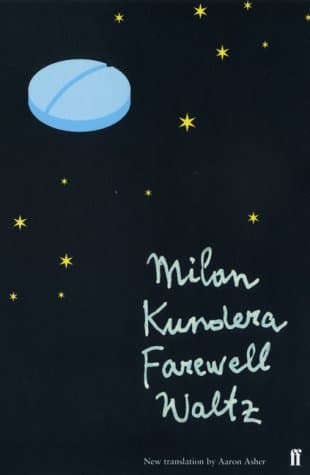
Synopsis
Covers the whole plot, including the ending.
- Difficulty
- Medium
- Pacing
- Moderate
- Mood
- Satirical, Philosophical, Darkly Humorous, Absurd
- Read it if
- You enjoy philosophical comedies of errors with a dark, satirical edge and a European sensibility, exploring themes of love, jealousy, and freedom.
- Skip it if
- You prefer straightforward narratives, clear moral conclusions, or are put off by morally ambiguous characters and a cynical tone.
Farewell Waltz Plot Summary
Covers the whole plot, including the ending.
The Announcement and the Spa's Intrigue
The novel begins with jazz trumpeter Klima getting a phone call from Ruzena, a young nurse. She says she is pregnant and thinks he is the father, after a brief meeting at a fertility spa. Klima, who is married, panics. He goes back to the spa, a private medical center, hoping to convince Ruzena to end the pregnancy. When he arrives, he meets various characters, including Dr. Skreta, the spa's gynecologist, and Jakub, an elderly political prisoner getting ready to leave the country. The air is thick with hidden desires and tensions, setting the stage for a series of connected events.
The Arrival of Kamila and the Web of Jealousy
Klima's jealous wife, Kamila, unexpectedly arrives at the spa, having grown suspicious of his frequent absences. Her presence immediately increases Klima's worry and forces him to keep up a detailed lie to hide his affair with Ruzena. Kamila's sharp mind makes it hard for Klima to avoid her questions, and her emotional nature threatens to reveal his secret at any moment. Meanwhile, Ruzena's equally possessive boyfriend, Franta, is also at the spa, adding another layer of possible conflict. The characters are now caught in a complex web of lies, jealousy, and unspoken desires, with the spa acting as a pressure cooker.
Jakub's Farewell and the Poisoned Gift
Jakub, the former political prisoner, is getting ready to leave the country. He decides to host a farewell party at the spa, inviting several residents, including Klima, Kamila, and Dr. Skreta. During the party, Jakub gives a seemingly harmless gift: a bottle with a liquid he claims can cause a peaceful death. He says it is a symbol of ultimate freedom from pain. This dark offering adds a philosophical tone to the party and plants a seed of danger, as the bottle is later left alone, its contents a silent threat in the spa's chaotic setting.
Felix's Pursuit of Ruzena and Kamila's Distress
Felix, a rich and charming American, arrives at the spa, drawn by its reputation. He quickly falls for Ruzena, seeing her as innocent and naturally beautiful. Felix's open admiration and pursuit of Ruzena add another layer to Klima's problem, as it gives Ruzena another suitor and possibly weakens Klima's attempts to control the story of her pregnancy. Kamila, already upset by Klima's evasiveness, watches Felix's attention to Ruzena with growing suspicion and anger, further fueling her jealousy and making her more determined to find out the truth about her husband's actions.
The Doctor's Obsession and the Fertility Clinic
Dr. Skreta, the spa's gynecologist, is consumed by his ideas on fertility and having children. He sees reproduction as a scientific and almost sacred act, often ignoring normal ethics. His clinic is a center for unusual treatments and experiments, and he secretly wants to be the father of many children, often through unusual ways. His focus on creating life, along with his willingness to manipulate situations, makes him a key and morally unclear character in the unfolding drama. His clinic becomes a place for both hope and manipulation, where the idea of fatherhood is questioned and redefined.
The Mix-up and the Poisoned Drink
Amidst the rising tension and confusion, the bottle of poison that Jakub gave at his farewell party is accidentally drunk. The exact details of how it happened are unclear at first, adding to the chaotic mood. This incident turns the comedic story into a potentially tragic one, greatly raising the stakes. The characters must face the grim reality of the situation, and the immediate aftermath is marked by panic, accusations, and a desperate search for an antidote. The accidental poisoning is a sharp reminder of how fragile life is and the unforeseen results of seemingly innocent actions within the spa's confined world.
Ruzena's Decision and Klima's Guilt
Ruzena, after much thought and influence from various characters, makes a decision about her pregnancy. Her choice, whether to keep the child or end it, has big effects on Klima. No matter her final decision, Klima must face the moral weight of his actions and the possible results of his cheating. He struggles with guilt, responsibility, and the realization that his casual meeting has changed several lives forever. The outcome of Ruzena's decision becomes a turning point for Klima, forcing him to rethink his relationships and his own moral compass, pushing him towards a deeper understanding of commitment and consequences.
Kamila's Revelation and the Confrontation
Kamila, through her persistent searching and sharp observation, eventually uncovers the full truth about Klima's affair with Ruzena and the resulting pregnancy. The discovery shatters her trust and leads to a dramatic and emotional fight with Klima. Her jealousy, which had been hidden, explodes into a painful display of betrayal and hurt. The confrontation forces Klima to face the results of his lies, and the emotional impact deeply affects their marriage. This scene is a critical turning point in their relationship, as they must now deal with the damage to their trust and decide the future of their union.
Felix's Intervention and the Search for Meaning
Felix, the rich American, steps into the escalating chaos not just as an observer but as an active participant, driven by his mix of playboy charm and saintly kindness. He tries to offer comfort and a different view to the upset characters, especially Ruzena and Kamila. Felix, with his philosophical thoughts and real concern, tries to guide the situation towards a more positive end, focusing on forgiveness and finding meaning beyond the immediate trouble. His presence offers a glimmer of hope and a contrast to the more cynical or manipulative characters, suggesting that even in the midst of absurdity, there is room for understanding and grace.
The Aftermath and the Farewell Waltz
As the immediate crisis of the poisoning and the paternity argument begins to settle, the characters are left to deal with the aftermath of their connected fates. The events at the spa have changed their lives and relationships forever. The final scenes show some characters leaving, some staying, but all carrying the lasting marks of their experiences. The novel ends with a bittersweet feeling, where the initial silly elements give way to a deeper thought on love, betrayal, freedom, and the inherent absurdity of human existence. The 'farewell waltz' symbolizes both an end and a continuation, a dance of life's unpredictable turns.
Farewell Waltz Characters
Klima
Protagonist
A celebrated jazz trumpeter caught in a web of infidelity and consequence.
Klima is a renowned musician, charismatic and accustomed to the adoration that comes with his profession. He is a man who values his freedom and enjoys casual encounters, but is ultimately unprepared for the profound consequences of his actions. He is prone to rationalization and attempts to control situations, often through manipulation, but finds himself increasingly out of his depth. His primary motivation is to maintain his comfortable life and protect his public image, while also navigating the complexities of his marriage.
Relationships: Kamila (Wife, relationship strained by his infidelity and her jealousy.); Ruzena (Lover, the mother of his alleged child, a source of panic and moral dilemma.); Jakub (Acquaintance, a philosophical counterpoint to Klima's hedonism.)
Kamila
Supporting
Klima's beautiful and fiercely jealous wife, determined to uncover the truth.
Kamila is Klima's elegant and intelligent wife, deeply devoted to him but plagued by intense jealousy and suspicion. She possesses a sharp wit and a keen intuition, making her a formidable force when she suspects betrayal. Her love for Klima is intertwined with a need for control and fidelity, and she is unwilling to passively accept his deceptions. Her actions are driven by a desire for truth and to reclaim her husband, even if it means confronting painful realities. She represents the stability and commitment that Klima often takes for granted.
Relationships: Klima (Husband, relationship marked by love, suspicion, and eventual betrayal.); Ruzena (Rival, the object of her husband's infidelity.)
Ruzena
Supporting
A young, naive nurse whose pregnancy ignites the novel's central conflict.
Ruzena is a young, somewhat naive nurse at the fertility spa. She is easily swayed by attention and affection, and her decision to inform Klima of her pregnancy is driven by a mix of genuine belief, a desire for connection, and perhaps a touch of romantic fantasy. She is not malicious but rather a catalyst for the plot, her vulnerability and unexpected pregnancy forcing the other characters to confront their own moral dilemmas. She represents innocence thrust into a complex world of adult compromises and deceptions, and her fate is central to the novel's exploration of responsibility.
Relationships: Klima (Alleged father of her child, a casual lover.); Franta (Boyfriend, possessive and jealous.); Felix (Admirer, offers her an alternative path.); Dr. Skreta (Employer, influential in her medical decisions.)
Dr. Skreta
Supporting
A fanatical gynecologist with unconventional and ethically ambiguous views on procreation.
Dr. Skreta is the spa's eccentric and fanatical gynecologist, driven by a radical philosophy of procreation. He believes in the importance of propagating life at all costs, often blurring ethical lines in his pursuit of this goal. He is a manipulator, eager to influence Ruzena's decisions and even to secretly father children himself. Skreta represents the extreme ends of scientific and medical intervention, where professional ethics can be overridden by personal ideologies. His character embodies the novel's critique of scientific hubris and the dangers of unchecked zeal.
Relationships: Ruzena (Patient/employee, whom he attempts to influence regarding her pregnancy.); Jakub (Acquaintance, a philosophical foil.)
Felix
Supporting
A wealthy American, a blend of Don Juan and saint, seeking meaning and offering solace.
Felix is a wealthy American, a complex character who embodies both a worldly charm reminiscent of a Don Juan and a spiritual, almost saintly compassion. He arrives at the spa seeking something indefinable, perhaps a sense of purpose or connection. He is drawn to Ruzena's perceived innocence and offers her an alternative to the manipulative machinations of Klima and Skreta. Felix acts as a philosophical observer and occasional intervener, offering a different perspective on love, freedom, and the human condition. He represents a potential path to redemption and understanding, a counterpoint to the cynicism and deceit prevalent among others.
Relationships: Ruzena (Admirer, offers her support and a potential future.); Klima (Acquaintance, offers a contrast in values.)
Jakub
Supporting
An elderly political prisoner preparing for emigration, a philosopher of freedom and death.
Jakub is an elderly political prisoner, recently released and preparing for emigration. He is a profound and melancholic figure, his experiences having given him a unique perspective on freedom, suffering, and the ultimate release of death. He carries with him a bottle of poison, not as a threat, but as a symbol of ultimate choice and liberation. Jakub serves as the novel's philosophical core, articulating Kundera's meditations on life's absurdities and the human right to tragedy. His impending departure signifies a farewell not just to a country, but to a certain way of life and thought.
Relationships: Klima (Acquaintance, a philosophical sparring partner.); Dr. Skreta (Acquaintance, a contrast in their views on life and death.)
Franta
Supporting
Ruzena's possessive and jealous boyfriend, a source of potential violence.
Franta is Ruzena's boyfriend, a character consumed by jealousy and a possessive love for her. He is less sophisticated than Klima or Felix, and his reactions are often driven by raw emotion and a sense of territoriality. His presence adds a layer of unpredictable tension to the narrative, as his jealousy makes him a potential source of conflict and even violence. Franta represents the more common, less intellectualized form of romantic attachment, contrasting sharply with the philosophical musings of other characters. He is a grounded, if volatile, presence in the chaotic spa environment.
Relationships: Ruzena (Boyfriend, deeply possessive.); Klima (Rival for Ruzena's affection.)
Farewell Waltz Themes
The Absurdity of Existence and the Loss of Tragedy
Kundera explores the idea that in the modern world, grand, meaningful tragedy has been replaced by a farcical, almost comical absurdity. Characters like Klima, despite their struggles, often find themselves in ridiculous situations, weakening any chance for deep suffering. Jakub's thoughts on the 'right to tragedy' highlight this loss, suggesting that modern life makes real human problems seem trivial. The mistaken poisoning, for example, could be very sad, but it has a slapstick element, stopping it from being truly tragic.
“The modern world has taken away our right to tragedy.”
Freedom vs. Responsibility
A main tension in the novel is the conflict between individual freedom, especially sexual freedom, and the responsibilities that come with it. Klima shows this struggle, wanting the freedom to follow his desires without consequences, yet finding himself caught by Ruzena's pregnancy. Jakub's idea of ultimate freedom, even the freedom to die, contrasts with the more ordinary responsibilities that tie the other characters. The choices Ruzena, Klima, and even Dr. Skreta make about life and having children constantly force them to weigh personal desires against the moral and social duties that come with their actions.
“What is freedom if not the right to choose your own end?”
Love, Jealousy, and Betrayal
These strong emotions form the complex web of relationships at the spa. Kamila's fierce jealousy of Klima's cheating drives much of what she does, while Franta's possessiveness over Ruzena adds another layer of tension. Klima's betrayal of Kamila, and his later attempts to manipulate Ruzena, show how destructive deceit is in close relationships. The novel examines how love can be tied to control and how betrayal can break trust, making characters question the very basis of their connections. The emotional chaos shows how fragile human bonds are.
“Jealousy is nothing but the struggle for possession.”
The Manipulation of Life and Procreation
Dr. Skreta's character is central to this theme, as his radical and questionable methods at the fertility spa show a desire to control and manipulate the process of life itself. His focus on increasing birth rates and his willingness to interfere in Ruzena's pregnancy highlight the dangers of scientific arrogance. The novel questions the ethics of using medical advances to serve personal goals and explores the blurred lines between healing and manipulation. This theme is further explored through Klima's attempts to influence Ruzena's decision, showing how individuals can try to control the lives of others.
“To give life is the greatest power a man can wield.”
Plot Devices & Literary Techniques
The Fertility Spa Setting
A secluded, almost surreal location that serves as a microcosm for human desires and moral dilemmas.
The spa functions as a pressure cooker, bringing together a disparate group of characters and intensifying their interactions. Its isolated nature allows for secrets to flourish and for eccentric behaviors to go unchecked. As a fertility spa, it inherently deals with themes of life, procreation, and the human body, providing a direct backdrop for Dr. Skreta's radical theories and Ruzena's pregnancy. The confined space amplifies the farcical elements and the sense of impending chaos, making it a perfect stage for Kundera's 'comedy of errors' with serious undertones.
The Bottle of Poison
A seemingly symbolic gift that becomes a literal instrument of potential tragedy and a catalyst for plot progression.
Introduced by Jakub as a symbol of ultimate freedom and the 'right to choose one's end,' the bottle of poison initially serves a philosophical purpose. However, its subsequent accidental ingestion transforms it into a literal plot device, injecting immediate danger and high stakes into the narrative. It forces the characters to confront mortality and the unforeseen consequences of their actions. The poison's presence elevates the story from a mere comedy of manners to a black comedy, blurring the lines between the absurd and the tragic, and highlighting the fragility of life amidst human folly.
Mistaken Identity/Misinformation
The use of misunderstandings and deliberate deception to drive the plot and create comedic and dramatic tension.
The entire premise of Ruzena's pregnancy, and Klima's attempts to deny or conceal his paternity, relies heavily on misinformation and deceit. Klima constantly fabricates stories to hide his infidelity from Kamila, while Dr. Skreta subtly manipulates Ruzena. The mistaken consumption of the poison also stems from a misunderstanding. These instances of mistaken identity and deliberate misinformation create both farcical situations and dramatic tension, propelling the plot forward and exposing the characters' flaws and vulnerabilities. It underscores how easily truth can be obscured and how human actions are often based on incomplete or false information.
Farewell Waltz Quotes
“The only reason people want to be rich is so they can be free. The only reason people want to be famous is so they can be loved.”
“He understood that the world was a tragedy, but a tragedy that could be lived with a certain lightness.”
“The heaviest of burdens is therefore simultaneously an image of life's most intense fulfillment. The heavier the burden, the closer our lives come to the earth, the more real and truthful they will be.”
“Humanity's true moral test, its fundamental test, consists of its attitude towards those who are at its mercy: animals.”
“A person who is not afraid of death is afraid of nothing.”
“The past is a foreign country; they do things differently there.”
“Love is the longing for the half of ourselves we have lost.”
“Every person is a mystery, a universe. And to try to understand another person is to try to understand the universe itself.”
“To live is to be a stranger, to be a foreigner, to be an exile.”
“The only way to escape the weight of the world is to dance.”
“What is serious in life is often ridiculous, and what is ridiculous is often serious.”
“We can never know what to want, because, living only one life, we can neither compare it with our previous lives nor perfect it in our lives to come.”
“The more a man is in love, the more he is afraid of the woman he loves.”
“Happiness is the longing for repetition.”
Quiz
10 questions on the plot and the characters. Each answer comes with a short explanation.
Question 1
Who is the protagonist of 'Farewell Waltz' and what is his profession?
- Jakub, a political dissident
- Klima, a celebrated jazz trumpeter
- Dr. Skreta, a gynecologist
- Bertlef, a rich American
Show answer
B. Klima, a celebrated jazz trumpeter The protagonist is Klima, a celebrated jazz trumpeter, who receives the news of a potential pregnancy.
Question 2
What event sets the main plot in motion for Klima?
- His wife discovers his infidelity.
- He receives a phone call from a nurse announcing her pregnancy, claiming him as the father.
- He is invited to perform at a prestigious international festival.
- He decides to leave his wife for the nurse.
Show answer
B. He receives a phone call from a nurse announcing her pregnancy, claiming him as the father. The plot begins when Klima receives a phone call from a young nurse, Ruzena, who informs him she is pregnant and believes he is the father after their brief encounter at a fertility spa.
Question 3
Where do many of the events in 'Farewell Waltz' take place?
- A bustling city hospital
- An isolated mountain retreat
- A fertility spa
- Klima's home and jazz club
Show answer
C. A fertility spa Many of the key interactions and events unfold at a fertility spa, where Klima and the nurse initially met, and where the elderly political prisoner is holding a farewell party.
Question 4
Which character is described as 'at once Don Juan and saint'?
- Klima, the trumpeter
- Dr. Skreta, the gynecologist
- Bertlef, a rich American
- Jakub, the political prisoner
Show answer
C. Bertlef, a rich American Bertlef, the rich American, is characterized by this duality, embodying both a seducer and a figure of moral purity in different contexts.
Question 5
What is the central theme Kundera explores through the 'blasphemous lightness' in 'Farewell Waltz'?
- The importance of fidelity in marriage.
- The loss of the 'right to tragedy' in the modern world.
- The pursuit of artistic excellence.
- The struggle against political oppression.
Show answer
B. The loss of the 'right to tragedy' in the modern world. The blurb explicitly states that Kundera's 'blasphemous lightness' makes us understand 'that the modern world has taken away our right to tragedy,' a key philosophical point of the novel.
Question 6
Who is the elderly political prisoner holding a farewell party at the spa just before his emigration?
- Klima's father
- Jakub
- Dr. Skreta
- Bertlef
Show answer
B. Jakub Jakub is the elderly political prisoner holding a farewell party, adding another layer of intrigue and philosophical depth to the spa's setting.
Question 7
How long do the main events of the novel, characterized by increasing speed, unfold?
- One week
- Five madcap days
- A single intense night
- Several months
Show answer
B. Five madcap days The summary states that events unfold 'during five madcap days,' emphasizing the rapid, comedic pace of the narrative.
Question 8
What is the primary motivation for Dr. Skreta, the 'fanatical gynecologist,' in the novel?
- To expose Klima's infidelity.
- To promote his radical ideas about fertility and procreation.
- To help Jakub escape the country.
- To sabotage the spa's reputation.
Show answer
B. To promote his radical ideas about fertility and procreation. Dr. Skreta is described as 'fanatical,' and his character is deeply involved in the themes of fertility and procreation, often with extreme views.
Question 9
The novel is likened to which Shakespearean play for its black comedy and entanglement of characters?
- Hamlet
- Romeo and Juliet
- A Midsummer Night's Dream
- Othello
Show answer
C. A Midsummer Night's Dream The summary explicitly draws a parallel, stating that characters are 'all drawn into this black comedy, as in A Midsummer Night's Dream,' highlighting the farcical and entangled nature of the plot.
Question 10
What is the ultimate irony regarding the 'farewell' in the novel's title, considering the intertwining plots?
- No one actually leaves the spa by the end of the novel.
- The farewells are not just about physical departure but also about the end of certain illusions or eras.
- Klima's career as a trumpeter comes to an unexpected end.
- The fertility spa itself is shut down permanently.
Show answer
B. The farewells are not just about physical departure but also about the end of certain illusions or eras. While Jakub's emigration provides a literal 'farewell,' Kundera's titles often carry deeper, ironic meanings, suggesting that the 'farewell' extends to broader societal concepts or personal illusions that characters must confront and let go of.
Farewell Waltz FAQ
What is the central premise that sets the plot in motion in 'Farewell Waltz'?
The story begins when Klima, a renowned jazz trumpeter, receives a call from Ruzena, a young nurse, informing him she is pregnant and believes he is the father after a brief encounter at a fertility spa. This unexpected news ignites a chain of events that unravel over five chaotic days.
Who are the main characters involved in the escalating chaos at the spa?
The central figures include Klima, the trumpeter; his beautiful and jealous wife, Kamila; Ruzena, the pregnant nurse, and her possessive boyfriend, Franta. Also crucial are Dr. Skreta, a fanatical gynecologist; Jakub, an elderly political prisoner preparing to emigrate; and Bertram, a wealthy American with a complex moral nature.
What role does the fertility spa play in the narrative?
The fertility spa serves as the primary setting where all the characters converge and their fates intertwine. It is the place of Klima's original encounter with Ruzena and becomes the stage for the escalating misunderstandings, betrayals, and philosophical debates that drive the plot.
How does the 'comedy' aspect manifest in the book, despite its serious undertones?
The comedic elements arise from the rapid-fire succession of absurd situations, mistaken identities, and farcical coincidences that befall the characters. Kundera employs a 'black comedy' style, where the characters' desperate attempts to control their lives only lead to more ludicrous and often darkly humorous outcomes.
What is the significance of the title 'Farewell Waltz'?
The title refers to the farewell party Jakub holds at the spa before his emigration, symbolizing a departure from a certain way of life or political era. More broadly, it hints at the characters' unwitting dance towards various 'farewells' – to innocence, to certain relationships, or even to life itself, all set to an ironic, lighthearted tune.
What is the true nature of Dr. Skreta's 'fanaticism' regarding fertility?
Dr. Skreta is not merely a gynecologist but a zealous proponent of procreation, viewing it almost as a moral imperative and a national duty. He is obsessed with the idea of 'making life' and sees himself as an agent of destiny, often manipulating situations to ensure pregnancies, even against the characters' conscious desires.
How does Bertram, the rich American, embody both 'Don Juan' and 'saint' qualities?
Bertram acts as a Don Juan through his past numerous affairs and his general charm, yet he also exhibits a 'saintly' desire to help others, often with money or influence, and harbors a profound sense of responsibility for his actions. This duality makes him a complex figure who both seduces and attempts to redeem.
What is the unspoken connection between Jakub and the other characters, particularly Klima?
Jakub, the political prisoner, serves as a philosophical anchor and, in a subtle way, a catalyst. His impending departure and his detached observations on life, freedom, and human nature influence the perspectives of others, particularly Klima, who struggles with personal freedom and responsibility amidst the chaos.
How does Kamila's jealousy influence Klima's actions and the overall plot?
Kamila's intense jealousy over Klima's past infidelities and the current accusation fuels much of the personal drama. Her reactions, ranging from accusations to attempts at reconciliation or manipulation, directly impact Klima's decisions and contribute significantly to the escalating tension and comedic misunderstandings at the spa.
Analyze Ruzena's motivation for claiming Klima is the father, despite having a boyfriend.
Ruzena's motivation appears to stem from a desire for a different life, perhaps one of status or perceived security, that she believes Klima, a celebrated musician, could offer. Her decision is less about romantic love for Klima and more about escaping her current circumstances with Franta, who is possessive and offers little upward mobility.
How does Franta's possessiveness contribute to the psychological tension?
Franta's aggressive and jealous possessiveness over Ruzena creates a volatile atmosphere, leading to threats and confrontations. His inability to accept Ruzena's choices or perceived betrayals adds a layer of menace and unpredictability, forcing other characters to react to his emotional outbursts and further complicating the plot.
What psychological impact does the constant threat of scandal and public exposure have on Klima?
The looming threat of scandal and the potential destruction of his public image and marriage weigh heavily on Klima, inducing anxiety and forcing him into desperate, often ill-conceived, actions. This pressure highlights his vulnerability and his struggle to maintain control over his personal life in the face of public perception.
What does Kundera mean by 'the modern world has taken away our right to tragedy'?
This statement suggests that in the modern era, profound suffering and fate are often trivialized or reduced to absurd, farcical events rather than grand, meaningful struggles. Kundera implies that the complexity and gravitas once associated with tragic figures are now replaced by a lightness and lack of consequence, even in moments of profound personal crisis.
How does the 'A Midsummer Night's Dream' comparison illuminate the book's themes?
The comparison highlights the book's intricate web of mistaken identities, unrequited loves, and magical chaos, much like Shakespeare's play. It suggests that human desires and intentions are often confused and manipulated by forces beyond individual control, leading to a comedic yet profound exploration of love, fate, and human folly.
Is Klima a sympathetic character, or is he a critique of a certain male archetype?
Klima is presented with enough internal struggle and vulnerability to evoke some sympathy, as he grapples with the consequences of his actions. However, he also embodies a critique of a male archetype that enjoys freedom without responsibility, often leading to chaos for those around him. Kundera allows for both perspectives, making him a complex figure.
What is Kundera's broader philosophical statement about freedom and responsibility in 'Farewell Waltz'?
Kundera explores the tension between individual freedom, particularly sexual freedom, and the responsibility that comes with it. The characters' attempts to assert their freedom often lead to unintended consequences, demonstrating that true freedom might involve acknowledging and embracing responsibility, rather than escaping it.
How does the theme of 'making life' (procreation) intertwine with the characters' personal and political freedoms?
The theme of procreation, championed by Dr. Skreta, becomes a metaphor for control and destiny, contrasting sharply with the characters' desires for personal autonomy and freedom. It forces them to confront the implications of creating life, both literally and figuratively, and the extent to which they can truly control their own destinies or are merely agents of biological and societal forces.
Does the ending offer any resolution for the characters, or does it reinforce the book's comedic-tragic worldview?
The ending typically reinforces Kundera's comedic-tragic worldview rather than offering neat resolutions. While some immediate conflicts might conclude, the underlying philosophical questions about fate, freedom, and the absurd nature of human existence remain, leaving the reader with a sense of the ongoing, often nonsensical, dance of life.
About the author
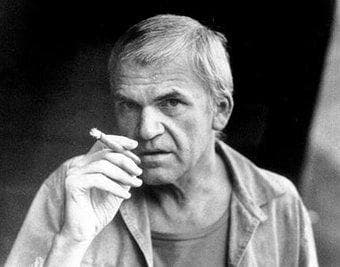
Milan Kundera is a Czech-born French writer. Kundera went into exile in France in 1975, acquiring citizenship in 1981. His Czech citizenship was revoked in 1979 and restored in 2019. He "sees himself as a French writer and insists his work should be studied as French literature and classified as such in book stores".
Similar books
- The Unbearable Lightness of Being
Milan Kundera
4.1 (342k) average on GoodreadsLiterary FictionShares Kundera's signature blend of philosophical inquiry, complex relationships, and tragicomic elements.
- A Midsummer Night's Dream
William Shakespeare
4.0 (443k) average on GoodreadsFantasyFeatures a similar farcical plot driven by mistaken identities, love triangles, and a blend of humor and underlying seriousness.
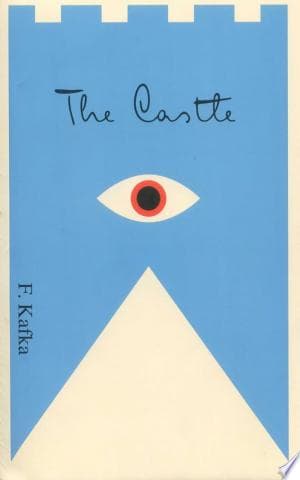
- The Castle
Franz Kafka
4.0 (45k) average on GoodreadsPhilosophyBoth "Farewell Waltz" and Kafka's "The Castle" explore themes of alienation and the individual's struggle against an inscrutable, often absurd system or fate. However, Kundera's approach is more overtly satirical and comedic, even with its dark undertones, whereas Kafka's narrative is characterized by a pervasive sense of dread, futility, and existential anguish. While both create labyrinthine plots, Kundera's is driven by human machinations and folly, while Kafka's is propelled by an impenetrable, bureaucratic, and ultimately dehumanizing force. Kundera provides more explicit philosophical commentary, while Kafka's meaning often remains elusive and open to interpretation.
- Nineteen Eighty-Four
George Orwell
4.2 (5.5M) average on GoodreadsFictionWinston Smith dreams of truth and rebellion in a world where Big Brother watches all, but he confronts the terrifying power of a regime that controls not just actions, but thoughts.
- The Frozen River
Ariel Lawhon
4.4 (600k) average on GoodreadsFictionIn 1789 Maine, a heroic midwife's diary helps her expose a murder and get justice in a town that wants to silence her.
- A Man Called Ove
Fredrik Backman
4.4 (569k) average on GoodreadsFictionA stubborn widower, who lives by strict rules, finds his quiet world changed by a lively new family next door, making him face his past and find happiness in human connection.





Enjoyed the summary?
A summary gives you the shape of the book. The book itself has the detail, the examples and the voice.
Find Farewell Waltz on AmazonAs an Amazon Associate, BookBrief earns from qualifying purchases. How we're funded