
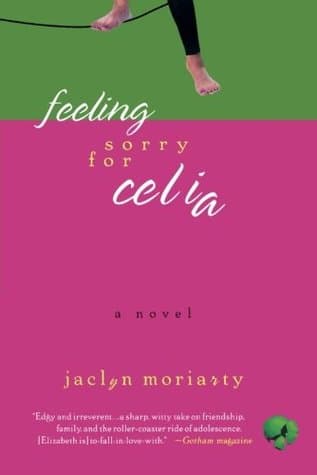
Synopsis
Covers the whole plot, including the ending.
- Difficulty
- Easy
- Pacing
- Moderate
- Mood
- Humorous, Touching, Candid, Witty, Nostalgic
- Read it if
- You enjoy epistolary novels, quirky humor, and a heartfelt exploration of teenage friendships and first love.
- Skip it if
- You prefer traditional narrative structures or stories with a very clear, linear plot without many subplots.
Feeling Sorry for Celia Plot Summary
Covers the whole plot, including the ending.
Introduction to Elizabeth's World
Elizabeth Clarry begins the novel by writing a letter to a 'Complete and Utter Stranger' for an English assignment. Her teacher hopes this exercise will revive 'the Joy of the Envelope.' Through these letters, she introduces her life: her mother communicates almost exclusively through notes on the fridge, often about neighborhood events or chores. Her best friend, Celia, often disappears. Elizabeth also mentions her crush on a boy named Patrick and her anxieties about school and social dynamics, all while trying to figure out her anonymous pen pal's identity.
Celia's First Disappearance and Patrick's Arrival
Celia's disappearances escalate when she vanishes for a long time without explanation, worrying Elizabeth. Elizabeth's letters to her pen pal detail her concern for Celia and her frustration with Celia's mother's indifference. At the same time, a new boy, Patrick, arrives at school and immediately catches Elizabeth's attention. She describes him as attractive and finds herself increasingly thinking about him, detailing her attempts to interact and her anxieties about how she appears to him. This new romantic interest distracts her from her worries about Celia.
The Enigmatic Pen Pal and School Antics
Elizabeth's letters to her 'Complete and Utter Stranger' become more personal. She shares details about her English class, her struggles with algebra, and her observations about her peers. A significant event is the school dance, which Elizabeth anticipates with excitement and dread, hoping for an interaction with Patrick. The dance, however, is awkward and disappointing, not meeting her romantic expectations. She also begins to suspect her pen pal's identity, narrowing it down to a few classmates, adding mystery to her daily life.
Celia's Return and New Friendships
Celia eventually reappears, but her return is not the reunion Elizabeth hoped for. Celia has befriended a new girl, Emily, and seems distant and changed. This shift in Celia's behavior and Emily's introduction makes Elizabeth feel excluded and hurt, straining their long friendship. Amidst this, Elizabeth unexpectedly connects with Christina, a girl she previously knew. Their shared experiences and observations, often about Celia's new dynamic, form a new and supportive friendship, offering Elizabeth comfort and a fresh perspective.
The Marathon and Father's Reappearance
Elizabeth decides to train for a marathon, a personal challenge that provides focus amidst her personal changes. Her training becomes a recurring subject in her letters, showing her determination. Adding to her complex life, Elizabeth's estranged father unexpectedly reappears, sending her letters and trying to reconnect. This sudden re-entry creates emotional confusion and stress for Elizabeth, as she deals with feelings of abandonment and the awkwardness of re-establishing a relationship with a parent she barely knows, while her mother largely ignores the situation.
Unmasking the Pen Pal and Growing Closer to Patrick
After much speculation, Elizabeth discovers her 'Complete and Utter Stranger' is Christina, her new friend. This revelation strengthens their bond. Meanwhile, Elizabeth's interactions with Patrick become more frequent and meaningful. They share conversations, study together, and attend events, leading to romantic tension. Elizabeth documents her escalating feelings for Patrick, detailing her hopes for their relationship to progress beyond friendship, culminating in a significant moment between them.
Celia's Crisis and Elizabeth's Support
Celia experiences a personal crisis, though the exact details are initially vague, hinting at family issues and emotional distress. Despite their recent estrangement and Elizabeth's hurt feelings, Elizabeth shows deep loyalty and concern for Celia. She reaches out, offers comfort, and tries to understand what Celia is going through. This difficult period allows Elizabeth to show her true character, proving that her friendship with Celia, though strained, remains a fundamental part of her life. Here, Elizabeth prioritizes Celia's well-being over her own hurt.
The Kiss and Relationship Developments
The romantic tension between Elizabeth and Patrick culminates in a kiss. This moment is a source of joy and excitement for Elizabeth, marking a milestone in her personal life. Her letters excitedly detail the experience and her hopes for their future together. However, she also begins to deal with the realities of a romantic relationship, including the uncertainties and vulnerabilities that come with it. She reflects on what it means to be in a relationship, the expectations, and the potential for heartbreak, while still enjoying their new connection.
Reconciling with Celia and Family Matters
As Celia slowly recovers from her crisis, Elizabeth and Celia begin to mend their fractured friendship. They have honest conversations, acknowledging the distance that grew between them and expressing their feelings. Elizabeth also continues to process her father's reappearance. She struggles with forgiveness and understanding his reasons for being absent, often confiding her conflicted emotions to her pen pal (Christina). Her mother's detached communication style further complicates Elizabeth's emotional life, forcing her to navigate these complex family dynamics on her own, or with friends.
The Marathon and Personal Growth
Elizabeth successfully runs and completes the marathon. This achievement is a symbol of her endurance, determination, and personal growth. Her letters describe the physical challenge and the satisfaction of crossing the finish line, reflecting her journey from an uncertain teenager to a more confident and resilient young woman. The marathon is a metaphor for overcoming personal obstacles and pushing past perceived limitations, showing her newfound strength and self-reliance, not just physically but emotionally.
The Future of Friendships and Romance
Towards the end, Elizabeth reflects on her friendships and romantic relationship. She acknowledges that while her bond with Celia has changed, it still holds a significant place in her heart, and they find a new balance. Her friendship with Christina has become a deep and supportive connection. Her relationship with Patrick is still new but promising. Elizabeth’s letters convey acceptance regarding the fluidity of relationships during adolescence, recognizing that people grow and change, and friendships adapt or sometimes fade, but new ones also start.
Elizabeth's Voice and Self-Discovery
Throughout the narrative, Elizabeth's letter writing is her main way of processing experiences and emotions. By articulating her thoughts, fears, and joys to various recipients, she develops a stronger sense of self and a clearer understanding of her place in the world. Her final letters show a mature, reflective voice, showing how she has navigated adolescence, family dynamics, and shifting friendships and romance. She has not only found her voice but also learned to trust it, becoming a more self-aware and confident individual.
Principal Figures
Elizabeth Clarry
Protagonist
A witty, observant teenager navigating the complexities of friendship, family, and first love.
Elizabeth is a highly articulate and introspective teenager, whose internal world is vividly expressed through her letters. She is observant, often witty, and prone to overthinking, especially concerning her social interactions and the actions of others. She values her friendships deeply, particularly with Celia, and struggles with feelings of insecurity and anxiety about fitting in and being liked. Elizabeth is driven by a desire for connection and understanding, both from her friends and her largely absent parents, and by her burgeoning romantic feelings.
Relationships: Celia (Best friend, complex and evolving); Christina (New best friend and confidante); Patrick (Love interest, boyfriend); Elizabeth's Mother (Distant but loving, communicates via notes); Elizabeth's Father (Estranged, later attempts to reconnect)
Celia
Supporting
Elizabeth's dramatic and often elusive best friend, prone to disappearances and emotional upheavals.
Celia is Elizabeth's best friend, characterized by her dramatic flair and tendency to disappear without explanation, causing Elizabeth considerable distress. She is portrayed as somewhat self-absorbed and impulsive, often prioritizing her own needs and new friendships over Elizabeth's feelings. Despite her frustrating behavior, Celia is also vulnerable and experiences her own set of family and personal struggles. Her actions drive much of Elizabeth's emotional journey and reflections on the nature of friendship.
Relationships: Elizabeth Clarry (Best friend, strained but enduring); Emily (New friend, causes initial rift with Elizabeth)
Christina
Supporting
Elizabeth's unexpected new friend and her anonymous pen pal, offering steadfast support.
Christina initially appears as a quiet classmate but develops into Elizabeth's closest confidante and, unbeknownst to Elizabeth for a time, her 'Complete and Utter Stranger' pen pal. She is intelligent, observant, and provides Elizabeth with a grounding and supportive presence. Christina's calm demeanor and insightful responses offer a stark contrast to Celia's dramatics, allowing Elizabeth to explore her feelings and experiences more openly. Her steady friendship becomes a crucial anchor for Elizabeth.
Relationships: Elizabeth Clarry (Best friend, pen pal)
Patrick
Supporting
Elizabeth's charming and attractive love interest.
Patrick is the new boy at school who immediately captures Elizabeth's romantic attention. He is described as handsome and appealing, and Elizabeth's crush on him forms a significant subplot, filled with the typical anxieties and excitements of first love. He is kind and responsive to Elizabeth, eventually reciprocating her feelings. Patrick represents the thrilling, often nerve-wracking, aspect of teenage romance and provides Elizabeth with a new emotional experience to navigate, contributing to her growth and understanding of relationships.
Relationships: Elizabeth Clarry (Love interest, boyfriend)
Elizabeth's Mother
Supporting
Elizabeth's quirky mother who communicates primarily through eccentric fridge notes.
Elizabeth's mother is a peculiar and somewhat detached figure who communicates almost exclusively through handwritten notes left on the fridge. These notes are often whimsical, tangential, or contain bizarre requests, reflecting her unique personality. While her communication style can be frustrating for Elizabeth, there's an underlying sense of care and affection. Her emotional distance, particularly regarding Elizabeth's father, forces Elizabeth to process many of her feelings independently, contributing to Elizabeth's self-reliance.
Relationships: Elizabeth Clarry (Mother-daughter, unconventional communication); Elizabeth's Father (Estranged ex-husband)
Elizabeth's Father
Supporting
Elizabeth's estranged father who attempts to re-enter her life.
Elizabeth's father is a largely absent figure for most of Elizabeth's life. He reappears mid-story through letters, attempting to reconnect with his daughter. His presence creates significant emotional turmoil for Elizabeth, as she grapples with feelings of abandonment, confusion, and the awkwardness of forming a relationship with a stranger. His re-entry forces Elizabeth to confront her past and her understanding of family, adding another layer of complexity to her coming-of-age journey. His motivations for returning are explored through his own letters.
Relationships: Elizabeth Clarry (Estranged father, attempts reconciliation); Elizabeth's Mother (Estranged ex-wife)
Mr. Penhaligon
Supporting
Elizabeth's English teacher who initiates the letter-writing assignment.
Mr. Penhaligon is Elizabeth's English teacher, responsible for the 'Joy of the Envelope' assignment that prompts Elizabeth to write to a 'Complete and Utter Stranger.' He is portrayed as an enthusiastic and somewhat eccentric educator who believes in the power of written communication. While not a major presence, his assignment is the catalyst for the entire narrative, shaping the novel's epistolary format and Elizabeth's journey of self-discovery through writing.
Relationships: Elizabeth Clarry (Teacher-student)
Emily
Mentioned
Celia's new friend who causes a temporary rift with Elizabeth.
Emily is the new friend Celia makes during one of her disappearances. Her presence exacerbates the distance between Elizabeth and Celia, making Elizabeth feel excluded and replaced. She is a catalyst for Elizabeth's feelings of insecurity and jealousy, highlighting the pain of shifting friendships during adolescence. Emily serves as a foil to Elizabeth, representing the new directions Celia's life is taking, which Elizabeth initially struggles to accept.
Relationships: Celia (New friend)
Themes & Insights
The Nature of Friendship and Growing Apart
The novel explores the complexities of teenage friendships. Elizabeth's relationship with Celia, her best friend, is central, showing the pain of feeling replaced when Celia makes new friends and distances herself. However, it also highlights the loyalty and forgiveness true friendship entails, as Elizabeth supports Celia during a crisis despite their estrangement. The theme also appears in Elizabeth's new, supportive friendship with Christina, showing that as one friendship shifts, new, meaningful connections can form.
“It's like when you're little and you have a best friend, and then suddenly you don't. It's not that you hate each other, it's just... different.”
Identity and Self-Discovery Through Writing
Elizabeth's self-discovery is linked to her writing. The epistolary format allows her to process her thoughts, emotions, and experiences in real-time, articulating her fears, hopes, and observations. Through her letters to her 'Complete and Utter Stranger' (Christina), her father, and various organizations, Elizabeth develops a stronger voice and a clearer understanding of who she is. Putting her feelings into words helps her define her identity and navigate adolescence, showing how writing can be a tool for introspection and growth.
“I think I'm learning more about myself by writing these letters than I ever would just thinking about things.”
The Quirks and Challenges of Family Life
Family dynamics are a theme, particularly the unconventional communication between Elizabeth and her mother, who uses only fridge notes. This shows a blend of affection and emotional distance. Her estranged father's sudden reappearance introduces themes of abandonment, forgiveness, and the difficulty of reconnecting with a long-absent parent. These family challenges force Elizabeth to mature, often navigating complex emotions without direct parental guidance, leading to greater independence and resilience.
“My mother doesn't talk, she notes. And sometimes, you just want a conversation.”
First Love and Romantic Anxiety
The novel portrays the experience of first love through Elizabeth's crush on Patrick. Her letters are filled with accounts of her observations, hopes, and anxieties about him, from worrying about her appearance to analyzing every interaction. This theme captures the intensity of teenage romance, the butterflies, the anticipation of a first kiss, and the vulnerability that comes with opening oneself up to another person. It highlights the emotional rollercoaster of these new relationships and their impact on a teenager's self-perception.
“I think my heart actually stopped for a second when he looked at me. This is ridiculous.”
Resilience and Overcoming Obstacles
Elizabeth shows resilience throughout the novel, facing challenges: the strain in her friendship with Celia, her estranged father's reappearance, and the anxieties of first love. Her decision to train for and run a marathon is a metaphor for her journey of perseverance. Despite moments of doubt and emotional distress, Elizabeth pushes through, both physically and emotionally, achieving her goals and becoming a stronger, more capable individual. This theme emphasizes inner strength during formative years.
“Some days I just want to give up. But then I think about the marathon, and I know I can't.”
Plot Devices & Literary Techniques
Epistolary Format
The entire novel is told through letters, emails, postcards, and notes.
The novel's complete reliance on an epistolary format is its most defining structural device. This allows readers direct access to Elizabeth's unfiltered thoughts, feelings, and observations, creating an intimate and authentic portrayal of her teenage experience. The varying forms of communication—from formal letters to quirky notes and messages from fictional organizations—add humor and reflect the fragmented, multi-faceted nature of modern communication. It also cleverly builds suspense around the identity of Elizabeth's pen pal and the unfolding events, as readers only know what Elizabeth chooses to write or what she receives.
The 'Complete and Utter Stranger' Assignment
A school project requiring students to correspond with an unknown recipient.
This assignment, given by Mr. Penhaligon, serves as the primary catalyst for Elizabeth's narrative. It provides a structured reason for her extensive self-expression and allows her to confide deeply personal thoughts to an anonymous recipient. This anonymity initially frees Elizabeth to be more candid than she might be face-to-face. The gradual revelation of the pen pal's identity (Christina) later transforms the device into a means of strengthening a new friendship and adding a layer of surprise and connection to the plot, highlighting the unexpected bonds that can form.
Fridge Notes
Elizabeth's mother's sole method of communication.
The fridge notes left by Elizabeth's mother are a humorous and revealing plot device. They offer insights into her mother's quirky personality, the mundane yet sometimes bizarre occurrences in their neighborhood, and her detached parenting style. These notes serve as a contrast to Elizabeth's more introspective and emotional letters, highlighting the generational and personality differences within the family. While providing comic relief, they also subtly underscore Elizabeth's emotional independence, as she largely processes her deeper issues without direct conversational input from her mother.
Fictional Organizations' Missives
Letters from imaginary associations like 'The Cold Hard Truth Association'.
Throughout the book, Elizabeth receives or refers to letters from various satirical, fictional organizations (e.g., 'The Cold Hard Truth Association,' 'The Institute for the Betterment of Teenagers'). These missives serve as a comedic device, often mocking or exaggerating teenage anxieties and societal expectations. They provide a meta-commentary on the pressures of adolescence and the often-absurd advice teenagers receive. This device adds a layer of whimsical humor and surrealism to Elizabeth's world, further illustrating her unique perspective and the often-overwhelming nature of growing up.
Feeling Sorry for Celia Quotes
“I can't believe how much trouble I get into just by being myself.”
“I think the whole point of being a teenager is to make really bad decisions and then write about them in your diary.”
“Sometimes I think the only way to get through life is to pretend you know what you're doing, even when you haven't got a clue.”
“Love is like a really complicated algebra problem, and I'm terrible at math.”
“Why is it that the people who say they love you are always the ones who make you cry?”
“Being popular is like being a really good juggler. You have to keep all the balls in the air, and if one drops, everyone notices.”
“I'm starting to think that the best way to get over someone is to get under someone else. Or maybe just eat a lot of chocolate.”
“It's amazing how much drama you can fit into one small suburb.”
“I wish life came with a rewind button, especially for the embarrassing bits.”
“You know you're in trouble when your best friend knows more about your love life than you do.”
“Maybe growing up is just realizing that everyone else is just as confused as you are.”
“There's something about writing things down that makes them feel more real, even the things you wish weren't.”
“I'm not sure what's worse: having a crush on someone who doesn't like you back, or having a crush on someone you shouldn't.”
Quiz
10 questions on the plot and the characters. Each answer comes with a short explanation.
Question 1
What is the primary reason Elizabeth's English teacher encourages letter writing?
- To improve students' handwriting skills.
- To rekindle the 'Joy of the Envelope'.
- To prepare students for a pen pal exchange program.
- To teach them about different forms of communication.
Show answer
B. To rekindle the 'Joy of the Envelope'. The book explicitly states that Elizabeth's English teacher wants to rekindle the 'Joy of the Envelope,' which leads to Elizabeth writing to a 'Complete and Utter Stranger'.
Question 2
What is the main form of communication between Elizabeth and her mother?
- Daily phone calls.
- Wacky notes left on the fridge.
- Formal letters sent through the mail.
- Email exchanges.
Show answer
B. Wacky notes left on the fridge. The synopsis mentions that Elizabeth's communication with her mother consists entirely of 'wacky notes left on the fridge'.
Question 3
Which of the following is NOT an imaginary organization that sends 'bizarre missives' in the book?
- The Cold Hard Truth Association.
- The Society for the Preservation of Ancient Languages.
- The Association of Concerned Grandparents.
- The Committee for the Reinstatement of Politeness.
Show answer
B. The Society for the Preservation of Ancient Languages. While the book features many bizarre missives from imaginary organizations, The Society for the Preservation of Ancient Languages is not specifically mentioned as one of them, unlike the others which are common examples of the book's humor.
Question 4
What significant event happens regarding Elizabeth's father during the course of the story?
- He moves to another country permanently.
- He suddenly reappears after being absent.
- He sends Elizabeth a large sum of money.
- He gets a new job in Elizabeth's town.
Show answer
B. He suddenly reappears after being absent. The synopsis states that Elizabeth's 'absent father suddenly reappears,' adding another layer of complication to her life.
Question 5
What central theme does the novel explore through the evolving relationships between characters?
- The importance of academic achievement.
- The complexities of female friendship and the processes of bonding and parting.
- The challenges of living in a big city.
- The pursuit of professional careers.
Show answer
B. The complexities of female friendship and the processes of bonding and parting. The description highlights that the novel 'captures, with rare acuity, female friendship and the bonding and parting that occurs as we grow'.
Question 6
What is one of Elizabeth's potential major changes mentioned in the synopsis?
- Starting a new school.
- Running in a marathon.
- Getting a part-time job.
- Moving to a different house.
Show answer
B. Running in a marathon. The synopsis lists several potential changes for Elizabeth, including the possibility of her 'run[ning] in a marathon'.
Question 7
How does Celia's behavior contribute to Elizabeth's complications?
- Celia constantly criticizes Elizabeth's choices.
- Celia keeps disappearing, causing Elizabeth worry.
- Celia introduces Elizabeth to bad influences.
- Celia tries to steal Elizabeth's boyfriend.
Show answer
B. Celia keeps disappearing, causing Elizabeth worry. One of Elizabeth's main complications mentioned is that 'Her best friend Celia keeps disappearing'.
Question 8
The book is entirely written in what format?
- Traditional prose with first-person narration.
- A series of diary entries and journal logs.
- Letters, messages, postcards, and bizarre missives.
- Online chat transcripts and social media posts.
Show answer
C. Letters, messages, postcards, and bizarre missives. The book's unique structure is highlighted, being 'written entirely in the form of letters, messages, postcards - and bizarre missives'.
Question 9
What does the phrase 'the roller coaster ride of being a teenager' signify in the context of the novel's portrayal of adolescence?
- Teenage years are exclusively filled with fun and excitement.
- Teenage years are characterized by unpredictable highs and lows, being both fun and harrowing.
- Teenage years are primarily about overcoming physical challenges.
- Teenage years are a period of constant boredom and uneventfulness.
Show answer
B. Teenage years are characterized by unpredictable highs and lows, being both fun and harrowing. The description states that the novel 'shows that the roller coaster ride of being a teenager is every bit as fun as we remember--and every bit as harrowing,' emphasizing the unpredictable mix of enjoyment and difficulty.
Question 10
Who is the 'Complete and Utter Stranger' to whom Elizabeth writes, and what is the context of their communication?
- A new student at her school, met through a club.
- An anonymous pen pal assigned by her English teacher.
- A distant relative she's never met, contacted by her mother.
- A celebrity she admires, whom she writes fan mail to.
Show answer
B. An anonymous pen pal assigned by her English teacher. As a result of her English teacher's assignment to rekindle the 'Joy of the Envelope,' Elizabeth ends up communicating with a 'Complete and Utter Stranger' who knows more about her than anyone else.
Feeling Sorry for Celia FAQ
What is the primary format of 'Feeling Sorry for Celia' and how does it contribute to the storytelling?
'Feeling Sorry for Celia' is an epistolary novel, told entirely through letters, emails, postcards, and other written communications. This format offers an intimate, immediate insight into Elizabeth Clarry's thoughts and experiences, as readers directly access her unedited correspondence with friends, family, and even imaginary organizations, revealing her personality and the plot through her own voice.
Who is Celia and what is the central conflict surrounding her character?
Celia is Elizabeth Clarry's best friend. The central conflict involving Celia is her frequent disappearances, which cause Elizabeth significant worry and strain on their friendship. These disappearances are a recurring motif throughout the book, hinting at deeper issues Celia might be facing and challenging Elizabeth's understanding of their bond.
How does Elizabeth Clarry's relationship with her mother evolve through their unique communication style?
Elizabeth's communication with her mother initially consists primarily of quirky, often humorous notes left on the fridge, highlighting a somewhat distant yet affectionate dynamic. As the story progresses, these notes, along with other forms of communication, subtly reveal a deeper understanding and support between them, particularly as Elizabeth navigates personal challenges, showing their bond strengthening beyond the initial lightheartedness.
Who is the 'Complete and Utter Stranger' and what role does he play in Elizabeth's life?
The 'Complete and Utter Stranger' is Elizabeth's assigned pen pal, whom she corresponds with as part of an English class assignment to rekindle 'the Joy of the Envelope.' He becomes an unexpected confidant, learning intimate details about Elizabeth's life, and his perspective offers a unique, detached sounding board for her thoughts, even though they never meet in person.
What significant personal changes does Elizabeth experience throughout the novel?
Elizabeth undergoes several major personal changes, including potentially losing her best friend Celia, forming a new significant friendship, experiencing her first serious romantic interest with the 'sexiest guy alive,' and challenging herself by training for and running in a marathon. These events mark her transition from adolescence into greater self-awareness and independence.
What is the significance of the letters from 'The Cold Hard Truth Association' and other imaginary organizations?
The letters from 'The Cold Hard Truth Association' and similar bizarre missives serve as a humorous and often satirical commentary on Elizabeth's life and the challenges she faces. They externalize her anxieties, offer mock-official advice, and add a layer of quirky charm and meta-commentary, reflecting her inner thoughts and the absurdities of teenage life.
How does the reappearance of Elizabeth's absent father affect her and her family dynamic?
The sudden reappearance of Elizabeth's absent father introduces a significant emotional upheaval. It forces Elizabeth to confront unresolved feelings about his absence and creates tension within her existing family unit, particularly impacting her relationship with her mother as they navigate this unexpected return and its implications for their future.
Are there any subtle clues about Celia's reasons for disappearing before they are explicitly revealed?
Yes, subtle clues about Celia's struggles are woven into Elizabeth's letters, such as mentions of Celia's mood swings, her increasing secrecy, and Elizabeth's own growing confusion and concern. These hints, often expressed through Elizabeth's anxieties and unanswered questions, foreshadow the deeper issues affecting Celia, building suspense before any direct revelations.
How does the novel use the marathon training as a metaphor for Elizabeth's personal growth?
The marathon training serves as a powerful metaphor for Elizabeth's personal growth and resilience. The physical challenge, discipline, and endurance required to prepare for and complete the race parallel her emotional journey of facing difficulties, pushing through pain, and achieving self-discovery and strength in her relationships and personal life.
Analyze Elizabeth's coping mechanisms for dealing with teenage angst and uncertainty.
Elizabeth primarily copes with teenage angst through writing, using her letters as a confessional and processing space. She also employs humor, often self-deprecating, and develops strong bonds with friends, seeking support and validation. Her engagement in activities like marathon training also provides a constructive outlet for her energy and anxieties.
How does the author portray the psychological impact of Celia's disappearances on Elizabeth?
Celia's disappearances cause Elizabeth significant psychological distress, including anxiety, confusion, and feelings of abandonment and betrayal. Elizabeth grapples with her loyalty to Celia versus her own emotional well-being, leading to introspection about the nature of friendship and her own identity separate from Celia.
Discuss the psychological significance of Elizabeth's 'Complete and Utter Stranger' pen pal.
The 'Complete and Utter Stranger' pen pal provides Elizabeth with a unique psychological space for unfiltered self-expression. Because he is unknown and detached, Elizabeth feels safe to confide her deepest thoughts and insecurities without fear of judgment or immediate repercussions, functioning almost as a therapeutic journal or an objective listener, aiding her self-reflection.
What role does humor play in alleviating the more 'harrowing' aspects of Elizabeth's teenage experience?
Humor is a crucial coping mechanism for Elizabeth, often used to lighten the mood of difficult situations and express her candid observations about life. It allows her to process emotional turmoil, maintain a sense of perspective amidst teenage drama, and endears her to the reader, making her relatable even in her most vulnerable moments.
How does 'Feeling Sorry for Celia' challenge or reinforce typical Young Adult romance tropes?
'Feeling Sorry for Celia' reinforces some YA romance tropes with Elizabeth's crush on 'the sexiest guy alive' and the excitement of a potential first kiss. However, it also challenges them by placing greater emphasis on female friendship, family dynamics, and self-discovery, suggesting that romantic love is just one facet of a teenager's complex emotional landscape, rather than the sole focus.
What larger message does the book convey about the nature of female friendship?
The book conveys a nuanced message about female friendship, highlighting its intensity, loyalty, and the pain of its potential dissolution. It shows that friendships evolve, sometimes painfully, as individuals grow, and that true friendship involves supporting each other through difficulties, even when understanding is elusive, ultimately emphasizing resilience and self-worth within these bonds.
In what ways does the epistolary format enhance or limit the reader's understanding of certain characters, particularly Celia?
The epistolary format enhances understanding of Elizabeth by giving direct access to her thoughts, but it limits direct insight into characters like Celia. We only see Celia through Elizabeth's perspective, making Celia's motivations and struggles somewhat enigmatic and forcing the reader to interpret her actions through Elizabeth's often biased or incomplete understanding, adding to the mystery surrounding her.
What is the book's stance on the importance of communication in relationships, given its format?
Despite being an epistolary novel, the book subtly highlights the complexities and sometimes failures of communication. While Elizabeth writes extensively, there are instances of miscommunication, unspoken truths, and the challenges of conveying genuine feelings through various mediums, suggesting that true understanding requires more than just words, emphasizing active listening and empathy.
How does the title 'Feeling Sorry for Celia' reflect the central themes of the novel?
The title 'Feeling Sorry for Celia' initially reflects Elizabeth's concern and pity for her friend's struggles, but it evolves to encompass broader themes. It subtly hints at the challenges of empathy, the limits of understanding another's pain, and perhaps even Elizabeth's own journey of moving beyond pity to self-awareness and active support, or even realizing she shouldn't always 'feel sorry' for Celia but rather empower her.
Does the novel ultimately offer a hopeful or realistic outlook on navigating adolescence?
The novel offers a realistic, yet ultimately hopeful, outlook on adolescence. It candidly portrays the anxieties, heartbreaks, and complexities of growing up, acknowledging the 'harrowing' aspects. However, Elizabeth's journey of self-discovery, new friendships, and personal triumphs, despite the challenges, reinforces a hopeful message about resilience, personal growth, and finding one's place in the world.
Similar books
- The Princess Diaries
Meg Cabot
4.0 (624) average on GoodreadsYoung AdultBoth feature a relatable teenage protagonist navigating school, friendships, and romance, told in a diary/epistolary format with a humorous tone.
- I Capture the Castle
Dodie Smith
4.0 (85k) average on GoodreadsHistorical FictionA coming-of-age story told through a young woman's journal entries, capturing the charm and challenges of adolescence with wit and insight.
- The Truth About Forever
Sarah Dessen
4.1 (209k) average on GoodreadsYoung AdultDessen's novel uses a traditional third-person narrative, focusing on external dramatic conflicts and grief. Moriarty's book, in contrast, uses an epistolary format to explore internal and relational drama, with a lighter tone and indirect communication.
- Eleanor & Park
Rainbow Rowell
4.0 (860k) average on GoodreadsYoung AdultRowell's novel employs a dual-perspective narrative, delving into heavier themes like poverty and abuse with direct emotional immersion. Moriarty's book maintains a lighter tone and uses its single-perspective epistolary structure to create a sense of unfolding discovery rather than immediate access to multiple deep emotional states.
- Harry Potter and the Sorcerer's Stone
J.K. Rowling
4.5 (7M) average on GoodreadsFantasyRescued from a miserable life under the stairs, an orphaned boy discovers he's a wizard destined for a magical school, where he uncovers a dangerous secret tied to the dark wizard who murdered his parents.
- The Hunger Games
Suzanne Collins
4.3 (6.4M) average on GoodreadsFantasyIn a future where children fight to the death on live television, Katniss Everdeen volunteers for the arena, turning a death sentence into a fight for survival and a spark of rebellion.




Enjoyed the summary?
A summary gives you the shape of the book. The book itself has the detail, the examples and the voice.
Find Feeling Sorry for Celia on AmazonAs an Amazon Associate, BookBrief earns from qualifying purchases. How we're funded