
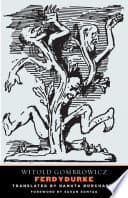
Synopsis
Covers the whole plot, including the ending.
- Difficulty
- Hard
- Pacing
- Variable
- Mood
- Absurdist, Philosophical, Satirical, Disorienting, Humorous
- Read it if
- You enjoy satirical, philosophical, and absurd literature that critiques social 'forms' and the performance of identity.
- Skip it if
- You prefer straightforward narratives, realistic fiction, or are easily frustrated by experimental and abstract concepts.
Ferdydurke Plot Summary
Covers the whole plot, including the ending.
The Onset of Immaturity
Józio, a writer nearing thirty, feels immature and unformed. He struggles with his latest work and is plagued by an existential dread of being incomplete. This internal crisis is abruptly externalized when Professor Pimko, a caricature of academic authority, invades Józio's room. Pimko, obsessed with reducing adults to their 'true' childlike state, declares Józio immature and forcibly drags him back to school. Józio, despite his age, cannot resist this bizarre imposition, succumbing to the professor's will and the overwhelming pressure to conform to the role of a schoolboy, beginning his journey into a world of forced adolescence and manufactured innocence.
Schoolboy Antics and Artificiality
At school, Józio is plunged into a world of exaggerated immaturity. He observes the students, particularly the 'greenhorns' like Miętus, and the 'purity' of Gałkiewicz. The school environment is a microcosm of Gombrowicz's critique of form, where students and teachers alike perform roles. Pimko orchestrates a staged debate between Miętus, who champions authenticity and 'being one's self,' and Syphon, who embodies traditional values and 'purity.' This debate, however, is not about genuine intellectual exchange but about reinforcing established forms and the 'purity' that Pimko and the other teachers wish to impose, showing the performative nature of their education system and the suppression of genuine individuality.
The Battle of the Faces
The staged debate escalates into a physical and symbolic battle. Miętus, representing the desire for authenticity and crude reality, provokes Syphon, the embodiment of refined, 'pure' academic form, by trying to 'pull faces' at him. This act is an attempt to strip away Syphon's cultivated facade and expose a more primal, 'immature' self. Syphon defends his 'purity' with equal ferocity, leading to a wrestling match that is both ridiculous and deeply symbolic. The other students and teachers, including Pimko, become entangled in the chaotic brawl, revealing the inherent violence and absurdity lurking beneath the veneer of civilized education. The entire episode shows the conflict between imposed form and suppressed individuality.
Relocation to the Modernist Household
Following the chaos at school, Pimko decides Józio needs a new environment for his 're-education.' He places Józio as a lodger in the Młodziak household, a family who embody superficial modernity. The Młodziaks—Mr. Młodziak, an engineer; Mrs. Młodziak, a progressive intellectual; and their daughter, Zuta, a 'modern girl'—pride themselves on their avant-garde views, their lack of traditional 'form,' and their embrace of all things new. Józio, however, quickly perceives their modernity as another rigid, albeit inverted, form. Their attempts to be open-minded and unconventional become just as stifling and performative as the traditionalism they claim to reject, further illustrating the inescapable nature of 'form' in society.
The Idolization of Zuta
Zuta Młodziak, the daughter, is a central figure in Józio’s and Miętus's experience. She represents the ideal 'modern girl' – emancipated, athletic, and free from traditional constraints. Both Józio and Miętus are drawn to her, for different reasons. Józio is intrigued by her seemingly unformed nature, her embodiment of a new kind of 'innocence' or lack of 'form,' while Miętus, still yearning for authentic connection, sees her as a potential escape from the artificiality he despises. Their fascination with Zuta highlights the novel's exploration of desire, purity, and the elusive nature of genuine selfhood in a world dominated by superficial appearances and imposed identities.
The 'Purity' of Zuta and the Plot
Józio and Miętus, disillusioned with the Młodziaks' performative modernity, plan to expose Zuta's 'impurity' and, by extension, her parents' hypocrisy. Their goal is to prove that Zuta, despite her 'modern' facade, is just as susceptible to conventional desires and 'form' as anyone else. Józio, with Miętus's help, orchestrates a situation where Zuta will be caught with two admirers, one a 'pure' student and the other a crude, 'unformed' commoner. The intent is to shock the Młodziaks and reveal the cracks in their carefully constructed 'modern' identity, bringing down their entire edifice of progressive pretense and demonstrating the pervasive influence of 'form' on even the most 'emancipated' individuals.
The Night of the Revelation
The night of the planned revelation arrives, and Józio's intricate scheme unfolds with unexpected and chaotic results. He arranges for both the 'pure' student, Kopyrda, and the rough, 'unformed' commoner, Pyzdra, to appear in Zuta's room. The plan, intended to expose Zuta's 'impurity' and the Młodziaks' hypocrisy, quickly devolves into a farcical melee. The Młodziaks, upon discovering the scene, are utterly humiliated. Their carefully cultivated image of modern, open-minded parents shatters as they react with shock, outrage, and embarrassment. The incident exposes the fragility of their 'modern' form and the deep-seated conventionality beneath their progressive veneer, causing their carefully constructed world to collapse into disarray.
Escape to the Countryside
After the catastrophic events at the Młodziak household, Józio and Miętus, seeking to escape the repercussions and the pervasive 'form' of urban society, decide to flee to the countryside. They head to Józio's aunt and uncle's estate, hoping to find a simpler, more 'natural' existence away from the suffocating artificiality of the city. Their journey is driven by a desire for authenticity and an escape from the imposed roles and identities that have plagued them. However, they soon discover that the countryside, far from being a haven of genuine 'unformedness,' is merely another arena where different, equally rigid, forms and social conventions are at play, proving the inescapable nature of 'form' in any human environment.
The Estate of the Aristocrats
Upon arriving at Józio's aunt and uncle's estate, Józio and Miętus encounter a new, equally stifling set of social 'forms' embodied by the aristocratic family and their servants. The aunt and uncle, though seemingly traditional, are also trapped in their own set of performative roles and expectations. Miętus, still obsessed with achieving genuine connection, tries to 'fraternize' with the stable boy, an act that is seen as scandalous and deeply transgressive by the family. This attempt to bridge social divides and break down class 'forms' highlights his continuous struggle against societal artifice, while Józio observes the inherent absurdity and inescapable nature of social structures, regardless of the setting.
The Abduction of the Niece
The tension at the estate culminates in a chaotic and symbolic act of rebellion. After a series of misunderstandings and escalating absurdities, Józio, in a desperate and somewhat inexplicable move, abducts his young cousin, Lena. This act is a final, grand gesture against the pervasive 'form' that he feels is suffocating everyone, including himself. He literally carries her off, a physical manifestation of his desire to escape and perhaps even to rescue someone from the clutches of imposed identity. The abduction is a final, desperate attempt to break free from the cycle of immaturity and artificiality, leaving the reader with a sense of the futility and absurdity of his struggle.
Principal Figures
Józio
Protagonist
A 30-year-old writer forcibly regressed to immaturity.
Józio is a sensitive and introspective writer on the cusp of his thirties, plagued by feelings of incompleteness and an unformed identity. He is acutely aware of the 'form' that society imposes on individuals and struggles to reconcile his inner self with external expectations. Despite his intellectual awareness, he often finds himself passively submitting to the absurd situations he's thrust into, making him a reluctant participant in his own infantilization. His journey is one of observation and a desperate, often futile, search for authenticity in a world of artifice.
Relationships: Professor Pimko (antagonistic, forces Józio's infantilization); Miętus (fellow student, accomplice in schemes, intellectual foil); Zuta Młodziak (object of fascination and a target for exposing 'form'); Lena (young cousin, abducted in a final act of rebellion)
Professor Pimko
Antagonist
A pedantic academic who embodies outdated authority and forces 'immaturity'.
Professor Pimko is the primary antagonist, a caricature of traditional academic authority. He is obsessed with reducing adults to their 'true' childlike state and imposing rigid 'form' and 'purity' upon them. Pimko sees himself as a guardian of traditional values and intellectual order, yet his methods are absurd, manipulative, and ultimately destructive. He represents the external forces that seek to define and control individuals, stifling genuine growth and self-expression under the guise of education and societal norms.
Relationships: Józio (target of his infantilization, pupil); Miętus (student, a challenge to his authority); Syphon (student, an embodiment of his 'purity' ideals)
Miętus
Supporting
A rebellious schoolboy who champions authenticity and scorns 'purity'.
Miętus is a fellow student at the school, a rebellious and somewhat crude character who yearns for authenticity and despises the artificiality and 'purity' imposed by the teachers. He is a foil to Syphon, representing the raw, unformed, and instinctual side of humanity. Miętus actively seeks to break down social conventions and expose hypocrisy, often through provocative and disruptive actions. His desire for genuine connection and his rejection of 'form' drive many of the novel's chaotic events, particularly his attempts to 'fraternize' with the stable boy.
Relationships: Józio (fellow student, accomplice in schemes, ideological ally); Syphon (arch-rival, ideological opposite); Zuta Młodziak (object of his desire and a means to expose hypocrisy)
Syphon (Zygmunt)
Supporting
A 'pure' student who embodies traditional values and academic conformity.
Syphon, also known as Zygmunt, is the antithesis of Miętus. He is presented as the epitome of 'purity,' academic excellence, and traditional values, meticulously adhering to the 'form' expected of him by Professor Pimko and the school system. He is refined, intellectual, and embodies the cultivated, almost sterile, ideal of the well-behaved student. His conflict with Miętus is central to the school sections, representing the clash between imposed order and rebellious authenticity. Syphon's character highlights the novel's critique of how 'form' can create a superficial and ultimately fragile persona.
Relationships: Professor Pimko (favored student, embodiment of his ideals); Miętus (arch-rival, ideological opposite)
Mrs. Młodziak
Supporting
A 'modern' intellectual who represents superficial progressiveness.
Mrs. Młodziak is a 'modern' intellectual and the mother of Zuta. She prides herself on her progressive views, her open-mindedness, and her rejection of traditional 'form.' However, her modernity is itself a rigid, performative 'form,' full of affectation and superficiality. She embodies the hypocrisy of those who claim to be avant-garde but are deeply conventional underneath. Her character serves as a critique of intellectual fads and the way people adopt new 'forms' without genuine internal change, leading to her eventual humiliation when her carefully constructed image is shattered.
Relationships: Józio (lodger, observer of her hypocrisy); Zuta Młodziak (daughter, object of her 'modern' parenting)
Zuta Młodziak
Supporting
The 'modern girl' who represents a new, yet still formed, type of innocence.
Zuta Młodziak is the daughter of the 'modern' Młodziak family, presented as an ideal 'modern girl' – emancipated, athletic, and seemingly free from traditional constraints. She is an object of fascination for both Józio and Miętus, who project their own desires for authenticity or 'unformedness' onto her. Zuta's 'purity' is of a different kind than Syphon's; it's a modern, almost blank slate, but ultimately still a 'form' that can be manipulated and exposed. Her character highlights the novel's exploration of desire, innocence, and the elusive nature of genuine selfhood in a world of appearances.
Relationships: Józio (lodger, observer, schemer against her 'purity'); Miętus (admirer, co-conspirator in exposing her 'purity'); Mrs. Młodziak (mother, whose 'modern' parenting she embodies)
Kopyrda
Mentioned
A 'pure' student who becomes a pawn in Józio's scheme.
Kopyrda is one of Zuta's admirers, a student who embodies a certain 'purity' or innocence, akin to Syphon but less developed. He is inadvertently drawn into Józio's plot to expose Zuta's 'impurity' and the Młodziaks' hypocrisy. Kopyrda represents the naive, almost generic, student figure who is easily manipulated by the more cynical characters. His role is primarily functional, serving as one half of the 'evidence' Józio needs to disrupt the Młodziak household, highlighting the novel's theme of individuals being reduced to instruments of others' designs.
Relationships: Zuta Młodziak (admirer); Józio (manipulated by him)
Pyzdra
Mentioned
A crude commoner used in Józio's scheme to expose Zuta.
Pyzdra is a rough, 'unformed' commoner, representing the raw, untamed aspects of humanity that stand in stark contrast to the cultivated 'purity' of characters like Syphon and the Młodziaks. He is recruited by Józio as the other half of the 'evidence' to expose Zuta's 'impurity.' Pyzdra's presence in Zuta's room is meant to be shocking and transgressive, highlighting the Młodziaks' hidden conventionality. He is a symbol of the 'lower' or less refined 'form' that the 'modern' characters claim to transcend but ultimately fear, demonstrating the pervasive nature of social stratification.
Relationships: Zuta Młodziak (object of manipulation); Józio (manipulated by him)
Themes & Insights
Form and Immaturity
The central theme of 'Ferdydurke' is the inescapable nature of 'form' (gęba) – the masks, roles, and identities imposed by society and often adopted by individuals. Gombrowicz argues that true authenticity is impossible because every interaction and social context forces a 'form' upon us, reducing us to an artificial, often immature, state. Józio's forced regression to schoolboy status by Professor Pimko is the most direct manifestation of this. Even the 'modern' Młodziaks, who pride themselves on rejecting convention, are shown to be trapped in their own rigid 'form' of progressiveness. The novel suggests that even in rebellion, one is merely adopting a new 'form'.
“For there is no escape from form, and there is no escape from gęba.”
The Absurdity of Modernity and Tradition
Gombrowicz critiques both rigid tradition and superficial modernity, presenting them as equally absurd and stifling. Professor Pimko embodies outdated, pedantic tradition, forcing a childish 'purity' onto his students. Conversely, the Młodziak family represents a hollow modernity, where progressive ideas are adopted as another set of rigid 'forms' rather than genuine liberation. The novel suggests that neither adherence to the past nor a superficial embrace of the new offers true freedom. Both are presented as equally performative and ultimately lead to a lack of genuine selfhood, trapping individuals in an endless cycle of artificiality and pretense.
“He knew that the world was ugly, but he did not know it was ugly in such an ugly way.”
Authenticity vs. Performance
A core tension in the novel is the struggle between an individual's desire for authenticity and the societal pressure to perform prescribed roles. Characters like Miętus actively seek to break through 'form' and connect on a raw, authentic level, as seen in his attempts to 'fraternize' with the stable boy. Józio, while more passive, also yearns for an unformed self. However, the novel consistently demonstrates that genuine authenticity is elusive, as every attempt to break free from one 'form' often leads to the adoption of another. Society forces individuals to wear 'masks' (gęba), making every interaction a performance.
“Man is a creature that must always be made, and that is why he must always be unfinished.”
The Violence of Imposition
The novel explores the violence inherent in the imposition of 'form' and identity. Pimko's forced 'infantilization' of Józio is a symbolic act of violence, stripping him of his adult self. The school scenes escalate into physical brawls (Miętus vs. Syphon), demonstrating the aggression that underlies the maintenance of 'purity' and the suppression of individuality. Even the Młodziaks' 'modernity' is a form of violence, as they impose their progressive ideals on Zuta and others. This theme highlights how societal expectations can be just as brutal and dehumanizing as physical assaults, forcing individuals into roles against their will.
“For man is not what he is, but what he is made by others.”
Plot Devices & Literary Techniques
Gęba (The Face/Mug)
A metaphorical term for the mask, role, or 'form' imposed by society or adopted by an individual.
Gęba is the central symbolic concept in 'Ferdydurke'. It represents the 'face' or 'mug' that society slaps on individuals, reducing them to a particular role or identity, often an immature one. It also refers to the internal 'mask' or persona that people adopt to navigate social interactions. For example, Professor Pimko imposes the 'gęba' of a schoolboy on Józio, while the Młodziaks wear the 'gęba' of modernity. The concept illustrates the inescapable nature of social conditioning and the artificiality of human identity, where true, unformed selfhood is perpetually elusive.
Infantilization
The forced regression of adults to a childlike state.
Infantilization is a core plot device, most explicitly seen in Professor Pimko's abduction of Józio and his re-enrollment in school. This literal regression to childhood serves as a powerful metaphor for how society and its institutions (like education) can strip individuals of their maturity and autonomy, reducing them to passive, impressionable beings. It highlights the power dynamics between authority figures and individuals, and how 'maturity' itself can be an imposed 'form' rather than a natural state. The device allows Gombrowicz to explore the absurdity of social roles and the arbitrary nature of age and identity.
The Grotesque and Absurd
The use of exaggerated, distorted, and illogical elements to expose societal flaws.
Gombrowicz employs the grotesque and absurd throughout 'Ferdydurke' to satirize and critique societal norms. The characters, situations, and dialogues are often exaggerated, illogical, and comically distorted, such as Pimko's grand pronouncements, the staged school debate devolving into a wrestling match, or Józio's abduction of his cousin. This device serves to break down conventional realism, allowing the author to expose the inherent ridiculousness and hypocrisy lurking beneath the surface of 'normal' society. The absurdity makes the critique sharper and more memorable, forcing the reader to confront the illogical nature of human behavior and social structures.
Binary Oppositions
The use of contrasting pairs (e.g., purity/impurity, tradition/modernity) to highlight conflict and the inescapability of 'form'.
The novel frequently utilizes binary oppositions to structure its critique. Examples include the clash between Miętus (representing raw authenticity/impurity) and Syphon (representing refined 'purity'/tradition), or the Młodziaks' 'modernity' against traditional values. These oppositions are rarely truly resolved; instead, they often collapse into chaos or reveal that one extreme is merely another 'form' of the other. This device emphasizes the idea that society is trapped in a cycle of opposing 'forms,' and that escaping one often means falling into the trap of another, reinforcing the central theme of the inescapability of 'gęba'.
Ferdydurke Quotes
“Man is a creature that lives on contradiction, a creature that is only itself in the process of becoming something else.”
“For man is bound to man by form, more than by love or hate.”
“Oh, to be immature! To be green! To be fresh! To be forever in the process of becoming!”
“The greatest torment of our lives is that we are condemned to eternal youth, to eternal formlessness.”
“He who loves is always a child, for he never grows old with the object of his love.”
“There is no escape from the human face, it pursues you everywhere.”
“Always, always, one must be in the process of making a face, because a face, once made, is already dead.”
“Youth is a terrible thing, for it is the time when one is most vulnerable to the opinions of others.”
“Culture is like a sticky flypaper, once you're on it, you can't get off.”
“The most important thing is to be unripe, to be still green, to be still becoming.”
“Every human encounter is a battle for form.”
“We are condemned to be modern, which means we are condemned to be immature.”
“Only through others do we become ourselves, but in becoming ourselves, we are always becoming someone else's idea of us.”
“The mouth of a child, which is so innocent, can also be the mouth of a monster, for it is always forming.”
Quiz
10 questions on the plot and the characters. Each answer comes with a short explanation.
Question 1
At the beginning of 'Ferdydurke', what is the protagonist, Józio, doing when Professor Pimko first appears?
- He is writing a letter.
- He is contemplating his own immaturity in front of a mirror.
- He is reading a newspaper.
- He is having breakfast with his aunt.
Show answer
B. He is contemplating his own immaturity in front of a mirror. Józio is explicitly shown in the opening pages reflecting on his perceived immaturity and lack of a definitive 'form' while looking at himself in the mirror, setting the stage for Pimko's intervention.
Question 2
What is Professor Pimko's primary goal when he takes Józio to school?
- To help Józio publish his novel.
- To reduce Józio to childishness and force him into a 'form'.
- To introduce Józio to influential literary figures.
- To teach Józio modern pedagogical methods.
Show answer
B. To reduce Józio to childishness and force him into a 'form'. Pimko's explicit intention is to infantilize Józio, to strip him of his adult pretensions and force him back into the 'form' of a schoolboy, as part of his philosophical agenda.
Question 3
Which of the following best describes the 'form' (gęba) as a central concept in 'Ferdydurke'?
- It represents genuine individual freedom and authenticity.
- It is a mask or imposed identity that society forces upon individuals, shaping their behavior and perception.
- It refers to the physical appearance of a person.
- It is a literary genre that Gombrowicz invented.
Show answer
B. It is a mask or imposed identity that society forces upon individuals, shaping their behavior and perception. The 'form' (gęba, often translated as 'mug' or 'face') is a core philosophical concept in the novel, representing the external, often artificial, identity imposed by others or society, which individuals struggle against or conform to.
Question 4
What is the primary method used by Professor Pimko and the school to infantilize the students and Józio?
- Strict physical discipline and corporal punishment.
- Forcing them to engage in childish games and trivial debates, emphasizing their 'innocence' and lack of maturity.
- Denying them access to adult literature and philosophy.
- Requiring them to wear school uniforms that resemble baby clothes.
Show answer
B. Forcing them to engage in childish games and trivial debates, emphasizing their 'innocence' and lack of maturity. The school, under Pimko's influence, uses trivial and infantilizing activities, like the ridiculous debate about the poem 'Słowacki' and the emphasis on 'innocence', to reduce the boys and Józio to a state of childishness.
Question 5
Who is Syphon (Miętus) and what is his main preoccupation at school?
- He is the class bully who torments Józio.
- He is a student obsessed with finding 'authenticity' and connecting with 'the lower classes'.
- He is the top student, always striving for academic excellence.
- He is the teacher's pet, always reporting on other students.
Show answer
B. He is a student obsessed with finding 'authenticity' and connecting with 'the lower classes'. Syphon (Miętus) represents a counterpoint to the 'purity' enforced by the school, seeking genuine, 'unformed' experience and attempting to connect with the 'stable boy' in an effort to escape artificiality.
Question 6
What event leads to chaos and a mass brawl at the Młodziak household?
- Józio attempts to run away with Zuta.
- Pimko orchestrates a confrontation between Syphon and Pylaszczkiewicz (Kopyrda) over Zuta.
- The Młodziaks discover Józio's true age.
- A political debate escalates out of control.
Show answer
B. Pimko orchestrates a confrontation between Syphon and Pylaszczkiewicz (Kopyrda) over Zuta. Pimko, in his manipulative fashion, sets up Syphon and Pylaszczkiewicz to fight over Zuta, exposing the artificiality of the 'modern' household and leading to a climactic, absurd brawl.
Question 7
What is the significance of the stable boy, Walek, to Syphon (Miętus)?
- Walek is Syphon's childhood friend from a similar background.
- Walek represents an 'unformed' and 'natural' state that Syphon idealizes and tries to emulate or provoke.
- Walek is Syphon's rival for academic success.
- Walek is a symbol of the intellectual elite that Syphon despises.
Show answer
B. Walek represents an 'unformed' and 'natural' state that Syphon idealizes and tries to emulate or provoke. Syphon's fascination with Walek stems from his belief that Walek, as a stable boy, embodies an authentic, 'unmoulded' existence, free from the societal 'form' that Syphon despises. He attempts to 'fraternize' with him to escape his own imposed form.
Question 8
How does Józio ultimately escape the Młodziak household and the chaos he helped create?
- He is rescued by Professor Pimko.
- He kidnaps Zuta and flees into the countryside with her.
- He locks himself in his room and refuses to come out.
- He pretends to be a different person and walks out unnoticed.
Show answer
B. He kidnaps Zuta and flees into the countryside with her. In a climactic, absurd escape, Józio kidnaps Zuta and runs off with her, highlighting the desperate and often irrational attempts to escape societal 'forms' and expectations.
Question 9
What is the primary critique Gombrowicz makes about modernity through the Młodziak family?
- That modern families are too focused on traditional values.
- That modern, progressive ideals can become just another rigid 'form,' leading to artificiality and hypocrisy.
- That modern education is superior to traditional methods.
- That modern art lacks genuine emotion.
Show answer
B. That modern, progressive ideals can become just another rigid 'form,' leading to artificiality and hypocrisy. The Młodziaks, with their 'modern' and 'enlightened' views, are ultimately revealed to be just as susceptible to artificiality and imposed 'form' as the traditionalists, showcasing Gombrowicz's critique of any system that becomes rigid and inauthentic.
Question 10
What happens to Józio at the very end of the novel, after his escape with Zuta?
- He achieves true freedom and authenticity.
- He finds himself trapped in another 'form,' realizing that escape is an endless, cyclical process.
- He returns to his original adult life, having learned his lesson.
- He becomes a successful writer, finally achieving recognition.
Show answer
B. He finds himself trapped in another 'form,' realizing that escape is an endless, cyclical process. The novel concludes with Józio realizing that his escape with Zuta has merely led him into another 'form,' another set of expectations and roles, reinforcing the cyclical and inescapable nature of human 'form' and immaturity.
Ferdydurke FAQ
What is the central premise of Ferdydurke?
Józio, a 30-year-old writer, is forcibly reverted to a schoolboy by the eccentric Professor Pimko, who believes Józio's 'immaturity' is a more authentic state. This act thrusts Józio into a series of absurd and humiliating experiences, challenging societal norms and the very concept of identity.
Who is Professor Pimko and what is his role?
Professor Pimko is a grotesque and manipulative figure who embodies the oppressive force of 'form' and 'immaturity.' He orchestrates Józio's return to school and later to the Młodziak household, constantly trying to impose a childish persona upon him and others, thus exposing the artificiality of social roles.
What happens to Józio at the Młodziak household?
Józio is placed as a boarder with the 'modern' Młodziak family, specifically to observe their 'emancipated' daughter, Zuta. He becomes entangled in their pretentious intellectualism and attempts to expose their hypocrisy, particularly regarding Zuta's supposed modernity, leading to chaotic and farcical events.
How does the 'fiancée' motif develop in the novel?
Józio's final escape involves kidnapping Zosia, the 'fiancée' of the Stable Boy, and fleeing into the countryside. This act, driven by a desire to escape the imposed 'form' and embrace a more 'natural' or 'immature' state, culminates in a desperate and ambiguous flight from societal expectations.
What is the significance of the 'pupa' (buttocks) in the novel?
The 'pupa' symbolizes the imposed childishness and the reduction of an individual to an infantile state. Professor Pimko's insistence on 'pupa-fying' Józio and others represents society's tendency to force individuals into simplistic, often demeaning, 'forms' rather than acknowledging their complex identities.
Are there any deeper political or social critiques embedded in the school setting?
The school acts as a microcosm of society, critiquing the oppressive nature of education, nationalism, and ideological indoctrination prevalent in pre-war Poland. The teachers' absurd methods and the students' forced conformity highlight the mechanisms by which 'form' is imposed and individuality suppressed.
What is the role of the 'duel of grimaces' or 'grimacing' throughout the book?
Grimacing represents a primal, unrefined expression of self, a spontaneous reaction that defies imposed 'form' and intellectual pretense. It's a way characters attempt to break free from societal masks, often leading to grotesque and liberating clashes, such as the famous duel between the Poet and the Stable Boy.
How does Gombrowicz use the concept of 'immaturity'?
Gombrowicz posits 'immaturity' not as a lack, but as a dynamic, authentic state of becoming, free from the rigid 'forms' imposed by culture and society. It's a source of vitality and rebellion against the ossification of identity, challenging the idea that maturity is inherently superior or more genuine.
What psychological impact does 'form' have on the characters?
The constant imposition of 'form' (social roles, expectations, judgments) leads to profound psychological distress and alienation. Characters like Józio struggle to reconcile their inner selves with the external personas forced upon them, resulting in a fractured sense of identity and a perpetual state of inauthenticity.
How does fear manifest in Józio's journey?
Józio is constantly plagued by the fear of being 'made' into something he is not, of being reduced and defined by others. This fear drives his desperate attempts to escape various 'forms' and assert his own fluid identity, even if it means resorting to absurd or violent acts.
In what ways does the novel explore the fluidity of identity?
Ferdydurke relentlessly demonstrates that identity is not fixed but constantly shaped and reshaped by external forces and internal resistance. Józio's shifting age and roles, from adult writer to schoolboy to the orchestrator of chaos, underscore the idea that the self is perpetually 'unfinished' and subject to external 'making.'
Is the ending of Ferdydurke optimistic or pessimistic?
The ending, with Józio and Zosia fleeing into the unknown, is ambiguously neither. It suggests a perpetual escape, a Sisyphean struggle against 'form,' where true liberation is elusive. While they escape one set of constraints, the novel implies that new 'forms' will inevitably emerge, leaving the reader to ponder the endlessness of this human condition.
How does Gombrowicz criticize intellectualism through the Młodziak family?
The Młodziaks embody a superficial, fashionable intellectualism that lacks genuine substance. Their 'modernity' is a carefully constructed façade, exposed by Józio as mere pretense and hypocrisy. Gombrowicz criticizes the emptiness of intellectual trends and the way they become another 'form' for people to adopt, rather than a path to authentic thought.
What is the significance of the 'un-human' or 'non-human' element in the novel?
The 'un-human' elements, such as the grotesque grimaces or the primal energy of the Stable Boy, represent a raw, untamed aspect of existence that defies rationalization and societal 'form.' They are sources of both horror and liberation, suggesting that true freedom might lie beyond purely human constructs and conventions.
How does the novel challenge traditional narrative structure?
Ferdydurke deliberately subverts traditional narrative with its episodic, chaotic structure, digressions, and philosophical interjections (like the 'Philosophical Introduction'). This fragmentation mirrors the novel's themes of fractured identity and the impossibility of a coherent, singular 'form,' forcing the reader to engage with its deliberate disarray.
What is the role of the 'Slap' in the larger context of the book?
The 'Slap' is a recurring symbol of humiliation, infantilization, and the sudden imposition of another's will or 'form.' It represents the arbitrary violence inherent in social interactions, where one individual can reduce another to a state of defenselessness and forced immaturity, as seen in the school and the Młodziak household.
How does Gombrowicz use satire and grotesque humor?
Gombrowicz employs biting satire and grotesque humor to expose the absurdities and hypocrisies of society, particularly its obsession with 'form' and pretense. The exaggerated characters, farcical situations, and physical comedy serve to highlight the ridiculousness of human behavior when constrained by artificial conventions.
What is the broader philosophical message about freedom?
The novel suggests that true freedom is an elusive and perhaps impossible state, as individuals are constantly subjected to external 'making' and the imposition of 'form.' Freedom, if it exists, lies in the perpetual struggle against these forces, in the conscious rejection of fixed identities, and in embracing one's own 'immaturity' or 'unfinishedness.'
About the author
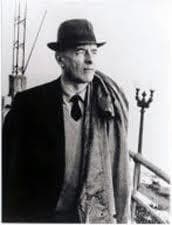
Witold Marian Gombrowicz was a Polish writer and playwright. His works are characterised by deep psychological analysis, a certain sense of paradox and absurd, anti-nationalist flavor. In 1937, he published his first novel, Ferdydurke, which presented many of his usual themes: problems of immaturity and youth, creation of identity in interactions with others, and an ironic, critical examination of class roles in Polish society and culture.
Similar books
- The Trial
Franz Kafka
4.0 (235k) average on GoodreadsLiterary FictionExplores themes of an individual trapped in an absurd, illogical system, with a nightmarish, bureaucratic atmosphere.
- Catch-22
Joseph Heller
4.0 (723k) average on GoodreadsHistorical FictionFeatures biting satire, absurd situations, and a critique of institutional madness and arbitrary rules.
- Nausea
Jean-Paul Sartre
3.9 (86k) average on GoodreadsPhilosophyDelves into existential themes, the alienation of the self, and the strangeness of human existence and consciousness.
- Nineteen Eighty-Four
George Orwell
4.2 (5.5M) average on GoodreadsFictionWinston Smith dreams of truth and rebellion in a world where Big Brother watches all, but he confronts the terrifying power of a regime that controls not just actions, but thoughts.
- The Frozen River
Ariel Lawhon
4.4 (600k) average on GoodreadsFictionIn 1789 Maine, a heroic midwife's diary helps her expose a murder and get justice in a town that wants to silence her.
- A Man Called Ove
Fredrik Backman
4.4 (569k) average on GoodreadsFictionA stubborn widower, who lives by strict rules, finds his quiet world changed by a lively new family next door, making him face his past and find happiness in human connection.




Enjoyed the summary?
A summary gives you the shape of the book. The book itself has the detail, the examples and the voice.
Find Ferdydurke on AmazonAs an Amazon Associate, BookBrief earns from qualifying purchases. How we're funded