
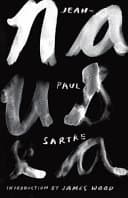
Synopsis
Covers the whole plot, including the ending.
- Difficulty
- Hard
- Read it if
- You are interested in the core tenets of existentialism, enjoy philosophical fiction that delves into the nature of consciousness and freedom, or are willing to engage with themes of absurdity and meaninglessness.
- Skip it if
- You prefer plot-driven narratives, seek optimistic or comforting philosophies, or find introspective, stream-of-consciousness writing challenging.
Nausea Quotes
“The essential thing is to avoid all the horrors of romantic love. That is, the romantic love of the bourgeois, which begins with love at first sight and ends with marriage and reconciliation. It is all a question of being able to continue to be oneself.”
“I am free: I have no more reasons for living, all the ones I had have been destroyed, and the others haven't been born yet.”
“Every existing thing is born without reason, prolongs itself out of weakness, and dies by chance.”
“I too am soft, I am flabby, I am obscene, I am living.”
“To exist is simply to be there; those who exist appear, let themselves be encountered, but you can never deduce anything from them.”
“I feel that I am going to burst into tears. I can’t bear it anymore. I am full of objects; I am full of things.”
“Man is a useless passion.”
“The word 'adventure' is a trap. I have lived, I have suffered, I have sought myself, I have lost myself, I have found myself, I have gone to the end of the world, and I have found nothing.”
“Nothing happens while you live. The scenery changes, people come in and go out, that’s all. There are no beginnings. Days are tacked on to days without rhyme or reason, an interminable, monotonous addition.”
“I must be like a tree, always rooted in the same soil, with the same leaves, the same branches, the same fruit. I must be like a stone, always the same, always silent, always alone.”
“I am alone, and it is a good thing that I am alone.”
“I have only my past, and even that is dissolving. The present is nothing but an empty interval.”
“The Nausea is not inside me: it is all around me, in all things. It is the very texture of this chair, this red of the carpet, this smell of the sea.”
“So this is the famous freedom. I am free to do nothing, to be nothing, to choose nothing.”
Quiz
10 questions on the plot and the characters. Each answer comes with a short explanation.
Question 1
What is the name of the protagonist in Jean-Paul Sartre's 'Nausea'?
- Antoine Roquentin
- Jacques Roquentin
- Pierre Roquentin
- Jean Roquentin
Show answer
A. Antoine Roquentin The protagonist and diarist of 'Nausea' is Antoine Roquentin, a historian living in Bouville.
Question 2
What literary form does 'Nausea' primarily take?
- An epistolary novel
- A third-person narrative
- A diary or journal
- A collection of short stories
Show answer
C. A diary or journal The novel is presented as a series of diary entries written by Antoine Roquentin, detailing his experiences and philosophical reflections.
Question 3
What is the primary emotional state or sensation that Antoine Roquentin experiences and gives the novel its title?
- Joy
- Anger
- Nausea
- Euphoria
Show answer
C. Nausea Roquentin experiences a profound sense of 'nausea' which is a physical manifestation of his growing awareness of the contingency and superfluousness of existence.
Question 4
What does Roquentin realize about the chestnut tree root in the park that triggers a significant philosophical insight?
- It is a symbol of nature's enduring beauty.
- It has a definite, inherent purpose.
- It exists without reason, a superfluous 'thing-in-itself'.
- It is a figment of his imagination.
Show answer
C. It exists without reason, a superfluous 'thing-in-itself'. The chestnut tree root incident is a pivotal moment where Roquentin perceives the raw, absurd existence of things, devoid of inherent meaning or purpose, leading to his profound sense of nausea.
Question 5
What is the 'Self-Taught Man' (l'Autodidacte) primarily trying to achieve through his extensive reading in the Bouville library?
- To become a famous author.
- To acquire all human knowledge in alphabetical order.
- To find a cure for Roquentin's nausea.
- To write a definitive history of Bouville.
Show answer
B. To acquire all human knowledge in alphabetical order. The Self-Taught Man is meticulously reading through all the books in the library in alphabetical order, believing this will grant him universal knowledge and a sense of belonging.
Question 6
What is the significance of the jazz song 'Some of These Days' that Roquentin hears in the café?
- It reminds him of his lost love.
- It is a symbol of the absurd meaninglessness of art.
- It offers a brief, almost redemptive, moment of 'necessary' existence and order.
- It intensifies his feelings of nausea.
Show answer
C. It offers a brief, almost redemptive, moment of 'necessary' existence and order. The jazz song, with its fixed melody and structure, presents a stark contrast to the contingent world, suggesting a fleeting possibility of creating meaning and necessity through art.
Question 7
Which core existentialist concept, central to 'Nausea', describes the idea that existence precedes essence?
- Determinism
- Fatalism
- Contingency
- Freedom
Show answer
D. Freedom The concept that 'existence precedes essence' implies that humans are first born (exist) and then define themselves through their choices and actions, thus being condemned to be free and responsible for their own meaning.
Question 8
How does Roquentin primarily perceive the townspeople of Bouville, particularly those depicted in the portrait gallery?
- As admirable figures of civic duty.
- As fellow sufferers of existential dread.
- As 'salauds' (swine) who delude themselves with false essences and roles.
- As sources of comfort and understanding.
Show answer
C. As 'salauds' (swine) who delude themselves with false essences and roles. Roquentin views the 'respectable' citizens of Bouville, especially those whose portraits line the gallery, as 'salauds' for believing in inherent rights, fixed roles, and a predetermined purpose for their lives, thereby denying their radical freedom and the contingency of existence.
Question 9
What is the ultimate decision Roquentin makes regarding his historical research on the Marquis de Rollebon?
- He completes the biography with newfound enthusiasm.
- He abandons it, realizing he cannot resurrect the past or give it meaning.
- He decides to write a historical fiction instead.
- He delegates the research to an assistant.
Show answer
B. He abandons it, realizing he cannot resurrect the past or give it meaning. Roquentin ultimately abandons his historical research, realizing that attempting to impose order and meaning on the past is a futile exercise against the inherent contingency of existence. The Marquis, like everything else, simply 'was' and cannot be fully understood or recreated.
Question 10
At the end of the novel, what glimmer of hope or potential solution does Roquentin consider for coping with his existential awareness?
- Returning to his former life and ignoring his insights.
- Engaging in political activism to change society.
- Writing a book, perhaps a novel, that could give some order to the chaos of existence.
- Seeking therapy to alleviate his feelings of nausea.
Show answer
C. Writing a book, perhaps a novel, that could give some order to the chaos of existence. Inspired by the jazz song, Roquentin contemplates the possibility of creating a work of art, perhaps a novel, that would be 'beautiful and hard as steel' and, through its necessity and structured form, might offer a way to 'redeem' the contingency of existence, at least for the creator.
Nausea FAQ
What is 'Nausea' by Jean-Paul Sartre about?
'Nausea' is Jean-Paul Sartre's philosophical novel that explores the protagonist Antoine Roquentin's growing sense of alienation and unease with existence. Through his diary entries, the book delves into themes of freedom, responsibility, and the arbitrary nature of reality, making it a foundational text for existentialist thought.
Does reading 'Nausea' help understand existentialism?
Absolutely. 'Nausea' is considered one of the most accessible and profound literary expressions of existentialist philosophy. It vividly illustrates core existentialist concepts like 'nausea,' 'contingency,' and 'bad faith' through the lived experience of its main character, providing an immersive understanding rather than just theoretical explanation.
What is the 'nausea' that Roquentin experiences?
The 'nausea' in the book refers to a profound existential realization of the sheer contingency and meaninglessness of existence, particularly the overwhelming 'facticity' of objects and one's own being. It's a feeling of revulsion and discomfort arising from the recognition that nothing inherently justifies or necessitates existence.
How is 'Nausea' different from other philosophical novels like Camus' 'The Stranger'?
While both are existentialist novels, 'Nausea' focuses more on the internal, intellectual struggle with the absurd and the contingency of being, often through abstract reflection. 'The Stranger,' by contrast, explores themes of absurdity and alienation through a more detached, observational narrative and the protagonist's indifference to societal norms and emotional events.
Is 'Nausea' a difficult book to read for beginners in philosophy?
While philosophically dense, 'Nausea' is a novel, making it more engaging than a purely academic text for many. Its narrative structure, character development, and evocative prose can make complex existentialist ideas more digestible, though it still requires thoughtful engagement with its themes.
What is the significance of the chestnut tree scene in 'Nausea'?
The chestnut tree scene is pivotal, representing Roquentin's most intense experience of 'nausea' and the realization of contingency. He perceives the tree's roots as monstrous and gratuitous, stripped of all human-imposed meaning, leading him to confront the raw, unjustified existence of all things, including himself.
Who was Jean-Paul Sartre and why is 'Nausea' important in his work?
Jean-Paul Sartre was a French philosopher, playwright, novelist, and political activist, a leading figure in 20th-century existentialism. 'Nausea' is crucial as it predates his major philosophical treatise 'Being and Nothingness' and serves as a literary precursor, vividly illustrating many of his core philosophical concepts in a narrative form.
Does 'Nausea' offer any solutions or hope for dealing with existential dread?
While 'Nausea' primarily depicts the problem of existential dread and the realization of contingency, it implicitly points towards the radical freedom and responsibility that comes with it. Sartre later argued that individuals are condemned to be free and must create their own meaning, suggesting an active response to the 'nausea' rather than offering direct comfort within the novel itself.
About the author
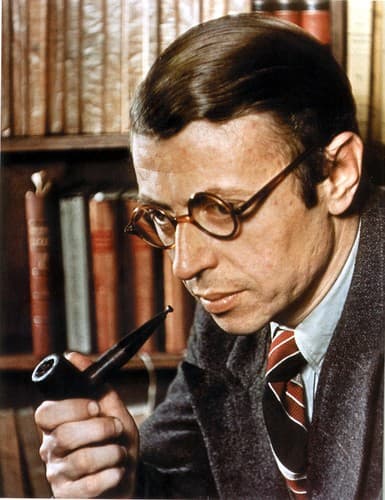
Jean-Paul Charles Aymard Sartre was a French philosopher, playwright, novelist, screenwriter, political activist, biographer, and literary critic, considered a leading figure in 20th-century French philosophy and Marxism. Sartre was one of the key figures in the philosophy of existentialism. His work has influenced sociology, critical theory, post-colonial theory, and literary studies, and continues to do so. He was awarded the 1964 Nobel Prize in Literature despite attempting to refuse it, saying that he always declined official honors and that "a writer should not allow himself to be turned into an institution."
Similar books
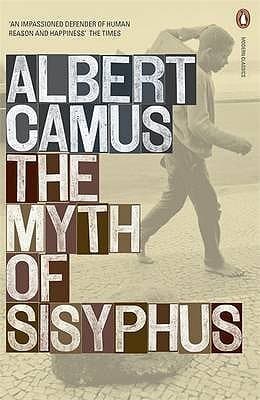
- The Myth of Sisyphus
Albert Camus
4.2 (25k) average on GoodreadsPhilosophyExplores the absurdity of existence and the human condition from an absurdist perspective.
- Being and Nothingness
Jean-Paul Sartre
4.0 (26k) average on GoodreadsPsychologySartre's foundational philosophical work that systematically elaborates on the themes introduced in 'Nausea'.
- The Stranger
Albert Camus
4.1 (3k) average on GoodreadsFantasyA classic of absurdist literature featuring an alienated protagonist confronting life's indifference.
- Brave New World
Aldous Huxley
4.0 (1.4M) average on GoodreadsFantasyIn a future where happiness comes from chemicals and individuality is gone, one man's desire for real experience threatens the calm, controlled society.
- Life of Pi
Yann Martel
3.9 (1.3M) average on GoodreadsFantasyStranded in the vast Pacific, a young Indian boy forms an unlikely bond with a Bengal tiger, questioning belief and survival.
- The Picture of Dorian Gray
Oscar Wilde
4.1 (966k) average on GoodreadsFantasyA beautiful young man's soul decays within a cursed portrait, mirroring the grotesque cost of his hedonistic pursuit of eternal youth and illicit pleasure.




Enjoyed the summary?
A summary gives you the shape of the book. The book itself has the detail, the examples and the voice.
Find Nausea on AmazonAs an Amazon Associate, BookBrief earns from qualifying purchases. How we're funded