Estimated read time: 8 min read
One Sentence Summary
"Fiasco" by Stanisław Lem is a philosophical science fiction novel exploring humanity's failed attempt to communicate and interact with an alien civilization, resulting in catastrophic consequences.
Table of Contents
Introduction
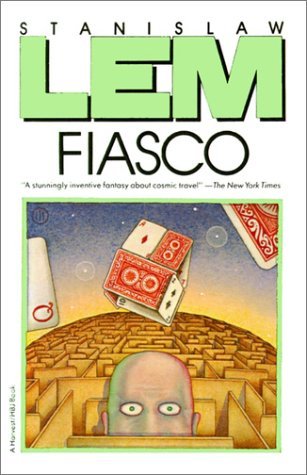
Fiasco by Stanisław Lem is a gripping, profound science fiction novel that probes deep philosophical questions about contact between civilizations, the nature of communication, and the unforeseen consequences of exploration. Published in 1986, this novel combines Lem’s trademark intellectual rigor with thrilling narrative and existential inquiry. For college students and lecturers alike, Fiasco offers a rich text for analyzing themes of human ambition, technological limits, and ethical dilemmas in interstellar diplomacy. Its relevance persists as humanity inches closer to real-world space exploration and the search for extraterrestrial intelligence.
Historical Context
Written during the late Cold War era, Fiasco reflects the anxieties and aspirations of a world on the brink of profound technological and geopolitical change. The 1980s saw increased interest in space exploration, alongside fears about nuclear annihilation and ideological conflicts. Lem, a Polish author, used science fiction as a medium to critique human hubris and the possible futility of communication with alien beings.
The novel also explores themes inspired by the Cold War’s standoff mentality—where mistrust and fear often prevented genuine dialogue. Lem’s work draws on contemporary scientific debates about the possibility of extraterrestrial life and philosophical questions regarding human limitations in understanding “the other.”
Brief Synopsis
Plot Overview
Fiasco centers on a human expedition to the distant star system Quintana, motivated by evidence of an advanced alien civilization. The crew aims to establish contact and avoid the catastrophic failures of prior attempts. However, the mission spirals into a tragic series of misunderstandings, technological failures, and ethical quandaries.
The story’s tension builds around the challenges of first contact: How can two vastly different intelligences understand each other? What assumptions do humans bring that might blind them to alien realities? Lem explores these questions through a suspenseful narrative culminating in a catastrophic “fiasco” that forces readers to confront the limits of human knowledge and control.
Setting
The novel is set primarily on the starship Eurydice and the alien world of Quintana. The time is the late 21st century, a plausible future where space travel is advanced but still fraught with uncertainty and danger. Quintana itself is a richly imagined alien environment, embodying the inscrutable “otherness” that challenges human explorers. The atmosphere is tense, cerebral, and often bleak, underscoring the isolation and existential risks of interstellar exploration.
Main Characters
| Name | Role | Key Traits | Importance to the Plot |
|---|---|---|---|
| Pirx | Pilot and narrator | Pragmatic, experienced | Offers a grounded human perspective on the mission |
| Kapitan (Captain) | Mission leader | Authoritative, cautious | Responsible for strategic decisions and crew morale |
| Scientist Krysicki | Linguist and xenologist | Intellectual, idealistic | Drives efforts to decode alien signals and culture |
| Engineer Fafner | Technical expert | Resourceful, pragmatic | Manages technological challenges on the ship |
| Alien representatives | Unknown entities | Mysterious, incomprehensible | Embody the core enigma and conflict of first contact |
Plot Summary
Launch and Journey
The novel begins with the Eurydice embarking on its mission to Quintana. The crew is aware of past failures in alien contact attempts, adding a layer of tension. Lem meticulously describes the technological sophistication of the ship and the psychological state of the crew, highlighting human hopes and fears.
Arrival and Initial Contact
Upon arrival, the crew encounters signs of alien life but struggles to interpret them. Despite thorough preparation, the aliens’ mode of communication and culture remain frustratingly opaque. The narrative explores the complexity of linguistic and cultural translation, emphasizing how human assumptions hinder understanding.
Escalating Misunderstandings
As attempts to communicate continue, mistrust grows. The humans interpret ambiguous alien actions as hostile, while the aliens perceive human gestures as threatening or nonsensical. Lem uses this escalating tension to dramatize the dangers of projection and anthropocentrism in interstellar diplomacy.
The Fiasco
The climax reveals the disastrous consequences of these misunderstandings. A tragic event—without explicit spoilers—forces the crew to reckon with the limits of their knowledge and control. The "fiasco" represents not only a mission failure but a profound philosophical statement on human fallibility.
Aftermath and Reflection
The novel ends on a somber, reflective note. The survivors and readers alike are left to ponder the ethical implications of exploration and the possibility that some encounters may be inherently doomed to failure.
Themes and Motifs
Communication and Miscommunication
At the heart of Fiasco is the theme of communication — or more precisely, the near-impossibility of truly understanding an alien intelligence. Lem dismantles the assumption that language or behavior can be easily decoded across species. This theme resonates with contemporary debates in linguistics, semiotics, and intercultural communication.
Human Hubris and Fallibility
Lem critiques human arrogance, especially the belief that technology and reason alone can overcome all barriers. The novel suggests that humans often impose their own frameworks on the unknown, leading to catastrophic errors.
The Other and Alienness
The alien civilization in Fiasco is not just a backdrop but a mirror reflecting human fears and hopes. The novel challenges anthropocentric worldviews by presenting the alien as genuinely “other,” not merely a human-like intelligence with different customs.
Ethical Dilemmas in Exploration
Fiasco raises difficult ethical questions: Should humans interfere with alien worlds? What responsibilities do explorers have to unknown civilizations? These questions remain relevant amid current discussions of space colonization and planetary protection.
The Limits of Science and Technology
Despite its advanced setting, the novel underscores that science has limits. Complex phenomena, especially those involving consciousness and culture, resist reduction to data and algorithms.
Literary Techniques and Style
Lem’s writing in Fiasco is dense yet accessible, blending scientific detail with philosophical reflection. His style is characterized by:
- Narrative Structure: The story unfolds in a linear but layered manner, interspersing technical descriptions with character introspection.
- Symbolism: The alien world and the “fiasco” serve as symbols of the unknowable and the consequences of human error.
- Realism: Lem grounds his speculative ideas in plausible science, lending credibility to the narrative.
- Philosophical Dialogue: Characters frequently engage in debates that elucidate thematic content.
- Dry Humor: Amidst the tension, Lem injects subtle irony and wit, lightening the narrative without undermining its seriousness.
Author's Background
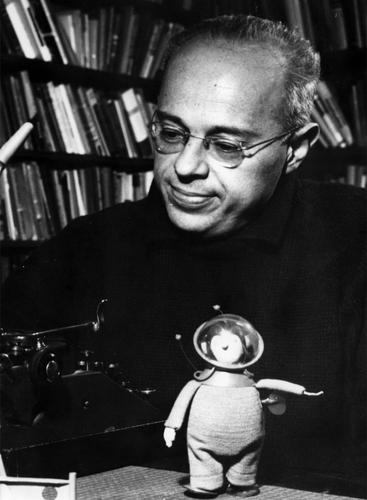
Stanisław Lem (1921–2006) was a Polish writer renowned for his philosophical science fiction. His works, including Solaris and The Cyberiad, explore complex themes such as consciousness, technology, and the human condition. Lem’s background in medicine and philosophy informed his speculative narratives, which often critique human rationality and technological optimism.
Lem wrote in Polish and achieved international acclaim, influencing both literary and scientific communities. His legacy includes challenging the genre’s conventions and elevating science fiction as a vehicle for serious intellectual inquiry.
Key Takeaways
- Effective communication across radically different cultures or species is profoundly challenging and prone to misunderstanding.
- Human assumptions and biases can blind us to alternative realities and lead to tragic outcomes.
- Advanced technology does not guarantee control over complex social and ethical situations.
- Ethical responsibility is paramount in exploration, especially when dealing with unknown civilizations.
- The quest for knowledge involves humility and acceptance of uncertainty.
Reader's Takeaway
Readers of Fiasco will find themselves intellectually stimulated and emotionally moved. The novel invites reflection on humanity’s place in the cosmos and the perils of overconfidence. It challenges readers to appreciate the complexity of “the other” and to consider the ethical dimensions of discovery. For students and lecturers, Fiasco offers a rich text for discussion on linguistics, philosophy, ethics, and science.
Conclusion
Fiasco stands as a monumental work in science fiction, combining thrilling narrative with profound philosophical inquiry. Stanisław Lem masterfully explores the limits of human understanding and the tragic potential of first contact with alien civilizations. This novel remains deeply relevant to contemporary discussions on space exploration, communication, and ethics. For anyone interested in the profound questions posed by contact with the unknown, Fiasco is a must-read that will provoke thought long after its final page.
Fiasco FAQ
What is the main theme of 'Fiasco' by Stanisław Lem?
'Fiasco' explores themes of first contact with extraterrestrial life, the limitations of human understanding, and the potential consequences of miscommunication.
Who is the protagonist in 'Fiasco'?
The protagonist is a human space explorer leading a mission to make contact with an alien civilization.
What genre does 'Fiasco' belong to?
'Fiasco' is a science fiction novel with elements of philosophical speculation and speculative fiction.
When was 'Fiasco' first published?
'Fiasco' was first published in 1986.
What is the significance of the title 'Fiasco'?
The title 'Fiasco' reflects the failure and tragic consequences of the human mission to communicate with an alien species, highlighting the unpredictability and dangers of such encounters.
Does 'Fiasco' include any commentary on human nature?
Yes, the novel offers critical insights on human arrogance, the limits of knowledge, and the ethical dilemmas faced during exploration and contact with unknown civilizations.
Is 'Fiasco' part of a series?
No, 'Fiasco' is a standalone novel.
Has 'Fiasco' been adapted into other media?
As of now, 'Fiasco' has not been officially adapted into films or TV series.
What kind of alien civilization is depicted in 'Fiasco'?
The alien civilization is technologically advanced but fundamentally different from humanity, making communication and understanding extremely challenging.