
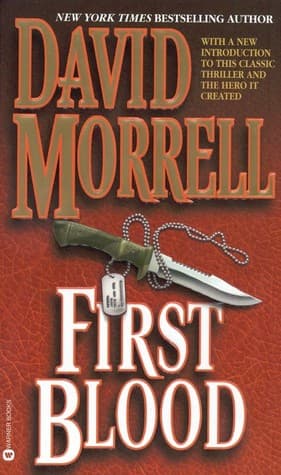
Synopsis
Covers the whole plot, including the ending.
- Difficulty
- Medium
- Pacing
- Fast
- Mood
- Gritty, Suspenseful, Dark, Intense, Tragic
- Read it if
- You enjoy intense, character-driven thrillers exploring the psychological scars of war and the dangers of unchecked authority, with a focus on survival and cat-and-mouse chases.
- Skip it if
- You prefer less violent stories, or are looking for the more action-hero portrayal of Rambo from the later movies.
First Blood Plot Summary
Covers the whole plot, including the ending.
A Drifter's Arrival and Unwarranted Harassment
John Rambo, a young, long-haired drifter wearing a fatigue jacket, arrives in Madison, Kentucky, seeking a meal. He is immediately accosted by Chief of Police Wilfred Teasle, who views Rambo with suspicion and prejudice due to his appearance. Teasle, a decorated Korean War veteran, orders Rambo to leave town, citing vagrancy laws. Rambo, tired and hungry, attempts to comply but is repeatedly intercepted by Teasle, who escalates his harassment, eventually arresting Rambo for resisting an officer and vagrancy. Rambo is taken to the police station, where Teasle's deputies further torment him.
The Trauma Unleashed: Rambo's Violent Escape
At the station, Rambo is subjected to a humiliating shave with a straight razor and further abuse by the deputies. This sensory overload, combined with the confinement and aggressive handling, triggers severe flashbacks to his time as a prisoner of war in Vietnam. His training kicks in, and Rambo, perceiving the police as enemy interrogators, snaps. He violently retaliates, disarming the deputies, killing one with his own razor, and injuring others. He then steals a motorcycle and a rifle, fleeing into the rugged Kentucky wilderness, initiating a desperate manhunt.
The Hunt Begins: Teasle's Personal Vendetta
Chief Teasle is consumed by a personal vendetta after his deputy is killed and his authority undermined. He mobilizes the entire Madison police force and calls for state police assistance, determined to capture Rambo. Teasle, an experienced hunter and former soldier, believes he understands Rambo's mindset and uses his knowledge of the terrain to track him. He disregards official protocols and becomes obsessed with Rambo, viewing the pursuit as a personal duel that mirrors his own combat experiences, pushing his men to their limits in the treacherous mountains.
Mountain Warfare: Rambo's Guerrilla Tactics
Using his elite Special Forces training, Rambo transforms the wilderness into his battlefield. He sets traps, camouflages himself, and moves with stealth, turning the dense forests and caves into his advantage. He ambushes the pursuing officers, inflicting injuries and deaths to slow them down and create diversions, always aiming to escape rather than engage in prolonged combat. His actions, while brutal, are driven by a desperate need for survival and a distrust of authority, reinforcing his perception that he is still fighting a war.
The Arrival of Colonel Trautman
As the body count rises and the local authorities prove ineffective, the military is called in. Colonel Sam Trautman, Rambo's former commanding officer and the man who trained him, arrives on the scene. Trautman immediately recognizes the gravity of the situation and Rambo's combat capabilities. He attempts to reason with Teasle, explaining Rambo's psychological state and suggesting a less aggressive approach. However, Teasle, blinded by pride and vengeance, refuses to listen, insisting on a direct confrontation, believing Rambo is nothing more than a criminal.
A Failed Negotiation and Escalation
Colonel Trautman establishes contact with Rambo via radio, attempting to talk him down and convince him to surrender. He appeals to Rambo's loyalty and discipline, acknowledging his past sacrifices. Rambo, however, is deeply traumatized and distrustful, convinced he will be killed if he surrenders. Teasle, impatient and convinced that Trautman is being too soft, ignores the colonel's advice and orders his men to close in, disrupting the delicate negotiation. This action further solidifies Rambo's belief that he is being hunted without mercy, leading to more violent confrontations.
The Town Under Siege
After evading a massive search party and a helicopter attack, Rambo, injured but still determined, makes his way back to Madison. He orchestrates a series of explosions and diversions, targeting gas stations and businesses, creating chaos and panic in the town. His intention is not random destruction, but a calculated effort to draw Teasle out and force a final confrontation. The town is thrown into disarray, and the local population is terrified, as Rambo uses his tactics to turn the tables on his pursuers, making them the hunted.
The Final Confrontation in the Town
The pursuit ends in a fierce, brutal showdown within the streets and buildings of Madison. Rambo, now a phantom in the night, systematically targets the remaining police officers. He and Teasle engage in a cat-and-mouse game, each using their combat experience and knowledge of the terrain (now the urban setting) to gain an advantage. Teasle, severely wounded, finds himself cornered, his vendetta having led him to the brink of death. Rambo, also injured and exhausted, is driven by a need to end the conflict that began with Teasle's initial harassment.
Trautman's Intervention and the Bleak End
Just as Rambo is about to deliver the final blow to a gravely wounded Teasle, Colonel Trautman appears. Trautman, understanding the cycle of violence and Rambo's shattered psyche, intervenes. He appeals to Rambo's last vestiges of humanity and discipline, reminding him of his identity and the futility of further bloodshed. In a final, desperate act, Rambo, broken by the ordeal and the realization of what he has become, allows Trautman to kill him, ending the rampage. Teasle succumbs to his wounds shortly after, leaving Trautman as the sole witness to the tragic end of two warriors.
First Blood Characters
John Rambo
Protagonist
Highly skilled Vietnam veteran, driven to violence by trauma and persecution.
John Rambo is a highly decorated former Green Beret, a master of guerrilla warfare, survival, and hand-to-hand combat. Beneath his stoic exterior lies deep psychological trauma from his experiences as a POW in Vietnam. He seeks only peace and anonymity but is provoked into a violent rampage by Chief Teasle's unwarranted harassment. Rambo is not inherently evil; his actions are a desperate, instinctual response to what he perceives as a life-threatening situation, rooted in his combat training and PTSD. He is a tragic figure, a product of war unable to adapt to civilian life.
Relationships: Wilfred Teasle (antagonistic, personal vendetta); Sam Trautman (former commanding officer, mentor, paternal figure)
Wilfred Teasle
Antagonist
Small-town police chief, whose prejudice ignites a deadly conflict.
Wilfred Teasle is the chief of police in Madison, Kentucky, a decorated Korean War veteran, and a respected figure in his community. He is proud, stubborn, and possesses a strong sense of law and order, which unfortunately is tainted by prejudice against outsiders and those who don't fit his narrow view of society. His initial harassment of Rambo stems from this prejudice and a need to assert his authority. Teasle becomes consumed by a personal vendetta against Rambo, viewing the pursuit as a re-enactment of his own wartime experiences, ultimately leading to his demise.
Relationships: John Rambo (antagonistic, personal vendetta); Sam Trautman (conflicting authority, mutual respect for combat experience but differing views on Rambo)
Colonel Sam Trautman
Supporting
Rambo's former commanding officer, understanding his fractured psyche.
Colonel Sam Trautman is Rambo's former commanding officer in the Special Forces, the man who trained him and knows him better than anyone. He acts as a voice of reason amidst the escalating chaos, attempting to mediate and de-escalate the situation. Trautman understands Rambo's psychological state and the combat conditioning that drives his actions. He represents the military's responsibility for creating soldiers like Rambo and the tragic consequences when they are discarded. He genuinely cares for Rambo, despite the horrific circumstances.
Relationships: John Rambo (former commanding officer, mentor, paternal figure); Wilfred Teasle (conflicting authority, mutual respect for combat experience but differing views on Rambo)
Lester
Supporting
Teasle's loyal, but less experienced, deputy.
Lester is one of Chief Teasle's deputies in Madison. He is initially part of the group that harasses and abuses Rambo at the police station. While loyal to Teasle, he lacks the chief's combat experience and often appears less hardened or more hesitant when the situation escalates. He is involved in the initial pursuit in the mountains and witnesses Rambo's brutal effectiveness. His role highlights the unpreparedness of the local police force against a highly trained warrior.
Relationships: Wilfred Teasle (subordinate, loyal deputy); John Rambo (antagonist, victim of Rambo's escape)
Galt
Supporting
Deputy killed by Rambo during his escape.
Galt is the deputy who is killed by Rambo during his violent escape from the Madison police station. He is one of the officers involved in the physical and psychological torment of Rambo. His death at Rambo's hands is the catalyst that transforms Teasle's harassment into a full-blown manhunt and personal vendetta. Galt's demise underscores the extreme and deadly capabilities Rambo possesses once his trauma is triggered, and the dire consequences of the police's actions.
Relationships: Wilfred Teasle (subordinate, fellow officer); John Rambo (antagonist, victim of Rambo's escape)
Sheriff Art Galt (County Sheriff)
Supporting
County Sheriff, initially dismissive of Teasle's growing problem.
Sheriff Art Galt is the county sheriff, a figure of broader authority than Teasle. Initially, he is somewhat dismissive of Teasle's frantic calls for assistance, underestimating the seriousness of the situation and the threat Rambo poses. As the body count rises and the scale of Rambo's rampage becomes undeniable, Galt is forced to mobilize more resources and acknowledge the extreme danger. He represents the bureaucratic and often slow-to-react nature of larger law enforcement when confronted with an unprecedented threat.
Relationships: Wilfred Teasle (colleague, superior in a broader jurisdiction); John Rambo (antagonist, target of his manhunt)
Orval
Mentioned
A fellow POW with Rambo, whose memory fuels Rambo's trauma.
Orval is a fellow prisoner of war in Vietnam, whose torture and death are vividly recalled by Rambo during his traumatic flashbacks at the police station. While not a present character, Orval's memory is crucial to understanding Rambo's psychological state and why he reacts so violently to the police's actions. Orval represents the deep-seated trauma and the horrors Rambo endured, which effectively turn the small-town police station into a Vietnamese POW camp in Rambo's mind, triggering his combat instincts.
Relationships: John Rambo (fellow POW, shared trauma)
Corporal Mitch Rogers
Supporting
A state trooper involved in the hunt for Rambo.
Corporal Mitch Rogers is a state trooper who joins the manhunt for Rambo. He represents a more professional and trained element of law enforcement compared to the local deputies, but even his experience is insufficient against Rambo's elite combat skills. Rogers is part of the larger forces mobilized to track Rambo, and his presence highlights the escalating scale of the conflict. He experiences Rambo's tactical prowess firsthand, contributing to the growing fear and desperation among the pursuers.
Relationships: Wilfred Teasle (colleague, part of the multi-agency task force); John Rambo (antagonist, target of his manhunt)
First Blood Themes
The Trauma of War and PTSD
The novel explores the lasting psychological impact of war, particularly Post-Traumatic Stress Disorder (PTSD). Rambo's extreme violence is not portrayed as inherent evil, but as a direct consequence of his unresolved combat trauma, particularly his experiences as a POW. The seemingly innocuous actions of the police — a shave, confinement, aggressive questioning — trigger vivid flashbacks that plunge him back into a wartime mindset, where he perceives the police as enemy interrogators. This theme is central to understanding Rambo's character and the tragedy of his rampage, showing how soldiers can be broken by their experiences and struggle to reintegrate into civilian life.
“He was a walking time bomb, wired to explode at the slightest touch of a memory, a sound, a smell that brought back the jungle, the torture, the fear.”
The Conflict Between Authority and Individual Freedom
A theme is the clash between institutional authority (represented by Chief Teasle and law enforcement) and the individual's right to freedom and dignity (represented by Rambo). Teasle's initial harassment of Rambo is an abuse of power, born from prejudice and a desire to control. Rambo's violent reaction, while extreme, is his desperate attempt to reclaim his autonomy and escape perceived oppression. The novel questions the nature of 'justice' and 'order' when wielded by flawed individuals, and how the state's power can crush or provoke those who don't conform. This conflict escalates into a full-blown war, showing the dangers when authority is misused and when an individual is pushed beyond their breaking point.
“He didn't want trouble. He just wanted to be left alone. But they wouldn't leave him alone.”
The Nature of Violence and Vengeance
The book explores the cyclical and destructive nature of violence and vengeance. Teasle's initial act of aggression against Rambo ignites a chain reaction of violence. Rambo's retaliatory violence, while rooted in trauma, fuels Teasle's personal vendetta, leading to an escalating cycle of death and destruction. Neither character can disengage from the conflict, driven by pride, anger, and a perceived need for retribution. The novel suggests that once this cycle begins, it is difficult to break, consuming both the perpetrator and the victim, ultimately leading to a tragic outcome for all involved. The violence is often graphic, emphasizing its brutal reality.
“The war was over, but it was still inside him. And now, thanks to Teasle, it was outside too.”
The Failure of Society to Reintegrate Veterans
First Blood critiques society's failure to understand, support, and reintegrate its veterans. Rambo, a highly trained soldier, returns from Vietnam only to be met with suspicion, hostility, and a lack of understanding. His unique skills, honed for war, are seen as a threat in civilian life. The novel argues that the society that created such a formidable warrior is unprepared and unwilling to deal with the consequences of his training and trauma. Colonel Trautman embodies this theme, recognizing the responsibility the military has for Rambo, and lamenting how society discards its heroes, turning them into outcasts.
“We trained him to be a killer. We told him to kill. And now you expect him to just turn it off?”
Man vs. Wilderness/Civilization
The novel uses the contrast between the untamed wilderness and the confines of civilization to highlight Rambo's struggle. In the wilderness, Rambo is in his element, a master of survival and combat, effectively turning the natural environment into his ally and weapon. He thrives in this primal setting, reverting to his basic, trained instincts. Conversely, civilization, represented by Madison, its laws, and its police, is where he is persecuted and where his trauma is triggered. The conflict moves from the wild mountains back into the town, blurring the lines and showing how Rambo brings the 'wilderness' of war into the 'civilized' world, exposing its vulnerability.
“The forest was his home, his sanctuary, his battlefield. He knew its secrets, and it protected him.”
Plot Devices & Literary Techniques
Flashbacks and PTSD Triggers
Narrative device revealing Rambo's past trauma and explaining his actions.
Flashbacks are a crucial device in 'First Blood,' providing insight into Rambo's fractured psyche. The novel uses specific sensory details—the cold razor blade, the confined space, the aggressive questioning—to trigger Rambo's memories of being a POW in Vietnam. These flashbacks are not just exposition; they directly drive his violent reactions, transforming the present-day police into his past torturers in his mind. This device allows the reader to understand, if not condone, Rambo's extreme behavior as a symptom of severe PTSD, making him a more complex and tragic figure rather than a simple villain.
The Hunter and the Hunted Dynamic
Reversal of roles that explores power and survival.
This device is central to the narrative, initially establishing Teasle as the hunter and Rambo as the hunted. However, once Rambo's combat instincts are unleashed, the dynamic frequently reverses. Rambo, using his superior training and knowledge of guerrilla tactics, often turns the tables, ambushing and outmaneuvering his pursuers, making them the hunted. This reversal highlights Rambo's capabilities and the unpreparedness of the local authorities. It also emphasizes the primal nature of the conflict, blurring the lines between predator and prey, and demonstrating how quickly power dynamics can shift in a life-or-death struggle.
The Wilderness as a Character
The natural environment plays an active role in the conflict.
The rugged Kentucky wilderness is more than just a setting; it acts as a character in the story. Its dense forests, treacherous ravines, and hidden caves become Rambo's ally and his weapon. He uses its features for camouflage, traps, and escape routes, demonstrating his profound connection to and mastery over nature. Conversely, the wilderness becomes a formidable enemy for Teasle and his men, hindering their pursuit and exposing their vulnerabilities. This device emphasizes Rambo's primal skill set and contrasts it with the more conventional, less adaptable tactics of law enforcement.
Foil Characters (Rambo and Teasle)
Contrasting characters highlighting similar yet divergent paths.
Rambo and Teasle serve as foil characters, both decorated war veterans, skilled in combat, and possessing strong wills. However, their paths diverge dramatically. Teasle, a Korean War veteran, represents established authority and a sense of order, albeit one tainted by prejudice. Rambo, a Vietnam veteran, represents the discarded, traumatized soldier, alienated from society. Their shared military backgrounds create a perverse understanding between them, yet their differing responses to their experiences lead to their fatal clash. This device underscores the novel's themes of war's impact and the clash between individual trauma and societal norms.
First Blood Quotes
“They drew first blood, not me.”
“You just don't turn it off!”
“I could have killed 'em all, I could've killed you. In town you're the law, out here it's me. Don't push it. Don't push it or I'll give you a war you won't believe.”
“There was a war going on and everybody was doing things they didn't want to do, but they were doing them for their country.”
“He was a machine, a programmed killer, and they had turned him on.”
“It was not a war of good against evil, but of men against men, and the evil was in the fighting itself.”
“He felt the old familiar surge of adrenaline, the animalistic joy of the hunt.”
“They had taught him to kill, but they hadn't taught him how to live.”
“A man's got to do what a man's got to do.”
“The wilderness was his only friend, his only sanctuary.”
“He didn't want to be a hero. He just wanted to be left alone.”
“The uniform was gone, but the soldier remained.”
“He was a ghost, a legend, a nightmare made real.”
“It was impossible to kill a man who didn't care if he lived or died.”
Quiz
10 questions on the plot and the characters. Each answer comes with a short explanation.
Question 1
What is the primary reason Sheriff Teasle initially stops John Rambo?
- Rambo was caught shoplifting in town.
- Rambo's appearance (long hair, fatigue coat) made him look like a drifter and Teasle wanted him out of town.
- Rambo was speeding on the highway leading into town.
- Rambo was loitering suspiciously near the town bank.
Show answer
B. Rambo's appearance (long hair, fatigue coat) made him look like a drifter and Teasle wanted him out of town. Sheriff Teasle, a small-town cop, is portrayed as being judgmental and wanting to maintain order by removing perceived undesirable elements. Rambo's appearance as a long-haired drifter in a fatigue coat immediately draws Teasle's suspicion and desire to run him out of town, leading to the initial confrontation.
Question 2
Where does the majority of the life-and-death struggle between Rambo and Teasle take place?
- Within the confines of the small town's police station.
- Along the main highway connecting several towns.
- Through the woods, hills, and caves of rural Kentucky.
- In a deserted factory on the outskirts of town.
Show answer
C. Through the woods, hills, and caves of rural Kentucky. The book explicitly states that the struggle takes place 'through the woods, hills, and caves of rural Kentucky,' highlighting Rambo's survival skills and the harsh, natural environment that becomes their battlefield.
Question 3
What is John Rambo's background, which contributes to his extreme combat skills?
- He was a former special forces operative in World War II.
- He is a decorated Vietnam veteran.
- He grew up as a survivalist in the wilderness.
- He was a trained martial artist and mercenary.
Show answer
B. He is a decorated Vietnam veteran. The book identifies Rambo as a 'young Vietnam veteran,' which is central to understanding his combat prowess, training, and the psychological trauma that fuels his actions.
Question 4
What is a significant difference between the book's ending and the first Rambo movie's ending?
- In the book, Rambo is arrested and imprisoned; in the movie, he escapes.
- In the book, Rambo dies at the end; in the movie, he is taken into custody by Trautman.
- In the book, Teasle dies; in the movie, Teasle survives.
- In the book, Trautman kills Rambo; in the movie, Trautman convinces Rambo to surrender.
Show answer
B. In the book, Rambo dies at the end; in the movie, he is taken into custody by Trautman. A key difference often noted by readers is that in the original novel, Rambo is killed at the end, whereas the movie adaptation saw him survive and taken into custody by Colonel Trautman, paving the way for sequels.
Question 5
What psychological impact does his Vietnam service have on Rambo during the events of the book?
- It makes him overly trusting of authority figures.
- It leaves him with severe PTSD, causing him to react violently to perceived threats and flashbacks.
- It gives him a strong sense of community and desire to settle down.
- It makes him a pacifist, avoiding all conflict.
Show answer
B. It leaves him with severe PTSD, causing him to react violently to perceived threats and flashbacks. Rambo's actions are heavily influenced by his experiences in Vietnam, which have left him with severe post-traumatic stress disorder (PTSD). His violent reactions are often triggered by perceived threats and flashbacks to his wartime trauma, making him a complex and sympathetic character despite his dangerous capabilities.
Question 6
How does Sheriff Teasle's character evolve (or devolve) throughout his pursuit of Rambo?
- He realizes his initial judgment was wrong and tries to de-escalate the situation peacefully.
- He becomes increasingly obsessed and vindictive, mirroring Rambo's own primal drive for survival and revenge.
- He calls in federal agents and steps back from the pursuit.
- He develops a grudging respect for Rambo's skills and tries to recruit him.
Show answer
B. He becomes increasingly obsessed and vindictive, mirroring Rambo's own primal drive for survival and revenge. Teasle's initial arrogance and desire to assert authority quickly transform into a personal vendetta. As the body count rises and his town is terrorized, he becomes consumed by the hunt, mirroring Rambo's own desperation and blurring the lines between hero and villain.
Question 7
What is the overarching theme regarding the treatment of Vietnam veterans implied by the conflict in 'First Blood'?
- That veterans are always welcomed and respected upon returning home.
- That many veterans faced misunderstanding, resentment, and a lack of support, leading to their alienation.
- That military training makes veterans inherently dangerous to civilian society.
- That veterans should be integrated into law enforcement.
Show answer
B. That many veterans faced misunderstanding, resentment, and a lack of support, leading to their alienation. The book, particularly through Rambo's character, explores the difficult homecoming for many Vietnam veterans. They often faced a hostile public, lack of understanding for their trauma, and inadequate support, leading to feelings of alienation and being 'first blood' in a different kind of war at home.
Question 8
During Rambo's initial detainment, what specific abusive act by the deputies triggers his violent escape?
- They deny him food and water for an extended period.
- They beat him severely during interrogation.
- They attempt to shave his long hair with a straight razor.
- They threaten to harm his family if he doesn't cooperate.
Show answer
C. They attempt to shave his long hair with a straight razor. The attempt to forcibly shave Rambo's hair with a straight razor is a crucial turning point. This act, reminiscent of torture and dehumanization he likely experienced in captivity during the war, triggers his severe PTSD and leads to his violent breakout from the station.
Question 9
Why is the title 'First Blood' particularly significant to the novel's themes?
- It refers to the first person Rambo kills in self-defense.
- It symbolizes the idea that Rambo, and by extension other veterans, were the 'first blood' shed in a new kind of war at home, unacknowledged and misunderstood.
- It literally describes Rambo's first injury sustained in the pursuit.
- It refers to the first time Teasle draws blood from Rambo.
Show answer
B. It symbolizes the idea that Rambo, and by extension other veterans, were the 'first blood' shed in a new kind of war at home, unacknowledged and misunderstood. The title 'First Blood' carries significant thematic weight. It suggests that Rambo, as a returned veteran, is the 'first blood' in a new, internal conflict on American soil, highlighting the societal neglect and mistreatment of those who served, turning them into victims or combatants in their own country.
Question 10
What role does the character of Colonel Trautman play in the original novel, if any, compared to the movie?
- Trautman is Rambo's commanding officer who tries to negotiate his surrender, similar to the film.
- Trautman is Rambo's mentor, but he doesn't appear in the book, only in the film adaptations.
- Trautman is Rambo's former commanding officer who actively hunts Rambo, eventually killing him at the end of the book.
- Trautman is a psychiatrist who attempts to understand Rambo's psychological state.
Show answer
C. Trautman is Rambo's former commanding officer who actively hunts Rambo, eventually killing him at the end of the book. A significant departure from the film series, in the original novel, Colonel Sam Trautman is not just Rambo's former commanding officer but is also the one who tracks him down and ultimately kills him. This darker ending underscores the novel's tragic and uncompromising tone.
First Blood FAQ
What is 'First Blood' about?
'First Blood' tells the story of John Rambo, a young Vietnam veteran, who is harassed by the small-town sheriff, Teasle, in a rural Kentucky town. This initial confrontation escalates into a brutal manhunt through the wilderness as Rambo's combat training kicks in, turning him into a dangerous survivalist fighting for his life against local law enforcement and the National Guard.
Why should I read 'First Blood'?
You should read 'First Blood' for its intense, character-driven narrative that delves into the psychological trauma of a Vietnam veteran and the escalating consequences of a simple misunderstanding. It's a raw, visceral thriller that explores themes of PTSD, authority, and survival, offering a more nuanced and tragic portrayal of Rambo than the famous film adaptations.
What is the background/setting of 'First Blood'?
The story is set in the rugged, forested hills and caves of rural Kentucky, providing a perfect backdrop for the cat-and-mouse chase between Rambo and Teasle. The time period is post-Vietnam War, with Rambo's recent combat experience and the prevailing societal attitudes towards veterans being central to the conflict.
What are the most memorable quotes?
One memorable quote that encapsulates Rambo's internal struggle is, 'He never knew what it was to be lonely till he was with people.' Another powerful line reflecting Teasle's obsession is, 'I can't believe I'm doing this... chasing a goddamn hippie through the woods.'
What writing style does the author use?
David Morrell employs a taut, suspenseful writing style characterized by vivid descriptions of action and psychological states. He uses a third-person limited perspective, often shifting between Rambo and Teasle, to build tension and provide insight into both characters' deteriorating mental states, making the reader feel the urgency and desperation of the chase.
What minor details add significant meaning?
A minor detail is Rambo's deep sensitivity to being touched after his POW experiences, which is triggered when Teasle roughly handles him. This seemingly small interaction is a critical catalyst, pushing Rambo past his breaking point and igniting his combat instincts, demonstrating the lasting impact of his trauma.
What are some subtle foreshadowing moments?
Early in the book, Teasle's dismissive and aggressive attitude towards Rambo, coupled with his pride and stubbornness, subtly foreshadows the catastrophic conflict that will ensue. His inability to de-escalate or show compassion sets the stage for Rambo's violent reaction, hinting at the tragic consequences of his actions.
What unexpected character connections exist?
An unexpected connection emerges between Rambo and Colonel Trautman, his former commanding officer. Trautman arrives to try and de-escalate the situation, understanding Rambo's training and psychological makeup better than anyone, providing insight into Rambo's past and the military's role in shaping him.
What are unspoken character motivations?
Beyond simply enforcing the law, Teasle's unspoken motivation is a deep-seated need to assert his authority and maintain control, perhaps compensating for feelings of inadequacy or boredom in his small-town life. This pride prevents him from backing down, even as the situation spirals dangerously out of control.
What psychological complexities do characters exhibit?
Rambo exhibits severe PTSD, manifesting as hyper-vigilance, flashbacks, and an inability to reintegrate into civilian life. Teasle, on the other hand, displays a complex mix of stubborn pride, escalating obsession, and a gradual descent into primal revenge, blurring the lines between law enforcement and personal vendetta.
What are the major emotional turning points?
A major emotional turning point is Rambo's escape from the police station, where the rough treatment triggers his combat instincts, transforming him from a passive wanderer into a dangerous survivor. Another is Teasle's realization that he is no longer just a sheriff but a hunter, fully immersed in a personal war with Rambo, marking his own emotional descent.
How do relationship dynamics evolve?
The primary relationship dynamic between Rambo and Teasle evolves from an initial casual encounter between a vagrant and a sheriff into an intense, personal vendetta. Their roles as hunter and hunted become interchangeable, leading to a symbiotic, destructive relationship where each becomes obsessed with the other's demise.
Which parts remain ambiguous or open-ended?
The novel leaves some ambiguity regarding the full extent of Rambo's past trauma and the exact moment his sanity truly fractured beyond repair, suggesting the cumulative weight of his experiences. While his actions are clear, the precise internal tipping point for his complete breakdown remains somewhat open to interpretation.
What are controversial scenes or decisions?
A controversial decision is Teasle's unrelenting pursuit of Rambo, even after multiple fatalities among his men, which many readers question as a gross misuse of power and a descent into personal vengeance rather than justice. Rambo's own brutal tactics, while born of self-preservation, also spark debate about the morality of his actions.
'First Blood' ending explained: how it ends & what it means
Unlike the film, 'First Blood' ends with both Rambo and Teasle dying. Rambo, wounded and cornered by Trautman, eventually succumbs to his injuries and the emotional toll. Teasle, also mortally wounded by Rambo, dies shortly after, consumed by his obsession. The ending signifies the tragic and inescapable destruction that results from their clash, highlighting the futility of vengeance and the devastating cost of war on individuals.
About the author
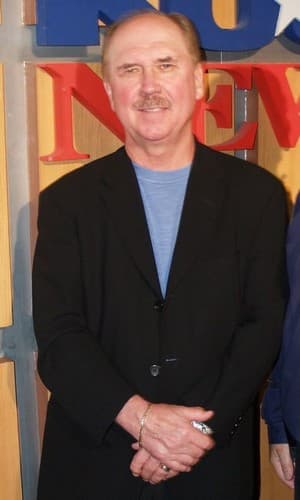
David Morrell is a critically acclaimed author known for his gripping thrillers and suspense novels. He is best known for creating the iconic character John Rambo in his debut novel, *First Blood*. Morrell's other notable works include *Fireflies* and the award-winning historical mystery *Murder as a Fine Art*, showcasing his versatility across genres.
Similar books
- The Most Dangerous Game
Richard Connell
3.9 (42k) average on GoodreadsThrillerFeatures a skilled protagonist hunted by a formidable adversary in a wilderness setting.
- Eye of the Needle
Ken Follett
4.2 (129k) average on GoodreadsThrillerFocuses on a dangerous cat-and-mouse game with a highly skilled protagonist.
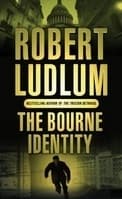
- The Bourne Identity
Robert Ludlum
4.0 (397k) average on GoodreadsThrillerUnlike Bourne's amnesia-driven quest for identity, Rambo's trauma is explicitly known and directly fuels his actions, offering a more direct exploration of PTSD rather than a mystery of self. Morrell's focus is on the psychological aftermath of war, while Ludlum's is on espionage and uncovering a past.
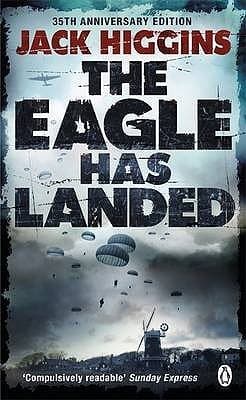
- The Eagle Has Landed
Jack Higgins
4.2 (54k) average on GoodreadsThrillerHiggins' novel focuses on a meticulously planned, large-scale military operation with multiple characters and strategic objectives. First Blood, in contrast, is an intensely personal, individual struggle for survival driven by psychological trauma, making it a more intimate and visceral thriller.
- Angels & Demons
Dan Brown
3.9 (2.7M) average on GoodreadsThrillerA Harvard symbologist races through Rome's ancient sites, deciphering cryptic clues to unmask the Illuminati and stop a vengeful plot to destroy the Vatican with a stolen antimatter weapon.
- Gone Girl
Gillian Flynn
4.1 (2.3M) average on GoodreadsThrillerA wife's sudden disappearance on her fifth anniversary reveals a web of lies and psychological warfare, exposing the secrets within a seemingly perfect marriage.


Enjoyed the summary?
A summary gives you the shape of the book. The book itself has the detail, the examples and the voice.
Find First Blood on AmazonAs an Amazon Associate, BookBrief earns from qualifying purchases. How we're funded