
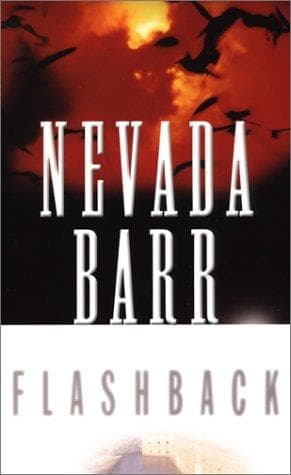
Synopsis
Covers the whole plot, including the ending.
- Difficulty
- Medium
- Pacing
- Moderate
- Mood
- Suspenseful, isolated, historical, mysterious
- Read it if
- you enjoy mystery novels set in unique, isolated historical locations, with a strong female protagonist and a blend of historical and contemporary crime.
- Skip it if
- you prefer fast-paced thrillers without historical elements or don't enjoy stories with limited external support for the protagonist.
Flashback Plot Summary
Covers the whole plot, including the ending.
Escape to Garden Key
Anna Pigeon, a National Park Ranger, is dealing with a marriage proposal from Sheriff Paul Davidson. To get away, she takes a temporary supervisory ranger job on remote Garden Key, part of Dry Tortugas National Park, seventy miles off Key West. The island is dominated by Fort Jefferson, a large, crumbling fortress. Anna's first days are spent getting used to the isolation, the heat, and the few people around, mostly tourists, park staff, and local shrimpers. She lives inside the fort, taking in its unique atmosphere and the history of its past as a Civil War-era prison.
A Glimpse into the Past
Anna's sister, Molly, sends her old letters from their great-great-aunt, Miranda. Miranda lived at Fort Jefferson during the Civil War with her husband, a soldier stationed there. These letters give Anna a clear look into the fort's past, showing daily life, the struggles of soldiers and their families, and the Lincoln conspirators imprisoned there. Anna gets lost in Miranda's story, imagining her experiences and the historical events happening around her ancestor.
Explosion and Discovery
The calm of Garden Key ends with a sudden, violent boat explosion in the harbor. Anna, as the ranking law enforcement officer, is on the scene immediately. The explosion is big, leaving a wrecked boat and debris. During the investigation, human body parts are found among the wreckage. This makes Anna stop thinking about history and focus on the present, realizing a serious crime has happened in her area, far from mainland resources.
The First Clues
With the discovery of human remains, Anna, helped by another park law enforcement ranger, Heath, starts investigating the boat explosion. They face big problems because of the island's isolation: bad phone service, unreliable radio contact, and the distance from mainland forensic and law enforcement help. They first try to identify the boat and its owner, search for more remains, and interview the few residents and visitors. The lack of clear evidence and the remote setting make every step harder, showing how vulnerable they are.
Echoes of History and Present Danger
As Anna looks into both Miranda's letters and the current investigation, she sees disturbing similarities. Themes of confinement, betrayal, and hidden dangers from the Civil War era seem to match the boat explosion. Garden Key's isolation, once a comfort, now feels oppressive and dangerous. Anna starts to think that past and present crimes are linked, forming a complex web that started before she arrived, threatening her mind and her life. The lines between her historical fantasy and current reality blur.
A Tangled Web Unravels
Anna's investigation, driven by her sharp observation skills and intuition, starts to uncover lies. She finds subtle clues among the park staff, local shrimpers, and even the historical records of Fort Jefferson that point to a larger plan. Miranda's letters provide a relevant historical context, helping Anna consider motives and hidden reasons rooted in the fort's past. She begins to suspect the boat explosion was not an isolated event but part of a calculated plan, possibly linked to valuable artifacts or secrets within the fort.
Confronting the Past and Present
As Anna gets closer to the truth about the boat explosion and its link to the fort's history, the threats against her increase. She experiences suspicious accidents and encounters, confirming someone is trying to stop her investigation and silence her. Garden Key's isolation becomes a dangerous trap, with limited ways to communicate or escape. Anna realizes she is directly targeted by dangerous people willing to do anything to protect their secrets, forcing her to rely on her wit and survival skills.
The Storm Gathers
Adding to the tension, a powerful hurricane heads for the Dry Tortugas. The coming storm threatens to cut off Garden Key completely, ending the last links to the mainland and trapping Anna with the perpetrator(s). The hurricane makes things urgent, as Anna knows she must find the full truth before the storm hits, or she may be trapped without hope of rescue or justice. The natural disaster mirrors the human storm she is in, raising the stakes.
Showdown in the Fort
As the hurricane rages, Anna confronts those responsible for the boat explosion and cover-up. The crumbling Fort Jefferson is the dramatic setting for a tense and dangerous fight. The storm's fury adds to the chaos, creating a perilous environment where survival is key. Anna, using her ranger skills and knowledge of the fort, must outmaneuver her enemies. She fights for her own life and to expose the truth and bring justice to victims, both past and present, against great odds.
Aftermath and Resolution
After the hurricane and the confrontation, Anna starts to put together the remaining pieces of the mystery. While the immediate danger is gone, the full scope of the conspiracy and its historical roots still needs to be understood. With the storm gone, communication with the mainland is slowly restored, allowing proper law enforcement and forensic support to arrive. Anna reflects on how history and present-day crime intertwine, the strength of the human spirit, and the impact of her time on Garden Key, both personally and professionally.
Principal Figures
Anna Pigeon
Protagonist
A seasoned National Park Ranger seeking solitude, who uncovers a complex mystery.
Anna Pigeon is a highly capable and intuitive National Park Ranger, known for her sharp intellect, resilience, and a deep connection to nature. She often seeks out remote assignments, partly to escape personal entanglements and partly due to her preference for solitude. Despite her preference for quiet, she possesses an unwavering commitment to justice and a fierce determination when faced with crime. Her professional skills are complemented by a vivid imagination, which allows her to immerse herself in historical narratives, particularly those of her ancestors. She is resourceful and brave, often putting herself in harm's way to uncover the truth.
Relationships: Paul Davidson (Fiancé (at a distance)); Molly (Sister); Ranger Heath (Colleague/Subordinate)
Miranda
Supporting
Anna's great-great-aunt, whose historical letters provide crucial context.
Miranda is Anna's great-great-aunt, who lived at Fort Jefferson during the Civil War. Though she is a character only through her letters, her presence is profoundly felt throughout the narrative. Her detailed and personal accounts offer a unique, first-hand perspective on daily life, social dynamics, and the political tensions within the fort during a pivotal historical period. Her observations and experiences, particularly regarding the Lincoln conspirators, indirectly guide Anna's investigation in the present. She represents a historical echo, a voice from the past that illuminates the present mystery, showcasing resilience and perhaps hidden knowledge.
Relationships: Anna Pigeon (Great-great-niece); Husband (unnamed) (Spouse)
Ranger Heath
Supporting
A dedicated but less experienced law enforcement ranger assisting Anna.
Ranger Heath is the other law enforcement ranger stationed at Dry Tortugas National Park, serving as Anna's primary assistant in the investigation. He is dedicated to his duties and eager to learn, but lacks Anna's extensive experience and intuitive investigative skills. Heath is reliable and follows Anna's lead, providing practical support in a challenging environment. He represents the limited resources and personnel available in such a remote park, highlighting the immense pressure on Anna. His presence underscores the isolation and the need for teamwork, however small, in solving the complex crime.
Relationships: Anna Pigeon (Supervisor/Colleague)
Sheriff Paul Davidson
Supporting
Anna's fiancé, whose marriage proposal she is escaping.
Sheriff Paul Davidson is Anna Pigeon's fiancé, a steady and loving presence in her life, but also a source of her current emotional retreat. His marriage proposal is the catalyst for Anna's escape to Garden Key, as she grapples with the idea of commitment and settling down. Though physically absent for most of the story, his influence is felt as Anna contemplates her future and the choices she has made. He represents the 'normal' life Anna often shies away from, and her internal conflict regarding personal relationships versus her independent, solitary nature.
Relationships: Anna Pigeon (Fiancé)
Molly
Supporting
Anna's sister, who provides the historical letters.
Molly is Anna's sister, and though she has a minor presence in the narrative, her action of sending Miranda's letters is crucial to the plot. She represents Anna's connection to her family and her past, even when Anna tries to distance herself. Molly's curiosity about their family history inadvertently provides Anna with the key to unlocking the present-day mystery. Her role highlights the unexpected ways in which personal connections can influence professional endeavors, bridging the gap between Anna's private life and her work.
Relationships: Anna Pigeon (Sister)
The Perpetrator(s)
Antagonist
The mysterious individual(s) behind the boat explosion and subsequent threats.
The perpetrator(s) remain largely unseen and unknown for much of the novel, their actions driving the plot's suspense. They are ruthless and cunning, willing to resort to violence and intimidation to protect their secrets. Their motives are deeply rooted in the historical context of Fort Jefferson, suggesting a long-standing conspiracy or a desire to exploit hidden resources connected to the fort's past. They pose a direct and escalating threat to Anna, forcing her into a dangerous cat-and-mouse game within the isolated confines of Garden Key. Their identity and specific motivations are slowly revealed as Anna uncovers the truth.
Relationships: Anna Pigeon (Adversary)
Themes & Insights
The Intertwining of Past and Present
The novel combines two timelines: Anna's current investigation and the Civil War era through Miranda's letters. The past is not just a background but an active part, offering clues, motives, and similarities that are key to understanding the present crime. Fort Jefferson's isolation lets its history fill the present, suggesting that old secrets still influence current events. This theme shows how historical events leave lasting marks on places and people, echoing through generations.
“The fort was a living tomb, holding secrets not just of those buried within its walls, but of those who walked its ramparts, then and now.”
Isolation and Confinement
Garden Key, and Fort Jefferson, is a powerful symbol of isolation and confinement. Seventy miles from the mainland, with bad communication, the island becomes a small world where human nature is amplified. For Anna, it first offers an escape, but it quickly becomes a dangerous trap when a crime happens. The fort's history as a prison strengthens this theme, showing how physical boundaries can both protect and trap, and how the mind deals with limited contact and outside support. This isolation raises the psychological and physical stakes for Anna.
“Seventy miles of water, poor phone service, and sketchy radio contact. On Garden Key, you were truly on your own.”
The Burden of History
The novel shows how history, especially unresolved parts, can affect the present. The secrets and injustices of the Civil War era, including the imprisonment of the Lincoln conspirators, are not just historical facts but active forces that motivate present-day actions. The characters, especially Anna, feel the weight of this history, influencing their decisions and the mysteries they face. This theme suggests that until historical wrongs or hidden truths are revealed, they will continue to haunt and shape the future.
“Some ghosts, Anna mused, weren't just in the mind. They walked the same paths, breathed the same air, centuries apart.”
Personal Escape vs. Professional Duty
Anna Pigeon arrives at Garden Key seeking to escape a personal commitment (Paul's marriage proposal) and wanting solitude. However, her professional duty as a law enforcement ranger quickly takes over. The crime forces her to face reality and her responsibilities, putting aside her need for introspection and historical fantasy. This theme shows the conflict between personal desires and professional demands, especially for someone as dedicated as Anna. It ultimately demonstrates her commitment to justice, even when it means sacrificing personal comfort.
“She'd come to escape, but the island had other plans. Duty, as always, had a way of finding her.”
Plot Devices & Literary Techniques
Letters from the Past
Historical letters providing crucial context and clues.
The packet of letters from Anna's great-great-aunt Miranda serves as a powerful plot device. These letters, written during the Civil War era, offer a direct conduit to the past of Fort Jefferson. They not only provide rich historical detail and atmosphere but also contain subtle clues and insights into the social dynamics, hidden agendas, and potential secrets of the fort's inhabitants. Anna's immersion in these letters allows her to draw parallels between historical events and the present-day crime, guiding her investigation in ways that contemporary evidence alone could not. They are a bridge between the two timelines, making the past actively relevant.
The Isolated Setting (Garden Key/Fort Jefferson)
The remote island and crumbling fortress as a character and catalyst.
The setting of Garden Key and Fort Jefferson is more than just a backdrop; it functions as a character and a significant plot device. Its extreme isolation seventy miles from the mainland creates a sense of vulnerability and claustrophobia, intensifying the stakes of the investigation. The crumbling, historic fort itself, with its hidden passages and long history as a prison, provides numerous opportunities for suspense, concealment, and dramatic confrontations. The limited communication and resources inherent to the location force Anna to rely solely on her wits and the few people around her, making the mystery more challenging to solve.
The Impending Hurricane
A natural disaster escalating tension and isolating the characters.
The approaching hurricane acts as a ticking clock and a major intensifier of the plot. As the storm draws nearer, it further isolates Garden Key, severing communication and limiting any hope of external assistance. This natural disaster magnifies the sense of urgency for Anna to solve the crime before she is completely cut off and potentially trapped with dangerous individuals. The hurricane's destructive power also creates a chaotic and perilous environment for the climax, adding a layer of physical danger and unpredictability to the human conflict, mirroring the internal and external storms Anna faces.
Unidentifiable Body Parts
A gruesome discovery that immediately establishes the severity of the crime.
The discovery of unidentifiable human body parts after the boat explosion is a critical plot device. It immediately establishes the gruesome nature and severity of the crime, moving the incident beyond a simple accident. The lack of identifiability adds to the mystery, forcing Anna to investigate who the victim might be, which in turn leads her to uncover deeper layers of the conspiracy. This grim detail serves to anchor the plot in a tangible, shocking reality, compelling Anna and the reader to seek answers about the victim's identity and the perpetrator's motives.
Flashback Quotes
“She had been a hunter, and a hunter knew that the most dangerous prey was the one that didn't know it was being hunted.”
“The park was a sanctuary, a place where the wild things could be wild.”
“Sometimes the quietest places held the loudest secrets.”
“She carried the weight of the past like a pack on her back, a constant reminder of what she had lost.”
“The law was a blunt instrument, but sometimes it was all you had to work with.”
“Her job was to protect the wild, but sometimes the wild protected her.”
“The silence of the woods wasn't empty; it was full of stories waiting to be heard.”
“He was a ghost, a shadow that haunted the edges of her life.”
“The river flowed on, indifferent to the tragedies that played out on its banks.”
“She had learned that survival was not about strength, but about adaptability.”
“The truth was a slippery thing, often hidden beneath layers of deception.”
“In the wilderness, you learned to trust your instincts. They were all you had.”
“She was a ranger, and rangers didn't run. They faced what came at them.”
“The scars on her soul were invisible, but they ached with a pain that was all too real.”
Quiz
10 questions on the plot and the characters. Each answer comes with a short explanation.
Question 1
What is the name of the main character who takes a temporary job as a ranger?
- Molly Pigeon
- Anna Pigeon
- Sheriff Paul Davidson
- Great-Great-Aunt Eleanor
Show answer
B. Anna Pigeon Anna Pigeon is the protagonist who takes on the role of a supervisory ranger.
Question 2
Where does Anna Pigeon take her temporary ranger position?
- Key West
- Dry Tortugas National Park
- A crumbling fortress in Washington D.C.
- The mainland near a proposal of marriage
Show answer
B. Dry Tortugas National Park Anna takes a post on Garden Key in Dry Tortugas National Park.
Question 3
Why does Anna Pigeon initially go to Dry Tortugas?
- To investigate a boat explosion.
- To explore the history of the Lincoln conspirators.
- To escape a marriage proposal.
- To find her sister Molly.
Show answer
C. To escape a marriage proposal. Anna is running from a proposal of marriage from Sheriff Paul Davidson, which prompts her to take the temporary ranger position.
Question 4
What historical event is mentioned in relation to the fort on Garden Key?
- The Revolutionary War
- The Civil War and imprisonment of Lincoln conspirators
- World War II
- The Gold Rush
Show answer
B. The Civil War and imprisonment of Lincoln conspirators The fort served as a prison for Lincoln conspirators during and after the Civil War.
Question 5
What triggers the central mystery in the present day for Anna?
- A letter from her great-great-aunt
- The arrival of unruly shrimpers
- A mysterious boat explosion and discovery of body parts
- A visit from Sheriff Paul Davidson
Show answer
C. A mysterious boat explosion and discovery of body parts A mysterious boat explosion and the discovery of unidentifiable body parts are the events that anchor Anna to the present-day mystery.
Question 6
What connection does Anna discover that links her to the fort's past?
- Her great-great-aunt lived there with her husband, a soldier.
- Her ancestor was a Lincoln conspirator.
- Her sister Molly once worked there.
- She recognizes the body parts from a past incident.
Show answer
A. Her great-great-aunt lived there with her husband, a soldier. Anna's sister Molly sends her a packet of letters from a great-great-aunt who lived at the fort with her soldier husband.
Question 7
What challenges does Anna face in communicating with the mainland?
- High-speed internet and frequent flights
- Miles of water, poor phone service, and sketchy radio contact
- A direct satellite phone link
- Regular ferry service
Show answer
B. Miles of water, poor phone service, and sketchy radio contact The remoteness of the islands leads to difficulties in communication, including miles of water, poor phone service, and sketchy radio contact.
Question 8
Besides tourists and shrimpers, who are Anna's primary companions on the remote island?
- A team of archaeologists
- The ghosts of Civil War prisoners
- An unruly group of shrimpers
- She has little company except for occasional tourists and shrimpers.
Show answer
D. She has little company except for occasional tourists and shrimpers. The text states Anna has 'little company except for the occasional sunburned tourist or unruly shrimper.'
Question 9
What metaphor is used to describe the complex web of events Anna encounters?
- A tangled web that was woven before she arrived
- A storm to rival the hurricanes
- A crumbling fortress of secrets
- A fantasy life filled with visions
Show answer
A. A tangled web that was woven before she arrived The book describes the situation as 'A tangled web that was woven before she arrived.' The hurricane metaphor is used later to describe the severity of the situation.
Question 10
What is the ultimate threat Anna faces in the story, as described in the text?
- The recurring hurricanes
- Being forced to marry Sheriff Davidson
- Losing her sanity and her life due to the interconnected crimes
- The arrival of more tourists and shrimpers
Show answer
C. Losing her sanity and her life due to the interconnected crimes The text states that the tangled web of crimes begins to 'threaten her sanity and her life.' While hurricanes are mentioned as a comparison, the primary threat is the danger posed by the unfolding mystery.
Flashback FAQ
What is the plot of Nevada Barr's "Flashback"?
Anna Pigeon, a park ranger, takes a temporary assignment on remote Garden Key in Dry Tortugas National Park to escape a marriage proposal. She becomes entangled in mysteries involving both the park's historical past as a prison for Lincoln conspirators and a present-day boat explosion with disturbing discoveries.
Where does "Flashback" by Nevada Barr take place?
"Flashback" is set on Garden Key in Dry Tortugas National Park, a remote location seventy miles off Key West. The setting includes a large, crumbling historical fortress.
Who is the main character in "Flashback"?
The main character is Anna Pigeon, a park ranger who seeks solitude and escape on Garden Key.
What historical elements are featured in "Flashback"?
The book incorporates the historical past of Garden Key, which served as a prison for the Lincoln conspirators during and after the Civil War. Anna discovers letters from a great-great-aunt who lived there during that time.
What mystery does Anna Pigeon have to solve in "Flashback"?
Anna must investigate a mysterious boat explosion and the discovery of unidentifiable body parts, which connects to secrets from the island's past and threatens her present safety.
What challenges does Anna face while investigating in "Flashback"?
Anna faces isolation due to the remote location, poor communication with the mainland (phone and radio), and limited assistance, making her investigation difficult and dangerous.
What is the significance of the title "Flashback" in relation to the book's plot?
The title "Flashback" likely refers to Anna's delving into the past through her great-great-aunt's letters, juxtaposed with the present-day mystery that unfolds on Garden Key.
Is "Flashback" part of a series?
"Flashback" features the recurring character Anna Pigeon, who is the protagonist in a series of mysteries by Nevada Barr, often set in national parks.
What kind of atmosphere does "Flashback" create?
The book creates an atmosphere of isolation, historical intrigue, and suspense, amplified by the remote, storm-prone setting of Dry Tortugas National Park.
Similar books
- A Great Deliverance
Elizabeth George
4.0 (40k) average on GoodreadsThrillerFeatures a strong detective investigating complex crimes with psychological depth in a distinct setting.
- The Lincoln Lawyer
Michael Connelly
4.2 (193k) average on GoodreadsThrillerInvolves a protagonist uncovering a deep, dangerous conspiracy.
- The Cold Dish
Craig Johnson
4.1 (29k) average on GoodreadsThrillerCraig Johnson's "The Cold Dish," featuring Sheriff Walt Longmire, shares Barr's commitment to a strong sense of place and a protagonist deeply rooted in their environment. Both authors excel at depicting rugged, often isolated American landscapes (Mesa Verde for Barr, Absaroka County, Wyoming for Johnson). However, "Flashback" delves more into historical archaeology and the specific challenges of national park rangers, whereas Johnson's work leans into modern Western themes, Native American culture, and a more traditional law enforcement procedural. Anna Pigeon's personal introspection in "Flashback" is more pronounced and often melancholic, compared to Walt Longmire's folksy wisdom and often humorous internal monologues, despite both characters carrying significant emotional burdens. Barr's mysteries often highlight environmental themes and the unique pressures of the park service, while Johnson focuses on justice in a frontier-like setting.
- Harry Potter and the Sorcerer's Stone
J.K. Rowling
4.5 (7M) average on GoodreadsFantasyRescued from a miserable life under the stairs, an orphaned boy discovers he's a wizard destined for a magical school, where he uncovers a dangerous secret tied to the dark wizard who murdered his parents.
- The Hunger Games
Suzanne Collins
4.3 (6.4M) average on GoodreadsFantasyIn a future where children fight to the death on live television, Katniss Everdeen volunteers for the arena, turning a death sentence into a fight for survival and a spark of rebellion.
- Nineteen Eighty-Four
George Orwell
4.2 (5.5M) average on GoodreadsFictionWinston Smith dreams of truth and rebellion in a world where Big Brother watches all, but he confronts the terrifying power of a regime that controls not just actions, but thoughts.




Enjoyed the summary?
A summary gives you the shape of the book. The book itself has the detail, the examples and the voice.
Find Flashback on AmazonAs an Amazon Associate, BookBrief earns from qualifying purchases. How we're funded