
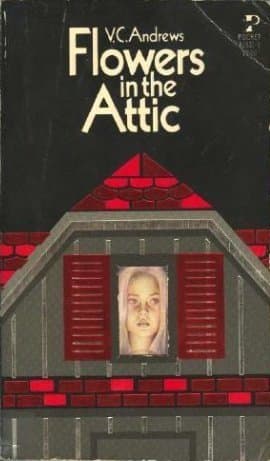
Synopsis
Covers the whole plot, including the ending.
- Difficulty
- Medium
- Pacing
- Moderate
- Mood
- Dark, Gothic, Suspenseful, Melancholy, Disturbing
- Read it if
- You enjoy dark, melodramatic family sagas with gothic undertones, psychological tension, and forbidden romance.
- Skip it if
- You are sensitive to themes of child abuse, incest, and extreme psychological distress, or prefer lighthearted stories.
Flowers in the Attic Plot Summary
Covers the whole plot, including the ending.
The Foxworth Legacy and Corrine's Betrayal
The story begins with the seemingly idyllic life of the Dollanganger family: Malcolm Foxworth, Corrine, and their four beautiful, blond children—Chris, Cathy, and the twins, Cory and Carrie. Their perfect world shatters when their father, Christopher Dollanganger Sr., dies in a car accident. Destitute, Corrine reveals a shocking secret: she is the estranged daughter of Malcolm Foxworth, a wealthy and powerful patriarch who disinherited her for marrying her half-uncle, Christopher Sr. Corrine convinces her children that they must hide in the attic of Foxworth Hall for a short period while she attempts to reconcile with her dying father and reclaim her inheritance. She promises it will be temporary, just until her father dies and she is reinstated in his will.
Life in the Attic: A Gilded Cage
Upon arrival at Foxworth Hall, the children are led by Corrine and her stern, fanatically religious mother, Olivia Foxworth, to a large, opulent attic room. Initially, the children are optimistic, believing their confinement will be brief. Corrine visits them frequently, bringing them gifts and promising their imminent release. However, Olivia Foxworth, a severe and unforgiving woman, sees the children as products of incest and sin. She subjects them to physical and emotional abuse, constantly reminding them of their sinful origins and the shame they bring to the family name. The attic, while spacious, becomes a gilded cage, its windows barred, and their only view of the outside world through a small skylight.
Years of Confinement and Growing Despair
As weeks turn into months, and then years, the children's initial hope transforms into despair. Corrine's visits become increasingly sporadic and brief, her promises of release hollow. Chris, the eldest, takes on a paternal role, trying to protect and educate his siblings using the books their mother occasionally provides. Cathy, the second eldest, grows into a beautiful but rebellious young woman, her spirit chafing under the confinement. The twins, Cory and Carrie, remain innocent but are increasingly frail and sickly. The children are forced to live in constant fear of Olivia's wrath, relying on each other for comfort and companionship, their only escape being their imaginations and the stories they tell.
Forbidden Love and Emerging Sexuality
Confined to the attic with no other human contact, Chris and Cathy's relationship evolves from sibling affection to a complex, incestuous love. Driven by loneliness, their burgeoning sexuality, and a desperate need for intimacy and connection, they find solace and forbidden comfort in each other's arms. This taboo relationship becomes a central, disturbing aspect of their confinement, a twisted mirroring of their parents' own incestuous union. They struggle with the morality of their actions, yet their desperate circumstances make them feel it is their only source of love and warmth in an otherwise cold and cruel world, further blurring the lines of what is right and wrong.
Cory's Decline and Tragic Death
The children's already grim existence takes a tragic turn when Cory, the younger of the twins, begins to suffer from a mysterious illness. He experiences severe stomach pains, vomiting, and extreme weakness. Despite Chris and Cathy's desperate attempts to care for him, and their pleas to Corrine and Olivia for medical help, Cory's condition rapidly deteriorates. He eventually succumbs to his illness, dying in the attic. His death shatters the remaining innocence of the children, particularly Carrie. Chris and Cathy become convinced that Cory was deliberately poisoned, attributing his death to the sugar donuts Olivia brought, which tasted bitter.
The Discovery of the Poison and Plans for Escape
After Cory's death, Chris and Cathy's suspicions solidify. They recall the bitter taste in the sugar donuts and begin to test their food. They discover that the sugar they are given is laced with arsenic. This horrifying realization confirms their grandmother's murderous intent and their mother's complicity. The children understand that they are being slowly poisoned to death. This revelation fuels their resolve to escape. Chris, using his ingenuity, begins to meticulously plan their escape, hoarding supplies and observing the routines of the house. Cathy, driven by anger and a thirst for revenge, becomes an active participant in the dangerous plan.
Corrine's Wedding and the Final Betrayal
During their confinement, the children learn through overheard conversations and glimpses through the skylight that Corrine has successfully charmed her dying father and inherited his vast fortune. She has also become engaged to Bart Winslow, a wealthy and influential man. Corrine's wedding day is a devastating blow to the children, particularly Cathy, who witnesses the lavish ceremony through the attic window. This event signifies Corrine's complete abandonment of her children and her embrace of a new, untainted life, leaving them to die in the attic. It strengthens their resolve to escape and expose her treachery.
The Escape from Foxworth Hall
After years of planning, Chris, Cathy, and Carrie finally put their escape plan into action. Chris manages to pick the lock of the attic door, and they cautiously navigate the labyrinthine passages of Foxworth Hall. They steal clothes and money from Corrine's room, careful to avoid detection by Olivia or the servants. The escape is fraught with tension and near-misses, but their desperation for freedom propels them forward. They manage to slip out of the mansion under the cover of darkness, leaving behind the only home they have known for years, along with the graves of their father and brother, and the chilling memories of their imprisonment.
Confrontation and Revelation
The escaped children make their way to a nearby town, where they clean themselves up and buy new clothes with the stolen money. Driven by a burning desire for justice and revenge, they crash Corrine's lavish wedding reception. Dressed in their new finery, they confront Corrine, exposing her heinous crimes—the confinement, the neglect, and the poisoning of her own children, which led to Cory's death. The revelation shocks the guests, including Corrine's new husband, Bart Winslow. Corrine, horrified and cornered, collapses in a state of denial and mental breakdown.
A New Beginning, Haunted by the Past
After the dramatic confrontation, Chris, Cathy, and Carrie flee the scene, their future uncertain. They adopt new identities, changing their last name to Sheffield, and attempt to build new lives. Chris pursues a career in medicine, fulfilling his desire to heal and protect. Cathy, driven by her passion for dance and her desire for recognition, dedicates herself to ballet, finding an outlet for her intense emotions. Carrie, still fragile and traumatized, struggles to adapt to the outside world. Despite their newfound freedom, the psychological scars of their attic confinement and the incestuous bond between Chris and Cathy remain, deeply influencing their choices and relationships, ensuring their past continues to dictate their future.
Principal Figures
Cathy Dollanganger
Protagonist
The spirited and rebellious middle child, yearning for freedom and love.
Cathy is the central narrator and protagonist, a beautiful, intelligent, and fiery girl who possesses a strong will and a vivid imagination. Initially optimistic, her spirit is gradually crushed and then hardened by the attic confinement. She develops a passion for dance, which becomes both an escape and a symbol of her desire for freedom and self-expression. Her relationship with Chris is complex and deeply unsettling, born out of their shared trauma and isolation. Cathy is driven by a profound need for love, attention, and ultimately, revenge against her mother.
Relationships: Chris Dollanganger (Brother, lover, protector); Corrine Foxworth (Mother, betrayer, object of hatred); Carrie Dollanganger (Younger sister, object of protection); Cory Dollanganger (Younger brother, victim); Olivia Foxworth (Grandmother, abuser)
Chris Dollanganger
Protagonist
The eldest brother, protective and responsible, who takes on a paternal role.
Chris is the eldest Dollanganger child, intelligent, responsible, and inherently protective. He quickly assumes the role of patriarch in the attic, attempting to care for, educate, and shield his younger siblings from their harsh reality. He possesses a strong moral compass but is forced to compromise it due to the extreme circumstances, leading to his incestuous relationship with Cathy. Chris is pragmatic and resourceful, always thinking of ways to survive and eventually escape. His desire is to provide for and protect his family, a goal he carries into his adult life.
Relationships: Cathy Dollanganger (Sister, lover, confidant); Corrine Foxworth (Mother, betrayer); Carrie Dollanganger (Younger sister, object of protection); Cory Dollanganger (Younger brother, object of protection); Olivia Foxworth (Grandmother, abuser)
Corrine Foxworth (Dollanganger)
Antagonist
The vain and selfish mother who sacrifices her children for wealth and social standing.
Corrine is the beautiful but utterly self-absorbed mother of the Dollanganger children. Driven by greed and a desperate desire to reclaim her inheritance and social status, she manipulates her children into hiding in the attic, promising them a short stay that turns into years of neglect and abuse. She is weak-willed, easily swayed by her mother's influence, and ultimately prioritizes her own comfort and image over the well-being of her children. Her visits become less frequent, and her love for them diminishes as her new life takes hold, culminating in her complicity in their slow poisoning.
Relationships: Chris Dollanganger (Son, victim); Cathy Dollanganger (Daughter, victim); Carrie Dollanganger (Daughter, victim); Cory Dollanganger (Son, victim); Olivia Foxworth (Mother, manipulator); Christopher Dollanganger Sr. (Husband, half-uncle, father of her children); Bart Winslow (Second husband)
Olivia Foxworth
Antagonist
The fanatically religious and cruel grandmother who abuses and attempts to murder the children.
Olivia Foxworth is Corrine's mother and the children's paternal grandmother. She is a deeply religious, cold, and sadistic woman who views the Dollanganger children as products of incest and sin, an abomination that has tainted the Foxworth name. She is the primary tormentor in the attic, subjecting the children to physical beatings, starvation, psychological abuse, and ultimately, slow poisoning. Her rigid moral code and twisted sense of justice lead her to believe she is cleansing her family line. She is the embodiment of oppressive, destructive religious fanaticism.
Relationships: Corrine Foxworth (Daughter, manipulated); Chris Dollanganger (Grandson, victim); Cathy Dollanganger (Granddaughter, victim); Carrie Dollanganger (Granddaughter, victim); Cory Dollanganger (Grandson, victim)
Cory Dollanganger
Supporting
One of the younger twins, innocent and frail, who tragically dies in the attic.
Cory is one of the younger Dollanganger twins, a sweet and innocent boy. He is particularly close to Carrie. Due to his young age and the harsh conditions of the attic, he is the most vulnerable of the children. His health deteriorates rapidly due to the arsenic poisoning in the sugar donuts, leading to his premature and agonizing death. Cory's death is a pivotal moment in the story, solidifying Chris and Cathy's resolve to escape and exposing the true extent of their mother and grandmother's cruelty.
Relationships: Carrie Dollanganger (Twin sister); Chris Dollanganger (Older brother, protector); Cathy Dollanganger (Older sister, protector)
Carrie Dollanganger
Supporting
The younger twin, fragile and deeply affected by the trauma of the attic.
Carrie is the other younger twin, a delicate and impressionable girl. She is deeply traumatized by the confinement, the abuse, and especially the death of her twin brother, Cory. She struggles significantly with her identity and mental well-being even after their escape, often exhibiting signs of severe emotional scarring. Carrie represents the ultimate fragility of innocence and the lasting damage inflicted by prolonged abuse. Her inability to fully recover highlights the profound psychological impact of their ordeal.
Relationships: Cory Dollanganger (Twin brother); Chris Dollanganger (Older brother, protector); Cathy Dollanganger (Older sister, protector)
Christopher Dollanganger Sr.
Mentioned
The children's father and Corrine's half-uncle, whose death sets the plot in motion.
Christopher Dollanganger Sr. is the father of the four children and Corrine's husband, who is also her half-uncle. He is described as a loving and kind man, a doctor, whose sudden death in a car accident leaves his family destitute. His marriage to Corrine is the reason for her disinheritance by Malcolm Foxworth, and thus the catalyst for the entire plot. Though he dies early in the book, his memory and the incestuous nature of his marriage cast a long shadow over the children's lives.
Relationships: Corrine Foxworth (Wife, half-niece); Chris Dollanganger (Son); Cathy Dollanganger (Daughter); Carrie Dollanganger (Daughter); Cory Dollanganger (Son)
Malcolm Foxworth
Mentioned
The wealthy and dying patriarch whose inheritance motivates Corrine's cruelty.
Malcolm Foxworth is Corrine's father and the children's grandfather. He is a powerful, wealthy, and autocratic man who disinherited Corrine for marrying her half-uncle. Though he is dying throughout the initial confinement, his vast fortune and the conditions of his will are the primary motivators for Corrine's actions. His strict moral code and control over his family's wealth indirectly lead to the children's suffering, as Corrine sacrifices them to regain his favor and inheritance. He never truly appears alive in the story, only as a looming presence.
Relationships: Corrine Foxworth (Daughter); Olivia Foxworth (Wife)
Themes & Insights
Incest and Forbidden Love
The theme of incest is central and deeply disturbing in 'Flowers in the Attic.' It manifests directly through Corrine's marriage to her half-uncle, Christopher Sr., which is the original 'sin' that leads to her disinheritance and the children's imprisonment. More poignantly, it develops between Chris and Cathy in the attic, born out of extreme isolation, emotional deprivation, and burgeoning sexuality. This forbidden relationship is portrayed as a desperate search for comfort and intimacy in an inhumane environment, blurring moral lines and highlighting the psychological damage inflicted upon them. It is a direct consequence of their unnatural confinement.
“We were a secret, and secrets are never good. We were a sin, and sins are never forgiven.”
Betrayal and Parental Neglect
Betrayal is the driving force of the narrative, primarily embodied by Corrine's actions. She betrays her children's trust, their safety, and their very lives for the sake of wealth and social status. Her initial 'loving' facade crumbles as she becomes increasingly absent and complicit in their abuse. This theme extends to Olivia, who betrays her role as a grandmother by inflicting physical and psychological torture. The children experience a profound sense of abandonment and betrayal, which shapes their worldview and fuels their desire for revenge and self-preservation. The ultimate betrayal is Corrine's role in the slow poisoning of her own children.
“She had stopped being our mother the moment she locked that door.”
Survival and Resilience
Despite the horrific circumstances, the Dollanganger children display remarkable resilience and a fierce will to survive. Chris takes on the role of protector and educator, while Cathy finds solace and strength in her creativity and dreams of dancing. They adapt to their cramped, dark world, creating their own routines, games, and stories to maintain their sanity and hope. Their determination to escape, even after enduring years of abuse and witnessing Cory's death, showcases an indomitable human spirit that refuses to be completely broken, even when faced with seemingly insurmountable odds.
“We had to be strong. Stronger than any children should ever have to be.”
The Corrupting Power of Greed and Class
The entire tragedy is set in motion by Corrine's insatiable greed and her desperate desire to regain the wealth and social standing she lost by marrying Christopher Sr. The Foxworth fortune is presented as a corrupting force, leading Corrine to abandon and systematically endanger her own children. The rigid class structure and the importance placed on inherited wealth by the Foxworth family are what drive Corrine to such extreme measures. This theme highlights how material desires can override natural maternal instincts and moral integrity, leading to monstrous acts in pursuit of an opulent lifestyle.
“Money, money, money. It was the only god my mother knew.”
Loss of Innocence and Trauma
The children's journey is a harrowing descent from childhood innocence into a world of profound trauma. They are robbed of their childhood, forced to confront the darkest aspects of human nature, and experience abuse, death, and forbidden love at an age when they should be carefree. The attic itself becomes a symbol of their lost innocence. Even after their escape, the trauma of their confinement leaves indelible psychological scars, particularly evident in Carrie's fragility and Chris and Cathy's inability to fully escape their past, demonstrating how early-life trauma can permanently alter an individual's psyche.
“We were children, but we had seen too much, known too much, felt too much.”
Plot Devices & Literary Techniques
The Attic as a Symbol
A confined space representing imprisonment, isolation, and the 'closeting' of family secrets.
The attic is not merely a setting but a powerful symbol. It represents the children's literal and metaphorical imprisonment, their isolation from the outside world, and the 'closeting' of the Foxworth family's dark secrets—incest, greed, and abuse. Its gradual decay mirrors the children's fading hope and physical deterioration. The contrast between its initial 'luxury' and its eventual squalor highlights the deceptive nature of their mother's promises and the slow erosion of their lives. It is a gilded cage that becomes a tomb for their innocence and Cory's life.
First-Person Narration (Cathy)
Provides an intimate, subjective, and emotionally charged perspective on the horrific events.
The story is primarily told from Cathy Dollanganger's first-person perspective. This narrative choice immerses the reader directly into her thoughts, fears, and emotional turmoil. It allows for an intimate portrayal of the psychological impact of the confinement, the development of her forbidden relationship with Chris, and her growing resentment and desire for revenge. Her subjective viewpoint creates a sense of claustrophobia and immediacy, making the reader feel trapped alongside her and deeply invested in her struggle for survival and justice. It also allows for a biased, yet compelling, account of her family members.
Poisoned Food (Doughnuts)
A literal and metaphorical device for betrayal, slow death, and the loss of trust.
The poisoned sugar doughnuts serve as a crucial plot device. Initially, they are a rare treat from Corrine, symbolizing a fleeting connection to the outside world and a mother's love. However, when they become the vehicle for arsenic poisoning, they transform into a symbol of ultimate betrayal and a slow, agonizing death. The discovery of the poison confirms the children's worst fears about their grandmother's malice and their mother's complicity, acting as a catalyst for their escape plan and shattering any remaining illusion of safety or maternal care.
The Skylight/Window
A symbol of limited hope, the outside world, and voyeurism.
The small skylight in the attic serves as the children's only connection to the outside world, offering glimpses of seasons changing, the family below, and eventually, Corrine's wedding. It represents a tantalizing but unattainable freedom, a constant reminder of what they are missing. It also functions as a voyeuristic device, allowing them to witness events in the 'real' world—Corrine's new life, the arrival of new furniture—which further underscores their abandonment and fuels their anger. The window offers a sliver of light, but also highlights the darkness of their confinement.
Flowers in the Attic Quotes
“Like everything else, we had to take what was given to us and bear it.”
“We were like flowers, forced to bloom too soon, and wither in the attic.”
“Sometimes I think we are all in the attic, looking out at the world through a dirty window.”
“Love shouldn't be a secret. If you keep it a secret, you're letting it die.”
“We were prisoners of our own flesh and blood.”
“The attic was our world, and the world was our attic.”
“I would rather be hated for who I am than loved for who I am not.”
“Hope is the worst of evils, for it prolongs the torments of man.”
“We were children of sin, and sin was our inheritance.”
“The heart has its reasons which reason knows nothing of.”
“In the attic, we learned that love and hate are two sides of the same coin.”
“We were ghosts in our own home, haunting the attic where we were meant to be forgotten.”
“The only way to deal with an unfree world is to become so absolutely free that your very existence is an act of rebellion.”
“We were taught to fear the world, but the real monster was in the house with us.”
Quiz
10 questions on the plot and the characters. Each answer comes with a short explanation.
Question 1
What is the primary reason the children are hidden in the attic?
- To protect them from their abusive father
- To secure their mother's inheritance from her dying father
- Because the grandmother believes they are cursed
- To punish them for misbehaving
Show answer
B. To secure their mother's inheritance from her dying father The children's mother, Corrine, hides them in the attic to keep them a secret from her dying father, who would disinherit her if he knew she had children from her marriage, which he disapproved of. This is central to the plot's motivation.
Question 2
Who is the narrator of 'Flowers in the Attic'?
- Chris Dollanganger
- Cathy Dollanganger
- Corrine Foxworth
- The grandmother
Show answer
B. Cathy Dollanganger The story is told from the first-person perspective of Cathy Dollanganger, the second-oldest child, who recounts the events of their imprisonment and its aftermath.
Question 3
What are the names of the twin children hidden in the attic?
- Carrie and Cory
- Chris and Cathy
- Corrine and Christopher
- Catherine and Cory
Show answer
A. Carrie and Cory The twins are Carrie and Cory Dollanganger, the youngest of the four children. Their vulnerability and suffering are key elements in the story's emotional impact.
Question 4
How does the grandmother primarily punish the children in the attic?
- By locking them in a closet
- By whipping them with a switch
- By denying them food for days
- By forcing them to do hard labor
Show answer
B. By whipping them with a switch The grandmother, Olivia Foxworth, often whips the children with a switch as punishment, reflecting her strict, religious, and abusive nature, which adds to their torment.
Question 5
What substance does the grandmother add to the powdered sugar donuts given to the children?
- Arsenic
- Rat poison
- Sleeping pills
- Laxatives
Show answer
A. Arsenic The grandmother poisons the powdered sugar donuts with arsenic in an attempt to kill the children slowly, as part of her belief that they are evil and must be destroyed to protect the family's reputation.
Question 6
Which theme is most prominently explored through the children's isolation in the attic?
- The importance of family loyalty
- The corruption of innocence by adult greed and neglect
- The power of religious faith to overcome adversity
- The benefits of homeschooling
Show answer
B. The corruption of innocence by adult greed and neglect The children's imprisonment highlights how adult desires, particularly Corrine's greed for inheritance and the grandmother's religious fanaticism, corrupt their innocence and lead to their physical and emotional suffering.
Question 7
What event leads to the children's initial discovery of the attic's secret room?
- They hear noises coming from behind a wall
- Chris finds a hidden key in a desk
- Cathy accidentally knocks over a bookshelf
- The grandmother shows it to them as a punishment
Show answer
B. Chris finds a hidden key in a desk Chris discovers a hidden key in a desk in the attic, which unlocks a door to a secret room containing treasures and information about the family, symbolizing hope and escape from their confinement.
Question 8
How does Cory Dollanganger die in the attic?
- He falls from a high window while trying to escape
- He is beaten to death by the grandmother
- He succumbs to illness exacerbated by arsenic poisoning
- He starves to death due to lack of food
Show answer
C. He succumbs to illness exacerbated by arsenic poisoning Cory dies from a prolonged illness, worsened by the arsenic poisoning from the donuts. His death is a tragic result of the neglect and abuse the children endure, marking a turning point in the story.
Question 9
What is the significance of the 'flowers in the attic' metaphor in the book?
- It represents the children's beauty and innocence being hidden and withering away
- It refers to actual flowers the children grow to pass the time
- It symbolizes the grandmother's love for gardening
- It is a code name the children use for their escape plan
Show answer
A. It represents the children's beauty and innocence being hidden and withering away The metaphor compares the children to flowers kept in the dark attic, where their potential and innocence are stifled and destroyed by their confinement and the adults' actions, emphasizing themes of lost childhood and corruption.
Question 10
After their escape, what do Cathy and Chris plan to do regarding their mother and grandmother?
- Forgive them and move on with their lives
- Seek legal justice and expose the abuse
- Take revenge and claim the inheritance for themselves
- Cut all ties and never speak of the attic again
Show answer
C. Take revenge and claim the inheritance for themselves Cathy and Chris vow to take revenge on their mother and grandmother for the suffering they endured, aiming to claim the Foxworth fortune that was the root cause of their imprisonment, setting up the sequel's plot.
Flowers in the Attic FAQ
What is 'Flowers in the Attic' about?
The novel follows the four Dollanganger siblings—Cathy, Chris, and twins Carrie and Cory—who are locked in their wealthy grandparents' attic by their mother, Corrine, after their father's death. Corrine hides them to inherit her dying father's fortune, but the children endure years of abuse, starvation, and psychological torment from their grandmother while their mother gradually abandons them.
Why should I read 'Flowers in the Attic'?
It's a gripping psychological thriller that explores themes of family betrayal, survival, and forbidden love through the lens of gothic horror. The novel's shocking plot twists, complex character dynamics, and exploration of trauma make it a compelling and controversial classic in young adult fiction.
What is the background/setting of 'Flowers in the Attic'?
Set primarily in the 1950s, the story begins in Pennsylvania before moving to the Foxworth Hall mansion in Virginia. Most of the plot unfolds in the isolated, dusty attic of the mansion, where the children are confined for over three years, creating a claustrophobic and oppressive atmosphere.
What are the most memorable quotes from 'Flowers in the Attic'?
Key quotes include Cathy's reflection, 'Sometimes I think that the whole world is an attic, and we are all locked in, struggling to get out,' and the grandmother's chilling warning, 'The Devil works in dark and devious ways. Sometimes he sends children to do his work.' These lines capture the novel's themes of entrapment and corruption.
What writing style does V.C. Andrews use in 'Flowers in the Attic'?
Andrews employs a first-person narrative from Cathy's perspective, blending gothic horror with melodramatic prose. The style is descriptive and emotional, emphasizing the children's suffering and the eerie atmosphere of the attic, while also incorporating elements of romance and mystery.
What minor details add significant meaning to 'Flowers in the Attic'?
The attic's barred windows symbolize the children's imprisonment, while the 'flowers' (the children) withering in the 'attic' reflect their lost innocence. Small acts, like Cathy and Chris secretly educating the twins with books, highlight their resilience and attempt to maintain normalcy amidst horror.
What are some subtle foreshadowing moments in 'Flowers in the Attic'?
Early mentions of the grandmother's religious fanaticism and her belief that the children are 'devil's spawn' foreshadow her abusive actions. Corrine's gradual distancing from the children and her focus on expensive gifts hint at her eventual betrayal and prioritization of the inheritance over their well-being.
What unexpected character connections exist in 'Flowers in the Attic'?
It's revealed that Corrine and the children's father were half-uncle and niece, making the siblings products of incest. This hidden familial taboo adds a layer of horror to their confinement and explains the grandmother's extreme hatred and desire to 'destroy' them.
What are unspoken character motivations in 'Flowers in the Attic'?
Corrine is driven by greed and a desire to reclaim her wealthy lifestyle, masking it as concern for her children's future. The grandmother's abuse stems from her shame over the incestuous relationship that produced the children, and her religious zealotry justifies her cruelty as 'purifying' sin.
What psychological complexities do characters exhibit in 'Flowers in the Attic'?
Cathy evolves from an innocent girl to a vengeful survivor, grappling with trauma and forbidden feelings for Chris. Chris represses his desires through intellectual pursuits, while the twins show signs of severe developmental delays due to isolation. Corrine displays narcissistic traits, rationalizing her neglect as necessity.
What are the major emotional turning points in 'Flowers in the Attic'?
Key moments include Cory's death from poisoning, which shatters the family's hope; Cathy and Chris's first sexual encounter, marking their loss of innocence; and Corrine's final abandonment when she remarries, leaving the children to fend for themselves and solidifying their betrayal.
How do relationship dynamics evolve in 'Flowers in the Attic'?
Cathy and Chris's bond shifts from sibling protectiveness to a romantic and sexual relationship, born of isolation and trauma. Corrine transforms from a loving mother to a distant manipulator, while the grandmother's hostility escalates from neglect to active harm. The twins become increasingly dependent and fragile as their confinement worsens.
Which parts of 'Flowers in the Attic' remain ambiguous or open-ended?
The exact cause of Cory's death is ambiguous—implied to be arsenic poisoning from powdered doughnuts, but left unclear if it was accidental or intentional. The novel also leaves open whether Cathy and Chris's relationship is a product of trauma or genuine love, and what their future holds after escaping.
What are controversial scenes or decisions in 'Flowers in the Attic'?
The incestuous relationship between Cathy and Chris is highly controversial, as is Corrine's decision to prioritize inheritance over her children's safety. The graphic depictions of child abuse, starvation, and the grandmother's religious extremism have sparked debates about the novel's appropriateness for young audiences.
'Flowers in the Attic' ending explained: how it ends & what it means
The novel ends with Cathy, Chris, and Carrie escaping after Cory's death and their mother's betrayal. They burn their attic belongings and vow revenge, symbolizing their transition from victims to survivors. The ending suggests a cycle of trauma and retribution, as they plan to expose Corrine's crimes and reclaim their stolen lives.
About the author
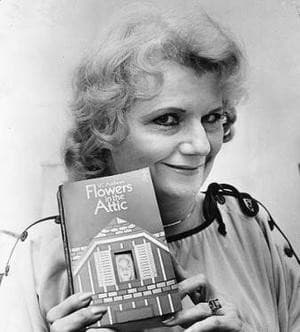
V.C. Andrews was an American author known for her gothic and family saga novels. She gained popularity with works such as "Flowers in the Attic," "Petals on the Wind," "If There Be Thorns," "Seeds of Yesterday," "Garden of Shadows," and "My Sweet Audrina," which often explore themes of betrayal, family secrets, and psychological drama. Her writing has captivated readers since the late 20th century.
Similar books
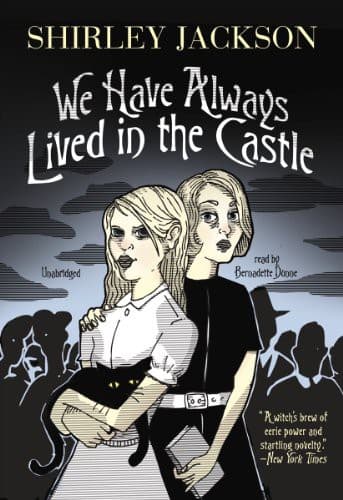
- We Have Always Lived in the Castle
Shirley Jackson
4.0 (118k) average on GoodreadsThrillerExplores themes of isolation, family secrets, and psychological unease within a confined setting.
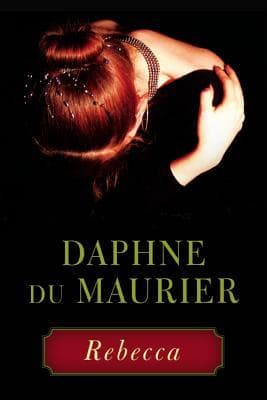
- Rebecca
Daphne du Maurier
4.2 (450k) average on GoodreadsThrillerFeatures a gothic atmosphere, a grand estate with dark secrets, and a sense of impending doom.
- The Haunting of Hill House
Shirley Jackson
3.8 (162k) average on GoodreadsThrillerFocuses on psychological horror and characters trapped in a sinister environment.
- Angels & Demons
Dan Brown
3.9 (2.7M) average on GoodreadsThrillerA Harvard symbologist races through Rome's ancient sites, deciphering cryptic clues to unmask the Illuminati and stop a vengeful plot to destroy the Vatican with a stolen antimatter weapon.
- Gone Girl
Gillian Flynn
4.1 (2.3M) average on GoodreadsThrillerA wife's sudden disappearance on her fifth anniversary reveals a web of lies and psychological warfare, exposing the secrets within a seemingly perfect marriage.
- The Girl on the Train
Paula Hawkins
3.9 (2.1M) average on GoodreadsThrillerA woman’s fascination with a seemingly perfect couple she watches from her daily train commute leads her into a dark investigation when she witnesses something that shatters their idyllic image.




Enjoyed the summary?
A summary gives you the shape of the book. The book itself has the detail, the examples and the voice.
Find Flowers in the Attic on AmazonAs an Amazon Associate, BookBrief earns from qualifying purchases. How we're funded