

Synopsis
Covers the whole plot, including the ending.
- Difficulty
- Medium
- Pacing
- Moderate
- Mood
- Atmospheric, Suspenseful, Dark, Romantic, Brooding
- Read it if
- You enjoy gothic atmospheres, psychological suspense, and stories where a house itself feels like a character. Perfect for fans of classic romantic thrillers with a dark edge.
- Skip it if
- You prefer clear-cut heroes and villains, or dislike ambiguous endings and stories heavily reliant on internal monologue and psychological tension over explicit action.
Rebecca Plot Summary
Covers the whole plot, including the ending.
A Chance Encounter in Monte Carlo
The story begins in Monte Carlo, where the young, unnamed narrator works as a paid companion to the wealthy Mrs. Van Hopper. She often meets Maxim de Winter, a rich English aristocrat recently widowed. Maxim, still mourning his beautiful first wife, Rebecca, initially seems distant. However, a connection slowly forms between him and the shy narrator. Mrs. Van Hopper, noticing their growing affection, plans to leave for America and take the narrator with her. This prompts Maxim to propose marriage to the narrator, an offer she accepts, feeling overwhelmed.
Arrival at Manderley
Maxim and the new Mrs. de Winter arrive at Manderley, Maxim's estate in Cornwall. The narrator is immediately struck by the house's grandeur and history, but also by an oppressive feeling. She meets the housekeeper, Mrs. Danvers, who had been devoted to Rebecca. Mrs. Danvers's cold manner and constant comparisons to Rebecca make the narrator feel inadequate. The house itself, with many untouched rooms and items belonging to Rebecca, seems to be a shrine to the former mistress, making the narrator feel like an intruder.
The Lingering Presence of Rebecca
The narrator's first attempts to settle into her role as mistress of Manderley are constantly blocked by Rebecca's memory. Mrs. Danvers quietly undermines her confidence, suggesting the narrator can never match Rebecca's beauty, charm, or skill. Everything at Manderley, from household routines to social gatherings, seems guided by Rebecca's past choices. The narrator feels increasingly alone and inadequate, convinced Maxim still loves Rebecca and regrets marrying her. She becomes fixated on Rebecca, always comparing herself and feeling she falls short.
The Costume Ball Incident
Maxim decides to bring back the annual Manderley costume ball, a tradition Rebecca loved. The narrator, wanting to please Maxim, asks Mrs. Danvers for costume advice. Mrs. Danvers slyly suggests she wear a replica of a white dress from a portrait of one of Maxim's ancestors, assuring her it would be a delightful surprise. However, when the narrator appears at the ball, Maxim is furious. Rebecca had worn that exact dress to her last Manderley ball, making the narrator's appearance a shocking imitation. This public humiliation further isolates the narrator and confirms her belief that she can never escape Rebecca's shadow.
Mrs. Danvers's Manipulation and Suicidal Thoughts
After the costume ball disaster, the narrator retreats to her room, deeply upset. Mrs. Danvers, seeing her chance, enters and begins a chilling speech, praising Rebecca's beauty, intelligence, and spirit, and stressing the narrator's inferiority. She shows the narrator Rebecca's untouched bedroom, filled with her clothes and personal items, making Rebecca's presence almost real. Mrs. Danvers then subtly urges the narrator to commit suicide by jumping from the window, suggesting it would be an escape from her misery. The narrator is about to give in when a sudden noise from the beach below interrupts them.
The Discovery of Rebecca's Boat
The noise below is from a ship running aground in the cove. During the salvage operation, a diver finds the wreck of Rebecca's boat, the 'Je Reviens,' which Maxim had said was found empty after her supposed drowning. Inside the boat, to everyone's shock, is Rebecca's body. This discovery contradicts the official story of her death, which had been ruled an accidental drowning, and requires a new inquest. Maxim is clearly disturbed, and the narrator senses a deep change in him, hinting at a hidden truth.
Maxim's Confession
Faced with Rebecca's body, Maxim finally tells the narrator the truth. He reveals that his marriage to Rebecca was a lie; she was a cruel, manipulative, and promiscuous woman who openly boasted of her affairs and tormented him. He admits he hated her and that her death was not an accident. Maxim explains that on the night she died, Rebecca told him she was pregnant with another man's child and would raise it as his heir, knowing it would drive him mad. In a rage, he shot her and then sank her body in the boat, making it look like an accidental drowning.
The Second Inquest
At the second inquest, Maxim sticks to his story that Rebecca's death was an accident, and the narrator supports him, now understanding his pain. However, a cousin of Rebecca's, Jack Favell, a crude character, appears and testifies that Rebecca was supposed to meet him on the night she died. He implies that Maxim murdered her and tries to blackmail him. Favell is convinced Rebecca would never have committed suicide and suspects foul play, blaming Maxim. The situation becomes dangerous for Maxim as evidence against him grows, despite his efforts to maintain the accidental drowning story.
Seeking Answers from Dr. Baker
Maxim and the narrator, wanting to clear his name and expose Favell's lies, travel to London to see Dr. Baker, a specialist Rebecca had secretly consulted before her death. They hope to find information that might explain Rebecca's behavior or her death. Dr. Baker's records show that Rebecca had been diagnosed with inoperable cancer and had only months to live. This information changes everything, suggesting a reason for Rebecca's actions on the night she died.
The Truth Revealed: Rebecca's Suicide
The discovery of Rebecca's terminal illness greatly changes how her death is understood. Maxim realizes that Rebecca, knowing she was dying, likely provoked him into killing her. She wanted a dramatic, violent end rather than a slow decline from cancer, and possibly aimed to frame him. The new evidence, presented to the authorities, suggests Rebecca's death was either an act by Maxim, provoked by her own suicidal intent, or a cleverly planned suicide by provoking him. The authorities rule her death a suicide, clearing Maxim of murder, though the ambiguity of the moment remains.
Manderley Aflame
As Maxim and the narrator drive back to Manderley, relieved but exhausted, they see a strange red glow in the distance. They realize Manderley is on fire. It is implied that Mrs. Danvers, learning of Maxim's exoneration and the final defeat of Rebecca's memory, set the house ablaze out of loyalty to her former mistress. The grand estate, which had been a symbol of Rebecca's power and a prison for the narrator, is completely destroyed. The fire marks a clear end to Rebecca's shadow and the old life at Manderley.
A New Beginning, Far from Manderley
The novel ends with Maxim and the narrator living a traveling life, never settling. Manderley is gone, and with it, Rebecca's presence. However, the narrator still carries the emotional scars of her experiences, and the memory of Manderley and Rebecca, though no longer a physical threat, remains a part of her. They are free from the past, but not entirely. The narrator finds quiet contentment with Maxim, but the grandeur and terror of Manderley, and the woman who ruled it, still haunt her dreams.
Rebecca Characters
The Narrator (Second Mrs. de Winter)
Protagonist
A shy, insecure young woman who marries Maxim de Winter.
Initially a naive and timid orphan working as a paid companion, the narrator is swept into a world of wealth and privilege she's ill-equipped for. She suffers from profound insecurity, constantly comparing herself to the flawless memory of Rebecca and feeling inadequate. Her lack of a first name emphasizes her initial lack of identity, existing only in relation to others. Her journey is one of self-discovery, from a girl terrified of her husband's first wife to a woman who finds strength and asserts her place.
Relationships: Maxim de Winter (Husband, initially a distant figure who becomes her confidant and partner.); Rebecca de Winter (Her predecessor, a constant, intimidating memory and rival for Maxim's affection.); Mrs. Danvers (Antagonistic housekeeper, deeply loyal to Rebecca and hostile to the narrator.)
Maxim de Winter
Protagonist/Love Interest
The wealthy, brooding owner of Manderley, haunted by his past.
Maxim is a charismatic yet deeply troubled aristocrat. He appears charming and dashing in Monte Carlo, but at Manderley, his moods become volatile and unpredictable, often shadowed by the memory of Rebecca. He carries a heavy secret, which causes him immense psychological torment. Despite his outward sophistication, he is emotionally scarred by his first marriage and struggles to connect truly with his new wife until he reveals his truth. He values Manderley deeply but is ultimately willing to sacrifice it for his new life.
Relationships: The Narrator (Wife, initially a naive companion who becomes his emotional anchor.); Rebecca de Winter (Deceased first wife, a source of profound hatred and a dark secret.); Mrs. Danvers (Housekeeper, a relic of Rebecca's reign whom he tolerates out of tradition.)
Rebecca de Winter
Antagonist/Eponymous character
Maxim's beautiful, charismatic, and manipulative first wife, deceased but ever-present.
Rebecca is the eponymous character, though she is dead before the story begins. She is presented through the memories and perceptions of others, particularly Mrs. Danvers, as a woman of unparalleled beauty, charm, intelligence, and social grace. However, Maxim's confession reveals her true nature: cruel, promiscuous, and utterly without conscience. She exerted immense power over Manderley and those around her, and her lingering presence, fueled by Mrs. Danvers, is the primary source of conflict for the narrator. She is a symbol of perfection and destruction.
Relationships: Maxim de Winter (Husband, whom she tormented and despised.); The Narrator (Her successor, whom she indirectly torments from beyond the grave.); Mrs. Danvers (Her devoted, fanatical housekeeper and confidante.); Jack Favell (Her cousin and lover.)
Mrs. Danvers
Antagonist
The formidable, obsessive housekeeper of Manderley, devoted to Rebecca.
Mrs. Danvers is the chilling and fanatically loyal housekeeper of Manderley. She idolized Rebecca, seeing her as the epitome of perfection, and resents the new Mrs. de Winter as an inferior interloper. Her gaunt appearance and silent movements make her a terrifying presence. She actively works to undermine the narrator's confidence and happiness, subtly and overtly reminding her of Rebecca's superiority. Her loyalty borders on obsession, culminating in her attempt to drive the narrator to suicide and her probable arson of Manderley.
Relationships: Rebecca de Winter (Her idol and the object of her fervent devotion.); The Narrator (Her enemy, whom she seeks to displace and destroy.); Maxim de Winter (Her employer, whom she despises for marrying the narrator and for his role in Rebecca's death.)
Frank Crawley
Supporting
The kind and loyal estate manager of Manderley.
Frank Crawley is the honest, reliable, and kind estate manager at Manderley. He is one of the few people who treats the narrator with genuine warmth and respect, offering her comfort and support amidst the hostile atmosphere. He provides a grounded, practical perspective and is one of the narrator's few allies, helping her navigate the complexities of Manderley life. He is a man of integrity and a steadying presence.
Relationships: The Narrator (A supportive and friendly ally.); Maxim de Winter (His employer and friend.); Rebecca de Winter (He held her in less esteem than others, sensing her true nature.)
Jack Favell
Supporting/Antagonist
Rebecca's unscrupulous cousin and former lover.
Jack Favell is Rebecca's coarse, shifty, and opportunistic cousin. He was one of Rebecca's many lovers and attempts to use his knowledge of her affairs to blackmail Maxim after Rebecca's body is found. He represents the unsavory aspects of Rebecca's life and her capacity for illicit relationships. His presence adds a layer of danger and suspicion to the investigation into Rebecca's death, though his motives are primarily self-serving.
Relationships: Rebecca de Winter (Cousin and lover.); Maxim de Winter (Antagonist, whom he attempts to blackmail.); The Narrator (Another person he attempts to intimidate.)
Mrs. Van Hopper
Supporting
The wealthy, snobbish American employer of the narrator in Monte Carlo.
Mrs. Van Hopper is a boorish, socially ambitious American woman who employs the narrator as her paid companion at the beginning of the novel. She is characterized by her vulgarity, snobbery, and constant need to be at the center of attention. Her decision to leave Monte Carlo and take the narrator with her inadvertently precipitates Maxim's proposal, making her a catalyst for the main plot. She serves as a stark contrast to the refined world of Manderley.
Relationships: The Narrator (Employer, treating her more as a servant and property than a companion.); Maxim de Winter (An object of her social curiosity and gossip.)
Beatrice Lacy
Supporting
Maxim's kind but somewhat blunt sister.
Beatrice is Maxim's older sister, a warm-hearted but sometimes tactless woman. She genuinely tries to be welcoming to the new Mrs. de Winter, though her well-meaning comparisons to Rebecca often inadvertently make the narrator feel worse. She and her husband, Giles, are a part of Maxim's social circle and represent a more traditional, if slightly oblivious, aspect of the English gentry.
Relationships: Maxim de Winter (Sister.); The Narrator (Sister-in-law, whom she tries to befriend.); Rebecca de Winter (Sister-in-law, whom she disliked despite her outward charm.)
Colonel Julyan
Supporting
The local magistrate investigating Rebecca's death.
Colonel Julyan is the local magistrate who conducts both the initial inquest into Rebecca's supposed drowning and the second inquest when her body is discovered. He is a fair but persistent investigator, determined to uncover the truth. He initially accepts the accidental drowning verdict but reopens the case with the discovery of the body. He represents the law and order that eventually unravels the mystery of Rebecca's death.
Relationships: Maxim de Winter (Subject of his investigation.); The Narrator (Witness in the investigation.)
Rebecca Themes
The Haunting Power of the Past
The past, represented by Rebecca, controls the present at Manderley. Rebecca's memory, made stronger by Mrs. Danvers and the untouched house, stops the narrator from finding her own identity or happiness. Every room, object, and social expectation seems set by Rebecca's choices. This theme shows in the narrator's constant feeling of inadequacy and her fixation on Rebecca's perceived perfection, as well as Maxim's deep emotional scars from his first marriage, which keep him from truly connecting with his new wife until the truth comes out. The fire at Manderley is a literal burning away of this oppressive past.
“Last night I dreamt I went to Manderley again.”
Identity and Insecurity
The narrator's fight to find her own identity is central to the novel. She remains unnamed, showing her initial lack of self and her existence only in relation to Maxim and Rebecca. Her deep insecurity is constantly made worse by Mrs. Danvers's comparisons to Rebecca, making her feel like an unworthy imposter. She tries to copy Rebecca, like with the costume ball, only to fail. Her journey is about shedding this borrowed identity and slowly building her own, especially after Maxim's confession and her decision to stand by him.
“I was like a guest in someone else's house, someone who had gone away but might return at any moment.”
Appearance vs. Reality
The novel relies on a main deception: the perfect, beloved Rebecca is, in reality, a cruel and manipulative woman. Manderley itself, appearing as an ideal English estate, holds dark secrets. Maxim, first presented as a grieving widower, hides a terrible truth. This theme explores how outward appearances can hide deep inner turmoil. The narrator first judges everything by its surface, leading to her fear and insecurity, but eventually learns to see beyond the facade, discovering Rebecca's true nature and Maxim's suffering. The revealing of Rebecca's character is the core of this theme.
“It was not Rebecca's beauty that had made him hate her, but her soul.”
Love and Obsession
The novel explores different kinds of love and obsession. Mrs. Danvers's devotion to Rebecca borders on a pathological obsession, driving her to extreme actions like trying to make the narrator commit suicide and burning Manderley. Maxim's 'love' for Rebecca turned into deep hatred, a twisted emotional bond that continued even after her death. The narrator's love for Maxim is initially mixed with admiration and insecurity, but grows into a deeper, more realistic partnership formed through shared trauma. The story questions the nature of love when it becomes possessive, destructive, or based on false ideals.
“I suppose I loved Rebecca. I was obsessed by her, in a way.”
Social Class and Expectations
The large social gap between the unnamed narrator, a paid companion, and Maxim, an aristocrat, causes her constant insecurity. She feels out of place in Manderley's grand world and struggles to meet the expectations of a mistress of such a household. Her lack of social graces and experience contrasts with Rebecca's easy command. The novel highlights the strict class structure of early 20th-century England and the pressures it places on individuals, especially women, to fit into specific roles. The narrator's journey involves navigating and eventually overcoming these societal expectations.
“I was conscious of my own inferiority, of my shyness, my youngness.”
Plot Devices & Literary Techniques
The Unnamed Narrator
Emphasizes insecurity and allows readers to project onto her.
The narrator's lack of a first name is a powerful device. It highlights her initial lack of identity and self-worth, as she exists primarily in relation to others – first Mrs. Van Hopper, then Maxim, and most significantly, Rebecca. This anonymity allows the reader to more easily empathize with her feelings of inadequacy and her struggle to carve out her own space. It also underscores Rebecca's overwhelming presence, as Rebecca's name is constantly invoked, making the narrator's namelessness even more pronounced.
Manderley as a Character
The estate acts as a living, breathing entity, embodying Rebecca's lingering presence.
Manderley is more than just a setting; it is a character in itself. Its grandeur, history, and the way it is maintained (or not maintained, in certain rooms) reflect the psychological state of its inhabitants and the enduring power of Rebecca. The house feels alive, oppressive, and serves as a constant reminder of Rebecca's reign. Its destruction by fire at the end symbolizes the final obliteration of Rebecca's physical and psychological hold, clearing the way for the narrator and Maxim to forge a new life, free from its shadows.
The Motif of Dreams
Foreshadows the narrative's themes and Rebecca's enduring psychological impact.
The novel famously opens with the line, 'Last night I dreamt I went to Manderley again,' immediately establishing the enduring psychological impact of the estate and Rebecca. Dreams often serve as a subconscious reflection of the narrator's fears and anxieties, particularly her feeling of being an intruder and her obsession with Rebecca. The recurring imagery of Manderley in her dreams signifies that even after its physical destruction, the emotional scars and memories of her experiences will forever be a part of her, suggesting that true escape from the past is never absolute.
Gothic Atmosphere
Creates suspense, dread, and a sense of the supernatural.
Du Maurier employs classic Gothic elements to build suspense and dread. The isolated, decaying mansion (Manderley), the brooding, mysterious aristocrat (Maxim), the vulnerable heroine (the narrator), and the seemingly supernatural presence of the deceased first wife (Rebecca), all contribute to a chilling atmosphere. The dark secrets, Mrs. Danvers's menacing behavior, and the feeling of being haunted create a pervasive sense of unease, blurring the lines between psychological torment and genuine supernatural influence, keeping the reader on edge throughout the story.
Rebecca Quotes
“Last night I dreamt I went to Manderley again.”
“A husband is not a lover, and I have never wanted a lover. I have always wanted a husband. Someone to be with always, someone to talk to, someone to share my life with.”
“I suppose sooner or later in the life of everyone comes the moment of reckoning.”
“We can't go on living in the past, Maxim. It's not right. It's not healthy.”
“Men are simpler than you imagine, my dear. They can resist a pretty face and a good figure, but they cannot resist a woman who is a good listener.”
“I wondered how many people there were in the world who suffered, and suffered in silence.”
“There was a curious sense of expectation, as if something was about to happen, something exciting and yet a little frightening.”
“I had a sudden vision of myself, not as I was, but as I might be, if I let myself go, if I allowed the atmosphere of Manderley to engulf me.”
“Happiness is not a possession to be prized, it is a quality of thought, a state of mind.”
“I am Mrs. de Winter now, I thought, I am Maxim's wife. And I must behave as such.”
“No, I am not afraid. I am not afraid of anything. I have been afraid too long.”
“She was not beautiful, not in the accepted sense, but she had a quality, a radiance, that drew all eyes to her.”
“The past is a foreign country; they do things differently there.”
“It was not a question of love any longer, but of possession.”
“There was no going back. We had to go on, whatever the cost.”
Quiz
10 questions on the plot and the characters. Each answer comes with a short explanation.
Question 1
Where does the narrator first meet Maxim de Winter?
- At a ball in London
- In Monte Carlo, while working as a lady's maid
- At Manderley, during a social visit
- On a cruise ship in the Mediterranean
Show answer
B. In Monte Carlo, while working as a lady's maid The narrator is working as a lady's companion to Mrs. Van Hopper in Monte Carlo when she first encounters Maxim de Winter.
Question 2
What is the name of Maxim de Winter's country estate?
- Blackwell Manor
- Thornfield Hall
- Manderley
- Winterfell
Show answer
C. Manderley The iconic estate, central to the novel's atmosphere and plot, is Manderley.
Question 3
What is the second Mrs. de Winter's given name?
- Rebecca
- She is never named
- Catherine
- Jane
Show answer
B. She is never named The narrator's name is famously never revealed in the novel, emphasizing her lack of identity compared to the titular Rebecca.
Question 4
Who is Mrs. Danvers?
- Maxim's sister
- The housekeeper at Manderley
- A childhood friend of Rebecca's
- The local village gossip
Show answer
B. The housekeeper at Manderley Mrs. Danvers is the formidable housekeeper at Manderley, deeply devoted to the late Rebecca and hostile towards the new Mrs. de Winter.
Question 5
What event does the narrator inadvertently recreate, causing distress at Manderley?
- A garden party
- A hunting expedition
- A masquerade ball in Rebecca's old costume
- A Christmas dinner
Show answer
C. A masquerade ball in Rebecca's old costume Mrs. Danvers manipulates the narrator into wearing a replica of Rebecca's costume from a previous masquerade ball, much to Maxim's horror.
Question 6
What is the ultimate fate of Manderley?
- It is sold to a new owner
- It is inherited by a distant relative
- It burns to the ground
- It is turned into a museum
Show answer
C. It burns to the ground Manderley is destroyed by fire, presumably set by Mrs. Danvers, at the end of the novel.
Question 7
What does Maxim initially tell the narrator about Rebecca's death?
- She died in a riding accident
- She committed suicide
- She was murdered by a poacher
- She ran away with another man
Show answer
A. She died in a riding accident Maxim initially maintains the story that Rebecca died in a boating accident, found drowned, which was ruled a suicide.
Question 8
What is revealed to be the true cause of Rebecca's death?
- She drowned accidentally during a storm
- She was shot by Maxim
- She died of a sudden illness while at sea
- She was killed by an unknown assailant
Show answer
B. She was shot by Maxim Maxim confesses that he shot Rebecca in her boathouse after she provoked him, revealing her true manipulative and cruel nature.
Question 9
What is the significance of the recurring dream of Manderley at the beginning and end of the novel?
- It symbolizes the narrator's desire to return to Manderley
- It represents the lingering power and memory of the past, particularly Rebecca's influence
- It foreshadows a future rebuilding of the estate
- It is a simple literary device with no deeper meaning
Show answer
B. It represents the lingering power and memory of the past, particularly Rebecca's influence The dream sequences highlight the enduring psychological hold Manderley and Rebecca's memory have on the narrator, even after the house is gone.
Question 10
What crucial piece of information does Dr. Baker reveal about Rebecca's health?
- She was pregnant at the time of her death
- She had a terminal illness and only months to live
- She was suffering from severe depression
- She had a secret heart condition
Show answer
B. She had a terminal illness and only months to live Dr. Baker's testimony reveals that Rebecca had an inoperable cancer, which changes the perception of Maxim's actions and Rebecca's motives.
Rebecca FAQ
What is the central conflict the unnamed narrator faces upon arriving at Manderley?
The narrator's central conflict is the overwhelming presence and idealized memory of Maxim's first wife, Rebecca. She feels constantly compared to Rebecca, struggling to establish her own identity and place within Manderley, which seems to be perpetually haunted by the former mistress's ghost.
Who is Mrs. Danvers, and what is her role in the narrator's struggles?
Mrs. Danvers is the austere, fiercely loyal housekeeper of Manderley who was devoted to Rebecca. She actively undermines the narrator's confidence, subtly and overtly comparing her unfavorably to Rebecca, and manipulates situations to make the narrator feel inadequate and unwelcome.
How does Maxim de Winter's behavior change once he and the narrator are at Manderley?
Maxim becomes distant, moody, and often irritable at Manderley, a stark contrast to his charming demeanor in Monte Carlo. His silences and unexplained outbursts contribute significantly to the narrator's anxiety and her belief that he regrets marrying her, fueling her insecurities about Rebecca.
What is the significance of the fancy dress ball in the plot?
The fancy dress ball is a pivotal event where Mrs. Danvers manipulates the narrator into wearing a replica of Rebecca's dress, causing Maxim to react with horror and anger. This incident publicly exposes the narrator's insecurity and Mrs. Danvers's malice, deepening the chasm between the narrator and Maxim.
What shocking truth about Rebecca's death is eventually revealed?
It is revealed that Rebecca did not die accidentally, but was murdered by Maxim. He shot her in the boathouse after she provoked him, claiming she was pregnant with another man's child and threatening to ruin him and Manderley, making her death appear to be a suicide.
What is the true nature of Rebecca's character, as revealed by Maxim?
Maxim reveals Rebecca was cruel, manipulative, promiscuous, and utterly devoid of moral scruples, maintaining a facade of perfection for society. She tormented him during their marriage, openly engaging in affairs and mocking his sensibilities, making his life a living hell.
How does the discovery of Rebecca's body in the scuttled boat impact the narrative?
The discovery of Rebecca's body, initially identified as another woman, shatters the accepted narrative of her accidental drowning and forces Maxim to confess the truth of her murder. This event reopens the investigation and puts Maxim under suspicion, leading to the dramatic inquest.
What role does Jack Favell play in the post-discovery investigation?
Jack Favell, Rebecca's cousin and lover, attempts to blackmail Maxim after Rebecca's body is found, claiming Maxim murdered her. He provides damning testimony during the inquest, trying to implicate Maxim for murder, driven by greed and a desire for revenge.
How does the second narrator's lack of a name contribute to her psychological portrayal?
Her namelessness emphasizes her profound insecurity and lack of identity, especially in Rebecca's shadow. It symbolizes her struggle to define herself outside of Maxim's influence and Rebecca's overwhelming legacy, making her feel like an anonymous placeholder in Manderley.
Analyze Mrs. Danvers's devotion to Rebecca from a psychological perspective.
Mrs. Danvers's devotion to Rebecca borders on obsessive and perhaps even romantic, suggesting a deep psychological attachment. She identifies entirely with Rebecca, seeing her as a projection of her own desires for power and beauty, and thus views the new Mrs. de Winter as an intolerable intrusion.
How does the narrator's initial idealization of Maxim contrast with her later understanding of him?
Initially, the narrator idealizes Maxim as a sophisticated, protective savior. However, at Manderley, she sees his darker, brooding side and eventually learns of his capacity for violence, revealing a complex and morally ambiguous man, shattering her romanticized image.
Discuss the psychological impact of Manderley itself on the narrator.
Manderley acts as a claustrophobic, oppressive entity, mirroring the narrator's internal state of anxiety and fear. Its grandeur, history, and the constant reminders of Rebecca within its walls contribute to her sense of inadequacy and her growing paranoia.
Is Maxim a sympathetic character, a villain, or something more complex?
Maxim is a complex character rather than a straightforward villain or hero. While he commits murder, the narrative positions Rebecca as so monstrous that his act is presented as a desperate measure to escape her torment, making his actions morally ambiguous and open to interpretation.
To what extent is the narrator complicit in her own psychological torment?
The narrator's extreme shyness and profound lack of self-worth make her highly susceptible to Mrs. Danvers's manipulations and her own insecurities. Her inability to assert herself or communicate openly with Maxim exacerbates her torment, though she is primarily a victim of circumstances.
How does the ending, with Manderley's destruction by fire, serve as a symbolic resolution?
Manderley's destruction by fire symbolizes the complete eradication of Rebecca's lingering influence and the past that haunted Maxim and the narrator. It represents a violent cleansing, allowing the couple to start anew, free from the oppressive legacy of the estate and its former mistress.
Was Rebecca truly evil, or was she simply a woman ahead of her time, challenging societal norms?
While Maxim portrays Rebecca as purely evil, some interpretations suggest she was a woman rebelling against the restrictive expectations placed upon wives in her era. Her 'wickedness' could be seen as a refusal to conform, albeit expressed through cruel and destructive means, challenging the patriarchal world of Manderley.
Does the novel endorse Maxim's murder of Rebecca, or does it critique violence as a solution?
The novel presents Maxim's murder of Rebecca in a way that elicits reader sympathy for him, framing it as an act of desperation against an unbearable tormentor. While not explicitly endorsing violence, the narrative structure leans towards justifying his action given Rebecca's extreme provocation, leaving the critique of violence somewhat subdued.
What is the significance of the dream sequence that opens the novel?
The opening dream sequence, 'Last night I dreamt I went to Manderley again,' immediately establishes the enduring psychological hold Manderley and its past have on the narrator. It signals that the story is a recollection, colored by memory and lingering trauma, setting a melancholic and reflective tone.
About the author
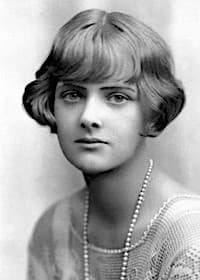
Daphne du Maurier was a celebrated English author renowned for her gothic suspense novels. Her most famous work, "Rebecca," is a classic of psychological suspense and mystery. Other notable works include "Jamaica Inn" and "The House on the Strand," solidifying her legacy as a master storyteller in the realm of atmospheric fiction.
Similar books
- Jane Eyre
Charlotte Brontë
4.1 (1.6M) average on GoodreadsHistorical FictionFeatures a young, unassuming protagonist falling for an older, enigmatic man, and a formidable 'first wife' who casts a long shadow.
- The Secret History
Donna Tartt
3.9 (2k) average on GoodreadsPoliticsExplores dark secrets, psychological tension, and a sense of impending doom within an enclosed, atmospheric setting, though in a modern context.
- Wuthering Heights
Emily Brontë
3.9 (1.3M) average on GoodreadsHistorical FictionBoth share gothic elements and the haunting presence of a deceased lover (Catherine in Wuthering Heights, Rebecca in du Maurier's novel). However, Rebecca is a more refined psychological thriller rooted in social anxieties and personal inadequacy, with a focus on unraveling a mystery. Wuthering Heights is characterized by its raw, untamed passions, class conflict, and more pronounced supernatural undertones, depicting a destructive, all-consuming love.
- Angels & Demons
Dan Brown
3.9 (2.7M) average on GoodreadsThrillerA Harvard symbologist races through Rome's ancient sites, deciphering cryptic clues to unmask the Illuminati and stop a vengeful plot to destroy the Vatican with a stolen antimatter weapon.
- Gone Girl
Gillian Flynn
4.1 (2.3M) average on GoodreadsThrillerA wife's sudden disappearance on her fifth anniversary reveals a web of lies and psychological warfare, exposing the secrets within a seemingly perfect marriage.
- The Girl on the Train
Paula Hawkins
3.9 (2.1M) average on GoodreadsThrillerA woman’s fascination with a seemingly perfect couple she watches from her daily train commute leads her into a dark investigation when she witnesses something that shatters their idyllic image.






Enjoyed the summary?
A summary gives you the shape of the book. The book itself has the detail, the examples and the voice.
Find Rebecca on AmazonAs an Amazon Associate, BookBrief earns from qualifying purchases. How we're funded