
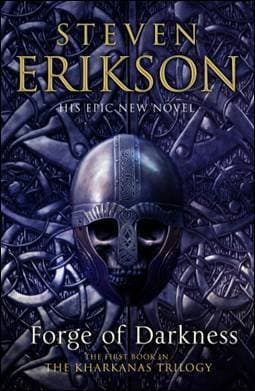
Synopsis
Covers the whole plot, including the ending.
- Difficulty
- Hard
- Pacing
- Slow
- Mood
- Epic, Dark, Philosophical, Tragic, Complex
- Read it if
- You are a dedicated Steven Erikson fan eager to delve into the ancient history and origins of the Malazan universe, particularly the Tiste races and their gods.
- Skip it if
- You are looking for a standalone story or a fast-paced, easily digestible fantasy novel, or if you are new to Erikson's dense prose and intricate world-building.
Forge of Darkness Plot Summary
Covers the whole plot, including the ending.
The Seeds of Discord
The novel opens in Kurald Galain, Mother Dark's realm. Her Consort is Lord Draconus. However, Vatha Urusander, a charismatic hero, leads a faction seeking to marry Mother Dark and replace Draconus. This political tension grows from the lingering sorrow over the recent death of Grizzin Farl, an Elder God whose demise is mysterious. Anomander, Andarist, and Silchas Ruin Purake, Mother Dark's three First Sons of Darkness, are caught in the conflict, each facing choices about loyalty as civil war looms. The stage is set for deep unrest and the unraveling of ancient traditions.
The Gathering Storm
As Urusander gains influence, he gathers support from various Holds in Kurald Galain, promising more involved leadership than Mother Dark. Draconus remains calm, but his allies, like the mysterious Hood, watch events closely. Amidst this political maneuvering, strange things happen. Old, forgotten creatures stir beneath the earth and in Kurald Galain's dead seas, hinting at a deeper threat than political arguments. The Purake brothers, Anomander, Andarist, and Silchas, become more involved. Anomander tries to keep peace, Andarist sides with Mother Dark's traditionalists, and Silchas pursues his own goals, often with Sheltatha Lore.
The Arrival of the Jaghut
Jaghut refugees arrive in Kurald Galain, fleeing a disaster in their own lands. Among them is the powerful Jaghut Tyrant, Gothos, and his children. They seek safety, but their presence further strains the tense political situation. Some in Kurald Galain view them with suspicion, while others, like Anomander, see them as beings deserving of help. This influx of outsiders forces the Tiste to confront their own xenophobia and the possibility of a wider conflict beyond their internal struggles. The Jaghut's situation shows broader cosmic forces at play, suggesting Kurald Galain's internal strife is part of a larger, older story of suffering and survival.
The First Blood
The tensions finally erupt into open conflict. Skirmishes break out between Urusander's followers and those loyal to Mother Dark and Draconus. These initial clashes are brutal, marking the first widespread Tiste bloodshed in generations. Important figures, both Tiste and Jaghut, begin to die, showing how serious the situation is. These early battles are about ideology and Kurald Galain's future, not just territory or power. The violence forces many characters to choose sides, changing their relationships and destinies. The Purake brothers find themselves on opposing sides, with Anomander trying to prevent more escalation, Andarist defending tradition, and Silchas pursuing his own shadowy goals.
The Ascendancy of the Azathanai
As the conflict deepens, the ancient Azathanai, powerful beings who often watch from the side, begin to act more directly. Figures like Hood, Draconus, and others, with great power and knowledge, start to intervene, sometimes subtly, sometimes openly. Their reasons are often complex and mysterious, rooted in old agreements, personal grudges, or a desire to keep a delicate balance of power. The Azathanai's involvement adds cosmic importance to the Tiste conflict, showing that Kurald Galain's fate is tied to elder entities and the fabric of existence. Their actions show that the Tiste are not alone in their struggles, and that their world is subject to forces beyond their understanding.
Anomander's Burden
Anomander Purake, burdened by his responsibility and love for Kurald Galain, tries to mediate between the warring factions. He believes a peaceful solution is still possible, even as violence grows. He has difficult talks with both Urusander and Draconus, trying to find common ground and prevent the realm from tearing itself apart. His efforts are often met with frustration, as both sides become more set in their positions. Anomander's internal struggle is a main theme, as he sees ideals corrupted and lives lost, all while trying to keep his moral compass in a world falling into chaos. His attempts at diplomacy highlight the deep divisions within his people.
The Sundering of the Purake
The civil war breaks the bond between Anomander, Andarist, and Silchas Ruin. Andarist, loyal to Mother Dark and the old ways, increasingly opposes Urusander's vision. Silchas, driven by his own mysterious motives and often allied with Sheltatha Lore, follows a path that seems to serve only himself, further distancing him from his brothers. Anomander, caught between his brothers' diverging paths and his own desire for peace, feels the weight of their growing animosity. The once-strong bond of the First Sons of Darkness is shattered by the conflict, reflecting the wider split happening in Kurald Galain itself. This family breakdown foreshadows deeper divisions to come.
The Emergence of the Forkrul Assail
As if internal strife were not enough, an older, more terrifying threat emerges: the Forkrul Assail. These ancient, powerful beings, known for their strict adherence to a brutal justice and devastating martial skill, awaken. Their sudden appearance introduces a new, existential danger to Kurald Galain, overshadowing the Tiste's internal conflict. The Forkrul Assail are a force of nature, indifferent to the Tiste's squabbles. Their awakening signals a shift from political infighting to a struggle for survival against an overwhelming external enemy. Their presence forces the Tiste and Jaghut to consider an alliance against this common, powerful foe.
The Betrayal and the Blade
A deep betrayal occurs within Urusander's faction, shaking his movement. This treachery, often from ambition or fear, leads to a direct, violent confrontation between key figures. After this betrayal, Draconus forges a legendary weapon, Dragnipur. This blade is not just a weapon, but a prison for souls, a symbol of ultimate judgment and a terrifying deterrent. The forging of Dragnipur is a moment of great power and grim resolve, showing Draconus will take extreme measures to protect Mother Dark and Kurald Galain from those who would usurp her. Its creation casts a long shadow over the realm, promising severe consequences.
The First Cataclysm
The various conflicts—Tiste against Tiste, Tiste against Jaghut, and now against the Forkrul Assail—meet in a cataclysmic event. This is not just a battle, but a world-shattering confrontation that leaves Kurald Galain permanently scarred. Ancient powers are unleashed, and the realm's landscape changes. Many lives are lost, and the innocence of the age is shattered. This event marks a turning point, ending one era and beginning another grim one. The First Sons of Darkness are deeply affected, their paths set for their future roles in the Malazan universe. The cataclysm is a tragic climax, showing the devastating cost of ambition and division.
Mother Dark's Retreat
After the cataclysm and endless bloodshed among her children, Mother Dark, Kurald Galain's ancient goddess, makes a devastating decision. Overwhelmed by grief and disappointment at the internal conflict and betrayal she has seen, she withdraws her light and presence from her children, turning her back on them. This act of profound rejection leaves a spiritual and existential void in Kurald Galain. Her departure is a key moment, signifying the loss of divine guidance and the start of a long age of darkness and despair for the Tiste. Her retreat sets the stage for the later splitting of the Tiste into various houses and lasting consequences that echo through millennia.
The Legacy of Loss
The novel ends with Kurald Galain a fractured, wounded realm. The civil war has ended, but at an immense cost. The Tiste are left to rebuild their broken society, haunted by memories of betrayal and loss. The Purake brothers, though survivors, are deeply changed and more estranged. The seeds of future conflicts and the long, tragic history of the Tiste are firmly planted. The ending leaves many questions unanswered, but establishes the deep sorrow and weight of history that will define the Tiste race for millennia. The realm is left in a state of deep melancholy, its future uncertain but grim.
Principal Figures
Anomander Purake
Protagonist
The First Son of Darkness, attempting to maintain peace and justice in a fracturing realm.
Anomander Purake is the eldest of Mother Dark's three First Sons, a powerful Tiste Andii warrior and leader. He possesses immense strength, both physical and moral, and is deeply burdened by a sense of responsibility for his people. He is characterized by his attempts to mediate the growing conflict between Urusander and Draconus, seeking a peaceful resolution even as the realm descends into civil war. His compassion and desire for justice are often at odds with the harsh realities of power and ambition. He carries the weight of his lineage and the fate of Kurald Galain on his shoulders, striving to uphold ideals even as they crumble around him.
Relationships: Andarist Purake (Brother, initially close but growing apart due to differing allegiances.); Silchas Ruin Purake (Brother, estranged and enigmatic, often pursuing his own agenda.); Mother Dark (Son, deeply loyal and concerned for her realm.); Vatha Urusander (Political rival, though Anomander attempts to reason with him.); Draconus (Ally by circumstance, respecting his power and position.)
Andarist Purake
Supporting
The Second Son of Darkness, fiercely traditional and loyal to Mother Dark.
Andarist Purake is the middle brother, known for his unwavering loyalty to Mother Dark and the ancient traditions of Kurald Galain. He is less inclined to compromise than Anomander and views Urusander's ambitions as a dangerous affront to the established order. He is a formidable warrior and a staunch defender of what he perceives as righteous, even if it means clashing with his own family. His adherence to tradition and his sense of duty drive many of his actions, making him a powerful, if sometimes rigid, force in the unfolding conflict. He represents the conservative element resistant to change.
Relationships: Anomander Purake (Brother, growing apart due to differing approaches to the conflict.); Silchas Ruin Purake (Brother, strained relationship, often at odds.); Mother Dark (Son, deeply devoted and protective.); Draconus (Ally, sharing a common enemy in Urusander.)
Silchas Ruin Purake
Supporting/Antagonistic
The Third Son of Darkness, enigmatic and driven by his own mysterious agenda.
Silchas Ruin Purake is the youngest of the First Sons, a complex and often inscrutable character. He is highly intelligent, cunning, and seems to operate on his own moral compass, which often appears detached from the immediate concerns of his brothers. He is frequently accompanied by Sheltatha Lore, an equally enigmatic figure, and together they pursue objectives that are not always clear to others. Silchas possesses a keen understanding of power dynamics and ancient secrets, making him a dangerous and unpredictable player in the unfolding drama. His motivations are often shrouded in mystery, hinting at deeper, long-term goals.
Relationships: Anomander Purake (Brother, strained and distant relationship.); Andarist Purake (Brother, often in opposition or conflict.); Sheltatha Lore (Close companion and likely co-conspirator.); Mother Dark (Son, but his loyalty is questionable and self-serving.)
Mother Dark
Central Figure/Deity
The ancient, reclusive goddess and ruler of Kurald Galain.
Mother Dark is the ancient, primordial deity and ruler of Kurald Galain. She is a figure of immense power and mystery, often described as distant and sorrowful, having withdrawn much of her light and presence from her children. Her reclusiveness is a source of contention, fueling Urusander's ambitions. Despite her distance, her influence is paramount, and the realm's stability is tied to her well-being. She embodies the essence of darkness, not as evil, but as a fundamental, ancient force. Her eventual act of turning her back on her children is a pivotal event, shaping the destiny of the Tiste race.
Relationships: Anomander, Andarist, Silchas Purake (Sons, though her relationship with them is complex and often distant.); Draconus (Consort, a loyal and protective ally.); Vatha Urusander (Challenger to her consort and her traditional rule.)
Lord Draconus
Supporting/Azathanai
Mother Dark's ancient Consort and a powerful Azathanai.
Lord Draconus is Mother Dark's ancient and powerful Consort, an Azathanai of immense strength and enduring loyalty. He is stoic, formidable, and deeply committed to protecting Mother Dark and the traditions of Kurald Galain. He views Urusander's challenge with a grim resolve, not underestimating the threat. Draconus is a master of combat and strategy, possessing knowledge from countless millennia. His eventual forging of Dragnipur is a testament to his unwavering commitment and his willingness to employ extreme measures to safeguard the realm. He represents the ancient, unyielding forces that uphold the established order.
Relationships: Mother Dark (Consort, deeply loyal and protective.); Hood (Fellow Azathanai, often in alliance or understanding.); Vatha Urusander (Direct rival and threat to his position.)
Vatha Urusander
Antagonist
A charismatic Tiste leader who challenges Mother Dark's Consort.
Vatha Urusander is a charismatic and ambitious Tiste leader who gains significant popular support by advocating for a more engaged leadership for Kurald Galain. He challenges Lord Draconus for the position of Mother Dark's Consort, promising a new era for the realm. While his initial intentions may seem noble to his followers, his ambition quickly leads to division and conflict. He is a skilled orator and strategist, capable of inspiring loyalty, but his desire for power ultimately fuels the civil war. Urusander represents the forces of change and challenge to ancient traditions, regardless of the cost.
Relationships: Mother Dark (Target of his ambition, seeking to replace her consort.); Draconus (Direct rival and enemy.); Anomander Purake (Opponent, though Anomander attempts to reason with him.)
Hood
Supporting/Azathanai
An enigmatic Azathanai, associated with death and judgment.
Hood is an ancient and powerful Azathanai, often associated with death and the realm of the dead. He is a mysterious figure, observing the unfolding events in Kurald Galain with a detached yet keen interest. While not directly involved in the Tiste political struggles, his presence and actions often have profound consequences, hinting at a broader, cosmic agenda. He possesses immense power and knowledge, and his interactions with other characters are often cryptic and laden with foreshadowing. Hood represents the inexorable forces of fate and the ultimate judgment that awaits all beings.
Relationships: Draconus (Fellow Azathanai, often in alliance or understanding.); Gothos (Fellow Azathanai, with a complex relationship rooted in ancient events.)
Gothos
Supporting/Jaghut
A powerful Jaghut Tyrant seeking refuge in Kurald Galain.
Gothos is a powerful and ancient Jaghut Tyrant, forced to flee his own realm with his children due to a devastating cataclysm. He seeks refuge in Kurald Galain, bringing with him the weight of his people's suffering and his own formidable power. Gothos is a figure of immense intellect and strength, burdened by the responsibility of his family and the survival of his race. His presence in Kurald Galain adds a new dimension to the conflict, forcing the Tiste to confront their prejudices and the wider cosmic implications of their internal strife. He represents the plight of refugees and the enduring strength of a people facing extinction.
Relationships: Hood (Fellow Azathanai, with a complex and ancient history.); Anomander Purake (Potential ally, as Anomander shows compassion towards the Jaghut.)
Sheltatha Lore
Supporting/Enigmatic
A mysterious and powerful figure often allied with Silchas Ruin.
Sheltatha Lore is an enigmatic and powerful figure, whose origins and motivations are largely shrouded in mystery. She is frequently seen in the company of Silchas Ruin, and their alliance suggests a shared, hidden agenda. She possesses ancient knowledge and considerable power, often acting as a catalyst for certain events or providing cryptic insights. Her presence adds to the intrigue and complexity of the narrative, hinting at deeper machinations beyond the immediate Tiste conflict. She represents the unseen forces and ancient secrets that influence the destiny of Kurald Galain.
Relationships: Silchas Ruin Purake (Close companion and likely co-conspirator.)
Themes & Insights
The Weight of History and Tradition
The novel explores the weight of ancient history and the conflict between tradition and change. Tiste society in Kurald Galain is rooted in millennia of customs, loyalty to Mother Dark, and her Consort's role. Urusander's challenge to Draconus directly confronts these traditions, causing violent upheaval. Characters, especially Anomander and Andarist, grapple with their ancestors' legacy and the expectations of their lineage. The Jaghut refugees also force the Tiste to face their historical xenophobia versus the need for compassion in a changing world. Mother Dark's eventual retreat is a profound consequence of this struggle, showing the tragic loss of ancient guidance.
“History is a burden, brother. A weight on the shoulders of all who come after.”
The Corrupting Influence of Ambition
Ambition, particularly Vatha Urusander's unchecked ambition, causes the civil war in Kurald Galain. Urusander's desire to replace Draconus as Mother Dark's Consort, fueled by appealing to commoners, quickly escalates from politics to widespread bloodshed. This theme shows how even seemingly good intentions, when driven by personal power and disregard for order, can lead to devastating consequences. The Purake brothers' fracturing bond is also influenced by their individual ambitions and differing visions for the realm, showing how personal desires can destroy strong ties. The novel vividly portrays the tragic cost when ambition outweighs compassion and wisdom.
“Ambition is a hungry god, brother. It devours all who serve it, and those who stand in its path.”
Loss and Grief
Loss and grief fill the narrative, from the lingering sorrow over Grizzin Farl's death to the rising casualties of the civil war. Tiste society is shown as already touched by a deep, collective sadness. As the conflict progresses, characters experience profound personal losses, including broken family bonds and loved ones' deaths. Mother Dark's eventual retreat is an ultimate act of grief and disappointment, a withdrawal from a world that has caused her immense sorrow. The Jaghut refugees also carry the weight of their own catastrophic losses, adding to the pervasive sadness. This theme highlights the deep emotional cost of conflict and the lasting scars it leaves on individuals and an entire civilization.
“The price of living is always loss, and the weight of that truth can crush a soul.”
The Nature of Darkness
Given Kurald Galain's setting as the realm of Darkness, the novel deeply explores the many aspects of 'darkness.' It is not simply evil, but a primal, fundamental force, capable of both nurturing and destroying. Mother Dark herself embodies this complexity; she is a distant, sorrowful deity, but also her children's source of life. The Tiste Andii, as children of darkness, struggle with its meaning for their identity and morality. The growing conflict and betrayal threaten to corrupt this inherent darkness into something truly malevolent, raising questions about whether their realm's name will define their tragic fate. It challenges common ideas of light and dark.
“Darkness is not absence, child. It is presence. A vast, ancient, and indifferent presence.”
The Cycles of Violence and Betrayal
The narrative details how a civil war begins, showing how small acts of defiance and ambition can escalate into widespread violence and deep betrayal. The cycle starts with Urusander's challenge, leading to factions, skirmishes, and eventually full-scale war. Betrayals within Urusander's own ranks, and the fracturing of the Purake brothers' loyalty, show how trust erodes during conflict. The constant back-and-forth, shifting alliances, and retaliatory actions highlight a tragic, self-perpetuating cycle that ultimately devastates Kurald Galain. This theme suggests that once violence begins, it is very hard to stop, and its consequences are far-reaching and lasting.
“Once the first blow is struck, the dance of blades knows no end until all are broken.”
Plot Devices & Literary Techniques
The Elder Gods/Azathanai
Ancient, powerful beings who influence mortal affairs and the cosmic balance.
The Elder Gods, or Azathanai, are powerful, ancient entities like Draconus, Hood, and Gothos, who predate the Tiste and possess immense, often mysterious powers. They serve as a constant reminder of the vastness and antiquity of the world, often acting as observers, manipulators, or direct participants in the mortal conflicts. Their presence elevates the stakes of the Tiste civil war, hinting at broader cosmic implications. They provide exposition through their ancient knowledge and demonstrate the limits of mortal power, often acting as catalysts for major events, such as Draconus forging Dragnipur, or Gothos's arrival with the Jaghut refugees. They represent forces beyond mortal comprehension, shaping destinies from the shadows.
Dragnipur
A legendary sword forged by Draconus, capable of imprisoning souls.
Dragnipur is a legendary sword forged by Lord Draconus, not merely a weapon but a prison for the souls of those he deems deserving of eternal damnation. It is a symbol of ultimate judgment and Draconus's grim resolve to protect Mother Dark and Kurald Galain. Its creation marks a pivotal moment, signifying the escalation of the conflict and the introduction of a terrifying new force. The blade's power and its implications for the afterlife cast a long, ominous shadow over the realm, serving as a warning and a promise of dire consequences for those who threaten the established order. It is a physical manifestation of divine wrath and an enduring plot point.
The Sundering of the Purake Brothers
The tragic fracturing of the bond between Anomander, Andarist, and Silchas Ruin.
The sundering of the Purake brothers (Anomander, Andarist, and Silchas Ruin) is a central plot device that mirrors and amplifies the wider civil war in Kurald Galain. Their once-unbreakable bond is gradually fractured by differing loyalties, ambitions, and moral stances. This familial breakdown serves as a microcosm of the larger societal collapse, making the conflict deeply personal and tragic. Their diverging paths set the stage for their individual destinies and the future of the Tiste race, foreshadowing the later schisms within the Tiste people. It is a powerful emotional anchor, demonstrating the devastating cost of conflict on even the closest relationships.
The Retreat of Mother Dark
Mother Dark's withdrawal of her light and presence from her children.
Mother Dark's retreat is a critical plot device that serves as the ultimate consequence of the Tiste civil war and a profound turning point for Kurald Galain. Her disillusionment and grief at her children's endless conflict lead her to withdraw her divine presence, plunging the realm into a deeper, existential darkness. This act signifies the loss of divine guidance, the end of an era, and the beginning of a long period of suffering and self-reliance for the Tiste. It directly impacts their future development, leading to the eventual sundering of the Tiste into distinct houses and setting the stage for millennia of their tragic history in the wider Malazan world.
Forge of Darkness Quotes
“The past is a country we can never truly leave. It shapes our present, whether we acknowledge it or not.”
“What is a god, after all, but a mortal who has forgotten how to die?”
“To be truly alone, one must first be truly forgotten.”
“Justice, my friend, is often no more than the will of the powerful, dressed in fine words.”
“We are all prisoners of our natures, until we choose to break the chains.”
“Grief is a landscape you must walk alone, but its echoes can haunt every path you take thereafter.”
“The greatest lies are not those spoken, but those we tell ourselves.”
“Every legend begins with a truth, then gathers the dust of a thousand tellings.”
“Fear is a weapon, but also a shield. It depends on who wields it, and against whom.”
“There are wounds that time cannot heal, only hide.”
“Compassion is not weakness. It is the strength to bear witness to another's suffering.”
“The world does not care for your intentions, only your actions.”
“Sometimes, the only way to find your path is to get utterly lost.”
“Memory is a fickle thing. It selects, it omits, it rearranges. It is never the whole truth.”
“Even the mightiest empires eventually crumble into dust. What remains are the stories.”
Quiz
10 questions on the plot and the characters. Each answer comes with a short explanation.
Question 1
Which ancient realm is the primary setting for 'Forge of Darkness'?
- Kurald Liosan
- Kurald Galain
- Kurald Thyrllan
- Kurald Emurlahn
Show answer
B. Kurald Galain The book explicitly states that the story takes place in Kurald Galain, the realm of Darkness.
Question 2
Who is the reigning deity of Kurald Galain at the beginning of 'Forge of Darkness'?
- Father Light
- Mother Dark
- Sister Spite
- Brother Dawn
Show answer
B. Mother Dark The synopsis clearly states that 'Mother Dark reigns' in Kurald Galain.
Question 3
What is the name of Mother Dark's current Consort, who stands in the way of Vatha Urusander's ambitions?
- Lord Anomander
- Lord Andarist
- Lord Draconus
- Lord Silchas
Show answer
C. Lord Draconus The synopsis identifies Lord Draconus as Mother Dark's Consort, whose position is threatened by Vatha Urusander.
Question 4
Vatha Urusander is described as a 'great hero' of which group?
- The First Sons of Darkness
- The commoners
- The Elder Gods
- The Pure Bloods
Show answer
B. The commoners The synopsis states, 'The commoners' great hero, Vatha Urusander, is being promoted by his followers'.
Question 5
Which of the following is NOT one of the First Sons of Darkness from the Purake Hold mentioned in the synopsis?
- Anomander
- Andarist
- Draconus
- Silchas Ruin
Show answer
C. Draconus The synopsis lists Anomander, Andarist, and Silchas Ruin as the First Sons of Darkness. Draconus is Mother Dark's Consort.
Question 6
What major event is the impending clash between Vatha Urusander and Lord Draconus rumored to incite?
- A new ice age
- An invasion from another realm
- A civil war
- The return of the Forkrul Assail
Show answer
C. A civil war The synopsis explicitly states, 'as the rumors of civil war burn through the masses'.
Question 7
What is described as emerging from the 'long dead seas' amidst the growing conflict?
- A lost city
- An ancient power
- A new continent
- The Elder Warrens
Show answer
B. An ancient power The synopsis mentions that 'an ancient power emerges from the long dead seas' as the realm descends into conflict.
Question 8
How does 'Forge of Darkness' relate chronologically to Steven Erikson's 'Malazan Book of the Fallen' series?
- It takes place immediately after the events of 'The Crippled God'.
- It is a parallel story occurring at the same time in a different realm.
- It takes place millennia before the events of the Malazan Book of the Fallen.
- It is a retelling of events from the Malazan Book of the Fallen from a different perspective.
Show answer
C. It takes place millennia before the events of the Malazan Book of the Fallen. The description clearly states that this trilogy 'takes place millennia before the events of the Malazan Book of the Fallen'.
Question 9
The synopsis implies a significant theme related to the nature of power and ambition. Which statement best reflects this theme?
- True power lies in renouncing all worldly desires.
- The pursuit of power, even for a 'hero', can lead to widespread conflict and destabilization.
- Ancient powers always emerge to restore balance when conflict arises.
- The commoners' will is always the ultimate determinant of a realm's fate.
Show answer
B. The pursuit of power, even for a 'hero', can lead to widespread conflict and destabilization. The core conflict, driven by Urusander's ambition to marry Mother Dark and the resulting 'fissures throughout the realm' and 'rumors of civil war', highlights how the pursuit of power can destabilize an entire society.
Question 10
What role does the fate of Kurald Galain play in the broader context of the Malazan Empire's world, according to the synopsis?
- It serves as a distant, unrelated historical event.
- Its fate is crucial in shaping the world of the Malazan Empire.
- It is merely a legendary tale with no real-world impact.
- It is the source of all magic in the Malazan Empire.
Show answer
B. Its fate is crucial in shaping the world of the Malazan Empire. The synopsis states, 'It is the epic story of a realm whose fate plays a crucial role in shaping the world of the Malazan Empire,' directly linking its importance.
Forge of Darkness FAQ
What is the primary conflict driving the narrative in 'Forge of Darkness'?
The central conflict revolves around Vatha Urusander's ambition to marry Mother Dark and usurp Lord Draconus's position as Consort. This power struggle creates deep divisions within Kurald Galain, threatening civil war and destabilizing the ancient realm, drawing many factions into the brewing conflict.
Who are the First Sons of Darkness, and what is their role in the unfolding events?
The First Sons of Darkness are Anomander, Andarist, and Silchas Ruin of the Purake Hold. They are caught in the escalating tensions between Urusander and Draconus, struggling to navigate the political machinations and maintain a semblance of peace amidst the growing unrest, each with their own unique perspective and loyalties.
What is the significance of Mother Dark in Kurald Galain, and why is her position being challenged?
Mother Dark is the ancient, revered ruler of Kurald Galain, embodying the essence of Darkness itself. Her position is challenged by Vatha Urusander and his followers who seek to elevate him through marriage, believing he is a more suitable and dynamic leader for the changing times, despite her ancient authority.
How does the re-emergence of an ancient power from the 'long dead seas' impact the existing conflicts?
The re-emergence of an ancient power from the long dead seas introduces an unpredictable and potentially devastating third party into the existing political turmoil. This new threat complicates the Urusander-Draconus standoff, forcing characters to confront an external danger while dealing with internal strife, and potentially revealing forgotten histories.
What is the relationship between 'Forge of Darkness' and the 'Malazan Book of the Fallen' series?
'Forge of Darkness' is the first novel in a trilogy set millennia before the events of the 'Malazan Book of the Fallen'. It provides foundational lore, character origins, and the ancient history of Kurald Galain, directly shaping the world and many of the powerful entities encountered in the later Malazan series.
What is the true nature of the 'ancient power' that emerges from the seas, and what are its long-term implications?
The 'ancient power' emerging from the seas is the Jaghut, specifically the entity known as Gothos. His reawakening has profound long-term implications, as it reintroduces a powerful, often chaotic, race into a world already on the brink, setting the stage for future conflicts and the eventual Jaghut wars that shape Malazan history.
How do the individual personalities of Anomander, Andarist, and Silchas Ruin foreshadow their later roles?
Anomander's sense of duty and burden, Andarist's introspective nature and desire for peace, and Silchas Ruin's sharp intellect and underlying ruthlessness all foreshadow their tragic destinies and pivotal roles in the broader Malazan narrative. Their early decisions here lay the groundwork for their future struggles and transformations.
What is the significance of the term 'Azathanai' and how does it relate to the characters in this book?
'Azathanai' refers to ancient, powerful beings, often god-like, who predate many of the current pantheons. Characters like Draconus and Mother Dark are explicitly Azathanai, and their inherent power and unique perspectives on existence differentiate them from mortals and even other Elder Gods, hinting at their deep, primal connections to the world.
What is the role of the 'Refugium' and its inhabitants in the broader Kurald Galain narrative?
The Refugium is a hidden realm where various beings, including the T'lan Imass, seek solace and escape from the turmoil of Kurald Galain. Its existence highlights the deep divisions and atrocities occurring, offering a contrast to the political struggles and foreshadowing the eventual schism of the Tiste races and the rise of other powerful factions.
How does Mother Dark's 'silence' contribute to the psychological distress and political instability?
Mother Dark's prolonged silence is interpreted differently by various factions, leading to confusion, despair, and an erosion of faith. This perceived withdrawal fuels Urusander's ambitions and contributes to the psychological distress of her followers, as they grapple with a seemingly absent deity, fostering an environment ripe for rebellion and self-doubt.
Analyze the psychological motivations behind Vatha Urusander's ambition to become Consort.
Urusander's ambition appears to stem from a complex mix of genuine belief in his own leadership, a desire for power, and perhaps a need for validation. His followers' adoration likely inflates his ego, leading him to believe he is the rightful choice for Mother Dark, driven by a perceived need to 'modernize' or 'save' Kurald Galain.
How does the concept of 'light' versus 'darkness' manifest psychologically within the Tiste characters?
The concept of 'light' versus 'darkness' manifests as internal struggles within the Tiste characters, particularly between duty and desire, ancient tradition and nascent change. The Tiste Andii, especially, grapple with their identity tied to Mother Dark's darkness, facing psychological pressure to define themselves as the world around them fragments and new ideals emerge.
Discuss the psychological impact of impending civil war on the common citizens of Kurald Galain.
The rumors of impending civil war inflict widespread fear, anxiety, and desperation upon the common citizens of Kurald Galain. They are caught between powerful factions, forced to choose sides or suffer the consequences, leading to a sense of helplessness, paranoia, and the erosion of societal trust as their ancient world crumbles around them.
Is Mother Dark's silence a deliberate act, or a consequence of her nature? What are the implications of either?
Mother Dark's silence is open to interpretation. If deliberate, it could be a test, a punishment, or a withdrawal from a world she finds disappointing, implying a conscious decision to let events unfold. If a consequence of her ancient nature or a deeper cosmic event, it suggests a profound, perhaps unavoidable, shift in the fabric of existence, with far-reaching, impersonal implications.
How much agency do individual characters like Anomander and Draconus truly possess, given the 'ancient realm' context?
While characters like Anomander and Draconus possess significant power and influence, their agency is often constrained by ancient traditions, prophecies, and the vast, slow-moving currents of history. They make choices, but these choices are often shaped by their inherent nature and the predetermined roles they are forced into by the very fabric of the ancient realm, leading to a tragic sense of predestination.
To what extent is Urusander a villain, or a product of his circumstances and the evolving nature of Kurald Galain?
Urusander's portrayal is complex; while his ambition causes great strife, he can be seen as a product of circumstances. Kurald Galain is changing, and his followers genuinely believe in him. He embodies a more 'modern' or 'active' form of leadership, making him less a purely malicious villain and more a figure whose actions, though destructive, are driven by a perceived necessity in a time of profound transition.
What is the thematic significance of the 'forge' in the title 'Forge of Darkness'?
The 'forge' in the title signifies a crucible where the fundamental elements of the Tiste race, their society, and their very world are being violently reshaped. It implies a process of intense heat and pressure, forging new identities, alliances, and ultimately, the tragic destinies that will define the Tiste for millennia to come, leading to their eventual splintering.
How does the book challenge traditional fantasy notions of 'good' and 'evil'?
The book deeply challenges traditional notions of 'good' and 'evil' by presenting morally ambiguous characters and situations. Urusander, while disruptive, isn't purely evil, and even Mother Dark's 'darkness' isn't inherently malevolent. Characters operate within complex motivations, and actions have unforeseen consequences, blurring the lines between hero and antagonist, reflecting a more realistic, nuanced moral landscape.
About the author
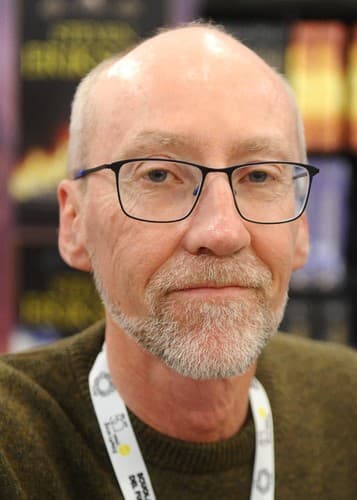
Steven Erikson is a Canadian author known for his epic fantasy series, "Malazan Book of the Fallen." His notable works include "Deadhouse Gates," "House of Chains," "Midnight Tides," "The Bonehunters," "Toll the Hounds," and "Dust of Dreams." Erikson's writing is characterized by its complex narratives and extensive world-building.
Similar books
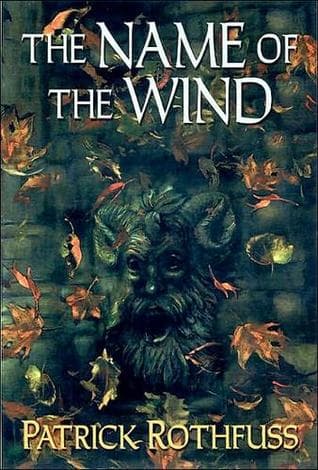
- The Name of the Wind
Patrick Rothfuss
4.5 (716k) average on GoodreadsFantasyFeatures deep lore and a focus on character-driven tragedy within an epic fantasy setting.
- A Game of Thrones
George R.R. Martin
4.5 (2M) average on GoodreadsFantasyWhile both 'Forge of Darkness' and 'A Game of Thrones' feature complex political intrigue and large casts, Erikson's work is far more philosophical and less focused on direct character-driven drama. Martin prioritizes immediate character stakes and accessible prose, making his world more immediately engaging for a broader audience. Erikson's narrative in 'Forge of Darkness' is less concerned with individual triumphs or tragedies in the short term, instead building a foundational mythos, a contrast highlighted by scholars like [Professor Laura K. Schmidt](https://www.schmidt-litcrit.com/fantasy-genre-analysis).
- The Way of Kings
Brandon Sanderson
4.6 (305k) average on GoodreadsFantasy'The Way of Kings' offers a similarly epic scope and intricate world-building, but Sanderson's approach is generally more action-oriented and his magic systems are more explicitly defined and central to the plot. In contrast, 'Forge of Darkness' delves into more abstract and existential questions, with the 'Ascendancy of the Azathanai' being more about the nature of nascent power than a systematic magical framework. Sanderson's prose is typically more direct and accessible, making his lengthy novels feel faster-paced than Erikson's deliberately ponderous style in 'Forge of Darkness'.
- Harry Potter and the Sorcerer's Stone
J.K. Rowling
4.5 (7M) average on GoodreadsFantasyRescued from a miserable life under the stairs, an orphaned boy discovers he's a wizard destined for a magical school, where he uncovers a dangerous secret tied to the dark wizard who murdered his parents.
- The Hunger Games
Suzanne Collins
4.3 (6.4M) average on GoodreadsFantasyIn a future where children fight to the death on live television, Katniss Everdeen volunteers for the arena, turning a death sentence into a fight for survival and a spark of rebellion.
- 1984
George Orwell
4.2 (3.1M) average on GoodreadsPoliticsIn a future where surveillance and thought control are absolute, a man's search for truth clashes with the Party, showing that hope can be a form of rebellion.





Enjoyed the summary?
A summary gives you the shape of the book. The book itself has the detail, the examples and the voice.
Find Forge of Darkness on AmazonAs an Amazon Associate, BookBrief earns from qualifying purchases. How we're funded