
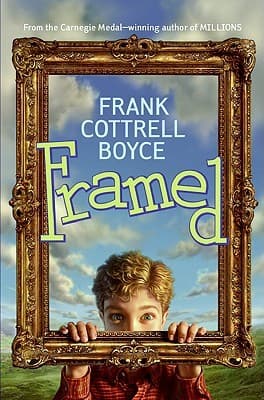
Synopsis
Covers the whole plot, including the ending.
- Difficulty
- Easy
- Pacing
- Moderate
- Mood
- Whimsical, Heartwarming, Humorous, Mysterious, Uplifting
- Read it if
- You enjoy heartwarming mysteries with quirky characters, a strong sense of community, and a touch of magical realism, especially if you appreciate stories about the unexpected impact of art.
- Skip it if
- You prefer fast-paced, action-driven thrillers or highly realistic narratives without whimsical elements.
Framed Plot Summary
Covers the whole plot, including the ending.
The Arrival of the Masterpieces
Dylan Hughes lives in Manod, a remote, rainy Welsh village, the only place in the UK without a boy his age. His family runs the last petrol station for miles, also a cafe known for his mum's pies, but they face financial trouble. One day, a convoy of lorries arrives, bringing a secret: the National Gallery's art collection, including works by Van Gogh, Monet, and Turner, is going to Manod's disused slate mine for safety during an emergency. The news is meant to be secret, but the art's arrival and the museum staff quickly change the village's quiet routine, fascinating Dylan.
Dylan's Unexpected Role
Because of a misunderstanding and the art's extreme secrecy, Dylan, with his two pet chickens, is first mistaken for part of the security team. Mr. Daniel, the overwhelmed director of the National Gallery, likes Dylan and informally makes him a 'Special Security Consultant.' Dylan, who often feels ignored, takes this role seriously. He learns about the paintings from Mr. Daniel and other museum experts, who slowly adjust to their isolated lives in the Welsh mountains, often with funny results. The art, in the huge mine, becomes a strange and beautiful background to Dylan's daily life.
The Family's Financial Woes and Papa's Secret
The Hughes family's finances are bad. Their petrol station is failing, and Dylan's father, Papa, worries about a tax investigation. Papa, a kind but somewhat naive man, made questionable business decisions, like selling 'shares' in his petrol station to villagers, which tax authorities find suspicious. The family struggles to pay bills, and the pressure is clear. Dylan's older sister, Minnie, a budding entrepreneur with a talent for schemes, tries to help, often with bad or funny results. The family's worries contrast with the priceless treasures hidden nearby.
The Village's Reaction to the Art
Initially, villagers are uninterested in or suspicious of the art and the 'Londoners' who brought it. They see museum staff as strange and paintings as unrelated to their tough, practical lives. However, as experts slowly join village life, and as Dylan shares his growing appreciation for the art, a change happens. Mrs. Davies, the village matriarch, becomes interested, and local children are drawn to the paintings' colors and stories. The village pub, the 'Manod Arms,' becomes a reluctant meeting place for the two groups, creating an unexpected cultural exchange.
Minnie's Scheme and the 'Framing'
Desperate to save their father from prison and their family from ruin, Minnie plans a complex and illegal scheme. She decides they need to 'frame' the visiting tax inspector, Mr. Jenkins, by making it look like he stole a painting. Her idea is to stage a fake theft, hoping the chaos and publicity will somehow clear Papa and distract from their financial problems. Dylan, despite his moral doubts and his growing love for the art, is reluctantly pulled into Minnie's bold plan, which she meticulously designs, showing her cleverness.
The 'Theft' and Its Aftermath
Minnie, with Dylan's help, tries to 'steal' a painting (a fake one they made) and plant it to blame Mr. Jenkins. However, during their secret operation in the mine, they find a real theft happened. A genuine painting—Van Gogh's 'Sunflowers'—is missing. This discovery panics the National Gallery staff and alerts authorities. Minnie's carefully planned 'frame-up' accidentally uncovers a real crime, raising the stakes for everyone in Manod and bringing unwanted national attention to the secret art storage.
The Search for the Stolen Art
The theft of 'Sunflowers' energizes the entire village. Police arrive, along with media, making Manod a busy place. The villagers, who had not cared about the art, now feel a personal connection and responsibility. With Dylan's guidance, and the combined efforts of museum staff and locals, a frantic search starts. They search the mine, village, and surrounding areas, using local knowledge and community skills. The crisis brings the two groups—art experts and Welsh villagers—closer in an unexpected alliance.
Dylan's Deduction and the True Culprit
As the official investigation stops, Dylan, with his perspective and knowledge of the mine and art, starts to connect clues. He remembers details and differences, using his 'special security consultant' training. He realizes the thief is not an outsider but someone in the small, trusted group of National Gallery staff. Through careful thought, he identifies the true culprit: Mr. Jenkins, the seemingly harmless tax inspector, who used his access to plan the theft, driven by greed and a desire to profit from the 'national emergency'.
The Confession and the Resolution
Faced with Dylan's clear evidence, Mr. Jenkins confesses to stealing 'Sunflowers' and is arrested. The painting is recovered, to the relief of Mr. Daniel and the National Gallery. The art theft's resolution has an unexpected good outcome for the Hughes family. Media attention about the art and Dylan's role in its recovery brings many visitors to Manod, revitalizing their struggling petrol station and cafe. Papa's tax issues are also resolved, as authorities realize the 'shares' were more a village custom than a crime, partly due to the goodwill from the art crisis.
Manod's New Identity
Eventually, the national emergency ends, and the art collection returns to London. The villagers are sad to see it go, having grown fond of the paintings and the art experts. However, Manod is changed forever. The village, once unknown, is now called the 'Home of the Art,' a place where art found shelter. It becomes a small tourist attraction, with visitors coming to see the mine and the petrol station that once held masterpieces. Dylan, no longer just the boy who lives in the rain, is now a hero and an unlikely guardian of culture, his life much richer from his experience with the art.
Principal Figures
Dylan Hughes
Protagonist
A nine-year-old boy who becomes the unlikely guardian of priceless art.
Dylan is a quiet, observant, and imaginative nine-year-old boy living in the remote Welsh village of Manod. He feels somewhat isolated, being the only boy his age in town, and finds companionship in his two pet chickens. He's initially a typical child, but his encounter with the art collection awakens a deep appreciation for beauty and a sense of responsibility. He takes his role as 'Special Security Consultant' very seriously, meticulously observing details that others miss. His growing understanding of the art allows him to see beyond the surface and ultimately solve the mystery of the stolen painting.
Relationships: Minnie Hughes (Older sister, often leading him into schemes); Papa Hughes (Father, whom he deeply loves and worries about); Mama Hughes (Mother, whose pies are a source of village pride); Mr. Daniel (Mentor and friend, director of the National Gallery)
Minnie Hughes
Supporting
Dylan's older sister, a brilliant and mischievous schemer.
Minnie is Dylan's older sister, a pragmatic and highly intelligent girl with a flair for elaborate schemes. She is fiercely protective of her family, especially her father, and her 'criminal instincts' are driven by a desire to solve their financial problems. She is the mastermind behind the plan to 'frame' the tax inspector, demonstrating impressive strategic thinking, even if her methods are morally ambiguous. Despite her sometimes reckless plans, she genuinely cares for Dylan and her family, and her actions, though misguided, ultimately lead to the discovery of the real theft.
Relationships: Dylan Hughes (Younger brother, her reluctant accomplice); Papa Hughes (Father, whom she tries to protect from the law)
Papa Hughes
Supporting
Dylan's kind but financially struggling father, under investigation for tax evasion.
Papa Hughes is Dylan's father, a good-natured but somewhat naive man who runs the struggling petrol station. He is deeply worried about his family's financial situation and the impending tax investigation, which stems from his unconventional, community-based business practices (selling 'shares' in the petrol station). He is a loving father and husband, but his anxieties weigh heavily on him. He represents the everyday struggles of the villagers and the pressure of keeping a family afloat in a remote, economically challenged area.
Relationships: Dylan Hughes (Son, whom he loves dearly); Minnie Hughes (Daughter, whose loyalty he appreciates); Mama Hughes (Wife, who supports him through tough times)
Mama Hughes
Supporting
Dylan's mother, known for her delicious pies and steady presence.
Mama Hughes is Dylan's mother, a resilient and practical woman who runs the cafe side of the petrol station, famous for her delicious pies. She is the steady anchor of the family, providing comfort and sustenance amidst their financial troubles. While less outwardly involved in the plot's central mystery than Dylan or Minnie, her pies become a symbol of community and comfort, bridging the gap between the villagers and the art experts. She represents the quiet strength and enduring spirit of the Manod community.
Relationships: Dylan Hughes (Son, whom she cares for); Papa Hughes (Husband, whom she supports); Minnie Hughes (Daughter)
Mr. Daniel
Supporting
The eccentric and overwhelmed director of the National Gallery.
Mr. Daniel is the director of the National Gallery, a highly educated but socially awkward and somewhat overwhelmed man responsible for the priceless art collection. He is deeply passionate about art but struggles with the practicalities of evacuating it to a remote Welsh mine. He takes an immediate, if unusual, liking to Dylan, recognizing his unique perspective and appointing him 'Special Security Consultant.' He represents the world of high culture and intellectualism, which initially clashes with, but eventually integrates into, the rustic Manod community.
Relationships: Dylan Hughes (Mentor and friend to Dylan); Other National Gallery Staff (Colleagues, whom he leads)
Mr. Jenkins
Antagonist
The seemingly unassuming tax inspector who is secretly the art thief.
Mr. Jenkins is introduced as the stern and meticulous tax inspector investigating Papa Hughes. He appears to be a minor antagonist, representing the bureaucratic threat to the family. However, he is later revealed to be the true villain – a cunning and opportunistic art thief who uses his position and the chaos of the art evacuation to steal 'Sunflowers.' His unassuming demeanor masks his criminal intent, making his betrayal all the more shocking. He represents the theme of appearances being deceiving and the corruption that can arise from greed.
Relationships: Papa Hughes (His target for investigation); Dylan Hughes (The boy who ultimately exposes him)
Mrs. Davies
Supporting
The no-nonsense matriarch of the Manod village.
Mrs. Davies is a prominent figure in Manod, a tough and traditional Welsh woman who initially views the arrival of the art and the 'Londoners' with suspicion and disdain. She is a voice of the community's initial resistance to change and outsiders. However, as the story progresses, she slowly warms to the art and the museum staff, eventually becoming an unexpected advocate and leader in the search for the stolen painting. She embodies the gradual transformation of the village and the breaking down of cultural barriers.
Relationships: Manod Villagers (Respected community elder)
The Chickens (Mavis and Mildred)
Mentioned
Dylan's two loyal pet chickens, his closest companions.
Mavis and Mildred are Dylan's two pet chickens, his constant companions and closest friends in a town where he has no other boys his age. They accompany him everywhere, even into the hallowed halls of the art mine. While not characters in the human sense, they symbolize Dylan's innocence, his connection to nature, and his unique perspective. Their presence adds a touch of whimsical charm to the serious business of art preservation and crime-solving. They are silent observers, often providing Dylan with comfort and a sense of routine amidst the extraordinary events.
Relationships: Dylan Hughes (His beloved pets and confidantes)
Themes & Insights
The Power of Art and Culture
This theme explores how art, even when new, can change people and communities. The paintings from the National Gallery, brought to the Welsh village of Manod, slowly bring out wonder, beauty, and shared humanity among the villagers. Dylan's journey of appreciating art, from seeing it as objects to understanding its value, reflects the village's change. The art helps unite people, bringing together different groups and inspiring a sense of shared responsibility.
“It was as if the pictures, all of them, had been holding their breath for a very long time, and now they could breathe again.”
Community and Belonging
The novel shows the Manod community's strengths and quirks. Initially isolated and wary of outsiders ('Londoners'), the villagers slowly come together, first through curiosity about the art, then through a group effort to protect it. Dylan, feeling alone as the only boy his age, finds belonging through his 'special security consultant' role and his connection to the art. The stolen painting crisis unites everyone, blurring social lines and creating a strong sense of shared purpose and identity.
“Suddenly, the whole village was involved. It was a proper Manod thing.”
Family and Loyalty
The Hughes family's struggles, especially Papa's tax problems, drive much of the plot. Minnie's plan, though illegal, comes from loyalty and a desperate wish to protect her father. Dylan, despite his morals, joins Minnie's plan because he loves his family. The story shows the strong bonds within the family and how they face challenges together. Ultimately, the family's problems are solved not by Minnie's illegal schemes, but by the unexpected good results of Dylan's heroism.
“Minnie was a genius when it came to plans. Especially plans to save Papa.”
Appearances vs. Reality
This theme appears in several parts of the story. The 'national emergency' that requires the art's evacuation is unclear, creating mystery. The quiet village of Manod hides priceless treasures. Most importantly, Mr. Jenkins, the seemingly harmless tax inspector, is the art thief, showing that appearances can mislead. Dylan, an ordinary nine-year-old, becomes an extraordinary hero, defying expectations. The story constantly asks the reader to look past the obvious.
“He looked like a tax inspector, which, as it turned out, was the perfect disguise for an art thief.”
Plot Devices & Literary Techniques
The Art Collection
A priceless collection of paintings serving as the central MacGuffin and catalyst for change.
The National Gallery's art collection (including works by Van Gogh, Monet, and Turner) functions as both a MacGuffin and a transformative force. Initially, it's the secret cargo that brings disruption to Manod. Its presence drives the plot, particularly the theft. Beyond its plot-driving role, the art acts as a powerful symbol of beauty, culture, and shared human heritage, ultimately inspiring and uniting the villagers, and awakening Dylan's sense of purpose. It represents the potential for unexpected beauty to emerge in the most unlikely of places.
The Slate Mine
The disused mine serves as a unique and symbolic setting for the art's safekeeping.
The disused slate mine is more than just a location; it's a symbolic setting. Its dark, cavernous depths contrast sharply with the vibrant, light-filled masterpieces it houses. It represents a hidden world, a sanctuary, and a place where two vastly different cultures (the rural Welsh community and the sophisticated art world) are forced to coexist. The mine's history and its role as a secret vault add to the mystery and tension of the story, making it an integral part of the narrative's atmosphere and themes.
Minnie's Schemes
The recurring device of Minnie's elaborate, often ill-advised, plans to solve problems.
Minnie's schemes are a recurring plot device that injects humor, tension, and unexpected turns into the story. Her meticulously planned (and often comically flawed) attempts to 'frame' the tax inspector or otherwise save her family drive significant portions of the plot. While her intentions are good, her methods are questionable, leading to unforeseen consequences, such as accidentally uncovering the real art theft. This device highlights themes of family loyalty, the fine line between ingenuity and mischief, and the unpredictable nature of well-intentioned plans.
The 'Special Security Consultant' Role
Dylan's self-appointed and officially sanctioned title, giving him agency.
Dylan's role as 'Special Security Consultant' is a clever plot device that grants him agency and legitimacy within the adult world of the art experts. It elevates him from an ordinary child to a crucial participant in the unfolding events. This title, given somewhat whimsically by Mr. Daniel, empowers Dylan, allowing him to observe, deduce, and ultimately solve the mystery. It also allows the narrative to explore complex themes from a child's unique and often insightful perspective, making his contributions feel earned and significant.
Framed Quotes
“The greatest art is in the frame. The frame is the thing that makes you look at the picture.”
“You don't need a lot of money to be happy. You need a lot of interesting things to look at.”
“Sometimes the most valuable things are the ones nobody else wants.”
“Art isn't just about beautiful things. It's about things that make you feel something.”
“The world is full of clues, if you know how to look for them.”
“Even the smallest thing can be important if it's in the right place at the right time.”
“People always want to believe what they want to believe, even when the truth is staring them in the face.”
“A good story isn't just about what happened, but why it happened.”
“Silence can be a very powerful thing. It can hide a lot, or it can reveal a lot.”
“You never know what you're capable of until you have to be.”
“Sometimes the best way to find something is to stop looking so hard.”
“Every picture tells a story, but sometimes you have to look beyond the frame to hear it.”
“The greatest adventures often start in the most ordinary places.”
Quiz
10 questions on the plot and the characters. Each answer comes with a short explanation.
Question 1
What unique characteristic sets Dylan apart from other children in his town?
- He is the only child under ten years old.
- He is the only boy in the entire town.
- He is the only one who attends school.
- He is the only one with pets.
Show answer
B. He is the only boy in the entire town. The book description explicitly states that Dylan is the only boy in his entire town, which impacts his ability to play certain games like soccer.
Question 2
What kind of business does Dylan's family own?
- A general store and post office
- A farm and bakery
- A gas station/coffee house
- A car repair shop and diner
Show answer
C. A gas station/coffee house Dylan's family owns the 'world's only gas station/coffee house,' which is a key setting in the story.
Question 3
What is the primary reason the tax men are after Dylan's father?
- For suspected smuggling operations.
- For questioning related to his financial dealings.
- For failing to maintain the gas station.
- For illegal gambling activities.
Show answer
B. For questioning related to his financial dealings. The description mentions 'the tax men are after his father for questioning,' indicating financial scrutiny.
Question 4
Who are Dylan's best friends?
- His sister and a local shopkeeper.
- Two pet chickens.
- Other children from a neighboring town.
- His father and his teacher.
Show answer
B. Two pet chickens. The book explicitly states, 'His best friends are two pet chickens,' highlighting his unique social situation as the only boy in town.
Question 5
What is the state of the family's business profits?
- They are thriving due to popular pies.
- They are just breaking even.
- They are in the hole, despite good pies.
- They are fluctuating wildly.
Show answer
C. They are in the hole, despite good pies. The description notes that 'their pies are to die for, but profits are in the hole,' indicating financial struggles for the family business.
Question 6
What kind of 'instincts' are said to run in Dylan's family?
- Artistic instincts
- Entrepreneurial instincts
- Criminal instincts
- Survival instincts
Show answer
C. Criminal instincts The text states, 'Criminal instincts run in his family,' setting up a humorous and potentially problematic family dynamic.
Question 7
What major event 'falls into Dylan's lap' at the beginning of the story?
- A large sum of money.
- A lost pet belonging to a wealthy neighbor.
- The crime of the century.
- An opportunity to leave his town.
Show answer
C. The crime of the century. The synopsis explicitly states, 'the crime of the century has just fallen into his lap,' indicating the central mystery of the plot.
Question 8
How does Dylan's sister's character contribute to the family's 'criminal instincts' theme?
- She is an accomplished thief.
- She is described as a 'mastermind-in-training'.
- She often gets into trouble with the law.
- She is planning a grand heist.
Show answer
B. She is described as a 'mastermind-in-training'. The description highlights her role in the family's 'criminal instincts' by calling her a 'mastermind-in-training,' suggesting her intelligence and mischievous nature.
Question 9
What overarching theme does Dylan ultimately remind his town of, according to the description?
- The importance of family loyalty.
- The value of community support.
- The power of art.
- The necessity of following rules.
Show answer
C. The power of art. The final sentence of the description states that Dylan 'reminds an entire town of the power of art,' indicating a central theme of the novel.
Question 10
Given the book's premise, what is a likely conflict Dylan will face regarding the 'crime of the century'?
- Deciding whether to keep the discovery secret from his family.
- Struggling with his family's 'criminal instincts' versus doing the right thing.
- Choosing between solving the crime and playing soccer.
- Confronting the tax men about his father's innocence.
Show answer
B. Struggling with his family's 'criminal instincts' versus doing the right thing. With 'criminal instincts' in his family and a 'crime of the century' falling into his lap, a key internal and external conflict for Dylan would likely revolve around his moral compass and whether to involve his family's less-than-legal tendencies.
Framed FAQ
What is "Framed" about?
"Framed" is about nine-year-old Dylan, the only boy in his small Welsh town, who finds his life turned upside down when a secret art collection, evacuated from London, is stored in his family's struggling gas station. When a severe flood threatens the art, Dylan and his family must protect it, leading to a series of misadventures and a rediscovery of the power of art for their community.
Why should I read "Framed"?
You should read "Framed" for its unique blend of humor, mystery, and heartwarming themes about community and the unexpected impact of art. It features a charmingly quirky protagonist, Dylan, a vivid Welsh setting, and a story that cleverly intertwines a family's financial struggles with a grand artistic secret, making it both entertaining and thought-provoking.
What is the background/setting of "Framed"?
The story is set in the small, remote Welsh village of Manod, which is unique for its isolation and the unusual fact that Dylan is the only boy. The village's primary landmark becomes Dylan's family's struggling gas station/coffee house, where the unexpected arrival of priceless artworks transforms the quiet, overlooked community into a hub of activity and intrigue.
What writing style does the author use?
Frank Cottrell Boyce employs a witty, warm, and accessible writing style, characteristic of his work in "Millions." He uses a first-person narrative from Dylan's perspective, filled with dry humor, keen observations, and a sense of childlike wonder, making complex themes digestible and engaging for young readers while still appealing to adults.
What minor details add significant meaning?
Dylan's two pet chickens, which he treats as his best friends, symbolize his isolation and unique perspective, but also his capacity for care and observation. The family's pies, initially just a menu item at their struggling gas station, become a point of connection and comfort, subtly highlighting the simple, enduring values of the community.
What are some subtle foreshadowing moments?
The initial description of the town's remoteness and the family's financial woes subtly foreshadows how Manod's isolation makes it an ideal, if unlikely, hiding place for the art, and how the art's presence will dramatically impact their economic situation. The mention of Dylan's sister's 'mastermind-in-training' criminal instincts hints at her future role in devising plans to protect or profit from the art.
What unexpected character connections exist?
An unexpected connection emerges between Dylan's family, particularly his father who is under scrutiny from tax authorities, and the mysterious art curator, Mr. Ho Ho. Despite their vastly different backgrounds, they share a common goal of protecting the art, and their interactions slowly reveal a mutual respect, bridging the gap between their everyday struggles and the world of high culture.
What are unspoken character motivations?
Dylan's father's unspoken motivation for protecting the art goes beyond mere financial gain; it's also about restoring his sense of worth and proving his responsibility, especially while under investigation by the tax men. He sees the guardianship of the art as a chance for redemption and to provide something meaningful for his family and the town.
What psychological complexities do characters exhibit?
Dylan, despite his young age, grapples with the complexity of responsibility and moral dilemma, torn between the financial needs of his family and the intrinsic value of the art. His sister exhibits a complex mix of childlike mischievousness and strategic thinking, often blurring the lines between playful schemes and genuinely risky endeavors.
What are the major emotional turning points?
A major emotional turning point occurs when the entire village comes together during the flood to save the art, demonstrating their collective appreciation and connection to the pieces. Another is when Dylan realizes the art's true value isn't just monetary but lies in its power to unite and inspire his isolated community, shifting his perspective from a burden to a source of wonder.
How do relationship dynamics evolve?
The relationship between Dylan and his father deepens as they navigate the challenges of protecting the art, fostering mutual respect and understanding. Initially, Dylan's father is preoccupied with financial worries, but through their shared experience with the art, they connect on a more profound level, learning to appreciate each other's unique contributions.
Which parts remain ambiguous or open-ended?
The ultimate fate of the art collection, beyond its initial rescue and temporary display in Manod, remains somewhat ambiguous. While the town finds renewed purpose, the long-term implications for the family's gas station and the specific future of each artwork are left for the reader to ponder, suggesting that the journey and its impact on the community are more important than a definitive end for the art itself.
What are controversial scenes or decisions?
A controversial decision involves the family's initial, desperate attempts to profit from the art through unconventional means, reflecting their dire financial situation. While understandable, these actions raise ethical questions about the commercialization of priceless artifacts and the blurred lines between preservation and exploitation.
"Framed" ending explained: how it ends & what it means
The book ends with the art collection saved from the flood, having brought the entire community of Manod together and instilled a new sense of purpose and appreciation for beauty. The gas station's future is still uncertain, but the experience has fundamentally changed Dylan and his family, showing them the intrinsic value of art and community over mere monetary gain. It signifies that true wealth lies in shared experiences and inspiration, rather than just financial stability.
About the author

Frank Cottrell Boyce is a British author known for his children's fiction. His notable works include "Cosmic," which explores themes of space and adventure, and "Framed," a story that intertwines art and mystery. Boyce has also written screenplays and is recognized for his contributions to literature for young readers.
Similar books
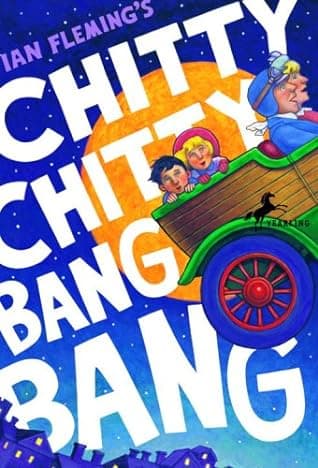
- Chitty Chitty Bang Bang
Ian Fleming
4.0 (13k) average on GoodreadsFantasyClassic children's adventure with an eccentric family, a touch of inventiveness, and a sense of wonder.
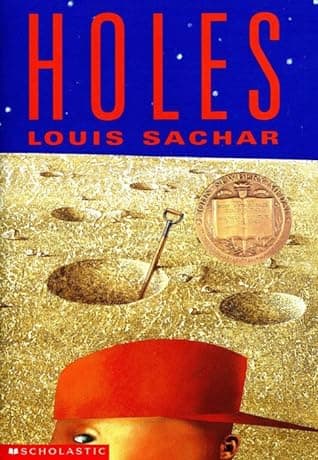
- Holes
Louis Sachar
4.0 (970k) average on GoodreadsChildren'sBoth Framed and Holes feature young protagonists in unusual, isolated settings, using a mystery as a vehicle for character development and thematic exploration. While Holes delves into themes of fate and injustice through a multi-generational curse, Framed focuses on the transformative power of art and community resilience. Sachar's plot is arguably more intricate and tightly woven in its mystery aspect, whereas Boyce prioritizes emotional depth and the social impact of art.
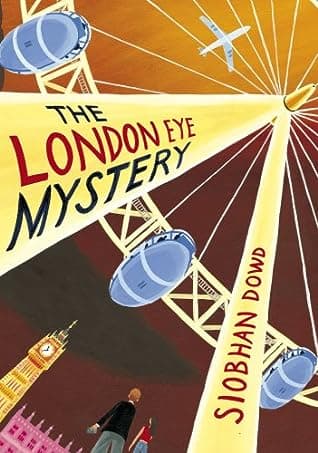
- The London Eye Mystery
Siobhan Dowd
3.9 (12k) average on GoodreadsChildren'sBoth books are children's mysteries set in the UK, featuring young protagonists who must solve a perplexing disappearance. Dowd's The London Eye Mystery is more of a classic 'whodunnit' with a strong emphasis on logical deduction and observational skills, particularly from its neurodivergent protagonist. Framed, while having a mystery, uses it more as a backdrop to explore broader themes of art's value and community spirit. Boyce's strength lies in character voice and social commentary, while Dowd excels at intricate plotting and unique character perspectives within the mystery genre.
- Harry Potter and the Sorcerer's Stone
J.K. Rowling
4.5 (7M) average on GoodreadsFantasyRescued from a miserable life under the stairs, an orphaned boy discovers he's a wizard destined for a magical school, where he uncovers a dangerous secret tied to the dark wizard who murdered his parents.
- The Hobbit, or There and Back Again
J.R.R. Tolkien
4.3 (2.9M) average on GoodreadsFantasyA comfort-loving hobbit named Bilbo Baggins is whisked away by a mischievous wizard and a band of dwarves on an unexpected journey to reclaim stolen treasure from a fearsome dragon, discovering courage and a magical ring along the way.
- Harry Potter and the Goblet of Fire
J.K. Rowling
4.6 (2.6M) average on GoodreadsFantasyA bewildered Harry Potter, underage and thrust into a deadly Triwizard Tournament, must brave dragons, mermaids, and a resurgent dark magic to survive a year that will forever alter the wizarding world.



Enjoyed the summary?
A summary gives you the shape of the book. The book itself has the detail, the examples and the voice.
Find Framed on AmazonAs an Amazon Associate, BookBrief earns from qualifying purchases. How we're funded