

Synopsis
Covers the whole plot, including the ending.
- Difficulty
- Easy
- Pacing
- Moderate
- Mood
- Heartwarming, Hopeful, Romantic, Authentic
- Read it if
- You enjoy YA romance with a strong, athletic female protagonist, small-town charm, and a focus on personal growth.
- Skip it if
- You prefer fantasy/sci-fi or stories without a high school sports focus.
Front and Center Plot Summary
Covers the whole plot, including the ending.
The End of the Off-Season, The Start of Something New
D.J. Schwenk begins her senior year, still affected by the previous spring's events. She has broken up with Brian Nelson, the football star from Hawley, and is trying to move on, though thoughts of him remain. She is also trying to understand her new friendship with Curtis, a student at Red Bend High. Her main focus is basketball, as college scouts are watching her closely. Her coach, Coach P., pushes her hard, seeing her potential for Division I. D.J. feels the weight of expectations from her family, the town, and herself, as she tries to prove her abilities and secure her future.
New Team Dynamics and Old Rivalries
The Red Bend basketball team faces a tough season after several key players graduated. D.J. is the clear leader, a role she is not entirely comfortable with but accepts. The team struggles early on, and D.J. feels pressure to carry them. Adding to her stress is the return of Maria, a talented player who transferred away years ago and is now back. Maria is a rival from D.J.'s past, and their competitive history immediately creates tension on the court, as D.J. tries to lead a united team.
Curtis and the Karaoke Challenge
D.J.'s relationship with Curtis, a quirky and charming junior from Red Bend, grows. He is clearly interested in her, and while D.J. enjoys his company, she hesitates to commit, still guarded after her breakup with Brian. Curtis, known for his love of karaoke, challenges D.J. to sing a duet with him at a local restaurant. This public performance pushes D.J. outside her comfort zone, forcing her to confront her shyness and the vulnerability of being in the spotlight outside of sports. The experience strengthens their bond, even as D.J. remains unsure about their future.
Brian's Return and Lingering Feelings
Just as D.J. starts to feel some normalcy, Brian Nelson reappears. He begins attending Red Bend basketball games; his presence is a constant reminder of their past. D.J. tries to ignore him, focusing on the game, but his eyes on her are noticeable. Their interactions are brief and awkward at first, full of unspoken tension. Brian eventually talks to her, expressing regret and a desire to reconcile. This brings back significant emotional conflict for D.J., who is still hurt but also acknowledges her lingering feelings for him.
Recruitment Pressures and College Visits
The college recruitment process intensifies for D.J. She receives offers and visits from several Division I schools, including the University of Wisconsin and the University of Iowa. These visits are exciting but overwhelming, as D.J. struggles to see herself at any of them. She feels pressure from her coach, her family, and the scouts to make the 'right' decision, one that will secure her future and validate her hard work. The choices before her represent a complete change of life, far from her familiar farm and family, adding to her conflict about identity and belonging.
The Farm's Future and Family Worries
Beneath D.J.'s basketball success, her family's dairy farm faces increasing financial difficulties. Her father, Joe, works tirelessly, but the economic climate for dairy farmers is tough. D.J. is aware of their struggles, and this adds another layer of pressure to her college decision. She feels loyal to her family and the farm, sometimes wondering if pursuing basketball is selfish when her family needs her. The potential sale of some land shows the precariousness of their situation and D.J.'s desire to help, even if it means sacrificing her own dreams.
Maria's Challenge and Team Unity
Maria's presence on the Red Bend team continues to create tension. Her individual playing style clashes with D.J.'s leadership and the team's need for cohesion. During practices and games, their rivalry often causes issues, affecting team morale. D.J. confronts Maria directly, on and off the court, to try and integrate her into the team. This challenge tests D.J.'s leadership skills beyond just scoring points; she must manage personalities and build unity to ensure the team's success, especially with their playoff hopes on the line.
The Playoff Push and Personal Sacrifices
As the Red Bend team makes its playoff push, D.J.'s commitment grows. She dedicates herself entirely to basketball, often sacrificing her social life and studies to practice and prepare. The physical demands are immense, and she plays through minor injuries, showing her determination. Each game becomes a high-stakes battle, and D.J. feels the weight of her team's and town's expectations. Her performance on the court is stellar, but the emotional and physical toll is significant, pushing her to her limits as she strives for a state championship.
Confronting Brian and Emotional Honesty
The tension between D.J. and Brian reaches a breaking point. After a difficult game or a poignant interaction, D.J. decides she can no longer avoid a direct conversation. They meet, and D.J. expresses her hurt and confusion from their past breakup, while Brian articulates his remorse and his continued feelings for her. This conversation is raw and emotional, forcing both of them to be honest about their mistakes and their lingering connection. It is a crucial step for D.J. in processing her emotions, whether it leads to reconciliation or final closure, allowing her to move forward with clarity.
The State Championship Game
The Red Bend team, against many expectations, makes it to the state championship game. D.J. is at the peak of her game, but the pressure is immense. The opposing team is formidable, and the game is close until the very end. D.J. makes crucial plays, both offensively and defensively, showing her leadership and skill. She rallies her teammates, including Maria, who finally fully integrates into the team's effort. The entire town is watching, and D.J. plays with fierce determination, understanding that this game is the culmination of years of hard work and sacrifice, and will define her high school legacy.
The Aftermath and Future Decisions
Following the state championship game, regardless of the outcome, D.J. processes the end of her high school basketball career. The immediate aftermath is a mix of exhaustion, relief, and reflection. She must now make her final decision about which college to attend, a choice that has significant implications for her athletic future, her education, and her independence. Simultaneously, she must clarify her relationships with both Brian and Curtis. With the intense pressure of basketball behind her, D.J. is finally able to look inward and decide what truly matters to her for the next chapter of her life.
Principal Figures
D.J. Schwenk
Protagonist
A pragmatic, talented dairy farm girl navigating senior year, basketball recruitment, and complicated relationships.
D.J. is a no-nonsense, hardworking high school senior from a dairy farm in rural Wisconsin. While incredibly talented on the basketball court, she often feels more comfortable in the background, a stark contrast to the spotlight now shining on her due to college recruitment. She's fiercely loyal to her family and the farm, which often influences her decisions. D.J. is intelligent, observant, and possesses a dry wit, though she struggles with expressing her deeper emotions, especially regarding her romantic relationships. Her pragmatic nature sometimes makes her seem aloof, but underneath she cares deeply about her friends, family, and team.
Relationships: Brian Nelson (Ex-boyfriend, complicated lingering feelings); Curtis (Friend, potential romantic interest); Coach P. (Mentor, demanding coach); Joe Schwenk (Dad) (Supportive but struggling father); Maria (Rival turned teammate)
Brian Nelson
Love Interest
D.J.'s ex-boyfriend from Hawley, a talented football player attempting to reconcile.
Brian is a football star from the rival town of Hawley, D.J.'s on-again, off-again boyfriend. He is charming and popular but has made mistakes in the past that led to their breakup. Brian is persistent in his attempts to win D.J. back, showing genuine remorse for his actions. He represents a past comfort and a deep, if complicated, emotional connection for D.J. His presence in Red Bend games stirs up old feelings and forces D.J. to confront their history. He is earnest in his desire to be with D.J. but must prove he has matured.
Relationships: D.J. Schwenk (Ex-girlfriend, enduring romantic interest)
Curtis
Love Interest/Friend
A quirky, karaoke-loving junior from Red Bend who is interested in D.J.
Curtis is a junior at Red Bend High School, known for his unique personality, love for karaoke, and genuine interest in D.J. He offers a stark contrast to Brian; he's less intense and more lighthearted, providing D.J. with a sense of fun and normalcy. Curtis is patient and understanding of D.J.'s guarded nature, allowing their friendship to develop organically. He's supportive of her basketball career but also pushes her gently to explore other aspects of herself, like singing. He represents a new, less complicated romantic possibility for D.J.
Relationships: D.J. Schwenk (Friend, romantic interest)
Coach P.
Supporting
D.J.'s demanding but supportive basketball coach.
Coach P. is the head basketball coach for Red Bend High, a stern but deeply committed mentor to D.J. She recognizes D.J.'s exceptional talent and pushes her relentlessly to reach her full potential, both as a player and a leader. Her expectations are high, but her belief in D.J. is unwavering. Coach P. plays a crucial role in D.J.'s college recruitment process, guiding her through the complexities and advocating for her. She represents the external pressure and high stakes of D.J.'s athletic career, but also a source of unwavering support and tough love.
Relationships: D.J. Schwenk (Coach/Player, mentor)
Joe Schwenk
Supporting
D.J.'s hardworking father, a dairy farmer facing financial struggles.
Joe Schwenk is D.J.'s father, a dedicated and hardworking dairy farmer. He is a man of few words but his love and support for D.J. are evident. He represents the roots and responsibilities of D.J.'s home life. The family farm is facing financial difficulties, which creates an undercurrent of worry for D.J. and influences her thoughts about her future. Joe's quiet strength and his deep connection to the land are foundational to D.J.'s identity, and she often seeks his understated wisdom and comfort.
Relationships: D.J. Schwenk (Father/Daughter)
Maria
Supporting/Rival
A talented basketball player and D.J.'s former rival, now back on the Red Bend team.
Maria is a skilled basketball player who previously played with D.J. but transferred away, only to return for their senior year. She is a natural talent, but her individualistic style and past rivalry with D.J. create tension on the team. Maria challenges D.J.'s leadership and forces her to confront issues of team cohesion and personal ego. While initially a source of conflict, her presence ultimately pushes D.J. to be a better leader and player, and they eventually learn to work together for the team's success.
Relationships: D.J. Schwenk (Teammate, former rival)
Amber
Supporting
D.J.'s loyal best friend and teammate.
Amber is D.J.'s best friend and a fellow basketball player. She is a steady and reliable presence in D.J.'s life, offering emotional support, advice, and a listening ear. Amber understands D.J.'s sometimes complicated nature and provides a grounding influence. She is a loyal friend who celebrates D.J.'s successes and helps her navigate her personal struggles, particularly concerning Brian and Curtis. Amber represents the importance of enduring friendships amidst D.J.'s senior year challenges.
Relationships: D.J. Schwenk (Best friend, teammate)
Winona
Supporting
D.J.'s younger sister.
Winona is D.J.'s younger sister. She provides a glimpse into D.J.'s family life beyond the farm work and basketball. Winona often offers a different perspective or lightheartedness to D.J.'s intense world. Her presence reminds D.J. of her responsibilities and connections at home, and the normalcy of family life away from the court. She looks up to D.J., but also has her own distinct personality and interests that occasionally clash with D.J.'s more serious demeanor.
Relationships: D.J. Schwenk (Sister)
Themes & Insights
Identity and Self-Discovery
D.J. struggles with who she is outside of being a basketball player and a farm girl. Her senior year forces her to confront her future, her relationships, and her own desires. The college recruitment process makes her question where she belongs and if she truly wants to leave her familiar life. Her interactions with Curtis, especially the karaoke challenge, push her to explore aspects of her personality beyond her athletic skills, forcing her to consider who she is when she's not 'D.J. the basketball star.'
“In photographs, of course, I’m always in the background. My whole life I’ve been in the background. But now, it turns out, other folks have big plans for D.J.”
The Weight of Expectations
D.J. faces great pressure from various sources: her coach, college scouts, her family's financial struggles, and the entire town of Red Bend. Everyone seems to have an opinion or a hope for D.J.'s future, particularly regarding her basketball career. This theme appears in the descriptions of college visits and the high-stakes playoff games, where D.J. feels the burden of carrying her team and fulfilling the dreams of others. She constantly battles the internal and external pressures to make the 'right' decision for her future, rather than just her own happiness.
“It was like everyone in Red Bend had a piece of my future already carved out for me. I just had to figure out if it was the piece I wanted.”
Love, Loss, and Second Chances
This theme explores D.J.'s complicated romantic life, particularly her lingering feelings for Brian Nelson and the emergence of Curtis. She is still healing from her past breakup but is forced to confront those emotions when Brian re-enters her life. The story looks at whether second chances are possible and if past hurts can truly be overcome. Simultaneously, her budding relationship with Curtis offers a different, potentially healthier, path forward, forcing D.J. to weigh her emotional investments and decide what kind of love she truly desires.
“He was a mistake I couldn't stop thinking about. And Curtis... Curtis was a possibility I was too scared to reach for.”
Loyalty vs. Personal Ambition
D.J.'s deep loyalty to her family and the struggling dairy farm often conflicts with her personal ambitions for a Division I basketball career. She feels a responsibility to her family and her home, sometimes questioning if pursuing her dreams is selfish. This internal conflict is highlighted by the family's financial struggles and the potential need to sell land. D.J. must navigate the tension between staying true to her roots and pursuing a future that takes her far away, ultimately deciding where her primary allegiance lies.
“Every time a scout talked about scholarships, I saw Dad's tired face, and the leaky roof of the milking parlor.”
Plot Devices & Literary Techniques
First-Person Narrative
The story is told entirely from D.J.'s perspective.
The novel employs a first-person narrative, allowing readers direct access to D.J.'s thoughts, feelings, and internal struggles. This intimate perspective helps to convey her dry wit, her pragmatic approach to life, and her underlying vulnerabilities. It makes her internal conflicts, such as her indecision about Brian and Curtis, and her anxieties about college, feel immediate and personal. The reader experiences the world through D.J.'s observant and often understated lens, making her growth and self-discovery more impactful.
Sports as Metaphor
Basketball serves as a central metaphor for life's challenges and D.J.'s personal growth.
Basketball is not just a sport in the novel; it's a powerful metaphor for D.J.'s life. The pressures of the game, the need for teamwork, the drive to win, and the physical and mental demands all mirror her personal struggles. Learning to lead her team, confronting rivals like Maria, and performing under pressure in crucial games reflect her journey in embracing her own leadership, overcoming personal conflicts, and stepping into the 'front and center' of her own life. The court becomes a proving ground for her character and her future.
Symbolism of the Dairy Farm
The farm represents D.J.'s roots, family, and the challenges of her rural life.
The Schwenk dairy farm is a potent symbol throughout the novel. It represents D.J.'s roots, her family's heritage, and the hardworking, grounded values she embodies. Its struggles highlight the financial pressures on her family and create a stark contrast to the glamorous world of Division I athletics. The farm symbolizes the comfort and familiarity D.J. might leave behind, but also the responsibilities she feels. It’s a constant reminder of where she comes from and helps ground her decisions about where she's going.
Flashbacks/Recollections
Brief moments where D.J. recalls past events, particularly with Brian.
The narrative uses subtle flashbacks or internal recollections, particularly when Brian Nelson reappears. These are not always explicit scene changes but rather D.J.'s internal musings and memories of past conversations, dates, or emotional moments with Brian. This device effectively conveys the lingering impact of their past relationship on D.J.'s present emotions and decisions, helping the reader understand the depth of their history without needing to explicitly recount previous events from the earlier books.
Front and Center Quotes
“I didn't choose to be a ballet dancer. I was chosen.”
“Every plié, every tendu, every grand jeté felt like a conversation with the universe.”
“Sometimes you have to break to truly see what you're made of.”
“Love isn't about finding someone perfect. It's about finding someone who makes your imperfections feel perfect.”
“The stage is a mirror. It shows you who you are, not just who you want to be.”
“There's a difference between wanting something and being willing to bleed for it.”
“He saw me, really saw me, not just the dancer, but the girl underneath the layers of tulle and ambition.”
“Fear can be a compass if you let it point you towards what you truly value.”
“Sometimes the greatest leaps aren't across the stage, but into the unknown.”
“My body was my instrument, but my heart was the conductor.”
“Being front and center isn't just about position; it's about owning your story.”
“The applause fades, but the feeling of dancing, truly dancing, stays with you.”
“Maybe happy ever after isn't a destination, but a series of beautiful, messy moments.”
“Every scar tells a story, and mine are a testament to how much I loved this life.”
Quiz
10 questions on the plot and the characters. Each answer comes with a short explanation.
Question 1
At the beginning of 'Front and Center,' what is D.J. Schwenk's initial desire regarding her role in her own life, specifically in photographs?
- To be the absolute center of attention.
- To remain in the background, like 'plain old background D.J.'
- To be a professional photographer.
- To avoid being in any photographs at all.
Show answer
B. To remain in the background, like 'plain old background D.J.' The book description explicitly states D.J.'s desire to go 'back to being plain old background D.J.' and mentions that in photographs, she's 'always in the background.'
Question 2
Which character from D.J.'s past is she determined to be 'done with' but keeps showing up?
- Winona Schwenk
- Curtis Schwenk
- Brian Nelson
- Kyle Booth
Show answer
C. Brian Nelson The summary clearly states, 'Not to mention Brian Nelson, who she should not be thinking about! Who she is done with, thank you very much. But who keeps showing up anyway...'
Question 3
Besides her own desire to be 'background D.J.', who has 'big plans' for D.J. Schwenk according to the book description?
- Her best friend and her English teacher.
- Her coach, college scouts, and town hoops fans.
- Her parents and her siblings.
- A local newspaper reporter and the school principal.
Show answer
B. Her coach, college scouts, and town hoops fans. The description lists her coach, college scouts, and all the town hoops fans as having 'big plans' for D.J.
Question 4
What is the primary conflict D.J. faces at the outset of 'Front and Center' regarding her personal visibility?
- She wants to be famous, but no one recognizes her.
- She desires to retreat into the background, but others are pushing her into the spotlight.
- She is constantly seeking attention, but her efforts are ignored.
- She is trying to avoid college, but her coach is making her apply.
Show answer
B. She desires to retreat into the background, but others are pushing her into the spotlight. D.J. wants to be 'plain old background D.J.' but 'other folks have big plans for D.J.', indicating a conflict between her desire for anonymity and external pressures for her to be 'front and center'.
Question 5
In 'Front and Center,' D.J. is described as stepping out from behind what specific sports line?
- The three-point line
- The half-court line
- The free-throw line
- The baseline
Show answer
C. The free-throw line The description states: 'Now D.J. steps out from behind the free-throw line in this third installment.'
Question 6
A specific junior from Red Bend High School is mentioned as being 'keen for romance and karaoke.' What does this detail suggest about D.J.'s romantic life in this book?
- She is solely focused on her basketball career.
- She has a new potential romantic interest besides Brian Nelson.
- She is starting a karaoke club at school.
- She is trying to get Brian Nelson to do karaoke with her.
Show answer
B. She has a new potential romantic interest besides Brian Nelson. The mention of 'A certain Red Bend High School junior who’s keen for romance and karaoke' indicates a new romantic entanglement or possibility for D.J., separate from her complicated feelings for Brian Nelson.
Question 7
What phrase is used to describe D.J. Schwenk's communication style, indicating a core aspect of her personality established in previous books?
- Quietly observant
- Always joking
- Straight-talking
- Deeply philosophical
Show answer
C. Straight-talking The description reminds readers, 'Readers first fell in love with straight-talking D.J. Schwenk in Dairy Queen,' highlighting her direct communication style.
Question 8
The summary mentions D.J. going back to being 'plain old background D.J.' after 'five months of sheer absolute craziness.' What does this 'craziness' likely refer to in the context of the series?
- A period of intense academic pressure and exams.
- The events and challenges D.J. faced in the previous two books, 'Dairy Queen' and 'The Off Season'.
- Her family moving to a new town and her adjusting to a new school.
- A summer spent traveling abroad with her friends.
Show answer
B. The events and challenges D.J. faced in the previous two books, 'Dairy Queen' and 'The Off Season'. Given that 'Front and Center' is the third installment, the 'five months of sheer absolute craziness' logically refers to the significant plot developments, personal growth, and challenges D.J. experienced in the preceding books, particularly 'The Off Season'.
Question 9
How does the phrase 'D.J. steps out from behind the free-throw line' contribute to the central theme of 'Front and Center'?
- It literally means she will no longer be playing basketball.
- It symbolizes her transition from a supporting role to a more prominent, central position in her life and story.
- It suggests she will become a better free-throw shooter.
- It indicates she is changing sports to track and field.
Show answer
B. It symbolizes her transition from a supporting role to a more prominent, central position in her life and story. This phrase is a metaphor. The free-throw line is a specific, often solitary, position in basketball. Stepping out from behind it, combined with the title 'Front and Center' and D.J.'s desire to be 'background,' strongly symbolizes her moving from a less visible or more constrained role to taking a more central and exposed position in her life, facing new challenges and opportunities head-on.
Question 10
Considering the previous books 'Dairy Queen' and 'The Off Season,' what does the recurring presence of Brian Nelson, despite D.J.'s desire to be 'done with' him, imply about their relationship in 'Front and Center'?
- Their relationship is completely over and will not be a factor.
- Their romantic connection is likely complex and unresolved, continuing to be a significant plot point.
- Brian is only present as a rival on the basketball court.
- D.J. has forgotten about Brian entirely and moved on.
Show answer
B. Their romantic connection is likely complex and unresolved, continuing to be a significant plot point. The text 'Who she should not be thinking about! Who she is done with, thank you very much. But who keeps showing up anyway...' strongly indicates that despite D.J.'s intentions, Brian Nelson remains a significant and likely complicated romantic or emotional presence in her life, suggesting an unresolved relationship dynamic central to the plot.
Front and Center FAQ
What is the central conflict D.J. Schwenk faces at the beginning of 'Front and Center'?
D.J. initially wants to return to a 'plain old background' existence after a tumultuous period, but finds herself thrust into the spotlight due to her basketball talent. Her coach and college scouts have significant plans for her, forcing her to confront her desire for anonymity versus her emerging potential and responsibilities.
How does D.J.'s basketball career evolve in this installment compared to previous books?
In 'Front and Center,' D.J. moves beyond simply playing basketball to becoming a central figure in her team's success, attracting college scouts and significant town attention. This marks a shift from her earlier struggles and development in 'Dairy Queen' and 'The Off Season,' where she was still finding her footing on the court.
Who are the primary romantic interests D.J. navigates in 'Front and Center'?
D.J. deals with two main romantic interests: a new junior from Red Bend High School who is keen on romance and karaoke, and Brian Nelson. While she believes she is 'done with' Brian, he consistently reappears, complicating her emotional landscape and making her question her past feelings.
What role do college scouts play in D.J.'s storyline?
College scouts represent the external pressure and the potential future D.J. could have if she embraces her basketball talent. Their presence signifies the seriousness of her skills and the major life decisions she faces regarding her athletic future, pushing her out of her comfort zone.
How does the town's perception of D.J. change in 'Front and Center'?
The town's perception shifts from D.J. being a participant in basketball to being a key player and a source of pride, with 'all the town hoops fans' taking a keen interest in her. This new attention adds a layer of public expectation and scrutiny to her personal journey.
What specific 'craziness' from the previous five months is hinted at that D.J. wants to escape?
The synopsis alludes to 'five months of sheer absolute craziness,' which likely refers to the emotional and athletic challenges D.J. faced in 'The Off Season.' This period would have included significant personal growth, difficult decisions, and possibly relationship drama, making her yearn for a quieter existence.
How does D.J.'s internal struggle about being 'in the background' manifest beyond literal photographs?
D.J.'s desire to be 'in the background' extends beyond photos to her general approach to life and her discomfort with attention. This internal conflict manifests as a reluctance to fully embrace her talent and the spotlight, creating a tension between her natural inclination and the opportunities presented to her.
What is the significance of the Red Bend High School junior's interest in 'karaoke' specifically?
The mention of 'karaoke' with the new romantic interest subtly highlights a contrast with D.J.'s typically more grounded and less outwardly performative personality. It suggests a potential for D.J. to explore new social activities and perhaps a lighter, more carefree side of romance compared to her past relationships.
How does Brian Nelson's continued presence challenge D.J.'s self-perception and resolve?
Brian Nelson's persistent reappearance directly challenges D.J.'s declaration that she is 'done with' him, forcing her to confront unresolved feelings and question her own boundaries. His presence makes her doubt her emotional progress and whether she has truly moved on, creating significant internal turmoil.
What does D.J.'s coach's 'big plans' for her imply about her growth as an athlete?
The coach's 'big plans' signify D.J.'s significant development as an athlete, indicating that she has moved from a promising player to a vital, high-performing asset. This implies a level of skill, leadership, and reliability that her coach recognizes and intends to leverage for the team's success.
How does D.J.'s 'straight-talking' nature contribute to her internal and external conflicts?
D.J.'s 'straight-talking' nature means she is often direct and honest, which can be both a strength and a weakness. While it allows her to express herself clearly, it can also lead to blunt assessments or difficulties in navigating complex emotional situations, particularly when her feelings about Brian Nelson are not so straightforward.
In what ways does 'Front and Center' represent D.J. 'stepping out from behind the free-throw line' both literally and metaphorically?
Literally, 'stepping out from behind the free-throw line' implies D.J. is becoming a more dynamic, all-around player rather than just a shooter. Metaphorically, it means she is moving from a supporting role in her own life to a central, prominent figure, facing challenges and making decisions that directly impact her future.
Is D.J.'s desire to be 'background' a sign of humility or a fear of failure/scrutiny?
D.J.'s desire to be 'background' is likely a complex mix of both. While it could stem from genuine humility, it also suggests a fear of the pressure, expectations, and potential scrutiny that come with being in the spotlight. Her past experiences might have taught her that visibility can lead to complications and emotional challenges.
What might be the thematic implications of D.J. being a 'Dairy Queen' character in a book titled 'Front and Center'?
The juxtaposition of 'Dairy Queen' (implying small-town, perhaps unassuming origins) and 'Front and Center' (implying prominence and exposure) highlights D.J.'s journey of growth. It suggests she is evolving beyond her roots, grappling with how her identity as a 'Dairy Queen' girl fits with her new, more public persona.
Does the book suggest that D.J. will ultimately embrace the spotlight, or find a balance between background and front-and-center roles?
The book seems to set up a conflict where D.J. must confront her discomfort with being 'front and center.' It is likely she will learn to embrace her talent and the attention it brings, but the narrative will probably explore her finding a personal balance, rather than fully transforming into someone who revels in constant attention.
How does the author use the phrase 'she should not be thinking about! Who she is done with, thank you very much' to reveal D.J.'s internal conflict about Brian Nelson?
This phrase uses D.J.'s internal monologue and direct address ('thank you very much') to express her defiant, yet clearly struggling, attempt to convince herself she's over Brian. The forceful repetition and internal argument reveal that, despite her assertions, he still occupies her thoughts and emotions, highlighting her deep internal conflict.
What kind of 'ups and downs' from 'The Off Season' might be influencing D.J.'s current desire for a quieter life?
The 'ups and downs' in 'The Off Season' likely involved significant challenges related to her basketball performance, team dynamics, family issues, and the complexities of her relationship with Brian Nelson. These experiences would have been emotionally taxing, making a return to a 'background' role appealing as a way to avoid further drama.
How might D.J.'s growth as a basketball player parallel her emotional maturity in this book?
As D.J. develops more sophisticated basketball skills and takes on a leadership role on the court, her emotional maturity will likely mirror this growth. Handling college scouts and complex romantic situations will require her to make more mature decisions, communicate effectively, and understand her own feelings more deeply, much like a seasoned player understands the game.
Similar books
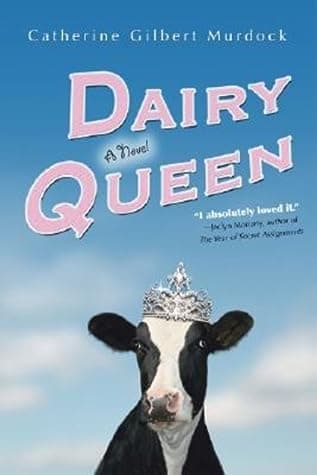
- Dairy Queen
Catherine Gilbert Murdock
3.7 (27k) average on GoodreadsYoung AdultThis is the preceding book in the same series, featuring the same protagonist and setting.
- The Summer I Turned Pretty
Jenny Han
3.9 (152k) average on GoodreadsYoung AdultFeatures a love triangle, coming-of-age themes, and a focus on summer romance and family dynamics.
- The Truth About Forever
Sarah Dessen
4.1 (209k) average on GoodreadsYoung AdultWhile both novels explore young adult romance and personal growth, Murdock's Front and Center offers a stronger emphasis on competitive sports and team dynamics as a catalyst for development. Dessen's work, though excellent in character-driven romance and grief processing, typically lacks the structured, goal-oriented environment of athletic competition found in Murdock's narrative. Murdock integrates athletic challenges more deeply into the protagonist's emotional journey.
- Harry Potter and the Sorcerer's Stone
J.K. Rowling
4.5 (7M) average on GoodreadsFantasyRescued from a miserable life under the stairs, an orphaned boy discovers he's a wizard destined for a magical school, where he uncovers a dangerous secret tied to the dark wizard who murdered his parents.
- The Hunger Games
Suzanne Collins
4.3 (6.4M) average on GoodreadsFantasyIn a future where children fight to the death on live television, Katniss Everdeen volunteers for the arena, turning a death sentence into a fight for survival and a spark of rebellion.
- To Kill a Mockingbird
Harper Lee
4.3 (4.5M) average on GoodreadsHistorical FictionIn the 1930s Jim Crow South, Harper Lee writes about racial injustice, moral growth, and the quiet courage of a lawyer father, Atticus Finch, as seen through his young daughter's eyes.





Enjoyed the summary?
A summary gives you the shape of the book. The book itself has the detail, the examples and the voice.
Find Front and Center on AmazonAs an Amazon Associate, BookBrief earns from qualifying purchases. How we're funded