

Synopsis
Covers the whole plot, including the ending.
- Difficulty
- Easy
- Pacing
- Moderate
- Mood
- Thought-provoking, Poignant, Reflective, Hopeful
- Read it if
- You want a classic coming-of-age story tackling themes of justice, prejudice, and empathy through the eyes of a child, set against the backdrop of the American South.
- Skip it if
- You prefer fast-paced plots with constant action, or find discussions of racial injustice and legal drama too heavy.
To Kill a Mockingbird Plot Summary
Covers the whole plot, including the ending.
A Summer of Curiosity and Mystery
The story begins in Maycomb, Alabama, during the Great Depression. Six-year-old Jean Louise 'Scout' Finch narrates. She lives with her older brother, Jem, and their widowed father, Atticus, a lawyer. Their summer is made more interesting by Charles Baker 'Dill' Harris, a friend who stays with his aunt next door. The children become interested in their mysterious neighbor, Arthur 'Boo' Radley. He is a recluse no one has seen in years. They hear rumors about Boo, saying he is a bad person. Their interest leads them to try to make Boo come out of his house, even though Atticus tells them to leave him alone. They dare each other to touch the house and look through windows, but they get no response.
School, Morals, and Secret Gifts
Scout starts school, which she finds disappointing. Her teacher, Miss Caroline Fisher, does not understand Maycomb's ways or Scout's reading ability. The children's interest in Boo Radley continues. They find small gifts in a knothole of an old oak tree on the Radley property: chewing gum, polished pennies, carved soap figures of themselves, more gum, a tarnished medal, and a pocket watch. They think Boo is leaving them, creating a secret way to communicate. But Nathan Radley, Boo's older brother, fills the knothole with cement, saying the tree is dying. This stops the connection, making the children confused and sad.
A Fire, a Blanket, and a New Case
Winter brings snow to Maycomb, and Jem and Scout build a snowman. Later, Miss Maudie Atkinson's house burns down. During the fire, while Scout is outside in the cold, someone silently puts a blanket around her shoulders. She later realizes, with Atticus's help, that it was Boo Radley. This event changes how they think about Boo. Soon after, Atticus takes on a case defending Tom Robinson, a Black man accused of raping Mayella Ewell, a white woman. This decision immediately brings out anger and prejudice from the white community in Maycomb. It shows Jem and Scout the unfairness of racial injustice in their town.
Prejudice and Principles
Atticus and his children face the town's racial prejudice. Scout gets into fights at school defending her father. Atticus tells his children it is important to stand up for what is right, even if it is not popular. He teaches them about empathy. Jem and Scout also meet Mrs. Henry Lafayette Dubose, an elderly, ill-tempered woman. She often insults them, especially about Atticus defending Tom Robinson. Jem, in anger, destroys Mrs. Dubose's camellia bushes. As punishment, he has to read to her daily. After she dies, Atticus explains that Mrs. Dubose was fighting a morphine addiction and wanted to die free of the drug. Jem's reading helped her, teaching the children about courage.
The Mob and the Jailhouse
As Tom Robinson's trial nears, tensions in Maycomb grow. Atticus, worried for Tom's safety, sits outside the jailhouse one night to protect him from a lynch mob. Jem, Scout, and Dill, worried about Atticus, sneak out and find him surrounded by angry men, including Mr. Walter Cunningham Sr. Scout, not fully understanding the situation, recognizes Mr. Cunningham. She starts talking to him about his son and their shared experiences, reminding him of his humanity. Her innocent conversation makes the mob ashamed, and they leave. This moment shows Scout's ability to connect with people and Atticus's commitment to justice.
The Trial Begins: Ewell's Testimony
The trial of Tom Robinson begins, with the entire town at the courthouse. Atticus presents his case, carefully questioning witnesses. The first witness is Bob Ewell, Mayella's abusive father. He testifies that he saw Tom Robinson raping his daughter. Atticus shows problems in Ewell's testimony, especially about which eye Mayella was bruised on and Ewell's left-handedness. Atticus suggests Ewell, not Tom, might have beaten Mayella. Ewell's aggressive behavior on the stand makes him less believable to objective observers. However, the deep-seated racial prejudices of the white jury remain a strong, unspoken factor.
Mayella's Deception and Tom's Truth
Mayella Ewell takes the stand, looking afraid. She says Tom Robinson assaulted her, but her testimony has contradictions when Atticus questions her. She struggles to keep her story straight, especially when Atticus mentions her father's abuse and the lack of medical proof. Tom Robinson then testifies. He says he often helped Mayella with chores. On the day in question, she invited him into the house and tried to kiss him. When he refused, her father, Bob Ewell, saw them and started beating her. Tom, despite telling the truth, makes a mistake by saying he felt 'sorry' for Mayella. A Black man expressing pity for a white woman is seen as an unforgivable offense by the prejudiced jury.
The Verdict and Its Aftermath
Atticus makes a strong closing argument, appealing to the jury's sense of justice. He points out the clear evidence of Tom's innocence and the Ewells' lies. However, the all-white jury finds Tom guilty. The verdict upsets Jem, who cannot understand such injustice. Atticus is disappointed but remains calm. The Black community is sad but thankful for Atticus's efforts, sending him food. The trial's outcome shows the strong racial prejudice in Maycomb, proving that a Black man, no matter how innocent, could not win against a white person's word.
Tragedy and Vengeance
The injustice continues when Tom Robinson is shot and killed trying to escape from prison. The guards say he was fleeing, but Atticus believes it was a desperate act from a man who had lost hope. This news affects the children and the community, showing the terrible results of racial prejudice. Bob Ewell, despite winning the case, feels shamed by Atticus exposing his lies and abuse during the trial. He publicly threatens Atticus and his family, spitting in Atticus's face and promising revenge. These threats worry the Finch family, suggesting the conflict from the trial is not over.
Halloween Night Attack
On Halloween night, Maycomb has a pageant. Scout, dressed as a ham, misses her cue, causing a small commotion. On their way home through the dark woods, Jem and Scout are attacked. The attacker breaks Jem's arm and tries to hurt Scout. Scout's ham costume, bulky and protective, saves her from serious injury. Jem loses consciousness. In the dark, someone steps in, fighting off their attacker. Scout, confused, hears a struggle and sees a man carrying Jem back to their house, where Atticus and Aunt Alexandra are waiting, worried.
The Protector Revealed
At the Finch house, Sheriff Heck Tate arrives and finds Bob Ewell dead, with a knife under the tree where the attack happened. It is clear Ewell attacked the children. Scout, still in shock, realizes that the rescuer who carried Jem home is Boo Radley. Atticus thinks Jem killed Ewell in self-defense. But Sheriff Tate, knowing the truth, says Ewell 'fell on his knife.' Tate's decision is a kind lie, meant to protect Boo Radley from public attention. He argues that bringing Boo into the spotlight would be wrong given his private nature.
A Moment of Understanding
Scout walks Boo Radley home, arm-in-arm. It is a quiet moment of connection. On his porch, Scout looks at the neighborhood, finally seeing it from Boo's perspective. She thinks about the past few years—the gifts in the tree, the blanket during the fire, his silent watching, and his saving her and Jem. She understands that Boo has been a protective figure, not the monster of childhood stories. This experience helps Scout grow morally and empathetically. It shows Atticus's lesson about understanding others. Boo then goes back into his house, out of public view, but he has left a lasting impression on Scout's understanding of people.
To Kill a Mockingbird Characters
Jean Louise 'Scout' Finch
Protagonist
The intelligent, tomboyish narrator who matures throughout the story.
Scout is the precocious and observant narrator of the story, a young girl growing up in Maycomb, Alabama. Initially naive and quick to resort to physical fights, she gradually develops a deeper understanding of human nature, justice, and prejudice through her father's guidance and the events surrounding Tom Robinson's trial. She is intelligent, questioning, and struggles with the gender expectations of her time, preferring overalls to dresses. Her innocence often allows her to see situations with a clarity that adults lack, as shown when she disarms the lynch mob. Her journey is one of learning empathy and confronting the complex moral landscape of her community.
Relationships: Atticus Finch (daughter and student); Jeremy 'Jem' Finch (younger sister and close companion); Charles Baker 'Dill' Harris (childhood friend and summer companion); Arthur 'Boo' Radley (mysterious neighbor, later a protector and object of empathy)
Atticus Finch
Protagonist/Moral Compass
A principled and morally upright lawyer who defends Tom Robinson.
Atticus is Scout and Jem's father, a widowed lawyer in Maycomb known for his integrity, quiet strength, and unwavering moral compass. He is committed to justice and equality, famously taking on the defense of Tom Robinson despite widespread racial prejudice, knowing it will alienate him from much of the white community. Atticus teaches his children empathy, courage, and the importance of standing up for what is right, even when it is difficult. He is a man of few words but profound wisdom, always leading by example and instilling strong values in his children. His calm demeanor and intellectual approach to conflict make him a revered figure.
Relationships: Jean Louise 'Scout' Finch (father and moral guide); Jeremy 'Jem' Finch (father and moral guide); Calpurnia (respected housekeeper and surrogate mother); Tom Robinson (defense attorney and advocate)
Jeremy 'Jem' Finch
Supporting/Protagonist
Scout's older brother, who struggles with the injustice of the world.
Jem is Scout's older brother, about four years her senior, and her constant companion. He is more mature and sensitive than Scout, often taking on a protective role. Jem's journey through the novel is marked by a gradual disillusionment with the justice system and the perceived goodness of his community. He is deeply affected by the injustice of Tom Robinson's trial, struggling to reconcile the ideals of fairness with the reality of prejudice. His broken arm at the end of the book becomes a symbol of his coming-of-age and the painful lessons he learns about the world's harshness, but also its capacity for quiet heroism.
Relationships: Jean Louise 'Scout' Finch (older brother and close companion); Atticus Finch (son and student); Charles Baker 'Dill' Harris (childhood friend and summer companion); Arthur 'Boo' Radley (mysterious neighbor, later a protector)
Arthur 'Boo' Radley
Supporting/Symbolic
The reclusive neighbor, a source of fear and fascination, who ultimately acts as a protector.
Boo Radley is the mysterious, reclusive neighbor who lives next door to the Finches. He is the subject of numerous dark rumors and childhood superstitions, portrayed as a malevolent phantom by the townspeople. For much of the novel, he remains unseen, communicating only through the gifts left in the knothole of a tree. His isolation is a result of past trauma and the town's gossip. Despite the fear he inspires, Boo is ultimately revealed to be a gentle, watchful, and protective figure. His heroic act of saving Jem and Scout from Bob Ewell, and his quiet retreat afterward, solidifies his role as the 'mockingbird' – an innocent who has been harmed by the world.
Relationships: Jean Louise 'Scout' Finch (mysterious guardian, later an object of empathy); Jeremy 'Jem' Finch (mysterious guardian, later an object of empathy); Nathan Radley (older brother and caretaker)
Charles Baker 'Dill' Harris
Supporting
Scout and Jem's summer friend, who represents childhood imagination and sensitivity.
Dill is Jem and Scout's best friend who spends his summers with his Aunt Rachel next door to the Finches. He is a small, imaginative boy with a vivid imagination and a penchant for elaborate storytelling. Dill is fascinated by Boo Radley, often instigating the children's attempts to make him come out. He comes from a somewhat unstable home life, which makes him sensitive to loneliness and injustice. During the trial, Dill is deeply upset by the way Tom Robinson is treated by the prosecutor, Mr. Gilmer, crying uncontrollably and highlighting the emotional toll of prejudice on the innocent bystander. He represents the innocent, unburdened perspective of childhood.
Relationships: Jean Louise 'Scout' Finch (childhood friend and summer companion); Jeremy 'Jem' Finch (childhood friend and summer companion); Aunt Rachel Haverford (aunt and summer guardian)
Calpurnia
Supporting
The Finch family's Black housekeeper, a mother figure and cultural bridge.
Calpurnia is the Finch family's stern but loving Black housekeeper and cook. She serves as a surrogate mother figure to Scout and Jem, providing discipline, comfort, and moral guidance. Calpurnia is highly educated for a Black woman of her time and acts as a bridge between the white and Black communities in Maycomb. She takes the children to her church, the First Purchase African M.E. Church, exposing them to a different side of Maycomb and helping them understand the challenges faced by the Black community. Her presence in the Finch household embodies Atticus's open-mindedness and commitment to treating all people with respect.
Relationships: Atticus Finch (employer and respected colleague); Jean Louise 'Scout' Finch (surrogate mother and caretaker); Jeremy 'Jem' Finch (surrogate mother and caretaker)
Tom Robinson
Supporting/Victim
The innocent Black man falsely accused of rape, whose trial exposes Maycomb's prejudice.
Tom Robinson is a kind, honest, and hardworking Black man with a crippled left arm, who is falsely accused of raping Mayella Ewell. He is a symbolic 'mockingbird' in the novel, an innocent person who is destroyed by the evil of others. Despite overwhelming evidence of his innocence and Atticus's compelling defense, Tom is convicted by an all-white jury, highlighting the deep-seated racial prejudice of Maycomb. His tragic death while attempting to escape prison underscores the hopelessness and injustice faced by Black individuals in the Jim Crow South. Tom's character embodies the devastating consequences of racial hatred and the fragility of justice.
Relationships: Atticus Finch (client and defense attorney); Mayella Ewell (accuser and alleged victim); Helen Robinson (wife)
Mayella Ewell
Antagonist/Victim
Bob Ewell's abused daughter, who falsely accuses Tom Robinson.
Mayella Ewell is the lonely, abused, and unloved daughter of Bob Ewell. She is a pitiful figure, trapped in a cycle of poverty and violence, and desperate for human connection. It is implied that her father abuses her, and she makes advances towards Tom Robinson, which he gently rejects. To cover her shame and fear of her father's wrath, she falsely accuses Tom of rape. Her testimony is inconsistent and driven by fear and social pressure, making her both an antagonist in Tom's trial and a victim of her own circumstances and the rigid social structures of Maycomb. She represents the destructive power of shame and prejudice.
Relationships: Bob Ewell (abusive father); Tom Robinson (accuser)
Bob Ewell
Antagonist
The abusive, prejudiced father who falsely accuses Tom Robinson and later attacks the Finch children.
Bob Ewell is the main antagonist of the novel, the abusive, ignorant, and prejudiced father of Mayella Ewell. He represents the worst aspects of Maycomb society – poverty, racism, and malice. He is a lazy, drunkard who lives off welfare and has no respect for anyone, especially Black people. He orchestrates the false accusation against Tom Robinson to cover up his own abuse of Mayella and to save face. After the trial, feeling humiliated by Atticus, he seeks revenge, eventually attacking Jem and Scout. His death at the hands of Boo Radley is a consequence of his own evil actions and a symbolic defeat of the prejudice he embodies.
Relationships: Mayella Ewell (abused daughter); Tom Robinson (false accuser)
Miss Maudie Atkinson
Supporting
The Finches' wise and benevolent neighbor, a voice of reason and optimism.
Miss Maudie Atkinson is a kind, intelligent, and strong-willed neighbor who serves as a positive female role model for Scout. She loves gardening, baking, and is an outspoken critic of hypocrisy and prejudice in Maycomb. She offers Scout comfort and wisdom, often explaining the complexities of the town and its people in a way Scout can understand. After her house burns down, she remains optimistic and resilient, embodying a spirit of hope. Miss Maudie supports Atticus throughout the trial, providing a voice of reason and moral clarity that counteracts the prevailing prejudice of the community.
Relationships: Jean Louise 'Scout' Finch (mentor and friend); Atticus Finch (close friend and confidante)
Aunt Alexandra Hancock
Supporting
Atticus's traditional sister, who struggles to understand Maycomb's social dynamics.
Aunt Alexandra is Atticus's sister, who comes to live with the Finches during the trial to provide a feminine influence for Scout and to help manage the household. She is a strong-willed woman who values family heritage, social conventions, and the rigid class structure of Maycomb. Initially, she clashes with Scout's tomboyish nature and Atticus's unconventional parenting style. While she holds some prejudiced views, she also cares deeply for her family and eventually shows concern and affection for the children. Her presence highlights the societal expectations and traditions that Atticus often challenges.
Relationships: Atticus Finch (sister); Jean Louise 'Scout' Finch (aunt and influence on femininity); Jeremy 'Jem' Finch (aunt)
Heck Tate
Supporting
The Sheriff of Maycomb, a fair and pragmatic lawman.
Heck Tate is the Sheriff of Maycomb County, a decent and fair-minded man who, despite his position, understands the limitations and complexities of justice in their prejudiced society. He is a pragmatic individual who tries to do what is right within the confines of the law, but also recognizes when a 'white lie' is necessary to protect an innocent person. His decision to cover up the circumstances of Bob Ewell's death to protect Boo Radley demonstrates his moral judgment and his understanding of 'true justice' over strict legalistic interpretation, ultimately prioritizing the well-being of a vulnerable individual.
Relationships: Atticus Finch (colleague and friend); Arthur 'Boo' Radley (protector)
To Kill a Mockingbird Themes
Racial Injustice and Prejudice
This is the most important theme, seen through Tom Robinson's trial. The book shows the deep racism of the Jim Crow South, where a Black man's word was automatically dismissed against a white person's, regardless of proof. Tom Robinson's unjust conviction and death show the terrible effects of prejudice and the system's failure to provide justice for Black people. This theme is explored through Atticus's defense, the town's reaction, and the children's growing awareness of unfairness, especially Jem's sadness over the verdict.
“'You never really understand a person until you consider things from his point of view . . . until you climb into his skin and walk around in it.”
Empathy and Understanding
Atticus often teaches his children about empathy. He tells them to 'walk around in someone else's skin' before judging. This theme is key to Scout's growth. She learns to see the world from different views, whether it is Mrs. Dubose, Mayella Ewell, or Boo Radley. Her final act of walking Boo home, standing on his porch and seeing the neighborhood through his eyes, completes this lesson. It helps her move past childhood fears to understand human goodness and suffering.
“Mockingbirds don't do one thing but make music for us to enjoy. They don't eat up people's gardens, don't nest in corncribs, they don't do one thing but sing their hearts out for us. That's why it's a sin to kill a mockingbird.”
Loss of Innocence and Coming of Age
The novel is a coming-of-age story, following Scout and Jem's journey from childhood innocence to a more complex understanding of the world. The Tom Robinson trial, especially, forces them to face evil, injustice, and prejudice in their seemingly peaceful town. Jem's deep sadness at the verdict and Scout's realization about Boo Radley's true nature are important steps in their development. They must let go of naive views and deal with the complexities of human morality.
“There are just some kind of men who—who're so busy worrying about the next world they've never learned to live in this one, and you can look down the street and see the results.”
Moral Courage vs. Physical Courage
Atticus defines courage not as having a gun, but as 'when you know you're licked before you begin but you begin anyway and you see it through no matter what.' Atticus shows this by defending Tom Robinson, knowing he will likely lose and face criticism. Mrs. Dubose also shows courage in her fight against morphine addiction. The book contrasts this with mob behavior or Bob Ewell's violence. It shows that true strength is in upholding principles and fighting for justice, not in aggression or conforming to social pressure.
“I wanted you to see what real courage is, instead of getting the idea that courage is a man with a gun in his hand. It's when you know you're licked before you begin but you begin anyway and you see it through no matter what.”
The Coexistence of Good and Evil
Maycomb has both good people (Atticus, Miss Maudie, Calpurnia, Boo Radley) and bad people (Bob Ewell, the prejudiced jury, the lynch mob). The children's experiences show them this mix. The gifts from Boo Radley represent hidden goodness. His saving the children from Bob Ewell shows that good can come from unexpected places to confront evil. The novel suggests that while evil exists, acts of kindness, courage, and empathy can resist it, even if the fight continues.
“As I made my way home, I thought of Atticus's advice to me. I would never understand people until I stood in their shoes and walked around in them.”
Plot Devices & Literary Techniques
First-Person Narrative (Child Narrator)
Scout's innocent perspective offers a unique lens on complex social issues.
The story is told through the eyes of six-year-old (and later eight-year-old) Scout Finch. This narrative choice allows Harper Lee to present complex themes of prejudice, justice, and morality through an innocent, yet observant, lens. Scout's limited understanding and unfiltered reactions highlight the absurdity and cruelty of adult prejudices, making the social commentary more poignant. As she matures, her evolving perspective also reflects the novel's coming-of-age theme, showing her growing comprehension of the world's complexities. Her voice is both humorous and insightful, often capturing truths that adults overlook.
The Mockingbird Symbolism
A central metaphor representing innocence harmed by evil.
The mockingbird is a powerful symbol throughout the novel. As Miss Maudie explains, mockingbirds do no harm, only bring joy through their song, making it a 'sin to kill a mockingbird.' This metaphor is applied to several characters, most notably Tom Robinson, who is an innocent man destroyed by the prejudice of others, and Boo Radley, a reclusive but benevolent figure who is misunderstood and harmed by societal rumors and expectations. Protecting Boo from public scrutiny at the end of the novel is explicitly framed as not 'killing a mockingbird,' reinforcing the idea of preserving innocence from a cruel world.
The Radley House and Boo Radley
A gothic element representing fear of the unknown and societal judgment.
The Radley house, with its mysterious, reclusive inhabitant, Boo Radley, serves as a gothic element that introduces an initial sense of fear and fascination for the children. It represents the unknown and the power of rumor and gossip to create a 'monster' out of an innocent. As the story progresses, the house and Boo become a symbol of compassion and protection. The gifts in the knothole and Boo's ultimate act of heroism subvert the initial fear, demonstrating that appearances can be deceiving and that goodness can exist even in the most isolated and misunderstood individuals, challenging the children's preconceived notions.
The Knothole Gifts
A silent communication device symbolizing connection and hidden kindness.
The small gifts left by Boo Radley in the knothole of the oak tree are a crucial plot device. They serve as Boo's only means of communication with the outside world, particularly with Jem and Scout. These seemingly insignificant items—gum, pennies, soap carvings—symbolize Boo's hidden kindness, his silent watchfulness over the children, and his desire for connection. When Nathan Radley cements the knothole, it represents a cruel severing of this innocent bond, intensifying the children's sadness and sense of loss, and further highlighting Boo's isolation. It builds anticipation for Boo's eventual direct appearance.
The Courtroom as a Microcosm
The trial functions as a condensed representation of Maycomb's societal flaws.
The courtroom during Tom Robinson's trial acts as a microcosm of Maycomb society. All the town's prejudices, social hierarchies, and moral conflicts are brought to the forefront within its walls. The trial itself is a dramatization of the deep-seated racial injustice prevalent in the South. The jury, the witnesses (the Ewells, Mayella, Tom), the spectators, and Atticus's defense all represent different facets of the community's values and biases. The outcome of the trial, despite overwhelming evidence of innocence, reveals the inherent flaws and moral bankruptcy of a society governed by prejudice rather than true justice.
To Kill a Mockingbird Quotes
“You never really understand a person until you consider things from his point of view... Until you climb into his skin and walk around in it.”
“Mockingbirds don't do one thing but make music for us to enjoy. They don't eat up people's gardens, don't nest in corncribs, they don't do one thing but sing their hearts out for us. That's why it's a sin to kill a mockingbird.”
“The one thing that doesn't abide by majority rule is a person's conscience.”
“People generally see what they look for, and hear what they listen for.”
“I wanted you to see what real courage is, instead of getting the idea that courage is a man with a gun in his hand. It's when you know you're licked before you begin but you begin anyway and you see it through no matter what.”
“Until I feared I would lose it, I never loved to read. One does not love breathing.”
“It's not time to worry yet.”
“I think there's just one kind of folks. Folks.”
“Bad language is a stage all children go through, and it dies with time when they learn they're not attracting attention with it.”
“Things are never as bad as they seem.”
“Simply because we were licked a hundred years before we started is no reason for us not to try to win.”
“Neighbors bring food with death and flowers with sickness and little things in between.”
“Atticus, he was real nice.”
“They're certainly entitled to think that, and they're entitled to full respect for their opinions... but before I can live with other folks I've got to live with myself.”
Quiz
10 questions on the plot and the characters. Each answer comes with a short explanation.
Question 1
What is the primary reason Atticus Finch defends Tom Robinson in court?
- Because he is paid a large sum of money by Tom's family
- Because he believes in justice and equality, regardless of race
- Because the judge orders him to take the case
- Because he wants to gain fame in Maycomb
Show answer
B. Because he believes in justice and equality, regardless of race Atticus defends Tom Robinson because he believes it is his moral duty to uphold justice and treat all people equally, even in the racially charged setting of 1930s Alabama. This reflects the book's themes of morality and racial injustice.
Question 2
Who is the mysterious neighbor that Scout and Jem befriend by the end of the novel?
- Miss Maudie Atkinson
- Arthur 'Boo' Radley
- Bob Ewell
- Calpurnia
Show answer
B. Arthur 'Boo' Radley Boo Radley, initially feared by the children as a reclusive figure, ultimately saves Scout and Jem from Bob Ewell's attack, revealing his kindness and challenging the children's prejudices.
Question 3
What event causes Jem to lose his pants while trying to peek into the Radley house?
- He trips over a tree root in the dark
- He gets caught in a fence and has to leave them behind
- He tears them on a nail while climbing a tree
- He gives them to Dill as a disguise
Show answer
B. He gets caught in a fence and has to leave them behind During their nighttime adventure to see Boo Radley, Jem's pants get caught on the Radley fence when Nathan Radley fires a warning shot, forcing him to abandon them to escape.
Question 4
Why does Atticus say it is a sin to kill a mockingbird?
- Because mockingbirds are rare and protected by law
- Because mockingbirds symbolize innocence and do no harm
- Because killing them brings bad luck to the community
- Because they are sacred in Maycomb's local folklore
Show answer
B. Because mockingbirds symbolize innocence and do no harm Atticus explains that mockingbirds only make music for people to enjoy and cause no trouble, making them symbols of innocence. This metaphor extends to characters like Tom Robinson and Boo Radley, who are harmed despite their innocence.
Question 5
What role does Miss Maudie Atkinson play in the children's lives?
- She is a strict teacher who disciplines them often
- She is a kind neighbor who offers wisdom and support
- She is a distant relative who rarely interacts with them
- She is a rival to Atticus in legal matters
Show answer
B. She is a kind neighbor who offers wisdom and support Miss Maudie serves as a moral guide and friend to Scout and Jem, providing insights into adult life and reinforcing Atticus's values, such as empathy and justice.
Question 6
How does Scout inadvertently diffuse the mob that comes to lynch Tom Robinson at the jail?
- By reciting a poem she learned at school
- By recognizing Mr. Cunningham and talking about his son
- By threatening to call the police
- By offering them food from her lunch
Show answer
B. By recognizing Mr. Cunningham and talking about his son Scout's innocent conversation with Mr. Cunningham about his legal entailment and his son Walter humanizes him, reminding the mob of their individual identities and causing them to disperse.
Question 7
What is the significance of the items left in the knothole of the Radley tree for Scout and Jem?
- They are clues to a treasure hunt set by Nathan Radley
- They are gifts from Boo Radley to connect with the children
- They are discarded toys from the Radley household
- They are warnings to stay away from the property
Show answer
B. They are gifts from Boo Radley to connect with the children The small treasures, such as chewing gum and carved soap figures, are Boo Radley's way of reaching out to Scout and Jem, showing his desire for friendship and challenging their fears about him.
Question 8
Why does Aunt Alexandra come to live with the Finch family?
- To help with finances after Atticus loses his job
- To provide a feminine influence on Scout and manage the household
- To escape a scandal in her own community
- To take over Calpurnia's duties as the cook
Show answer
B. To provide a feminine influence on Scout and manage the household Aunt Alexandra arrives to instill traditional Southern values in Scout, emphasizing family heritage and proper behavior, which contrasts with Atticus's more progressive parenting.
Question 9
What does the snowman incident in Maycomb symbolize in the novel?
- The children's creativity and joy during winter
- The blending of black and white elements, reflecting racial tensions
- A warning from Boo Radley about upcoming dangers
- The economic hardships faced by the town
Show answer
B. The blending of black and white elements, reflecting racial tensions Jem builds a snowman using dirt and snow, creating a figure that is part black and part white. This symbolizes the racial mixing and conflicts in Maycomb, foreshadowing the Tom Robinson trial.
Question 10
How does the novel's setting in the 1930s Deep South influence the plot and themes?
- It provides a backdrop of economic prosperity that contrasts with social issues
- It highlights the Great Depression's impact, but racial injustice is the central focus
- It emphasizes technological advancements that change community dynamics
- It shows how World War II preparations distract from local conflicts
Show answer
B. It highlights the Great Depression's impact, but racial injustice is the central focus The 1930s setting in Alabama underscores the pervasive racism and social hierarchies of the Jim Crow era, driving the central conflict of Tom Robinson's trial and themes of morality versus prejudice.
To Kill a Mockingbird FAQ
What is 'To Kill a Mockingbird' about?
The novel follows young Scout Finch and her brother Jem in 1930s Alabama as their father, Atticus Finch, defends Tom Robinson, a Black man falsely accused of raping a white woman. Through their childhood adventures and the trial, the children learn about racial injustice, moral courage, and empathy in their small town of Maycomb.
Why should I read 'To Kill a Mockingbird'?
It's a powerful exploration of racism, morality, and childhood innocence that remains relevant today. The story combines a compelling courtroom drama with poignant coming-of-age moments, offering timeless lessons about justice and human dignity through memorable characters like Atticus Finch.
What is the background/setting of 'To Kill a Mockingbird'?
Set in the fictional town of Maycomb, Alabama during the Great Depression (1933-1935), the novel depicts the rigid social hierarchy and racial segregation of the American South. The setting influences everything from the trial's outcome to the children's understanding of their community's prejudices.
What are the most memorable quotes?
Key quotes include Atticus telling Scout 'You never really understand a person until you consider things from his point of view... until you climb into his skin and walk around in it,' and his explanation that 'it's a sin to kill a mockingbird' because they only make music for others. Miss Maudie's 'Mockingbirds don't do one thing but make music for us to enjoy' reinforces this symbolism.
What writing style does the author use?
Harper Lee employs a first-person retrospective narrative from Scout's childhood perspective, blending Southern Gothic elements with coming-of-age storytelling. The prose combines colloquial dialogue with lyrical descriptions, creating both intimacy with the characters and critical social commentary.
What minor details add significant meaning?
The knothole in the Radley tree where Boo leaves gifts for the children symbolizes his attempt to connect, while the cemented hole later represents the end of that connection. The mad dog scene foreshadows Atticus's hidden marksmanship and moral courage when facing dangerous situations.
What are some subtle foreshadowing moments?
When Atticus says 'Remember it's a sin to kill a mockingbird' early in the novel, it foreshadows both Tom Robinson's unjust persecution and Boo Radley's protection of the children. The children's gradual understanding of Boo—from monster to neighbor—mirrors their growing maturity about prejudice.
What unexpected character connections exist?
Boo Radley, initially feared as a monster, ultimately saves Scout and Jem from Bob Ewell, revealing his protective nature. Dolphus Raymond, who pretends to be drunk to explain his interracial relationship, shows how Maycomb's prejudices force people to create false narratives to survive socially.
What are unspoken character motivations?
Mayella Ewell accuses Tom Robinson not just from racial prejudice, but from shame over her attraction to him and fear of her abusive father. Boo Radley stays inside not because he's dangerous, but likely due to trauma from his father's harsh punishment and society's rejection of his differences.
What psychological complexities do characters exhibit?
Atticus balances his role as a single father with his moral duty as a lawyer, showing quiet strength despite community backlash. Scout struggles between her tomboy identity and societal expectations, while Jem's shattered idealism after the trial reveals how injustice affects developing minds.
What are the major emotional turning points?
The guilty verdict devastates Jem's belief in justice, while Scout's realization that Boo Radley saved them allows her to finally 'stand in his shoes.' Atticus's quiet acceptance of the verdict, yet continued respect for the judicial process, shows his complex emotional resilience.
How do relationship dynamics evolve?
Scout and Jem's relationship matures from childish squabbles to protective concern, especially after the trial. Their view of Boo Radley transforms from fearful curiosity to grateful understanding. Atticus's relationship with his children deepens as they witness his integrity under pressure.
Which parts remain ambiguous or open-ended?
Boo Radley's full backstory and reasons for isolation are never fully explained, leaving his character mysterious. The novel doesn't specify what happens to Tom Robinson's family after his death, or how Maycomb might change long-term after the trial's injustice.
What are controversial scenes or decisions?
Atticus's decision to defend Tom Robinson despite knowing he'll likely lose sparks debate about whether he should have taken a more aggressive approach. The use of racial slurs in dialogue, while historically accurate, continues to generate discussion about their educational value versus potential harm.
'To Kill a Mockingbird' ending explained: how it ends & what it means
After Bob Ewell attacks Scout and Jem, Boo Radley kills Ewell to protect them. Sheriff Tate decides to report Ewell fell on his knife, protecting Boo from unwanted attention. Scout walks Boo home and finally sees the world from his perspective, symbolizing her moral growth and the novel's theme of empathy.
How does the theatre program adaptation differ from the book?
The stage adaptation often condenses subplots and emphasizes dramatic courtroom scenes, sometimes giving more voice to adult perspectives than Scout's childhood narration. Key differences may include streamlined dialogue and heightened visual symbolism to convey themes within theatrical constraints.
About the author

Nelle Harper Lee was an American novelist who wrote the 1960 novel To Kill a Mockingbird that won the 1961 Pulitzer Prize and became a classic of modern American literature. She assisted her close friend Truman Capote in his research for the book In Cold Blood (1966). Her second novel, Go Set a Watchman, has been confirmed to be an earlier draft of Mockingbird but was published in July 2015 as a sequel.
Similar books
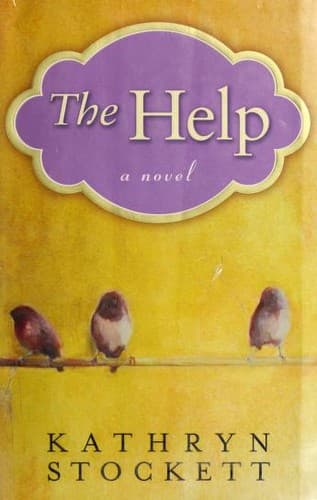
- The Help
Kathryn Stockett
4.5 (2.2M) average on GoodreadsHistorical FictionExplores racial injustice and the lives of Black women in the segregated South through multiple perspectives.
- A Time to Kill
John Grisham
4.1 (703k) average on GoodreadsThrillerFeatures a lawyer defending an unpopular client in a racially charged small-town trial in the South.
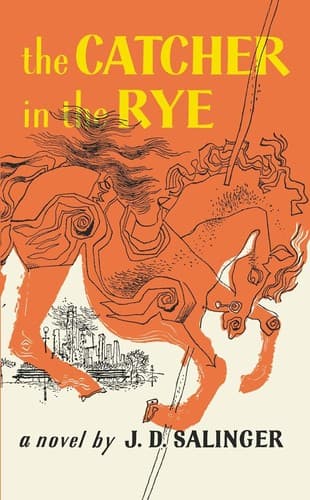
- The Catcher in the Rye
J.D. Salinger
3.8 (2.7M) average on GoodreadsYoung AdultA classic coming-of-age story with a distinct young narrator's voice reflecting on societal norms.
- The Adventures of Huckleberry Finn
Mark Twain
3.8 (1.2M) average on GoodreadsHistorical FictionBoth novels use a young protagonist's journey through the American South to explore racial prejudice and moral development. However, Huckleberry Finn is often seen as more directly confronting the complexities and ambiguities of race and freedom through Huck's evolving relationship with Jim, a runaway slave. While Lee's novel has a clear moral center in Atticus, Twain's work delves into a more morally ambiguous landscape, forcing Huck to grapple with deeply ingrained societal norms versus personal conscience in a way that is less guided by an adult moral authority. Mockingbird presents a more idealized figure of justice, whereas Huckleberry Finn focuses on the internal struggle against societal corruption, often with less clear-cut resolutions. (See: Fishkin, Shelley Fisher. Was Huck Black? Mark Twain and African-American Voices. Oxford University Press, 1993).
- A Raisin in the Sun
Lorraine Hansberry
While To Kill a Mockingbird explores racial injustice from a white perspective, A Raisin in the Sun directly centers the experiences and struggles of a Black family navigating racism and economic hardship in Chicago. Hansberry's play offers an internal view of Black aspiration, dignity, and the systemic barriers faced, providing a crucial counterpoint to Lee's external observation of injustice. The latter focuses on the impact of racism on the white community and the moral education of its white protagonist, whereas Hansberry directly amplifies Black voices, agency, and the nuances of intra-racial dynamics. A Raisin in the Sun offers a less mediated, more direct engagement with the lived realities of racism. (See: Nemiroff, Robert, ed. Lorraine Hansberry: The Collected Last Plays. New American Library, 1987).
- The Great Gatsby
F. Scott Fitzgerald
3.9 (3.8M) average on GoodreadsHistorical FictionIn the opulent Roaring Twenties, a mysterious millionaire's lavish parties hide his desperate, tragic pursuit of a lost love, exposing the emptiness within the American Dream.




Enjoyed the summary?
A summary gives you the shape of the book. The book itself has the detail, the examples and the voice.
Find To Kill a Mockingbird on AmazonAs an Amazon Associate, BookBrief earns from qualifying purchases. How we're funded