
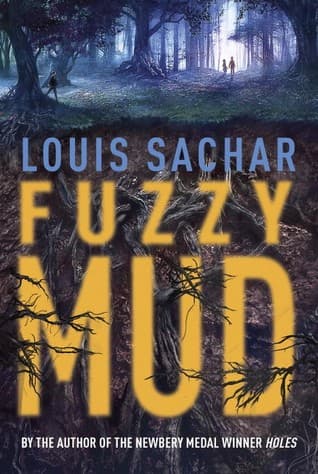
Synopsis
Covers the whole plot, including the ending.
- Difficulty
- Easy
- Pacing
- Moderate
- Mood
- Suspenseful, Thought-provoking, Cautionary
- Read it if
- You enjoy thought-provoking children's mysteries with a science fiction twist and a strong moral message.
- Skip it if
- You prefer fantasy over science fiction or dislike stories with significant ethical debates.
Fuzzy Mud Plot Summary
Covers the whole plot, including the ending.
The Shortcut and the Mud
Fifth graders Tamaya Dhilwaddi and Marshall Walsh walk home from Woodbridge Academy when Chad Wilson, a seventh-grade bully, confronts them. To avoid a fight, Marshall takes a shortcut through the forbidden woods behind the school. Tamaya, a rule-follower, is hesitant but follows Marshall, fearing for his safety. As they navigate the dense woods, they lose their way. Eventually, they find a strange, purplish, and unusually warm mud. Chad Wilson, who had followed them, ambushes Marshall. During the struggle, Tamaya shoves Chad, causing him to fall face-first into the fuzzy mud.
Chad's Disappearance and Tamaya's Guilt
After Chad falls into the fuzzy mud, he scrambles out, angry and disoriented, and runs off deeper into the woods, disappearing. Tamaya feels guilty and afraid, convinced she has seriously hurt Chad. Marshall, also shaken, insists they must get out of the woods and not tell anyone what happened. They eventually find their way out and return home, but the incident weighs heavily on Tamaya. The next day, Chad doesn't show up for school, and his parents report him missing, sparking a search effort that includes the local police and school officials. Tamaya tries to act normal, but her anxiety grows.
The Mysterious Rash and the School Closure
The day after the incident in the woods, Tamaya notices a small, itchy, purplish rash developing on her arm, exactly where some of the fuzzy mud had splattered. She tries to hide it, but it quickly spreads and becomes more painful. Other students and staff at Woodbridge Academy also begin to report similar rashes and flu-like symptoms, particularly those who were involved in the search for Chad. The school closes temporarily, citing a mysterious illness. Meanwhile, Tamaya's parents take her to the doctor, who is baffled by her condition, unable to identify the cause or provide effective treatment for the rapidly worsening rash.
Chad's Discovery and the Spreading Illness
After several days of intense searching, Chad Wilson is found deep in the woods. He is in critical condition, covered in a severe rash that mirrors Tamaya's, and suffering from a high fever and disorientation. He is immediately hospitalized. His discovery confirms Tamaya's fears and links the mysterious mud to the spreading illness. The news of Chad's condition and the growing number of affected individuals, including search volunteers and emergency personnel, causes widespread panic. The illness, now called 'Fuzzy Mud Disease,' becomes a national public health crisis, attracting the attention of scientists, medical experts, and government officials.
The Senate Hearings Begin
As the 'Fuzzy Mud Disease' escalates, the U.S. Senate holds emergency hearings to understand the crisis. Dr. Fitzman, a scientist, is called to testify. He reveals that the fuzzy mud is a new, rapidly multiplying single-celled organism, a 'microrg,' which he had been developing in a secret lab located near the Woodbridge Academy woods. His initial goal was to create a clean, renewable energy source, but the microrg mutated unexpectedly, becoming aggressive and pathogenic when exposed to sunlight and certain environmental conditions. He confesses his role in the accidental release of the organism into the environment.
Dr. Fitzman's Revelation and the Ethics Debate
During the Senate hearings, Dr. Fitzman explains the microrg, which he named 'splurch.' He describes how he genetically engineered it from a common pond scum, aiming for an efficient biofuel. However, the organism developed an unforeseen ability to consume organic matter at an alarming rate and, under certain conditions, to cause severe skin lesions and internal damage in humans. He explains that the microrg thrives in warmth and light, and its rapid reproduction makes it difficult to contain. The senators question him on his ethical responsibilities and the lack of oversight in his experimental research, noting the potential for global consequences.
A Potential Solution Emerges
As the crisis deepens, medical researchers struggle to find a cure for the 'Fuzzy Mud Disease.' They observe that while many victims suffer greatly, Tamaya Dhilwaddi's symptoms, though severe, seem to be progressing differently than Chad's. Dr. Fitzman, reviewing the medical data, notices a subtle difference in her blood work and the nature of her lesions. He hypothesizes that something in Tamaya's unique biochemistry, possibly an allergen or an unknown antibody, is slightly inhibiting the microrg's progression within her body, offering a glimmer of hope. He believes that understanding this difference could be key to developing an antidote or a treatment.
The Search for a Cure Intensifies
Inspired by Dr. Fitzman's hypothesis, a team of scientists begins working around the clock to isolate and analyze the specific components in Tamaya's blood that seem to be fighting the microrg. They take numerous samples from her, subjecting them to testing. The pressure is immense, as the 'Fuzzy Mud Disease' continues to spread, threatening to overwhelm hospitals and destabilize society. The Senate hearings continue, with testimony from public health officials detailing the grim projections if a cure isn't found soon. The world watches anxiously, hoping for a breakthrough from the scientific community.
The Antidote and Recovery
After an intense period of research, the scientists develop an antidote derived from Tamaya's unique biological response. The antidote, a specially engineered enzyme, is designed to neutralize the microrg's harmful effects and halt its reproduction. It is quickly administered to Chad Wilson, Tamaya, and other victims, leading to a recovery for many. The Senate then focuses on containment strategies, including a plan to spray the affected areas with a chemical agent that is harmless to humans but lethal to the microrg. The immediate threat is contained, but the long-term ecological impact remains a concern.
Aftermath and Reflection
With the crisis averted, Woodbridge Academy reopens, and life slowly returns to normal. Tamaya and Marshall, though affected by their experience, are relieved and grateful for their recovery. Chad, having made a full recovery, is changed by the near-death experience, becoming less of a bully and more introspective. Dr. Fitzman faces legal and ethical consequences for his unauthorized research, but his scientific contributions to the antidote are acknowledged. The fuzzy mud incident is a reminder of the delicate balance of nature, the dangers of unchecked scientific experimentation, and the importance of ethical considerations in technological advancement. The world learns a lesson about humility in the face of nature's power.
Principal Figures
Tamaya Dhilwaddi
Protagonist
Fifth grader and rule-follower, whose accidental actions trigger the crisis and later provide a key to its solution.
Tamaya is a diligent, intelligent, and conscientious fifth-grader who always tries to do the right thing and follow the rules. She is somewhat timid and easily influenced by her friend Marshall, especially when he suggests breaking rules. Her strong sense of guilt and responsibility is a defining characteristic, as she agonizes over pushing Chad into the fuzzy mud and fears the consequences. Despite her initial fear, her unique biological reaction to the fuzzy mud ultimately makes her instrumental in the development of the antidote, demonstrating an unexpected resilience and importance.
Relationships: Marshall Walsh (Best friend); Chad Wilson (Victim of her shove, later a recipient of the cure); Dr. Fitzman (Her case helps him find a cure)
Marshall Walsh
Supporting
Seventh grader and Tamaya's friend, who instigates the shortcut to avoid a bully.
Marshall is a seventh-grade boy who, despite being older than Tamaya, often relies on her for emotional support and moral guidance. He is intimidated by Chad Wilson and chooses to take a forbidden shortcut through the woods to avoid a confrontation. He initially tries to downplay the incident with the fuzzy mud and keep it a secret, driven by fear and a desire to avoid trouble. His actions, though stemming from self-preservation, inadvertently lead Tamaya into danger. He cares for Tamaya but struggles with his own cowardice and poor judgment.
Relationships: Tamaya Dhilwaddi (Best friend); Chad Wilson (Target of Chad's bullying)
Chad Wilson
Antagonist/Victim
Seventh-grade bully who follows Tamaya and Marshall into the woods, becoming the first severe victim of the fuzzy mud.
Chad is a seventh-grade bully known for his intimidating presence and aggressive behavior, particularly towards Marshall. He is persistent and follows Marshall and Tamaya into the woods, intent on confronting Marshall. His fall into the fuzzy mud, caused by Tamaya, makes him the most severely affected victim, suffering extreme pain and near-fatal illness. His experience with the fuzzy mud transforms him, making him less of a bully and more reflective after his recovery. He serves as a catalyst for the plot and a symbol of the fuzzy mud's destructive power.
Relationships: Marshall Walsh (Bully and victim); Tamaya Dhilwaddi (Victim of her shove)
Dr. Jonathan Fitzman
Supporting
Brilliant but ethically questionable scientist responsible for creating the fuzzy mud (microrg).
Dr. Fitzman is a highly intelligent microbiologist who, in his pursuit of a revolutionary clean energy source, genetically engineers the 'microrg' (fuzzy mud). He conducts his research in a secret, unauthorized lab near the Woodbridge Academy woods. He is initially driven by scientific ambition and a desire to solve global energy problems but demonstrates a severe lack of ethical oversight and concern for potential risks. When the crisis unfolds, he is remorseful and actively participates in finding a cure, demonstrating a redemption arc despite his initial negligence. His testimony before the Senate is crucial to understanding the microrg's nature.
Relationships: Tamaya Dhilwaddi (Her case provides key to his cure); Chad Wilson (Victim of his creation)
Senator William T. Jordan
Supporting
Head of the Senate committee investigating the fuzzy mud crisis.
Senator Jordan presides over the U.S. Senate hearings concerning the 'Fuzzy Mud Disease.' He represents the political and governmental response to the crisis, asking probing questions of Dr. Fitzman and other witnesses. He is concerned with public safety, accountability, and understanding the full scope of the disaster. His role is primarily to guide the investigation, ensure transparency, and facilitate the search for solutions, highlighting the national and global implications of Dr. Fitzman's unregulated research.
Relationships: Dr. Fitzman (Interrogator of Dr. Fitzman); The Public (Representative of public interest)
Ms. Latherly
Mentioned
Tamaya's fifth-grade teacher at Woodbridge Academy.
Ms. Latherly is Tamaya's empathetic and observant fifth-grade teacher. She notices Tamaya's distress and the developing rash, showing concern for her student's well-being. Her role is minor but significant in reflecting the initial confusion and growing concern within the school community as the mysterious illness begins to manifest. She represents the caring adult figures in the children's lives.
Relationships: Tamaya Dhilwaddi (Teacher-student relationship)
Mr. Dhilwaddi (Tamaya's Father)
Supporting
Tamaya's concerned parent.
Tamaya's father is a supportive and caring parent who notices her developing rash and takes her to the doctor. He is worried about his daughter's mysterious illness and actively seeks medical help. He represents the parental anxiety and helplessness in the face of an unknown and rapidly spreading disease, highlighting the personal impact of the fuzzy mud crisis on families.
Relationships: Tamaya Dhilwaddi (Father-daughter relationship)
Mrs. Dhilwaddi (Tamaya's Mother)
Supporting
Tamaya's concerned parent.
Tamaya's mother, like her father, is deeply concerned about her daughter's health when the mysterious rash appears. She supports Tamaya and accompanies her to medical appointments, seeking answers and treatment. She embodies the love and worry of a parent facing a frightening and incomprehensible illness affecting her child, further emphasizing the human impact of Dr. Fitzman's creation.
Relationships: Tamaya Dhilwaddi (Mother-daughter relationship)
Themes & Insights
Scientific Ethics and Responsibility
The novel examines the ethical implications of unchecked scientific ambition. Dr. Fitzman's creation of the microrg, intended for renewable energy, shows the dangers of pursuing scientific advancement without adequate oversight and risk assessment. His secret lab and unauthorized experiments directly lead to a global health crisis, forcing a reckoning with the moral obligations of scientists. The Senate hearings show the societal demand for accountability in scientific research, emphasizing that innovation must be balanced with responsibility for potential consequences. The 'fuzzy mud' is a symbol of good intentions gone terribly wrong.
“Just because you can do something, doesn't mean you should.”
Consequences of Choices
Every major plot point in 'Fuzzy Mud' stems from a choice, showing the ripple effect of individual decisions. Marshall's decision to take a shortcut to avoid Chad leads them into the woods. Tamaya's impulsive shove of Chad into the mud directly triggers the spread of the microrg. Dr. Fitzman's choice to conduct unregulated experiments has catastrophic global consequences. Even seemingly small choices, like Tamaya's initial reluctance to follow Marshall, contribute to the escalating events. The narrative traces how these choices, both deliberate and accidental, intertwine to create a crisis, demonstrating that actions, however minor, have significant and often unforeseen repercussions.
“One wrong step, and everything can change.”
Bullying and Its Fallout
Bullying is the initial catalyst for the entire plot. Chad Wilson's persistent bullying of Marshall forces Marshall to seek an alternative route home, leading him and Tamaya into the forbidden woods. The fear and desperation caused by Chad's aggression are what directly lead to Tamaya's shove, which in turn exposes Chad to the fuzzy mud. The novel explores the psychological impact of bullying on both the victim (Marshall's fear) and the bully (Chad's eventual transformation after his near-death experience). It shows how a common problem like bullying can have extraordinary and unforeseen consequences.
“He hated Chad, but he was also terrified of him.”
The Fragility of Nature and Human Intervention
The fuzzy mud, a genetically engineered organism, represents the delicate balance of nature and how human intervention can disrupt it with devastating effects. Dr. Fitzman's attempt to 'improve' upon nature for human benefit results in an uncontrollable, self-replicating entity that threatens ecosystems and human life. The microrg's rapid mutation and aggressive nature show the unpredictability of biological systems when tampered with. The woods, initially a place of childhood adventure and mystery, become a source of danger, symbolizing how human disregard for natural boundaries can unleash unforeseen forces. The theme highlights humanity's responsibility to respect and protect the natural world.
“Nature has a way of fighting back, even against our best intentions.”
Plot Devices & Literary Techniques
The Fuzzy Mud (Microrg)
The central antagonist and catalyst for the entire plot.
The fuzzy mud is a genetically engineered single-celled organism (microrg) created by Dr. Fitzman. It initially appears harmless, a strange purple mud, but quickly proves to be highly pathogenic and rapidly multiplying, causing severe rashes and illness. It serves as the primary antagonist, driving the plot from a local incident to a global health crisis. Its unpredictable mutation and aggressive nature symbolize the dangers of unchecked scientific experimentation and humanity's attempts to control nature.
The Forbidden Woods
A setting that symbolizes danger, the unknown, and the consequences of breaking rules.
The woods behind Woodbridge Academy are explicitly off-limits, making them a forbidden zone that Marshall and Tamaya enter. This setting immediately establishes a sense of tension and foreboding. It represents a place where rules are broken, and where the unknown (the fuzzy mud) resides. The woods become a symbol of both escape and entrapment, leading the children into the heart of the crisis and serving as the initial containment zone for the spreading microrg.
Senate Hearings
A narrative structure used to provide exposition and broaden the scope of the crisis.
Interspersed throughout the main narrative of Tamaya and Marshall's experience are transcripts of U.S. Senate hearings. This device allows Sachar to provide scientific explanations for the fuzzy mud, reveal Dr. Fitzman's backstory, and illustrate the national and global impact of the crisis. It broadens the story's scope beyond the children's immediate experience, lending credibility and urgency to the unfolding events, while also exploring themes of scientific ethics and governmental response.
The Rash
A visible manifestation of the fuzzy mud's infection and a symbol of guilt and spreading danger.
The purplish, itchy rash that first appears on Tamaya and then on Chad and other victims is a key plot device. It serves as a physical manifestation of the fuzzy mud's infection, making the invisible danger visible. For Tamaya, it's a constant reminder of her guilt and fear. For the wider community, it's a clear indicator of the spreading disease, escalating the crisis from a local disappearance to a public health emergency, and driving the search for a cure.
Fuzzy Mud Quotes
“It's not about being brave. It's about doing what you have to do.”
“Sometimes the smallest things can cause the biggest problems.”
“Friends don't let friends walk into danger alone.”
“Nature has a way of fighting back when we mess with it.”
“Fear is just a feeling. It doesn't have to stop you.”
“We thought we could control it, but we were wrong.”
“Bullies are just scared people pretending to be tough.”
“The mud wasn't evil. It was just doing what it was made to do.”
“Sometimes you have to break the rules to do what's right.”
“One small act of kindness can change everything.”
“The woods weren't scary because of what was in them, but because of what we brought with us.”
“We're all connected, whether we like it or not.”
“Learning isn't just about books. It's about paying attention to the world around you.”
“The truth doesn't care if you believe in it or not.”
Quiz
10 questions on the plot and the characters. Each answer comes with a short explanation.
Question 1
What is the name of the private school that Tamaya and Marshall attend?
- Woodbridge Elementary
- Woodbridge Academy
- Woodbridge Middle School
- Woodbridge Preparatory
Show answer
B. Woodbridge Academy Tamaya and Marshall attend Woodbridge Academy, a private school mentioned in the book's description as the starting point of their daily walk home.
Question 2
Why do Tamaya and Marshall decide to take a shortcut through the woods?
- To explore and have an adventure
- To avoid a fight with bully Chad Wilson
- To find a lost pet
- To take a quicker route home for no particular reason
Show answer
B. To avoid a fight with bully Chad Wilson Marshall takes the shortcut through the off-limits woods to avoid a confrontation with Chad Wilson, who challenged him to a fight, and Tamaya follows reluctantly.
Question 3
What substance do Tamaya and Marshall encounter in the woods that causes major trouble?
- Poison ivy
- Quicksand
- Fuzzy mud
- Radioactive waste
Show answer
C. Fuzzy mud They encounter 'fuzzy mud,' a mysterious and dangerous substance that is central to the book's plot and leads to widespread consequences.
Question 4
What grade is Tamaya in at the beginning of the story?
- Fourth grade
- Fifth grade
- Sixth grade
- Seventh grade
Show answer
B. Fifth grade Tamaya is a fifth grader, as stated in the book's description, while Marshall is in seventh grade.
Question 5
Which government body becomes involved in the events following the discovery in the woods?
- The U.S. House of Representatives
- The U.S. Senate
- The FBI
- The CIA
Show answer
B. The U.S. Senate The U.S. Senate becomes involved, as mentioned in the description, indicating the scale and importance of the events related to the fuzzy mud.
Question 6
What is a key theme explored in 'Fuzzy Mud' related to the consequences of human actions?
- The importance of friendship
- The dangers of scientific experimentation without proper oversight
- The value of honesty
- The benefits of technology
Show answer
B. The dangers of scientific experimentation without proper oversight The book explores themes like the ethical implications and potential global impacts of unchecked scientific experimentation, as seen with the fuzzy mud's origins and effects.
Question 7
How does the fuzzy mud initially affect those who come into contact with it?
- It causes immediate blindness
- It leads to severe skin rashes and health issues
- It induces hallucinations
- It results in instant paralysis
Show answer
B. It leads to severe skin rashes and health issues Exposure to the fuzzy mud causes serious skin rashes and other health problems, which escalate as the story progresses and more people are affected.
Question 8
What role does Chad Wilson play in the story's conflict?
- He is a friend who helps Tamaya and Marshall escape the woods
- He is the bully whose threat forces Marshall into the woods
- He is a scientist who created the fuzzy mud
- He is a government agent investigating the incident
Show answer
B. He is the bully whose threat forces Marshall into the woods Chad Wilson is the bully who challenges Marshall to a fight, directly causing Marshall and Tamaya to enter the woods where they find the fuzzy mud.
Question 9
In what way does the book suggest the fuzzy mud incident might affect the future of the world?
- By causing a permanent change in climate patterns
- By leading to new laws on school bullying
- By prompting global awareness and regulation of bioengineering risks
- By inspiring a new genre of children's literature
Show answer
C. By prompting global awareness and regulation of bioengineering risks The incident draws high-level attention and suggests broader implications for how society handles bioengineering and environmental safety, potentially influencing future policies.
Question 10
What is implied about the origins of the fuzzy mud based on the book's genre and plot?
- It is a natural phenomenon from the woods
- It is the result of a school science project gone wrong
- It is linked to human-made scientific experimentation
- It is a mythical substance from local folklore
Show answer
C. It is linked to human-made scientific experimentation Given the science fiction elements and the involvement of authorities like the U.S. Senate, the fuzzy mud is implied to stem from human scientific activities, such as bioengineering, rather than natural causes.
Fuzzy Mud FAQ
What is 'Fuzzy Mud' about?
'Fuzzy Mud' follows fifth-grader Tamaya Dhilwaddi and seventh-grader Marshall Walsh as they take a forbidden shortcut through the woods to avoid a bully, Chad Wilson. They encounter a mysterious, glowing 'fuzzy mud' that causes severe skin reactions and triggers a global biotech crisis. The story alternates between their survival journey and a Senate investigation into SunRay Farm, the company responsible for the genetically engineered microbe.
Why should I read 'Fuzzy Mud'?
The book combines a tense survival adventure with thought-provoking science fiction, exploring themes like bullying, environmental ethics, and unintended consequences of technology. Sachar's accessible writing and short chapters make it engaging for young readers, while the suspenseful plot and moral dilemmas resonate with all ages.
What is the background/setting of 'Fuzzy Mud'?
Set in a suburban town, the story primarily unfolds in the off-limits woods near Woodbridge Academy and the Dhilwaddi home where Tamaya and Marshall take refuge. Parallel scenes occur in a U.S. Senate hearing room, investigating SunRay Farm's biocontainment breach. The contrast between the natural woods and sterile government settings highlights the clash between technology and nature.
What are the most memorable quotes?
Key quotes include: 'Be careful. Your next step may be your last' (the ominous opening line), Tamaya's realization 'I'm not just a goody-goody... I'm a person,' and Senator Jenkins' warning at the hearing: 'We're playing with forces we don't understand.' These capture the book's themes of caution, identity, and responsibility.
What writing style does the author use?
Louis Sachar employs a straightforward, suspenseful style with short chapters that alternate between Tamaya and Marshall's woodland ordeal and the Senate hearings. He blends scientific details about the microbe with emotional character moments, using clear prose suitable for middle-grade readers while maintaining tension and moral complexity.
What minor details add significant meaning?
Tamaya's habit of tracing her finger along fence pickets symbolizes her desire for order and safety, which shatters in the woods. The 'fuzzy mud' glowing at night hints at its unnatural, bioluminescent origin. Marshall's repeated lies about his family subtly reveal his insecurity and need to appear tough in front of Chad.
What are some subtle foreshadowing moments?
Early mentions of SunRay Farm's 'secret project' and news reports about strange rashes foreshadow the biocrisis. Tamaya's mother warning her to avoid the woods ('bad things happen there') directly precedes their encounter with the mud. Marshall's fear of Chad escalates gradually, hinting that the confrontation will force drastic actions.
What unexpected character connections exist?
Chad Wilson, the bully, becomes an unintended victim when he enters the woods later, linking him to the same danger as Tamaya and Marshall. SunRay Farm's scientist, Dr. Eileen Warshaw, is revealed to have ethical doubts about the microbe, connecting the corporate greed subplot to the kids' personal struggle.
What are unspoken character motivations?
Marshall avoids fighting Chad not just from cowardice, but from a deep fear of disappointing his absent father and losing social status. Tamaya follows Marshall into the woods out of loyalty, but also to prove she's more than just a 'goody-goody.' Chad bullies others to mask his own loneliness and family neglect.
What psychological complexities do characters exhibit?
Tamaya grapples with her rigid moral code versus survival instincts, showing how crisis forces growth. Marshall's bravado hides vulnerability, especially as he depends on Tamaya in the woods. Chad's aggression stems from parental neglect, revealed when he seeks the fuzzy mud out of desperation for attention.
What are the major emotional turning points?
Tamaya deciding to enter the woods marks a break from her rule-following nature. Marshall confessing his lies to Tamaya deepens their bond. The moment Tamaya uses the fuzzy mud as a weapon against Chad shifts her from victim to active survivor. Their rescue brings relief but also trauma from the mud's effects.
How do relationship dynamics evolve?
Tamaya and Marshall start as routine walkmates but become interdependent survivors, with Tamaya taking charge as Marshall weakens from the mud. Chad transitions from antagonist to a fellow victim, humanizing him. The Senate hearings strain relationships between scientists, executives, and politicians over blame for the crisis.
Which parts remain ambiguous or open-ended?
The long-term global impact of the microbe release is left uncertain, with the Senate hearing concluding without a definitive solution. Chad's full recovery is ambiguous, hinting at lasting effects. Whether SunRay Farm faces justice is unresolved, emphasizing the ongoing nature of corporate accountability debates.
What are controversial scenes or decisions?
Tamaya deliberately throwing fuzzy mud at Chad is controversial, as it uses the dangerous substance as a weapon, blurring lines between self-defense and harm. SunRay Farm's decision to secretly develop the microbe for profit, despite risks, sparks debate on ethical science. The Senate's slow response critiques bureaucratic failure in crises.
'Fuzzy Mud' ending explained: how it ends & what it means
The book ends with Tamaya and Marshall recovering but haunted by the experience, while the Senate hearings expose SunRay Farm's negligence without immediate consequences. It suggests that technological hubris and bullying both have far-reaching impacts, urging caution and responsibility. The open-ended conclusion implies that such crises require ongoing vigilance.
About the author
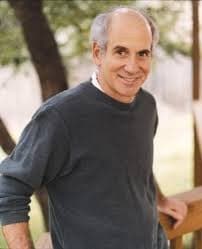
Louis Sachar is an American author known for his contributions to children's literature, particularly in the realm of fiction. He is best known for his novel "Holes," which won the National Book Award and the Newbery Medal, along with other works such as "Small Steps," "Fuzzy Mud," and "Someday Angeline." His writing often explores themes of friendship, resilience, and the challenges of growing up.
Similar books
- Holes
Louis Sachar
4.0 (970k) average on GoodreadsChildren'sShares Louis Sachar's distinctive blend of humor, mystery, and moral depth, with interconnected plotlines.
- The Giver
Lois Lowry
4.1 (1.8M) average on GoodreadsFantasyExplores ethical dilemmas and the consequences of scientific or societal control in a dystopian setting.
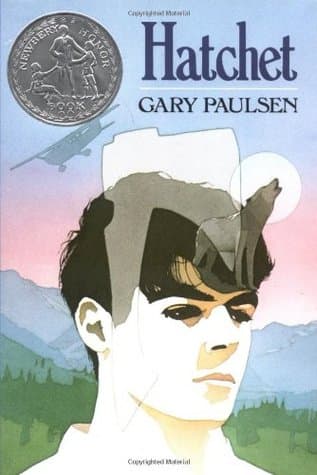
- Hatchet
Gary Paulsen
3.7 (309k) average on GoodreadsChildren'sFeatures young protagonists facing unexpected challenges and survival in the wilderness.
- Hoot
Carl Hiaasen
3.8 (97k) average on GoodreadsChildren'sFuzzy Mud delves into speculative science and genetic engineering ethics, whereas Hoot focuses more on traditional environmental activism and protecting endangered species from corporate development. Sachar's book is more contemporary in its scientific concerns.
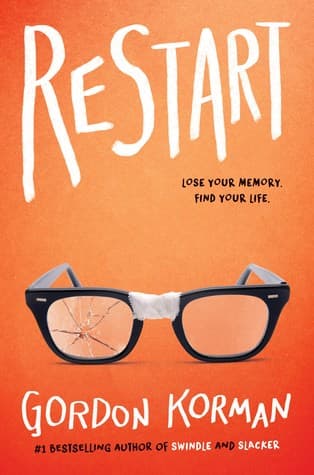
- Restart
Gordon Korman
4.2 (18k) average on GoodreadsChildren'sFuzzy Mud explores themes of responsibility and consequences within a scientific and environmental context, specifically regarding bio-engineering. Restart addresses similar themes but primarily within a social and personal context, focusing on character reform and community dynamics.
- Harry Potter and the Sorcerer's Stone
J.K. Rowling
4.5 (7M) average on GoodreadsFantasyRescued from a miserable life under the stairs, an orphaned boy discovers he's a wizard destined for a magical school, where he uncovers a dangerous secret tied to the dark wizard who murdered his parents.




Enjoyed the summary?
A summary gives you the shape of the book. The book itself has the detail, the examples and the voice.
Find Fuzzy Mud on AmazonAs an Amazon Associate, BookBrief earns from qualifying purchases. How we're funded