

Synopsis
Covers the whole plot, including the ending.
- Difficulty
- Medium
- Pacing
- Moderate
- Mood
- Thought-provoking, Mysterious, Hopeful, Slightly Dark
- Read it if
- You enjoy dystopian stories with a focus on art, societal control, and a young protagonist discovering hidden truths.
- Skip it if
- You prefer fast-paced action over introspective world-building and moral dilemmas, or are looking for a straightforward happy ending.
Gathering Blue Plot Summary
Covers the whole plot, including the ending.
The Scapegoat's Fate
In a post-apocalyptic village, Kira, a young girl with a disabled leg, becomes an orphan after her mother, Katrina, dies. Village laws say the weak or family-less are cast out to die. Kira is immediately targeted by Vandara, an elder woman with a scarred face, who demands Kira's banishment and claims her land. Despite Kira's pleas, villagers, fearing Vandara and following tradition, seem ready to condemn her. Kira's only hope rests with the Council of Guardians, who are called to decide her fate.
The Council's Decree
Kira is brought before the Council of Guardians, powerful men who govern the village, including the Chief Guardian, Jamison. Instead of banishing her, Jamison, who defends her, reveals Kira's rare talent: she is an exceptional embroiderer and weaver, a skill inherited from her mother. The Council decides Kira will live in the grand Council Edifice. Her task is to repair and complete the Robe of the Ruin, a ceremonial garment that chronicles their civilization's history. This sudden reprieve leaves Kira both relieved and suspicious of the Council's motives.
A New Home and New Friends
Kira moves into the opulent but isolated Council Edifice, a contrast to her former life. She gets her own spacious room with a private bathing facility. There, she meets Matt, a boisterous young boy from the Fen, the village's impoverished outskirts, who becomes her loyal friend. She also meets Thomas, a quiet boy her age who lives in the Edifice and is a gifted woodcarver, tasked with repairing the Singer's staff. Kira, Thomas, and Matt form a bond, sharing secrets and observations about their unusual circumstances.
The Robe of the Ruin
Kira is introduced to the Robe of the Ruin, a large, old garment depicting humanity's history, from its glorious past to its current state. Her mother, Katrina, was the previous keeper and repairer of the robe, and Kira is now expected to continue this duty. Jamison provides her with many colored threads, some with a vibrant quality. As Kira begins to work, she realizes that much of the robe's historical narrative, especially the future section, is unfinished or intentionally left blank, suggesting a controlled version of their history.
Unraveling Secrets
As Kira and Thomas work, they notice unsettling patterns. Thomas reveals his parents, also artists, died mysteriously, like Kira's mother. They discover the Council provides specific, often muted, dyes and threads, limiting their artistic expression. Through Matt's eavesdropping and their observations, they realize the Council keeps them isolated and manipulates them, ensuring they depict only the approved version of history and future. The children suspect their talents are used to maintain the Council's power and control over the villagers' understanding of their world.
The Singer's Performance
The annual Gathering arrives, a ceremony where the Singer, a revered but shackled man, performs humanity's entire history, guided by the Robe of the Ruin and his staff. Kira, Thomas, and Matt attend, observing the villagers' reactions. During the performance, Kira notices inconsistencies between the Singer's chant and the robe's images. She sees the Singer's scarred, shackled ankles and realizes he is a prisoner. The performance reinforces the Council's narrative, portraying the past as a series of destructions and the present as a fragile recovery, with the future left blank.
A Chilling Revelation
After the Gathering, Kira and Thomas discuss their suspicions. Matt, having ventured into the forbidden forest, returns with a revelation: he found a man with Kira's distinctive limp, living in a hidden community beyond the village. This man, he claims, is Kira's father, believed killed by beasts years ago. Jamison, anticipating Kira's departure, tries to dissuade her, revealing his true, sinister nature. He confesses he attacked Kira's father, leaving him for dead, and implies he may have been involved in the deaths of other gifted artisans, including Kira's mother.
The Offer of the Future
Kira's father, Christopher, confirms Matt's story and reveals Jamison attacked him but he survived, nursed back to health by the community of healers in the forest. He explains the Council isolates and exploits gifted individuals to control the village's narrative and future. Christopher offers Kira a choice: come with him to the safe community of healers where she can live free and develop her art, or remain in the village and try to influence the Robe of the Ruin, hoping to guide her people towards a better future. Thomas, though saddened, encourages her to decide for herself.
A Difficult Decision
Despite the danger, Kira decides to stay in the village. She believes that by remaining, she can use her art to alter the future depicted on the Robe of the Ruin, introducing hope and truth into the rigid historical narrative controlled by the Council. She entrusts Matt with a gift for her father and promises to send messages. Kira understands the risks but feels a responsibility to her people and to the potential for change. She chooses to be a silent beacon of hope, using her talent to weave a new, more truthful future for generations to come, armed with knowledge of the outside world.
Weaving the Future
With newfound clarity, Kira returns to her work on the Robe of the Ruin. She understands her task is not merely to repair, but to reinterpret and reshape the future depicted on the fabric. She incorporates colors and images that represent hope, community, and the potential for a world beyond the Council's control, drawing inspiration from the stories of the community of healers. She knows her work will be slow and subtle, but she is determined to plant seeds of truth and possibility within the fabric of their history, hoping that future generations will recognize her true message.
Gathering Blue Characters
Kira
Protagonist
A gifted weaver with a disabled leg, fighting for survival and truth.
Kira is a resilient and intelligent young girl with a twisted leg, which makes her an outcast in her village's brutal society. Orphaned, she possesses a rare and extraordinary talent for weaving and embroidery, inherited from her mother. Despite her physical vulnerability, Kira is fiercely independent and possesses a keen sense of observation and an innate desire for truth and beauty. She is driven by a deep love for her art and a yearning to understand her world, even when faced with manipulation and danger.
Relationships: Katrina (Deceased mother, source of her artistic gift and inspiration.); Jamison (Initial protector turned antagonist, manipulates her for his own ends.); Matt (Loyal, boisterous friend and messenger.); Thomas (Fellow artist and confidante, shares her plight.); Vandara (Antagonistic elder who seeks her banishment and land.); Christopher (Her long-lost father, a source of truth and an alternative future.)
Jamison
Antagonist
Chief Guardian who manipulates Kira for the Council's agenda.
Jamison is a powerful and seemingly benevolent member of the Council of Guardians who initially appears to save Kira from banishment. However, he is revealed to be a cunning and ruthless manipulator, responsible for the attack on Kira's father and likely the deaths of other gifted artisans. He exploits Kira's talent to maintain the Council's control over the village's history and future, presenting a façade of kindness while secretly orchestrating the oppression of the artists. His calm demeanor masks a sinister intelligence and a deep-seated desire to preserve the status quo.
Relationships: Kira (Manipulator and oppressor, pretends to be her guardian.); Christopher (Attempted murderer of Kira's father.); Thomas (Overseer and exploiter of his artistic talent.)
Matt
Supporting
A loyal, energetic boy from the Fen who becomes Kira's trusted friend.
Matt is a young, scruffy boy from the impoverished Fen, known for his unkempt appearance, rough manners, and a unique dialect. Despite his rough exterior, he is fiercely loyal, brave, and possesses a sharp wit and an uncanny ability to gather information. He becomes Kira's devoted friend and messenger, often venturing into forbidden areas. His innocence and genuine affection provide a stark contrast to the Council's manipulative world, and he plays a crucial role in uncovering the truth about Kira's father.
Relationships: Kira (Devoted friend and loyal helper.); Thomas (Acquaintance in the Edifice.)
Thomas
Supporting
A quiet, gifted woodcarver also exploited by the Council.
Thomas is a gentle and intelligent boy, roughly Kira's age, who lives in the Council Edifice. He is a master woodcarver, tasked with repairing and adding to the Singer's staff. Like Kira, he is an orphan whose parents, also artists, died under suspicious circumstances. He is quiet and observant, sharing Kira's growing suspicions about the Council. He provides Kira with companionship and a shared understanding of their unusual, controlled existence, offering a silent solidarity in their shared predicament.
Relationships: Kira (Fellow artist and confidante, shares her plight.); Matt (Acquaintance in the Edifice.)
Vandara
Supporting
An aggressive elder who seeks Kira's banishment and land.
Vandara is a formidable and cruel elder woman with a distinctive, deeply scarred face. She is a proponent of the village's harsh traditions and ruthlessly seeks to claim Kira's land after her mother's death. She embodies the brutal, unforgiving aspects of the village's society, showing no mercy to the weak or orphaned. Her presence highlights the constant threat Kira faces from within her own community, even before the Council's manipulations are fully revealed.
Relationships: Kira (Antagonist, attempts to secure her banishment and property.)
The Singer
Supporting
A shackled performer of the village's history, controlled by the Council.
The Singer is a revered but tragic figure in the village, a man whose powerful voice recounts the entire history of humanity during the annual Gathering. He is physically shackled and his performance is dictated by the Council, using the Robe of the Ruin and his carved staff as guides. Kira observes his scarred ankles, realizing he is a prisoner, not a revered elder. He represents the Council's ultimate control over information and history, as his talent is exploited to perpetuate their narrative.
Relationships: Kira (An object of Kira's observation and growing realization.); Thomas (His staff is carved and maintained by Thomas.)
Christopher
Supporting
Kira's long-lost father, a blind man living in a community of healers.
Christopher is Kira's father, believed to have been killed by beasts years ago. He was attacked by Jamison and left for dead but survived, though he lost his eyesight. He was rescued and taken in by a community of blind healers living in a hidden village beyond the forest. He is a source of truth and a symbol of an alternative, more compassionate society. He offers Kira a choice between safety and remaining to fight for change, providing a crucial turning point in her journey.
Relationships: Kira (Her father, a source of truth and an alternative future.); Jamison (His attacker.)
Katrina
Mentioned
Kira's deceased mother, a master weaver and keeper of the Robe.
Katrina was Kira's mother and the previous keeper of the Robe of the Ruin. She was an exceptionally talented weaver and embroiderer, skills she passed on to Kira. Her death leaves Kira vulnerable and triggers the events of the story. Though deceased, her legacy of art and her love for Kira continue to guide and inspire her daughter, and her mysterious death becomes part of the larger conspiracy Kira uncovers.
Relationships: Kira (Her mother, the source of her artistic gift.)
Gathering Blue Themes
The Power of Art and Creativity
Art in 'Gathering Blue' is not merely decorative; it is a tool for recording history, shaping perception, and influencing the future. Kira's weaving, Thomas's carving, and the Singer's chant are all forms of art used by the Council to control their society's narrative. Kira discovers that art also holds the potential for rebellion and truth, as she plans to weave a new, hopeful future into the Robe of the Ruin, contrasting the Council's bleak, controlled version. This theme emphasizes art's dual nature as both a weapon of control and a beacon of hope and freedom.
“She would make a future. She would make the world that should be, and not the one that was.”
Truth vs. Manipulation
The novel explores how those in power manipulate information and history to maintain control. The Council of Guardians hides the healing community, controls the narratives presented by the Singer and the Robe of the Ruin, and exploits artists to create a version of reality that suits their agenda. Kira's journey peels back these layers of deception, from the lie of her father's death to the realization that the Singer is a prisoner. The story highlights the importance of seeking truth and questioning authority.
“They don't want the people to know what is possible. They want them to believe that this is the best they can do. And they want them to believe that the future is already woven.”
Community and Isolation
Kira experiences both extreme isolation and the formation of new communities. Initially, she is an outcast, facing banishment. When brought to the Edifice, she is physically isolated from the village but finds belonging with Thomas and Matt. The novel contrasts the harsh, self-serving community of the village with the compassionate, supportive community of healers her father lives in. This theme questions what makes a 'community' and explores the human need for connection versus the dangers of forced isolation, emphasizing the power of chosen bonds over societal decrees.
“She had found friendship, and that was a solace. It was a comfort in the loneliness of the Edifice.”
The Nature of Civilization and Progress
The society in 'Gathering Blue' presents itself as a rebuilding civilization after a series of 'Ruins,' but its foundation is built on savagery, exploitation, and the discarding of the weak. The Council uses art to depict a controlled, cyclical history of destruction and limited regrowth, implying that true progress is impossible. Kira's discovery of the healing community, with its emphasis on compassion, knowledge, and genuine care, offers an alternative vision of civilization. The theme challenges readers to consider whether technological advancement or moral development truly signifies progress, and how a society's values dictate its future.
“This place, the village, it is not the only place. There are others. There is another kind of life.”
Plot Devices & Literary Techniques
The Robe of the Ruin
A ceremonial garment that chronicles the history of humanity.
The Robe of the Ruin is a massive, intricately embroidered fabric that serves as the visual history of the world, from its glorious past through multiple destructions to the present. It is the central artistic piece Kira is tasked with repairing and completing. This device is crucial because it represents the Council's control over historical narrative and future prophecy. By controlling what is depicted on the robe, they control the villagers' understanding of their past and their expectations for the future, making Kira's ability to subtly alter it a powerful form of resistance.
Kira's Twisted Leg
A physical disability that marks Kira as an outcast but ultimately saves her.
Kira's physical disability, a twisted leg, is initially presented as a severe disadvantage, marking her for banishment in a society that discards the weak. However, it ironically becomes the reason she is spared, as her inability to perform manual labor makes her more suited for the sedentary work of weaving. This serves as a powerful symbol of how perceived weaknesses can become strengths, and how a society's definition of 'valuable' is often arbitrary and cruel. It also connects her to her father, who also has a distinctive limp due to Jamison's attack.
The Council Edifice
A grand, isolated building that houses the Council and the artists.
The Council Edifice is a large, imposing building that stands apart from the rest of the village. It is a place of luxury compared to the villagers' homes, but it is also a place of isolation and surveillance for Kira and Thomas. It functions as a gilded cage, providing comfort while subtly controlling its inhabitants and their access to information. The contrast between its opulence and the hidden truths within highlights the deceptive nature of the Council's power and the isolation of the exploited artists.
The Fen
The impoverished, unruly outskirts of the village.
The Fen is the rough, impoverished district outside the main village where Matt and his family live. It represents the lowest social stratum of the society, characterized by squalor, hunger, and a lack of formal education. Despite its harshness, the Fen produces resilient and resourceful individuals like Matt. It serves as a contrast to the relative order and comfort of the village and the Edifice, highlighting the extreme social inequalities and providing a source of uncensored information and loyalty through Matt.
Gathering Blue Quotes
“You have the power to create beauty, and to bring it into the world. You have the power to make things right.”
“It was what they did. They took the talented ones and put them to use.”
“The future was not a place to be feared. It was a place to be built.”
“They were afraid of the truth, so they made up lies.”
“You are like the thread that holds the tapestry together.”
“The Ruin Song was a history, a memory, and a prophecy.”
“What if the world was meant to be beautiful?”
“It was easy to be brave when you had nothing to lose.”
“The gift was not the ability to weave, but the ability to see.”
“He had a kind face, but his eyes were cold.”
“She was learning that there was more than one way to mend.”
“Colors. They were everywhere.”
“The past was not something to be forgotten, but something to be understood.”
“The world was full of secrets, and some of them were dangerous.”
Quiz
10 questions on the plot and the characters. Each answer comes with a short explanation.
Question 1
What is Kira's physical flaw that makes her vulnerable in her village?
- She is blind in one eye.
- She has a twisted leg.
- She has a speech impediment.
- She is deaf.
Show answer
B. She has a twisted leg. Kira's twisted leg is her most significant physical flaw, making her an easy target for villagers who believe the weak should be discarded.
Question 2
What skill does Kira possess that ultimately saves her from being banished or killed after her mother's death?
- Her ability to hunt.
- Her exceptional singing voice.
- Her talent for weaving and embroidery.
- Her knowledge of ancient remedies.
Show answer
C. Her talent for weaving and embroidery. Kira's unique and almost magical talent for weaving and embroidery is what the Council of Guardians values, assigning her the task of repairing the Singer's robe.
Question 3
What is the primary purpose of the Singer's robe?
- To keep the Singer warm during the Ruin Song.
- To display the history of the world through its embroidered images.
- To signify the Singer's high status in the village.
- To scare away evil spirits during the annual Gathering.
Show answer
B. To display the history of the world through its embroidered images. The Singer's robe is a historical tapestry, with each section depicting a phase of humanity's past, from its rise to its destruction and rebirth.
Question 4
Who is Matt, and what is his relationship with Kira?
- He is a guard who protects Kira in the Council Edifice.
- He is a young boy from Kira's village who is her loyal friend.
- He is a rival weaver who tries to steal Kira's position.
- He is Kira's long-lost brother.
Show answer
B. He is a young boy from Kira's village who is her loyal friend. Matt is a grubby but loyal young boy from Kira's village who often brings her food and news, and later helps her in her quest.
Question 5
What shocking truth does Kira discover about the Singers?
- They are secretly planning to overthrow the Council.
- They are kept chained and blinded to prevent them from leaving.
- They are the true rulers of the entire land.
- They are not truly blind, but pretend to be for sympathy.
Show answer
B. They are kept chained and blinded to prevent them from leaving. Kira discovers that the Singers are kept chained and blinded by the Council of Guardians to control them and ensure they perform the Ruin Song as dictated.
Question 6
What item does Kira's father give her that provides a crucial clue to her heritage?
- A small, carved wooden bird.
- A piece of rare blue thread.
- An old, worn map of the territory.
- A necklace with an unusual pendant.
Show answer
A. A small, carved wooden bird. Kira's father, Christopher, gives her a small, carved wooden bird that helps her recognize him and symbolizes the possibility of flight and freedom.
Question 7
What is the primary theme explored through the contrast between Kira's village and the village Christopher describes?
- The importance of technology versus tradition.
- The conflict between individual freedom and societal control.
- The struggle for survival in harsh environments.
- The beauty of artistic expression.
Show answer
B. The conflict between individual freedom and societal control. Christopher's village, where the disabled are cared for and valued, stands in stark contrast to Kira's village, highlighting the theme of individual freedom and worth against the oppressive control and disregard for the weak in her society.
Question 8
Who teaches Kira about dyeing threads and introduces her to the color blue?
- Jamison, her guardian.
- Annabelle, an old woman in the village.
- Thomas, the wood carver.
- Vandara, the woman who wanted Kira's land.
Show answer
. No one in Kira's village teaches her about dyeing or blue; she learns about it from Matt's descriptions and eventually from Christopher, who lives in a village where blue is readily available.
Question 9
What decision does Kira make at the end of the book regarding her future?
- She decides to stay in the Council Edifice and continue her weaving.
- She chooses to leave with her father for the village of the disabled.
- She runs away to live in the forest with Matt.
- She attempts to dismantle the Council of Guardians from within.
Show answer
A. She decides to stay in the Council Edifice and continue her weaving. Despite the temptation to leave with her father, Kira decides to stay in her village to use her talents to subtly introduce change and 'gather blue' for her people, symbolizing hope and knowledge.
Question 10
Who is Thomas, and what is his role in the Council Edifice?
- He is a young boy who assists Kira with her chores.
- He is a skilled wood carver who lives in the Council Edifice.
- He is one of the Council of Guardians.
- He is the blind Singer.
Show answer
B. He is a skilled wood carver who lives in the Council Edifice. Thomas is a young, skilled wood carver who also lives in the Council Edifice and is responsible for carving the Singer's staff, making him a fellow artist under the Council's control.
Gathering Blue FAQ
What is the core premise of 'Gathering Blue' and who is the protagonist?
'Gathering Blue' introduces Kira, an orphaned young woman with a twisted leg, living in a post-apocalyptic village that shuns physical imperfections. She possesses an extraordinary talent for embroidery, which ultimately saves her from being cast out into the Field of Leaving and instead assigns her the vital role of mending the Singer's robe.
How does Kira's unique talent for embroidery become crucial to her survival and the village's traditions?
Kira's skill in weaving and dyeing threads, particularly her ability to 'see' colors like blue that are difficult to create, is deemed invaluable by the Council of Guardians. This talent is essential for restoring and adding to the intricate Story of the world depicted on the Singer's robe, a task considered sacred and fundamental to the village's annual Ruin Song.
Who are Matt and Thomas, and what roles do they play in Kira's new life at the Council Edifice?
Matt is a young, boisterous boy from the Fen who becomes Kira's loyal friend and helper, often bringing her supplies and news. Thomas is a slightly older boy, also an orphan, who lives in the Edifice and possesses a remarkable talent for carving wood, particularly the Singer's staff. Both share a unique artistic gift and a subtle sense of unease about their situation.
What is the significance of the Singer's robe and the annual Ruin Song ceremony?
The Singer's robe is a historical tapestry, depicting the entire history of humanity, from its rise to its many destructions and rebirths. The Ruin Song is an annual, days-long performance where the Singer recounts this history, using the robe as a visual aid, serving as both entertainment and a vital lesson for the villagers about their past and future.
What shocking truth does Kira uncover about the Singer and the nature of the Council of Guardians?
Kira discovers that the Singer is kept captive, his ankles chained, and his songs are meticulously controlled by the Council of Guardians. She realizes that the Council deliberately manipulates knowledge and art, using the gifted artisans like herself, Thomas, and the Singer to maintain their power and control over the village's understanding of history and reality.
How does the 'Tyke' plant, mentioned by Matt, connect to Kira's mother and the larger themes of the story?
The 'Tyke' plant, which Matt describes as having blue leaves, is crucial because it's the source of the rare blue dye that Kira's mother had been trying to cultivate. This connects to Kira's quest for blue thread and symbolizes the potential for new growth, innovation, and the hidden knowledge that the Council seeks to suppress.
What is the true purpose of the 'Field of Leaving' for those deemed 'flawed'?
The 'Field of Leaving' is revealed not as a place where the sick or weak simply die of exposure, but where they are actively killed by the villagers. This brutal practice is a mechanism of social control, eliminating those who are not deemed productive or who might challenge the established order, reinforcing the harshness of their society.
What is the significance of the wooden bird carved by Thomas that sits on his window sill?
The wooden bird carved by Thomas is not just an ornament; it symbolizes the longing for freedom and the desire to escape the confines of the Council Edifice. It represents the trapped nature of the artists, who, despite their gifts, are essentially prisoners, much like the Singer himself, unable to leave their 'gilded cage.'
How does Kira's physical disability influence her perception of self and her place in society?
Kira's twisted leg initially causes her deep insecurity and fear of rejection, as her society values physical perfection above all else. However, her disability also sharpens her other senses and talents, particularly her embroidery, and ultimately becomes a distinguishing mark that sets her apart, ironically leading to her elevated, albeit captive, status.
Discuss the psychological impact of isolation on Kira, Thomas, and the Singer within the Council Edifice.
The isolation within the Edifice fosters a sense of dependence and control. Kira and Thomas, as orphans, are accustomed to solitude, but their new 'comfort' comes at the cost of freedom. The Singer, having endured years of captivity, shows signs of resignation and perhaps learned helplessness, highlighting how the Council breaks spirits to maintain artistic output.
How does the Council of Guardians psychologically manipulate the artists, specifically Kira and Thomas?
The Council manipulates them by providing comfort and security, making them feel special and indispensable, while subtly restricting their freedom and access to information. By giving them 'important' work, they instill a sense of purpose that masks their true captivity, ensuring their talents serve the Council's agenda without direct coercion.
What internal conflict does Kira face regarding her artistic responsibility versus her desire for truth and freedom?
Kira struggles between the satisfaction of her artistic work on the Singer's robe, which she finds fulfilling, and her growing awareness of the Council's deceit. She feels a responsibility to complete the story but also an urgent need to uncover the full truth and potentially escape, torn between her creative passion and her moral compass.
What is the overarching metaphorical significance of 'blue' in the novel?
Blue symbolizes hope, truth, and the future. It is a color that is difficult to create in Kira's world, representing the scarcity of genuine knowledge and the suppression of new ideas. Kira's quest for blue thread is a metaphor for her search for understanding and the possibility of a better, less controlled future.
How does the ending, with Kira choosing to stay, reflect a different kind of heroism compared to escape?
Kira's decision to stay in the village, despite the offer to join her father in a thriving community, represents a choice to enact change from within. Rather than merely escaping, she chooses to use her position and knowledge to subtly influence the future of her own people, believing that true heroism lies in fostering hope and truth where it's most needed.
Does the novel suggest that art is inherently a tool for control or a vehicle for truth and change?
The novel presents a nuanced view: art can be a tool for control when manipulated by those in power, as seen with the Singer's robe being used to perpetuate the Council's narrative. However, it also shows art as a powerful vehicle for truth and change, as Kira's own artistic interpretations and her quest for new colors challenge the established order and offer hope for a different future.
What parallels can be drawn between Kira's society and themes explored in 'The Giver'?
Both 'Gathering Blue' and 'The Giver' depict seemingly orderly societies built on control and the suppression of genuine human experience and memory. Both protagonists, Kira and Jonas, are chosen for unique roles that grant them access to forbidden knowledge, leading them to question their world and ultimately seek change or truth.
Is Christopher, Kira's father, a purely benevolent figure, or is there ambiguity in his character?
While Christopher offers Kira a path to a better life, there's a subtle ambiguity. He was absent for her entire life, presumed dead, and reappears with a thriving community. His intentions seem benevolent, but his previous absence and the timing of his return, coupled with the stark contrast of his new village, might prompt readers to consider the complexities of his past choices and motivations.
How does the concept of 'seeing' colors, especially blue, contribute to the novel's thematic depth?
Kira's unique ability to 'see' and understand colors, particularly blue, goes beyond mere artistic talent; it represents a deeper perception of truth and possibility that others lack. In a world where beauty and knowledge are limited by the Council, Kira's vision symbolizes the potential for enlightenment and the breaking free from imposed limitations.
About the author
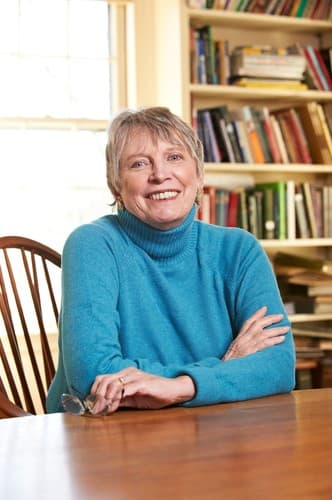
Lois Lowry is an American author known for her contributions to children's and young adult literature. Her notable works include "The Giver," "Number the Stars," "Gathering Blue," and the books in "The Giver Quartet," which explore themes of memory, identity, and the human experience. Lowry has received multiple awards for her writing, including the Newbery Medal.
Similar books
- The Giver
Lois Lowry
4.1 (1.8M) average on GoodreadsFantasyExplores a dystopian society through the eyes of a young protagonist, focusing on truth and societal control.
- A Wrinkle in Time
Madeleine L'Engle
4.0 (1.1M) average on GoodreadsFantasyA young protagonist embarks on a journey of discovery, facing challenges and making difficult moral choices.
- The Hunger Games
Suzanne Collins
4.3 (6.4M) average on GoodreadsFantasyWhile both Gathering Blue and The Hunger Games feature young female protagonists in dystopian societies, their approaches differ significantly. The Hunger Games is characterized by high-stakes action, overt rebellion, and a focus on survival through direct conflict. Gathering Blue, in contrast, is more introspective and subtle, with Kira's resistance manifesting through artistic expression and intellectual discovery rather than physical confrontation. The Hunger Games explores class warfare and media manipulation, whereas Gathering Blue delves into the exploitation of artistic talent and the manipulation of tradition. Lowry's work is less about visceral combat and more about the quiet subversion of oppressive systems through creativity.
- Uglies
Scott Westerfeld
3.9 (560k) average on GoodreadsFantasyBoth Gathering Blue and Uglies present societies that manipulate physical appearance or ability to maintain control. Uglies focuses on mandatory cosmetic surgery and the societal pressure for conformity to an 'ideal' beauty standard. Gathering Blue, however, deals with physical disability as a mark of undesirability that is then paradoxically exploited for artistic talent. While Uglies features a more technologically advanced and consumerist dystopia, Gathering Blue depicts a more primitive, tradition-bound society. Both protagonists uncover the manipulative truths behind their societies, but Tally Youngblood's journey involves more direct action and physical transformation, contrasting with Kira's more cerebral and artistic path of discovery.
- Harry Potter and the Sorcerer's Stone
J.K. Rowling
4.5 (7M) average on GoodreadsFantasyRescued from a miserable life under the stairs, an orphaned boy discovers he's a wizard destined for a magical school, where he uncovers a dangerous secret tied to the dark wizard who murdered his parents.
- 1984
George Orwell
4.2 (3.1M) average on GoodreadsPoliticsIn a future where surveillance and thought control are absolute, a man's search for truth clashes with the Party, showing that hope can be a form of rebellion.






Enjoyed the summary?
A summary gives you the shape of the book. The book itself has the detail, the examples and the voice.
Find Gathering Blue on AmazonAs an Amazon Associate, BookBrief earns from qualifying purchases. How we're funded