
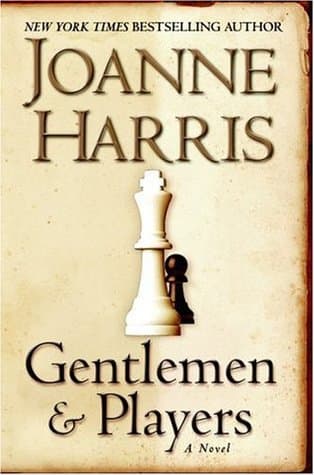
Synopsis
Covers the whole plot, including the ending.
- Difficulty
- Medium
- Pacing
- Moderate
- Mood
- Atmospheric, Suspenseful, Nostalgic, Dark, Introspective
- Read it if
- You enjoy atmospheric thrillers set in academic environments with a focus on psychological games and a slow-burn mystery.
- Skip it if
- You prefer fast-paced action thrillers or dislike stories with unreliable narrators and a strong sense of nostalgia for a bygone era.
Gentlemen and Players Plot Summary
Covers the whole plot, including the ending.
The Old Guard and the New Term
Roy Straitley, a Classics teacher at St. Oswald's Grammar School for Boys for over thirty years, starts a new school year. He is a strong traditionalist, against the modern changes the new headmaster, Dr. House, is making. Straitley finds comfort in the familiar routines and the Latin language, which he teaches with passion. This term brings five new teachers, including a quiet English teacher named Mr. Wright, and a confident art teacher, Mr. Penny. Straitley, though he acts like he dismisses change, feels his age and the coming need to retire. The mood at St. Oswald's is one of change, with the old ways represented by Straitley, and the new, efficiency-focused approach championed by Dr. House, creating underlying tensions.
Minor Disturbances and Growing Unease
As the term continues, small, confusing incidents begin at St. Oswald's. Pens disappear, coffee mugs are moved, and personal items are subtly tampered with. These first events are dismissed as minor annoyances or student pranks. However, how often they happen and their targeted nature suggest a more deliberate hand. For example, Straitley's carefully arranged desk is disturbed, and Mr. Penny's art supplies are interfered with. The staff, especially Straitley, starts to notice a pattern, though they cannot find a cause or person responsible. The incidents are unsettling, creating a low sense of unease under the school's daily operations, and slowly wearing away the feeling of order and security.
Escalation: The Bell and the Fire Alarm
The incidents become more serious, moving beyond personal annoyances to affect how the school runs. The school bell, a symbol of St. Oswald's tradition and order, is tampered with, ringing at wrong times and disrupting lessons. This is followed by false fire alarms, causing evacuations and major disruptions to the school schedule. These acts are clearly deliberate and harmful, no longer simple pranks. Dr. House, the headmaster, grows frustrated and calls for investigations, but no clear culprit appears. The increasing disruptions create a mood of suspicion among the staff and fear among the students, showing a more sinister plan at work within the school walls.
Targeting Individuals: The Staff Room and Penny's Demise
The sabotage campaign gets worse, directly targeting individual staff members. The staff room is vandalized, and personal belongings are stolen or damaged. Mr. Penny, the confident art teacher, becomes a main target. His classroom is defaced, and his reputation is slowly ruined through anonymous complaints and false evidence. This leads to a humiliating incident where his art exhibition is ruined, and he is accused of professional misconduct. Under great pressure and facing a formal inquiry, Mr. Penny is forced to resign, leaving the school under a cloud of scandal. His departure sends a chilling message to the other staff: no one is safe from the unseen perpetrator.
Straitley's Investigation and Suspicions
Troubled by the increasing events and Mr. Penny's forced resignation, Roy Straitley begins his own quiet investigation. Using his decades of experience at St. Oswald's, he watches the new teachers and studies the patterns of the attacks. He notices inconsistencies and strange behaviors, especially from Mr. Wright, the quiet English teacher. Straitley's suspicions are vague at first, but he senses a malevolent intelligence behind the disruptions, a 'player' in a game with the school as its board. He looks into the school's archives, searching for past events or forgotten grudges, believing the key to the present lies in the past. His investigation comes from a deep loyalty to St. Oswald's and a desire to protect its integrity.
The Headmaster's Plight and the Board's Pressure
Dr. House, the headmaster, finds himself in a difficult position. The constant disruptions, bad publicity, and low staff morale are getting unwanted attention from the school's board of governors. They demand answers and solutions, threatening Dr. House's career and the school's future. He puts in stricter security measures and starts internal investigations, but the perpetrator remains hidden. The pressure builds, making Dr. House desperate, caught between keeping order and keeping his authority. The board's scrutiny shows the severe impact of the 'game' on the school's public image and money, making the stakes very high for everyone involved.
The Game Unveiled: Past Grievances
Through his careful research and sharp observations, Roy Straitley finally identifies the perpetrator: Mr. Wright, the quiet English teacher. Straitley discovers that Mr. Wright is, in fact, Julian Thorogood, a former St. Oswald's student who suffered a traumatic and unfair expulsion decades ago. Julian had been wrongly accused of theft and expelled, his reputation and future destroyed, largely due to the carelessness and class snobbery of certain staff members and students. His return to St. Oswald's is a carefully planned act of revenge, a 'game' designed to systematically dismantle the institution he believes ruined his life. The 'incidents' were all part of his grand strategy to get retribution.
Julian Thorogood's Motives and Strategy
Julian Thorogood's reasons are rooted in a deep desire for revenge. As a scholarship student from a working-class background, he always felt like an outsider at St. Oswald's, a place of privilege and tradition. His expulsion, arranged by a vindictive teacher and a dismissive headmaster, not only ended his school career but also destroyed his self-worth. He spent years carefully planning his return, taking on the persona of Mr. Wright, a quiet and unassuming teacher, to get into the school. His strategy involved slowly ruining the school's reputation, causing disagreements among the staff, and ultimately bringing about its collapse, mirroring the destruction of his own life. His actions are not random but calculated moves in a long-awaited game of revenge.
The Confrontation and the Confession
Roy Straitley confronts Julian Thorogood, revealing that he knows Julian's true identity and his plan for revenge. The confrontation is full of emotion, as Julian, now exposed, confesses his long-held bitterness and the careful planning behind his 'game.' He details how each incident, from the missing pens to Mr. Penny's downfall, was a deliberate step in his strategy to dismantle St. Oswald's. Straitley tries to appeal to Julian's conscience, arguing that the school has changed, but Julian remains firm in his desire for complete destruction. Julian's final move involves exposing a major financial scandal, which he hopes will be the ultimate blow to the school's existence.
The Aftermath and St. Oswald's Future
Julian's final act of exposing a significant financial problem throws St. Oswald's into a severe crisis. The school faces closure, its reputation in ruins, and its future very uncertain. Dr. House is dismissed, and the board struggles to deal with the consequences. Roy Straitley, despite the devastation, remains firm. He refuses to abandon the school, believing in its core values and the students. He takes on a more active interim role, gathering the remaining staff and students, and working to save what he can of St. Oswald's. The ending suggests a long and difficult road to recovery, but also highlights Straitley's strong dedication and the lasting spirit of the institution, though it is changed forever by Julian's revenge.
Gentlemen and Players Characters
Roy Straitley
Protagonist
The eccentric, traditional Classics teacher devoted to St. Oswald's.
Roy Straitley is a veteran Classics teacher at St. Oswald's, a man deeply rooted in tradition and fiercely resistant to change. He is eccentric, with a love for Latin, dusty books, and the familiar routines of the school. Despite his curmudgeonly exterior, he possesses a sharp intellect and a profound loyalty to St. Oswald's and its students. He initially dismisses the disruptions as pranks but quickly recognizes a more sinister pattern, becoming the primary investigator and defender of the school. His dedication stems from a deep, almost paternal, connection to the institution, seeing it as more than just a place of work.
Relationships: Julian Thorogood (Mr. Wright) (Antagonist, former student he inadvertently failed); Dr. House (Headmaster, professional rival with differing views on school management); Mr. Penny (Colleague, initially dismissive but later feels sympathy for his downfall)
Julian Thorogood (Mr. Wright)
Antagonist
The quiet English teacher with a hidden agenda of revenge against St. Oswald's.
Julian Thorogood, disguised as Mr. Wright, is the novel's antagonist. He is a former scholarship student of St. Oswald's who suffered a devastating and unjust expulsion, leading to a life marked by bitterness and a burning desire for revenge. He meticulously planned his return, infiltrating the school as a seemingly innocuous English teacher. Beneath his quiet, unremarkable demeanor lies a brilliant, calculating mind, capable of orchestrating a complex campaign of sabotage and psychological warfare. His actions are driven by a deep-seated sense of injustice and a need to dismantle the institution that he believes destroyed his life.
Relationships: Roy Straitley (His ultimate opponent, the only one who truly understands his game); St. Oswald's School (Object of his revenge, the place that caused his suffering); Mr. Penny (A pawn in his game, targeted to demonstrate his power)
Dr. House
Supporting
The new, reform-minded headmaster struggling to modernize St. Oswald's.
Dr. House is the new headmaster of St. Oswald's, brought in to modernize the traditional institution. He is ambitious, focused on efficiency, technology, and financial stability, often clashing with Straitley's old-fashioned views. Initially confident, he becomes increasingly overwhelmed and frustrated by the escalating incidents, which threaten his authority and the school's reputation. He represents the 'new' St. Oswald's, trying to pull it into the 21st century, but ultimately proves ill-equipped to handle the deeply personal and vengeful nature of Julian's attacks. His downfall highlights the fragility of modern management when faced with deeply ingrained, historical grievances.
Relationships: Roy Straitley (Professional adversary, representing opposing views on education and tradition); School Board (His superiors, putting immense pressure on him to resolve the school's issues)
Mr. Penny
Supporting
The charismatic new art teacher who becomes a primary target of the saboteur.
Mr. Penny is one of the new teachers, a charismatic and ambitious art teacher who quickly gains popularity among students and some staff. He is enthusiastic about his subject and brings a fresh, modern energy to the school. However, he becomes a primary target of Julian Thorogood's campaign of sabotage. His professional reputation is systematically undermined, his art exhibition is ruined, and he is ultimately framed for misconduct, leading to his forced resignation. Mr. Penny serves as a tragic figure, an innocent victim caught in Julian's elaborate scheme, demonstrating the destructive power of the antagonist's revenge.
Relationships: Julian Thorogood (Mr. Wright) (Victim of Julian's deliberate targeting and framing); Roy Straitley (Colleague, initially a source of slight annoyance for Straitley, later evokes his sympathy)
Mr. Cromwell
Supporting
A senior teacher and colleague of Straitley, often a sounding board.
Mr. Cromwell is another long-serving teacher at St. Oswald's and a colleague of Roy Straitley. He often serves as a sounding board for Straitley's observations and frustrations, though he is less actively involved in the investigation. He represents a segment of the older staff who are resistant to change but less vocal than Straitley. He provides a sense of the collective staff's bewilderment and growing unease as the incidents escalate, and his reactions help to contextualize the impact of Julian's actions on the wider school community. He embodies the quiet despair and resignation felt by many traditionalists.
Relationships: Roy Straitley (Long-standing colleague and friend)
The School Board
Mentioned
The governing body putting pressure on Dr. House.
The School Board is the unseen but powerful governing body of St. Oswald's. They represent the external pressures and expectations placed upon the school, particularly concerning its reputation and financial viability. Their increasing demands for answers and solutions to the escalating disruptions drive much of Dr. House's desperate actions. Their ultimate decision to dismiss Dr. House and contemplate closing the school underscores the severe, real-world consequences of Julian's revenge.
Relationships: Dr. House (His employers, exerting authority and pressure)
Gentlemen and Players Themes
Revenge and Justice
The main theme is Julian Thorogood's carefully planned revenge for a great injustice he suffered decades ago at St. Oswald's. His 'game' is an elaborate attempt to get retribution, believing that the school must pay for its past mistakes. The story explores the destructive nature of long-held grudges and the fine line between seeking justice and giving in to vengeful destruction. Julian believes his actions are justified, a rebalancing of scales, while Straitley argues for forgiveness and the school's ability to change. The story makes readers question if true justice can ever be achieved through such means.
“Audere, agere, auferre. To dare, to strive, to conquer. It was the school motto, but to me, it was a battle cry.”
Tradition vs. Modernity
This theme is seen in the conflict between Roy Straitley's strong traditionalism and Dr. House's attempts to modernize St. Oswald's. Straitley values the school's old ways, its Latin lessons, and its established routines, seeing them as the core of its identity. Dr. House, conversely, focuses on efficiency, technology, and a more business-like approach to education. Julian's revenge, ironically, targets both the old and the new, using the tensions between them. The story suggests that while tradition can be rigid and exclusive, modern approaches, without soul, can also be vulnerable and easily manipulated. The struggle shows how difficult it is to adapt without losing core values.
“The old ways were dying. And I, Roy Straitley, was a dinosaur, clinging to the last vestiges of a forgotten age.”
Class and Privilege
The novel subtly but strongly explores the theme of class and privilege within an elite grammar school. Julian Thorogood, a scholarship student from a working-class background, felt like an outsider and was ultimately hurt by the common class snobbery and an institution that favored its privileged students. His expulsion was not just a personal failure but reflected the systemic biases within St. Oswald's. The story contrasts the lives of those born into privilege, who often faced fewer consequences, with Julian's struggle, which was made worse by his social standing. This theme highlights the deep reasons for Julian's bitterness and the lasting impact of social injustice.
“They were gentlemen. I was merely a player, and the rules were never designed for me.”
Identity and Deception
Julian Thorogood's entire plan relies on a major act of deception, taking on the identity of 'Mr. Wright' to get into St. Oswald's. This highlights the theme of identity, both how it forms and how it can be changed. Julian carefully creates his new persona, hiding his true self and his past grievances for decades. The story explores the psychological cost of such long-term deception and the blurring of lines between the real self and the assumed identity. Straitley, in contrast, is firm in his identity as a traditional teacher, making his unchanging authenticity a contrast to Julian's elaborate disguise. The story questions what truly defines a person and how deeply one's past shapes their present.
“To become someone else, you first have to erase who you were. And then, you have to remember why.”
Memory and the Past
The past plays a crucial, almost overwhelming role in the novel. Julian's entire motivation comes from a traumatic event from his past at St. Oswald's, and he carefully revisits and reconstructs those memories to fuel his revenge. For Straitley, the past is a source of comfort and identity, but also contains the origins of the current crisis. The school itself is full of history and tradition, which both defines it and makes it vulnerable to past grievances. The story explores how memories, both personal and institutional, shape the present and determine the future, suggesting that unresolved issues from the past can return with devastating consequences.
“The past, they say, is a foreign country. But sometimes, it's just the classroom next door, waiting for you to walk back in.”
Plot Devices & Literary Techniques
Unreliable Narrator
The story is told from multiple perspectives, primarily Straitley's, with hidden truths.
The novel employs an unreliable narrator, or rather, multiple narrators whose perspectives are gradually revealed to be incomplete or biased. The primary narrative is from Roy Straitley's point of view, colored by his traditionalism and initial obliviousness to the true nature of the events. Interspersed are chapters from the 'player' (Julian Thorogood), whose identity is concealed until late in the book. This dual narration, with one perspective actively hiding crucial information, creates suspense and allows for a dramatic reveal. The reader is led to make assumptions alongside Straitley, only to have them subverted when Julian's full story and identity are exposed, challenging the perceived reality of the events.
Red Herring
Misleading clues and characters divert attention from the true antagonist.
The author extensively uses red herrings to mislead the reader and Straitley about the identity of the perpetrator. Characters like Mr. Penny, with his ambition and occasional arrogance, are subtly presented in a way that makes them seem like plausible suspects for the minor disruptions, or even the target of a rival. The initial incidents are designed to appear as student pranks or general incompetence, diverting attention from the meticulous, long-term planning of Julian Thorogood. These misdirections build suspense and ensure that the reveal of Mr. Wright's true identity and motive is a genuine surprise, enhancing the mystery aspect of the thriller.
Dramatic Irony
The audience is privy to information that characters are not, creating tension.
Dramatic irony is employed through the interspersed chapters told from the perspective of the 'player' (Julian Thorogood). These chapters, initially anonymous, give the reader insights into the perpetrator's thoughts, motivations, and the meticulous planning behind the 'game' long before Straitley or any other character understands the full scope of what is happening. The audience knows that the incidents are deliberate and part of a larger scheme, while the characters within the story are still dismissing them as isolated events or pranks. This creates a constant sense of tension and foreboding, as the reader watches the characters stumble towards a truth they are unaware of.
Framing Device (The 'Game')
The antagonist views his revenge as a meticulously planned 'game' with rules and moves.
Julian Thorogood frames his entire revenge scheme as a 'game,' a meticulously planned series of moves and counter-moves designed to bring about the destruction of St. Oswald's. This plot device emphasizes his calculating nature and the intellectual battle between him and Straitley. The 'game' has 'players' (Julian and, unwittingly, Straitley), 'rules' (the school's vulnerabilities), and a 'board' (St. Oswald's itself). This metaphor elevates the conflict beyond simple sabotage, portraying it as a strategic, intellectual duel, making the antagonist's actions feel more deliberate and psychologically complex. It also highlights the antagonist's detachment and his view of the school and its inhabitants as pawns.
Gentlemen and Players Quotes
“There are some things you can't outrun. Some things that follow you, no matter how fast you go, or how far.”
“The past is a foreign country; they do things differently there.”
“A school is a small, self-contained world, with its own rules, its own hierarchies, its own cruelties.”
“Revenge, like a good wine, needs time to mature.”
“It's astonishing how quickly people forget, given the right inducements.”
“Every secret has a shelf life. Eventually, it spoils.”
“The truth is rarely pure and never simple.”
“A good game, like a good story, needs a twist.”
“We are all, in our way, prisoners of our own making.”
“Nostalgia is a powerful drug. It makes you remember things not as they were, but as you wish they had been.”
“There’s a kind of madness that comes from living too long with a secret.”
“The greatest trick the devil ever pulled was convincing the world he didn't exist.”
“Sometimes, the best way to hide is in plain sight.”
“You can change your clothes, your name, your address, but you can never truly escape who you are.”
“Every game has rules. And every player knows them. Or learns them, one way or another.”
Quiz
10 questions on the plot and the characters. Each answer comes with a short explanation.
Question 1
Which subject does Roy Straitley teach at St. Oswald's Grammar School for Boys?
- English Literature
- Mathematics
- Classics
- History
Show answer
C. Classics Roy Straitley is described as the eccentric Classics teacher who has been a fixture at St. Oswald's for over thirty years.
Question 2
What is the Latin motto associated with St. Oswald's, mentioned in the book's description?
- Veni, vidi, vici
- Audere, agere, auferre
- Carpe diem
- Ad astra per aspera
Show answer
B. Audere, agere, auferre The motto 'Audere, agere, auferre' (To dare, to strive, to conquer) is explicitly stated at the beginning of the book's description.
Question 3
What is the ultimate goal of the new teacher who harbors dark ties to the school's past?
- To become the new headmaster
- To modernize the school's curriculum
- To destroy St. Oswald's
- To expose a scandal from the past
Show answer
C. To destroy St. Oswald's The description clearly states that this young teacher 'has arrived with one terrible goal: to destroy St. Oswald's.'
Question 4
What kind of 'incidents' initially begin to plague St. Oswald's at the start of the new term?
- Major acts of vandalism
- Serious student injuries
- Small annoyances like lost pens and misplaced coffee mugs
- Disruptions during school assemblies
Show answer
C. Small annoyances like lost pens and misplaced coffee mugs The incidents begin as 'small annoyances -- a lost pen, a misplaced coffee mug' before escalating.
Question 5
What 'wind of unwelcome change' is blowing through St. Oswald's, making Roy Straitley contemplate retirement?
- A decrease in student enrollment
- A shift towards suits, paperwork, and information technology
- Budget cuts affecting teacher salaries
- Increased pressure from parents for better grades
Show answer
B. A shift towards suits, paperwork, and information technology Straitley is reluctant to retire because 'Suits, paperwork, and information technology are beginning to overshadow St. Oswald's tradition.'
Question 6
How many new faculty members join St. Oswald's at the start of the term, including the antagonist?
- Three
- Four
- Five
- Six
Show answer
C. Five The text states, 'He is joined this term by five new faculty members, including one who -- unbeknownst to Straitley and everyone else -- holds intimate and dangerous knowledge of St. Oswald's ways and secrets.'
Question 7
What role does Roy Straitley play in the face of the school's unraveling?
- He leads the charge for modernization.
- He forms an alliance with the new teacher.
- He is the only one who stands in the way of its ruin.
- He initially dismisses all the incidents as pranks.
Show answer
C. He is the only one who stands in the way of its ruin. The description highlights Straitley's crucial role: 'With St. Oswald's unraveling, only Straitley stands in the way of its ruin.'
Question 8
The antagonist's strategy is described as 'meticulously planned to the final move.' What does this imply about the nature of the conflict?
- It's a spontaneous and chaotic series of events.
- It's a chess-like game of wit and strategy.
- It relies heavily on brute force and intimidation.
- It is easily solvable by simple investigation.
Show answer
B. It's a chess-like game of wit and strategy. The phrase 'meticulously planned to the final move' and the mention of a 'master player' and 'secret game' strongly suggest a strategic, chess-like conflict.
Question 9
What is the primary motivation for the new teacher's destructive plan against St. Oswald's?
- A desire for financial gain from the school's collapse.
- A bitter grudge and dark ties to the school's past.
- A personal vendetta against Roy Straitley specifically.
- A belief that the school is inherently corrupt and needs to be reformed.
Show answer
B. A bitter grudge and dark ties to the school's past. The antagonist is described as 'a master player with a bitter grudge and a strategy that has been meticulously planned to the final move,' and having 'dark ties to the school's past.'
Question 10
The novel is described as a 'harrowing tale of cat and mouse.' What does this literary device suggest about the plot's structure?
- It will involve a literal chase sequence between animals.
- It implies a dynamic struggle between two opposing forces, one pursuing and one evading, with high stakes.
- The story will focus on the internal thoughts of a single character.
- The plot will be primarily a romantic comedy.
Show answer
B. It implies a dynamic struggle between two opposing forces, one pursuing and one evading, with high stakes. The 'cat and mouse' trope in thrillers typically refers to a sustained pursuit and evasion between an antagonist and protagonist, characterized by cunning and suspense.
Gentlemen and Players FAQ
What is the central conflict driving the plot of 'Gentlemen and Players'?
The central conflict revolves around an anonymous saboteur, later revealed to be the new teacher Snyde (Julian Freye), systematically dismantling St. Oswald's Grammar School from within. His goal is to avenge his mother's abandonment and his own traumatic past associated with the school, creating a tense cat-and-mouse game with Roy Straitley.
Who is Roy Straitley, and what is his role in the story?
Roy Straitley is an eccentric, long-serving Classics teacher at St. Oswald's, deeply rooted in its traditions and history. He serves as the primary narrator and the unwitting antagonist to Snyde's plans, gradually piecing together the mystery of the school's unraveling and ultimately confronting the saboteur.
What is the significance of the Latin motto 'Audere, agere, auferre'?
The motto 'Audere, agere, auferre' (To dare, to strive, to conquer) embodies the competitive, often ruthless, spirit of St. Oswald's and its students. It also ironically reflects Snyde's calculated campaign of revenge, as he dares to execute his plan, strives to achieve his goal, and ultimately conquers the school's peace and reputation.
Who is Snyde, and what is his true identity and motivation?
Snyde is the pseudonym adopted by Julian Freye, the illegitimate son of the former headmaster, Reverend Freye, and his housemaid. His motivation is a deep-seated desire for revenge against St. Oswald's, which he blames for his mother's tragic fate and his own childhood trauma, meticulously planning its destruction.
How does the narrative structure contribute to the mystery?
The narrative is primarily told through Roy Straitley's first-person perspective, interspersed with an anonymous, italicized second-person narrative addressed to 'you' (Straitley). This dual perspective cleverly conceals the saboteur's identity until late in the book, building suspense and misdirection as readers try to deduce who 'you' refers to.
What role does the character of Julian Freye's mother play in the backstory?
Julian Freye's mother was a housemaid at St. Oswald's who had an affair with Reverend Freye, the headmaster. Her subsequent abandonment, the birth of Julian, and her eventual tragic death due to poverty and despair, form the core trauma that fuels Julian's lifelong quest for revenge against the school.
Are there any subtle clues about Snyde's identity woven into the early narrative?
Yes, there are subtle clues, such as Snyde's unusual familiarity with the school's forgotten nooks and crannies, his particular interest in the Classics department, and his almost theatrical performance as a new teacher. The anonymous narrator's intimate knowledge of Straitley's habits and thoughts also hints at a close observer.
How does the 'game' metaphor extend beyond Snyde's revenge plan?
The 'game' metaphor extends to the hierarchical and competitive nature of St. Oswald's itself, where students and even teachers engage in social maneuvering and academic rivalry. Straitley, as a Classics teacher, views life through the lens of ancient games and strategies, making him a fitting, if unwitting, player in Snyde's scheme.
What is the significance of the old St. Oswald's building and its hidden passages?
The old St. Oswald's building, with its hidden passages and forgotten rooms, symbolizes the school's layered history and secrets. For Snyde, these passages represent his intimate, hidden connection to the school and provide the perfect means for him to execute his campaign of sabotage undetected.
How does Straitley's attachment to tradition affect his perception of the unfolding events?
Straitley's deep attachment to tradition initially blinds him to the true nature of the incidents, causing him to dismiss them as minor annoyances or signs of modern decay. His reverence for the old ways makes him reluctant to suspect malicious intent, hindering his ability to identify Snyde as a threat until much later.
Analyze Snyde's psychological state throughout his revenge plan.
Snyde exhibits a highly controlled and calculating psychological state, driven by a deep-seated trauma and a need for retribution. His actions are meticulously planned, indicating a lack of impulsive emotion and a singular focus on his objective, bordering on sociopathy in his detachment from the consequences for others.
How does the concept of 'fair play' or 'gentlemen's rules' operate within the novel's context?
The concept of 'fair play' is ironically subverted in the novel. St. Oswald's prides itself on producing 'gentlemen,' but Snyde's actions expose the hypocrisy and hidden cruelties beneath the veneer of tradition. His 'game' is anything but fair, highlighting the destructive potential of grudges and the breakdown of expected decorum.
What psychological impact does the escalating sabotage have on the St. Oswald's community?
The escalating sabotage creates a climate of paranoia, suspicion, and fear within the St. Oswald's community. Teachers and students turn on each other, traditions crumble, and the sense of security is shattered, leading to a breakdown of trust and the school's very fabric.
Does Snyde achieve true 'victory' at the end of the book, or is his success ambiguous?
Snyde's victory is ambiguous. While he successfully exposes the school's vulnerabilities and causes significant disruption, he is ultimately unmasked and his plan for total destruction is thwarted by Straitley. His revenge is fulfilled in part, but it comes at the cost of his freedom and future, leaving a complex sense of triumph and loss.
What is the novel's stance on the value of tradition versus the need for change?
The novel presents a nuanced view on tradition versus change. While it acknowledges the beauty and comfort of St. Oswald's traditions through Straitley's eyes, it also critiques the rigidity and potential for harm when traditions become exclusionary or blind to injustice. Snyde's actions force a painful, albeit destructive, confrontation with the need for change.
How does the ending leave the reader feeling about St. Oswald's future?
The ending leaves the reader with a sense of uncertainty and melancholy regarding St. Oswald's future. While the immediate threat is neutralized, the school has been deeply wounded, its reputation tarnished, and its sense of invincibility shattered. It implies a long, difficult road to recovery, if recovery is even possible.
To what extent is Straitley responsible for the events, or is he merely a victim?
Straitley is neither entirely responsible nor merely a victim. While he represents the traditional St. Oswald's that inadvertently contributed to Freye's trauma, his motivations are pure, and he actively works to save the school. He is a player in a game he didn't initiate, forced to confront the hidden consequences of the world he cherishes.
About the author

Joanne Harris is a British author known for her fiction, particularly her novel "Chocolat," which explores themes of food and community. Other notable works include "Five Quarters of the Orange," a story of family and secrets, and "Gentlemen and Players," a psychological thriller set in a boys' school. Harris's writing often blends elements of magic realism with rich character development.
Similar books
- The Secret History
Donna Tartt
3.9 (2k) average on GoodreadsPoliticsFeatures a dark academic setting, a group of eccentric characters, and a slow-burn mystery with a focus on manipulation and secrets.
- The Likeness
Tana French
4.0 (126k) average on GoodreadsThrillerOffers a rich, atmospheric setting, a complex psychological mystery, and a deep dive into character motivations and past grievances.
- Angels & Demons
Dan Brown
3.9 (2.7M) average on GoodreadsThrillerA Harvard symbologist races through Rome's ancient sites, deciphering cryptic clues to unmask the Illuminati and stop a vengeful plot to destroy the Vatican with a stolen antimatter weapon.
- Gone Girl
Gillian Flynn
4.1 (2.3M) average on GoodreadsThrillerA wife's sudden disappearance on her fifth anniversary reveals a web of lies and psychological warfare, exposing the secrets within a seemingly perfect marriage.
- The Girl on the Train
Paula Hawkins
3.9 (2.1M) average on GoodreadsThrillerA woman’s fascination with a seemingly perfect couple she watches from her daily train commute leads her into a dark investigation when she witnesses something that shatters their idyllic image.
- The Da Vinci Code
Dan Brown
3.9 (1.9M) average on GoodreadsThrillerA symbologist and a cryptologist race through European landmarks, deciphering ancient codes and uncovering a conspiracy that could rewrite the foundations of Christianity.





Enjoyed the summary?
A summary gives you the shape of the book. The book itself has the detail, the examples and the voice.
Find Gentlemen and Players on AmazonAs an Amazon Associate, BookBrief earns from qualifying purchases. How we're funded