

Core Idea
- Difficulty
- Medium
- Read it if
- You are fascinated by dark academia, psychological thrillers with a literary bent, explorations of moral decay among the intellectual elite, or character-driven stories about shared guilt and its aftermath.
- Skip it if
- You prefer fast-paced plots, clear-cut heroes and villains, or narratives that don't delve deeply into the intellectual justifications for morally reprehensible acts.
Key Takeaways from The Secret History
The Allure of the Elite Enclave
Exclusive groups create their own moral universes, detached from common societal norms.
The Hampden College Classics group, led by Julian Morrow's charismatic but manipulative guidance, shows how an intellectual elite can become dangerously isolated. Their shared pursuit of beauty and specialized knowledge, initially a bond, slowly becomes a reason for increasingly wrong behavior. This isolation creates a sense of moral exemption, where outside ethical rules are seen as unimportant or inferior to their own logic and shared values. The group's intellectual superiority, combined with their isolation, builds a distorted reality where their actions, no matter how extreme, are explained as necessary for their unique intellectual and spiritual growth. This separation from typical morality is a main reason for their turn to violence and deception.
“Beauty is terror. Whatever we call beautiful, we half desire and half dread.”
In the book: The initial formation of the group, Julian's selective acceptance of students, and their exclusive study of Greek, which sets them apart from the rest of the college, are early indicators of this insular world. Their shared secret of the bacchanal and subsequent murder further solidifies their isolation.
Try this: Be wary of groups, academic or otherwise, that foster an 'us vs. them' mentality or whose leaders encourage a rejection of common ethical standards in favor of a unique, self-serving moral code. Always question the justifications for exclusivity and the potential for moral erosion within such enclaves.
Related ideas: elite-isolation, moral-relativism, group-think
The Peril of Aestheticism Over Ethics
Prioritizing beauty and intellectual pursuit above all else can lead to a dangerous disregard for human life and morality.
The Classics students, especially Henry Winter, are deeply committed to an aesthetic view, where life is understood through beauty, art, and abstract thought. This extreme aestheticism, however, is a dangerous philosophy. When faced with the messy parts of human emotion, consequences, and morality, they are not ready to respond ethically. Their interest in ancient rituals and the Dionysian ideal, initially an intellectual exercise, becomes a justification for actual violence. The search for a sublime, transcendent experience, without ethical thought, ultimately leads to murder. The book shows how separating beauty from human values can dehumanize people and open the door to terrible acts, as the 'idea' of an experience becomes more appealing and less accountable than its real-world effect.
“I like the idea of it better. It's not nearly as interesting when it's real.”
In the book: Henry's detached analysis of the bacchanal and subsequent murder, his cold, calculated planning of Bunny's death, and the group's attempts to intellectualize their crimes rather than confront their moral implications.
Try this: Cultivate a balanced appreciation for beauty and intellect alongside a strong ethical compass. Recognize that true wisdom integrates moral responsibility with intellectual curiosity, and that aesthetic pursuits should never supersede the fundamental respect for human life and well-being.
Related ideas: aestheticism, moral-decay, intellectual-hubris
The Corrupting Influence of Charismatic Authority
Unquestioning devotion to a charismatic leader can blind followers to their own moral compass.
Julian Morrow, the Classics professor, embodies the appealing power of charismatic authority. He fosters an exclusive, almost cult-like loyalty among his students by appealing to their intellectual pride and desire to belong. His statements, often wrapped in philosophical grandeur, are accepted without question, creating an environment where his word is law. This unquestioning loyalty allows him to subtly change their views of morality and reality. The students, eager for his approval and immersed in his intellectual world, gradually adopt his values, even when those values differ greatly from common ethics. Julian's ultimate failure to act or even acknowledge the murders highlights the dangerous neglect of responsibility in such unchecked influence, leaving his followers morally lost and psychologically damaged.
“He had a way of looking at you, a way of making you feel as if you were the only person in the room, the only person who mattered.”
In the book: Julian's initial selection process, his engaging lectures that enchant the students, their shared dinners and discussions, and their collective fear of disappointing him, even after the murders, demonstrate his profound influence. His retreat and ultimate disappearance after learning of the crimes also underscore his manipulative nature.
Try this: Always maintain a critical perspective, even towards highly admired figures. Question authority, especially when it encourages exclusivity, secrecy, or a deviation from established ethical norms. Prioritize your own moral judgment over the directives of a charismatic leader.
Related ideas: cult-of-personality, authoritarianism, moral-abdication
The Burden of Shared Guilt
Collective secrets, especially those involving violence, create unbreakable but destructive bonds.
The shared secret of Bunny Corcoran's murder, after the accidental death of the farmer, ties the Classics group together in a way stronger than friendship. This guilt, a heavy and inescapable burden, becomes the defining feature of their relationships. It warps their perceptions, fuels paranoia, and eventually destroys their individual minds. The initial attempt to act normally breaks down under the weight of their involvement, leading to internal suspicion, betrayal, and self-destruction. The novel shows that while shared secrets can create strong alliances, those built on crime are inherently unstable and ultimately harmful, destroying trust and individual peace of mind. The 'togetherness' they achieve is not one of companionship, but of mutual entrapment.
“We are all in this together, whether we like it or not. And we are all equally guilty.”
In the book: The group's frantic efforts to cover up Bunny's death, their subsequent paranoia and suspicion of each other, Henry's manipulation of Richard, and Charles's descent into alcoholism and madness due to the guilt.
Try this: Understand that complicity in unethical or illegal acts creates a toxic bond that can destroy individual well-being and relationships. Seek accountability and transparency rather than attempting to bury dark secrets, as the latter almost always leads to greater suffering.
Related ideas: collective-guilt, secrecy, moral-consequences
The Illusion of Control and the Fickleness of Fate
Human attempts to orchestrate events often unravel, revealing the unpredictable nature of existence.
The Classics students, especially Henry, believe they can control their environment and the results of their actions. Their carefully planned murder of Bunny is an attempt to bring order to a chaotic situation, to remove a perceived threat and restore their idealized world. However, their elaborate plans are constantly undone by unexpected events, human error, and life's sheer unpredictability. The initial bacchanal results in an accidental death, Bunny's murder is full of problems, and the cover-up falls apart due to internal pressures and outside scrutiny. The novel suggests that while people try to control things, fate, chance, and the inherent messiness of human nature often work against even the most careful plans, leading to unintended and often tragic results. Their intellectual pursuit of 'order' ultimately leads to complete disorder.
“It is difficult to believe in the dreadful but divine order of things; the actual, real order of things, in short, which you can only see with your eyes shut.”
In the book: The accidental death of the farmer during the bacchanal, Bunny's unexpected persistence and threats, the botched attempt to stage Bunny's disappearance, and the eventual disintegration of the group despite their efforts to maintain secrecy.
Try this: Recognize the limits of human control. While planning and foresight are important, cultivate adaptability and resilience, understanding that life is inherently unpredictable. Avoid the hubris of believing you can fully dictate outcomes, especially when those outcomes involve manipulating others or violating ethical boundaries.
Related ideas: fate-vs-free-will, unintended-consequences, hubris
The Destructive Nature of Escapism
Seeking refuge in idealized worlds or substances can exacerbate rather than alleviate real-world problems.
The students in Julian's class, particularly Richard, are drawn to Hampden and the Classics as a way to escape their ordinary or troubled pasts. They seek refuge in an intellectualized, romanticized view of antiquity, believing it offers a more profound and beautiful existence than their own. However, this escapism becomes a dangerous coping mechanism. When faced with the horrific reality of their actions, they retreat further into intellectualizing, alcohol, and denial rather than confronting the truth. Charles's alcoholism, Francis's anxiety, and Richard's detached narration all show this destructive escapism. The novel argues that while temporary distractions can be harmless, a sustained flight from reality, especially when combined with serious moral wrongs, prevents real healing, personal growth, and accountability, ultimately leading to deeper psychological harm and more destructive behavior.
“Our lives, our habits, our most cherished thoughts seemed to be little more than a set of elaborate rules, a game, if you will, to keep us from the truth of what we were.”
In the book: Richard's flight from his Californian background, the group's immersion in Greek tragedies and Dionysian rituals, Charles's escalating alcoholism, and Francis's attempts to manage his anxiety through various means.
Try this: Confront reality, even when it's difficult. While self-care and leisure are important, avoid using escapism as a chronic strategy to avoid personal responsibility or painful truths. Seek healthy coping mechanisms and face challenges directly rather than retreating into illusions or harmful habits.
Related ideas: denial, addiction, psychological-trauma
The Elusive Nature of Truth and Memory
Narrative perspective and personal bias profoundly shape our understanding of events.
Richard Papen, as the only narrator, tells the events years after they happened, presenting the whole story as his 'project.' This narrative choice highlights how subjective and often unreliable memory and truth are. Richard's desire to be accepted by the elite group, his fascination with beauty, and his own moral involvement clearly color his account. He often leaves out details, explains actions, and presents a version of events that suits his own psychological needs, rather than a purely objective account. The reader is always aware that they are seeing the past through a distorted lens, filtered by Richard's longing, guilt, and lingering fascination. The novel challenges the reader to question the 'facts' presented and consider how personal bias, time, and emotional investment can reshape even the most traumatic experiences into a coherent, though incomplete or biased, story.
“I suppose at heart I have always been a man of projects. And this was the project of my life.”
In the book: Richard's initial idealization of the group, his selective focus on certain interactions, his retrospective commentary on events, and the moments where he admits to not fully understanding or recalling certain details. His framing of the story as an attempt to understand 'how it all happened' rather than a purely factual retelling.
Try this: Approach all narratives, especially personal accounts of complex events, with a critical eye. Recognize that memory is reconstructive, not purely reproductive, and that personal biases inevitably shape storytelling. Seek multiple perspectives to gain a more complete, if still imperfect, understanding of truth.
Related ideas: unreliable-narration, subjectivity-of-truth, memory-bias
The Disillusionment of Idealism
Chasing idealized versions of life or people often leads to bitter disappointment and moral compromise.
Richard Papen arrives at Hampden College with a romanticized idea of intellectual pursuit and elite friendship. He idealizes Julian Morrow and the Classics group, seeing them as examples of a deeper and more beautiful way of life. However, this idealism is systematically broken throughout the novel. The sophisticated intellectuals reveal themselves to be manipulative, morally corrupt, and ultimately destructive. The pursuit of 'divine madness' leads not to enlightenment, but to murder and psychological ruin. Richard's journey is one of deep disappointment, as the beautiful facade of his chosen world crumbles, revealing the ugliness underneath. The novel is a warning against placing one's hopes and dreams onto others or abstract ideals, as reality often falls short, leading to painful realizations and the compromise of one's own values.
“I had always been a solitary child, and I had always been, in some ways, a romantic. I had wanted to belong to something, to be part of something larger than myself.”
In the book: Richard's initial awe of the group, his eagerness to impress them, the slow realization of their moral failings, and his eventual, albeit belated, understanding of Julian's true nature.
Try this: Maintain a healthy skepticism towards idealized situations, people, or groups. Ground your aspirations in reality and be prepared to critically evaluate whether a group's actions align with your values, rather than blindly adhering to a romanticized vision. Embrace realism over naive idealism to avoid severe disappointment and moral pitfalls.
Related ideas: idealism-vs-realism, disillusionment, moral-compromise
The Enduring Power of Trauma
Unresolved psychological trauma can haunt individuals for a lifetime, shaping their future.
The events at Hampden College leave lasting psychological scars on all surviving members of the Classics group. Years later, Richard, Francis, Charles, and Henry are still deeply affected by the murders and the cover-up. Charles falls into alcoholism and paranoia, Francis lives with constant anxiety and a feeling of being trapped, and even the seemingly immune Henry eventually plans his own death. Richard, the narrator, is constantly haunted by the past, unable to form meaningful connections or escape the shadow of his involvement. The novel shows that trauma, especially from violent acts and shared guilt, does not simply disappear over time. Instead, it becomes a permanent part of one's identity, influencing relationships, decisions, and overall well-being, demonstrating the long-term, devastating consequences of unresolved psychological wounds.
“It is a fact that I have been dead for a long time. I was dead before I was born.”
In the book: The fates of Charles, Francis, and Henry years after the events, as described by Richard. Richard's own inability to move past the experience, his recurring dreams, and his lingering obsession with the group.
Try this: Acknowledge and address trauma rather than suppressing it. Seek professional help or healthy coping mechanisms to process traumatic experiences, as unresolved trauma can have pervasive and destructive long-term effects on mental health and interpersonal relationships. Understand that healing is a process, not an event.
Related ideas: post-traumatic-stress, psychological-healing, grief-and-loss
The Fragility of Social Constructs
The veneer of civility and intellectualism can easily crack under pressure, revealing primitive impulses.
The Classics students, outwardly refined and intelligent, believe they are accessing deep ancient wisdom by embracing Dionysian ideals. They see themselves as rising above ordinary societal norms, aiming for a higher level of existence. However, their attempts to unleash their 'animal'istic nature, particularly during the bacchanal, quickly turn into chaos and violence, showing how thin the line is between cultured intellect and primal brutality. The carefully built social order of Hampden College, and the students' own self-perception, proves very fragile when faced with extreme emotions, fear, and the breakdown of ethical limits. The novel strongly argues that even the most intelligent and seemingly civilized individuals are vulnerable to their basic instincts, and that societal structures, no matter how strong they appear, can quickly unravel when challenged by unchecked desires and a disregard for human values.
“The Greeks, as I'm sure you know, believed that the truly wise man was the one who could be both a god and an animal. And not just one, but both.”
In the book: The bacchanal leading to the accidental death of the farmer, the group's subsequent decision to murder Bunny, and the rapid deterioration of their relationships and individual mental states. Julian's philosophical justification for embracing both 'god' and 'animal' is ironically proven in the most brutal way.
Try this: Recognize that civility and ethical behavior are cultivated, not inherent, and require constant vigilance. Understand that even intelligent and educated individuals can succumb to destructive impulses without strong moral frameworks. Uphold and defend ethical boundaries, as their erosion can lead to a rapid societal and personal decline.
Related ideas: human-nature, social-order, primal-instincts
The Secret History Quotes
“Beauty is terror. Whatever we call beautiful, we half-desire, half-dread.”
“I suppose at heart I've always been a romantic, and though I've tried to fight it, it's a losing battle.”
“Death is the mother of beauty. And what is beauty but an ecstasy of sorrow, a thrill of that terrible knowledge that we are mortal?”
“It is a singular sensation, that of being a young man, in a world that is just beginning to open up to you.”
“There are certain things, after all, that one takes for granted. And then, one day, one doesn't.”
“We are not talking about some ordinary crime. We are talking about something much more ancient, much more profound.”
“Does such a thing as 'the fatal flaw' exist? I don't know. It sounds a little like an excuse to me.”
“I have been to a place, you understand, where the human and the divine meet. And it is not a pretty place.”
“I prefer to think of it as a kind of moral wilderness, where the rules are different.”
“It is difficult to be at once a gentleman and a revolutionary.”
“We are all of us, in some way, caught in a web of our own making.”
“But how can I explain what it was like? How can I describe the terrible, beautiful clarity of that day?”
“Integrity, I think, is a rare and precious thing, and not to be trifled with.”
“You can never really know anyone, not even the people you love the most.”
Quiz
10 questions on the main ideas. Each answer comes with a short explanation.
Question 1
Which ancient language does Julian Morrow primarily teach to his select group of students at Hampden College?
- Latin
- Ancient Greek
- Old Norse
- Sanskrit
Show answer
B. Ancient Greek Julian Morrow's eccentric and exclusive class is centered around the study of Ancient Greek, which sets his students apart from the rest of Hampden College.
Question 2
What is Richard Papen's initial major before he successfully transfers into Julian Morrow's class?
- English Literature
- Philosophy
- Architecture
- Greek
Show answer
D. Greek Richard initially enrolls at Hampden as a Greek major, specifically to gain access to Julian Morrow's prestigious class, though he struggles with the language at first.
Question 3
Which character is described as having an 'unearthly beauty' and is often the object of both admiration and suspicion among the group?
- Henry Winter
- Francis Abernathy
- Camilla Macaulay
- Judy Poovey
Show answer
C. Camilla Macaulay Camilla Macaulay, Charles's twin sister, is consistently portrayed as possessing a striking, almost ethereal beauty that captivates Richard and others.
Question 4
What is the primary motivation behind the students' first fatal act, the murder of the farmer?
- Revenge for a past slight
- A ritualistic sacrifice during a bacchanal
- To prevent him from exposing their secrets
- An accidental death during a drunken brawl
Show answer
B. A ritualistic sacrifice during a bacchanal The farmer is accidentally killed during a Dionysian ritual (bacchanal) that Henry and others are experimenting with, believing they can achieve a state of ecstasy and transcendence.
Question 5
What philosophical concept, heavily influenced by Ancient Greek thought, underpins the students' pursuit of aesthetic beauty and their detachment from conventional morality?
- Utilitarianism
- Nihilism
- Aestheticism
- Existentialism
Show answer
C. Aestheticism The students, particularly Henry, are deeply invested in the pursuit of beauty and the sublime, often prioritizing aesthetic experience over ethical considerations, a core tenet of Aestheticism.
Question 6
How does Julian Morrow react when he eventually learns the full truth about the murders committed by his students?
- He attempts to cover up their crimes and protect them.
- He immediately goes to the authorities to report them.
- He expresses profound disappointment and guilt, then disappears.
- He tries to rationalize their actions using classical philosophy.
Show answer
C. He expresses profound disappointment and guilt, then disappears. Upon discovering the full extent of their actions, Julian is utterly devastated. He feels a deep sense of betrayal and personal failure, leading him to leave Hampden College abruptly, never to be seen by the students again.
Question 7
What significant personal sacrifice does Francis Abernathy make to help the group maintain their secret and avoid financial ruin?
- He sells his family's ancestral home.
- He marries a wealthy heiress for her money.
- He becomes engaged to a woman he doesn't love to secure an inheritance.
- He embezzles money from his family's trust fund.
Show answer
C. He becomes engaged to a woman he doesn't love to secure an inheritance. Francis, facing financial pressure and deeply entangled with the group's secrets, agrees to an arranged engagement to a woman solely for the financial security and inheritance it promises, a move he despises.
Question 8
The novel explores the dangerous consequences of intellectual elitism and the isolation of a closed group. How does this theme manifest in the students' relationship with the outside world?
- They actively seek to integrate their classical knowledge into modern society.
- They view themselves as superior and separate, leading to a disregard for conventional societal rules and human life.
- They use their intellectual prowess to manipulate others for personal gain.
- Their isolation is accidental, a result of their intense academic focus.
Show answer
B. They view themselves as superior and separate, leading to a disregard for conventional societal rules and human life. The group's intellectual snobbery and belief in their own unique understanding of the world foster a deep sense of superiority. This detachment from 'ordinary' people allows them to rationalize their transgressions and ultimately leads to their moral decay and violence.
Question 9
What specific book or author from classical antiquity is most frequently referenced and directly inspires the students' dangerous experiments with altered states of consciousness?
- Homer's 'The Odyssey'
- Plato's 'The Republic'
- Euripides' 'The Bacchae'
- Sophocles' 'Oedipus Rex'
Show answer
C. Euripides' 'The Bacchae' Euripides' 'The Bacchae' is central to their studies and directly inspires Henry and the others to attempt to reenact Dionysian rites, leading to the accidental death of the farmer.
Question 10
How does the narrative structure, told in retrospect by Richard Papen, contribute to the novel's themes of memory, guilt, and the subjective nature of truth?
- It presents an objective, factual account of events, highlighting the inevitable consequences of their actions.
- It allows Richard to absolve himself of blame by shifting responsibility to the other characters.
- It filters events through Richard's biased, nostalgic, and often self-serving perspective, emphasizing the enduring psychological impact of the past.
- It creates a sense of immediate danger and suspense, as the reader experiences events as they unfold.
Show answer
C. It filters events through Richard's biased, nostalgic, and often self-serving perspective, emphasizing the enduring psychological impact of the past. Richard's first-person retrospective narration shapes the entire story. His longing for the past, his attempts to understand and justify their actions, and his selective memory all contribute to the novel's exploration of how memory distorts truth and the lasting burden of guilt.
The Secret History FAQ
What is 'The Secret History' about?
'The Secret History' follows Richard Papen, a transfer student at the elite Hampden College, as he becomes entangled with a charismatic group of classics students led by their eccentric professor, Julian Morrow. The story delves into their intellectual pursuits, moral decay, and the dark consequences of their attempts to recreate ancient rituals.
Is 'The Secret History' based on a true story or a biography?
No, 'The Secret History' is a work of fiction. While it explores historical themes and philosophical concepts, the characters, setting, and events are entirely products of Donna Tartt's imagination.
Does the 'secret history' concept refer to actual historical events?
The 'secret history' in the book refers more to the hidden, morally ambiguous actions and events within the exclusive student group, rather than uncovering an actual, previously unknown historical event. It's about their private world and the dark secrets they keep.
What kind of 'politics' are explored in 'The Secret History'?
The book explores the internal politics of an insular social group, power dynamics, class distinctions, and the moral and ethical implications of intellectual elitism. It delves into the micro-politics of their relationships and their detachment from conventional societal norms.
How does 'The Secret History' differ from other dark academia novels?
'The Secret History' is often considered a seminal work in the dark academia genre due to its focus on classical studies, an isolated campus setting, and the moral descent of its intelligent protagonists. It distinguishes itself with its profound exploration of hubris, intellectual arrogance, and the tragic consequences of their esoteric pursuits, often with a more direct criminal plotline than some other genre entries.
Does the book contain elements of a mystery or crime novel?
Yes, 'The Secret History' opens with the revelation of a murder, immediately establishing a central mystery. The narrative then backtracks to explore the events leading up to the crime, revealing how the group's intellectual and social dynamics ultimately culminate in violence.
What is the significance of classical studies in the book?
Classical studies are central to the novel, providing both the intellectual framework and the catalyst for the characters' actions. Their immersion in ancient Greek philosophy and rituals blurs the lines between academic pursuit and dangerous experimentation, ultimately leading to their moral downfall.
Is 'The Secret History' suitable for readers interested in Greek mythology?
Yes, readers interested in Greek mythology and classical antiquity will find much to engage with. The characters are deeply immersed in these subjects, and their interpretations and attempts to recreate ancient rituals drive significant portions of the plot, though often with a dark and dangerous twist.
What kind of philosophical themes does 'The Secret History' explore?
The book delves into themes of beauty, truth, morality, hubris, the nature of evil, and the corrupting influence of intellectual arrogance. It questions the limits of human knowledge and the consequences of pursuing extreme aesthetic and intellectual ideals without ethical boundaries.
About the author
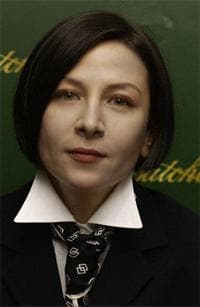
Donna Louise Tartt is an American novelist and essayist. Her work has been widely critically-acclaimed, and her novel The Goldfinch won the Pulitzer Prize for Fiction and has been adapted into a film.
Similar books
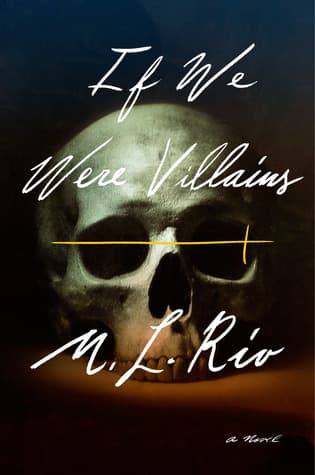
- If We Were Villains
M.L. Rio
4.1 (26k) average on GoodreadsThrillerFeatures a close-knit group of theater students whose intense relationships lead to murder and a shared secret.
- A Separate Peace
John Knowles
3.6 (191k) average on GoodreadsHistorical FictionExplores intense friendships, rivalry, and a tragic incident within an elite boarding school setting.
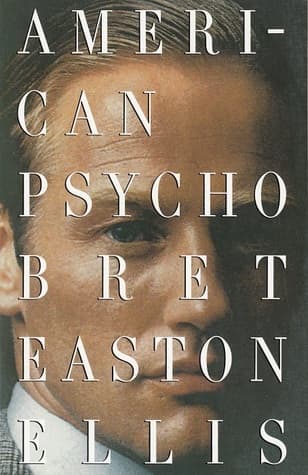
- American Psycho
Bret Easton Ellis
3.8 (242k) average on GoodreadsThrillerBoth novels critique the moral vacuum and superficiality of specific elite social strata. The Secret History offers a more literary and psychologically introspective examination of moral decay and violence, with a traditional narrative structure, while American Psycho employs a more visceral, explicit, and satirical approach to critique consumerism and violence.
- 1984
George Orwell
4.2 (3.1M) average on GoodreadsPoliticsIn a future where surveillance and thought control are absolute, a man's search for truth clashes with the Party, showing that hope can be a form of rebellion.
- Animal Farm
George Orwell
4.0 (2.7M) average on GoodreadsPoliticsA farm animals' rebellion against humans turns into a pig-led dictatorship, showing how power corrupts and revolutionary ideals are betrayed.
- Freakonomics: A Rogue Economist Explores the Hidden Side of Everything
Steven D. Levitt
4.0 (709k) average on GoodreadsBusinessThis book uses economic principles to reveal the surprising incentives behind everything from drug dealing and real estate to cheating teachers and the decline of crime.



Enjoyed the summary?
A summary gives you the shape of the book. The book itself has the detail, the examples and the voice.
Find The Secret History on AmazonAs an Amazon Associate, BookBrief earns from qualifying purchases. How we're funded