
Synopsis
Covers the whole plot, including the ending.
- Difficulty
- Medium
- Pacing
- Fast
- Mood
- Suspenseful, Deceptive, Intriguing, Dark
- Read it if
- You enjoy psychological thrillers with unreliable narrators, intricate plots, and a focus on identity and reinvention. Fans of 'We Were Liars' will appreciate E. Lockhart's signature style.
- Skip it if
- You prefer straightforward narratives, dislike morally ambiguous protagonists, or are looking for a story with clear-cut heroes and villains.
Genuine Fraud Plot Summary
Covers the whole plot, including the ending.
Jule Flees Mexico After a Violent Encounter
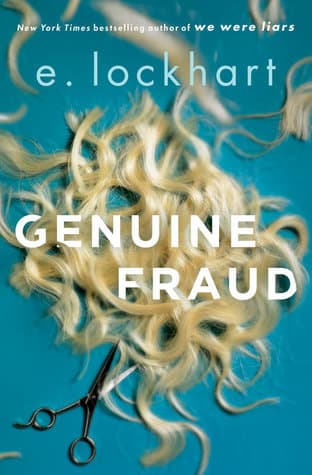
The story opens with Jule West Williams in a hotel room in Oaxaca, Mexico, trying to change her appearance. She dyes her hair blonde, knowing that a man named Ben, whom she recently fought, is looking for her. Jule checks her bank accounts, which are dwindling, and realizes she needs to disappear. She thinks about her past, especially her friendship with Imogen, and the events that led her to this situation. Jule carefully plans her escape, using cash and avoiding any digital footprint. She recalls the intense fight with Ben, which hints at a darker past and a pattern of conflict.
A Flashback to Imogen's Affluent World
The narrative shifts to a flashback, showing how Jule, a scholarship student and athlete, met Imogen Sokoloff at a summer program in Martha's Vineyard. Imogen, an heiress from a wealthy but neglectful family, is immediately drawn to Jule's resilience and street smarts. Jule is fascinated by Imogen's privileged world, her beautiful home, and her carefree existence. Their friendship quickly deepens, becoming intensely codependent. Imogen introduces Jule to her circle, including her boyfriend, Forrest, and her friends, showing the contrast between Jule's humble background and Imogen's rich lifestyle. Jule begins to admire and subtly copy Imogen.
The Summer of Lies and Deception on Martha's Vineyard
During their summer on Martha's Vineyard, Jule and Imogen become inseparable. Imogen, feeling neglected by her parents, finds comfort and excitement with Jule. They go on various adventures, often involving minor deceptions and rule-breaking. Jule observes Imogen's tendency to manipulate situations and people, a trait she subtly begins to adopt. Imogen's relationship with Forrest is also explored, showing its complexities and underlying tensions. Jule starts to feel more entangled in Imogen's life, blurring the lines between their identities and desires. This period marks a point where Jule's admiration for Imogen starts to become more sinister.
Imogen's Disappearance and Jule's Cover-Up
The story jumps forward, revealing that Imogen has disappeared, and Jule now lives as Imogen. She carefully maintains the facade, using Imogen's money and copying her mannerisms. Jule recounts how she disposed of Imogen's body after an accident involving a blunt object, making it look like Imogen ran away. She contacts Imogen's family and friends, fabricating stories to explain Imogen's absence and her own presence. This section details Jule's ability to impersonate Imogen, convincing others that she is the wealthy heiress, all while dealing with the guilt and fear of exposure. The incident with Ben in Mexico is a consequence of this cover-up.
Jule's Escape to Mexico and Encounter with Ben
After successfully living as Imogen in America for a period, Jule decides to escape to Mexico, using Imogen's passport and funds. She meets Ben, a charismatic but suspicious American, and they become involved. Ben eventually discovers Jule's true identity and what happened to Imogen. A violent confrontation follows, with Jule killing Ben in self-defense, or so she claims. This event forces Jule to go on the run again, leading directly to the opening scene of the book where she is dyeing her hair and planning her next move. The encounter with Ben shows the constant threat of her past catching up.
The Return to Martha's Vineyard and Confrontation with Forrest
Jule, having escaped Mexico, returns to Martha's Vineyard, convinced that she can continue her charade. She meets Forrest, who still grieves Imogen's disappearance. Forrest, however, begins to notice inconsistencies in Jule's behavior and memories, raising his suspicions. Jule struggles to maintain her composure and keep her story straight, realizing that Forrest knows Imogen better than anyone. Their interactions are tense as Forrest subtly questions Jule, trying to understand what happened to Imogen and why this 'Imogen' seems so different. Jule's fear of exposure grows with each interaction.
The Truth About Imogen's Death Revealed
Through fragmented flashbacks and Jule's internal monologue, the full truth of Imogen's death is revealed. Jule intentionally killed Imogen, not in an accident or self-defense. Imogen had discovered Jule's manipulative nature and was planning to expose her and end their friendship. In a fit of rage and desperation to maintain her access to Imogen's life and wealth, Jule struck Imogen with a blunt object, killing her. Jule then carefully staged the scene to appear as if Imogen had run away, effectively stealing her identity and her life. This revelation shows Jule as a cold-blooded murderer.
Jule's Final Deception and Escape
With Forrest closing in on the truth and her resources dwindling, Jule executes her final, most elaborate deception. She stages her own 'disappearance' as Imogen, creating a story that suggests she has run off to start a new life. She manipulates a situation to ensure that Forrest and others believe she is gone for good, leaving behind just enough clues to support her fabricated story. Jule then assumes a completely new identity, using the skills she gained in impersonating Imogen. She meticulously plans her next move, showing her commitment to survival and reinvention, leaving her past behind, or so she hopes.
A New Beginning, or a Cycle Repeated?
The story concludes with Jule, under a new name and identity, starting afresh somewhere else. She has successfully avoided capture and built a new persona, blending into society. However, the narrative hints that her past actions and manipulative tendencies are not truly left behind. There's a sense that Jule's pattern of befriending, envying, and replacing others might continue. The ending offers a chilling look into the mind of a sociopathic survivor, leaving the reader to wonder if Jule will ever truly escape the consequences of her genuine fraud, or if she will repeat her cycle of deception and violence.
Principal Figures
Jule West Williams
Protagonist/Antagonist
A cunning and manipulative social chameleon who assumes the identity of her wealthy friend.
Jule is a scholarship student from a working-class background, initially drawn to Imogen's privileged world. She is intelligent, resourceful, and athletically gifted, but also deeply insecure and envious. Her core drive is to escape her humble origins and attain a life of wealth and status. She is a master of disguise and deception, capable of meticulously crafting new identities and manipulating those around her. Jule's journey is a descent into cold-blooded murder and a relentless pursuit of self-preservation, demonstrating a chilling lack of remorse for her actions.
Relationships: Imogen Sokoloff (Intense, codependent friendship turned into victim-perpetrator dynamic); Ben (Romantic relationship turned violent confrontation and victim-perpetrator dynamic); Forrest (Acquaintance from Imogen's past, later a suspicious pursuer)
Imogen Sokoloff
Victim/Supporting
A wealthy but neglected heiress whose identity is stolen by her friend, Jule.
Imogen is a privileged but emotionally vulnerable young woman. She comes from an affluent family but suffers from parental neglect, which makes her crave intense connections. She is drawn to Jule's strength and authenticity, forming a deep, albeit ultimately fatal, friendship. Imogen is initially portrayed as somewhat naive and trusting, unaware of the depth of Jule's envy and manipulative tendencies. Her disappearance and eventual murder serve as the central mystery and driving force of the plot, revealing the dark underbelly of her seemingly charmed life.
Relationships: Jule West Williams (Intense, codependent friendship turned into victim-perpetrator dynamic); Forrest (Boyfriend); Imogen's Parents (Neglectful parental figures)
Forrest
Supporting
Imogen's former boyfriend who becomes suspicious of 'Imogen' after her supposed return.
Forrest is Imogen's ex-boyfriend, a kind and observant young man who genuinely cared for Imogen. He is one of the few characters who notices the subtle differences in Jule's portrayal of Imogen, leading him to investigate her true identity. Forrest represents a moral compass in the story, driven by a desire for truth and justice for the real Imogen. His persistence and keen memory of the real Imogen make him a significant threat to Jule's elaborate deception, forcing her to continually adapt and cover her tracks.
Relationships: Imogen Sokoloff (Ex-boyfriend); Jule West Williams (Acquaintance, later a suspicious pursuer)
Ben
Supporting
An American man Jule encounters and kills in Mexico, who uncovers her fraud.
Ben is a man Jule meets in Mexico while living under Imogen's identity. He is initially charming and becomes romantically involved with Jule. However, he eventually uncovers Jule's true identity and the truth about Imogen's disappearance. Ben's discovery makes him a dangerous threat to Jule's carefully constructed life, leading to a violent confrontation in which Jule kills him. His character serves as a catalyst, forcing Jule to flee Mexico and further entrenching her in a life of crime and evasion.
Relationships: Jule West Williams (Romantic relationship turned violent confrontation and victim-perpetrator dynamic)
Imogen's Parents
Mentioned
Wealthy but emotionally distant parents of Imogen Sokoloff.
Imogen's parents are largely absent figures in the story, representing the neglect that shaped Imogen's vulnerability. Their immense wealth provides the backdrop for Imogen's privileged life, which Jule so desperately covets. Their emotional distance from Imogen makes them easy to deceive, as they readily accept Jule's fabricated stories about Imogen's disappearance and her own presence in their lives. They are symbolic of the superficiality of wealth without genuine connection.
Relationships: Imogen Sokoloff (Neglectful parental figures); Jule West Williams (Deceived by Jule posing as Imogen)
Lola
Mentioned
A minor character who briefly interacts with Jule.
Lola is a character Jule encounters during her travels. She is a brief connection, a means to an end for Jule as she tries to maintain her various disguises and evade detection. Lola serves to highlight Jule's ability to seamlessly integrate into different social circles and manipulate casual acquaintances for her own benefit. Her interactions with Jule are fleeting but demonstrate Jule's constant vigilance and strategic thinking even in minor social settings.
Relationships: Jule West Williams (Acquaintance)
Themes & Insights
Identity and Reinvention
The novel explores how identity changes and how far one might go to reinvent themselves. Jule's entire journey is a relentless pursuit of shedding her original self and fully taking on the life she believes she deserves. She meticulously studies Imogen, adopting her mannerisms, voice, and even memories, blurring the lines between who she was and who she pretends to be. This theme questions the authenticity of self when outside circumstances and desires dictate one's persona, showing how easily identity can be fabricated and stolen.
“She was a girl who refused to give people what they wanted from her. A girl who refused to be the person she once was.”
Envy and Social Class
A main theme is the destructive power of envy, especially fueled by social class differences. Jule, from a modest background, deeply covets Imogen's wealth, privilege, and carefree existence. Her envy is not just for material possessions but for the 'ease' of Imogen's life, leading her to believe that by becoming Imogen, she can escape her own perceived limitations. The novel contrasts Jule's struggle for survival with Imogen's advantages, showing how class differences can create resentment and extreme actions.
“Imogen had everything, and Jule had nothing. It was only fair, then, that Jule should take it.”
Deception and Manipulation
The entire plot is built on layers of deception and manipulation. Jule is a master manipulator, constantly lying, fabricating stories, and adopting disguises to achieve her goals and avoid detection. She manipulates her closest friend, romantic partners, and even strangers with chilling effectiveness. The narrative structure itself, presented non-chronologically and from Jule's unreliable perspective, mirrors this theme, forcing the reader to piece together the truth from a web of lies. It explores the psychological cost and moral implications of living a life built on falsehoods.
“The trick was not to lie, but to tell the truth in a way that fooled everyone.”
The Nature of Friendship
The intense friendship between Jule and Imogen is a twisted look at loyalty, codependency, and betrayal. What starts as a deep bond, rooted in mutual fascination, slowly becomes a toxic relationship poisoned by Jule's envy and Imogen's vulnerability. The novel questions the boundaries of friendship and how easily trust can be exploited. It shows how an imbalance of power and unmet emotional needs can turn a close connection into a dangerous dynamic, leading to a horrifying act of betrayal.
“They were two halves of a whole, but one half was always trying to consume the other.”
Plot Devices & Literary Techniques
Reverse Chronology
The story is told backwards, revealing events from most recent to earliest.
The novel employs a reverse chronological structure, starting with Jule on the run in Mexico and gradually moving backward in time to reveal the events that led to her current predicament, culminating in the true story of Imogen's death. This device creates immediate suspense and mystery, as the reader is presented with the consequences before fully understanding the causes. It forces the reader to constantly re-evaluate Jule's actions and motivations as new information is unveiled, enhancing the thriller aspect and making Jule an even more unreliable narrator.
Unreliable Narrator
Jule's perspective is the primary lens, but her inherent deceitfulness makes her an untrustworthy guide.
Jule is the sole narrator, and her internal thoughts and justifications are central to the story. However, given her nature as a professional liar and manipulator, her account is inherently unreliable. The reader is constantly challenged to question Jule's version of events, especially as the reverse chronology reveals more about her past deceptions. This device deepens the psychological suspense, forcing the reader to actively interpret and deduce the truth, rather than passively accepting Jule's narrative, aligning with the theme of genuine fraud.
Foil Characters
Imogen serves as a direct contrast to Jule, highlighting Jule's motivations and character traits.
Imogen acts as a foil to Jule. Imogen's inherent privilege, emotional vulnerability, and relative naiveté starkly contrast with Jule's working-class background, resilience, and manipulative cunning. This juxtaposition highlights Jule's envy and ambition, making her desire to 'become' Imogen more understandable, albeit horrifying. The differences between them amplify the central themes of social class, identity, and the destructive nature of envy, as Jule systematically dismantles and replaces everything Imogen represents.
Symbolism of Disguise and Appearance
Hair dye, clothing, and physical transformation symbolize Jule's constant reinvention.
Throughout the novel, Jule's changing hair color, clothing, and physical transformations are symbolic of her fluid identity and her relentless pursuit of reinvention. The act of dyeing her hair blonde, for instance, is not just a practical measure to evade capture but a ritualistic shedding of her old self and an adoption of a new persona. These external changes underscore her internal psychological shifts and her willingness to shed any semblance of her true self to survive and achieve her desired status.
Genuine Fraud Quotes
“She was a girl who knew how to get what she wanted. And she wanted everything.”
“You can be anyone you want to be, if you're willing to work for it.”
“Friendship is a currency. You spend it, you earn it, you lose it.”
“The truth is a story you tell yourself until you believe it.”
“Some people are born with everything. Others have to take it.”
“A good liar remembers every detail. A great liar makes you want to believe.”
“You don't get to choose your family, but you can choose who you become.”
“Fear is just another thing to conquer. Like a mountain or a person.”
“In the end, we are all just stories. Some are just better told than others.”
“Luxury is a mask. It hides the cracks underneath.”
“Trust is the first step to betrayal.”
“The world rewards the bold. The rest get left behind.”
“Memory is a tricky thing. It changes to fit the story you need.”
“Sometimes the only way out is through someone else's life.”
Quiz
10 questions on the plot and the characters. Each answer comes with a short explanation.
Question 1
What is the primary narrative structure of 'Genuine Fraud'?
- Chronological order from childhood to adulthood
- Reverse chronological order, starting near the end and moving backward
- Alternating perspectives between Jule and Imogen in real-time
- A series of unrelated vignettes about different characters
Show answer
B. Reverse chronological order, starting near the end and moving backward The novel is told in reverse chronological order, beginning with Chapter 18 and moving backward to Chapter 1, which gradually reveals the truth about Jule's actions and identity.
Question 2
What is Jule's primary motivation throughout the story?
- To find true love and settle down
- To inherit Imogen's wealth legally
- To reinvent herself and escape her past, often through deception and violence
- To become a famous athlete or superhero
Show answer
C. To reinvent herself and escape her past, often through deception and violence Jule is driven by a desire to shed her old identity and create new ones, using lies, manipulation, and even murder to achieve this, as seen in her impersonation of Imogen and others.
Question 3
How does Jule initially meet Imogen?
- They are childhood friends from the same neighborhood
- Jule saves Imogen from a drowning accident
- Through a mutual friend at a party in New York City
- At a resort in Mexico, where Jule is working as a waitress
Show answer
D. At a resort in Mexico, where Jule is working as a waitress Jule meets Imogen while working as a waitress at a resort in Mexico, where Imogen is vacationing. This encounter sparks their intense and ultimately destructive friendship.
Question 4
What key object is repeatedly associated with violence and death in the novel?
- A chocolate bar
- A superhero costume
- A blunt object, such as a rock or a trophy
- A disguise or wig
Show answer
C. A blunt object, such as a rock or a trophy Blunt objects, like a rock used to kill Imogen and a trophy in another incident, symbolize the brutal and physical nature of the violence Jule commits throughout the story.
Question 5
What theme is explored through Jule's constant identity shifts and impersonations?
- The importance of family heritage and tradition
- The American dream and self-reinvention
- The power of true friendship and loyalty
- The inevitability of fate and destiny
Show answer
B. The American dream and self-reinvention The novel critiques the American dream by showing Jule's extreme and violent attempts to reinvent herself, highlighting how identity can be fluid but also destructive when based on deception.
Question 6
What is the fate of Imogen in the story?
- She fakes her own death and runs away to start a new life
- She is murdered by Jule, who then assumes her identity
- She reconciles with her family and returns home
- She becomes a successful chef and opens her own restaurant
Show answer
B. She is murdered by Jule, who then assumes her identity Jule kills Imogen with a rock during a confrontation, then takes on Imogen's identity to access her wealth and social status, a central plot point revealed through the reverse narrative.
Question 7
Which character is a love interest for both Jule and Imogen at different points?
- Forrest
- Paolo
- Miguel
- Brooke
Show answer
A. Forrest Forrest is romantically involved with Imogen first, and later with Jule when she impersonates Imogen, adding to the complex web of relationships and deceptions in the novel.
Question 8
What role do superhero stories and comics play in the novel?
- They are used as a metaphor for Jule's desire to be a hero and save others
- They symbolize Jule's view of herself as a villain or anti-hero, capable of great power and reinvention
- They represent Imogen's childhood dreams and innocence
- They are merely background details with no deeper meaning
Show answer
B. They symbolize Jule's view of herself as a villain or anti-hero, capable of great power and reinvention Jule often references superheroes and spies, seeing herself as a character who can transform and wield power, which ties into themes of identity and morality in the story.
Question 9
How does Jule's background as a fighter and athlete influence her actions?
- It makes her physically capable of committing violence, such as in the murders she carries out
- It leads her to pursue a career in professional sports
- It helps her win Imogen's friendship through shared athletic interests
- It symbolizes her inner peace and discipline
Show answer
A. It makes her physically capable of committing violence, such as in the murders she carries out Jule's physical strength and training as a fighter enable her to execute violent acts, like killing Imogen and others, which is crucial to her manipulative and destructive behavior.
Question 10
What is the significance of the title 'Genuine Fraud'?
- It refers to a counterfeit art piece that plays a key role in the plot
- It describes Jule, who is authentically deceptive—a real fraud in both identity and actions
- It highlights the theme of financial scams and heists in the story
- It is a nickname given to Imogen by her friends
Show answer
B. It describes Jule, who is authentically deceptive—a real fraud in both identity and actions The title encapsulates Jule's character: she is a 'genuine' or real fraud, not just pretending but fully embodying deception through her lies, impersonations, and crimes.
Genuine Fraud FAQ
What is 'Genuine Fraud' about?
'Genuine Fraud' follows Jule West Williams, a social chameleon who assumes the identity of her wealthy friend Imogen Sokoloff after Imogen disappears. The story unfolds in reverse chronological order, revealing Jule's violent actions, including murdering Imogen's boyfriend Forrest and eventually Imogen herself, as she fabricates a new life through deception and theft.
Why should I read 'Genuine Fraud'?
You should read 'Genuine Fraud' for its unique reverse narrative structure that gradually unveils the protagonist's true nature, its exploration of identity theft and reinvention, and its psychological tension. The book keeps readers guessing about Jule's motives and reliability as an narrator until the shocking revelations at the end.
What is the background/setting of 'Genuine Fraud'?
The novel shifts between various luxurious locations including a Mexican resort, Imogen's family estate in Martha's Vineyard, and upscale areas of London and New York. These settings contrast with Jule's impoverished background, highlighting her desire to escape her past and infiltrate wealthy circles.
What are the most memorable quotes from 'Genuine Fraud'?
Key quotes include Jule's mantra 'I am a genuine fraud' reflecting her constructed identity, and 'You can be anyone you want to be, if you try hard enough' showcasing her philosophy of self-reinvention. Another significant line is 'I am not the person I once was' which underscores the novel's theme of identity transformation.
What writing style does E. Lockhart use in 'Genuine Fraud'?
Lockhart employs a reverse chronological narrative structure, starting with the aftermath of events and working backward to reveal causes. The prose is taut and suspenseful, with short chapters and shifting perspectives that mirror Jule's fragmented identity and keep readers disoriented about what's real.
What minor details add significant meaning to 'Genuine Fraud'?
Jule's constant consumption of chocolate bars represents her attempt to comfort herself amid violence, while her superhero comic book collection reflects her fantasy of being powerful and invincible. The recurring mention of blunt objects connects to her murder weapons, creating subtle patterns of violence throughout the narrative.
What are some subtle foreshadowing moments in 'Genuine Fraud'?
Early mentions of Jule's fighting skills and her ability to 'become' other people foreshadow her violent capabilities and identity theft. References to her reading about criminal techniques and her admiration for spy novels hint at her calculated, manipulative nature that fully emerges as the story progresses backward.
What unexpected character connections exist in 'Genuine Fraud'?
Jule's connection to Paolo, a boy she briefly dates, reveals how she uses relationships instrumentally—she steals his passport to further her deception. More crucially, her friendship with Imogen appears genuine initially but is ultimately exposed as parasitic, with Jule coveting Imogen's wealth and identity rather than truly caring for her.
What are Jule's unspoken motivations throughout 'Genuine Fraud'?
Beneath her stated desire for reinvention, Jule is driven by deep-seated resentment toward privilege and a pathological need to escape her traumatic past of poverty and parental abandonment. Her violence stems not just from practical necessity but from an almost compulsive need to prove she can outsmart and dominate those born into advantage.
What psychological complexities do Jule and Imogen exhibit?
Jule displays sociopathic traits—charming yet manipulative, with limited empathy—but also shows vulnerability in her desperate need to belong. Imogen, while initially appearing as a carefree heiress, reveals her own complexity through her decision to run away from wealth and expectations, suggesting both privilege and profound dissatisfaction.
What are the major emotional turning points in 'Genuine Fraud'?
The emotional turning points include when Jule murders Forrest in self-defense but then coldly disposes of his body, marking her descent into calculated violence. Another is when she kills Imogen—initially planned as another identity theft but becoming an act of brutal elimination when Imogen resists. The final reveal of Jule's impoverished childhood provides the emotional foundation for all her actions.
How does the relationship between Jule and Imogen evolve?
Their relationship begins with Jule idealizing Imogen as the embodiment of everything she wants—wealth, freedom, charm. It evolves into parasitic dependence as Jule studies and mimics Imogen, then turns predatory when Jule decides to literally become Imogen. Ultimately it becomes fatal when Imogen recognizes the threat Jule poses and tries to escape her.
Which parts of 'Genuine Fraud' remain ambiguous or open-ended?
The novel leaves ambiguous whether Jule feels genuine affection for Imogen at any point, or if their entire friendship was transactional from the start. It's also unclear how much of Jule's narrative is reliable—she may be exaggerating her poverty or her capabilities. The ending doesn't reveal whether she'll be caught or continue her fraudulent life indefinitely.
What are controversial scenes or decisions in 'Genuine Fraud'?
Jule's murder of Imogen is particularly controversial as it transitions from calculated identity theft to brutal, intimate violence. Some readers also debate whether Jule's actions are justified by her traumatic background or represent pure sociopathy. Her manipulation of Paolo and theft of his passport raises ethical questions about how far the novel sympathizes with its protagonist.
'Genuine Fraud' ending explained: how it ends & what it means
The novel ends at the chronological beginning—showing Jule as a poor, ambitious teenager before she meets Imogen. This reveals her transformation was always driven by desperation and calculation. The ending suggests Jule's 'genuine fraud' identity was constructed from the start, questioning whether reinvention is possible or if we're always products of our original circumstances.
How does the reverse narrative structure affect the reading experience?
The reverse structure initially presents Jule as confident and in control, then gradually reveals the chaos and violence behind her facade. This forces readers to constantly reinterpret earlier scenes—what seemed like Jule's triumphs become increasingly disturbing as we learn they're built on murder and theft. It mirrors how identity is constructed from selective memories.
What role does class and privilege play in 'Genuine Fraud'?
Class is central—Jule's impoverished background versus Imogen's inherited wealth creates the novel's central tension. Jule sees wealth as something to be taken through deception rather than earned, while Imogen's privilege allows her aimlessness but also makes her vulnerable to predation. The book critiques how economic inequality fuels resentment and moral compromise.
How does 'Genuine Fraud' compare to E. Lockhart's 'We Were Liars'?
Both feature unreliable narrators and wealthy settings, but 'Genuine Fraud' is more explicitly a thriller with violent crime, while 'We Were Liars' focuses on family drama and psychological trauma. Jule is actively manipulative where Cadence in 'We Were Liars' is more passive. Both use structural tricks—reverse chronology versus fragmented memory—to conceal truths.
About the author

E. Lockhart is the author of the bestselling novel "We Were Liars," a New York Times Notable Book and a Michael L. Printz Honor book. She also penned the acclaimed "Genuine Fraud." Lockhart is known for her compelling young adult fiction, often exploring themes of memory, identity, and suspense with a distinctive narrative voice.
Similar books
- We Were Liars
E. Lockhart
3.8 (465k) average on GoodreadsThrillerShares the same author's distinctive voice, focus on wealthy families, and a twisty, psychological mystery.
- Gone Girl
Gillian Flynn
4.1 (2.3M) average on GoodreadsThrillerInvolves a missing person, a manipulative protagonist, and a complex web of lies and deception.
- Angels & Demons
Dan Brown
3.9 (2.7M) average on GoodreadsThrillerA Harvard symbologist races through Rome's ancient sites, deciphering cryptic clues to unmask the Illuminati and stop a vengeful plot to destroy the Vatican with a stolen antimatter weapon.
- The Girl on the Train
Paula Hawkins
3.9 (2.1M) average on GoodreadsThrillerA woman’s fascination with a seemingly perfect couple she watches from her daily train commute leads her into a dark investigation when she witnesses something that shatters their idyllic image.
- The Da Vinci Code
Dan Brown
3.9 (1.9M) average on GoodreadsThrillerA symbologist and a cryptologist race through European landmarks, deciphering ancient codes and uncovering a conspiracy that could rewrite the foundations of Christianity.
- The Guest List
Lucy Foley
3.8 (1.3M) average on GoodreadsThrillerOn a remote Irish island, a glamorous wedding descends into a deadly whodunnit when a guest is found murdered, trapping everyone with their secrets as a storm rages.






Enjoyed the summary?
A summary gives you the shape of the book. The book itself has the detail, the examples and the voice.
Find Genuine Fraud on AmazonAs an Amazon Associate, BookBrief earns from qualifying purchases. How we're funded