
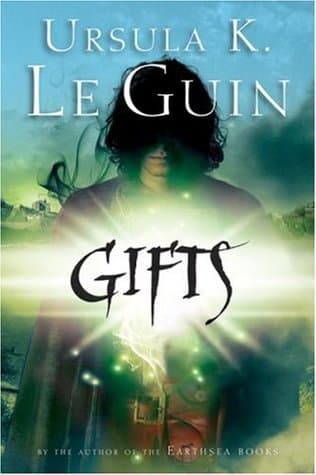
Synopsis
Covers the whole plot, including the ending.
- Difficulty
- Medium
- Pacing
- Moderate
- Mood
- Thoughtful, Reflective, Subdued, Hopeful
- Read it if
- You enjoy thought-provoking fantasy with deep philosophical themes about power, morality, and self-discovery, and appreciate Ursula K. Le Guin's nuanced world-building and character development.
- Skip it if
- You prefer fast-paced action, clear-cut good vs. evil narratives, or stories with extensive magic systems and epic battles.
Gifts Plot Summary
Covers the whole plot, including the ending.
The Burden of Birthright
Orrec Caspro is born into the Caspro family, one of the most powerful and feared families in the Uplands, known for their dangerous 'unmaking' gifts. His father, Canoc, is ruthless, and Orrec grows up under the shadow of his family's reputation and the constant threat of his own gift appearing. He learns early that his gaze can 'unmake' things, causing them to disappear or wither. To protect others and himself, he begins wearing a blindfold, a sign of his self-imposed restraint and his fight against his inherited power. This decision sets him apart from other Uplanders, who often embrace or exploit their gifts.
Gry's Gentle Rebellion
Gry is a girl from the Bedger family, a clan known for their 'calling' gifts, especially the ability to call animals for hunting. Unlike her family, especially her mother, Gry finds calling and killing animals disturbing. She develops a deep empathy for the creatures and refuses to use her gift for the hunt, preferring to call them for companionship or observation. This refusal creates conflict within her family and clan, as her gift is seen as vital for their survival and status. She is often ostracized for her pacifist stance, which is considered a weakness or defiance.
A Shared Understanding
Orrec and Gry, despite their different family backgrounds and gifts, form a deep friendship based on their shared struggles. They both carry the burden of powerful gifts they are unwilling to use in the destructive ways their societies expect. Orrec's blindfold and Gry's refusal to hunt become signs of their mutual resistance. Their conversations and interactions provide comfort and understanding, strengthening their bond. They often meet in secret, away from the scrutiny and judgment of their families, finding solace in each other's unconventional views.
The Price of Power
The Caspro family maintains its dominance through fear and the strategic use of their 'unmaking' gifts. Orrec sees firsthand the consequences of defying his father, Canoc, and the power his family holds over others. He sees how their gifts are used to control and intimidate, creating a fearful atmosphere among other clans. Canoc frequently reminds Orrec of his duty and the expectation that he will inherit and use his gift to maintain the Caspro legacy. This constant pressure reinforces Orrec's determination to resist his own gift's destructive potential.
Gry's Exile
Gry's refusal to use her calling gift for hunting eventually reaches a breaking point with her family. Her mother, frustrated and ashamed by Gry's perceived weakness, publicly disowns her. The clan, seeing her as a burden and a threat to their traditions, agrees to cast her out. Gry is forced to leave her home, a harsh result of her nonconformity. This exile marks a turning point, forcing Gry to rely entirely on herself and her own moral compass, further solidifying her resolve to live by her own principles.
Orrec's Reckoning
After Gry's exile, Orrec feels a greater urgency to understand and control his own gift. He confronts his father, Canoc, about the destructive nature of their family's power and his own desire not to use it in the same way. This confrontation is tense, as Canoc views Orrec's reluctance as weakness. Orrec, however, asserts his right to choose how he lives with his gift. He continues to wear the blindfold, not out of fear, but as a deliberate act of self-mastery, seeking to understand the true nature of his power beyond its immediate destructive capacity.
Life Beyond the Uplands
After being cast out, Gry makes the difficult journey from the Uplands to the Lowlands, a place she has only heard about in stories. She finds a different society, one where gifts are not central to daily life and people live in a more communal, less fear-driven way. She learns new skills, such as weaving and farming, and adapts to a life without the constant pressure of her gift. This experience broadens her perspective, showing her that there are other ways to live and contribute to a community, and that her 'weakness' in the Uplands is not a universal failing.
Orrec's Quest for Understanding
Driven by his desire to understand gifts beyond the narrow, destructive interpretations of the Uplands, Orrec decides to leave his home. He travels to various clans and regions, seeking those who use their gifts in different, non-harmful ways. He learns about healing gifts, gifts of insight, and gifts used for crafts and community building. This journey is a quest for knowledge and self-discovery, allowing him to challenge the beliefs about power and responsibility he grew up with. He begins to see his own 'unmaking' gift not just as destruction, but as a potential for change or transformation.
Reunion and Revelation
Orrec and Gry eventually reunite in the Lowlands, both having undergone significant personal changes. They share their experiences, finding that their journeys have led them to similar conclusions about the responsible use of power. Gry has embraced her ability to connect with animals, using it for understanding and companionship rather than control. Orrec, through his travels and introspection, begins to understand that his 'unmaking' gift might not solely be for destruction, but perhaps for clearing the way for new growth or change. Their reunion confirms their shared vision of a world where gifts are used for connection and creation, not fear and destruction.
A New Path
Having found a deeper understanding of themselves and their gifts, Orrec and Gry decide to teach others about the responsible and compassionate use of power. They become advocates for a new way of thinking in the Uplands, challenging old traditions of fear and dominance. They aim to show that true strength is not in the ability to destroy or control, but in empathy, understanding, and the choice to use one's unique abilities for the greater good. Their journey is far from over, but they embark on this new path together, embodying the 'gifts of light' in a world previously dominated by darkness.
Gifts Characters
Orrec Caspro
Protagonist
A young man born with a deadly 'unmaking' gift, who chooses to wear a blindfold to prevent its use.
Orrec is the son of Canoc Caspro, from a powerful and feared Upland family. He possesses a dangerous 'unmaking' gift that can cause things to cease to be or wither with a glance. From a young age, he chooses to wear a blindfold, not just to protect others, but as an act of defiance against his family's expectations and the destructive legacy of his gift. He is introspective, morally driven, and struggles deeply with the inherent power he holds, seeking a way to live without causing harm.
Relationships: Gry (Childhood friend, confidant, and later, partner in advocating for responsible gift use.); Canoc Caspro (Father, a powerful and ruthless Upland lord who expects Orrec to embrace his destructive gift.)
Gry Bedger
Protagonist
A girl with a 'calling' gift who refuses to use it for hunting, leading to her exile.
Gry is from the Bedger family, known for their ability to call animals. Unlike her family, she has a deep empathy for animals and refuses to use her gift for hunting or killing. This pacifist stance makes her an outcast within her own clan, leading to her eventual exile. She is strong-willed, principled, and compassionate, willing to endure hardship rather than compromise her beliefs. Her journey takes her from the rigid traditions of the Uplands to the more open society of the Lowlands.
Relationships: Orrec Caspro (Childhood friend, confidant, and later, partner in advocating for responsible gift use.); Gry's Mother (Strict and traditional, she disowns Gry for her refusal to use her gift for hunting.)
Canoc Caspro
Antagonist/Supporting
Orrec's powerful father, a ruthless Upland lord who embodies the destructive potential of gifts.
Canoc is Orrec's father and the head of the fearsome Caspro clan. He wields his 'unmaking' gift with authority and ruthlessness, using it to maintain his family's power and intimidate other clans. He represents the traditional, often brutal, interpretation of gifts in the Uplands, viewing them as tools for dominance and survival. He is demanding and expects Orrec to follow in his footsteps, seeing his son's reluctance as a weakness or defiance.
Relationships: Orrec Caspro (Father to Orrec, he is demanding and expects Orrec to embrace his deadly gift.)
Gry's Mother
Supporting
A traditional Bedger woman who disowns Gry for her refusal to use her gift for hunting.
Gry's mother is a stern and traditional woman who firmly believes in the established ways of her clan, particularly the use of calling gifts for hunting. She is deeply shamed and frustrated by Gry's refusal to participate in the hunt, viewing it as a betrayal of family duty and a sign of weakness. Her actions, though harsh, stem from a desire to maintain the clan's standing and ensure its survival within the rigid Upland society.
Relationships: Gry Bedger (Mother to Gry, she eventually disowns her daughter for not fulfilling her expected role.)
Gry's Grandfather
Supporting
A wise elder who offers Gry some understanding despite her rebellion.
Gry's grandfather is a more understanding and less rigid figure within the Bedger clan. While he doesn't openly defy the clan's traditions, he shows a quiet empathy for Gry's predicament and her unique perspective on her gift. He represents a glimmer of compassion and wisdom within the strict Upland society, offering Gry a small measure of support and understanding during her difficult childhood, even if he cannot prevent her ultimate exile.
Relationships: Gry Bedger (Grandfather to Gry, he shows her quiet understanding and empathy.)
Gifts Themes
The Burden of Power and Responsibility
The novel explores how inherited power, especially through 'gifts,' can be both a blessing and a curse. Orrec and Gry deal with the immense responsibility that comes with their unique abilities. Orrec's 'unmaking' gift carries the burden of potential destruction, forcing him to wear a blindfold as a constant act of self-control. Gry's 'calling' gift, while seemingly benign, becomes a burden when it clashes with her moral convictions about killing. Both characters choose to redefine their responsibility, opting for a path of non-harm and understanding. They show that true power is in conscious choice and compassion, not just ability. This is clear in Orrec's journey to understand his gift's non-destructive potential and Gry's refusal to hunt.
“What is a gift, after all, but a thing given? And what is a gift that cannot be given, but a burden?”
Conformity vs. Individuality
The rigid, fear-driven society of the Uplands pressures individuals to conform to traditional uses of their gifts, often for dominance or survival. Gry's refusal to use her calling gift for hunting and Orrec's decision to wear a blindfold are acts of individuality that challenge these societal norms. Their nonconformity leads to ostracization and exile, showing the high cost of choosing one's own path. However, their journeys show that genuine strength and self-discovery come from following one's moral compass, even when it means defying traditions. Their friendship highlights finding solidarity in shared individuality.
“To be born with a gift was to be born with a fate. But what if one refused one's fate?”
Empathy and Compassion
Empathy drives both protagonists. Gry's deep connection to animals prevents her from using her gift for hunting, a radical act of compassion in her society. Orrec's fear of harming others leads him to blind himself, a physical sign of his empathetic concern. The novel suggests that true understanding and a higher way of living come from the ability to feel and act with compassion for others, rather than giving in to fear or the desire for power. Their goal is to build a society based on these principles, contrasting with the fear and cruelty in the Uplands. Gry's connection with the deer she calls but doesn't kill is a prime example.
“It was not a thing to be used, but a thing to be understood.”
The Nature of Freedom
Freedom in 'Gifts' is not just the absence of external restraint, but an internal state achieved through self-mastery and moral choice. Both Orrec and Gry are born into lives dictated by their gifts and societal expectations. Orrec's blindfold is an act of self-imposed restriction that paradoxically gives him a form of freedom from his gift's destructive impulses. Gry's exile, while a loss of her home, frees her from the oppressive expectations of her clan. Their journeys to the Lowlands and their eventual reunion symbolize their quest for a different kind of freedom—one where they can define their own purpose and use their gifts constructively, rather than being controlled by their power or by tradition.
“To choose not to use a gift might be the greatest gift of all.”
Plot Devices & Literary Techniques
The Blindfold
A physical and symbolic barrier representing self-control and the refusal to harm.
Orrec's blindfold is a central symbol. Physically, it prevents him from inadvertently 'unmaking' things with his deadly gaze. Symbolically, it represents his conscious choice to resist the destructive nature of his inherited gift and the expectations of his family. It is an act of self-imposed limitation that paradoxically grants him moral freedom and the strength to pursue a different path. The removal of the blindfold signifies a moment of potential danger or a deliberate, controlled application of his power, marking a shift in his understanding of his gift.
The Uplands vs. The Lowlands
Contrasting geographical and societal settings that highlight different ways of life and values.
The stark contrast between the Uplands and the Lowlands serves as a significant plot device. The Uplands, with its scattered clans and reliance on powerful, often destructive, gifts, represents a society driven by fear, tradition, and dominance. The Lowlands, in contrast, offers a glimpse into a more communal, less gift-centric way of life, where people live in greater harmony and cooperation. This contrast provides a broader perspective for both Gry and Orrec, showing them that their Upland struggles are not universal and that alternative, more compassionate ways of living are possible, thus motivating their desire for change.
The 'Unmaking' and 'Calling' Gifts
Opposing types of magical abilities that drive the central conflict and character arcs.
The specific nature of the 'unmaking' and 'calling' gifts are fundamental to the plot. Orrec's 'unmaking' gift, inherently destructive, forces him to confront the ethics of power and self-control. Gry's 'calling' gift, while seemingly benign, creates a moral dilemma when its traditional use conflicts with her empathy. These opposing gifts highlight different facets of power: one that takes away, and one that brings forth. Their individual struggles with these gifts form the core of their character development and their eventual quest to find non-destructive, compassionate uses for their abilities.
Gifts Quotes
“It is not the strength of the body that counts, but the strength of the spirit.”
“To be able to choose not to use a gift, that is a gift in itself.”
“Fear is a great teacher, but it is a cold one.”
“The greatest gift is not what you have, but what you choose to do with it.”
“Sometimes the safest place is the one you make for yourself.”
“True power is not in destruction, but in creation, and in the refusal to destroy.”
“We are all bound, one way or another. The trick is to choose your bonds.”
“It's not the name of the gift that matters, but the heart of the giver.”
“Silence can be a shield, and a weapon.”
“To be afraid of what you are is to be afraid of yourself.”
“The wildness in us is not something to be tamed, but understood.”
“Stories are how we remember who we are, and who we might be.”
“Sometimes the greatest courage is to walk away from a fight.”
“Love is not a gift you are given, but one you choose to give.”
Quiz
10 questions on the plot and the characters. Each answer comes with a short explanation.
Question 1
What is the primary reason the Uplanders live in constant fear regarding their gifts?
- They fear their gifts will disappear if not used regularly.
- They are afraid their gifts might accidentally harm themselves.
- One family might unleash its gift against another.
- Outlanders might discover and steal their gifts.
Show answer
C. One family might unleash its gift against another. The description explicitly states, 'The Uplanders live in constant fear that one family might unleash its gift against another.'
Question 2
What is the specific gift that the girl in the story refuses to use?
- Bringing forth fire.
- Moving the land.
- Summoning animals to their death in the hunt.
- Inflicting a wasting illness.
Show answer
C. Summoning animals to their death in the hunt. The text states, 'One, a girl, refuses to bring animals to their death in the hunt.'
Question 3
Why does the boy in the story wear a blindfold?
- To hide his identity from other clans.
- Lest his eyes and his anger kill.
- To enhance his other senses.
- As a traditional sign of mourning in his family.
Show answer
B. Lest his eyes and his anger kill. The description clearly states, 'The other, a boy, wears a blindfold lest his eyes and his anger kill.'
Question 4
Which of the following is NOT listed as a 'wondrous' gift in the Uplanders' possession?
- Summoning animals.
- Bringing forth fire.
- Twisting a limb.
- Moving the land.
Show answer
C. Twisting a limb. The text categorizes 'summon animals, bring forth fire, move the land' as 'Wondrous gifts', while 'twist a limb, chain a mind, inflict a wasting illness' are described as 'Fearsome gifts'.
Question 5
What overarching theme does Ursula K. Le Guin explore through the 'proud cruelty of power' in the story?
- The inevitable corruption of all authority figures.
- How difficult it is to reject the destructive aspects of power.
- The necessity of power for survival in a harsh world.
- The idea that all power is inherently evil.
Show answer
B. How difficult it is to reject the destructive aspects of power. The summary mentions Le Guin writes 'of the proud cruelty of power, of how hard it is to grow up, and of how much harder still it is to find, in the world's darkness, gifts of light.' This directly relates to the struggle against the destructive aspects of power.
Question 6
The setting of the story is described as 'poor, desolate farms.' How does this environment likely influence the Uplanders' relationship with their gifts?
- It encourages them to use their gifts for entertainment and leisure.
- It suggests a desperate reliance on gifts for survival, alongside the fear of their misuse.
- It leads them to abandon their gifts in favor of traditional farming methods.
- It fosters a sense of community where gifts are always shared for collective good.
Show answer
B. It suggests a desperate reliance on gifts for survival, alongside the fear of their misuse. In a desolate environment, gifts like summoning animals, bringing fire, or moving land would be crucial for survival, amplifying both their utility and the danger of their misuse among desperate people.
Question 7
What is the relationship between the two young protagonists?
- They are siblings who share the same unique gift.
- They are rivals from opposing clans.
- They are friends since childhood.
- They are mentor and apprentice.
Show answer
C. They are friends since childhood. The text states, 'Two young people, friends since childhood, decide not to use their gifts.'
Question 8
The phrase 'gifts of light' in the story's summary most likely refers to:
- Gifts that literally produce light or fire.
- The positive, constructive, or ethical application of one's abilities.
- Gifts that are easily visible and obvious to others.
- Ancient, legendary gifts that have been lost over time.
Show answer
B. The positive, constructive, or ethical application of one's abilities. Given the contrast with 'world's darkness' and the story's themes of refusing destructive power, 'gifts of light' metaphorically refers to using one's abilities for good, compassion, or non-harmful purposes.
Question 9
How does the decision of the two young people to 'not use their gifts' contribute to the central conflict or message of the story?
- It demonstrates that the gifts are inherently useless and should be abandoned.
- It highlights the difficulty and moral courage required to resist the destructive potential of power.
- It suggests that their gifts are weaker than those of other Uplanders.
- It leads to their ostracization and eventual banishment from the Uplands.
Show answer
B. It highlights the difficulty and moral courage required to resist the destructive potential of power. Their refusal to use their gifts, specifically for harm (hunting, killing with anger), directly addresses the 'proud cruelty of power' and the struggle to find 'gifts of light' in a dark world, embodying moral resistance.
Question 10
The description mentions 'how hard it is to grow up.' How does the context of 'gifts' make this process particularly challenging for the Uplanders?
- Learning to control powerful, potentially destructive abilities adds immense pressure and moral complexity to adolescence.
- The gifts prevent them from experiencing normal childhood activities and friendships.
- The gifts cause accelerated physical aging, making them grow up too quickly.
- Their gifts make them targets for recruitment into adult clan wars at a young age.
Show answer
A. Learning to control powerful, potentially destructive abilities adds immense pressure and moral complexity to adolescence. Growing up is difficult, but in this context, it's compounded by the responsibility of wielding 'wondrous' and 'fearsome' gifts, requiring immense self-control and moral discernment to prevent harm, as exemplified by the two protagonists.
Gifts FAQ
What is the central conflict in 'Gifts'?
The central conflict revolves around the Uplanders' 'gifts' – inherited magical abilities that range from benign to destructive. Families live in constant fear of each other, leading to a culture of pre-emptive violence and an oppressive cycle where gifts are often used to assert dominance or inflict harm, rather than for communal benefit.
Who are the two main protagonists, and what are their primary struggles?
The main protagonists are Orrec, whose family possesses the feared gift of 'unmaking' – the ability to kill or disable with a glance – and Gry, whose family gift allows her to 'unmake' animals, making her a formidable hunter. Orrec struggles with the immense responsibility and terror of his dormant power, choosing to wear a blindfold, while Gry grapples with the ethical implications of her gift and her desire to not participate in the hunt, defying her family's expectations.
How do the Uplanders view their gifts, and how does this perception influence their society?
Uplanders view their gifts as both a source of pride and a constant threat. This perception fosters a highly stratified and isolated society where families are suspicious of each other, leading to feuds, raids, and a general atmosphere of fear and distrust. The gifts, rather than unifying them, often serve to divide and oppress.
What motivates Orrec to leave the Uplands, and what does he hope to find?
Orrec is driven to leave the Uplands by his profound discomfort with his family's destructive gift and the constant fear it instills, even in himself. He seeks a place where his power doesn't define him, hoping to find a way to live without the threat of 'unmaking' and to understand the world beyond the Uplanders' violent traditions.
What is the significance of the blindfold Orrec wears throughout much of the story?
Orrec's blindfold is a powerful symbol of his self-imposed restraint and his refusal to succumb to the destructive potential of his gift. It represents his moral choice to not harm, even at the cost of his own sight and ease of living. It also highlights the internal struggle he faces to control a power he deeply fears.
How does Gry's relationship with animals evolve, and what does it reveal about her character?
Initially, Gry is expected to use her gift to hunt, but she develops a deep empathy for animals, refusing to 'unmake' them for sport. This evolution reveals her compassionate nature and her strong moral compass, demonstrating her willingness to defy societal expectations and family tradition in favor of her own ethical convictions.
What is the role of the Lowlanders in the narrative, and how do they contrast with the Uplanders?
The Lowlanders represent a stark contrast to the Uplanders. They are a settled, agricultural people without 'gifts,' who value community, learning, and peaceful coexistence. Their society offers Orrec a glimpse of a world where power isn't inherently destructive, providing a framework for him to understand and control his own abilities.
What is the significance of Orrec learning to read and write in the Lowlands?
Learning to read and write is transformative for Orrec. It represents an acquisition of a different kind of 'gift' – knowledge and communication – which is constructive rather than destructive. This skill empowers him to articulate his experiences, connect with others, and ultimately find a new, non-violent way to understand and manage his own unique power.
How does the Uplanders' fear of 'uncontrolled' gifts contribute to their psychological state?
The constant fear of uncontrolled gifts creates a pervasive atmosphere of paranoia and anxiety among Uplanders. It fosters a 'fight or flight' mentality, leading to emotional suppression and a deep-seated distrust of others, even within families. This fear prevents genuine connection and perpetuates cycles of violence.
Discuss the psychological burden of inherited power, as exemplified by Orrec's family.
Orrec's family bears an immense psychological burden due to their 'unmaking' gift. They are isolated and feared, forced into a defensive posture, and constantly aware of their destructive potential. This leads to a sense of fatalism and a struggle to find meaning beyond their inherited, terrifying power, impacting their self-worth and relationships.
How does Gry's decision to reject her hunting gift impact her sense of identity and belonging?
Gry's rejection of her hunting gift creates a profound conflict with her family and Upland traditions, leading to feelings of alienation. She struggles with her identity, as refusing to hunt means defying her expected role and purpose. However, this defiance also strengthens her sense of self and integrity, as she aligns with her personal ethics rather than external pressures.
Analyze the psychological journey of Orrec from fear and paralysis to self-acceptance and agency.
Orrec's journey is one of overcoming deep-seated fear and paralysis. Initially, he is defined by his blindfold and his terror of his gift. Through his experiences in the Lowlands, particularly learning to read and finding a non-violent purpose, he gradually gains self-acceptance, learns to control his power through conscious choice, and ultimately achieves agency over his own destiny.
How does Le Guin use the concept of 'gifts' to explore the nature of power itself?
Le Guin uses 'gifts' to explore power's dual nature: its potential for both creation and destruction. She demonstrates that power is not inherently good or evil, but its morality is determined by how it is wielded and the intent behind its use. The narrative critiques unchecked power and celebrates the power of self-control and ethical choice.
What message does the book convey about breaking cycles of violence and tradition?
The book powerfully conveys that breaking cycles of violence and tradition requires immense courage, self-awareness, and a willingness to challenge established norms. Orrec and Gry exemplify this by consciously choosing to not use their gifts destructively, demonstrating that personal ethics can triumph over inherited patterns and societal expectations.
In what ways do Orrec and Gry represent different facets of heroism in the story?
Orrec's heroism lies in his internal struggle and his passive resistance, choosing self-denial (the blindfold) to prevent harm, and later actively seeking knowledge and a new path. Gry's heroism is more active defiance, refusing to conform to her family's expectations and standing firm in her compassionate choices, even if it means isolation. Both demonstrate courage in their own unique ways.
How does the ending of 'Gifts' offer a sense of hope, despite the challenges faced by the characters?
The ending offers hope by showing Orrec and Gry finding their own paths beyond the destructive traditions of the Uplands. Orrec learns to control his gift and finds a constructive use for it, while Gry finds a place where her compassion is valued. Their personal growth and the potential for a different future, even if difficult, signify hope for breaking old cycles.
Is the Uplanders' fear of 'uncontrolled' gifts truly justified, or is it a self-fulfilling prophecy?
It's both. The gifts themselves are inherently powerful and dangerous, thus justifying some fear. However, the Uplanders' societal structure and emphasis on pre-emptive violence and dominance also make it a self-fulfilling prophecy, as their fear and distrust lead them to use gifts destructively, perpetuating the very cycle they fear.
About the author
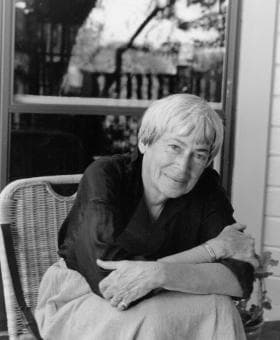
Ursula Kroeber Le Guin was an American author best known for her works of speculative fiction, including science fiction works set in her Hainish universe, and the Earthsea fantasy series. She was first published in 1959, and her literary career spanned nearly sixty years, producing more than twenty novels and over a hundred short stories, in addition to poetry, literary criticism, translations, and children's books. Frequently described as an author of science fiction, Le Guin has also been called a "major voice in American Letters". Le Guin said she would prefer to be known as an "American novelist".
Similar books
- A Wizard of Earthsea
Ursula K. Le Guin
4.0 (241k) average on GoodreadsFantasyExplores themes of power, responsibility, and self-discovery in a coming-of-age fantasy setting.
- The Giver
Lois Lowry
4.1 (1.8M) average on GoodreadsFantasyFeatures a protagonist who questions societal norms and a unique inherited ability that sets them apart.
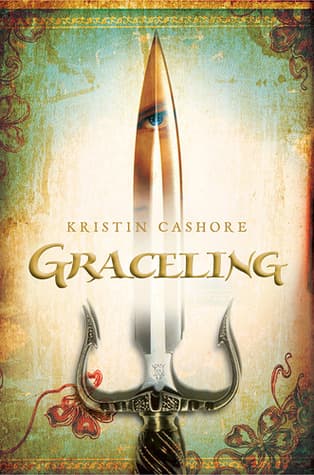
- Graceling
Kristin Cashore
4.1 (385k) average on GoodreadsFantasyFocuses on young characters with dangerous, often feared, special abilities and their struggle with how to use them responsibly.
- Harry Potter and the Sorcerer's Stone
J.K. Rowling
4.5 (7M) average on GoodreadsFantasyRescued from a miserable life under the stairs, an orphaned boy discovers he's a wizard destined for a magical school, where he uncovers a dangerous secret tied to the dark wizard who murdered his parents.
- The Hunger Games
Suzanne Collins
4.3 (6.4M) average on GoodreadsFantasyIn a future where children fight to the death on live television, Katniss Everdeen volunteers for the arena, turning a death sentence into a fight for survival and a spark of rebellion.
- 1984
George Orwell
4.2 (3.1M) average on GoodreadsPoliticsIn a future where surveillance and thought control are absolute, a man's search for truth clashes with the Party, showing that hope can be a form of rebellion.





Enjoyed the summary?
A summary gives you the shape of the book. The book itself has the detail, the examples and the voice.
Find Gifts on AmazonAs an Amazon Associate, BookBrief earns from qualifying purchases. How we're funded