
Synopsis
Covers the whole plot, including the ending.
- Difficulty
- Medium
- Pacing
- Moderate
- Mood
- Mysterious, Philosophical, Eerie, Thought-provoking
- Read it if
- You enjoy complex, thought-provoking science fiction with deep ecological themes, social commentary, and a strong sense of mystery.
- Skip it if
- You prefer fast-paced action, clear-cut heroes and villains, or shy away from philosophical discussions on humanity's role in the universe.
Grass Plot Summary
Covers the whole plot, including the ending.
Arrival on Grass
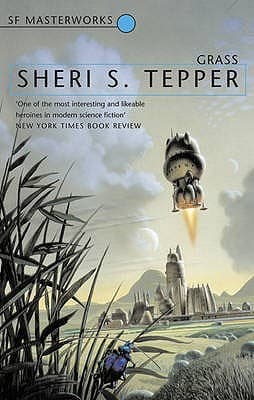
Marjorie Westriding, an Earth diplomat, is dispatched with her husband, Rill, and their children, Tony and Ginny, to the planet Grass. Humanity faces a devastating plague, the 'plague of ages,' which spares no world except for the mysterious Grass. Their mission is to discover the secret of Grass's immunity. Upon arrival, they are immediately struck by the planet's unique ecosystem, dominated by vast, sentient-like grasslands and a peculiar alien culture. The dominant human society on Grass is an aristocratic, fox-hunting gentry, descended from the original colonists, who live in isolated estates and maintain a rigid social structure. The Westridings find themselves outsiders in this strange, ritualistic world, struggling to understand its customs and the planet's true nature.
The Hunt and the Hounds
Marjorie, a keen observer, quickly becomes immersed in the local culture, particularly the elaborate fox hunts that are central to the Grassian gentry's lives. These hunts involve not only humans on horseback but also 'hounds,' alien creatures that resemble a cross between a horse and a dog, with an unsettling intelligence. Marjorie notices the hounds' strange behavior and their peculiar bond with their human riders. She learns that the hounds are more than just animals, they are an integral, almost sacred, part of Grassian society. She also observes the local 'foxes,' another alien species, which are not merely prey but seem to participate in the hunt in a ritualized, almost voluntary manner. The entire spectacle raises questions about the true nature of life and death on Grass.
The Plague's Reach and Political Intrigue
Despite Grass's initial immunity, whispers begin to circulate that the plague is starting to appear even there, albeit in a different form. The Westridings' mission becomes more urgent. However, the ruling gentry on Grass, particularly figures like the powerful Mrs. Dapple, resist outside interference and cling to their traditional ways, including their unique religion centered around the hunts. They believe the plague is divine punishment or a test, not a scientific problem. Marjorie faces significant opposition and subtle sabotage in her attempts to investigate, as the local authorities care more about maintaining their social order and sacred rituals than with finding a cure for a perceived 'alien' disease. The political landscape is full of hidden agendas and deep-seated prejudices.
Ginny's Connection and Tony's Disappearance
Marjorie's daughter, Ginny, a sensitive and somewhat reclusive child, forms an unusual bond with one of the hounds, a creature she names 'Fido.' This connection gives Ginny unique insights into the hounds' nature and the planet's subtle energies, often communicating with them non-verbally. Meanwhile, Marjorie's son, Tony, a curious and adventurous boy, disappears during one of the hunts. His disappearance sparks a frantic search and intensifies Marjorie's determination to uncover the planet's secrets. Tony's vanishing act is not merely an accident but seems connected to the deeper, hidden aspects of Grass, hinting at a sentience beyond human comprehension, and a world where the lines between hunter and hunted are blurred.
The Hounds' True Nature
Through her investigations, observations, and Ginny's unique connection, Marjorie begins to unravel the shocking truth about the hounds. They are not mere animals but highly intelligent, ancient beings, the true inhabitants of Grass, who have developed a complex, symbiotic relationship with the 'foxes' and, more recently, with humans. The hunts are not simply sport but an essential part of the hounds' life cycle and a form of ritualistic interaction between the species. The hounds manipulate their human riders, guiding them in a dance of survival and propagation. This revelation upends Marjorie's understanding of the planet and its inhabitants, revealing a millennia-old intelligence at play.
The Foxen and the Plague
Further investigation reveals that the 'foxes' are also sentient beings, known as Foxen, who are equally integral to Grass's ecosystem and the hounds' existence. The Foxen possess the planet's unique immunity to the galactic plague. The hunts, it turns out, are a complex process of population control and resource distribution, orchestrated by the hounds and the Foxen. The plague that affects humans is a biological weapon, and the Foxen have evolved a natural resistance. Marjorie realizes that the solution to the galactic plague lies not in human science alone, but in understanding and harnessing the unique biological and symbiotic mechanisms of the Foxen and the hounds, which have adapted to their environment over eons.
The Bargain and the Betrayal
Marjorie attempts to broker a delicate alliance between the human colonists, the hounds, and the Foxen. She proposes a way to extract the immunity from the Foxen without destroying their species, offering humanity a chance at survival. However, human fear, greed, and the rigid traditions of the Grassian gentry complicate matters. Some humans, particularly the more ruthless elements, see the Foxen and hounds as resources to be exploited rather than partners. There are betrayals and attempts to seize control of the immunity by force, threatening to shatter the fragile trust Marjorie has painstakingly built. The conflict highlights humanity's struggle to overcome its own destructive tendencies.
The Planet's True Purpose
Marjorie learns that Grass itself is a sentient entity, or rather, a complex ecosystem of interconnected intelligences — the hounds, the Foxen, and the very grasslands — all working together. The planet's immunity is not accidental but a deliberate, evolved defense mechanism. The hunts are a carefully managed system of life and death, an ancient ritual that sustains the delicate balance of the planet and its inhabitants. The hounds and Foxen are not just animals but guardians of a unique biological solution, a living archive of resistance against galactic threats. The planet is a sanctuary, a living laboratory, and its inhabitants hold the key to understanding universal biological resilience.
Tony's Transformation
Tony is eventually found, but he is no longer the same boy. He has been taken in by the Foxen and has undergone a profound, almost spiritual, transformation. He has gained a deeper understanding of their language, their ways, and the planet's interconnectedness. This transformation makes him an intermediary, a bridge between humanity and the Foxen, but it also separates him from his human family. His experience highlights the potential for human evolution and adaptation when confronted with truly alien intelligences, but also the sacrifice and loss of identity that can accompany such a profound shift. Tony's change is both a miracle and a tragedy, a demonstration of Grass's power.
The Resolution and Departure
Marjorie, with the help of Ginny and the transformed Tony, manages to secure the immunity from the Foxen, not through force, but through a negotiated understanding and respect for their species. The solution involves a carefully managed symbiotic relationship rather than exploitation. The Westridings prepare to leave Grass, carrying the cure for the galactic plague. However, they are all profoundly changed by their experiences. Marjorie has a new understanding of life, intelligence, and humanity's place in the cosmos. Ginny has found her voice and a unique connection to alien life. Tony has become something new, a hybrid consciousness. They depart with the cure, but the mysteries and lessons of Grass will forever shape their lives and the future of humanity.
Principal Figures
Marjorie Westriding
Protagonist
A pragmatic Earth diplomat and astute observer investigating the plague on Grass.
Marjorie is a sharp, intelligent, and fiercely determined diplomat from Earth. She approaches her mission on Grass with a scientific mind and a deep sense of duty to humanity. Initially skeptical of the Grassian gentry's traditions, she remains open-minded enough to observe and learn, even when confronted with unsettling truths. She is a devoted wife and mother, though her professional drive often pulls her focus. Her core motivation is to find a cure for the plague and save humanity, but she develops a profound respect for the alien life forms on Grass.
Relationships: Rill Westriding (Husband, initially supportive but struggles with Grass's strangeness.); Tony Westriding (Son, whose disappearance and transformation deeply impact her.); Ginny Westriding (Daughter, whose unique connection to the hounds aids Marjorie's investigation.)
Rill Westriding
Supporting
Marjorie's husband, a compassionate but somewhat overwhelmed doctor.
Rill is Marjorie's husband, a doctor who accompanies her to Grass. He is kind, empathetic, and generally supportive of Marjorie, but he finds the alien culture and the planet's mysteries more unsettling than she does. He struggles to reconcile his medical training with the non-traditional 'plague' symptoms on Grass and the bizarre local customs. Rill represents a more conventional human perspective, grappling with the limits of his understanding and the emotional toll of their mission. He often acts as Marjorie's emotional anchor, though he is sometimes overshadowed by her stronger personality.
Relationships: Marjorie Westriding (Husband, supportive but occasionally bewildered by her drive.); Tony Westriding (Son, deeply concerned by his disappearance and transformation.); Ginny Westriding (Daughter, tries to understand her unique connection to the hounds.)
Ginny Westriding
Supporting
Marjorie's sensitive daughter, who forms a unique bond with the alien hounds.
Ginny is Marjorie and Rill's daughter, a quiet and sensitive child who initially struggles to adapt to Grass. She possesses an intuitive empathy that allows her to connect deeply with the alien hounds, forming a unique, almost telepathic bond with them. This connection makes her a crucial link in understanding the planet's true nature. Ginny is often overlooked by the adults, but her inner world is rich and observant. Her ability to communicate with the hounds proves invaluable to Marjorie's investigation, making her a vital, if understated, character.
Relationships: Marjorie Westriding (Daughter, provides crucial insights through her unique bond.); Rill Westriding (Daughter, who he worries about but also admires her sensitivity.); Fido (Hound) (Forms a deep, almost symbiotic, bond with this particular hound.)
Tony Westriding
Supporting
Marjorie's adventurous son, who disappears and undergoes a profound transformation.
Tony is Marjorie and Rill's son, an adventurous and curious boy who is initially fascinated by the hunts and the alien wildlife. His disappearance during a hunt propels a significant part of the plot. When he is found, he has undergone a profound transformation, having spent time with the Foxen. He gains a deep understanding of their culture and the planet's interconnectedness, becoming a bridge between species but also an alien to his own family. Tony represents the potential for radical change and adaptation when humans encounter truly alien intelligences.
Relationships: Marjorie Westriding (Son, his transformation deeply affects her understanding of Grass.); Rill Westriding (Son, whose disappearance causes him immense worry and grief.); The Foxen (Forms a deep, transformative connection with them.)
Mrs. Dapple
Antagonist
A powerful, traditionalist matriarch of the Grassian gentry.
Mrs. Dapple is a formidable and unyielding matriarch among the Grassian gentry. She embodies the rigid traditions and aristocratic values of the human colonists on Grass, fiercely protecting their way of life, including the elaborate hunts and their unique religion. She views outsiders, particularly Earth diplomats, with suspicion and disdain, seeing their scientific inquiries as a threat to her established order. Mrs. Dapple is a powerful obstacle to Marjorie's investigation, representing the entrenched resistance to change and the dangers of dogmatic adherence to tradition.
Relationships: Marjorie Westriding (Antagonistic, sees Marjorie as an unwelcome outsider and threat.)
The Hounds
Supporting
Ancient, intelligent alien creatures that resemble horses and dogs, central to Grassian society.
The Hounds are one of the two primary sentient alien species on Grass. They are large, intelligent creatures resembling a hybrid of horses and dogs, with complex communication methods and a profound connection to the planet. They are not merely animals but an ancient, evolved species that orchestrates the hunts and maintains a symbiotic relationship with the Foxen and, to a lesser extent, with humans. Their true intelligence and purpose are gradually revealed to Marjorie, demonstrating a sophisticated understanding of their ecosystem and a deep, ancient wisdom. They are the silent, powerful architects of Grass's unique balance.
Relationships: Ginny Westriding (Forms a unique, empathetic bond with her.); The Foxen (Engage in a complex, symbiotic relationship with them.)
The Foxen
Supporting
Sentient alien 'prey' on Grass, possessing immunity to the galactic plague.
The Foxen are the other primary sentient alien species on Grass, initially perceived as mere 'foxes' to be hunted. They are smaller, cunning, and possess the unique biological immunity to the galactic plague. The hunts are revealed to be a complex, ritualized interaction between them and the Hounds, essential for their population control and the planet's ecosystem. The Foxen are intelligent, adaptable, and capable of communication, though their methods are very different from humans'. Their existence and their immunity are central to the entire mystery of Grass and the potential salvation of humanity.
Relationships: The Hounds (Engage in a complex, symbiotic relationship with them.); Tony Westriding (Transform him through deep interaction.)
Themes & Insights
Interspecies Communication and Understanding
The novel explores the challenges and possibilities of communication between vastly different species. Marjorie's struggle to understand the Hounds and Foxen, and Ginny's intuitive connection, show that true understanding goes beyond language to empathy and a willingness to shed human-centered biases. The planet's ecosystem, a complex web of sentient life, forces humanity to reconsider its place in the universe. This theme is central when Marjorie tries to broker a deal with the Foxen, recognizing their intelligence and rights, rather than merely exploiting them for a cure.
“We think of ourselves as the apex, the crown of creation. But on Grass, we are merely another thread in a tapestry we barely comprehend.”
The Nature of Life and Death
Grass redefines life, death, and symbiosis. The ritualistic hunts are not merely sport but a vital, orchestrated cycle of life, death, and regeneration for the Hounds and Foxen. What appears brutal to human eyes is revealed to be a necessary, even sacred, process for the planet's ecosystem. The 'plague of ages' forces humanity to confront its own mortality and the interconnectedness of all life. Tony's transformation also blurs the lines between human and alien, suggesting that death can be a form of transformation rather than an end.
“What is death to us, is merely a different kind of life to them. A transformation, not an ending.”
Human Arrogance and Anthropocentrism
The novel critiques humanity's tendency to view itself as superior and to impose its own understanding on alien worlds. The Grassian gentry, with their rigid traditions and disdain for the 'animals,' exemplify this arrogance. Marjorie initially shares some of these biases but gradually sheds them as she uncovers the true intelligence of the Hounds and Foxen. The galactic plague itself can be seen as a consequence of humanity's unchecked expansion and lack of respect for other life forms. The story is a cautionary tale against assuming human-centric perspectives in a vast, diverse universe.
“We came here with our definitions, our certainties. Grass simply laughed at them.”
Tradition vs. Progress
The conflict between the entrenched traditions of the Grassian gentry and the need for scientific progress to combat the plague is a major theme. Mrs. Dapple and her ilk resist any change or outside interference, clinging to their ancient rituals and beliefs even in the face of universal catastrophe. Marjorie represents the drive for progress and adaptability. The novel suggests that while tradition can provide stability, rigid adherence to it can be dangerous and ultimately self-destructive, especially when confronted with existential threats. A balance must be found between honoring the past and embracing necessary evolution.
“Tradition is a comfortable blanket, until it smothers you.”
The Price of Survival
The desperate search for a cure for the galactic plague forces humanity to consider the ethical implications of survival. Is it acceptable to exploit another species for one's own gain? Marjorie's journey is about finding a way to secure humanity's survival without destroying the unique ecosystem of Grass or betraying the trust of its inhabitants. Tony's transformation, while offering a solution, also comes at a personal cost, highlighting that survival might require radical change and the shedding of old identities. The novel asks what humanity is willing to sacrifice, and what it might become, to continue existing.
“Survival is not merely living. It is living in a way that is worth living.”
Plot Devices & Literary Techniques
The Galactic Plague
A mysterious, deadly disease ravaging the galaxy, driving the plot.
The 'plague of ages' is the inciting incident and central mystery of the novel. It is a devastating, widespread disease that spares no planet except Grass, making the planet the sole focus of humanity's hopes. The plague serves as a powerful external threat, forcing Marjorie's mission and creating immense urgency. Its nature and origin are gradually revealed to be more complex than a simple pathogen, ultimately tying into the planet's unique biology and the larger galactic ecosystem. It acts as a catalyst for humanity's self-reflection and interspecies engagement.
The Ritualistic Hunts
The central, symbolic activity of Grassian human society, masking deeper alien processes.
The elaborate fox hunts are a prominent cultural feature of the human colonists on Grass. Initially presented as a barbaric sport, they are gradually revealed to be a highly ritualized, essential component of the planet's alien ecosystem, orchestrated by the Hounds and Foxen. The hunts serve as a narrative device to introduce the alien species, their complex interactions, and the deeper mysteries of Grass. They are a red herring, diverting human perception from the true nature of the planet, while simultaneously being the key to understanding it. They symbolize the human tendency to misinterpret alien cultures through their own lens.
Ginny's Empathy/Connection
A unique, intuitive bond with alien life forms, serving as a key to understanding.
Ginny Westriding's innate empathy and her ability to form a deep, almost psychic, connection with the Hounds serve as a crucial plot device. Her unique perspective allows Marjorie to gain insights into the Hounds' intelligence and the planet's subtle communications that would otherwise be inaccessible. Ginny acts as a bridge between human and alien understanding, providing crucial information and emotional depth. Her connection highlights the potential for non-linguistic communication and the idea that children, with their less rigid worldviews, might be more open to truly alien experiences.
The Sentient Planet/Ecosystem
The entire planet of Grass operates as a single, interconnected, intelligent entity.
Grass itself functions as a sentient, or at least highly intelligent and interconnected, ecosystem. The Hounds, Foxen, and even the grasslands are not separate entities but parts of a larger, self-regulating biological consciousness. This device challenges anthropocentric notions of intelligence and life. The planet's 'sentience' is not a single brain, but a distributed network, orchestrating its own defense and survival. This concept provides the ultimate explanation for Grass's immunity and forces characters to reconsider their understanding of agency and life itself.
Grass Quotes
“The universe is a place of terrible beauty and magnificent terror. It is not for us to understand it, but to live within it, and to try to make our small part of it a little better.”
“Sometimes the greatest evils are done by those who believe themselves to be doing good.”
“Fear is a powerful tool, and those who wield it often find themselves wielding a double-edged sword.”
“The truth is not always what we want to hear, but it is always what we need to know.”
“To be human is to be flawed, to make mistakes, and to learn from them. It is also to be capable of great love and great cruelty.”
“We build our prisons with our own beliefs, and sometimes the hardest chains to break are those we forge ourselves.”
“The greatest mystery is not out there among the stars, but here, within ourselves.”
“Hope is a fragile thing, easily crushed, but it is also the most resilient of all human emotions.”
“Sometimes the only way to find your way home is to get lost first.”
“The past is not dead; it is not even past. It lives within us, shaping who we are and what we will become.”
“Nature has its own laws, and they are often harsher than any we might devise.”
“To truly see, one must first be willing to question everything they believe to be true.”
“Power corrupts, not just the powerful, but also those they rule.”
“The universe does not care about our intentions, only our actions.”
Quiz
10 questions on the plot and the characters. Each answer comes with a short explanation.
Question 1
What is the name of the cosmic anomaly where humans have settled, and which is immune to the deadly plague?
- Terra Nova
- Verdant
- Grass
- Gaia Prime
Show answer
C. Grass The planet where humans have settled and which is immune to the plague is explicitly named 'Grass' in the book's premise.
Question 2
What is the primary characteristic of the planet Grass's ecosystem that makes it so distinctive and challenging for human inhabitants?
- It is covered in a dense, poisonous jungle.
- It is dominated by vast, undulating fields of sentient grass.
- It features a unique predator-prey relationship involving large, equine-like creatures and their hunters.
- Its atmosphere is toxic to humans without advanced filtration.
Show answer
C. It features a unique predator-prey relationship involving large, equine-like creatures and their hunters. Grass is famously characterized by the hunt, involving the large, elegant Hippa and the predatory Hounds, which is central to the planet's culture and mystery.
Question 3
Who is the protagonist sent to Grass to investigate its immunity to the plague?
- Molly Cobweb
- Marjorie Westriding
- Rillibeth
- Lady Ada
Show answer
B. Marjorie Westriding Marjorie Westriding is the central character, a diplomat sent by the Holy Disciples to uncover the secret of Grass's immunity.
Question 4
What is the 'hunt' on Grass, and what species are primarily involved?
- A ritualistic chase between humans and the sentient 'grass' itself.
- A traditional sport where humans track and capture large, dangerous insects.
- A complex ecological interaction involving the Hippa (prey) and the Hounds (predators), often observed and participated in by humans.
- A military exercise conducted by the human colonists to maintain order.
Show answer
C. A complex ecological interaction involving the Hippa (prey) and the Hounds (predators), often observed and participated in by humans. The 'hunt' refers to the unique ecological relationship between the Hippa and Hounds, which has become a central cultural and religious practice for the human inhabitants.
Question 5
What is the name of the religious organization that sends Marjorie Westriding to Grass?
- The Galactic Federation
- The Holy Disciples
- The Order of the Star
- The Ecumenical Council
Show answer
B. The Holy Disciples Marjorie is a diplomat for the Holy Disciples, the dominant religious and political power in the human galaxy, who are desperate to understand Grass's immunity.
Question 6
What is the true nature of the 'Hounds' on Grass, which are believed to be the predators of the Hippa?
- They are genetically engineered canines brought by early human colonists.
- They are a highly evolved form of local insect life.
- They are the sentient, indigenous species of Grass, manipulating the ecosystem.
- They are mechanical constructs designed to maintain the planetary balance.
Show answer
C. They are the sentient, indigenous species of Grass, manipulating the ecosystem. A major revelation in the book is that the Hounds are the true sentient natives of Grass, who have orchestrated the entire ecosystem, including the Hippa and the 'hunt,' for their own purposes.
Question 7
What is the ultimate source of the galaxy-wide plague, as revealed by the end of the book?
- A natural viral mutation that spread uncontrollably.
- An ancient alien weapon unleashed by accident.
- A form of biological warfare initiated by a rival alien empire.
- The Holy Disciples themselves, through their efforts to control and manipulate life.
Show answer
D. The Holy Disciples themselves, through their efforts to control and manipulate life. The devastating truth is that the plague, known as the 'Foxen,' originated from the Holy Disciples' own attempts at biological control and genetic manipulation, which backfired and spread across the galaxy.
Question 8
What is the significance of the 'Foxen' in the context of the plague?
- It is the name of the alien race that brought the plague to the galaxy.
- It refers to the specific pathogen causing the plague, which targets sentient life.
- It is a slang term for those who are immune to the disease.
- It is the name of the medical cure developed on Grass.
Show answer
B. It refers to the specific pathogen causing the plague, which targets sentient life. The 'Foxen' is the name given to the deadly plague itself, a biological entity that attacks and destroys sentient life across the galaxy.
Question 9
How do the indigenous Hounds of Grass achieve immunity from the Foxen plague?
- They possess a natural genetic resistance that evolved over millennia.
- They consume a unique plant native to Grass that confers immunity.
- Their life cycle and biological processes are fundamentally different from other sentient species, making them incompatible hosts for the Foxen.
- They have developed advanced medical technology to inoculate themselves.
Show answer
C. Their life cycle and biological processes are fundamentally different from other sentient species, making them incompatible hosts for the Foxen. The Hounds' immunity stems from their unique biology and life cycle, which the Foxen cannot infect or replicate within, making them fundamentally different from the human-like life forms the plague targets.
Question 10
What is a central theme explored in 'Grass' regarding humanity's relationship with nature and other species?
- The inevitable triumph of human technology over natural challenges.
- The dangers of unchecked religious dogma and anthropocentric views.
- The necessity of preserving all forms of life, regardless of intelligence.
- The ultimate benevolence of powerful, ancient alien civilizations.
Show answer
B. The dangers of unchecked religious dogma and anthropocentric views. A core theme of 'Grass' is the critique of human arrogance, particularly the Holy Disciples' belief in their divine right to control life and their failure to understand or respect non-human intelligence, leading to devastating consequences.
Grass FAQ
What is the core premise of 'Grass' and why do humans migrate there?
The core premise of 'Grass' revolves around a deadly interstellar plague, known as the 'plague,' that is decimating humanity across the galaxy. Grass is the only known planet immune to this plague, prompting the human aristocracy, led by the Marq family, to migrate there in hopes of finding a cure or understanding its immunity. They establish a new society on Grass, mirroring their old aristocratic ways.
Who are the primary protagonists and what is their initial mission on Grass?
The primary protagonists are Rillibeth and her husband, Perkin. They are part of the aristocratic human population that has relocated to Grass. Their initial mission, beyond mere survival, is to investigate the planet's unique ecology and determine the source of its immunity to the plague, a task assigned to them by the ruling Marq family.
Describe the unique biological characteristics of the planet Grass itself.
Grass is characterized by its vast, sentient, and carnivorous plant life, which forms a complex ecosystem. This includes the 'hippos,' large, horse-like creatures that are hunted in ritualistic hunts, and the 'foxen,' smaller, more elusive creatures. The planet's flora and fauna are intricately linked, forming a singular consciousness that deeply influences its inhabitants.
What is the significance of the 'hunt' on Grass for the human colonists?
The 'hunt' on Grass, involving the pursuit and killing of the hippos, becomes a central ritual for the human colonists, especially the aristocracy. It serves as a social hierarchy, a test of skill, and a way to maintain their cultural traditions from their homeworld. However, its true significance is much deeper, tied to the planet's native intelligence and the humans' unconscious subservience to it.
Who are the 'Sanctity' and what is their role in the story?
The Sanctity is a powerful, authoritarian religious organization that spans human-settled space. They oversee moral and ethical guidelines, often with a strict hand, and are deeply involved in the politics of human expansion and survival. On Grass, their representatives attempt to exert control over the colonists and their investigation into the plague.
What is the true nature of the 'plague' affecting humanity, and how does Grass relate to it?
The 'plague' is not a naturally occurring disease but a deliberate biological weapon engineered by the native intelligence of Grass. It targets those with human DNA, serving as a defense mechanism to prevent overpopulation and exploitation of other planets. Grass's immunity stems from its own bio-weapon, which it uses to control and limit the human species.
How are the 'hippos' and 'foxen' more than just animals in the ecosystem of Grass?
The hippos and foxen are not mere animals; they are manifestations or extensions of the planet's overarching native intelligence. The hippos represent a more aggressive, dominant aspect, while the foxen are more elusive and manipulative. They are crucial components of the planet's self-regulating system, influencing human behavior through the ritualistic hunts and other subtle means.
What is the 'worm' and its connection to the overall planetary intelligence?
The 'worm' refers to the subterranean, sentient network of the planet's consciousness, a vast, interconnected organism that controls the entire ecosystem of Grass. It is the true intelligence behind the hippos, foxen, and even the plague. The worm is the planet's ultimate defense mechanism and manipulator, orchestrating events to protect itself.
How does Rillibeth's perception of the hunts change throughout the narrative?
Initially, Rillibeth views the hunts as a necessary and perhaps even thrilling aristocratic ritual. However, as she delves deeper into the planet's secrets, she begins to understand the hunts are not for human sport but are orchestrated by the planet itself. She realizes humans are being manipulated, and the hunts serve a purpose far beyond their own understanding, leading to a profound shift in her perspective.
Discuss the psychological impact of the 'plague' and isolation on the human colonists.
The 'plague' creates immense fear, desperation, and a sense of existential threat among humanity, driving them to Grass. On Grass, the isolation, the alien environment, and the constant threat of the unknown foster paranoia, rigid adherence to old customs, and a deep-seated denial of their true predicament. This psychological stress makes them susceptible to the planet's subtle manipulations.
How does Tepper explore themes of human arrogance and speciesism through the colonists' actions?
Tepper highlights human arrogance by showing the colonists' persistent belief in their own superiority and their right to exploit new planets, even in the face of overwhelming evidence to the contrary. They assume the native life on Grass is primitive and subservient, failing to recognize its advanced intelligence. This speciesism blinds them to the true nature of their situation, making them vulnerable.
What is the role of gender and power dynamics within the aristocratic society on Grass?
The aristocratic society on Grass maintains traditional, patriarchal power dynamics, where men often hold overt positions of authority and women, like Rillibeth, are expected to conform to certain social roles. However, the narrative subtly undermines this, showing how female characters often possess greater insight or exert influence in less direct ways, challenging the superficial power structures.
Is the 'worm' truly malevolent, or is it merely acting in self-preservation?
This is a key interpretive question. While the 'worm' employs lethal methods like the plague and manipulates humans, its actions can be seen as self-preservation for its own species and planet. It perceives humanity as an invasive, destructive force. Its 'malevolence' is subjective; from its perspective, it is simply defending its territory and ensuring its survival against a perceived threat.
What does the ending of 'Grass' suggest about humanity's future and its relationship with other species?
The ending suggests a humbling, if not outright subjugation, of humanity. It implies that humanity must learn to coexist and respect other intelligences, rather than dominate them, or face extinction. The future is one where humanity's unchecked expansion is curbed, and it must adapt to a new, more constrained role within the galactic ecosystem, possibly under the influence of powerful alien intelligences.
How does Tepper use the concept of 'spirituality' in the context of Grass's alien ecosystem?
Tepper integrates spirituality by portraying the planet's native intelligence as a quasi-deity or spiritual force that governs life and death, influencing human beliefs and rituals, especially the hunts. The humans, despite their advanced technology, are drawn into a primitive, almost religious reverence for the planet's power, suggesting a deeper, inherent human need for meaning beyond pure science.
Could the 'plague' be interpreted as a metaphor for environmental destruction or human hubris?
Yes, the 'plague' strongly functions as a metaphor for the consequences of human hubris and environmental destruction. It represents nature's retaliation against unchecked exploitation and a warning against humanity's tendency to colonize and consume without understanding or respecting other life forms. It highlights the idea that humanity's actions have planetary-scale repercussions.
What is the significance of the human tendency to 'domesticate' or impose order on chaos, even on an alien world?
The human colonists' attempts to domesticate the wildness of Grass, from their structured hunts to their aristocratic social order, signifies their ingrained need to impose familiar order on alien chaos. This reflects a deep-seated psychological need for control and comfort, yet it also blinds them to the true, untamable nature of Grass, making them vulnerable to its underlying intelligence.
How does the novel critique traditional notions of 'progress' and 'civilization'?
The novel critiques traditional notions of 'progress' by showing how humanity's advanced technology and 'civilized' aristocratic society ultimately lead them to a deadly trap. Their 'progress' in space exploration has only brought them to the brink of extinction. It suggests that true progress might lie in understanding and adapting to nature, rather than conquering it, and that 'civilization' can be a fragile construct when faced with alien intelligence.
About the author

Sheri S. Tepper was an American author known for her contributions to speculative fiction. Her notable works include "Grass," a complex exploration of ecology and society, "The Visitor," which delves into themes of alien contact, "After Long Silence," a reflection on trauma and memory, and "Beauty," a reimagining of classic fairy tales.
Similar books
- Dune
Frank Herbert
4.2 (766k) average on GoodreadsFantasyExplores complex ecological systems, religious themes, and the interaction between humans and a unique alien environment.
- The Left Hand Of Darkness
Ursula K. Le Guin
4.1 (120k) average on GoodreadsFantasyFeatures deep dives into alien cultures, social structures, and philosophical questions within a science fiction framework.
- The Handmaid's Tale
Margaret Atwood
4.1 (1.5M) average on GoodreadsFantasyWhile Atwood's novel offers a powerful, dystopian critique of patriarchal control and reproductive rights, Grass expands this critique to encompass humanity's destructive relationship with nature itself. Tepper suggests that patriarchal and colonial structures are intrinsically linked to an exploitative worldview that extends beyond human-to-human oppression to encompass humanity's relationship with the entire planet. Both are feminist works, but Tepper's scope is broader, integrating ecological and spiritual dimensions into her social commentary.
- Harry Potter and the Sorcerer's Stone
J.K. Rowling
4.5 (7M) average on GoodreadsFantasyRescued from a miserable life under the stairs, an orphaned boy discovers he's a wizard destined for a magical school, where he uncovers a dangerous secret tied to the dark wizard who murdered his parents.
- The Hunger Games
Suzanne Collins
4.3 (6.4M) average on GoodreadsFantasyIn a future where children fight to the death on live television, Katniss Everdeen volunteers for the arena, turning a death sentence into a fight for survival and a spark of rebellion.
- 1984
George Orwell
4.2 (3.1M) average on GoodreadsPoliticsIn a future where surveillance and thought control are absolute, a man's search for truth clashes with the Party, showing that hope can be a form of rebellion.





Enjoyed the summary?
A summary gives you the shape of the book. The book itself has the detail, the examples and the voice.
Find Grass on AmazonAs an Amazon Associate, BookBrief earns from qualifying purchases. How we're funded