
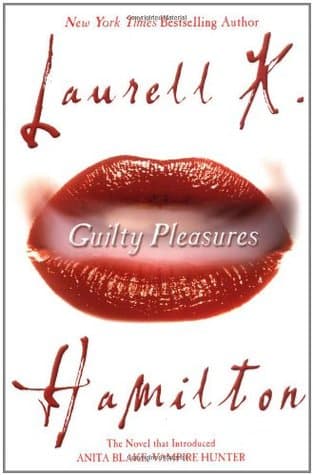
Synopsis
Covers the whole plot, including the ending.
- Difficulty
- Medium
- Pacing
- Moderate
- Mood
- Dark, Gritty, Suspenseful, Action-packed, Sexy
- Read it if
- You like urban fantasy with a strong female protagonist, a dark and gritty atmosphere, and a blend of mystery, action, and developing supernatural romance.
- Skip it if
- You prefer your fantasy to be lighthearted, are sensitive to graphic violence, or dislike morally ambiguous characters and complex power dynamics.
Guilty Pleasures Plot Summary
Covers the whole plot, including the ending.
The First Call and the Vampire Council
Anita Blake, an animated corpse re-animator and licensed vampire executioner for the Regional Preternatural Investigation (RPI), receives contact from a representative of Nikolaos, the Master Vampire of St. Louis. Nikolaos demands her services to investigate brutal vampire murders, a task Anita initially resists due to her deep fear and hatred of vampires. She eventually agrees, mostly to prevent a potential vampire war and to protect innocent humans. Her first stop is to view the crime scene, where she observes the unique, ritualistic nature of the killings, indicating a serial killer targeting vampires specifically and draining them completely.
Meeting Jean-Claude and Investigating the First Victim
Anita's investigation leads her to the first victim, a vampire named Julian, who was under the dominion of Jean-Claude, a charismatic and powerful Master Vampire who owns a strip club called 'Guilty Pleasures.' Jean-Claude immediately tries to influence Anita, a move she fiercely resists. Despite her animosity, Anita acknowledges Jean-Claude's intelligence and potential usefulness. She interviews witnesses and examines Julian's living quarters, discovering a hidden cache of human blood, which is illegal for vampires to possess, complicating the case and raising questions about Julian's true activities and allegiances within the vampire community.
The Second Victim and the Human Sacrifice
A second vampire is murdered, this time a female named Cassandra, also connected to Jean-Claude. The method of killing is identical to Julian's, solidifying the pattern of a serial killer. During her investigation, Anita discovers disturbing evidence of human sacrifice associated with the vampire victims, which is strictly forbidden by the vampire council and human law. This revelation suggests a deeper, more sinister plot than simple inter-vampire feuding. The sacrifices involve draining victims of blood and life force, indicating a ritualistic element that points towards ancient, forbidden vampire magic and a possible challenge to Nikolaos's authority.
The Werewolf Connection and Edward's Warning
To gather more information, Anita reluctantly seeks out the local werewolf pack, led by Richard Zeeman, hoping they might have heard whispers among the preternatural community. While she gains little direct information, the encounter highlights the intricate and often tense relationships between different supernatural factions. Later, Anita is visited by Edward, a notorious human assassin known as 'Death' who specializes in killing supernatural creatures. Edward warns her that she's entering dangerous territory and that the forces she's against are far more powerful and ancient than she realizes, hinting at a larger, organized threat to the established order.
Jean-Claude's Manipulation and the Third Victim
Jean-Claude continues his relentless attempts to seduce and bind Anita to him, using both his charm and subtle magical influence. Anita resists fiercely, but her attraction to him grows, creating internal conflict. A third vampire, Phillip, is brutally murdered right outside 'Guilty Pleasures,' a clear challenge to Jean-Claude and Nikolaos. This public display of violence escalates the urgency of the investigation and puts Anita in greater danger. The ritualistic elements of the murder are more pronounced, suggesting growing confidence and power from the killer.
The Harlequin and the Ancient Evil
Through diligent investigation and piecing together clues, Anita realizes the killer is not just any vampire but a Harlequin, an ancient and powerful vampire assassin, often employed by Master Vampires or the Vampire Council for specific, often bloody, tasks. She learns that the Harlequin works for someone attempting to destabilize Nikolaos's rule and seize control of St. Louis. The murders are not random acts of violence but calculated moves in a power play, designed to weaken Nikolaos's network and intimidate his allies. The Harlequin uses a specific, ritualistic dagger and ancient magic in the killings.
Confrontation with Nikolaos and the Revelation
Anita presents her findings to Nikolaos, accusing him of either being behind the attacks or knowing more than he let on. Nikolaos, a centuries-old Master Vampire, is initially dismissive and infuriated by Anita's audacity. However, under pressure, he reveals that the Harlequin works for a rival Master Vampire named Alejandro, who attempts to usurp Nikolaos's territory and influence. Nikolaos admits that the killings are part of an ancient ritual to drain power from his bloodline and weaken his hold on the city, making him vulnerable to Alejandro's takeover. This revelation places Anita directly in the middle of a vampire war.
The Trap and Jean-Claude's Intervention
Anita is lured into a trap by the Harlequin, who uses a human informant as bait. Cornered and outmatched, Anita faces certain death. However, Jean-Claude, having anticipated the danger or simply keeping a close watch on her, appears and intervenes, engaging the Harlequin in a brutal fight. Jean-Claude's actions save Anita's life, but he is severely injured. This incident further complicates Anita's feelings for Jean-Claude, as she witnesses his vulnerability and his willingness to protect her, despite their adversarial relationship. It also highlights the immense power of the Harlequin.
The Final Confrontation at Guilty Pleasures
Knowing that the Harlequin will come for Jean-Claude next, Anita and a recovering Jean-Claude prepare for a final confrontation at 'Guilty Pleasures.' They fortify the club and gather allies, including some of Jean-Claude's loyal servants. The atmosphere is tense, as they anticipate an assault. Anita understands that this isn't just about solving murders anymore; it's about preventing a full-scale vampire war and protecting her city from a brutal takeover. She arms herself with stakes, guns, and her unique magical abilities, ready to face the ancient evil.
Defeating the Harlequin and Alejandro
The Harlequin, accompanied by other vampires loyal to Alejandro, attacks 'Guilty Pleasures.' A fierce battle ensues, with Anita fighting alongside Jean-Claude. Anita uses her unique skills as a vampire executioner, combining her knowledge of vampire weaknesses with her magical abilities. She manages to wound the Harlequin, eventually driving him back. With the Harlequin defeated or neutralized, Alejandro's plan to usurp Nikolaos is thwarted. The remaining vampires loyal to Alejandro retreat, and the immediate threat to Nikolaos's rule and the city is averted, though the underlying power struggles remain.
Aftermath and New Alliances
After the battle, the immediate danger passes, but the city's supernatural landscape has changed. Nikolaos, while still Master of the City, has been weakened, and power dynamics are shifting. Anita's relationship with Jean-Claude has deepened and become more complex; the undeniable attraction between them has been cemented by their shared ordeal. While she still resists his advances and her own feelings, she acknowledges a new, uneasy alliance has formed. The events have forced Anita to confront her prejudices and the blurred lines between good and evil in the preternatural world.
Guilty Pleasures Characters
Anita Blake
Protagonist
A necromancer and vampire executioner for the RPI.
Anita is a petite but formidable woman with a sharp wit, a strong moral compass, and a deep-seated fear and hatred of vampires, despite her profession. She's pragmatic, cynical, and doesn't suffer fools gladly. She works as an 'animator' (re-animating the dead for legal purposes) and is a licensed vampire executioner, known as 'The Executioner.' Her primary drives are justice, protecting humans, and maintaining order in the supernatural world, even if it means working with creatures she despises. She carries a variety of weapons and is skilled in both combat and magic.
Relationships: Jean-Claude (Complex, adversarial, but intensely attracted to each other; he desires to make her his human servant.); Edward (Professional acquaintance, fellow supernatural assassin, and occasional ally.); Nikolaos (Master Vampire, her 'boss' on the case, a figure of authority and fear.); Richard Zeeman (Local werewolf pack leader, potential future romantic interest.)
Jean-Claude
Supporting/Love Interest
A powerful Master Vampire and owner of the Guilty Pleasures strip club.
Jean-Claude is an ancient, charismatic, and dangerously seductive Master Vampire. He is incredibly beautiful, manipulative, and possesses significant magical and physical power. He owns the 'Guilty Pleasures' strip club, which serves as a hub for various supernatural beings. His primary drive is to increase his power and influence within the vampire community, and he sees Anita as a valuable asset he wishes to claim as his human servant. Despite his predatory nature, he shows moments of genuine care and protection towards Anita, blurring the lines of her understanding of vampires.
Relationships: Anita Blake (Intensely attracted to her, desires to make her his human servant, often manipulative but also protective.); Nikolaos (Rival Master Vampire, vying for power and influence in St. Louis.)
Nikolaos
Antagonist/Supporting
The reigning Master Vampire of St. Louis.
Nikolaos is the ancient and powerful Master Vampire who holds dominion over St. Louis. He is ruthless, authoritative, and deeply entrenched in the politics of the vampire world. He values order and his own power above all else. He initially hires Anita to solve the vampire murders because they threaten his authority and stability, but he is not above using others for his own ends. He embodies the traditional, terrifying image of a vampire, a stark contrast to Jean-Claude's more seductive charm.
Relationships: Anita Blake (Employer, a necessary tool he grudgingly respects.); Jean-Claude (Subordinate Master Vampire, but also a rival for power.)
Edward
Supporting
A human assassin specializing in killing supernatural creatures, known as 'Death'.
Edward is a mysterious and highly skilled human assassin, nicknamed 'Death' for his efficiency in killing supernatural beings. He is pragmatic, detached, and operates by his own strict code. He often appears unexpectedly, offering cryptic warnings or assistance to Anita. He serves as a foil to Anita, representing a darker, more ruthless approach to dealing with the supernatural, yet he shares a strange camaraderie with her, respecting her abilities and her resolve. He is a man of few words but deadly actions.
Relationships: Anita Blake (Professional acquaintance, occasional ally, and kindred spirit in their dangerous professions.)
Dolores
Supporting
Anita's secretary at Animators, Inc.
Dolores is Anita's loyal and long-suffering secretary. She is a normal human woman, often flustered by the preternatural world her boss inhabits, but she remains dedicated and efficient. She provides a touch of normalcy and comic relief amidst the supernatural chaos, often worrying about Anita's safety. She represents the human world's perspective on the strange realities Anita navigates daily.
Relationships: Anita Blake (Boss and loyal employee, friend.)
The Harlequin
Antagonist
An ancient, powerful vampire assassin employed to destabilize Nikolaos.
The Harlequin is an ancient and highly skilled vampire assassin, a legendary figure in the vampire world. He is ruthless, precise, and uses ancient, ritualistic magic in his killings. He is employed by Alejandro to systematically murder vampires loyal to Nikolaos, aiming to weaken Nikolaos's power and facilitate a takeover. He is not a random killer but a tool of political upheaval, embodying the darker, more ritualistic aspects of vampire society and magic. His presence signifies a serious challenge to the established order.
Relationships: Alejandro (Employer and master.); Anita Blake (Target and opponent.)
Alejandro
Mentioned Antagonist
A rival Master Vampire attempting to usurp Nikolaos's territory.
Alejandro is a powerful, unseen Master Vampire who orchestrates the Harlequin's attacks. He is Nikolaos's rival, seeking to expand his own domain and influence by destabilizing and eventually taking over St. Louis. He represents the overarching political threat in the vampire community, a shadowy figure whose ambition drives much of the plot. His actions highlight the constant power struggles within the supernatural world.
Relationships: The Harlequin (Subordinate and assassin.); Nikolaos (Rival Master Vampire.)
Ronnie
Supporting
A dancer at Guilty Pleasures and one of Jean-Claude's human servants.
Ronnie is a human dancer at Jean-Claude's club, 'Guilty Pleasures,' and one of his human servants. She is beautiful, seemingly fragile, but deeply devoted to Jean-Claude. She provides insights into Jean-Claude's world and the nature of his influence over humans. Her presence highlights the seductive and dangerous allure of vampires and the complex relationships they form with their human thralls. She is initially wary of Anita but eventually comes to respect her.
Relationships: Jean-Claude (Master and devoted human servant.)
Guilty Pleasures Themes
Prejudice and Acceptance
Anita Blake starts the story with a deep hatred and fear of vampires, seeing them as evil. Her job as a vampire executioner reinforces this black-and-white view. However, as she works closely with Jean-Claude and other supernatural beings, she begins to see shades of gray. She learns that not all vampires are monsters, and even the 'good' ones can be dangerous. This theme appears when she reluctantly relies on Jean-Claude for help and when she sees his protective instincts, forcing her to confront her own biases and the complexities of the preternatural world. It challenges the reader to look beyond surface appearances.
“I was the law, and I was the executioner. And I was very good at my job. But I was beginning to realize that the lines between good and evil, between human and monster, were not as clear-cut as I had always believed.”
Power and Control
The novel explores themes of power and control, especially within the vampire hierarchy. Nikolaos's struggle to maintain his dominion over St. Louis against Alejandro's challenge, and Jean-Claude's constant attempts to influence Anita, are central to the plot. Power is shown through physical strength, ancient magic, political maneuvering, and even seduction. Anita, despite her physical size, holds significant power through her legal authority as an executioner and her unique magical abilities, constantly resisting attempts to be controlled. The entire conflict centers on who holds power in the city's supernatural underworld.
“Master of the City. The title vibrated with power, with ancient terrors and forbidden desires. And someone was trying to take it from Nikolaos.”
Forbidden Attraction and Desire
A central theme is the intense, forbidden attraction that develops between Anita and Jean-Claude. Anita is sworn to kill vampires and despises them, yet she feels drawn to Jean-Claude's charisma and power. This internal conflict creates significant tension and emotional depth. The attraction is dangerous, as Jean-Claude's desire for her is predatory, but it also hints at a deeper connection. This theme explores the blurring of lines between predator and prey, and the compelling nature of dark desires that challenge one's core beliefs, ultimately forcing Anita to confront her own sexuality and vulnerability.
“He was everything I hated, everything I was sworn to destroy. And I wanted him. God help me, I wanted him.”
The Nature of Humanity and Monstrosity
The book constantly asks what it means to be human and what makes a monster. Anita, a human, kills monsters, yet she often acts with violence and cold pragmatism that blurs her own humanity. Vampires like Jean-Claude, while monstrous, show moments of protective behavior and complex emotions, challenging Anita's simple categorization. The human characters who willingly serve vampires, like Ronnie, also complicate this theme, suggesting that the lines between victim and willing participant are often blurred. The novel suggests that monstrosity is not solely defined by species but by actions and intent.
“I was human, and I killed monsters. But sometimes, when I looked at my own hands, I wondered if the monster wasn't looking back at me.”
Plot Devices & Literary Techniques
The 'Animator' and 'Executioner' Professions
Anita's unique dual professions drive the plot and her perspective.
Anita's roles as a re-animator of the dead and a licensed vampire executioner are central to the plot. Her ability to raise the dead provides her with a unique perspective on death and the supernatural, while her executioner license gives her legal authority and a reason to interact with the vampire community. These professions not only define her character but also provide the framework for the mystery, as her skills are specifically required to investigate the vampire murders and navigate the preternatural legal system. They constantly put her in conflict with the very creatures she must work with.
The Vampire Council and Hierarchy
The established vampire political structure dictates much of the conflict and character interactions.
The existence of a strict vampire council and a clear hierarchy (Master Vampires, their servants, etc.) serves as a crucial plot device. This structure provides the political backdrop for the murders, as they are not random acts but calculated moves within a power struggle. It explains why Nikolaos needs Anita, a human executioner, to maintain order without starting a full-blown vampire war. The rules and traditions of this hierarchy dictate character motivations, alliances, and the consequences of breaking vampire law, driving the central conflict between Nikolaos and Alejandro.
The Harlequin as a Catalyst
The ancient vampire assassin whose actions propel the main conflict.
The Harlequin functions as a primary catalyst for the plot. His methodical, ritualistic murders of Nikolaos's vampires directly trigger Anita's involvement and escalate the stakes of the investigation. The Harlequin is not just a killer but a symbol of the ancient, darker side of vampire politics and magic. His actions force the various factions – Nikolaos, Jean-Claude, and even Anita – to react, form uneasy alliances, and confront the underlying power struggles in St. Louis. His very existence reveals the depth of the conspiracy against Nikolaos.
The Undeniable Attraction
The powerful, dangerous romantic tension between Anita and Jean-Claude.
The intense and forbidden attraction between Anita and Jean-Claude serves as a significant internal and external plot device. It complicates Anita's mission, challenges her prejudices, and creates a constant source of tension and vulnerability for her. Jean-Claude's attempts to seduce and claim her are integral to his character and his strategic goals. This attraction is not just romance; it's a power play, a psychological battle, and a constant threat that forces Anita to grow and question her own boundaries, making her journey more complex than a simple mystery solver.
Guilty Pleasures Quotes
“I was an animator, for Christ's sake, not a trained killer.”
“The problem with being a necromancer was that you were always in demand for the wrong reasons.”
“Never trust a vampire who smiles too much. It means they're either very old, very powerful, or very hungry.”
“Sometimes the monsters are the ones you least expect.”
“I didn't like being touched, not by strangers, not by anyone, unless I initiated it.”
“Guilty pleasures. We all have them. Mine just happen to involve a lot of blood and the occasional zombie.”
“Being a vampire executioner wasn't glamorous. It was messy, dangerous, and usually involved a lot of paperwork.”
“The dead don't lie, but they don't always tell you what you want to hear either.”
“Power corrupts. Absolute power corrupts absolutely. And supernatural power corrupts with a flair.”
“I wasn't afraid of death. I was afraid of dying badly.”
“Sometimes the best way to deal with a monster is to become a bigger one.”
“There's a difference between being brave and being stupid. I try to walk the line, usually with varying degrees of success.”
“My life was a series of bad decisions and worse consequences, spiced with the occasional moment of pure, unadulterated terror.”
“Even the most monstrous of us have a past, and sometimes that past is more tragic than evil.”
Quiz
10 questions on the plot and the characters. Each answer comes with a short explanation.
Question 1
What is Anita Blake's primary occupation at the beginning of 'Guilty Pleasures'?
- Police detective specializing in supernatural crimes
- Re-animator of the dead and killer of rogue vampires
- Vampire hunter for the local church
- Forensic pathologist for the St. Louis PD
Show answer
B. Re-animator of the dead and killer of rogue vampires Anita Blake is known as an 'animator' or 're-animator' who raises the dead for legal purposes and also works for the Regional Preternatural Investigation Team (RPIT) to take down rogue supernatural creatures, particularly vampires.
Question 2
Who is the 'city's most powerful vampire' who initially asks Anita to investigate the vampire slayings?
- Jean-Claude
- Nikolaos
- Master of the City, Edward
- Nikolaos, the Master of the City
Show answer
D. Nikolaos, the Master of the City It is Nikolaos, the Master of the City, who first summons Anita to investigate the murders of his people. Jean-Claude is his second-in-command, but not the Master himself.
Question 3
What is the name of the organization Anita works for that deals with supernatural crimes?
- Federal Bureau of Investigation (FBI)
- St. Louis Preternatural Task Force (SLPTF)
- Regional Preternatural Investigation Team (RPIT)
- Department of Supernatural Affairs (DSA)
Show answer
C. Regional Preternatural Investigation Team (RPIT) Anita is an authorized executioner for the Regional Preternatural Investigation Team (RPIT), often referred to by its acronym.
Question 4
What is the specific nature of the vampire slayings that Anita is hired to investigate?
- Vampires being burned to death by sunlight
- Vampires being ritually dismembered and drained of their blood
- Vampires being turned into ghouls by a new disease
- Vampires disappearing without a trace, presumed abducted
Show answer
B. Vampires being ritually dismembered and drained of their blood The victims are being brutally dismembered and carefully drained of their blood, indicating a ritualistic killer rather than a simple 'stake to the heart' kind of attack.
Question 5
What is Anita's initial reaction and internal conflict regarding Jean-Claude?
- She immediately distrusts him and suspects him of the murders.
- She finds him physically repulsive and avoids all contact.
- She feels an undeniable, unwanted attraction to him despite her job to kill his kind.
- She sees him as a potential ally and friend from the start.
Show answer
C. She feels an undeniable, unwanted attraction to him despite her job to kill his kind. The book description explicitly states her 'greatest fear—her undeniable attraction to master vampire Jean-Claude, one of the creatures she is sworn to destroy.' This is a central conflict for her.
Question 6
Who is Edward, also known as 'Death'?
- A human police officer who helps Anita
- A powerful werewolf who is Anita's ally
- A human vampire hunter, known for his efficiency and ruthlessness
- A vampire who secretly works against Nikolaos
Show answer
C. A human vampire hunter, known for his efficiency and ruthlessness Edward is a very effective and dangerous human vampire killer, known for his cold efficiency, which earns him the nickname 'Death'. He is not a supernatural creature himself.
Question 7
What is the name of the strip club that Jean-Claude owns and operates?
- The Crimson Moon
- Guilty Pleasures
- The Velvet Coffin
- Nightshade Nook
Show answer
B. Guilty Pleasures The strip club where Jean-Claude resides and operates is famously named 'Guilty Pleasures,' which is also the title of the first book in the series.
Question 8
What is the primary theme explored through Anita's internal conflict regarding her attraction to Jean-Claude?
- The struggle between good and evil in a literal sense.
- The nature of power and corruption within supernatural society.
- The blurring lines between duty and desire, and the prejudice against 'monsters'.
- The importance of teamwork in solving complex mysteries.
Show answer
C. The blurring lines between duty and desire, and the prejudice against 'monsters'. Anita is sworn to destroy vampires, yet she feels an undeniable attraction to Jean-Claude. This highlights the theme of her personal struggle against her own ingrained prejudices and professional duty, as her feelings complicate her black-and-white view of 'monsters'.
Question 9
What is the ultimate fate of Nikolaos, the Master of the City, at the end of 'Guilty Pleasures'?
- He flees St. Louis, his power broken.
- He is captured and imprisoned by the RPIT.
- He is killed by Anita Blake during a confrontation.
- He forms an uneasy alliance with Anita to fight a greater threat.
Show answer
C. He is killed by Anita Blake during a confrontation. Anita confronts Nikolaos after discovering his involvement and ultimately kills him, leading to Jean-Claude's ascension as the new Master of the City.
Question 10
What is the significance of the 'ardeur' that begins to manifest between Anita and Jean-Claude?
- It is a magical bond that forces them to become enemies.
- It is a telepathic link that allows them to communicate silently.
- It is a supernatural hunger or 'heat' that binds them, making them dependent on each other's touch/blood.
- It is a curse placed upon them by a rival vampire coven.
Show answer
C. It is a supernatural hunger or 'heat' that binds them, making them dependent on each other's touch/blood. The ardeur is a powerful, supernatural hunger or 'heat' that develops between certain individuals, particularly a human and a powerful vampire or lycanthrope. It creates an intense, often painful, physical and emotional bond that requires physical contact or blood exchange to sate, making them dependent on each other and significantly complicating their relationship.
Guilty Pleasures FAQ
What is Anita Blake's primary occupation and her unique skill set at the beginning of 'Guilty Pleasures'?
Anita Blake works as a professional zombie animator, operating under the unusual title of 'necromancer' for Animators Inc. Her unique skill set involves the ability to raise the dead for legal purposes, such as confirming wills, as well as her role as a licensed vampire executioner for the Regional Preternatural Investigation Team (RPIT).
Who is Jean-Claude and what is his initial relationship with Anita Blake in the story?
Jean-Claude is a very old and powerful master vampire in St. Louis, the current Master of the City. His initial relationship with Anita is one of professional antagonism mixed with a strong, unsettling attraction, as he seeks to draw her into his world and under his influence despite her deep-seated fear and hatred of vampires.
What specific case does Jean-Claude ask Anita to investigate, and why is she uniquely suited for it?
Jean-Claude asks Anita to investigate a series of brutal slayings targeting vampires in his territory, which are being staged to look like human murders but bear the unmistakable mark of a rogue vampire. Anita is uniquely suited due to her expertise in both human and preternatural homicide, and her legal authority to interact with and execute vampires.
Who is Edward, also known as 'Ted Forrester,' and what is his role in the story?
Edward, or 'Ted Forrester,' is a freelance vampire executioner and a notorious professional killer, known for his cold efficiency and lack of remorse. He initially appears as a rival and potential threat to Anita, but later becomes an unexpected, albeit morally ambiguous, ally due to their shared profession and mutual respect for their skills.
What is the 'Guilty Pleasures' club, and what significance does it hold for Jean-Claude?
The 'Guilty Pleasures' club is Jean-Claude's primary human-facing business and a hub of preternatural activity, serving as both a strip club and a meeting place for various creatures of the night. It signifies his power and influence in the human world, and is a key location where Anita is forced to confront her prejudices and attractions.
How does the 'ardeur' concept begin to manifest between Anita and Jean-Claude in this first book?
While the term 'ardeur' isn't explicitly used until later books, the intense and unsettling sexual attraction Anita feels towards Jean-Claude, often accompanied by physical discomfort and disturbing dreams, is the foundational manifestation of this powerful magical bond. It's portrayed as an unwanted, almost parasitic, connection that drains her emotionally and physically.
What is the significance of Anita's aversion to touching vampires, particularly Jean-Claude, beyond simple fear?
Anita's aversion to touching vampires, especially Jean-Claude, goes beyond simple fear; it's a visceral, almost magical repulsion rooted in her necromancer abilities and her strong moral code. She senses the 'unlife' in them, and physical contact often triggers unsettling sensations or even a psychic draining, hinting at her burgeoning magical connections.
What subtle clues are given about Anita's latent magical abilities beyond just reanimating the dead?
Subtle clues include her unusual sensitivity to preternatural presences, her ability to sense residual emotions from corpses, and the inexplicable attraction she generates among powerful supernatural beings like Jean-Claude and Nikolaos. These hints suggest a deeper, more complex magical potential that she is largely unaware of or actively represses.
How does the character of Nikolaos foreshadow the complex power dynamics of the vampire world?
Nikolaos, as an ancient and extremely powerful Master of the City, foreshadows the intricate and often brutal power dynamics within the vampire world. Her manipulation of Jean-Claude and her casual cruelty demonstrate the hierarchy and the constant struggle for dominance that will become central to later conflicts, highlighting the dangers of challenging established vampire authority.
Discuss Anita Blake's initial psychological state regarding her profession and her personal life.
Anita Blake is initially presented as highly compartmentalized; professionally, she is confident and ruthless, but personally, she is deeply guarded, emotionally detached, and struggles with intimacy. Her work as an executioner and necromancer allows her to maintain a necessary distance from the living, while her fear of vampires acts as a barrier to any deeper emotional connection.
How does Anita's internal conflict between duty and desire manifest throughout the narrative?
Anita's internal conflict manifests as a constant battle between her sworn duty to kill vampires and her undeniable, terrifying attraction to Jean-Claude. She views her desire as a weakness and a betrayal of her principles, leading to self-loathing and aggressive behavior, as she struggles to reconcile her professional identity with her burgeoning, unwanted urges.
Analyze Jean-Claude's psychological manipulation tactics towards Anita.
Jean-Claude employs a sophisticated blend of psychological manipulation, including subtle seduction, strategic vulnerability, and calculated displays of power. He uses her fear against her, plays on her sense of justice, and gradually chips away at her defenses by offering help and showing unexpected glimpses of humanity, all while exerting his vampiric allure.
What role does fear play in Anita's character arc in 'Guilty Pleasures'?
Fear is a dominant force in Anita's character arc; she fears vampires, fears losing control, and most significantly, fears her own attraction to Jean-Claude. This fear initially drives much of her aggression and isolation, but by the end of the book, she begins to confront and even weaponize her fear, indicating a shift towards a more complex and powerful identity.
To what extent is Anita a hero in 'Guilty Pleasures,' given her morally ambiguous actions and internal struggles?
Anita is a morally ambiguous hero; while she upholds justice and protects the innocent, her methods are often brutal, and her internal struggles are far from pure. Her heroism lies in her unwavering commitment to her own code, even when it puts her at odds with society or herself, rather than in traditional selflessness. She's a pragmatic hero, not an idealistic one.
How does the book challenge traditional notions of good and evil through its portrayal of vampires and other preternatural beings?
The book challenges traditional notions of good and evil by presenting vampires not as inherently evil monsters, but as complex beings capable of both great cruelty and surprising loyalty, such as Jean-Claude's protection of his people. It forces Anita, and the reader, to question black-and-white morality in a world where 'monsters' can be victims and 'heroes' can be killers.
Is Jean-Claude's pursuit of Anita purely predatory, or are there genuine hints of affection even in this first book?
While Jean-Claude's pursuit of Anita is undeniably predatory and manipulative, there are subtle hints of genuine, albeit possessive, affection. He shows concern for her safety, respects her skills, and seems genuinely intrigued by her defiance, suggesting his interest goes beyond mere power or lust, laying the groundwork for a more complex relationship.
What is the significance of the title 'Guilty Pleasures' in relation to Anita's character development?
The title 'Guilty Pleasures' directly reflects Anita's internal struggle with her forbidden attraction to Jean-Claude and the world of vampires. Her pleasure in their power, their beauty, and the thrill of the hunt is something she feels immense guilt over, as it contradicts her deeply held beliefs and professional identity, marking a pivotal point in her character development.
How does the novel establish the rules and limits of necromancy and vampirism within its universe?
The novel establishes necromancy as a precise, legally regulated skill for reanimating the dead for limited durations, with specific rituals and limitations. Vampirism is portrayed as a hierarchical, ancient, and powerful state of 'unlife' with its own political structures, weaknesses (sunlight, stakes), and unique abilities, clearly defining the boundaries of both magical systems.
About the author

Laurell K. Hamilton is an American author known for her contributions to the urban fantasy genre. Her notable works include "Guilty Pleasures," "Micah," "Bullet," "Swallowing Darkness," and "Danse Macabre," which often blend elements of horror and romance. Hamilton's writing features strong, complex characters and explores themes of supernatural beings and their interactions with the human world.
Similar books
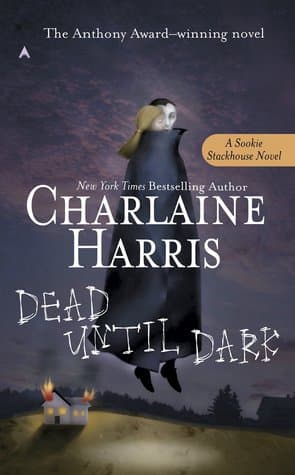
- Dead Until Dark
Charlaine Harris
4.0 (496k) average on GoodreadsFantasyFeatures a human protagonist navigating a world of supernatural creatures and vampire politics with a blend of mystery and romance.
- Moon Called
Patricia Briggs
4.2 (176k) average on GoodreadsFantasyUrban fantasy with a strong, independent female lead who is an enforcer in the supernatural community and deals with shifters and vampires.
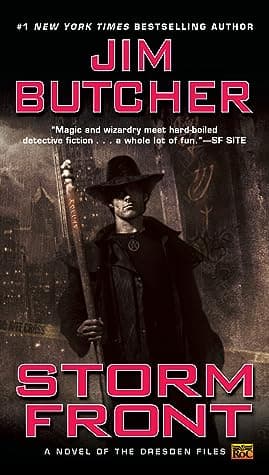
- Storm Front
Jim Butcher
4.0 (294k) average on GoodreadsFantasyA detective-style urban fantasy where a magic-user solves supernatural crimes in a modern city, albeit from a male perspective.
- Harry Potter and the Sorcerer's Stone
J.K. Rowling
4.5 (7M) average on GoodreadsFantasyRescued from a miserable life under the stairs, an orphaned boy discovers he's a wizard destined for a magical school, where he uncovers a dangerous secret tied to the dark wizard who murdered his parents.
- The Hunger Games
Suzanne Collins
4.3 (6.4M) average on GoodreadsFantasyIn a future where children fight to the death on live television, Katniss Everdeen volunteers for the arena, turning a death sentence into a fight for survival and a spark of rebellion.
- 1984
George Orwell
4.2 (3.1M) average on GoodreadsPoliticsIn a future where surveillance and thought control are absolute, a man's search for truth clashes with the Party, showing that hope can be a form of rebellion.




Enjoyed the summary?
A summary gives you the shape of the book. The book itself has the detail, the examples and the voice.
Find Guilty Pleasures on AmazonAs an Amazon Associate, BookBrief earns from qualifying purchases. How we're funded