
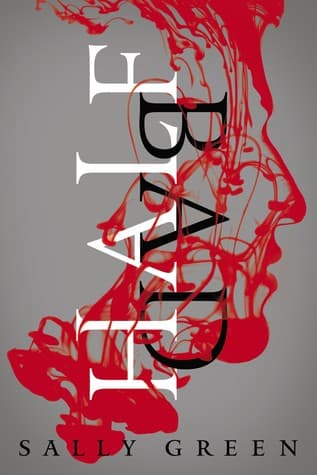
Synopsis
Covers the whole plot, including the ending.
- Difficulty
- Medium
- Pacing
- Fast
- Mood
- Dark, Suspenseful, Gritty, Alienating, Hopeful (at times)
- Read it if
- You enjoy dark, gritty YA fantasy with a strong focus on survival, identity, and moral ambiguity, featuring a protagonist who is an outcast.
- Skip it if
- You prefer lighthearted fantasy, shy away from violence and gore, or dislike morally grey characters and a bleak atmosphere.
Half Bad Plot Summary
Covers the whole plot, including the ending.
A Life in a Cage
Nathan Byrn is a sixteen-year-old half-code witch, the son of a White Witch mother, Corrine, and the notorious Black Witch, Marcus Edge. From birth, the White Witch Council, fearing his heritage, treats him as an outcast. He lives with his grandmother and half-siblings, Deborah, Arran, and Jessica, but White Witches, especially Celia, constantly monitor, test, and abuse him. He is often kept in a literal cage, subjected to painful tests and denied basic freedoms. His older sister, Jessica, hates him intensely, while Arran and Deborah show him some kindness, often in secret. Nathan lives in constant fear and longs for acceptance, knowing he must receive his three gifts on his seventeenth birthday to survive.
Escape and First Encounters
After another brutal incident where Celia and the Council force Nathan to eat a live rat, he escapes. He flees into the woods, where he meets Annalise O'Brien, a White Witch his age. She is initially scared but soon curious about him. Despite the danger, they form a tentative friendship, meeting in secret. Their hidden meetings offer Nathan a rare taste of normal life and human connection. He also has a brief, unsettling encounter with Gabriel, a Black Witch who saves him from a White Witch hunter, leaving Nathan unsure who to trust.
Betrayal and Capture
Jessica discovers Nathan's secret relationship with Annalise. Consumed by her deep hatred and fear, she reports him to the Council. This betrayal leads to Nathan's recapture. He faces even more horrific treatment, including being locked in a cage suspended over a cliff, tortured, and starved. The White Witches try to get information about Marcus from him, believing he has communicated with his father. During this time, Nathan's resolve strengthens, and he becomes increasingly desperate to escape and find Marcus before his seventeenth birthday, which is fast approaching.
The Hunter's Training
Instead of being executed, Nathan is forced into a hunter's program, trained by a harsh but practical White Witch named Mercury. He learns combat skills, how to track and kill Black Witches, and how to survive in the wilderness. This period is a brutal indoctrination, where Nathan must participate in hunts and witness the execution of Black Witches. He is given a special knife and learns to use his half-code abilities to his advantage, though under duress. This training, while terrible, sharpens his survival instincts and fighting ability, making him more formidable.
Escape to France and Gabriel's Help
Nathan takes an opportunity to escape his hunter handlers. Wounded, he flees and eventually finds Gabriel, the Black Witch he met before. Gabriel, a kind and mysterious figure, helps Nathan heal and offers him refuge. Together, they travel to France, a known haven for Black Witches. During their journey, Nathan learns more about the world of witches beyond the prejudiced views of the White Council. Gabriel shares his own struggles and the complex politics between the factions, slowly earning Nathan's trust and becoming a vital ally in his quest to find Marcus.
The Search for Marcus
In France, Nathan and Gabriel continue their search for Marcus. They navigate the dangerous underworld of Black Witches, where allegiances change easily and trust is rare. Gabriel uses his connections and knowledge to guide Nathan, leading them to various contacts and hidden locations. They learn that Marcus is a powerful and elusive figure, feared by both White and Black Witches, and that finding him will be incredibly difficult. Nathan's seventeenth birthday nears, making their mission more urgent, as not receiving his gifts means certain death.
Encounter with Marcus
Nathan and Gabriel eventually track Marcus to a remote, heavily guarded location. The reunion is not what Nathan expected. Marcus is cold, calculating, and seems indifferent to Nathan's situation. Instead of the three traditional gifts, Marcus gives Nathan only one: a vial of his own blood, forcing Nathan to drink it. This brutal act is Marcus's way of transferring some of his power, a dark and painful initiation that marks Nathan as a Black Witch and gives him a potent, though raw, ability. The encounter leaves Nathan both empowered and deeply disturbed by his father's nature.
The Attack and Annalise's Fate
Shortly after Nathan receives his first gift, the White Witches, led by Celia and hunters, launch a surprise attack on Marcus's hideout. In the chaos, Nathan finds Annalise, who has been captured and brought there, likely as bait or a hostage. Faced with a choice between saving Annalise or escaping, and realizing the danger she poses to him, Nathan makes the agonizing decision to kill her. This act, while horrifying, solidifies his survival instinct and breaks his last ties to his former life, immersing him fully in the brutal reality of the witch war.
The Aftermath and New Powers
After the attack and Annalise's death, Nathan is reeling. He struggles with immense guilt and trauma from what he was forced to do, but also with the growing, dark powers he inherited from Marcus. His abilities appear in violent and unpredictable ways, reflecting his inner turmoil. Gabriel stays by his side, offering support and trying to help Nathan understand and control his new gifts. Nathan is now undeniably a Black Witch, marked by his father's blood and his own brutal choices, and the path ahead is uncertain and full of danger.
A New Path and a Glimmer of Hope
With his seventeenth birthday passed and his first gift received, Nathan is no longer just a half-code; he is a powerful, though untrained, Black Witch. He, along with Gabriel, retreats further into the Black Witch community, seeking other allies and trying to understand the broader conflict between the factions. Nathan begins to realize that he must make his own way, not simply follow Marcus's, and that his unique heritage might be both a curse and a strength. Despite the darkness of his journey, a glimmer of hope remains that he can find a way to survive and perhaps even bring about change in a world that has always sought to destroy him.
Principal Figures
Nathan Byrn
Protagonist
A half-code witch, son of a White Witch and the most feared Black Witch, Marcus Edge.
Nathan is a resilient and deeply conflicted teenager. Born into a world that despises him for his heritage, he endures constant abuse and isolation from the White Witch Council. Despite the brutality he faces, he yearns for acceptance, love, and a sense of belonging. He is resourceful, determined, and possesses an innate will to survive. His internal struggle between his inherited darkness and his desire for goodness forms the core of his character. He is driven by the need to receive his gifts to live and to understand his true identity.
Relationships: Marcus Edge (Biological father, source of both terror and power, a mentor figure by force); Corrine Byrn (Deceased mother, White Witch); Jessica Byrn (Half-sister, main antagonist among his family, deeply resentful and fearful of him); Arran Byrn (Half-brother, kind and protective, one of Nathan's few allies); Deborah Byrn (Half-sister, generally kind and supportive); Annalise O'Brien (White Witch, Nathan's love interest, represents a connection to a normal life); Gabriel (Black Witch, friend, protector, and guide); Celia (White Witch Council enforcer, Nathan's primary tormentor)
Marcus Edge
Antagonist/Mentor
The most powerful and feared Black Witch, Nathan's father.
Marcus is an enigmatic and ruthless figure, a legendary Black Witch responsible for countless atrocities and feared by both factions. He is driven by a desire for power and survival, operating with a cold, pragmatic logic. He shows little emotional connection to Nathan, viewing him more as an extension of his own power and a means to an end. His methods are brutal, and he embodies the darkest aspects of Black Witch magic. Despite his cruelty, he holds the key to Nathan's survival and power, acting as a paradoxical mentor.
Relationships: Nathan Byrn (Biological son, recipient of his dark gifts); Corrine Byrn (Nathan's mother, former lover)
Gabriel
Supporting
A kind and resourceful Black Witch who becomes Nathan's trusted ally.
Gabriel is a Black Witch who initially appears enigmatic but quickly proves to be one of Nathan's most loyal and compassionate allies. He is intelligent, resourceful, and possesses a strong moral compass despite his affiliation with the Black Witches. He has a deep understanding of the witch world and its dangers, often acting as Nathan's guide and protector. He is driven by a desire to help Nathan survive and navigate his complicated heritage, offering a counterpoint to the brutality Nathan experiences from both factions.
Relationships: Nathan Byrn (Close friend, protector, and guide)
Annalise O'Brien
Supporting
A White Witch who forms a forbidden romantic bond with Nathan.
Annalise is a White Witch who, despite her upbringing, is curious and compassionate. She is initially afraid of Nathan due to his reputation but quickly sees beyond the prejudice to the person underneath. She represents Nathan's longing for normalcy, love, and acceptance. Her relationship with Nathan is a dangerous secret, symbolizing the possibility of bridging the divide between the factions, however briefly. She is kind, gentle, but ultimately vulnerable to the harsh realities of the witch world.
Relationships: Nathan Byrn (Love interest, secret friend)
Jessica Byrn
Antagonist
Nathan's older half-sister, consumed by hatred and fear of him.
Jessica is Nathan's older half-sister, a White Witch who harbors intense hatred and fear towards him, fueled by the Council's propaganda and her own insecurities. She is cruel, manipulative, and deeply prejudiced, often leading the charge in tormenting Nathan. Her actions are driven by a desperate desire to protect her family and uphold the White Witch hierarchy, even if it means betraying her own brother. She sees Nathan as a monstrous threat that must be eliminated.
Relationships: Nathan Byrn (Half-brother, object of her hatred and fear); Arran Byrn (Brother); Deborah Byrn (Sister)
Arran Byrn
Supporting
Nathan's kind and protective half-brother.
Arran is Nathan's half-brother, a White Witch who, unlike Jessica, shows genuine affection and concern for Nathan. He often tries to protect Nathan from Jessica's cruelty and the Council's abuse, offering him small acts of kindness and support. He represents the potential for empathy and compassion within the White Witch community, even when it goes against the prevailing prejudice. He is loyal to Nathan, even if he cannot openly defy the Council.
Relationships: Nathan Byrn (Half-brother, protector); Jessica Byrn (Sister); Deborah Byrn (Sister)
Celia
Antagonist
A ruthless White Witch enforcer who relentlessly persecutes Nathan.
Celia is a prominent member of the White Witch Council and one of Nathan's primary tormentors. She is cold, calculating, and utterly convinced of Nathan's inherent evil due to his Black Witch heritage. She oversees much of his abuse and imprisonment, driven by a rigid adherence to White Witch laws and a deep-seated fear of Marcus Edge. She embodies the institutional prejudice and brutality that Nathan faces, showing no mercy or empathy.
Relationships: Nathan Byrn (Captor and tormentor)
Mercury
Supporting
A pragmatic and powerful Black Witch who occasionally aids Nathan.
Mercury is a powerful and mysterious Black Witch who operates in the shadows. She is shrewd, cunning, and has a network of contacts throughout the witch world. While not overtly kind, she possesses a pragmatic understanding of power dynamics and sometimes aids Nathan, often with her own agenda in mind. She is not easily swayed by sentiment and represents a more neutral, self-serving aspect of the Black Witch community, offering Nathan a different perspective on survival.
Relationships: Nathan Byrn (Occasional ally, informant)
Themes & Insights
Identity and Belonging
Nathan's struggle to define himself in a world that calls him an 'abomination' is central. He is half White Witch and half Black Witch, belonging to neither side and feared by both. This internal and external conflict drives his quest for survival and understanding. He constantly questions who he is meant to be, especially as he is forced to accept his darker heritage. The pressure to choose a side, or to make his own, is a constant burden. This is clearly shown in his forced training as a hunter, making him kill Black Witches, and later by Marcus's brutal gift, forcing him to consume his father's blood.
“You're a half-code, Nathan. You're nothing. You're an abomination.”
Prejudice and Discrimination
The novel clearly shows how damaging prejudice is through Nathan's persecution. The White Witches, driven by fear and a strict belief in their own purity, subject Nathan to horrific abuse, imprisonment, and torture simply because of his family line. This systemic discrimination mirrors real-world issues of racism and xenophobia, showing how fear of the 'other' can lead to extreme cruelty. The White Witch Council's actions against Nathan are a constant reminder of how deeply rooted prejudice can be, even within families, as seen with Jessica's hatred.
“He's Black Witch. He's dangerous. He's evil.”
Survival and Resilience
Nathan's entire existence is a testament to his strong will to survive. Despite constant physical and mental torment, he clings to life and the hope of receiving his gifts. His resilience is tested repeatedly, from being caged and starved to being forced into a hunter's role. Each challenge, no matter how brutal, hardens him and strengthens his resolve. His desperate flight, his alliance with Gabriel, and his ultimate confrontation with Marcus are all driven by a basic need to live against impossible odds.
“I will survive. I have to.”
Love and Betrayal
Nathan experiences both deep love and devastating betrayal. His tentative, forbidden romance with Annalise offers him a rare glimpse of human connection and acceptance, representing a fragile hope for a different life. However, this love ends tragically, leading to his agonizing decision to kill her. Conversely, the betrayal by his sister, Jessica, and the coldness of his father, Marcus, highlight the dangers of misplaced trust and the harsh realities of his world. These experiences shape his understanding of relationships and survival.
“I loved her. And I killed her.”
The Nature of Good and Evil
The book questions simple ideas of good and evil, particularly through the 'white' versus 'black' witch divide. While White Witches are supposedly good, their actions towards Nathan are often monstrously cruel. Conversely, Black Witches, though feared, are not all inherently evil, as Gabriel's kindness shows. Nathan himself is a mix of both, forcing him and the reader to question whether actions or lineage define one's morality. His transformation into a Black Witch through Marcus's gift blurs these lines further, suggesting that power itself is neutral, and how it is used determines its moral alignment.
“There is no good or bad. There is only power, and those too weak to seek it.”
Plot Devices & Literary Techniques
The Three Gifts
A magical coming-of-age ritual vital for a witch's survival.
On a witch's seventeenth birthday, they must receive three gifts from their parent (or a close relative) to fully come into their powers and survive the transition to adulthood. Failure to receive these gifts results in death. This serves as the primary ticking clock and driving force for Nathan's quest. It highlights the patriarchal and traditional aspects of witch society and the unique danger Nathan faces as an orphan of a Black Witch, making his survival hinge on finding Marcus, his feared father.
The Cage
A literal and symbolic prison for Nathan.
Nathan is frequently confined to a literal cage by the White Witch Council, symbolizing his physical imprisonment and the mental and emotional isolation he endures. It represents the prejudice and fear that surround him, as well as the Council's desire to control and contain what they deem dangerous. The cage is a constant reminder of his status as an 'abomination' and the dehumanizing treatment he receives, fueling his desperate desire for freedom and self-determination.
First-Person Present Tense Narration
Immersive and immediate perspective of Nathan's experiences.
The story is told entirely from Nathan's perspective in the present tense. This narrative choice creates an immediate, visceral, and intense reading experience, allowing the reader to directly feel Nathan's pain, fear, and desperation. It immerses the reader in his subjective reality, making his struggles and emotional turmoil deeply personal. This also limits the reader's knowledge to only what Nathan perceives, enhancing the sense of danger and uncertainty in a world where trust is scarce.
The Half-Code Identity
A unique, stigmatized genetic heritage.
Nathan's 'half-code' status, being the child of a White Witch and a Black Witch, is not just a genetic descriptor but a powerful plot device that drives the entire narrative. It immediately sets him apart, making him an outcast and target for both factions. This identity is the root of all the prejudice and abuse he suffers, but also potentially the source of unique, powerful abilities. It forces him to navigate a morally ambiguous world, embodying the conflict between the two warring factions within himself.
Half Bad Quotes
“The only way to get through this is to be stronger than them. To be harder than them. To be more like them than they are.”
“You can be good or you can be bad. But you can't be both.”
“I hate being half-anything. I hate that I'm not whole. I hate that I'm always going to be half-something.”
“Sometimes the only way to stay alive is to be a monster.”
“Fear can be a useful tool.”
“You can't choose your family, but you can choose who you let into your heart.”
“The world isn't black and white. It's a million shades of grey.”
“Being different doesn't make you weak. It makes you unique.”
“Love is a dangerous thing. It makes you weak.”
“I'm not a monster. Not yet.”
“You don't need magic to be powerful. You need will.”
“Sometimes the things you hate the most are the things that save you.”
“Trust no one. Not even yourself.”
“Every choice has a consequence. Even not choosing.”
Quiz
10 questions on the plot and the characters. Each answer comes with a short explanation.
Question 1
What is Nathan's lineage that makes him an 'abomination' in the eyes of the witch community?
- He is the son of two White Witches.
- He is the son of a Black Witch mother and a human father.
- He is the son of a White Witch mother and a Black Witch father.
- He is a human adopted by witches.
Show answer
C. He is the son of a White Witch mother and a Black Witch father. Nathan is considered an abomination because he is the illegitimate son of a White Witch mother and the most feared Black Witch, Marcus.
Question 2
What significant event must happen by a witch's seventeenth birthday for them to fully come into their powers?
- They must perform their first spell.
- They must receive three gifts from a close relative.
- They must defeat another witch in combat.
- They must be initiated into their coven.
Show answer
B. They must receive three gifts from a close relative. A witch must receive three gifts from a blood relative by their seventeenth birthday to fully receive their powers. Without them, they will die.
Question 3
Who is Gabriel, and what is his initial role in Nathan's life?
- He is a White Witch hunter assigned to track Nathan.
- He is a Black Witch who helps Nathan escape a cage.
- He is a Fain (human) who befriends Nathan and later becomes a key ally.
- He is Nathan's half-brother who betrayed him.
Show answer
C. He is a Fain (human) who befriends Nathan and later becomes a key ally. Gabriel is a Fain (human) who Nathan meets while imprisoned. He helps Nathan escape and becomes a crucial ally and friend.
Question 4
What is the primary motivation for the White Witch Council's constant surveillance and mistreatment of Nathan?
- They want to train him to become a White Witch assassin.
- They fear he will follow in his father Marcus's violent footsteps and turn against them.
- They believe he possesses a rare magical artifact.
- They want to use him as a bargaining chip with the Black Witches.
Show answer
B. They fear he will follow in his father Marcus's violent footsteps and turn against them. The White Witch Council fears Nathan due to his lineage as the son of Marcus, the most dangerous Black Witch, and believes he is destined to become just as violent.
Question 5
What is Nathan's relationship with Annalise, and how does it evolve throughout the story?
- She is his half-sister who always hated him.
- She is a White Witch friend who ultimately betrays him.
- She is a White Witch he falls in love with, but their relationship is complicated by their opposing factions and her family's prejudice.
- She is a Black Witch who helps him find Marcus.
Show answer
C. She is a White Witch he falls in love with, but their relationship is complicated by their opposing factions and her family's prejudice. Annalise is a White Witch Nathan falls in love with. Their relationship is fraught with tension due to their opposing factions and her family's deep-seated prejudice against him.
Question 6
Which of Nathan's half-siblings is consistently kind and protective towards him, despite the family's general animosity?
- Aaron
- Jessica
- Deborah
- Neal
Show answer
C. Deborah Deborah, one of Nathan's older half-sisters, often shows him kindness and tries to protect him from the worst of the family's abuse.
Question 7
What is the primary danger Nathan faces if he fails to receive his gifts by his seventeenth birthday?
- He will be permanently stripped of all magical abilities.
- He will be forced to join the Black Witch faction.
- He will die.
- He will be exiled from England forever.
Show answer
C. He will die. The crucial detail about the gifts is that a witch will die if they do not receive them by their seventeenth birthday, making Nathan's quest a race against time.
Question 8
What significant act of rebellion does Nathan commit early in the book that solidifies his status as a target for the White Witch Council?
- He publicly curses one of the Council members.
- He helps a captured Black Witch escape.
- He kills a White Witch hunter who was tormenting him.
- He steals a powerful artifact from a White Witch vault.
Show answer
C. He kills a White Witch hunter who was tormenting him. Nathan kills a White Witch hunter, Souther, who was tormenting him, an act that confirms the Council's fears about his violent potential and makes him a prime target.
Question 9
What is the true nature of Marcus's gifts, and how does Nathan ultimately receive them?
- Marcus gives him three magical weapons, bestowed in a ritual.
- Marcus gifts him a potion, a spell, and a familiar, given willingly.
- Marcus gives him a knife, a vial of his blood, and a piece of his flesh, which Nathan must take by force.
- Marcus offers him three ancient texts, which Nathan reads.
Show answer
C. Marcus gives him a knife, a vial of his blood, and a piece of his flesh, which Nathan must take by force. Marcus's gifts are not willingly given; Nathan must take them by force. They consist of a knife, a vial of Marcus's blood, and a piece of his flesh.
Question 10
What does the 'Half Bad' title primarily refer to in the context of Nathan's identity and struggles?
- He is only partially skilled in magic.
- He is half-human and half-witch.
- He is half White Witch and half Black Witch, constantly battling his inherited 'good' and 'bad' natures.
- He is only half-trained as a witch, lacking proper guidance.
Show answer
C. He is half White Witch and half Black Witch, constantly battling his inherited 'good' and 'bad' natures. The title 'Half Bad' directly refers to Nathan's mixed heritage as the son of a White Witch and a Black Witch, symbolizing the internal conflict and external prejudice he faces due to his dual nature.
Half Bad FAQ
What is the core conflict Nathan faces throughout the story, beyond just escaping his cage?
Nathan's core conflict is his struggle for identity and belonging. As a half-Black, half-White witch, he is an outcast from both factions, constantly battling the prejudice and fear directed at him due to his parentage, especially being Marcus's son. He yearns for acceptance but is continually met with hostility and suspicion.
What are the 'three gifts' Nathan must receive, and why are they so crucial for him?
The three gifts are symbolic objects or actions from his father, Marcus, that are essential for Nathan to fully come into his magical powers on his seventeenth birthday. Without them, he will die. These gifts typically consist of a magical item, a drop of the father's blood, and a specific ritual or blessing, though Marcus's gifts prove to be unconventional.
Who is Marcus, and what is his reputation among the witch communities?
Marcus is Nathan's father and is widely regarded as the most powerful, ruthless, and terrifying Black witch in existence. He is responsible for countless deaths and atrocities, making him a legendary figure of fear and hatred among both White and Black witches. His reputation casts a long, dangerous shadow over Nathan's life.
What role does Annalise play in Nathan's early life and subsequent journey?
Annalise is a White witch and Nathan's first love interest. She represents a brief period of normalcy and affection in his otherwise brutal existence, offering him a glimpse of a life where he might be accepted. However, her family's allegiance and the war between the factions ultimately force her to make choices that deeply impact Nathan, leading to betrayal and heartbreak.
What are the key differences between White Witches and Black Witches in this world?
White Witches are generally associated with 'good' magic, healing, and traditional covens, often living in more open communities. Black Witches, in contrast, are typically portrayed as practitioners of 'dark' magic, often solitary or in smaller, more secretive groups, and are feared for their destructive powers and willingness to kill. The narrative challenges these simple distinctions.
What is the significance of Nathan's eyes, and how do they reflect his heritage?
Nathan's eyes are a striking detail: one is green (like his mother) and the other is black (like his father, Marcus). This heterochromia is a physical manifestation of his mixed heritage and the internal conflict he faces, constantly reminding others and himself of his dual nature as both a White and Black witch.
How does Celia's treatment of Nathan subtly reveal the deep-seated prejudice within the White Witch community?
Celia, Nathan's half-sister, subjects him to brutal physical and emotional abuse, keeping him caged and tortured, ostensibly to 'train' him. Her actions, sanctioned by the Council, highlight the extreme fear and hatred directed at Nathan solely because of his Black witch father, demonstrating how prejudice can twist even familial bonds and justify cruelty.
What is the true nature of Marcus's 'gifts' to Nathan, and how do they differ from traditional expectations?
Marcus's gifts are not conventional, benevolent presents but rather a transfer of his own power and a brutal lesson in survival. He essentially forces Nathan to consume parts of him and his magic, a painful and terrifying process that ensures Nathan's survival and power, but also deeply scars him. This deviates sharply from the expected symbolic items.
What is the 'Hunter's Mark' and what does it signify for a witch?
The Hunter's Mark is a distinct, often painful, magical tattoo or brand that appears on a witch who has killed another witch. It signifies a profound shift in their magical capabilities and often marks them as a powerful, dangerous individual, capable of wielding significant destructive power. Nathan eventually receives this mark.
How does Nathan's constant experience of being caged or confined impact his psychological development?
Nathan's repeated caging and confinement foster a deep-seated trauma, a sense of powerlessness, and an intense desire for freedom and control over his own destiny. It contributes to his distrust of others and his fierce independence, shaping him into a survivor who is constantly on guard and willing to fight for his autonomy.
Discuss the psychological impact of Nathan's isolation and lack of genuine human connection for most of his life.
Nathan's extreme isolation leads to profound emotional stuntedness and a struggle with forming healthy attachments. He craves connection but is wary of it, often pushing people away or struggling to understand social nuances. This isolation fuels his loneliness but also forces him to rely solely on himself, developing immense resilience.
How does the internalized prejudice Nathan faces affect his self-perception and his understanding of his own power?
Nathan internalizes much of the fear and hatred directed at him, leading to self-loathing and a struggle to accept his Black witch heritage and power. He initially views his abilities as a curse, fearing he will become like Marcus. This internal conflict makes him hesitant to fully embrace his strength, even as it is necessary for survival.
How does Gabriel's unwavering loyalty and support provide a crucial psychological anchor for Nathan?
Gabriel provides Nathan with his first real, unconditional friendship and loyalty, acting as a vital psychological anchor. In a world full of betrayal and suspicion, Gabriel's steadfast presence offers Nathan a rare sense of trust, acceptance, and even levity, helping to counteract the pervasive loneliness and trauma Nathan experiences.
Is Marcus truly evil, or is his character more complex than initially portrayed, especially regarding his actions towards Nathan?
Marcus's character is more complex. While undeniably brutal and violent, his actions towards Nathan, though terrifying, are ultimately aimed at ensuring his son's survival and power in a hostile world. He teaches Nathan harsh lessons in a harsh way, suggesting a twisted form of paternal care rather than pure malice, making his 'evil' debatable.
How does the book challenge the simplistic 'good vs. evil' dichotomy presented by the White and Black witch factions?
The book consistently blurs the lines between good and evil. White Witches, like Celia and the Council, are shown to be cruel and prejudiced, while some Black Witches, like Gabriel, display kindness and loyalty. Nathan himself, a mix of both, embodies this ambiguity, suggesting that morality is a personal choice rather than inherent to one's faction.
To what extent is Nathan a victim of circumstance versus an active agent shaping his own destiny?
Nathan begins as a profound victim of circumstance, born into a war he didn't choose and subjected to brutal treatment. However, his indomitable will to survive, his repeated escapes, and his active pursuit of Marcus demonstrate his evolving agency. He increasingly makes his own choices, even if those choices are forced by his circumstances, becoming a powerful agent.
What is the symbolic meaning of Nathan's constant physical pain and injuries throughout the narrative?
Nathan's constant physical pain and injuries symbolize the enduring trauma he carries, both from his past abuse and the ongoing violence of his world. It represents the literal cost of his survival and the burden of his identity, a physical manifestation of his suffering and resilience. His scars tell the story of his fight.
How does Annalise's betrayal contribute to Nathan's development, and is her decision understandable given her circumstances?
Annalise's betrayal, though devastating for Nathan, forces him to confront the harsh realities of his world and solidifies his distrust of others, pushing him towards self-reliance. Her decision, driven by fear and loyalty to her family and faction, is understandable within the context of the intense witch war, though it remains a painful blow to Nathan.
About the author

Sally Green is a British author known for her young adult fiction. She is best recognized for her "Half" trilogy, which includes "Half Bad," "Half Wild," and "Half Lost," exploring themes of magic and identity in a contemporary setting. Her works have garnered attention for their unique take on the fantasy genre.
Similar books
- The Hunger Games
Suzanne Collins
4.3 (6.4M) average on GoodreadsFantasyFeatures a young protagonist fighting for survival in a dystopian world, facing constant danger and moral dilemmas.
- Red Queen
Victoria Aveyard
4.0 (565k) average on GoodreadsFantasyExplores themes of power, rebellion, and a protagonist discovering hidden abilities in a society divided by blood.
- Shatter Me
Tahereh Mafi
4.0 (291k) average on GoodreadsFantasyFollows a protagonist with dangerous powers, confined and feared, who must learn to control them and fight for freedom.
- Six of Crows
Leigh Bardugo
4.4 (316k) average on GoodreadsFantasyWhile both books feature morally grey characters and a gritty world, Six of Crows excels in intricate world-building, a highly developed magic system (Grishaverse), and complex ensemble character dynamics. Half Bad is more singularly focused on Nathan's internal journey and less on the mechanics of its world or a diverse cast of viewpoint characters. Bardugo's plotting is often lauded for its ingenious heists and twists, while Green's narrative, though compelling, is more linear and character-driven.
- Harry Potter and the Sorcerer's Stone
J.K. Rowling
4.5 (7M) average on GoodreadsFantasyRescued from a miserable life under the stairs, an orphaned boy discovers he's a wizard destined for a magical school, where he uncovers a dangerous secret tied to the dark wizard who murdered his parents.
- 1984
George Orwell
4.2 (3.1M) average on GoodreadsPoliticsIn a future where surveillance and thought control are absolute, a man's search for truth clashes with the Party, showing that hope can be a form of rebellion.



Enjoyed the summary?
A summary gives you the shape of the book. The book itself has the detail, the examples and the voice.
Find Half Bad on AmazonAs an Amazon Associate, BookBrief earns from qualifying purchases. How we're funded