

Synopsis
Covers the whole plot, including the ending.
- Difficulty
- Hard
- Pacing
- Variable
- Mood
- Dark, Philosophical, Tragic, Suspenseful
- Read it if
- You enjoy classic tragedies, complex character studies, and exploring themes of revenge, madness, and morality.
- Skip it if
- You prefer lighthearted stories with clear heroes and villains, or find Elizabethan language challenging.
Hamlet Plot Summary
Covers the whole plot, including the ending.
The Ghost's Appearance and Hamlet's Distress
On the castle walls of Elsinore, guards Bernardo and Marcellus, with Hamlet's friend Horatio, see a ghost that looks like the dead King Hamlet. Horatio, at first doubtful, believes it after seeing it and hearing the guards. They decide to tell Prince Hamlet, who is deep in mourning for his father and upset by his mother Gertrude's quick marriage to his uncle Claudius, now the new King of Denmark. Hamlet feels betrayed and disgusted by the fast remarriage, seeing it as an unholy act and a sign of his mother's weakness. This puts him in a deep sad state even before he hears about the ghost.
The Ghost's Revelation and Hamlet's Oath
Hamlet meets his father's Ghost, who reveals a shocking truth: he was not killed by a snakebite as everyone thought, but poisoned by his brother Claudius, who poured poison into his ear while he slept. The Ghost describes his suffering in Purgatory and asks Hamlet to get revenge for his 'most foul, strange, and unnatural murder.' He tells Hamlet to spare Queen Gertrude, leaving her to her own guilt. Overwhelmed and angry, Hamlet vows to focus entirely on this revenge, sending away his friends and pretending to be mad to hide his true plans against Claudius.
Hamlet's 'Antic Disposition' and Ophelia's Distress
Following the Ghost's order, Hamlet pretends to be mad, acting strangely and speaking in riddles. His odd behavior greatly upsets Ophelia, his love interest, whom he treats with confusing coldness and harshness, further making the court believe he is insane. Polonius, Ophelia's father and the King's chief advisor, thinks Hamlet's madness comes from being lovesick for Ophelia and tells Claudius and Gertrude this. Claudius, however, suspects Hamlet's behavior is more than lovesickness and begins to worry about his own safety, starting a plan to watch Hamlet more closely.
The Mousetrap Play
To test the Ghost's claims, Hamlet plans to hire a group of traveling actors to perform 'The Murder of Gonzago.' He changes the play with extra lines to closely match how his father was murdered. During the performance, as the play shows the poisoning of the king, Claudius reacts strongly, standing up suddenly and demanding the play stop. His panicked reaction confirms his guilt to Hamlet. This moment is a turning point, solidifying Hamlet's decision for revenge and making the dangerous game between him and Claudius more intense.
Polonius's Death and Hamlet's Confrontation with Gertrude
After the play, Hamlet's mother sends for him. Polonius, believing he can find the reason for Hamlet's madness, hides behind a curtain in Gertrude's room to listen to their talk. During a heated argument with his mother, Hamlet hears a noise, assumes it is Claudius spying, and impulsively stabs through the tapestry, killing Polonius. This accidental murder has serious results, making the conflict worse and giving Claudius a reason to send Hamlet away. Hamlet then confronts Gertrude about her quick marriage and Claudius's betrayal, urging her to feel remorse.
Hamlet's Exile and Ophelia's Madness
Claudius, now afraid of Hamlet and using Polonius's death as an excuse, orders Hamlet to be sent to England. He pretends it is for Hamlet's safety, but secretly sends letters instructing that Hamlet be executed. Meanwhile, the grief and shock of her father Polonius's sudden death, along with Hamlet's cruel rejection and exile, drive Ophelia into deep madness. She walks around the castle singing broken songs, giving out flowers with symbolic meanings, and speaking nonsense. She is a tragic victim of the court's schemes and Hamlet's revenge plan.
Laertes's Return and Conspiracy
Laertes returns from France, angry and heartbroken by his father Polonius's death and his sister Ophelia's later madness. He storms the castle, demanding answers and revenge. Claudius, always manipulative, cleverly turns Laertes's anger from himself to Hamlet, convincing him that Hamlet is fully responsible for their family's suffering. Together, they plan a treacherous scheme: a fencing match between Hamlet and Laertes, where Laertes's sword will be unblunted and poisoned, and Claudius will have a poisoned drink for Hamlet as a backup.
Ophelia's Death and the Gravedigger Scene
Ophelia, in her madness, drowns in a brook, either by accident or by suicide, her arms full of flowers. Her tragic death further fuels Laertes's wish for revenge. Before her funeral, Hamlet and Horatio meet two gravediggers, who offer dark humor and thoughts on life and death. Hamlet famously holds the skull of Yorick, a former court jester, thinking about how short life is and how decay is unavoidable. This deepens his thoughts on existence before he learns of Ophelia's death and confronts Laertes at her burial.
The Fencing Match and Multiple Deaths
The fencing match between Hamlet and Laertes begins. Claudius offers Hamlet a poisoned drink, which Gertrude unknowingly drinks instead, dying quickly. Laertes wounds Hamlet with the poisoned sword. In the struggle, Hamlet disarms Laertes and, in a fit of rage, uses the poisoned sword to wound Laertes. Laertes, dying, confesses the plot and names Claudius. Angry, Hamlet then stabs Claudius with the poisoned sword and forces him to drink the remaining poisoned wine, ensuring his death. Hamlet, mortally wounded, dies shortly after, asking Horatio to tell his story.
Fortinbras's Arrival and the New Order
As Hamlet dies, Fortinbras, the Prince of Norway, arrives with his army, returning from a successful campaign. He is shocked to find the entire Danish royal court dead. Horatio, loyal to the end, promises to tell the full, tragic story of Hamlet and the events that led to the royal family's end. Fortinbras, seeing the carnage, claims the Danish throne, which Hamlet, with his dying breath, had supported. He orders a military funeral for Hamlet, acknowledging his princely status and signaling a new, more stable time for Denmark.
Hamlet Characters
Hamlet
Protagonist
The melancholic Prince of Denmark, burdened by his father's murder and mother's hasty remarriage.
Hamlet is a complex and highly intelligent young man, deeply philosophical and prone to introspection. He is educated, sensitive, and deeply moral, making him ill-suited for the brutal world of political intrigue and revenge. His primary drive is to avenge his father's murder, but he is plagued by doubt, indecision, and a profound sense of moral disgust with the world around him. He struggles with the ethics of vengeance, the nature of existence, and the authenticity of human actions, often using wit and feigned madness as coping mechanisms.
Relationships: King Hamlet (Ghost) (Father, source of his mission of revenge); Claudius (Uncle and stepfather, his father's murderer and his sworn enemy); Gertrude (Mother, whose hasty marriage deeply wounds and disgusts him); Ophelia (Love interest, whom he treats with confusing cruelty amidst his feigned madness); Horatio (Best friend and confidant, his sole trusted ally); Polonius (Courtier and Ophelia's father, whom Hamlet accidentally kills); Laertes (Ophelia's brother and Polonius's son, Hamlet's eventual dueling opponent)
Claudius
Antagonist
The ambitious and calculating King of Denmark, who murdered his brother to seize the throne.
Claudius is Hamlet's uncle and the new King of Denmark, a cunning and Machiavellian politician. He is driven by ambition and lust for power, which led him to murder his own brother, King Hamlet, and marry his sister-in-law, Gertrude. He is intelligent and manipulative, capable of charming the court and maintaining a façade of benevolent leadership. However, he is also deeply guilt-ridden, as evidenced by his attempts at prayer, and increasingly paranoid as Hamlet's erratic behavior threatens to expose his crimes.
Relationships: King Hamlet (deceased) (Brother, whom he murdered); Gertrude (Wife and sister-in-law, a relationship born of ambition and lust); Hamlet (Nephew and stepson, his primary threat and eventual killer); Polonius (Chief counselor and loyal, albeit misguided, supporter); Laertes (Manipulated ally in his plot against Hamlet)
Gertrude
Supporting
The Queen of Denmark, Hamlet's mother, who quickly marries Claudius after her husband's death.
Gertrude is the Queen of Denmark and Hamlet's mother. Her hasty marriage to Claudius, her deceased husband's brother, deeply troubles Hamlet and is a central catalyst for his despair. She appears to be more concerned with maintaining her status and comfort than with moral introspection, though her true complicity in Claudius's crimes is ambiguous. She genuinely loves Hamlet, but struggles to understand his grief and 'madness,' often caught between her son and her new husband. She ultimately dies by accidentally drinking the poisoned wine intended for Hamlet.
Relationships: King Hamlet (deceased) (Husband); Claudius (Husband, a relationship that sparks Hamlet's disgust); Hamlet (Son, whose pain she struggles to comprehend and alleviate)
Ophelia
Supporting
Polonius's daughter and Hamlet's love interest, who descends into madness and death.
Ophelia is a young, beautiful, and innocent noblewoman, daughter of Polonius and sister to Laertes. She is deeply in love with Hamlet, but is caught between her affections for him and her obedience to her father and brother, who warn her against Hamlet's advances. She is a pawn in the court's schemes, manipulated by her father to spy on Hamlet. Hamlet's cruel rejection, his feigned madness, and the shocking murder of her father by Hamlet's hand ultimately drive her to madness and a tragic death by drowning, making her one of the play's most poignant victims.
Relationships: Hamlet (Love interest, their relationship is tragically broken); Polonius (Father, whom she dutifully obeys); Laertes (Brother, who advises her on Hamlet)
Polonius
Supporting
The Lord Chamberlain of Denmark, a verbose and meddling advisor to King Claudius.
Polonius is the chief counselor to King Claudius and the father of Ophelia and Laertes. He is characterized by his verbose, often self-important speeches filled with platitudes and clichés. While he sees himself as wise and cunning, he is largely a pompous and meddling figure, more concerned with appearances and perceived loyalty than with genuine insight. His constant spying and attempts to manipulate situations, particularly concerning Hamlet and Ophelia, ultimately lead to his accidental death at Hamlet's hand, becoming a catalyst for further tragedy.
Relationships: Claudius (King and master, whom he loyally advises); Ophelia (Daughter, whom he attempts to control and use); Laertes (Son, to whom he offers paternal, albeit lengthy, advice); Hamlet (Prince, whom he misjudges and spies upon)
Horatio
Supporting
Hamlet's loyal and trusted friend, a scholar and skeptic.
Horatio is Hamlet's closest and most trusted friend, a fellow student from Wittenberg. He is rational, loyal, and level-headed, serving as a foil to Hamlet's passionate and often erratic nature. He is initially skeptical of the Ghost's appearance but quickly becomes convinced and remains a steadfast confidant to Hamlet throughout the play, witnessing all the tragic events unfold. At the play's end, he is the sole survivor of the main characters, tasked by Hamlet to tell his story and preserve his memory.
Relationships: Hamlet (Best friend and confidant, his most trusted ally)
Laertes
Supporting
Polonius's son and Ophelia's brother, who seeks revenge for his family's deaths.
Laertes is a young, passionate, and impulsive nobleman, son of Polonius and brother to Ophelia. In contrast to Hamlet's contemplative nature, Laertes is a man of action, quick to anger and eager for revenge when his family is wronged. He returns from France distraught by his father's death and his sister's madness, becoming a willing tool in Claudius's manipulative hands. His desire for vengeance leads him to conspire in the poisoned duel against Hamlet, ultimately resulting in his own death and a shared fate with his intended victim.
Relationships: Polonius (Father, whose death he avenges); Ophelia (Sister, whose madness and death he mourns); Claudius (Manipulative ally in his revenge plot); Hamlet (His target for revenge, and eventual killer)
King Hamlet (Ghost)
Mentioned
The deceased King of Denmark, whose ghost reveals his murder and demands revenge.
The Ghost of King Hamlet is the spectral apparition of Hamlet's recently deceased father. He appears in full armor, initially to the guards and Horatio, and then to Hamlet alone. He reveals the shocking truth of his murder by his brother Claudius, describing the agony of his death and his current torment in Purgatory. He tasks Hamlet with the sacred duty of avenging his 'foul and most unnatural murder,' but specifically warns Hamlet not to harm his mother, Gertrude. The Ghost serves as the primary catalyst for the play's central conflict and Hamlet's quest for revenge.
Relationships: Hamlet (Son, to whom he entrusts his revenge); Claudius (Brother and murderer); Gertrude (Wife, whom he asks Hamlet to spare)
Rosencrantz and Guildenstern
Supporting
Two of Hamlet's childhood friends, summoned by Claudius to spy on him.
Rosencrantz and Guildenstern are Hamlet's childhood friends, summoned to Elsinore by King Claudius to ascertain the cause of Hamlet's melancholic and erratic behavior. They are largely indistinguishable from each other, serving as a pair of opportunistic, easily manipulated figures. Despite their past friendship with Hamlet, they prioritize the King's favor, attempting to glean information from Hamlet to report back to Claudius. Hamlet sees through their false pretenses and ultimately orchestrates their deaths in England, viewing them as tools of the corrupt court.
Relationships: Hamlet (Childhood friends, turned reluctant spies); Claudius (Their employer and manipulator)
Hamlet Themes
Revenge and Justice
The play looks at the complex and often harmful nature of revenge. Hamlet is told to avenge his father's murder, but his thoughts about the act, his moral doubts, and his delays show the difference between quick retaliation and a more thought-out form of justice. The play contrasts Hamlet's intellectual approach with Laertes's immediate, passionate desire for revenge, showing how both paths lead to tragic endings. In the end, the cycle of vengeance consumes everyone involved, showing that 'justice' achieved through violent revenge often causes more suffering instead of solving problems, as seen in the final scene where almost all main characters die.
“'Haste me to know't, that I, with wings as swift / As meditation or the thoughts of love, / May sweep to my revenge.”
Madness and Sanity
Madness is a main idea, shown through Hamlet's 'antic disposition' and Ophelia's real descent into insanity. Hamlet pretends to be mad to confuse his enemies and gain time, using it as a shield and a weapon to speak uncomfortable truths. However, the line between his fake madness and real emotional distress often blurs, raising questions about his true mental state. Ophelia's madness, caused by grief and betrayal, is shown as a tragic result of the corrupt court and Hamlet's actions, demonstrating how fragile the human mind is under extreme pressure. The theme questions what is real and what is perceived within the dangerous court.
“'Though this be madness, yet there is method in't.”
Mortality and Existentialism
Hamlet thinks deeply about death, decay, and the meaning of life. His famous 'To be or not to be' speech directly deals with the question of suicide and the fear of what comes after death. The gravedigger scene, with Hamlet holding Yorick's skull, serves as a powerful reminder of death, forcing him to face that death is universal and earthly achievements are ultimately unimportant. This theme looks at how short life is, how death is certain, and the philosophical struggle to find purpose in a world where everyone eventually turns to dust, influencing Hamlet's delays and his deep sadness.
“'To be, or not to be: that is the question.”
Corruption and Deceit
The state of Denmark is presented as corrupt, symbolized by the 'rotten' conditions after Claudius's illegal rise to the throne. Deceit runs through every part of society, from Claudius's murder and cover-up to Polonius's spying and Rosencrantz and Guildenstern's betrayal of Hamlet. Characters constantly spy on each other, twist the truth, and hide their real intentions behind false appearances. This widespread corruption poisons personal relationships, weakens justice, and ultimately leads to the tragic downfall of almost every main character, showing how moral decay in leadership can destroy an entire kingdom.
“'Something is rotten in the state of Denmark.”
Family and Betrayal
The play deeply examines how family bonds break down because of betrayal. Claudius betrays his brother by murdering him and his sister-in-law by marrying her too quickly, breaking natural and moral laws. Hamlet feels deeply betrayed by his mother's quick marriage, seeing it as a profound disloyalty to his father's memory and a personal insult. Ophelia is betrayed by Hamlet's cruel rejection and by her father's manipulation. These acts of family betrayal start the main conflict and drive the characters toward their tragic fates, showing how broken trust within a family can have terrible results for individuals and the state.
“'Frailty, thy name is woman!”
Plot Devices & Literary Techniques
The Ghost
A supernatural apparition that reveals the truth and demands revenge.
The Ghost of King Hamlet serves as the primary inciting incident, revealing the secret murder of the former king and directly tasking Hamlet with the burden of revenge. It introduces the supernatural element, challenging the audience's perception of reality and Hamlet's sanity. The Ghost's appearance immediately establishes the central conflict and Hamlet's tragic quest, setting the entire plot in motion and providing the moral imperative for Hamlet's actions, however delayed or convoluted they become.
The Play-Within-A-Play ('The Mousetrap')
A theatrical performance designed by Hamlet to confirm Claudius's guilt.
Hamlet's staging of 'The Murder of Gonzago,' which he renames 'The Mousetrap,' is a crucial plot device. It serves as an ingenious test of Claudius's guilt, providing irrefutable proof of his crime through his panicked reaction. This device allows Hamlet to move beyond doubt and commit fully to his revenge. It also highlights the power of theater to reveal truth and mirrors the meta-theatrical nature of the play itself, drawing the audience into Hamlet's intricate scheme and intensifying the dramatic tension.
Soliloquies
Extended speeches by characters alone on stage, revealing their inner thoughts and motivations.
Hamlet's numerous soliloquies are vital plot devices that grant the audience unparalleled access to his complex inner world. They reveal his deepest doubts, philosophical ponderings, moral struggles, and true intentions, which he often conceals from other characters. These speeches drive the psychological depth of the play, explain his delays, and articulate the major themes of mortality, revenge, and madness. Without them, Hamlet's character would be enigmatic, and the profound intellectual and emotional layers of the narrative would be lost.
Feigned Madness
Hamlet's deliberate adoption of erratic behavior to mask his true intentions.
Hamlet's 'antic disposition' is a strategic plot device. By feigning madness, he creates a smokescreen that allows him to observe the court, gather information, and speak uncomfortable truths without immediate reprisal. It gives him license to act unpredictably and deflect suspicion from his true motives of revenge. However, this device also creates ambiguity, blurring the line between his act and genuine distress, and contributes to the tragic misunderstanding and suffering of characters like Ophelia.
Hamlet Quotes
“To be, or not to be: that is the question:”
“Something is rotten in the state of Denmark.”
“Frailty, thy name is woman!”
“Though this be madness, yet there is method in't.”
“Neither a borrower nor a lender be; For loan oft loses both itself and friend.”
“This above all: to thine own self be true, And it must follow, as the night the day, Thou canst not then be false to any man.”
“The play's the thing Wherein I'll catch the conscience of the King.”
“There are more things in heaven and earth, Horatio, Than are dreamt of in your philosophy.”
“Get thee to a nunnery: why wouldst thou be a breeder of sinners?”
“The time is out of joint; O cursed spite, That ever I was born to set it right!”
“Sweets to the sweet: farewell!”
“A little more than kin, and less than kind.”
“Report me and my cause aright To the unsatisfied.”
“We know what we are, but know not what we may be.”
Quiz
10 questions on the plot and the characters. Each answer comes with a short explanation.
Question 1
Who is Hamlet's uncle and the new King of Denmark?
- Polonius
- Laertes
- Claudius
- Horatio
Show answer
C. Claudius Claudius is Hamlet's uncle who marries his mother, Gertrude, shortly after King Hamlet's death and becomes the new King of Denmark.
Question 2
What is the name of the castle where the play primarily takes place?
- Dunsinane
- Elsinore
- Glamis
- Verona
Show answer
B. Elsinore The primary setting for the events of 'Hamlet' is Elsinore Castle in Denmark.
Question 3
What does the Ghost of Hamlet's father reveal to Hamlet?
- That he committed suicide out of grief.
- That he was poisoned by Claudius.
- That he plans to return to rule Denmark.
- That he wants Hamlet to marry Ophelia.
Show answer
B. That he was poisoned by Claudius. The Ghost reveals that he was murdered by Claudius, who poured poison into his ear while he slept.
Question 4
Why does Hamlet stage 'The Mousetrap' (a play within the play)?
- To entertain the court and forget his sorrows.
- To publicly accuse Claudius of murder.
- To gauge Claudius's reaction and confirm his guilt.
- To impress Ophelia with his theatrical skills.
Show answer
C. To gauge Claudius's reaction and confirm his guilt. Hamlet uses the play, 'The Murder of Gonzago' (which he renames 'The Mousetrap'), to observe Claudius's reaction to a scene mimicking his father's murder, thereby confirming the Ghost's accusations.
Question 5
Who is Ophelia's brother, and what happens to him by the end of the play?
- Horatio, he becomes the new King.
- Rosencrantz, he is executed in England.
- Laertes, he dies from a poisoned sword in a duel with Hamlet.
- Guildenstern, he commits suicide after Ophelia's death.
Show answer
C. Laertes, he dies from a poisoned sword in a duel with Hamlet. Ophelia's brother is Laertes. He returns from France seeking revenge for his father Polonius's death and dies during a duel with Hamlet, struck by his own poisoned rapier.
Question 6
What is the primary theme explored in Hamlet's famous 'To be, or not to be' soliloquy?
- The nature of true love and betrayal.
- The moral dilemma of action versus inaction and the fear of the unknown after death.
- The political instability of Denmark.
- The importance of filial duty and revenge.
Show answer
B. The moral dilemma of action versus inaction and the fear of the unknown after death. In this soliloquy, Hamlet contemplates suicide and the fear of what lies beyond death, weighing the suffering of life against the unknown terrors of the afterlife, thus exploring themes of existence, mortality, and indecision.
Question 7
How does Polonius die?
- He is poisoned by Claudius.
- He is killed in battle by Fortinbras.
- Hamlet stabs him while he is hiding behind an arras, mistaking him for Claudius.
- He dies of natural causes due to old age.
Show answer
C. Hamlet stabs him while he is hiding behind an arras, mistaking him for Claudius. Polonius is killed by Hamlet when he hides behind a tapestry (arras) in Gertrude's chamber, eavesdropping. Hamlet, believing it to be Claudius, stabs him.
Question 8
What is the ultimate fate of Rosencrantz and Guildenstern?
- They escape Denmark and live happily ever after.
- They are imprisoned by Claudius for their disloyalty.
- They are executed in England due to Hamlet's altered letter.
- They join Fortinbras's army.
Show answer
C. They are executed in England due to Hamlet's altered letter. Hamlet discovers a letter from Claudius ordering his execution in England. He alters the letter to order the execution of Rosencrantz and Guildenstern instead, leading to their deaths.
Question 9
Which character survives the play to tell Hamlet's story?
- Gertrude
- Claudius
- Horatio
- Fortinbras
Show answer
C. Horatio Horatio is the only major character loyal to Hamlet who survives the tragic events of the play. Hamlet, in his dying moments, implores Horatio to live and tell his story to the world.
Question 10
What is the final outcome for the royal family of Denmark at the end of the play?
- Claudius remains king, and Gertrude rules alongside him.
- Hamlet becomes king, and peace is restored to Denmark.
- All the principal members of the royal family die, and Fortinbras takes over the throne.
- Denmark is invaded and conquered by Norway.
Show answer
C. All the principal members of the royal family die, and Fortinbras takes over the throne. By the end of the play, King Claudius, Queen Gertrude, and Prince Hamlet are all dead. Fortinbras, the Prince of Norway, arrives and, with Hamlet's dying wish, takes over the Danish throne, bringing a new order.
Hamlet FAQ
What is the central conflict that drives the plot of Hamlet?
The central conflict in Hamlet is Prince Hamlet's internal struggle and external quest for revenge against his uncle, Claudius. Claudius murdered Hamlet's father, King Hamlet, and swiftly married his mother, Queen Gertrude, seizing the throne of Denmark. Hamlet grapples with the moral implications of this revenge, his indecision often paralyzing him.
Who are the key members of Hamlet's family and what are their roles in the tragedy?
Hamlet's family includes his deceased father, King Hamlet, whose ghost reveals the murder; his uncle Claudius, who becomes king and his stepfather; and his mother, Queen Gertrude, who marries Claudius shortly after her husband's death. Their intertwined relationships and actions directly propel Hamlet's descent into madness and his pursuit of justice.
What is the significance of the ghost of King Hamlet appearing to Hamlet?
The ghost of King Hamlet is crucial as it reveals the truth of his murder by Claudius, confirming Hamlet's suspicions and setting him on his path of revenge. It provides Hamlet with direct instruction to seek justice, though it also warns him not to harm his mother, complicating his emotional state and moral dilemma.
How does Ophelia's relationship with Hamlet evolve throughout the play, and what is its ultimate tragic outcome?
Ophelia's relationship with Hamlet begins with mutual affection, but it deteriorates as Hamlet's madness consumes him, leading him to reject her harshly. Manipulated by her father Polonius and brother Laertes, she is caught in the political machinations. Her father's death by Hamlet's hand ultimately drives her to madness and a tragic, ambiguous drowning.
What role do Rosencrantz and Guildenstern play in the unfolding drama?
Rosencrantz and Guildenstern are Hamlet's childhood friends, summoned by Claudius and Gertrude to spy on Hamlet and discover the cause of his strange behavior. They ultimately betray Hamlet, carrying letters that would order his execution in England, a plot Hamlet cleverly thwarts, leading to their own deaths.
What might be the symbolic meaning behind the 'Mousetrap' play Hamlet stages for Claudius?
The 'Mousetrap' play, or 'The Murder of Gonzago,' is a direct reenactment of King Hamlet's murder, serving as Hamlet's ingenious device to confirm Claudius's guilt. Its symbolic meaning lies in its ability to 'catch the conscience of the king,' exposing his internal turmoil and providing Hamlet with concrete proof of his uncle's villainy.
Are there any subtle indications that Gertrude might have known about Claudius's crime before the play begins?
While the play doesn't explicitly state Gertrude's prior knowledge, her hasty marriage to Claudius and her later confusion and distress during Hamlet's 'closet scene' suggest a complex emotional state. Some interpretations argue her quick remarriage might indicate a desire for stability or a naive ignorance, rather than complicity in the murder.
What is the significance of the gravedigger scene and Yorick's skull in Hamlet's journey?
The gravedigger scene, particularly Hamlet's contemplation of Yorick's skull, serves as a powerful memento mori, forcing Hamlet to confront the universality of death and the ephemeral nature of earthly glory. It marks a shift in his perspective, leading to a more philosophical acceptance of his fate and the inevitability of human mortality.
How does Hamlet's soliloquy 'To be, or not to be' reveal his psychological state?
This iconic soliloquy reveals Hamlet's profound existential crisis, weighing the agony of life against the unknown terrors of death. It exposes his deep depression, his contemplation of suicide, and his fear of what lies beyond, showcasing his intellectual yet indecisive nature as he grapples with suffering and the consequences of action.
Analyze Hamlet's 'antic disposition' – is it genuine madness or a calculated act, and what psychological purpose does it serve?
Hamlet's 'antic disposition' is largely a calculated act designed to confuse his enemies, allowing him to gather information and plan his revenge without suspicion. Psychologically, it serves as a coping mechanism for his grief and anger, providing a release for his turbulent emotions while also giving him a shield behind which he can observe and manipulate others.
How does Ophelia's descent into madness differ psychologically from Hamlet's 'antic disposition'?
Ophelia's madness appears genuine, a psychological breakdown triggered by overwhelming grief over her father's death and Hamlet's cruel rejection. Unlike Hamlet's calculated act, her madness is characterized by fragmented speech, singing of bawdy songs, and a loss of self-control, reflecting a true shattering of her psyche under immense emotional duress.
What psychological impact does Claudius's guilt have on his actions and demeanor throughout the play?
Claudius's guilt profoundly impacts his psychological state, leading him to paranoia, suspicion, and increasingly desperate actions to maintain his power. His soliloquy in the prayer scene reveals his internal torment and inability to truly repent, showcasing the heavy burden of his crime and its corrosive effect on his conscience.
Is Hamlet a tragic hero in the classical sense, and what is his fatal flaw?
Yes, Hamlet fits the mold of a tragic hero. His fatal flaw is often debated but commonly identified as his procrastination, indecision, or overthinking, which prevents him from taking decisive action when necessary. This flaw, combined with external pressures and the weight of his task, ultimately leads to his downfall and the destruction of those around him.
To what extent is Gertrude complicit in Claudius's crimes, or is she merely a victim of circumstance?
Gertrude's complicity is a highly debated point. While she is not directly involved in King Hamlet's murder, her hasty marriage and apparent ignorance of Claudius's true nature suggest a degree of moral blindness or naivety. Some argue she is a victim, manipulated by Claudius, while others see her as complicit through her inaction and desire for status.
How does the play explore the themes of appearance versus reality, and why is this significant?
The theme of appearance versus reality is central, with characters constantly dissembling and concealing their true intentions. Hamlet pretends madness, Claudius feigns sorrow, and Polonius spies. This theme is significant because it highlights the corruption within Denmark and the difficulty of discerning truth, driving much of the plot's dramatic tension and Hamlet's internal struggle.
What is the role of fate versus free will in the tragic events of Hamlet?
The interplay of fate and free will is a key interpretive element. The ghost's command sets Hamlet on a fated path, yet his choices and procrastination demonstrate free will. Ultimately, the tragic ending suggests a blend of both, where Hamlet's individual decisions intertwine with predetermined events, culminating in a seemingly unavoidable catastrophe.
Could Hamlet have achieved his revenge without so much collateral damage, and what does this say about the nature of revenge?
It is debatable whether Hamlet could have achieved revenge without the widespread collateral damage. His indecision and 'antic disposition' lead to Polonius's death, which in turn fuels Laertes's revenge and Ophelia's madness. This suggests that revenge, once set in motion, often spirals out of control, consuming innocents and leading to a cycle of violence that is difficult to contain.
What makes 'Hamlet' a masterpiece that resonates with audiences across centuries?
'Hamlet's' enduring appeal lies in its profound exploration of universal human themes: grief, betrayal, love, revenge, madness, and the existential struggle with life and death. Its complex characters, poetic language, and philosophical depth allow for endless interpretation, ensuring its relevance and power across generations and cultures.
About the author
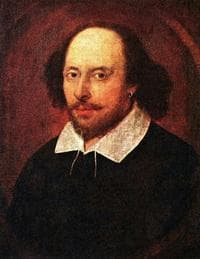
William Shakespeare was an English playwright, poet and actor. He is widely regarded as the greatest writer in the English language and the world's pre-eminent dramatist. He is often called England's national poet and the "Bard of Avon". His extant works, including collaborations, consist of some 39 plays, 154 sonnets, three long narrative poems, and a few other verses, some of uncertain authorship. His plays have been translated into every major living language and are performed more often than those of any other playwright. Shakespeare remains arguably the most influential writer in the English language, and his works continue to be studied and reinterpreted.
Similar books
- Othello
William Shakespeare
3.9 (315k) average on GoodreadsFictionA classic tragedy focusing on jealousy, betrayal, and manipulation.
- The Hunger Games
Suzanne Collins
4.3 (6.4M) average on GoodreadsFantasyBoth feature protagonists in dire circumstances, but The Hunger Games focuses on external conflict, survival, and rebellion with a clear antagonist and a more action-driven plot. Hamlet is primarily an internal struggle, dealing with moral ambiguity and philosophical debate, making it psychologically more complex than Katniss's more direct path to revolution.
- Throne of Glass
Sarah J. Maas
4.2 (596k) average on GoodreadsFantasyBoth involve protagonists dealing with trauma and political intrigue. However, Throne of Glass offers fast-paced action, romantic subplots, and a clear good-vs-evil dynamic, leaning into escapism and wish fulfillment. Hamlet is a tragedy with blurred moral lines, focusing on the inescapable consequences of actions and a journey of increasing isolation rather than a conventional heroic ascent.
- Harry Potter and the Sorcerer's Stone
J.K. Rowling
4.5 (7M) average on GoodreadsFantasyRescued from a miserable life under the stairs, an orphaned boy discovers he's a wizard destined for a magical school, where he uncovers a dangerous secret tied to the dark wizard who murdered his parents.
- To Kill a Mockingbird
Harper Lee
4.3 (4.5M) average on GoodreadsHistorical FictionIn the 1930s Jim Crow South, Harper Lee writes about racial injustice, moral growth, and the quiet courage of a lawyer father, Atticus Finch, as seen through his young daughter's eyes.
- The Fault in Our Stars
John Green
4.2 (3.6M) average on GoodreadsYoung AdultA girl with a terminal illness finds her story rewritten when a charming boy with a similar past enters her life at a cancer support group, leading to a star-crossed romance.






Enjoyed the summary?
A summary gives you the shape of the book. The book itself has the detail, the examples and the voice.
Find Hamlet on AmazonAs an Amazon Associate, BookBrief earns from qualifying purchases. How we're funded