

Synopsis
Covers the whole plot, including the ending.
- Difficulty
- Hard
- Pacing
- Slow
- Mood
- Absurdist, Existential, Melancholy, Philosophical
- Read it if
- You are interested in absurdist theatre, philosophical explorations of existence, and plays with minimal action but profound dialogue.
- Skip it if
- You prefer a clear plot, dynamic character interactions, or a definitive resolution to a story.
Happy Days Plot Summary
Covers the whole plot, including the ending.
Act I: Buried to the Waist
Winnie, a woman in her fifties, is buried up to her waist in a mound of scorched grass under a blazing sun. She is meticulously dressed and has a large black bag next to her. A bell rings, signaling her to wake. She begins her morning ritual, taking various items from her bag: a toothbrush, toothpaste, a comb, a mirror, and a revolver. She meticulously cleans her teeth, combs her hair, and looks at herself in the mirror, all while delivering a monologue about the 'happy days' she is experiencing despite her situation. She frequently calls out to her husband, Willie, who is out of sight behind the mound, and occasionally receives a grunted reply or sees his hand.
The Contents of the Bag
Winnie continues her monologue, focusing on the contents of her large black bag. She takes out a magnifying glass, examining her skin and a small ant, commenting on its activity. She then produces a music box, which she winds up and listens to with delight, humming along. Each item prompts her memories and observations about life, time, and her relationship with Willie. She thinks about the passage of time, her unchanging routine, and her constant need for Willie's presence, even if his responses are minimal. The revolver, always present, receives a casual, almost affectionate mention.
Willie's Presence and Absence
Throughout Act I, Winnie often tries to engage Willie, who is behind the mound, out of her direct line of sight. She asks him questions, makes comments, and requests confirmation, often receiving only grunts or a brief appearance of his hand or head. She recounts memories, such as their first kiss or a time she almost drowned, seeking his acknowledgment. Willie's responses are rare and often monosyllabic, highlighting his detachment and Winnie's isolation. Despite his minimal interaction, Winnie relies on his presence, finding comfort in knowing he is there, even if he offers little conversation or support.
Memories and the Passage of Time
Winnie's monologue includes recollections of their past life together, though her memories are often fragmented, contradictory, or embellished. She recalls an old couple named Shower and Cooker (or perhaps Shower and Spooner), a time when she was younger and more active, and various mundane events that she now elevates to significant moments. These memories fill the void of her present reality and construct a narrative of her 'happy days.' She often corrects herself or revises details, suggesting a fading grip on reality or a deliberate reshaping of her past to suit her current emotional needs. The contrast between her vivid internal world and her stagnant external reality is stark.
The Nature of Happiness
Despite being buried in a mound under a scorching sun, Winnie consistently declares her happiness, often repeating the phrase 'Oh, this is a happy day.' She finds joy in small rituals, like cleaning her teeth or listening to the music box, and in her continued existence. Her optimism is relentless, a deliberate choice to focus on the positive aspects of her incredibly limited life. This assertion of happiness, however, often feels forced or desperate, a coping mechanism against the overwhelming despair of her situation. She constructs her own reality of contentment, even as the physical evidence suggests otherwise.
Act II: Buried to the Neck
In Act II, the bell rings again, and Winnie awakens to find herself buried up to her neck in the mound. Her arms are gone, making her unable to reach her bag or the revolver. Her physical limitations are far greater, yet her spirit remains remarkably similar. She still speaks with the same upbeat tone, though her words are now more focused on memory and observation, lacking physical interaction with objects. Willie is still behind the mound, his grunts even more infrequent. The sun is still blazing, and the sense of desolate time passing is intensified. Her routine of speech and memory is her only remaining activity.
The Power of Speech
With her physical capabilities severely diminished, Winnie's speech is her primary, almost sole, means of asserting her existence and maintaining a connection to the world, however tenuous. She continues her flow of words, recounting memories, observing the light, and addressing Willie. Her monologue is a defiant act against oblivion, a way to fill the silence and to convince herself and Willie that life continues. She finds comfort in the sound of her own voice and the structure of her daily pronouncements, even as her audience remains largely unresponsive. Her words are a lifeline in her static, increasingly confined world.
Willie's Appearance
Towards the end of Act II, Willie, who has been largely inert and out of sight, makes a significant and arduous effort to crawl around the mound towards Winnie. He is dressed in a top hat and tails, suggesting a formal, almost ceremonial occasion. His movement is slow, painful, and difficult, requiring immense exertion. Winnie, noticing his approach, encourages him, believing he is coming to her. His goal, however, remains ambiguous. Is he coming to comfort her, to leave her, or to retrieve the revolver? His final, painful crawl is a moment of both hope and deep ambiguity.
The Revolver's Significance
In Act I, the revolver, named 'Brownie,' is treated almost as a familiar pet, an object Winnie cleans and places back in her bag. In Act II, however, with Winnie unable to reach it, its presence becomes more significant. Willie's slow, agonizing crawl towards Winnie brings him close to the bag and, presumably, the revolver. The gun's potential use, either by Willie or for Willie, hangs heavily in the air. Its symbolic weight shifts from a mere prop to a potential instrument of resolution, whether for escape, mercy, or an end to their suffering. Its final disposition is left unresolved, adding to the play's bleak uncertainty.
Ambiguous Ending
The play ends with Willie having completed his arduous crawl, positioning himself near Winnie, looking up at her. He is still in his formal attire. Winnie, observing him, asks if he is trying to kiss her, or perhaps to get the revolver. His final, unintelligible grunt, or perhaps a faint smile, leaves his intentions completely ambiguous. The audience is left with no clear resolution to their predicament or their relationship. The bell rings, signaling the end of the day or the play, leaving Winnie and Willie in their static, unresolved state, their 'happy days' continuing in their own peculiar, desperate way.
Principal Figures
Winnie
Protagonist
A woman buried in a mound, relentlessly optimistic despite her dire circumstances.
Winnie is a resilient woman in her fifties, buried first to her waist and then to her neck in a mound of earth. She meticulously maintains her appearance and daily rituals, finding solace and purpose in the mundane. She is a relentless talker, her monologue forming the bulk of the play, filled with fragmented memories, observations, and constant assertions of her happiness. Her optimism is a coping mechanism, a defiant act against the absurdity and despair of her existence. She relies heavily on the perceived presence of her husband, Willie, for emotional support, even if his responses are minimal.
Relationships: Willie (Husband; she relies on his presence and occasional grunts for validation and companionship.)
Willie
Supporting
Winnie's mostly unseen and unresponsive husband, who eventually makes a difficult appearance.
Willie is Winnie's husband, positioned behind the mound for most of the play. He is largely silent, communicating primarily through grunts, groans, or the occasional appearance of his hand or head. His actions are minimal, mostly confined to reading a newspaper or sleeping. Despite his apparent indifference, Winnie's world revolves around his presence. In Act II, he makes a painful, arduous crawl towards Winnie, dressed in formal attire, his intentions remaining ambiguous. He represents a kind of detached, almost animalistic counterpoint to Winnie's verbose and meticulously structured existence.
Relationships: Winnie (Wife; he is the silent, often unseen anchor of her daily routine, though their interaction is minimal.)
Themes & Insights
The Absurdity of Existence
The play presents the human condition as inherently absurd, with characters facing an incomprehensible world and meaningless routines. Winnie's situation—buried in a mound under a relentless sun—is a literal example of this absurdity. Her relentless optimism and adherence to trivial rituals (brushing teeth, combing hair) in the face of such a dire, unchanging reality highlight the human need to impose meaning where none inherently exists. Beckett suggests that life, stripped of its conventional comforts, reveals its inherent lack of purpose, yet characters continue to 'play the game.'
“Oh this is a happy day, this will have been another happy day! After all. So far.”
The Illusion of Happiness and Memory
Winnie consistently asserts her happiness, despite her increasingly dire circumstances. This theme explores how individuals construct their own reality, often through selective memory and deliberate optimism, to cope with suffering. Winnie's fragmented and often contradictory recollections of the past create a narrative of 'happy days' that may or may not be true. The play questions what happiness is: is it an objective state, or a subjective, self-willed illusion necessary for survival? Her constant repetition of 'happy days' becomes a mantra against despair, an act of self-deception that keeps her going.
“No, no, not a hope. Just to know that in theory at any rate you can still do the thing. Not that you will. No, no. But that nothing prevents you, in theory, from setting about it.”
Communication and Isolation
Despite living in close proximity, Winnie and Willie experience deep isolation. Winnie's verbose monologues are met with Willie's grunts or silence, highlighting a fundamental breakdown in communication. Winnie talks 'at' Willie, rather than 'with' him, using him as a silent sounding board for her thoughts and memories. This lack of genuine connection highlights the inherent loneliness of the human experience, even within a marital relationship. Each character is trapped within their own world, struggling to bridge the gap to the other, making their shared existence a testament to both their interdependence and their ultimate solitude.
“Ah yes, if only I could touch you! You I mean, not the bag. I touch you with my eyes and with my mind. But with my body? No! I must not ask for too much.”
The Persistence of Ritual and Habit
Winnie's life is defined by her meticulous daily rituals: brushing her teeth, combing her hair, examining her belongings, and her continuous monologue. These habits provide structure and meaning in an otherwise chaotic and meaningless existence. Even as her physical capacity diminishes (being buried up to her neck), she clings to the mental rituals of speech and memory. This theme suggests that habit is a powerful, perhaps even essential, mechanism for human survival, providing a sense of control and purpose when external circumstances offer none. The routines become a form of self-preservation against the encroaching void.
“Old things. Old things. (Pause.) Never any change. (Pause.) And yet... (Pause.) And yet I can't complain.”
Plot Devices & Literary Techniques
The Mound
A physical and symbolic representation of entrapment and decay.
The mound of scorched earth in which Winnie is buried is the central visual metaphor of the play. It serves as her prison, progressively engulfing her, symbolizing the irreversible decline and entrapment of the human condition. It also represents the barren, desolate landscape of their existence, a world stripped bare of natural beauty or comfort. Symbolically, it can be seen as the accumulation of life's burdens, the weight of time, or the slow, inevitable creep of death, physically limiting Winnie's world while her mind still desperately tries to expand beyond it.
Winnie's Bag (and its Contents)
A portable world of cherished objects, memories, and mundane rituals.
Winnie's large black bag contains all her cherished possessions – a toothbrush, comb, mirror, magnifying glass, music box, and revolver. These items are more than just props; they are prompts for her memories, tools for her daily rituals, and anchors to her sense of self. The bag represents her portable world, her last vestiges of control and comfort. Each item, particularly the revolver, carries symbolic weight, hinting at the past, present, and potential future. When she can no longer reach the bag in Act II, her loss of physical interaction with these objects highlights her increased helplessness.
The Bell
An external, arbitrary signal dictating Winnie's wake and sleep.
The bell that rings to signal Winnie to wake up and go to sleep is an external, unseen force that controls her daily cycle. It represents the arbitrary, mechanistic nature of existence, where individuals are subject to forces beyond their control. It underscores Winnie's lack of agency and the repetitive, almost robotic quality of her life. The bell's ringing imposes a structure on her days, however meaningless, reinforcing the idea of a predetermined existence from which there is no escape, only a prescribed rhythm of waking and sleeping.
The Revolver ('Brownie')
A recurring object symbolizing potential escape, violence, or an end to suffering.
The revolver, affectionately named 'Brownie' by Winnie, is a constant presence in her bag. Initially treated almost as a pet, it takes on increasing symbolic weight as the play progresses. It represents a potential exit from their predicament, either through suicide or mercy killing, or perhaps even an act of violence. Its ambiguity is key: it offers the possibility of an end to suffering, but its actual use is left unresolved. It hangs over the play as a silent question mark, a stark contrast to Winnie's 'happy days' rhetoric, highlighting the ever-present possibility of a definitive end to their absurd existence.
Happy Days Quotes
“Oh this is a happy day, this is going to be a happy day!”
“And now, for the first time in this long day, I can feel my heart pumping, my blood racing, my lungs panting.”
“No, I wouldn't have it any other way. Not now. No. Not now.”
“Ah yes, the old style. The old style. There is something to be said for the old style.”
“To have been always what I am, and to have been always what I am not, and to have been always what I shall be, and to have been always what I shall not be.”
“What is it, Willie, what is it, do you want to play a game?”
“That is what I find so wonderful, that you are still there, that you are still there beside me.”
“The earth is very still. It has not been so still for a long time.”
“To think that it should come to this, that I should be stuck up to my neck in this here mound, and he, he should be able to crawl about.”
“There was a time when I could have sworn that I heard a voice, a human voice.”
“No, not a word. Not a word. Not a word from him. Not a sound.”
“Is there life still in this old body? I say, is there life still in this old body?”
“The bell. It's the bell. It's the bell for waking.”
“Oh, this is a happy day, this is going to be a happy day. What a joy, what a joy.”
Quiz
10 questions on the plot and the characters. Each answer comes with a short explanation.
Question 1
At the beginning of Act I of 'Happy Days', in what physical state is Winnie?
- She is standing freely in a vast desert.
- She is buried up to her waist in a mound of earth.
- She is confined to a wheelchair in a small room.
- She is lying in a bed, unable to move.
Show answer
B. She is buried up to her waist in a mound of earth. At the start of Act I, Winnie is famously buried up to her waist in a mound of earth, a striking visual that immediately establishes her predicament.
Question 2
What is the name of Winnie's companion, who primarily remains out of sight for much of the play?
- Willie
- Barnaby
- Willie
- Bertram
Show answer
C. Willie Winnie's companion is Willie, who is mostly heard or briefly seen, offering minimal responses to her extensive monologues.
Question 3
What object does Winnie frequently consult and retrieve items from, often referring to it as her 'bag' or 'hold-all'?
- A large hatbox
- A picnic basket
- A large black bag
- A wooden chest
Show answer
C. A large black bag Winnie's large black bag is a crucial prop, from which she meticulously extracts various objects like her toothbrush, mirror, and revolver.
Question 4
What is Winnie's primary coping mechanism for her increasingly dire situation?
- Singing elaborate operatic pieces.
- Engaging in detailed, nostalgic reminiscences and daily rituals.
- Writing letters to unseen friends and family.
- Attempting to dig herself out of the mound.
Show answer
B. Engaging in detailed, nostalgic reminiscences and daily rituals. Winnie copes by adhering to a strict routine of daily rituals, conversation, and memories, which she uses to maintain a semblance of order and optimism.
Question 5
In Act II, what is Winnie's physical state compared to Act I?
- She is completely free from the mound.
- She is buried up to her neck, unable to move her arms.
- She is buried up to her chest, but still has use of her arms.
- She has been replaced by Willie in the mound.
Show answer
B. She is buried up to her neck, unable to move her arms. By Act II, Winnie's physical confinement has worsened; she is now buried up to her neck, further restricting her movement and ability to interact with her few possessions.
Question 6
What recurring phrase does Winnie use to describe her days, despite her circumstances?
- Terrible days
- Long days
- Happy days
- Empty days
Show answer
C. Happy days The title of the play itself comes from Winnie's persistent, almost defiant, assertion that each day, despite its hardships, is a 'happy day'.
Question 7
What is the significance of the revolver that Winnie keeps in her bag?
- It is a practical tool she uses for self-defense against wild animals.
- It represents a means of escape or control over her own ending, a potential 'way out'.
- It is a cherished family heirloom that reminds her of her past.
- She uses it to signal for help from passing strangers.
Show answer
B. It represents a means of escape or control over her own ending, a potential 'way out'. The revolver, often referred to as 'Brownie', is a symbol of potential agency and an ultimate escape from her predicament, though she never uses it as such during the play.
Question 8
What is the nature of the communication between Winnie and Willie throughout the play?
- They engage in lively, reciprocal conversations about their shared past.
- Winnie primarily monologues, with Willie offering sparse, often grunted or delayed, responses.
- Willie delivers long speeches, while Winnie mostly listens and nods.
- They communicate telepathically, without speaking aloud.
Show answer
B. Winnie primarily monologues, with Willie offering sparse, often grunted or delayed, responses. Their communication is highly asymmetrical; Winnie speaks almost constantly, while Willie's contributions are minimal, often just a word or a sound, highlighting their isolation despite proximity.
Question 9
The setting of the play, a scorched earth and a mound, contributes most strongly to which thematic element?
- The beauty and resilience of nature.
- A sense of post-apocalyptic desolation and existential entrapment.
- A pastoral idyll, contrasting with urban life.
- The vibrancy of a thriving ecosystem.
Show answer
B. A sense of post-apocalyptic desolation and existential entrapment. The barren, scorched landscape and Winnie's literal entrapment in the mound powerfully convey themes of existential desolation, the decay of the world, and the human condition of being 'stuck'.
Question 10
What is the ultimate ambiguity regarding Willie's final action at the end of the play, as he crawls towards Winnie?
- Whether he intends to bring her food or water.
- Whether he is attempting to help her, kill her, or simply reach her in a final, unclear gesture of connection or despair.
- Whether he is trying to escape from the mound himself.
- Whether he is trying to retrieve a lost item from her bag.
Show answer
B. Whether he is attempting to help her, kill her, or simply reach her in a final, unclear gesture of connection or despair. Willie's final crawl towards Winnie is deliberately ambiguous, leaving the audience to ponder his true intentions – whether it's an act of love, aggression, or a desperate, perhaps futile, attempt at connection in their shared predicament.
Happy Days FAQ
What is the basic premise of 'Happy Days'?
'Happy Days' centers on Winnie, a woman buried up to her waist in a mound of earth under a scorching sun. She meticulously goes through her daily rituals, pulling items from her large black bag, and occasionally conversing with her almost entirely unseen husband, Willie, who lives behind the mound.
Who are the main characters in 'Happy Days' and what is their relationship?
The main characters are Winnie and Willie. Winnie is a verbose, optimistic woman, buried progressively deeper in the earth. Willie is her mostly silent, largely unseen husband, who lives in a hole behind the mound, occasionally grunting responses or making brief, difficult appearances.
What significant change occurs between Act I and Act II?
Between Act I and Act II, Winnie becomes buried up to her neck, losing the use of her arms and her bag of possessions. This physical restriction further limits her already circumscribed world, intensifying her internal monologues and reliance on memory.
What is the significance of Winnie's bag and its contents?
Winnie's bag contains her essential tools for maintaining her 'happy days': a toothbrush, toothpaste, a music box, a revolver, and other mundane items. These objects are crucial for her daily rituals, providing a sense of purpose, routine, and connection to a past, more 'normal' existence.
What role does memory play in Winnie's daily life?
Memory is central to Winnie's existence, as she frequently recalls past events, conversations, and feelings to fill the void of her present. These recollections, often fragmented and potentially unreliable, provide comfort, structure, and a means to escape her immediate, desolate reality.
Is there any symbolism behind the mound of earth Winnie is buried in?
The mound of earth profoundly symbolizes human entrapment, the slow decay of life, and the inevitable progression towards death. It represents the physical and existential limitations imposed upon individuals, gradually diminishing their agency and connection to the world.
What is the significance of Willie's almost total silence and limited appearances?
Willie's silence and restricted presence highlight the breakdown of communication and the isolation inherent in relationships. His limited actions, like crawling towards Winnie at the end, underscore the difficulty of connection and the often futile attempts to bridge the gap between individuals.
What is the meaning behind the 'happy days' Winnie constantly refers to?
Winnie's 'happy days' are a coping mechanism, an imposed optimism in the face of her bleak reality. She consciously chooses to frame her existence, no matter how dire, as 'happy,' suggesting a profound human need for hope and the ability to find solace in routine and small comforts.
What does the revolver symbolize in Winnie's bag?
The revolver, often referred to as 'Brownie,' symbolizes both a potential escape from suffering and the ultimate control over one's own existence. Its presence hints at the underlying despair despite Winnie's forced cheerfulness, representing a final, albeit dark, option.
How does Winnie maintain her optimism despite her dire circumstances?
Winnie maintains her optimism through rigorous daily rituals, the comfort of her possessions, and a deliberate focus on positive memories. She consciously chooses to ignore the bleakness, constructing a narrative of 'happy days' to ward off despair and maintain a semblance of sanity.
What psychological defense mechanisms does Winnie employ?
Winnie primarily employs denial, rationalization, and projection. She denies the severity of her situation, rationalizes her routines as meaningful, and projects her desire for connection onto Willie, even when he is unresponsive. These mechanisms help her cope with existential dread.
How does Winnie's relationship with Willie reflect broader psychological themes?
Winnie and Willie's relationship reflects themes of codependency, one-sided communication, and the struggle for connection in isolation. Winnie needs Willie's presence, however minimal, to validate her existence, while Willie's near absence highlights the ultimate solitude of the individual.
What does Winnie's constant talking reveal about human psychology?
Winnie's incessant talking reveals the human need for self-affirmation, the construction of identity through narrative, and the profound fear of silence and non-existence. Her monologue is a desperate attempt to fill the void, assert her presence, and maintain a sense of being.
Is 'Happy Days' ultimately a pessimistic or optimistic play?
The play's interpretation often sparks debate. While the physical entrapment and bleak landscape suggest pessimism, Winnie's unwavering will to continue and her persistent search for 'happy days' can be seen as a testament to the resilience of the human spirit, suggesting a nuanced, perhaps even optimistic, view of endurance.
What does Willie's final crawl towards Winnie signify?
Willie's final, arduous crawl towards Winnie is open to multiple interpretations. It could signify a last, desperate attempt at connection, a recognition of their shared predicament, or even a failed attempt at violence, leaving the audience to ponder the true nature of their bond and its ultimate meaning.
How does Beckett use repetition in 'Happy Days' and what is its effect?
Beckett uses extensive repetition of phrases, rituals, and memories to emphasize the cyclical nature of existence and the futility of breaking free from routine. This repetition highlights Winnie's entrapment and the monotonous, yet comforting, patterns humans adopt to cope with meaninglessness.
What is the play suggesting about the nature of time?
'Happy Days' suggests that time is both a relentless progression towards decay and a subjective experience. Winnie's reliance on memory blurs past and present, while her fixed physical state makes time feel both infinite and stagnant, emphasizing its oppressive and elusive qualities.
Can Winnie and Willie be seen as representative of all humanity?
Many interpretations view Winnie and Willie as archetypes for the human condition, representing the universal struggles with existence, communication, and the search for meaning in a seemingly indifferent universe. Their extreme situation amplifies fundamental aspects of human experience.
About the author
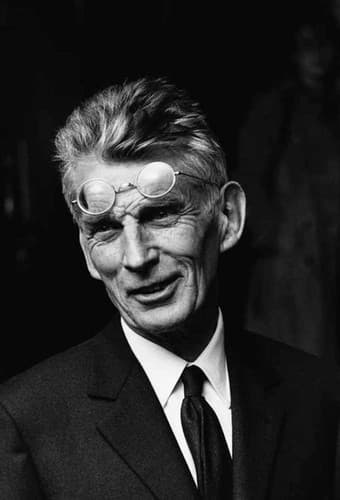
Samuel Barclay Beckett was an Irish novelist, dramatist, short story writer, theatre director, poet, and literary translator. His literary and theatrical work features bleak, impersonal and tragicomic experiences of life, often coupled with black comedy and nonsense. His work became increasingly minimalist as his career progressed, involving more aesthetic and linguistic experimentation, with techniques of repetition and self-reference. He is considered one of the last modernist writers, and one of the key figures in what Martin Esslin called the Theatre of the Absurd.
Similar books
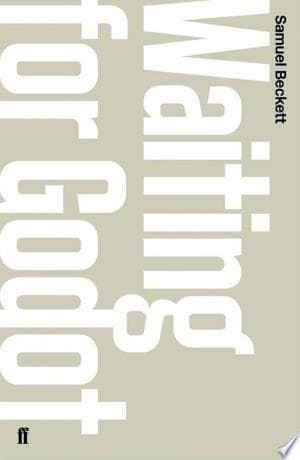
- Waiting for Godot
Samuel Beckett
3.8 (160k) average on GoodreadsPhilosophyExplores similar themes of existentialism, waiting, and the absurd with minimal plot and character interaction.
- Nineteen Eighty-Four
George Orwell
4.2 (5.5M) average on GoodreadsFictionWinston Smith dreams of truth and rebellion in a world where Big Brother watches all, but he confronts the terrifying power of a regime that controls not just actions, but thoughts.
- The Frozen River
Ariel Lawhon
4.4 (600k) average on GoodreadsFictionIn 1789 Maine, a heroic midwife's diary helps her expose a murder and get justice in a town that wants to silence her.
- A Man Called Ove
Fredrik Backman
4.4 (569k) average on GoodreadsFictionA stubborn widower, who lives by strict rules, finds his quiet world changed by a lively new family next door, making him face his past and find happiness in human connection.
- The Art of Racing in the Rain
Garth Stein
4.2 (452k) average on GoodreadsFictionThrough the eyes of Enzo, a wise and observant dog, a race car driver's family navigates a journey of love, loss, and resilience, learning that life's most important lessons often come in the curves, not just on the straightaways.
- The Colour of Magic
Terry Pratchett
4.0 (425k) average on GoodreadsFictionOn a discworld hurtling through space on the back of a giant turtle, an inept wizard and his naive, walking-luggage-toting tourist embark on a chaotic, belief-fueled journey to the very edge of their flat planet, encountering dragons that only exist if you believe in them.





Enjoyed the summary?
A summary gives you the shape of the book. The book itself has the detail, the examples and the voice.
Find Happy Days on AmazonAs an Amazon Associate, BookBrief earns from qualifying purchases. How we're funded