
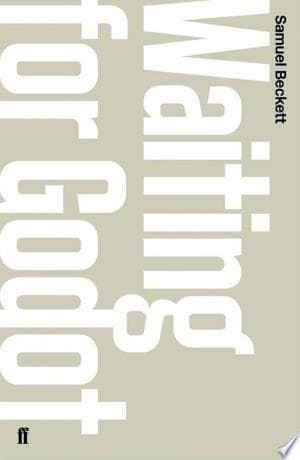
Synopsis
Covers the whole plot, including the ending.
- Difficulty
- Medium
- Pacing
- Slow
- Mood
- Existential, Absurdist, Philosophical, Melancholy, Comical (darkly)
- Read it if
- you enjoy plays that delve into existential themes, absurdism, and the human condition; you appreciate minimalist dialogue and a non-linear plot; you're interested in a work that invites multiple interpretations and philosophical reflection.
- Skip it if
- you prefer fast-paced, plot-driven narratives with clear resolutions; you dislike ambiguity and plays where 'nothing happens'; you're looking for a straightforward story without deep philosophical undertones.
Waiting for Godot Plot Summary
Covers the whole plot, including the ending.
A Roadside Rendezvous
The play starts with two tramps, Vladimir (Didi) and Estragon (Gogo), on a desolate country road with one bare tree. Estragon tries to remove his boot, complaining of pain, while Vladimir walks and thinks. They talk in circles, revealing they are waiting for someone named Godot. They do not know who Godot is or what he will do, but they believe his arrival is important. They consider hanging themselves from the tree but decide against it, mostly because they are unsure who should go first and if the tree is strong enough. Their conversation is full of repeated phrases, memory lapses, and thoughts on their existence and their wait, setting the play's absurd tone.
Pozzo and Lucky's Arrival
The sameness of Vladimir and Estragon's wait ends with two new characters: Pozzo, a loud and seemingly rich man, and Lucky, his silent, burdened slave, whom Pozzo leads on a rope. Pozzo introduces himself with great show, showing his power over Lucky. He treats Lucky with extreme cruelty, making him carry heavy bags, dance, and think on command. Vladimir and Estragon are curious and somewhat scared of Pozzo at first, talking with him. Pozzo enjoys being the center of attention, discussing his journey and his plan to sell Lucky. Their interaction shows power, control, and the random nature of human relationships.
Lucky's 'Think'
Pozzo, at Vladimir and Estragon's request, tells Lucky to 'think' for them. What follows is a long, rambling, and seemingly senseless speech, a stream of consciousness full of fragmented academic words, religious references, and disconnected scientific terms. Lucky's speech is a rush of words without clear meaning or pauses, showing a breakdown of logic and communication. Vladimir and Estragon are interested at first but quickly become overwhelmed and upset by the speech, eventually physically stopping Lucky. This scene shows the play's look at the limits of language and how intellectual talk can turn into meaningless noise, mirroring the characters' own confusion.
Pozzo and Lucky Depart
After Lucky's performance, Pozzo prepares to leave, which upsets Vladimir and Estragon, who have grown used to the distraction. Pozzo struggles with his things and demands that Lucky keep carrying them. Before leaving, Pozzo reflects sadly on how quickly time passes and how we forget things. He asks if they enjoyed his company, and Vladimir and Estragon give unclear answers. Pozzo and Lucky then leave, leaving Vladimir and Estragon alone again and back to waiting for Godot. Their departure leaves the tramps feeling empty again and wondering if Godot will ever arrive.
Godot's Messenger
Just as Vladimir and Estragon start to feel hopeless, a young boy arrives, saying he is a messenger from Godot. The boy tells them that Godot will not come today but will surely come tomorrow. He says Godot has a white beard and is a kind master. Vladimir asks the boy about Godot's activities and if he has brothers, but the boy's answers are vague and give little clear information. The boy also says Godot beats his brother. This repeated message from Godot's messenger keeps hope alive, stopping Vladimir and Estragon from leaving while also giving them a reason to stay. The boy's visit brings back the main idea of endless waiting.
The Second Day: Morning
Act Two begins with Vladimir and Estragon back at the same place the next day. The tree, which was bare in Act One, now has a few leaves, a small but important change. Vladimir sings a sad song about a dog, showing how their lives repeat. Estragon, still struggling with his boots, says he remembers nothing from the day before, including Pozzo and Lucky's visit. Vladimir, however, remembers everything clearly, leading to repeated arguments about how reliable their memories are. They go back to their usual routines of pointless talk, physical comedy, and trying to pass the time, showing their situation has not changed.
Memory and Identity
Vladimir tries to help Estragon remember Pozzo and Lucky's visit, but Estragon remains stubbornly forgetful, even denying he ever met them. This shows how fragile memory is and how it shapes who we are and what we think is real. Vladimir is frustrated by Estragon's lack of memory, as it makes their shared experience feel less real and their waiting even more isolating. They discuss their past, their friendship, and their constant companion, boredom. The conversation further blurs the lines between what is real and what is imagined, showing how subjective their existence is and the deep uncertainty in their lives.
Pozzo and Lucky Return (Blind and Dumb)
Pozzo and Lucky return, but they are much worse. Pozzo is now blind and fully relies on Lucky, who is now mute. Their entrance is messy, as they fall over each other in the dark. Pozzo remembers nothing of his earlier meeting with Vladimir and Estragon, insisting he is a different man. He is even more desperate and sad, constantly asking for help and guidance. Lucky, though still tied, can no longer speak or perform. This change shows the constant passage of time and decay, and the random suffering life brings, making the play's bleak outlook even deeper.
The Struggle for Meaning
Vladimir and Estragon struggle to understand Pozzo's blindness and Lucky's muteness. They try to help Pozzo up but get caught in a silly struggle, falling over themselves. Pozzo's inability to remember them or their previous meeting confuses Vladimir, who thinks about how quickly experiences fade and how unreliable memory is. Pozzo gives a strong speech about how sudden life and death are, and how quickly night follows day. This speech covers the play's ideas of human suffering and the universe's indifference. Their attempts to talk with Pozzo are met with his despair and confusion, showing how pointless it is to find meaning in a chaotic world.
Pozzo and Lucky Depart Again
After a long and difficult interaction, Pozzo and Lucky finally leave, with Pozzo guiding Lucky offstage. Their exit is as clumsy and sad as their entrance. Vladimir and Estragon are left alone again, thinking about the strange meeting. Vladimir considers how their lives repeat and how events constantly happen again, wondering if they are truly living or just dreaming. Pozzo and Lucky's departure leaves an empty space, showing the endless, unchanging nature of Vladimir and Estragon's wait and Godot's continued absence. Their departure also shows how brief companionship and distraction are.
The Second Messenger
As it gets dark, the boy messenger from Act One reappears. Vladimir, remembering him from the day before, eagerly questions him about Godot. However, the boy says he has not met Vladimir before and gives the same message: Godot will not come today, but he will surely come tomorrow. The boy again describes Godot's white beard and his kindness, and admits Godot beats his brother. This identical interaction, despite Vladimir's clear memory of their previous meeting, further shows how their existence repeats, and how hope is always put off. The boy's inability to remember Vladimir shows how unimportant the tramps are in the larger picture.
The Endless Wait Continues
After the boy leaves, Vladimir and Estragon think about their situation. They discuss leaving, finally giving up their wait for Godot, but they find they cannot move. Estragon suggests they hang themselves, but they do not have the rope. Vladimir considers their purpose and the meaning of their lives, concluding that they are tied to their spot by their wait. Despite saying they want to leave, they remain fixed in place, unable to move due to inaction and the faint promise of Godot's eventual arrival. The play ends with them saying they will leave, but the stage directions show they do not move, meaning their wait is eternal and unchanging.
Waiting for Godot Characters
Vladimir (Didi)
Protagonist
The more intellectual and reflective of the two tramps.
Vladimir is the more intellectual and philosophical of the two main characters. He is often the one who remembers past events and attempts to make sense of their predicament. He struggles with existential questions, the nature of time, and the reliability of memory. He is deeply dependent on Estragon for companionship and distraction, despite their frequent squabbles. Vladimir often tries to maintain a semblance of hope and purpose in their endless wait for Godot, even when faced with overwhelming despair. He is prone to singing and contemplating the deeper meanings of their existence.
Relationships: Estragon (Best friend and co-dependent companion); Godot (Object of his hope and perpetual wait); Pozzo (Temporary distraction and source of philosophical debate)
Estragon (Gogo)
Protagonist
The more physical and suffering of the two tramps.
Estragon is the more physical and suffering of the two tramps. He is perpetually hungry, tired, and in pain, often complaining about his boots or being beaten. He has a poor memory, frequently forgetting past events, including meeting Pozzo and Lucky. Estragon is more focused on immediate physical needs and desires, often suggesting they leave or hang themselves to escape their suffering. He relies heavily on Vladimir for intellectual stimulation and reassurance, despite often finding him irritating. His forgetfulness contributes to the cyclical nature of their existence.
Relationships: Vladimir (Best friend and co-dependent companion); Godot (Unseen figure of uncertain hope)
Pozzo
Supporting
The tyrannical, flamboyant master.
Pozzo is a flamboyant, bombastic, and seemingly wealthy man who initially appears as a temporary distraction from Vladimir and Estragon's wait. He is a master to Lucky, whom he treats with extreme cruelty and condescension, demonstrating a profound sense of entitlement and power. In Act One, he is boastful and self-important, enjoying being the center of attention. By Act Two, he has become blind and entirely dependent on Lucky, his memory also failing, which strips him of his former arrogance and reveals a deeper layer of despair and vulnerability. He represents the arbitrary nature of power and the inevitability of decay.
Relationships: Lucky (Master and slave); Vladimir (Temporary conversational partners); Estragon (Temporary conversational partners)
Lucky
Supporting
The enslaved, suffering servant.
Lucky is Pozzo's long-suffering slave, whom Pozzo keeps on a rope and forces to carry heavy bags. He is largely silent, only speaking when commanded to 'dance' or 'think.' His 'think' monologue is a torrent of fragmented, nonsensical academic and theological jargon, signifying the breakdown of coherent thought and communication. In Act Two, Lucky becomes mute, further emphasizing his dehumanization and the stripping away of his agency. He embodies extreme suffering, physical burden, and the loss of individual identity under oppression. His name is ironic, given his miserable condition.
Relationships: Pozzo (Slave and master)
A Boy (Godot's Messenger)
Supporting
The recurring messenger who delivers Godot's deferrals.
The Boy appears at the end of each act, claiming to be a messenger from Godot. He delivers the same message: Godot will not come today, but he will surely come tomorrow. He describes Godot as having a white beard and being kind, yet also mentions that Godot beats his brother. The boy's inability to remember Vladimir from one day to the next reinforces the cyclical nature of the play and the characters' insignificance. He is the only tangible link to Godot, yet his messages offer only perpetual deferral of hope, keeping Vladimir and Estragon trapped in their wait.
Relationships: Godot (Servant/messenger); Vladimir (Recipient of message); Estragon (Recipient of message)
Godot
Antagonist
The perpetually absent figure for whom the tramps wait.
Godot is the central, unseen character of the play, for whom Vladimir and Estragon are perpetually waiting. He never appears, and his identity, purpose, and even existence remain ambiguous. He is described by his messenger as having a white beard and being a kind master, yet also as someone who beats his brother. Godot represents an elusive, external source of meaning, salvation, or purpose that the characters hope will rescue them from their meaningless existence. His perpetual absence is the driving force of the play, symbolizing the human search for meaning in a chaotic and indifferent universe. He is the ultimate symbol of deferred hope.
Relationships: Vladimir (Object of hope and obsession); Estragon (Object of hope and obsession); A Boy (Master to his messenger)
Waiting for Godot Themes
The Absurdity of Existence
The play explores the idea that human existence is absurd in a godless, meaningless universe. Vladimir and Estragon's endless, pointless wait for Godot, a figure who never arrives and whose identity is unknown, shows humanity's search for meaning and purpose where none naturally exists. Their repeated conversations, memory lapses, and the way events repeat show how useless their actions are and how their world lacks natural logic. The play suggests that life has no set meaning, and people must create their own, often when faced with great indifference.
“Nothing to be done.”
Waiting and Inaction
Waiting is the main action of the play. Vladimir and Estragon are always waiting for Godot, a wait that takes over their entire lives and stops them from doing anything meaningful or leaving their empty spot. This idea looks at how people tend to put off living and finding purpose until a future event or person, instead of acting now. The wait becomes a symbol for the human condition, where hope is always delayed, and life is spent anticipating something that may never come, leading to inaction and a deep sense of being stuck. Their inability to leave, despite wanting to, shows this paralysis.
“We're waiting for Godot.”
The Nature of Time and Memory
Beckett questions common ideas of time and memory. The characters often forget events, even recent ones, leading to confusion and doubts about reality. Estragon's constant forgetting and Vladimir's frustrated attempts to remind him show how fragile and unreliable memory is. Time itself seems to repeat and not move forward; the events of Act Two are similar to those of Act One, suggesting a constant present rather than progress. This blurring of past and present, and the unreliable nature of memory, adds to the characters' confusion and supports the play's absurd view, where even personal history is unstable.
“Was I sleeping, while the others suffered? Am I sleeping now?”
Suffering and Companionship
The play shows human suffering in both physical and emotional ways. Estragon constantly complains of physical problems, while Vladimir deals with deeper feelings of dread. Yet, even with this suffering, the strong need for companionship is clear. Vladimir and Estragon's relationship, though often difficult and frustrating, is their only defense against complete despair and loneliness. They cannot stand to be apart, even when they wish they were. Their reliance on each other offers a temporary escape from their pain and the meaninglessness of their lives, suggesting that shared suffering and having someone else there are important, though imperfect, comforts in an indifferent world.
“Don't touch me! Don't question me! Don't speak to me! Stay with me!”
Language and Communication
Language in 'Waiting for Godot' often seems insufficient, repetitive, and ultimately meaningless, showing a breakdown of communication and the search for sense in an illogical world. The characters engage in circular arguments, sudden changes in topic, and fragmented dialogue, showing how limited words are in conveying truth or making connections. Lucky's 'think' speech is a key example, a flood of academic words without clear meaning. This idea suggests that language, despite being humanity's main tool for communication, can also cause confusion, isolation, and simply be a way to pass the time rather than truly connect or understand.
“That's the idea, let's abuse each other.”
Plot Devices & Literary Techniques
Repetition and Cyclical Structure
Events and dialogue repeat, creating a sense of an endless loop.
The play is characterized by extensive repetition, both in dialogue and in the overall structure of the two acts. Conversations, actions (like struggling with boots or hats), and the arrival of characters and messengers are mirrored in both acts. This cyclical structure creates a profound sense of stasis and futility, emphasizing that the characters are trapped in an endless loop from which there is no escape. It reinforces the theme of the absurdity of existence, where nothing truly changes or progresses, and time itself seems to be non-linear or perpetually resetting. This device underscores the hopelessness of their wait.
The Absent Character (Godot)
The central figure whose absence drives the entire plot.
Godot is the pivotal character despite never appearing on stage. His perpetual absence is the central driving force of the plot, creating the entire premise of the play: waiting. This device forces the audience and characters to confront the nature of hope, expectation, and deferred gratification. Godot's ambiguity allows for multiple interpretations – he could represent God, death, meaning, salvation, or simply an arbitrary distraction. His non-arrival highlights the human tendency to project meaning onto external figures and to postpone life in anticipation of an elusive future, making his absence more powerful than any presence could be.
Vaudeville and Slapstick Comedy
Humorous physical gags and witty banter used to lighten the mood.
Beckett incorporates elements of vaudeville and slapstick comedy throughout the play. This includes physical gags like Estragon struggling with his boots, Vladimir's hat antics, and the characters falling over each other. Their dialogue often features rapid-fire exchanges, puns, and non-sequiturs characteristic of comedic duos. This device serves multiple functions: it provides momentary relief from the bleak existential themes, highlights the absurdity of the characters' situation, and underscores their attempts to pass the time through diversion. The comedy often has a dark, ironic edge, emphasizing the tragicomic nature of their suffering and the human need for distraction.
Minimalist Set Design
A barren, sparse setting emphasizes desolation and universality.
The play's setting is strikingly minimalist: a country road with a single, leafless tree. This sparse environment is a deliberate plot device. It strips away all non-essential details, focusing the audience's attention solely on the characters and their predicament. The barrenness symbolizes the desolation and meaninglessness of the characters' existence and the universe they inhabit. The single tree, which sprouts a few leaves in Act Two, is the only visual indicator of the passage of time, yet its change is minimal. This universal, undifferentiated setting allows the play's themes to resonate on a broader, archetypal level, making the tramps' situation universally relatable.
Waiting for Godot Quotes
“Nothing to be done.”
“We are born to die, we die to live, we live to hate, we hate to love.”
“Estragon, my friend, don't let's do anything. Nobody's forcing us.”
“Hope is the thing with feathers...”
“Let's go. Shall we go? Yes, let's go. (They do not move.)”
“The tears of the world are a constant quantity. For each one who begins to weep somewhere else, another stops.”
“It's not the same thing, it's not the same thing. (He gets up.) It's not the same thing.”
“That's the way it is. (He sighs.) That's the way it is.”
“Godot's not coming.”
“Habit is a great deadener.”
“He’s blood of my blood, and bone of my bone.”
“Perhaps it's the same thing.”
“Tomorrow we can try again. (He sighs.)”
“I can't go on! (He stops.) What do I mean, I can't go on? I'll go on. (He goes on.)”
Quiz
10 questions on the plot and the characters. Each answer comes with a short explanation.
Question 1
What is the primary setting for the initial performance of 'Waiting for Godot'?
- A grand West End theatre in London
- The tiny Left Bank Theatre de Babylone in Paris
- A large Broadway theatre in New York
- An experimental theatre in Berlin
Show answer
B. The tiny Left Bank Theatre de Babylone in Paris The text explicitly states that the play began at the 'tiny Left Bank Theatre de Babylone in 1953'.
Question 2
Who are the two main characters waiting for?
- Their families
- A potential employer
- Someone or something named Godot
- A traveling circus
Show answer
C. Someone or something named Godot The play's central premise is that Vladimir and Estragon are waiting for 'someone--or something--named Godot'.
Question 3
What philosophical concept is 'Waiting for Godot' often interpreted as representing?
- The pursuit of material wealth
- Mankind's inexhaustible search for meaning
- The inevitability of progress
- The triumph of human reason
Show answer
B. Mankind's inexhaustible search for meaning The text mentions that the play 'has been interpreted as mankind's inexhaustible search for meaning'.
Question 4
What literary movement or style is Beckett's language in 'Waiting for Godot' described as pioneering?
- Surrealism
- Expressionistic minimalism
- Realism
- Absurdism
Show answer
B. Expressionistic minimalism The text states, 'Beckett's language pioneered an expressionistic minimalism'. While the play is often categorized as absurdist, the description of his language specifically is expressionistic minimalism.
Question 5
The play's setting is described as being near what natural object?
- A river
- A mountain
- A rock
- A tree
Show answer
D. A tree The text mentions that Vladimir and Estragon 'wait near a tree'.
Question 6
Which of these phrases best describes the nature of the dialogue and events in the play?
- A clear, linear narrative with a definitive resolution
- A series of logical arguments leading to a conclusion
- Comical wordplay, dreamscapes, and nonsense
- A historical account of post-war reconstruction
Show answer
C. Comical wordplay, dreamscapes, and nonsense The provided text describes the play as a 'drama spun of their own consciousness. The result is a comical wordplay of poetry, dreamscapes, and nonsense'.
Question 7
The play is considered a cornerstone of which dramatic period?
- The Renaissance
- The Enlightenment
- Twentieth-century drama
- Ancient Greek tragedy
Show answer
C. Twentieth-century drama The text explicitly states that 'Waiting for Godot' has become 'a cornerstone of twentieth-century drama'.
Question 8
What historical context is mentioned as being captured by Beckett's language?
- The Roaring Twenties
- The Cold War
- Post-World War II Europe
- The Victorian Era
Show answer
C. Post-World War II Europe The text notes that Beckett's language 'captured the existential post-World War II Europe'.
Question 9
The description of the play's initial reception by American and British audiences is best characterized as:
- Immediate acclaim and widespread understanding
- Confusion and bewilderment
- Controversy due to its political message
- Commercial success and popularity
Show answer
B. Confusion and bewilderment The text mentions, 'followed by bewilderment among American and British audiences', indicating a lack of immediate understanding or acceptance.
Question 10
The play is described using which of the following metaphorical terms regarding its allegorical nature?
- A historical chronicle
- A scientific experiment
- A romantic comedy
- A magical and beautiful allegory
Show answer
D. A magical and beautiful allegory The concluding sentence describes the play as 'one of the most magical and beautiful allegories of our time'.
Waiting for Godot FAQ
What is the main plot of Waiting for Godot?
The play follows two characters, Vladimir and Estragon, who are waiting for a mysterious figure named Godot. While they wait, they engage in conversations, encounter other characters, and pass the time near a tree, reflecting on their existence.
Who are the main characters in Waiting for Godot?
The central characters are Vladimir (Didi) and Estragon (Gogo), two tramps who are constantly waiting. They are joined by Pozzo, a master, and his servant Lucky, who appear in both acts.
What does Godot represent in the play?
Godot is never explicitly defined, leading to numerous interpretations. He is often seen as a symbol of hope, salvation, meaning, or even God himself, representing something or someone the characters desperately need but may never arrive.
What are the philosophical themes of Waiting for Godot?
The play explores existential themes such as the meaning of life, the passage of time, the nature of hope and despair, human suffering, the absurdity of existence, and the struggle to find purpose in a seemingly meaningless world.
Is Waiting for Godot a comedy or a tragedy?
Waiting for Godot is often described as a tragicomedy. While it deals with profound and often bleak philosophical ideas, it is filled with absurd humor, slapstick, and witty dialogue, creating a unique blend of laughter and sorrow.
What is the significance of the tree in Waiting for Godot?
The barren tree is a central visual element. It changes slightly between acts, perhaps symbolizing the passage of time or the persistent, albeit minimal, nature of hope or life. It serves as the only landmark for Vladimir and Estragon's endless vigil.
How does Waiting for Godot compare to other absurdist plays?
Waiting for Godot is a seminal work of the Theatre of the Absurd, characterized by its rejection of traditional plot and character development, its focus on the irrationality of human existence, and its use of nonsensical dialogue to convey profound philosophical questions.
What is the historical context of Waiting for Godot?
Written in the aftermath of World War II, the play reflects the sense of disillusionment, existential angst, and the search for meaning that characterized post-war Europe. Beckett's minimalist style mirrored the bleakness and uncertainty of the era.
How can I understand the ending of Waiting for Godot?
The ending, like much of the play, is deliberately ambiguous. Vladimir and Estragon resolve to leave but remain rooted to the spot, reinforcing the theme of perpetual waiting and the cyclical nature of their predicament.
What is the message or purpose of Waiting for Godot?
Beckett himself was often reluctant to assign a specific message. The play's power lies in its ability to provoke thought about the human condition, the nature of hope, and the ways in which people cope with uncertainty and the apparent lack of inherent meaning.
About the author
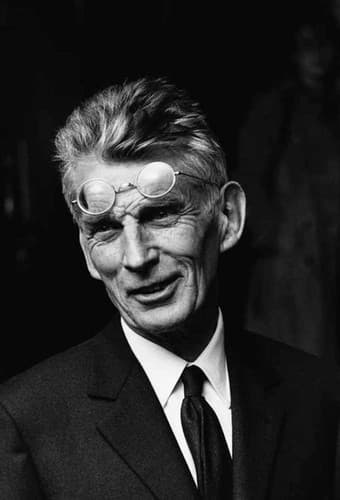
Samuel Barclay Beckett was an Irish novelist, dramatist, short story writer, theatre director, poet, and literary translator. His literary and theatrical work features bleak, impersonal and tragicomic experiences of life, often coupled with black comedy and nonsense. His work became increasingly minimalist as his career progressed, involving more aesthetic and linguistic experimentation, with techniques of repetition and self-reference. He is considered one of the last modernist writers, and one of the key figures in what Martin Esslin called the Theatre of the Absurd.
Similar books
- The Myth of Sisyphus
Albert Camus
4.2 (25k) average on GoodreadsPhilosophyExplores the philosophy of absurdism and the search for meaning in a meaningless world.
- Nausea
Jean-Paul Sartre
3.9 (86k) average on GoodreadsPhilosophySartre's "Nausea" is another pivotal work of existentialist philosophy, presented in novel form. Like "Waiting for Godot," it explores themes of meaninglessness and the crushing weight of freedom and existence. Roquentin, the protagonist of "Nausea," experiences a profound sense of 'nausea' as he confronts the contingent, superfluous nature of existence and the lack of inherent meaning in objects and people. While both works depict characters grappling with existential dread, Sartre's approach is more introspective and analytical, detailing Roquentin's internal philosophical journey. Beckett's play, conversely, externalizes this dread through action (or inaction) and dialogue, allowing the audience to witness the raw, often comedic, struggle of individuals attempting to create meaning in a void, rather than observing a character's internal philosophical breakdown. Sartre's work is an intellectual exploration of existentialism, while Beckett's is an experiential one.
- Brave New World
Aldous Huxley
4.0 (1.4M) average on GoodreadsFantasyIn a future where happiness comes from chemicals and individuality is gone, one man's desire for real experience threatens the calm, controlled society.
- Life of Pi
Yann Martel
3.9 (1.3M) average on GoodreadsFantasyStranded in the vast Pacific, a young Indian boy forms an unlikely bond with a Bengal tiger, questioning belief and survival.
- The Picture of Dorian Gray
Oscar Wilde
4.1 (966k) average on GoodreadsFantasyA beautiful young man's soul decays within a cursed portrait, mirroring the grotesque cost of his hedonistic pursuit of eternal youth and illicit pleasure.
- Tuesdays with Morrie
Mitch Albom
4.1 (782k) average on GoodreadsBiographyA dying professor's weekly lessons from his bedside change a former student, giving him ideas on life, love, and letting go.



Enjoyed the summary?
A summary gives you the shape of the book. The book itself has the detail, the examples and the voice.
Find Waiting for Godot on AmazonAs an Amazon Associate, BookBrief earns from qualifying purchases. How we're funded