
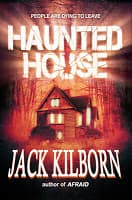
Synopsis
Covers the whole plot, including the ending.
- Difficulty
- Medium
- Pacing
- Fast
- Mood
- Suspenseful, terrifying, mysterious, claustrophobic
Haunted House Plot Summary
Covers the whole plot, including the ending.
The Invitation
The story begins with several characters, all survivors of horrific past events from previous novels, receiving a mysterious invitation. These individuals include Jim and Amy (from AFRAID), Ken, Joe, and Nancy (from TRAPPED), and Paul and Sarah (from ENDURANCE). The invitation is for a 'haunted house experience' at Blackwood Manor, a remote, run-down mansion, with a large cash prize for those who finish it. Skeptical but curious, and many still affected by their past, they decide to go. Each has their own reasons: some want the money, others seek a strange form of closure or an explanation for why they lived. They do not know that the person behind this event has a deeper, more dangerous plan than just entertainment.
Arrival at Blackwood Manor
When the survivors arrive at Blackwood Manor, a decaying Victorian mansion with a heavy atmosphere, they find other invited guests. These include Dr. Frank Belgium, a mysterious and unsettling character from ORIGIN. Belgium, a brilliant but morally questionable scientist, introduces himself as the host and explains the 'game's' rules. He claims the house is truly haunted and that their challenge is to survive the night, or several nights, while recording any paranormal activity. The cash prize is repeated, and participants are encouraged to explore the house, which is filled with old furniture, eerie portraits, and a strong sense of dread. The first interactions among the survivors are tense, marked by suspicion and a shared, unspoken understanding of their violent histories.
First Disturbances
As night falls, Blackwood Manor's true nature appears. The house, more than just a prop, starts to show real supernatural events. Lights flicker, doors slam shut on their own, whispers echo through the halls, and chilling figures are glimpsed. The survivors, initially trying to explain the events as tricks or psychological manipulation by Dr. Belgium, find their doubt fading. Their past traumas reappear, making them especially open to the house's evil influence. Panic slowly starts as they realize this is much more than a staged event. Their survival instincts, sharpened by past horrors, are again needed. The line between reality and hallucination blurs, and the group's unity begins to break under the constant psychological attack.
The House's History Revealed
Dr. Belgium, watching the unfolding terror with detached interest, eventually gives some vague details about Blackwood Manor's dark history. He says the house was once home to a family involved in dark rituals and has been a center for supernatural energy for centuries. More disturbingly, he hints at his own long-standing interest in the paranormal and the human mind under stress, suggesting that the 'haunting' is not just an accident but a controlled experiment. He mentions a device or method he is using to amplify the house's inherent evil, effectively turning it into a living thing designed to feed on their deepest fears. This revelation shifts the participants' focus from just surviving the ghosts to understanding Belgium's twisted plan.
Separation and Psychological Warfare
The house's influence grows, exploiting each survivor's individual psychological weaknesses. Jim sees visions of his deceased wife, Amy relives her abduction, Ken battles hallucinations of the cultists who tormented him, and Joe and Nancy are haunted by the memory of their ordeal in the pit. The group becomes more fragmented as fear and paranoia take hold, leading to accusations and mistrust. Dr. Belgium, through a hidden surveillance system, observes their reactions, making subtle adjustments to the house's manifestations, tailoring the terror to each person. Physical threats are minimal at this stage; the real danger is the psychological breakdown and the house's ability to drive them to madness or self-destruction by forcing them to face their most horrific memories.
The First Casualties
The 'game' moves from psychological torment to physical danger. Pushed to the edge of sanity by the house's constant attack, some participants give in to its influence. One character, overwhelmed by personal demons, commits suicide in a gruesome way, seemingly driven by a hallucination. Another is brutally murdered by a seemingly possessed houseguest, showing how blurred the lines are between supernatural and human evil. These deaths shatter any remaining belief the survivors held about the 'experience' being harmless. The stakes are now clearly life or death, and the survivors realize that escape, not just endurance, is their main goal. The house itself seems to enjoy their fear and suffering, growing stronger with each death.
Confronting Belgium
Realizing that Dr. Belgium is the true creator of their nightmare, the remaining survivors combine their resources and decide to confront him. They navigate the booby-trapped and increasingly hostile mansion, battling both the house's spectral inhabitants and their own fading sanity. They eventually corner Belgium in a hidden laboratory or control room within the manor, where he reveals the full scope of his experiment. He explains his theory that intense trauma and fear create a specific energy that can be collected and amplified, and that their past experiences made them ideal subjects. His ultimate goal is to understand and control this energy, believing it holds the key to unlocking new aspects of human experience or even immortality.
The Device and the Source
In his lab, Dr. Belgium proudly shows the device he has been using to manipulate Blackwood Manor and its inhabitants. It is a complex array of scientific equipment and occult artifacts, designed to amplify the house's inherent supernatural energies and channel the fear and trauma generated by the survivors. He explains that the house itself is a center of dark energy, a conduit to something ancient and evil, and that he is simply 'tuning' it. His goal is not just observation, but control – to master the forces that have historically plagued humanity. The survivors understand that they are not just victims, but unwilling catalysts for Belgium's grand, horrific experiment, and that their continued suffering is essential to his success.
The Uprising
Despite their weakened state, the survivors, united by a common enemy, launch a desperate counter-attack against Dr. Belgium. They use their collective trauma and survival skills, honed in previous horrors, to fight back. The battle is complex: they must deal with Belgium's cunning and traps, the house's intensified supernatural attacks, and their own internal demons. They try to destroy Belgium's device, believing it is the key to stopping the haunting and escaping the manor. The fight is brutal and chaotic, with the house seemingly fighting back, creating new illusions and physical obstacles to protect its master and its own dark power.
The Climax and Destruction
The climax shows the survivors making a desperate, final effort to stop Belgium and destroy the source of the haunting. They manage to damage or overload Belgium's device, which has a catastrophic effect on Blackwood Manor. The house, unable to contain the unleashed energies, begins to fall apart. Walls crumble, fires erupt, and the supernatural manifestations reach a peak before collapsing entirely. Dr. Belgium, either consumed by his own experiment, trapped in the collapsing mansion, or finally defeated by the survivors, dies. The survivors, battered and scarred, narrowly escape the collapsing inferno, leaving Blackwood Manor to burn to the ground, taking its dark secrets with it.
Aftermath and Lingering Scars
Immediately after, the few remaining survivors emerge from the burning ruins of Blackwood Manor, physically injured but alive. Authorities find them and struggle to understand their wild stories of a haunted house and a mad scientist. While the immediate danger is gone, the experience at Blackwood Manor adds another layer of trauma to their already difficult lives. They are forever changed, having faced not only external horrors but also the deepest parts of their own minds. The ending leaves a lingering feeling that while the house is destroyed, the scars of their experiences, and perhaps the evil energy Belgium sought to control, will continue to haunt them in different ways, questioning what survival truly means.
Haunted House Characters
Jim
Protagonist
A haunted survivor from AFRAID, seeking peace.
Jim is one of the central protagonists, a survivor of the horrific events in AFRAID. He is characterized by his quiet strength and deep-seated trauma, particularly the loss of his wife and the ordeal he endured. Jim is often the voice of reason and courage within the group, attempting to protect others even as he battles his own inner demons. His past experiences have made him cynical but also resilient, capable of facing extreme danger when pushed. He struggles with guilt and the desire to find meaning in his survival.
Relationships: Amy (Fellow survivor, platonic ally); Dr. Frank Belgium (Antagonist, tormentor)
Amy
Protagonist
A strong-willed survivor from AFRAID, battling inner demons.
Amy, also from AFRAID, is another key protagonist. She is portrayed as resourceful and strong-willed, but deeply scarred by her past abduction and torture. Her resilience is constantly tested, and she often struggles with panic attacks and the resurgence of her memories. Amy's determination to survive and protect herself is a driving force, but she is also prone to moments of vulnerability. She forms a bond with Jim, relying on their shared history to navigate the new horrors.
Relationships: Jim (Fellow survivor, platonic ally); Dr. Frank Belgium (Antagonist, tormentor)
Ken
Protagonist
A pragmatic and cautious survivor from TRAPPED.
Ken is a survivor from TRAPPED, known for his more pragmatic and analytical approach to dangerous situations. He is often the one to question the logic behind the events and attempts to find rational explanations before succumbing to fear. His past ordeal has made him wary and cautious, but also incredibly resilient. He tries to maintain a level head, even as the supernatural events unfold, and often acts as a grounding force for the more emotional members of the group.
Relationships: Joe (Fellow survivor, ally); Nancy (Fellow survivor, ally); Dr. Frank Belgium (Antagonist, tormentor)
Joe
Supporting
A brave but weary survivor from TRAPPED.
Joe, another survivor from TRAPPED, is characterized by his bravery and loyalty, though he carries the heavy burden of his past experiences. He is physically capable and willing to take risks, but the constant exposure to horror has left him emotionally drained. He often looks out for Nancy and forms a protective bond with the other survivors. His struggle is to find the strength to keep fighting when all seems lost, constantly battling the memory of the pit.
Relationships: Ken (Fellow survivor, ally); Nancy (Fellow survivor, ally); Dr. Frank Belgium (Antagonist, tormentor)
Nancy
Supporting
A emotionally fragile survivor from TRAPPED.
Nancy, also from TRAPPED, is perhaps the most emotionally vulnerable of the group. Her past trauma has left her prone to panic and anxiety, making her particularly susceptible to the psychological attacks of Blackwood Manor. She relies heavily on the support of Joe and the others, and her struggle is to overcome her debilitating fear to contribute to the group's survival. Her journey highlights the psychological toll of repeated exposure to extreme horror.
Relationships: Joe (Fellow survivor, ally); Ken (Fellow survivor, ally); Dr. Frank Belgium (Antagonist, tormentor)
Paul
Supporting
A resourceful and determined survivor from ENDURANCE.
Paul is a survivor from ENDURANCE, known for his resourcefulness and determination. He is practical and often looks for solutions to physical problems, using his skills to navigate the house's traps. His past has instilled in him a strong will to live and a distrust of authority. He is less prone to emotional outbursts and more focused on practical escape strategies, making him a valuable asset to the group.
Relationships: Sarah (Fellow survivor, ally); Dr. Frank Belgium (Antagonist, tormentor)
Sarah
Supporting
A resilient and observant survivor from ENDURANCE.
Sarah, also from ENDURANCE, is resilient and observant. She often notices details that others miss and uses her intuition to assess threats. Like Paul, she is practical, but also possesses a strong sense of empathy, often trying to comfort or understand the other survivors. Her past has made her tough, but she retains a core of humanity that helps her connect with the others. She struggles with the moral implications of their predicament.
Relationships: Paul (Fellow survivor, ally); Dr. Frank Belgium (Antagonist, tormentor)
Dr. Frank Belgium
Antagonist
A brilliant but psychopathic scientist from ORIGIN.
Dr. Frank Belgium is the primary antagonist, a brilliant but utterly amoral scientist introduced in ORIGIN. He is obsessed with understanding and controlling the nature of fear, trauma, and the supernatural. Belgium views humans as mere test subjects and lacks any discernible empathy. His intellect allows him to orchestrate elaborate and cruel experiments, using Blackwood Manor as his laboratory and the survivors' past traumas as his fuel. He is calm, articulate, and utterly terrifying in his detachment.
Relationships: All survivors (Experiment subjects, tormentor)
Haunted House Themes
The Persistence of Trauma
The novel deeply explores how past trauma continues to affect individuals, appearing not just as psychological scars but as active weaknesses. The characters, having survived previous horrors, are chosen because their minds are already open to fear. Blackwood Manor preys on these existing wounds, forcing them to relive their worst moments, showing that survival is not the end of the battle, but often the start of a new, internal one. This theme highlights the lasting impact of extreme violence and psychological abuse.
“The house knew their fears, because their fears were already living inside them, waiting for a chance to break free.”
The Nature of Evil
HAUNTED HOUSE examines evil in many forms: the supernatural malice of Blackwood Manor, the calculated cruelty of Dr. Frank Belgium, and the potential for evil within humans pushed to their limits. The story blurs the lines between these, suggesting that the house's power is amplified by human fear and suffering, and Belgium's scientific curiosity is indistinguishable from pure sadism. It questions whether evil is an inherent force, a human creation, or a symbiotic relationship between both, ultimately showing how easily one can become a monster, or be consumed by one.
“Some houses are just old. Others are hungry.”
Survival and Resilience
Despite the overwhelming horror, a core theme is the human will to survive. The characters are already 'survivors,' and the novel tests their resilience to its limits. They endure extreme psychological and physical torment, finding strength in their shared experience and their refusal to give up. This theme celebrates the human spirit's ability to endure unimaginable suffering, fight back against impossible odds, and cling to life even when hope seems lost, though it acknowledges the heavy cost of such endurance.
“They had survived worse. They would survive this, or die trying.”
Exploitation of Suffering
The novel critically explores the theme of exploiting human suffering, primarily through Dr. Frank Belgium. He deliberately gathers individuals with deep-seated trauma, not to help them, but to use their fear and pain for his scientific experiments. This raises ethical questions about seeking knowledge at any cost and treating individuals as less than human for a greater, twisted purpose. Belgium represents the darkest side of scientific ambition, where empathy is absent, and human lives are merely data points in a grand, horrific plan.
“Your fear, your pain, it's all just energy. And I'm learning how to conduct it.”
Plot Devices & Literary Techniques
The Haunted House (Blackwood Manor)
A physical setting that acts as a character and antagonist.
Blackwood Manor is not merely a backdrop; it is a central antagonist. The house is depicted as a living, malevolent entity that feeds on fear and trauma. It actively manipulates the environment, creates illusions, and amplifies the characters' deepest fears, making it a character in itself. Its decaying grandeur and dark history contribute to the oppressive atmosphere, and its destruction is crucial to the story's climax, signifying the defeat of a primary source of evil.
Shared Trauma and Pre-existing Characters
Using established backstories to deepen character vulnerability and connection.
The novel leverages the pre-existing backstories of its characters from previous Kilborn novels. This device allows for immediate character depth and vulnerability without extensive exposition. The shared trauma creates an instant bond and understanding among the survivors, but also provides Dr. Belgium with specific psychological targets. Their past experiences inform their reactions, fears, and survival strategies, making the 'haunting' deeply personal and intensely effective, as the house preys on known weaknesses.
The Mad Scientist (Dr. Frank Belgium's Device)
A technological and occult apparatus amplifying the haunting.
Dr. Frank Belgium's device serves as a crucial plot device, bridging the gap between scientific horror and supernatural terror. It's a tangible explanation for the house's intensified malevolence, allowing Belgium to control and amplify the haunting. This device provides a clear goal for the protagonists – to destroy it – and grounds the supernatural elements in a quasi-scientific framework, making the horror more immediate and controllable, rather than purely mystical. Its destruction is key to breaking the house's power.
Psychological Warfare
The primary method of torment, exploiting characters' minds.
The novel heavily employs psychological warfare as its main plot device for generating horror. Instead of relying solely on jump scares or physical threats, the haunting primarily targets the characters' minds, forcing them to confront their deepest fears, guilt, and past traumas. This is achieved through illusions, personalized hallucinations, disorienting sounds, and subtle manipulations of their environment. This method makes the horror deeply personal and inescapable, as the characters are battling not just external forces, but their own fractured psyches.
Quiz
10 questions on the plot and the characters. Each answer comes with a short explanation.
Question 1
What genre does the book "Haunted House" primarily fall under?
- Romance
- Thriller
- Comedy
- Historical Fiction
Show answer
B. Thriller The provided text explicitly states that the book is a Thriller, Fantasy, and Mystery.
Question 2
According to the text, "Haunted House" is a sequel to which of the following novels?
- Origin
- Afraid, Trapped, and Endurance
- The Shining
- It
Show answer
B. Afraid, Trapped, and Endurance The text mentions, "HAUNTED HOUSE is a sequel to the novels AFRAID, TRAPPED, and ENDURANCE."
Question 3
Which character from another novel is mentioned as appearing in "Haunted House"?
- Jack Torrance
- Dr. Frank Belgium
- Hannibal Lecter
- Sherlock Holmes
Show answer
B. Dr. Frank Belgium The text states, "Also included is Dr. Frank Belgium, from ORIGIN."
Question 4
The back stories of characters in "Haunted House" are found in:
- The same novel, "Haunted House"
- Separate short stories
- Other books by the author
- No other source, they are exclusive to this book
Show answer
C. Other books by the author The text says, "In the case of HAUNTED HOUSE, these back stories exist in other books."
Question 5
Can "Haunted House" be read as a standalone novel?
- No, it is impossible to understand without reading the previous books
- Yes, but it is highly recommended to read the prior books first
- Yes, it can be read as a standalone
- Only if the reader is already familiar with the author's other works
Show answer
C. Yes, it can be read as a standalone The text explicitly states, "While HAUNTED HOUSE can be read as a stand alone..."
Question 6
For readers who enjoy "Haunted House", what is suggested?
- To stop reading the author's books
- To read other books in the same genre by different authors
- To read more about the characters in different novels by the same author
- To only re-read "Haunted House"
Show answer
C. To read more about the characters in different novels by the same author The text suggests, "...if a reader enjoys it, he/she can read more about these characters in different novels."
Question 7
The blog mentioned in the text is titled:
- Publishing Insights
- A Newbie's Guide to Publishing
- Jack Kilborn's Blog
- Horror Novel Reviews
Show answer
B. A Newbie's Guide to Publishing The text states, "- from J.A. Konrath's Blog "A Newbies Guide to Publishing"."
Question 8
What is the primary benefit for fans of Kilborn's other novels when reading "Haunted House"?
- They discover a completely new set of characters
- They get to see familiar characters appear in a new story
- They can finally understand the plot of the previous books
- They are introduced to a different genre
Show answer
B. They get to see familiar characters appear in a new story The text notes, "And fans of these other novels will enjoy seeing familiar characters show up again in a new novel."
Question 9
The information about "Haunted House" is sourced from a blog written by:
- Jack Kilborn
- Dr. Frank Belgium
- An unknown fan
- J.A. Konrath
Show answer
D. J.A. Konrath The attribution at the end of the text clearly states, "- from J.A. Konrath's Blog..."
Question 10
The phrase "put through a new kind of hell" suggests that the characters in "Haunted House" will experience:
- A mild inconvenience
- A romantic encounter
- An extremely difficult and unpleasant situation
- A peaceful resolution
Show answer
C. An extremely difficult and unpleasant situation The idiom "a new kind of hell" implies a severe and terrible ordeal, far beyond a mild inconvenience or peace.
Haunted House FAQ
Is "Haunted House" a standalone novel?
"Haunted House" can be read as a standalone novel and may be the first book by Jack Kilborn that many readers pick up. However, it is a sequel to "Afraid," "Trapped," and "Endurance," and features characters from those novels, as well as Dr. Frank Belgium from "Origin."
What genre is "Haunted House"?
"Haunted House" falls into the thriller, fantasy, and mystery genres. It combines elements of suspense, supernatural occurrences, and puzzling events.
Do I need to read the previous books before reading "Haunted House"?
While "Haunted House" can be enjoyed on its own, reading the previous novels like "Afraid," "Trapped," and "Endurance" will provide deeper background and context for the characters and their shared experiences. Fans of those books will particularly enjoy seeing familiar characters reappear.
Who are the main characters in "Haunted House"?
The main characters are the survivors from Jack Kilborn's previous novels "Afraid," "Trapped," and "Endurance." Additionally, Dr. Frank Belgium from the novel "Origin" is also a significant character in "Haunted House."
What is the premise of "Haunted House"?
In "Haunted House," the survivors from previous Jack Kilborn thrillers are brought together and subjected to a new and terrifying ordeal. The novel explores their struggles as they face an unknown and frightening situation.
Are there any connections to other Jack Kilborn books?
Yes, "Haunted House" is a sequel and connects to several other Jack Kilborn novels. It features characters from "Afraid," "Trapped," "Endurance," and "Origin," offering a continuation of their stories and a crossover for fans.
What kind of "hell" do the characters go through in "Haunted House"?
The novel describes the characters being put through a "new kind of hell," suggesting an intense and possibly supernatural or psychological torment that goes beyond their previous experiences.
What are the back stories of the characters in "Haunted House"?
The characters in "Haunted House" have back stories that are explored in other Jack Kilborn novels. Reading those books will provide a more complete understanding of their individual histories and motivations.
If I enjoy "Haunted House," what other books by Jack Kilborn should I read?
If you enjoy "Haunted House," you can explore the back stories and further adventures of the characters by reading Jack Kilborn's novels "Afraid," "Trapped," "Endurance," and "Origin."
Is "Haunted House" suitable for new readers of Jack Kilborn?
Yes, "Haunted House" is designed to be accessible to new readers and can be enjoyed as a standalone novel. However, it also serves as a gateway to Kilborn's wider universe for those who wish to delve deeper.
About the author

Jack Kilborn is an author known for his fiction, including the works "Endurance" and "Haunted House." His writing often explores themes of suspense and horror, engaging readers with gripping narratives and complex characters.
Similar books
- The Haunting of Hill House
Shirley Jackson
3.8 (162k) average on GoodreadsThrillerWhile both books explore the concept of a haunted house, Kilborn's "Haunted House" is significantly more explicit in its horror and action. Jackson's classic is a masterclass in psychological horror, relying on subtle dread, unreliable narration, and the slow unraveling of sanity. Kilborn, in contrast, delivers overt supernatural attacks and a much higher body count, prioritizing visceral thrills over slow-burn psychological terror. Jackson's house is a character primarily through its effect on the human mind; Kilborn's house is an active, physical aggressor.
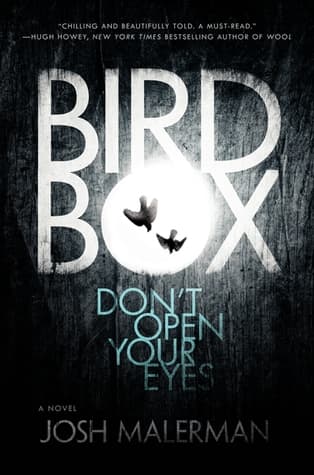
- Bird Box
Josh Malerman
4.0 (143k) average on GoodreadsThrillerBoth "Haunted House" and "Bird Box" plunge their protagonists into immediate, life-threatening scenarios with unknown, unseen (or barely seen) entities. Malerman's novel builds tension through the fear of the unseen and the psychological toll it takes, forcing characters to rely on other senses. Kilborn, while also using mystery, is much more direct in revealing the monstrous threats and their gruesome capabilities. "Bird Box" is a survival story centered on sensory deprivation and existential dread, whereas "Haunted House" is a survival story rooted in confrontational horror and relentless physical onslaught, even if the entities' full nature remains elusive.
- Angels & Demons
Dan Brown
3.9 (2.7M) average on GoodreadsThrillerA Harvard symbologist races through Rome's ancient sites, deciphering cryptic clues to unmask the Illuminati and stop a vengeful plot to destroy the Vatican with a stolen antimatter weapon.
- Gone Girl
Gillian Flynn
4.1 (2.3M) average on GoodreadsThrillerA wife's sudden disappearance on her fifth anniversary reveals a web of lies and psychological warfare, exposing the secrets within a seemingly perfect marriage.
- The Girl on the Train
Paula Hawkins
3.9 (2.1M) average on GoodreadsThrillerA woman’s fascination with a seemingly perfect couple she watches from her daily train commute leads her into a dark investigation when she witnesses something that shatters their idyllic image.
- The Da Vinci Code
Dan Brown
3.9 (1.9M) average on GoodreadsThrillerA symbologist and a cryptologist race through European landmarks, deciphering ancient codes and uncovering a conspiracy that could rewrite the foundations of Christianity.





Enjoyed the summary?
A summary gives you the shape of the book. The book itself has the detail, the examples and the voice.
Find Haunted House on AmazonAs an Amazon Associate, BookBrief earns from qualifying purchases. How we're funded