
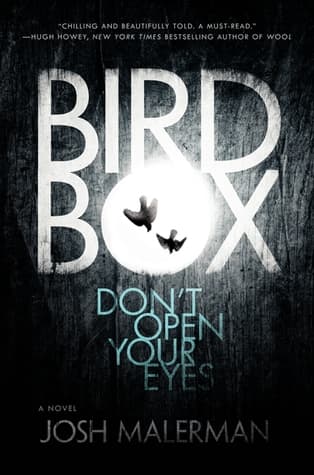
Synopsis
Covers the whole plot, including the ending.
- Difficulty
- Medium
- Pacing
- Fast
- Mood
- Suspenseful, Terrifying, Desperate, Claustrophobic
- Read it if
- You enjoy tense, psychological thrillers with a unique premise and a focus on survival against an unknown threat.
- Skip it if
- You prefer clear explanations for supernatural phenomena or struggle with themes of intense parental fear and survival horror.
Bird Box Plot Summary
Covers the whole plot, including the ending.
The Journey Begins
The story begins with Malorie, a protective mother, getting her four-year-old children, Boy and Girl, ready for a dangerous river journey. They live in an abandoned house, surrounded by an unseen threat that causes madness and suicide upon sight. Malorie has trained the children to listen and obey, as they must stay blindfolded for the entire trip. Her goal is a rumored safe haven, twenty miles downriver. She packs few supplies, including a bird box with three canaries, which she thinks can sense the entities. Tension is immediate as they start into the unknown, navigating only by sound and Malorie's memory of the river.
Malorie's Past: The Outbreak's Beginning
Five years earlier, Malorie is pregnant and alone when news reports describe a mysterious epidemic of mass suicides worldwide. People become violent against themselves and others after seeing something indescribable. Her sister, Shannon, visits, bringing more alarming news and growing panic. Soon, Shannon falls victim to the phenomenon, succumbing after looking out a window. Malorie watches her sister's horrific, self-inflicted death. This event forces Malorie to face the world's collapse and her urgent need for safety for herself and her unborn child.
Finding Sanctuary at Tom's House
Desperate and alone after Shannon's death, Malorie finds a house with blacked-out windows, guided by an anonymous phone call. Inside, she finds a group of survivors led by Tom, a practical man who has organized their defenses. The group includes Don, an older man; Jules, a former athlete; Felix, a young man; Cheryl, a kind woman; and Olympia, another pregnant woman. They live by strict rules: covered windows, blindfolded outdoor trips, and extreme caution with outside sounds. This house becomes Malorie's temporary refuge, a place to prepare for motherhood during the apocalypse.
Life Inside the House
Life in the house settles into a tense routine. Tom uses a ham radio, trying to contact other survivors. The group shares stories, debates theories about the entities, and struggles with dwindling resources. Malorie and Olympia bond over their shared pregnancy. Don, however, often expresses a wish to see outside, thinking it might be a trick. The survivors develop methods for foraging, always blindfolded, using sound and touch. The constant outside threat creates paranoia and distrust, yet they try to build some sense of community and hope in their isolated lives.
The First Breach
One day, a stranger named Gary arrives at the house, claiming to be a survivor. He is blindfolded and brought inside. Gary seems harmless at first, but Malorie immediately distrusts him. He carries a briefcase of drawings depicting the entities, which he claims are beautiful and bring enlightenment. He speaks of 'seeing' as a path to truth, openly defying the group's rule of not looking. His presence creates a dangerous division within the group, as he subtly tries to convince others that the entities are not threats but something to welcome, increasing Malorie's suspicions.
Birth and Betrayal
Malorie and Olympia go into labor at the same time. During the births, Gary, who has been pretending to sleep, acts. He removes the window coverings, exposing several group members to the entities outside. Jules and Felix go mad and commit suicide. Don, influenced by Gary, also looks and succumbs. In the panic, Olympia, after seeing something, tries to harm her newborn before taking her own life. Malorie, having just given birth to her son, must kill Olympia to protect the babies, strengthening her resolve to protect them at all costs. Cheryl, though traumatized, helps Malorie with the newborns.
Raising the Children in Darkness
After the tragedy, only Malorie, Tom, and Cheryl remain with the two babies — Malorie's son and Olympia's daughter. Cheryl eventually leaves, unable to cope with the trauma, and does not return. Malorie names the children Boy and Girl, refusing individual names to stress their shared struggle and the need for strict adherence to her rules. Tom becomes a father figure, teaching them practical skills while Malorie instills absolute obedience, drilling them on navigating blindfolded and responding to her commands. Their childhood is one of constant watchfulness, where the unseen world is a deadly threat.
The Radio Call and the Decision to Leave
Tom continues trying to contact other survivors via ham radio. One day, he contacts Rick, who claims to run a safe, blind community twenty miles downriver. Rick describes a place where people live without fear of the entities, a true sanctuary. This news gives Malorie hope, as she has long dreamed of a better life for her children. Despite the huge risks, Malorie decides this is their chance. She carefully plans their journey, knowing the river itself presents many dangers, let alone the entities along its banks.
Perils on the River
The river journey is difficult. Malorie, Boy, and Girl navigate rapids, fallen trees, and the constant threat of the entities. The canaries in the bird box occasionally chirp loudly, signaling nearby horrors, forcing Malorie to row harder or change direction. At one point, they hear voices from the riverbank — people who have been 'turned' and now try to coax others to look. Malorie's determination is tested by fear and exhaustion, but the children's trust and her strong maternal instinct push her forward. The river itself becomes a path to salvation and a source of constant danger.
The Final Obstacle
As they near their destination, they meet a group of 'turned' individuals trying to capsize their boat, urging them to open their eyes. Malorie must make a hard decision to protect her children. She uses her knowledge of the river and boat to evade them, narrowly escaping. One of the 'turned' individuals tries to climb into their boat, and Malorie, in a desperate act of self-preservation, shoves them back into the water. The struggle further confirms Malorie's understanding that survival requires constant vigilance and, at times, harsh action.
Arrival at the Sanctuary
Finally, after days of hard travel, Malorie hears the sounds of rapids, showing they are close to the sanctuary. She guides the boat through the rough water, using her children's sharp hearing to find obstacles. They eventually crash onto a bank and are met by Rick, who is blind. He explains that the community is mostly visually impaired, making them immune to the entities' main weapon. The children are given names for the first time: Tom and Olympia. Malorie, for the first time in years, feels a glimmer of true safety and hope, realizing her journey has brought them to a place where they can finally live without constant fear.
A New Beginning
Inside the sanctuary, Malorie and the children find a thriving, though sightless, community. Rick introduces them to the other residents, who move with confidence. The children, now named Tom and Olympia, begin to explore their new world, learning to interact with others and experience a childhood free from terror. Malorie, relieved and exhausted, finally takes off her blindfold, though she still struggles with the fear of looking. The book ends with Malorie watching her children play, an image of hope in a changed world, where a new form of life has begun.
Bird Box Characters
Malorie
Protagonist
A fiercely protective mother determined to save her children from an unseen threat.
Malorie is a pragmatic, resilient, and deeply traumatized woman. Initially withdrawn and cautious, her pregnancy and the subsequent apocalypse force her to become an unyielding protector. She is defined by her meticulous planning, her unwavering discipline, and her capacity for extreme measures when her children's safety is at stake. Her emotional walls are high, a defense mechanism against the horrors she has witnessed and the constant threat of the entities. Despite her stoicism, her love for her children is the driving force behind all her actions.
Relationships: Boy (Tom) (Son, object of fierce protection and strict training.); Girl (Olympia) (Adopted daughter, object of fierce protection and strict training.); Shannon (Sister, whose death traumatizes Malorie.); Tom (Friend and surrogate father figure to the children, a source of stability.); Olympia (Fellow pregnant survivor, a brief bond formed in shared vulnerability.); Gary (Antagonist, a manipulative threat to the group's safety.)
Boy (Tom)
Supporting
Malorie's biological son, trained from birth to survive blindfolded.
Boy, later named Tom, is one of Malorie's two children. He is four years old during the river journey. He is exceptionally disciplined and obedient, a testament to Malorie's rigorous training. He has never known a world where seeing is safe and relies entirely on his hearing and his mother's commands. His innocence is tempered by his learned survival instincts, making him a poignant symbol of a generation raised in the apocalypse. He represents the hope for a future, albeit one shaped by profound darkness.
Relationships: Malorie (Mother, trainer, and ultimate protector.); Girl (Olympia) (Adopted sister and companion in survival.)
Girl (Olympia)
Supporting
Olympia's daughter, adopted by Malorie and raised alongside Boy.
Girl, later named Olympia, is the daughter of the original Olympia, adopted by Malorie after her mother's death. Like Boy, she is four years old and has been rigorously trained by Malorie to navigate the world blindfolded. She is equally disciplined and reliant on Malorie's guidance. Her presence underscores the tragic loss of her biological mother and Malorie's profound commitment to protecting both children. She embodies the resilience of the human spirit, adapting to an unimaginable existence from birth.
Relationships: Malorie (Adopted mother, trainer, and protector.); Boy (Tom) (Adopted brother and companion in survival.); Olympia (Biological mother, who died shortly after her birth.)
Tom
Supporting
The pragmatic leader of the first survivor group and a father figure to Malorie's children.
Tom is a resourceful and calm individual who establishes the initial safe house where Malorie finds refuge. He is practical, level-headed, and dedicated to the survival of the group. After the tragedy caused by Gary, he becomes Malorie's sole companion and a surrogate father to the children, providing stability and hope in their bleak existence. He is a voice of reason and a skilled problem-solver, ultimately being the one to make contact with the blind community via radio.
Relationships: Malorie (Friend, co-survivor, and eventual partner in raising the children.); Boy (Tom) (Surrogate father figure.); Girl (Olympia) (Surrogate father figure.)
Gary
Antagonist
A seemingly harmless survivor who secretly worships the entities and seeks to expose others to them.
Gary is the primary human antagonist. He presents himself as a lost survivor but is, in fact, a mentally unstable individual who believes the entities bring enlightenment rather than destruction. He carries a briefcase of disturbing drawings and subtly manipulates the group's trust, eventually betraying them in a horrific act. Gary represents the internal threat to humanity's survival, a dangerous ideology that embraces the very force that seeks to annihilate them. He is charismatic yet deeply disturbing.
Relationships: Malorie (Antagonistic, as she immediately distrusts him.); Don (Manipulates Don into looking at the entities.)
Olympia
Supporting
Another pregnant survivor who forms a bond with Malorie.
Olympia is a kind and somewhat naive young woman who is also pregnant when she joins Tom's house. She forms a bond with Malorie over their shared condition, offering a brief moment of normalcy and companionship. Her innocence makes her particularly vulnerable to Gary's deception. Her tragic death, immediately after giving birth, serves as a catalyst for Malorie's heightened resolve to protect the newborns at any cost.
Relationships: Malorie (Fellow pregnant survivor, brief friend.); Girl (Olympia) (Biological mother.)
Shannon
Mentioned
Malorie's sister, one of the earliest victims of the outbreak.
Shannon is Malorie's sister, who appears briefly at the beginning of the story. She is the first person Malorie witnesses succumbing to the entities' influence, a traumatic event that profoundly shapes Malorie's understanding of the threat and her drive to survive. Her death is Malorie's direct introduction to the horrors of the new world.
Relationships: Malorie (Sister, her death is a profound trauma for Malorie.)
Rick
Supporting
The blind leader of the sanctuary community.
Rick is the man Malorie contacts via radio and the leader of the safe community downriver. He is blind, which makes him and his community inherently immune to the primary danger of the entities. Rick represents hope and the possibility of a new, sustainable way of life in the post-apocalyptic world. He is compassionate and welcoming, offering a true sanctuary to Malorie and her children.
Relationships: Malorie (Provides Malorie with guidance and a safe haven.)
Bird Box Themes
Motherhood and Protection
The main theme of 'Bird Box' is the intense, often brutal, nature of maternal protection when facing horror. Malorie's entire life focuses on keeping her children, Boy and Girl, safe. This theme shows in her strict discipline, forcing her children to live blindfolded and teaching them absolute obedience, as seen during their dangerous river journey. Her initial refusal to give them individual names highlights her focus on their group survival rather than individual identity. The peak of her protection is her willingness to sacrifice everything, including her own emotional well-being, to get them to safety.
“They are my children. They are my only hope. And they will survive.”
Fear of the Unknown
The entities in 'Bird Box' are never seen or fully understood, making the fear of the unknown a constant and terrifying theme. The act of seeing them leads to madness and death, forcing survivors to live blindfolded and use other senses. This lack of clear knowledge increases the terror, as characters must imagine the unspeakable. The entities embody humanity's deepest fears about what lies beyond understanding. The story explores how people cope, or fail to cope, with a threat that cannot be directly faced, as seen in Don's desire to look or Gary's twisted respect for them.
“It is the not knowing that gets to you. The not knowing what it is. The not knowing what it wants.”
Loss of Sight, Gain of Insight
This theme explores how losing sight forces characters to develop other senses and a deeper understanding of their world and themselves. Blindfolds, initially a sign of terror and restriction, become a tool for survival and, for the blind community, a way of life. Malorie's children are raised to navigate by sound and touch, developing a sharp awareness of their surroundings. The sanctuary, filled with visually impaired people, shows that true 'sight' in this world is not about literal vision but about adapting, trusting, and recognizing danger without needing to 'see' it. This theme ends with Malorie finally removing her blindfold in the sanctuary, a moment of both vulnerability and deep understanding.
“The river knows. The river has always known.”
Survival vs. Humanity
This theme deals with the moral compromises and sacrifices needed for survival in an apocalyptic world. Characters must make harsh decisions, often at the cost of their humanity or emotional well-being. Malorie's refusal to name her children, her strict discipline, and her willingness to use violence (as when she kills Olympia) all come from the need to survive. The contrast is clear between the initial group's attempts to maintain normalcy and the harsh reality of the outside world, where any lapse in caution can be fatal. The journey itself tests the limits of what one will do to keep living.
“There is a choice to be made. Between life and living.”
Plot Devices & Literary Techniques
The Blindfold
A literal and metaphorical barrier against the unseen entities.
The blindfold is the central and most iconic plot device. Literally, it is a tool for survival, preventing characters from seeing the entities and succumbing to madness. Metaphorically, it represents humanity's inability to comprehend or confront the cosmic horror. It also symbolizes Malorie's emotional walls and her children's sheltered, yet terrifying, existence. The act of wearing it signifies fear, discipline, and the desperate hope for survival, while its removal, particularly at the end, signifies a shift towards trust and a new way of living.
The Bird Box (Canaries)
A primitive alarm system to detect the entities' proximity.
The bird box, containing three canaries, functions as a crucial early warning system. The birds' frantic chirping or sudden silence indicates the presence of the entities nearby, giving Malorie a precious few moments to react. This device highlights the characters' reliance on non-visual cues and their desperate attempts to understand and avoid an undetectable threat. It also serves as a poignant symbol of life's fragility in a world where even birds can sense the encroaching darkness.
The River Journey
A linear, perilous path towards a rumored sanctuary.
The river journey is the primary narrative structure of the present-day timeline. It is a classic quest motif, representing a linear progression towards a goal, fraught with obstacles. The river itself becomes a character, both a guide and a source of danger (rapids, fallen trees). It amplifies the tension by forcing Malorie and the children into an exposed and unfamiliar environment, where every sound and touch is critical. The journey symbolizes the arduous path humanity must take to find any semblance of safety and hope.
Flashbacks
Interspersed chapters revealing the origins of the apocalypse and Malorie's past.
The narrative uses frequent flashbacks to interweave Malorie's past (the initial outbreak, her time in Tom's house) with her present-day river journey. This device builds suspense, gradually revealing the horrifying origins of the entities and the traumatic events that shaped Malorie's survival instincts. It provides context for her extreme caution and her deep-seated fear, allowing the reader to understand the full scope of the world's unraveling and the sacrifices made to reach the present moment. The flashbacks amplify the stakes of the present journey.
Bird Box Quotes
“It is a house of the blind, she thinks, and she is the only one who can see.”
“The problem with living in a world where you always have to keep your eyes closed is that you don't know what's coming.”
“The blindfold is a promise. It's a promise to stay alive.”
“The worst part is not knowing what you're not seeing.”
“Hope is a dangerous thing. It can make you do stupid things.”
“She has to be strong for them. She has to be the one who sees nothing.”
“The world outside is a canvas of horrors, painted only for those who dare to look.”
“You can’t unsee something. That’s the problem.”
“It wasn't a monster. It was an idea. And ideas don't die.”
“Silence. That’s the sound of safety now. The sound of not seeing.”
“She had given them names, but she hadn’t given them faces.”
“The river was their only road, and the blindfold was their only map.”
“The fear wasn't of what they saw, but what they would become if they saw it.”
“And then, she opens her eyes. Just for a second. Just to be sure.”
Quiz
10 questions on the plot and the characters. Each answer comes with a short explanation.
Question 1
What is the primary rule Malorie and the other survivors must follow to avoid being driven to madness and violence?
- Remain silent at all times
- Never go outside
- Never open their eyes outdoors
- Always stay in groups of three or more
Show answer
C. Never open their eyes outdoors The core premise of Bird Box is that seeing 'something' drives people to insanity and violence, hence the necessity of blindfolds or remaining indoors with covered windows.
Question 2
How old are Malorie's children, Boy and Girl, when she decides to embark on the dangerous river journey?
- Two years old
- Three years old
- Four years old
- Five years old
Show answer
C. Four years old The book explicitly states that the boy and girl are four when Malorie decides it's time to make the journey downriver.
Question 3
What is the name of the man who initially takes Malorie and the other survivors into his house at the beginning of the crisis?
- Don
- Rick
- Tom
- Gary
Show answer
A. Don Don is the first character Malorie meets who offers her shelter, bringing her into his house with other survivors.
Question 4
What mode of transportation does Malorie use for the bulk of her journey to the sanctuary?
- A car, driven blindfolded
- Walking on foot with a guide dog
- A rowboat, blindfolded
- A bicycle, with the children leading
Show answer
C. A rowboat, blindfolded Malorie's perilous journey involves navigating twenty miles downriver in a rowboat, completely blindfolded, relying on her children's hearing.
Question 5
What is the primary method Malorie uses to train her children for the dangerous world outside, specifically for their journey?
- Teaching them to read maps by touch
- Drill exercises involving identifying sounds and directions while blindfolded
- Practicing self-defense techniques against unseen threats
- Memorizing specific landmarks along the river
Show answer
B. Drill exercises involving identifying sounds and directions while blindfolded Malorie rigorously trains her children to identify sounds, directions, and potential dangers while blindfolded, which is crucial for their survival on the river.
Question 6
What is the significance of the character Gary to the initial group of survivors in Don's house?
- He is a doctor who provides medical aid
- He represents the danger of those who can look at the creatures without being driven mad, and forces others to look
- He is an expert survivalist who finds supplies for the group
- He is the one who first discovers the creatures' weakness
Show answer
B. He represents the danger of those who can look at the creatures without being driven mad, and forces others to look Gary is a pivotal antagonist in the flashback sequences; he is a seemingly unaffected individual who believes the creatures are beautiful and tries to force others to look at them, leading to the group's demise.
Question 7
What is the ultimate destination Malorie is trying to reach at the end of her journey?
- A government-protected bunker
- A remote island sanctuary
- A former school for the blind
- A fortified city run by other survivors
Show answer
C. A former school for the blind Malorie is guided by radio transmissions to a former school for the blind, which has been converted into a safe haven for those who have learned to live without sight.
Question 8
What specific sound do Malorie and her children use as a critical navigational aid during their river journey?
- The repetitive call of a specific bird species
- The distinct sound of rushing rapids
- The voice of Rick on the radio, giving directions
- The hum of an old generator
Show answer
C. The voice of Rick on the radio, giving directions Rick, a survivor at the sanctuary, sends out radio messages with specific instructions, including a recurring phrase, 'The river is safe here,' which Malorie and the children listen for.
Question 9
Which of the following best describes the psychological theme most prominent in 'Bird Box'?
- The corrupting influence of power
- The struggle for survival and the loss of innocence in a hostile world
- The inevitable triumph of good over evil
- The beauty found in extreme isolation
Show answer
B. The struggle for survival and the loss of innocence in a hostile world The novel heavily emphasizes Malorie's desperate and often brutal measures to ensure her children's survival, forcing them to grow up in a world devoid of sight and normal childhood experiences.
Question 10
What is the ultimate fate of Tom, Malorie's loyal companion during much of the crisis in the initial house?
- He survives and joins Malorie on her journey
- He is killed by Gary during the chaos in the house
- He commits suicide after seeing the creatures
- He abandons the group to find his own family
Show answer
B. He is killed by Gary during the chaos in the house Tom is one of the last remaining sane adults in the house before Gary's actions lead to the group's destruction. He is ultimately killed by Gary, who forces him to look outside.
Bird Box FAQ
What is the core premise of 'Bird Box' and what drives the initial conflict?
The core premise of 'Bird Box' revolves around an unseen entity that, when viewed, drives people to extreme violence and suicide. The initial conflict is driven by Malorie's desperate attempt to survive in this new, terrifying world while pregnant, forcing her to adapt quickly to a life lived without sight.
Who are the key characters in the present-day timeline and what is their immediate goal?
In the present-day timeline, the key characters are Malorie and her two children, Boy and Girl, who are four years old. Their immediate goal is to travel twenty miles downriver in a rowboat, blindfolded, to reach a rumored sanctuary where they hope to find safety and community.
How does Malorie prepare her children for the perilous journey downriver?
Malorie prepares her children by training them extensively to rely on their other senses, particularly hearing, and to follow her precise instructions without question. She teaches them to identify sounds, row the boat, and maintain their blindfolds, instilling a strict discipline crucial for their survival.
What is the significance of the 'bird box' itself, and how is it used by Malorie?
The 'bird box' contains several canaries, which act as an early warning system against the unseen entities; the birds become agitated and chirp wildly when the entities are near. Malorie relies on this auditory cue to gauge the proximity and threat level of the creatures, guiding her decisions during their blindfolded journey.
What happens to the group of survivors Malorie initially finds shelter with, and who are some notable members?
Malorie initially shelters with a diverse group of survivors in an abandoned house, including Tom, a pragmatic leader; Don, a man struggling with denial; and Olympia, another pregnant woman. The group is ultimately torn apart by internal conflict and the insidious influence of Gary, who deliberately exposes them to the entities, leading to their demise.
What is the nature of the entities, and does the book ever reveal their true form or origin?
The nature of the entities is never explicitly revealed; they are described as an unseen force that, when glimpsed, drives observers to madness and self-destruction. The book deliberately withholds their true form or origin, emphasizing the psychological horror of the unknown rather than a tangible monster.
How does Gary manage to infiltrate the house and what is his true agenda?
Gary infiltrates the house by claiming to be a survivor seeking shelter, initially appearing harmless. His true agenda, however, is to expose others to the entities, believing that seeing them offers a profound, even beautiful, experience rather than destruction, essentially acting as an evangelist for the unseen horrors.
Are there any clues or hints about what the entities might represent symbolically?
While not explicitly stated, the entities could symbolize various anxieties: the overwhelming nature of information overload, the dangers of confronting uncomfortable truths, or even the unseen psychological pressures of modern life. Their ability to exploit inner fears suggests a metaphorical connection to internal demons.
How does Malorie's pregnancy and subsequent motherhood influence her survival instincts and decisions?
Malorie's pregnancy and motherhood profoundly sharpen her survival instincts, transforming her into a fiercely protective and pragmatic individual. Her decisions are entirely driven by the need to ensure her children's safety, leading her to make ruthless choices and endure unimaginable hardships for their sake.
Discuss the psychological impact of living blindfolded for years on Malorie and her children.
Living blindfolded for years has a profound psychological impact, forcing Malorie and her children to develop extreme sensory awareness and reliance on sound, touch, and spatial memory. It also fosters a deep-seated paranoia and an inability to trust the sense of sight, creating a world defined by auditory cues and constant vigilance.
How does the novel explore themes of trust and paranoia within the survivor group?
The novel deeply explores themes of trust and paranoia within the survivor group, showcasing how fear and the unknown erode bonds. Initially, there's a fragile sense of community, but Gary's presence and the constant threat outside gradually lead to suspicion, betrayal, and ultimately, the group's dissolution.
What role does Tom play in Malorie's journey, both physically and emotionally?
Tom plays a crucial role as Malorie's most reliable ally and emotional anchor during her initial survival. He acts as a pragmatic leader, providing structure and protection, and offers Malorie much-needed companionship and a sense of shared humanity amidst the apocalypse, helping her navigate her pregnancy and the early days of the catastrophe.
How does the ending of the book provide a sense of resolution, and what kind of future does it suggest for Malorie and her children?
The ending provides a strong sense of resolution by bringing Malorie and her children to a sanctuary, a former school for the blind, where they find safety and a community of survivors. It suggests a future where they can live without constant fear of the entities, adapting to a world where sight is no longer a necessity but a dangerous liability, finding peace in their new reality.
Is there a deeper meaning to the entities' ability to manifest as a person's greatest fear or lost loved one?
The entities' ability to manifest as a person's greatest fear or lost loved one is crucial; it suggests they prey on individual psychological vulnerabilities and grief. This power makes them not just physical threats but deeply personal and insidious psychological tormentors, highlighting the internal battles characters face.
How does the narrative structure, alternating between past and present, enhance the reader's experience?
The alternating narrative structure between past and present enhances the reader's experience by building suspense and providing crucial context. The past chapters explain how Malorie became the resilient, hardened survivor she is, while the present chapters deliver immediate tension and the high stakes of her journey, making her current struggles more impactful.
What is the significance of the sanctuary being a former school for the blind?
The sanctuary being a former school for the blind is highly significant, as it represents a place where the residents are inherently safe from the entities due to their lack of sight. It symbolizes a reversal of fortune, where a previous disability becomes the ultimate form of protection and a foundation for a new society.
How does Malorie's naming of the children 'Boy' and 'Girl' reflect her survival philosophy?
Malorie's decision to name the children 'Boy' and 'Girl' rather than giving them personal names reflects her pragmatic, detached survival philosophy, prioritizing anonymity and function over emotional attachment in a dangerous world. It symbolizes her initial reluctance to form deep bonds, fearing the pain of loss and the need to remain objective for their survival.
Could the entities be interpreted as a metaphor for mental illness or societal collapse?
Yes, the entities can be interpreted as a powerful metaphor for mental illness, specifically the way it can distort perception and lead to self-destruction, or for societal collapse, where fear and unseen forces dismantle order. Their unseen nature and profound psychological impact resonate with both interpretations.
About the author

Josh Malerman is an American author known for his work in fiction. He is best recognized for his novels "Bird Box," which explores themes of fear and survival in a post-apocalyptic world, and "Goblin," a collection of interconnected stories set in a fictional town. Malerman's writing often blends elements of horror and psychological suspense.
Similar books
- The Road
Cormac McCarthy
4.0 (716k) average on GoodreadsScience FictionExplores a parent's desperate journey to protect their child in a post-apocalyptic, dangerous world.
- Station Eleven
Emily St. John Mandel
4.0 (322k) average on GoodreadsLiterary FictionStation Eleven explores themes of art, culture, and the human spirit's resilience in the aftermath of a devastating pandemic, with a focus on interconnected narratives and hope. Bird Box is a more direct, high-stakes thriller, prioritizing immediate survival and psychological horror over broader societal rebuilding or philosophical contemplation. Mandel's character development is more expansive across a larger cast than Malerman's more focused approach on Malorie.
- The Passage
Justin Cronin
The Passage is an epic post-apocalyptic saga with a vast scope, intricate world-building, and deep character backstories across a large ensemble cast, spanning decades. Bird Box is a more contained and focused narrative, primarily following one character's immediate struggle for survival. While both involve dangerous creatures, Cronin's 'virals' are explicitly defined and understood, whereas Malerman's entities remain terrifyingly ambiguous.
- Angels & Demons
Dan Brown
3.9 (2.7M) average on GoodreadsThrillerA Harvard symbologist races through Rome's ancient sites, deciphering cryptic clues to unmask the Illuminati and stop a vengeful plot to destroy the Vatican with a stolen antimatter weapon.
- Gone Girl
Gillian Flynn
4.1 (2.3M) average on GoodreadsThrillerA wife's sudden disappearance on her fifth anniversary reveals a web of lies and psychological warfare, exposing the secrets within a seemingly perfect marriage.
- The Girl on the Train
Paula Hawkins
3.9 (2.1M) average on GoodreadsThrillerA woman’s fascination with a seemingly perfect couple she watches from her daily train commute leads her into a dark investigation when she witnesses something that shatters their idyllic image.





Enjoyed the summary?
A summary gives you the shape of the book. The book itself has the detail, the examples and the voice.
Find Bird Box on AmazonAs an Amazon Associate, BookBrief earns from qualifying purchases. How we're funded