

Synopsis
Covers the whole plot, including the ending.
- Difficulty
- Medium
- Pacing
- Fast
- Mood
- Dark, Suspenseful, Terrifying, Psychological
- Read it if
- You enjoy supernatural thrillers with a strong sense of dread, psychological torment, and a rock-and-roll edge.
- Skip it if
- You prefer less graphic horror or dislike morally ambiguous protagonists.
Heart-Shaped Box Plot Summary
Covers the whole plot, including the ending.
The Acquisition of a Ghost
Aging rock star Judas Coyne, who lives alone and collects macabre items, learns from his assistant, Danny Wooten, about a ghost for sale online. Coyne, who owns many morbid artifacts, bids on and buys the ghost. The ghost, said to be Craddock McDermott, will arrive in a black, heart-shaped box. Coyne sees this as just another strange item for his collection, unaware of the terror and personal vendetta that will soon unravel his life. His girlfriend, Georgia, a young goth woman, finds his eccentricity amusing at first.
The Arrival of the Box
The heart-shaped box arrives at Judas Coyne's isolated estate in upstate New York. When Coyne and Danny open it, they find a neatly folded, musty black suit from an earlier time. Immediately, a strong coldness and dread come from the box, affecting everyone there. Coyne, a showman and skeptic, tries to dismiss it as a psychological effect or a trick. However, Georgia, more sensitive to the supernatural, feels an immediate and strong unease, sensing a true, malevolent presence. The air grows heavy, and strange whispers seem to fill the silence, showing this is no ordinary collectible.
First Manifestations and Attacks
Craddock McDermott's ghost quickly makes its presence known. The spirit begins its terror campaign by targeting Coyne's dogs, causing them extreme fear and aggressive behavior. Soon, the attacks escalate from mental torment to physical events. Objects move on their own, chilling whispers fill the house, and the temperature drops. The ghost's main target is Judas Coyne, whom it wants to drive to madness and death. Danny Wooten and Georgia also become targets, experiencing nightmares and waking hallucinations. The once-skeptical Coyne must face the horrifying truth that he has invited a real, vengeful spirit into his home.
The Revelation of Craddock's Identity
As the attacks grow stronger, Judas Coyne's memories stir, and he slowly starts to understand the ghost's identity and motive. He remembers a troubled groupie named Jessica Price, with whom he had a brief, careless affair years ago. Jessica, obsessed with Coyne, later died by suicide. Through flashbacks and the ghost's whispers, Coyne realizes that Craddock McDermott was Jessica's stepfather, a man who loved and protected her. Craddock's pursuit is not random; it is a planned act of revenge for Jessica's death, which he blames on Coyne's cruel dismissal. This realization shatters Coyne's self-absorbed world, forcing him to face the results of his past actions.
The Flight and the Pursuit
Realizing the danger, Judas Coyne, Georgia, and Danny Wooten decide to leave the haunted estate, hoping to escape Craddock McDermott's pursuit. They pack a car and drive away, but the ghost is more persistent and powerful than they expected. Craddock's presence appears outside the house, in their rearview mirror, causing car trouble, and in their dreams. The ghost's ability to follow them everywhere creates a suffocating feeling of being trapped. Their journey becomes a desperate, terrifying flight, with no safe place, as Craddock's malevolent energy seems to fill every space they enter, slowly eroding their sanity and resolve.
Danny's Demise
The psychological strain of Craddock McDermott's haunting is too much for Danny Wooten. Plagued by visions, whispers, and the ghost's physical attacks, Danny's mental state quickly worsens. Craddock, sensing his weakness, focuses much of his torment on Danny, exploiting his fears and driving him to despair. Tragically, Danny succumbs to the ghost's influence and takes his own life. His death shocks Coyne and Georgia, showing the real and deadly threat Craddock poses. It also serves as a warning of what awaits Coyne if he cannot stop the vengeful spirit.
The Search for Answers
After Danny's death, Judas Coyne and Georgia realize that running is pointless. They decide their only chance is to understand Craddock McDermott's history and defeat him. They begin to research Craddock and Jessica Price's past, finding details about their lives in rural Pennsylvania. They learn about Craddock's deep love for Jessica, and the grief and rage he felt after her suicide, which he blamed on Coyne. Their investigation leads them to old newspaper clippings, family records, and the circumstances of Craddock's own death, hoping to find a weakness or a ritual to bind or banish the ghost.
The Confrontation in the Past
Coyne and Georgia's research leads them to the abandoned McDermott property in rural Pennsylvania, where Craddock McDermott lived and died, and where Jessica Price grew up. As they approach, the haunting becomes much stronger. The house is a center of Craddock's power, filled with his lingering essence and memories of his life with Jessica. The ghost appears more powerfully than ever, trying to trap them, separate them, and overwhelm them with fear. The decaying house becomes a battlefield, showing Craddock's tormented soul and his desire for vengeance, forcing Coyne to face the source of his torment directly.
Georgia's Sacrifice and the Ritual
To protect Judas Coyne and end Craddock's terror, Georgia, using her occult studies and their research, tries to perform a binding ritual at the McDermott property. The ritual requires a significant personal sacrifice and strong will. As she performs it, Craddock McDermott unleashes his full fury, attacking her to stop her. Georgia's bravery and selflessness are clear as she faces the ghost, willing to risk everything to save Coyne. The ritual is a difficult ordeal, pushing Georgia to her limits, and its outcome is uncertain, leaving her in danger.
Coyne's Desperate Act
Seeing Georgia's struggle and the seriousness of the situation, Judas Coyne, despite his fear, finally acts heroically. He confronts Craddock McDermott directly, using what he knows about the ghost's nature and weaknesses. In a desperate, final struggle, Coyne exploits a weakness in Craddock's spirit form, perhaps related to the heart-shaped box or Jessica's memories. This confrontation is not just physical; it is a battle of wills and a reckoning with Coyne's past. He makes a final, desperate move, risking his life to save Georgia and end Craddock's haunting, hoping to break the cycle of terror.
The Aftermath and Lingering Scars
Judas Coyne and Georgia survive the encounter with Craddock McDermott, but with deep and lasting scars. The ghost is seemingly banished or contained, but the trauma leaves a lasting mark on Coyne's mind. His self-absorbed, cynical view of the world is shattered, replaced by an understanding of his past wrongs and their real consequences. He is no longer the man who casually collected macabre objects; he has truly faced death and the supernatural. While the immediate threat is gone, the memory of Craddock, the loss of Danny, and Georgia's near-death experience haunt him, forcing him to live a life changed by the spectral encounter.
A Life Reconsidered
After the haunting, Judas Coyne is a changed man. He gives up his old rock star persona, his obsession with the macabre, and his self-centered lifestyle. He tries to build a more authentic and meaningful life, deeply affected by Danny's death and Georgia's near-loss. His experiences with Craddock McDermott have forced him to face his own death and the impact of his past choices. While the trauma never fully fades, Coyne seeks redemption, finding new appreciation for life and human connection. He carries the weight of his past, but also the hope of a different future, forever marked by the heart-shaped box and the ghost within.
Principal Figures
Judas Coyne
Protagonist
Aging, reclusive rock star with a macabre collection, targeted by a vengeful ghost.
Judas Coyne is a 54-year-old, formerly famous heavy metal rock star, now living a reclusive life in a gothic mansion. He is defined by his profound cynicism, self-absorption, and a notorious collection of macabre artifacts, including a trepanned skull and a hangman's noose. His past is marked by a string of casual, exploitative relationships with groupies. He initially views the purchased ghost as another unique collectible, demonstrating his detached and somewhat morbid curiosity. His wealth allows him to indulge every dark whim, but it also isolates him.
Relationships: Georgia (Romantic partner, initially casual, evolving into deep affection and mutual support.); Danny Wooten (Long-suffering personal assistant, friend, and confidant.); Craddock McDermott (The vengeful ghost of Jessica Price's stepfather, seeking to kill Coyne.); Jessica Price (Former groupie, whose suicide directly resulted from Coyne's callous treatment, sparking Craddock's vendetta.)
Georgia
Supporting
Coyne's young, goth girlfriend, who becomes his strongest ally against the ghost.
Georgia is Judas Coyne's current girlfriend, a significantly younger woman with a goth aesthetic and an interest in the occult. Unlike Coyne, she is more open to the supernatural and quickly senses the malevolent nature of Craddock's ghost. She is intelligent, resourceful, and possesses a strong will, often challenging Coyne's cynicism. Despite Coyne's flaws, she genuinely cares for him and proves to be fiercely loyal and brave in the face of extreme danger. Her practical knowledge of occult practices becomes crucial in their fight against Craddock.
Relationships: Judas Coyne (Romantic partner, initially casual, evolving into deep affection and mutual support.); Craddock McDermott (Target of his attacks, along with Coyne.); Danny Wooten (Ally and friend in the fight against Craddock.)
Danny Wooten
Supporting
Coyne's loyal but long-suffering personal assistant.
Danny Wooten is Judas Coyne's dedicated personal assistant, responsible for managing Coyne's eccentric life and vast collection of morbid curiosities. He is a pragmatic and somewhat timid man, often overwhelmed by Coyne's demands and the bizarre nature of his job. Despite his loyalty, he is constantly stressed and underappreciated. He is initially skeptical of the ghost but quickly becomes a terrified believer as Craddock's attacks intensify. Danny represents the 'normal' person thrust into an extraordinary and terrifying situation, highlighting the real human cost of Coyne's reckless actions.
Relationships: Judas Coyne (Employer and friend, though often taken for granted.); Georgia (Ally and friend in the fight against Craddock.); Craddock McDermott (Victim of his relentless psychological and physical attacks.)
Craddock McDermott
Antagonist
The vengeful ghost of Jessica Price's stepfather, seeking retribution against Judas Coyne.
Craddock McDermott is the primary antagonist, a ghost driven by an intense, unwavering desire for vengeance. In life, he was a protective and loving stepfather to Jessica Price. After Jessica's suicide, which he blames entirely on Judas Coyne's cruel indifference, Craddock died himself, but his spirit lingered, fueled by his profound grief and rage. He manifests as a cold, shadowy, and increasingly corporeal presence, capable of psychological torture, physical manipulation, and ultimately, murder. His methods are insidious, designed to slowly strip Coyne of his sanity and loved ones before delivering the final blow. He is a force of nature, relentless and unforgiving.
Relationships: Judas Coyne (His primary target, whom he seeks to destroy for causing Jessica's death.); Jessica Price (His beloved stepdaughter, whose death is the sole motivation for his vengeance.); Georgia (Secondary target, an obstacle to his revenge on Coyne.); Danny Wooten (Secondary target, another obstacle to his revenge on Coyne, whom he drives to suicide.)
Jessica Price
Mentioned
Former groupie whose suicide fuels Craddock McDermott's vendetta against Judas Coyne.
Jessica Price is a pivotal character, though she only appears in flashbacks and as the catalyst for the entire haunting. She was a young, troubled groupie who became obsessed with Judas Coyne after a brief, casual affair. Coyne, in his typical callous manner, discarded her, leading to her profound despair and eventual suicide. Her death is the direct cause of Craddock McDermott's vengeful haunting. She represents the unseen victim of Coyne's emotional recklessness and serves as a haunting reminder of the real human cost of his past actions. Her presence is felt throughout the narrative through Craddock's motivations.
Relationships: Judas Coyne (Brief, exploitative romantic relationship, leading to her suicide.); Craddock McDermott (Her loving stepfather, who avenges her death.)
Dr. Amara
Supporting
Coyne's former therapist, contacted for advice on the supernatural.
Dr. Amara is Judas Coyne's former therapist, a woman with whom he had a brief, ethically questionable affair years prior. Despite the past, Coyne reaches out to her in desperation when the haunting begins, seeking a rational explanation or a way to cope. She initially dismisses his claims as psychological manifestations but eventually offers some theoretical advice based on her knowledge of folklore and the human psyche, suggesting that a ghost might be tied to a 'focus' or a physical object. She represents a link to Coyne's past and an attempt to apply logic to an illogical situation.
Relationships: Judas Coyne (Former therapist and brief, complicated romantic involvement.)
The Heart-Shaped Box
Mentioned
The physical container and conduit for Craddock McDermott's spirit.
The heart-shaped box is not a character in the traditional sense, but it functions as a crucial plot device and a symbolic entity within the story. It is the physical vessel that contains Craddock McDermott's suit and, by extension, his spirit. Its heart shape is ironic, given the cruel intentions it carries. The box acts as a conduit, a focal point for the ghost's power, and a constant reminder of the purchased evil. It represents the binding of the supernatural to a physical object, a concept central to many ghost stories. Its very presence signifies the haunting.
Relationships: Craddock McDermott (The container for his spirit and a conduit for his power.); Judas Coyne (The object he purchased, bringing the haunting upon himself.)
Themes & Insights
Consequences of Past Actions
The main theme is Judas Coyne's past actions, especially his careless treatment of groupies, coming back to haunt him. His dismissal of Jessica Price's affection directly leads to her suicide and, in turn, Craddock McDermott's vengeful haunting. The ghost is a physical sign of Coyne's past mistakes, forcing him to face the pain he caused others. This theme is clear from when Craddock's identity is revealed, showing that even small acts of cruelty can have devastating, lasting effects. Coyne's journey becomes a reckoning, where he must pay for a lifetime of self-serving behavior.
“What goes around, comes around, the old timers used to say. But they never said it came back with a shotgun.”
Redemption and Transformation
Despite his initial cynicism and self-absorption, Judas Coyne changes significantly. The terrifying experience with Craddock McDermott strips away his rock star image and forces him to confront his own humanity. He learns to care for others, especially Georgia, and acts selflessly. His journey from a detached collector of macabre objects to a man fighting for his life and the lives of those he loves shows that redemption is possible, even for flawed people. The haunting, while horrific, ultimately helps him grow, forcing him to shed his old self and embrace a more meaningful life.
“He had spent a lifetime collecting the dark, and now the dark had come to collect him.”
The Nature of Grief and Vengeance
Craddock McDermott's ghost shows the destructive power of unresolved grief and the relentless nature of vengeance. His love for Jessica Price was deep, and her death shattered him, turning his sorrow into all-consuming rage. The ghost's methodical torment of Coyne shows how deeply grief can fester and how vengeance can become an obsessive, self-perpetuating force. Craddock's inability to move on, even in death, highlights the tragic results of not processing loss in a healthy way. His actions, though monstrous, come from a deeply human emotion, making him a complex antagonist.
“Grief, he realized, was not a phase but a state of being, a place from which there was no return.”
The Allure and Danger of the Macabre
Judas Coyne's lifelong obsession with the macabre—collecting serial killer artifacts, occult objects, and finally, a ghost—is a cautionary tale. He is drawn to the dark and dangerous, treating it as a safe hobby. However, the novel shows that some forces should not be messed with, and that the line between fascination and real danger can be crossed. His purchase of the ghost is the ultimate example of this theme, as his harmless collection suddenly becomes deadly real. The story warns against treating evil lightly and the consequences of inviting darkness into one's life purely for entertainment or ego.
“He had always been fascinated by the dark corners, the things that made other people shudder. He'd never expected them to reach back.”
Plot Devices & Literary Techniques
The Heart-Shaped Box
The literal and symbolic container for the ghost.
The heart-shaped box serves as the central focal point and a powerful symbol in the narrative. It is the physical object that contains Craddock McDermott's suit and, by extension, his vengeful spirit. Its shape is ironic, contrasting with the malevolent contents it holds. The box acts as a constant reminder of Coyne's initial, casual procurement of the ghost and becomes a key element in understanding Craddock's power and potential weaknesses. It represents the tangible connection between the living and the dead, and the idea that supernatural entities can be 'contained' or 'bound' to physical objects, a classic horror trope.
Flashbacks and Memory Fragments
Used to reveal Craddock and Jessica's past and Coyne's culpability.
Flashbacks and fragmented memories are crucial in slowly revealing the backstory of Craddock McDermott and Jessica Price, and more importantly, Judas Coyne's role in Jessica's suicide. Initially, Coyne's memories are hazy or suppressed, reflecting his self-absorption and denial. As the haunting intensifies, Craddock's presence forces these memories to the surface, often in terrifying dream sequences or waking visions. This device allows the reader to piece together the full tragedy and understand the ghost's motivations, while also serving as a form of psychological torture for Coyne, forcing him to confront his past sins in a visceral way.
Psychological Torture
Craddock's primary method of attack, driving characters to madness.
Craddock McDermott employs psychological torture as his primary weapon, aiming to break Judas Coyne's sanity before physically harming him. This includes terrifying nightmares, hallucinations, whispers that prey on fears and guilt, and manipulating the environment to create an unbearable atmosphere of dread. The ghost targets the characters' minds, exploiting their weaknesses and isolating them. This device heightens the suspense and horror, as the characters question their own sanity and the reality of their perceptions. Danny Wooten's eventual suicide due to this relentless mental assault underscores the devastating effectiveness of this plot device, demonstrating the ghost's insidious power.
The Macabre Collection
Coyne's extensive collection of morbid artifacts, foreshadowing and ironic.
Judas Coyne's extensive collection of macabre artifacts—ranging from John Wayne Gacy's sketches to a trepanned skull—serves multiple purposes. It establishes Coyne's character as a man obsessed with death and the dark side of humanity, providing context for his decision to buy a ghost. It acts as foreshadowing, subtly hinting at the danger of inviting such darkness into one's life. Ironically, his collection, meant to be a source of amusement and status, ultimately becomes a backdrop to his living nightmare, highlighting the theme that some dark forces are not meant to be mere collectibles, and that his fascination has finally turned on him.
Heart-Shaped Box Quotes
“The dead don't stay dead for long in this town. They just keep coming back, looking for something they lost.”
“There was a darkness in her that even the brightest lights couldn't touch. A cold, quiet place where the shadows lived.”
“Some things, once broken, can never be truly fixed. You can glue the pieces back together, but the cracks will always show.”
“The worst kind of monster is the one you invite into your own home.”
“Fear is a funny thing. It can make you do things you never thought you were capable of, both good and bad.”
“He understood then that some people are just built for pain, and they carry it with them like a shadow.”
“The past isn't just a story we tell ourselves. It's a living, breathing thing that can reach out and grab you when you least expect it.”
“Sometimes the things we want the most are the very things that will destroy us.”
“There's a difference between being a victim and choosing to stay one.”
“The house was a tomb, but not for the dead. It was a tomb for the living, slowly suffocating them with its memories.”
“Every secret has a weight, and eventually, that weight will crush you.”
“You can't outrun your own heart, not when it's beating a rhythm of regret.”
“Love isn't always gentle. Sometimes it's a claw, ripping you open to get at what's inside.”
“The greatest trick the devil ever pulled was convincing the world he didn't exist. The second greatest was convincing a rock star he was invincible.”
Quiz
10 questions on the plot and the characters. Each answer comes with a short explanation.
Question 1
What kind of item does Judas Coyne purchase online that sets the main conflict in motion?
- A cursed antique mirror
- A ghost
- A famous serial killer's last confession
- A mummified hand
Show answer
B. A ghost Judas Coyne's assistant tells him about a ghost for sale on an online auction site, which he then purchases.
Question 2
What is the physical object that arrives in the mail containing the purchased spirit?
- A wooden coffin
- A silver locket
- A black, heart-shaped box
- A glass vial
Show answer
C. A black, heart-shaped box The description states that 'The black, heart-shaped box that Coyne receives in the mail not only contains the suit of a dead man but also his vengeance-obsessed spirit.'
Question 3
What specific item, related to a famous serial killer, is mentioned as part of Judas Coyne's macabre collection?
- Ted Bundy's eyeglasses
- Jack the Ripper's knife
- Sketches from John Wayne Gacy
- Jeffrey Dahmer's refrigerator
Show answer
C. Sketches from John Wayne Gacy Coyne's collection includes 'sketches from infamous serial killer John Wayne Gacy,' among other macabre items.
Question 4
Who is the ghost seeking vengeance against Judas Coyne?
- The father of a rival musician
- The stepfather of a groupie Coyne mistreated
- A former bandmate he wronged
- A record executive he cheated
Show answer
B. The stepfather of a groupie Coyne mistreated The ghost 'is the stepfather of a young groupie who committed suicide after the 54-year-old Coyne callously used her up and threw her away.'
Question 5
What is the name of the vengeance-obsessed ghost?
- Lazarus Cain
- Craddock McDermott
- Silas Blackwood
- Elias Thorne
Show answer
B. Craddock McDermott The text explicitly names the ghost as 'Craddock McDermott' when describing his assault on Coyne's sanity.
Question 6
What is Judas Coyne's profession?
- An antique dealer
- A private investigator
- An aging, self-absorbed rock star
- A horror novelist
Show answer
C. An aging, self-absorbed rock star The description introduces Judas Coyne as an 'Aging, self-absorbed rock star.'
Question 7
What is the ghost's ultimate goal regarding Judas Coyne?
- To make him apologize publicly
- To steal his macabre collection
- To kill Coyne and anyone who aids him
- To possess his body
Show answer
C. To kill Coyne and anyone who aids him The text states: 'Now, determined to kill Coyne and anyone who aids him, the merciless ghost of Craddock McDermott begins his assault on the rocker's sanity.'
Question 8
What was the fate of the young groupie related to the ghost?
- She disappeared mysteriously
- She joined another rock band
- She committed suicide
- She moved to a different country
Show answer
C. She committed suicide The ghost is the stepfather of a 'young groupie who committed suicide after the 54-year-old Coyne callously used her up and threw her away.'
Question 9
Which of these items is NOT mentioned as part of Judas Coyne's macabre collection?
- A trepanned skull from the 16th century
- A used hangman's noose
- Dracula's original cape
- Aleister Crowley's childhood chessboard
Show answer
C. Dracula's original cape While Coyne has a diverse collection, 'Dracula's original cape' is not listed. The text mentions 'sketches from infamous serial killer John Wayne Gacy, a trepanned skull from the 16th century, a used hangman's noose, Aleister Crowley's childhood chessboard, etc.'
Question 10
What is the primary method the ghost uses to torment Judas Coyne?
- Physical attacks that leave visible injuries
- Manipulating his financial assets
- Assaulting his sanity
- Haunting his public performances
Show answer
C. Assaulting his sanity The text states the ghost 'begins his assault on the rocker's sanity,' indicating a psychological torment rather than purely physical.
Heart-Shaped Box FAQ
What is the central premise of 'Heart-Shaped Box'?
Aging rock star Judas Coyne, obsessed with the macabre, purchases a ghost online. He receives a heart-shaped box containing the suit and vengeful spirit of Craddock McDermott, who seeks retribution for Coyne's role in his stepdaughter's suicide, leading to a terrifying supernatural assault.
Who is Judas Coyne, and what are his defining characteristics?
Judas Coyne is a 54-year-old, self-absorbed heavy metal rock star with a penchant for collecting morbid artifacts. He is characterized by his callous treatment of women, his detached nature, and his eventual vulnerability when confronted by genuine supernatural horror.
Who is Craddock McDermott, and what is his motivation?
Craddock McDermott is the vengeful ghost purchased by Judas Coyne. He is the stepfather of Anna "Florida" O'Key, a young groupie who committed suicide after being used and discarded by Coyne. His sole motivation is to torment and ultimately kill Judas Coyne and anyone assisting him.
What role do Coyne's assistants, Danny and Jessica, play in the story?
Danny and Jessica are Coyne's personal assistants who initially help him acquire the ghost. They become unwitting targets of Craddock McDermott's wrath, suffering psychological and physical attacks, forcing them into a desperate struggle for survival alongside Coyne.
How does the 'heart-shaped box' itself function in the narrative?
The heart-shaped box is the physical vessel that contains Craddock McDermott's suit and anchors his spirit. It acts as a focal point for his power and presence, serving as a constant, tangible reminder of the terror Coyne has brought upon himself.
What is the significance of the black dog, Jet, in the story?
Jet is Judas Coyne's loyal black German Shepherd. He serves as an early warning system for Craddock's presence, reacting violently and fearfully before humans perceive the ghost. Jet also provides a measure of emotional grounding for Coyne, and his well-being becomes a point of concern for the rock star.
Are there any subtle hints about Craddock's past life or the nature of his death?
Yes, details emerge about Craddock's history as a violent, abusive man even before his death, particularly towards Anna. His death itself is revealed to be a suicide, hanging himself, which subtly explains the method of his spectral attacks and his enduring torment.
How does Anna O'Key's backstory intertwine with Craddock's revenge?
Anna O'Key, or Florida, is the catalyst for Craddock's vengeance. Her tragic suicide, directly resulting from Coyne's emotional abuse and abandonment, fuels Craddock's rage. Her fragmented memories and voice sometimes surface through Craddock, adding layers to his motivation.
What is the implied significance of Coyne's collection of macabre items?
Coyne's collection represents his lifelong fascination with death and darkness, but from a safe, detached distance. It ironically foreshadows his encounter with genuine horror and highlights his superficial understanding of true evil until he experiences it firsthand.
How does Judas Coyne's character evolve throughout the novel?
Initially a detached, narcissistic rock star, Judas Coyne is forced to confront his past actions and their consequences. He gradually sheds his apathy, develops genuine concern for those around him (especially Georgia), and shows a surprising capacity for resilience and self-sacrifice.
What psychological torment does Craddock inflict on Coyne?
Craddock inflicts psychological torment through vivid hallucinations, sleep deprivation, manipulation of Coyne's environment, and exploiting his deepest fears and guilt. He constantly reminds Coyne of Anna's suffering, aiming to break his sanity before killing him.
How does the novel explore themes of guilt and consequence?
The novel directly confronts Coyne's guilt over his past actions, particularly his treatment of women. Craddock's relentless pursuit forces Coyne to face the consequences of his callousness, demonstrating that even seemingly minor cruelties can have devastating and lasting repercussions.
Is Craddock McDermott purely evil, or is there any room for sympathy?
While Craddock is undeniably a terrifying and destructive force, the novel presents him as a victim of his own past trauma and grief over Anna. His extreme methods are born from a desire for justice, blurring the lines of pure evil and inviting debate on whether his vengeance is justified, albeit horrific.
What is the significance of the ending, particularly regarding Coyne's fate?
The ending sees Coyne making a significant sacrifice to stop Craddock, seemingly finding a measure of redemption. His survival, albeit altered, suggests a profound transformation and a potential for a different future, leaving readers to ponder the true cost of his survival.
Does the novel suggest any deeper meaning behind the 'ghost for sale' concept?
The 'ghost for sale' concept can be interpreted as a commentary on commodification, even of the supernatural, and the idea that one can't simply acquire or dispose of true suffering. It also highlights how Coyne's detached consumerism ironically brings genuine horror into his life.
How does the narrative challenge the reader's perception of villainy and heroism?
The novel blurs these lines by presenting Judas Coyne, initially a deeply flawed and unsympathetic character, as the protagonist facing an antagonist who, despite his horrific methods, is driven by a form of grief and perceived justice. This forces the reader to re-evaluate who to root for.
What is the symbolic meaning of the 'heart-shaped box' itself?
The heart-shaped box symbolizes a twisted form of love or obsession, containing not affection but vengeance and suffering. Its shape, typically associated with romance, ironically holds a dark and destructive force, representing the broken heart of Anna and Craddock's grief.
How do the supernatural elements in the book compare to traditional ghost stories?
While 'Heart-Shaped Box' features a traditional vengeful ghost, it modernizes the trope by incorporating online auctions and a rock star setting. The ghost's methods are also more visceral and psychologically invasive than many classic tales, blending physical horror with mental torment.
About the author

Joe Hill is an American author known for his contributions to contemporary horror and fiction. His notable works include "Heart-Shaped Box," "NOS4A2," "Horns," "The Fireman," and the short story collection "20th Century Ghosts." Hill is recognized for his ability to blend supernatural elements with deep character exploration.
Similar books
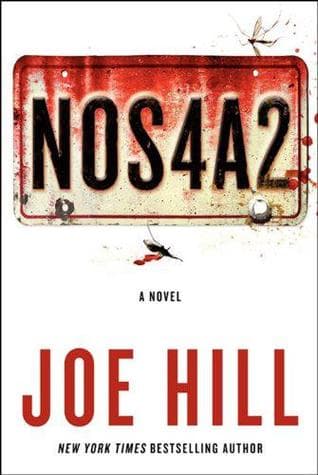
- NOS4A2
Joe Hill
4.1 (101k) average on GoodreadsThrillerFeatures supernatural villains, dark fantasy elements, and a focus on character trauma.
- The Haunting of Hill House
Shirley Jackson
3.8 (162k) average on GoodreadsThrillerExplores psychological horror and the breakdown of sanity due to a malevolent presence.
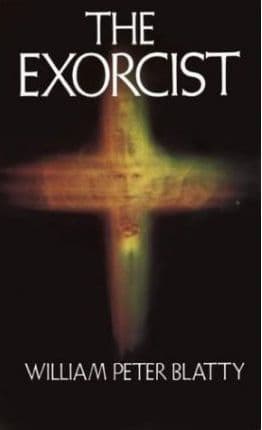
- The Exorcist
William Peter Blatty
4.2 (181k) average on GoodreadsThrillerDeals with relentless supernatural evil and the struggle against an overwhelming force.
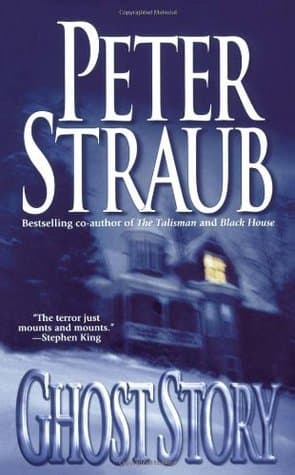
- Ghost Story
Peter Straub
4.3 (83k) average on GoodreadsFantasyBoth Heart-Shaped Box and Straub's Ghost Story (1979) delve into the profound psychological impact of a vengeful spirit on a group of characters with dark pasts. However, Straub's novel is arguably more literary and complex in its narrative structure, focusing on a collective guilt within a small town, whereas Hill's approach is more direct and character-centric, exploring individual culpability. Hill's ghost is a more tangible, physically threatening entity, while Straub's horror is often more atmospheric and subtly insidious, building through shared secrets and the slow unraveling of reality. Straub's work, as noted by critics like Harold Bloom in his analysis of horror literature, often prioritizes psychological terror and the erosion of sanity over jump scares, a balance Hill also strives for but sometimes leans more into explicit horror.
- Angels & Demons
Dan Brown
3.9 (2.7M) average on GoodreadsThrillerA Harvard symbologist races through Rome's ancient sites, deciphering cryptic clues to unmask the Illuminati and stop a vengeful plot to destroy the Vatican with a stolen antimatter weapon.
- Gone Girl
Gillian Flynn
4.1 (2.3M) average on GoodreadsThrillerA wife's sudden disappearance on her fifth anniversary reveals a web of lies and psychological warfare, exposing the secrets within a seemingly perfect marriage.



Enjoyed the summary?
A summary gives you the shape of the book. The book itself has the detail, the examples and the voice.
Find Heart-Shaped Box on AmazonAs an Amazon Associate, BookBrief earns from qualifying purchases. How we're funded