
Synopsis
Covers the whole plot, including the ending.
- Difficulty
- Medium
- Pacing
- Moderate
- Mood
- Dark, Terrifying, Suspenseful, Philosophical, Despairing
- Read it if
- You enjoy intense psychological horror with deep spiritual and theological themes, and aren't afraid of disturbing content.
- Skip it if
- You are sensitive to themes of demonic possession, blasphemy, or graphic descriptions of violence and illness.
The Exorcist Plot Summary
Covers the whole plot, including the ending.
The Dig in Hatra and Father Merrin's Premonition
The novel starts in Hatra, Iraq, where Father Lankester Merrin, an old Jesuit archaeologist, is on a dig. He finds an ancient amulet showing Pazuzu, an Assyrian demon. He immediately feels a deep sense of dread. Merrin, who did an exorcism in Africa that almost killed him, recognizes the symbol as a sign of pure evil. The discovery causes a deep spiritual unease in him, a feeling that he will face this ancient evil again, perhaps in a final fight. He understands that this entity is not just an old artifact but an active, evil force getting ready to appear.
Regan MacNeil's Peculiar Illness
Meanwhile, in Georgetown, Washington D.C., twelve-year-old Regan MacNeil, daughter of famous actress Chris MacNeil, starts having strange symptoms. At first, they are subtle: odd noises in her bedroom, a shaking bed, and growing irritability. Her behavior gets worse, including violent outbursts, speaking in a guttural voice, using bad language, and showing abnormal strength. Medical tests, including neurological exams and psychiatric evaluations, give no diagnosis, leaving her mother, Chris, more and more desperate and scared. Regan's personality changes a lot, becoming hostile and cruel, especially towards Chris and the house staff. She starts talking about an imaginary friend named Captain Howdy.
Medical Failure and the Turn to the Occult
As Regan gets worse, she goes through many invasive and painful medical procedures, including a pneumoencephalogram and an angiogram. All results are normal. Her symptoms progress to levitation, speaking in multiple voices, knowing hidden secrets, and self-mutilation. Dr. Klein, her psychiatrist, suggests that while her case has no medical explanation, some cases of hysteria or psychosis have mimicked demonic possession. He carefully recommends Chris consider an exorcism, not because he believes in the supernatural, but as a last-resort psychiatric treatment. He argues the ritual might shock Regan's mind back to normal, especially if she believes in it.
Chris MacNeil Seeks Spiritual Help
Chris MacNeil, who does not believe in God, first resists the idea of an exorcism. But, having tried everything else, she approaches Father Damien Karras. Karras is a Jesuit priest and psychiatrist struggling with his faith after his mother's death. He feels immense guilt for putting her in a bad hospital. He is skeptical of demonic possession, seeing such cases as psychological. Chris tells him about Regan's terrifying actions, including speaking Latin and French, her unnatural strength, and her knowledge of Karras's personal problems. Karras is bothered by the details but keeps his scientific skepticism, agreeing only to watch Regan.
Karras's Initial Assessment and Growing Doubt
Father Karras begins watching Regan. He sees firsthand the chilling events: the bed shaking violently, Regan's body twisting unnaturally, her speaking in various voices, and her use of deeply personal and bad insults directed at him. She reveals private details about his mother's death and his crisis of faith, which she could not possibly know. The entity inside Regan taunts him with his guilt and doubts. While Karras still looks for a rational explanation, the sheer impossibility of what he sees starts to break down his psychiatric framework, forcing him to consider the terrifying idea of real demonic possession. He records the sessions, hoping for a medical breakthrough, but finds none.
The Death of Burke Dennings
During Regan's possession, Chris MacNeil's friend and film director, Burke Dennings, is found dead at the bottom of the long, steep stone steps outside the MacNeil house. His neck is broken, and his head is turned unnaturally. The police, led by Lieutenant Kinderman, investigate, first suspecting foul play or an accident. However, the circumstances are mysterious, and Kinderman, a fan of detective fiction and Chris's work, becomes interested in the MacNeil household. Later, the demon inside Regan tells Karras, in detail, that it killed Burke Dennings by throwing him out the window. This further confirms the supernatural nature of Regan's problem.
Karras Requests an Exorcism
After much observation and talking with other priests and doctors, Father Karras, despite his deep skepticism, concludes that Regan's case is beyond natural explanation. The demon's knowledge of his inner thoughts, its ability to speak dead languages, and the violent physical events convince him she is truly possessed. He formally asks the Archdiocese for an exorcism. He argues that all medical options have been tried and that the spiritual nature of the problem is clear. The Church, careful about approving such a rare and dangerous rite, agrees to send their most experienced exorcist.
Father Merrin's Arrival
In response to Karras's request, the Archdiocese sends Father Lankester Merrin, who has a history of successful exorcisms, including the difficult one in Africa. Merrin, now frail and with a heart condition, arrives at the MacNeil house. He carries his vestments and a sense of grim determination. He immediately recognizes the evil entity as Pazuzu, the same demon he met in Hatra and before in Africa. His arrival brings both hope and dread, as Karras understands the immense spiritual and physical toll such a battle will take on Merrin, given his age and health.
The Exorcism Begins
The exorcism begins with Merrin, helped by Karras, entering Regan's room. The demon immediately reacts with intense anger, unleashing many blasphemies, insults, and physical attacks. Regan's body twists violently, she levitates, spits, and vomits foul substances. The room's temperature drops a lot, and objects move strangely. Merrin, calm and firm, begins the Latin prayers, directly confronting the demon. Karras struggles with his own faith and fear, but supports Merrin, holding the crucifix and holy water. The demon's power is immense, and it targets Karras's guilt and doubts, trying to break his will and turn him against Merrin.
Merrin's Death and Karras's Sacrifice
The exorcism is a long and brutal fight. The demon taunts and physically abuses both priests, focusing its psychological attacks on Karras, using his guilt over his mother's death. During a short break, Father Merrin, weakened by his heart condition and the intense spiritual struggle, has a fatal heart attack and collapses. Seeing Merrin die and angered by the demon's win, Karras, in a desperate act of self-sacrifice to save Regan, makes the demon leave Regan and enter him instead. The demon, briefly surprised, enters Karras. Karras, now possessed, throws himself out of Regan's window and falls down the stone steps, giving his life to expel the demon and save Regan.
Regan's Recovery and Departure
After Karras's sacrifice, Regan is found calm and clear-headed, though she has no memory of the possession or the exorcism. She seems completely free from the demon's influence, her personality back to her sweet, innocent self. Chris MacNeil, heartbroken but relieved, decides to move out of Georgetown to escape the traumatic memories. As they get ready to leave, Father Dyer, Karras's friend, visits them. Regan, without knowing why, kisses Father Dyer on the cheek. This poignant, innocent gesture suggests a lingering, perhaps unconscious, spiritual connection or gratitude for Karras's sacrifice. The MacNeils leave, leaving the haunted house behind.
Principal Figures
Regan MacNeil
Protagonist/Victim
A sweet, innocent twelve-year-old girl who becomes the victim of demonic possession.
Regan is introduced as a bright, artistic, and loving pre-teen, deeply attached to her mother, Chris. Her transformation into a foul-mouthed, violent, and blasphemous entity is the central horror of the story. She is not an active participant in the possession, but rather a vessel for the demon Pazuzu. Her innocence makes her possession all the more terrifying and tragic, highlighting the vulnerability of the pure to malevolent forces. The demon uses her body and voice to torment those around her, especially her mother and the priests.
Relationships: Chris MacNeil (Daughter-mother, loving bond turned into a torturous relationship during possession); Father Damien Karras (Victim-exorcist, target of demon's psychological attacks); Father Lankester Merrin (Victim-exorcist, target of demon's physical attacks)
Chris MacNeil
Protagonist/Mother
A famous actress and devoted mother fighting desperately to save her daughter.
Chris is a strong-willed, intelligent, and fiercely protective mother. Her journey begins with confusion and medical frustration, escalating into profound fear and desperation as she witnesses her daughter's horrific transformation. Initially an agnostic, she is forced to confront the supernatural and challenge her worldview in her relentless quest for a cure. Her love for Regan drives her to seek help from every possible source, eventually turning to the Catholic Church and accepting the necessity of an exorcism, despite her lack of faith.
Relationships: Regan MacNeil (Mother-daughter, deep and loving bond); Father Damien Karras (Desperate mother seeking help from a skeptical priest); Burke Dennings (Friend and film director)
Father Damien Karras
Protagonist/Exorcist
A Jesuit priest and psychiatrist struggling with a crisis of faith and guilt.
Father Karras is a complex character, torn between his scientific training as a psychiatrist and his priestly vows. He is intelligent, compassionate, and deeply empathetic, but also plagued by guilt over his mother's death and a profound crisis of faith. He initially approaches Regan's case with skepticism, seeking a rational explanation, but is gradually forced to confront the undeniable evidence of demonic possession. His internal struggle makes him a relatable figure, and his ultimate sacrifice is a testament to his rediscovered faith and love.
Relationships: Regan MacNeil (Exorcist-victim, target of demon's psychological warfare); Chris MacNeil (Priest offering help to a desperate mother); Father Lankester Merrin (Exorcist-assistant, spiritual mentor); Father Joseph Dyer (Close friend and fellow priest)
Father Lankester Merrin
Supporting/Exorcist
An aged, experienced Jesuit archaeologist and exorcist who previously confronted the demon Pazuzu.
Father Merrin is a wise, calm, and deeply spiritual man. He is introduced at an archaeological dig in Iraq, where he unearths an amulet of Pazuzu, sensing the demon's return. Merrin has a history of performing exorcisms, a past encounter with Pazuzu having nearly killed him. Despite his advanced age and weak heart, he accepts the call to perform Regan's exorcism, approaching the battle with unwavering faith and courage. He represents pure, unwavering spiritual strength against ancient evil.
Relationships: Regan MacNeil (Exorcist-victim); Father Damien Karras (Spiritual mentor and fellow exorcist)
Lieutenant Kinderman
Supporting/Investigator
A shrewd, philosophical police detective investigating the death of Burke Dennings.
Kinderman is an intelligent and observant detective with a love for cinema and philosophical discussions, particularly about good and evil. He investigates the mysterious death of Burke Dennings, and while initially focused on human suspects, he becomes increasingly intrigued by the strange events surrounding the MacNeil household. He forms a bond with Father Karras, engaging him in conversations that subtly touch upon themes of faith and the nature of evil, serving as a foil to Karras's scientific skepticism.
Relationships: Father Damien Karras (Investigator-priest, philosophical sparring partners); Chris MacNeil (Investigator-witness)
Burke Dennings
Supporting/Victim
Chris MacNeil's flamboyant film director friend.
Burke Dennings is a charismatic but somewhat dissolute film director working on Chris MacNeil's movie. He is a friend to Chris and often present in the MacNeil home. His death, which occurs early in Regan's possession, is initially thought to be an accident or murder, but is later revealed to be the demon's doing. His demise serves as a chilling escalation of the demon's power and influence, making the supernatural threat very real and deadly.
Relationships: Chris MacNeil (Friend and colleague); Regan MacNeil (Familiar figure in the household, victim of the demon)
Sharon Spencer
Supporting/Assistant
Chris MacNeil's personal assistant and tutor for Regan.
Sharon is Chris MacNeil's devoted assistant and Regan's tutor. She is a kind and loyal woman who witnesses the horrifying changes in Regan firsthand. She tries to help Chris understand and cope with Regan's illness, offering practical support and emotional comfort. Her presence highlights the strain the possession places on the entire household and provides a consistent witness to Regan's deteriorating condition. She is deeply affected by the events, showing fear but remaining steadfast.
Relationships: Chris MacNeil (Assistant-employer, close confidante); Regan MacNeil (Tutor-student, deeply concerned caretaker)
Karl Engstrom
Supporting/Housekeeper
The MacNeils' German housekeeper and groundskeeper.
Karl is the MacNeils' loyal and long-serving German housekeeper and handyman. He is a quiet, observant man who cares deeply for Regan. He is one of the first to notice the strange occurrences in the house and is a witness to some of Regan's early, unsettling behaviors. His concern for Regan and his steady presence provide a grounding element amidst the chaos, though he too is deeply disturbed by the events. He is often the one to discover strange phenomena.
Relationships: Chris MacNeil (Employer-employee); Regan MacNeil (Caretaker, deeply concerned for her well-being)
Father Joseph Dyer
Supporting/Friend
Father Karras's close friend and fellow Jesuit priest.
Father Dyer is a kind, jovial, and compassionate priest, serving as Father Karras's closest friend and confidant. He offers emotional support to Karras, particularly during Karras's crisis of faith and guilt over his mother's death. Dyer represents a simpler, more trusting faith compared to Karras's intellectual struggles. He is present at Karras's death and provides a comforting presence to Chris and Regan at the end of the story, serving as a symbol of hope and continuity of faith.
Relationships: Father Damien Karras (Close friend and spiritual brother); Chris MacNeil (Comforting presence after the exorcism)
Pazuzu
Antagonist/Demon
An ancient Assyrian demon who possesses Regan MacNeil.
Pazuzu is the malevolent entity that possesses Regan. It is an ancient, powerful demon, first encountered by Father Merrin in Hatra. The demon's motivations are not explicitly stated beyond a desire to cause suffering, blaspheme, and destroy faith. It uses Regan's body to speak profanities, reveal hidden knowledge, and physically assault those around her. It specifically targets Father Karras's guilt and doubts, attempting to break his spirit. Pazuzu embodies pure, unadulterated evil, acting as a force of chaos and spiritual corruption.
Relationships: Regan MacNeil (Possessor-possessed); Father Damien Karras (Spiritual adversary, target of psychological warfare); Father Lankester Merrin (Ancient adversary, engaged in a spiritual battle)
Themes & Insights
Faith vs. Skepticism
This main theme is shown through Father Karras and Chris MacNeil. Karras, a priest and psychiatrist, first approaches Regan's case with scientific skepticism, looking for rational reasons for her symptoms. His journey involves deep doubt, dealing with his lost faith and guilt over his mother's death. Chris, an agnostic, also resists the supernatural. Both are forced to face clear evidence of the demonic, pushing them beyond their rational thinking. The novel suggests that while skepticism has its place, some forces defy purely scientific understanding. It ultimately affirms the power and need for faith when facing absolute evil.
“'I'm not saying it's the Devil, Father. I'm saying it's a case of hysteria that's been treated as a case of possession, and the treatment has worked.'”
The Nature of Evil
The Exorcist looks at the raw, pure nature of evil as seen in the demon Pazuzu. This evil is not just human wickedness but a supernatural force that wants to corrupt, blaspheme, and destroy. It works through psychological torture, using the weaknesses and guilt of its victims (Karras's guilt, Chris's fear) and through physical violence. The demon's goal seems less about killing and more about defiling the innocent (Regan) and breaking the faith of the religious. The novel shows evil as an active, intelligent, and very personal force, not an abstract idea, suggesting its old and lasting presence in the world.
“'The demon has one particular quality, Father: it is a liar. The most insidious of all liars. It will speak in many tongues, and it will say many things that are not true, and then it will speak one truth, and that truth will be the one that you least want to hear.'”
Sacrifice and Redemption
The theme of sacrifice is clearly shown in Father Karras's final act. Troubled by guilt and a crisis of faith, Karras finds redemption not through thinking but through a selfless act of love and courage. He draws the demon into himself, knowing it will kill him, to save Regan. Father Merrin also shows sacrifice, taking on a dangerous exorcism despite his poor health. He eventually dies from the strain. These sacrifices show that facing absolute evil often requires the highest cost, and that true redemption can come through selflessness and protecting the innocent, even for those struggling with their own spiritual battles.
“'Why you? Because you're the one who hurts, Karras. You're the one who cares. And that makes you a target.'”
Motherhood and Protection
Chris MacNeil's character shows the strong, steady love and protective instinct of a mother. Her journey is completely driven by her desperate need to save her daughter. She tries all medical options, endures public scrutiny, and finally, against her own non-religious beliefs, asks the Church for an exorcism. Her willingness to do anything, to face any horror, for Regan's sake is a powerful emotional part of the novel. The demon specifically targets this bond, tormenting Chris through Regan's body and voice, trying to break her spirit. Chris's strength in the face of such unimaginable horror emphasizes the deep power of maternal love.
“'I've been to every doctor, every specialist, every psychiatrist in this city, and they all say the same thing: 'We don't know.' I'm telling you, Father, there's something wrong with my daughter, something terrible, and I don't know what to do!'”
Guilt and Atonement
Father Karras's character is deeply shaped by his guilt over his sick mother's death and his decision to put her in a less-than-ideal care facility. This guilt feeds his crisis of faith and makes him open to the demon's psychological attacks. The demon constantly taunts him with his perceived failures and spiritual doubts. Karras's path to atonement ends with his selfless act of drawing the demon into himself, effectively giving his life to save Regan. His death, while sad, is also an act of deep atonement, clearing his guilt and reaffirming his faith through ultimate self-sacrifice. This suggests that true atonement can be found in selfless love and courage.
“'You left your mother to die alone!'”
Plot Devices & Literary Techniques
The Amulet of Pazuzu
A physical artifact that signals the demon's presence and Merrin's past.
The ancient amulet depicting the demon Pazuzu, unearthed by Father Merrin in Hatra, serves as a crucial plot device. It acts as a tangible harbinger of evil, connecting the ancient, spiritual world with the contemporary setting. For Merrin, it's a grim reminder of a previous, harrowing encounter with the same entity, establishing him as the only priest capable of facing it again. The amulet not only foreshadows the demon's manifestation but also grounds the supernatural threat in a historical and archaeological context, suggesting a persistent, ancient evil rather than an isolated incident.
The Unexplained Medical Failure
Builds tension and forces the characters to confront the supernatural.
Regan's extensive medical examinations, which consistently yield no physiological or psychological diagnosis, function as a critical plot device. By systematically ruling out all natural explanations, the narrative forces Chris MacNeil, and later Father Karras, to confront the undeniable reality of a supernatural affliction. This process meticulously builds tension and dread, as each failed medical intervention closes off a rational path, pushing the characters (and the reader) inexorably towards the terrifying conclusion of demonic possession. It validates the need for an exorcism not as a first resort, but as the only remaining option.
The Demon's Knowledge of Secrets
Psychologically torments characters and proves the demon's supernatural nature.
The demon's ability to reveal intimate, hidden, and often guilt-inducing secrets about the characters (especially Father Karras's mother's death and his crisis of faith) is a potent plot device. This supernatural knowledge serves multiple purposes: it psychologically torments the characters, proving the demon's intelligence and malevolence; it breaks down Karras's scientific skepticism by demonstrating an impossible feat of information retrieval; and it deepens the character arcs by exposing their vulnerabilities and inner turmoil. It underscores that the battle is not just physical, but a profound spiritual and psychological warfare.
The Georgetown Steps
A symbolic location for death, sacrifice, and the fall from grace.
The steep, stone steps outside the MacNeil house in Georgetown serve as a recurring and highly symbolic plot device. They are the site of Burke Dennings's fatal fall (or being thrown by the demon) and later, Father Karras's ultimate sacrifice. The steps represent a precipitous descent—literally and metaphorically. They symbolize the fall from grace, the descent into evil, and the ultimate, violent end of both a victim and a hero. Their visual prominence and association with death make them a memorable and chilling element, marking the physical and spiritual turning points of the narrative.
The Exorcist Quotes
“The power of Christ compels you!”
“What an excellent day for an exorcism.”
“I'm not the devil. I'm not the devil. I'm not the devil.”
“The demon is a liar. He will lie to confuse us. But he will also mix lies with the truth to attack us.”
“Why you? Why this girl? It's not fair.”
“You're going to die up there.”
“I think the point is to make us despair; to see ourselves as... animal and ugly... to reject the possibility that God could ever love us.”
“St. Michael the Archangel, defend us in battle...”
“It's not Regan. It's not my daughter.”
“The demon is a coward. It fears the light.”
“You see, it's not just the body; it's the soul that's under attack.”
“We must show no fear. Fear gives it power.”
“Sometimes, the only way to fight evil is to look it in the face.”
“This is not a game. This is a war for a human soul.”
Quiz
10 questions on the plot and the characters. Each answer comes with a short explanation.
Question 1
What is the name of the 12-year-old girl who becomes possessed by a demon in 'The Exorcist'?
- Regan MacNeil
- Chris MacNeil
- Sharon Spencer
- Mary Katherine
Show answer
A. Regan MacNeil Regan MacNeil is the daughter of actress Chris MacNeil, and her possession by the demon Pazuzu drives the central plot of the novel.
Question 2
What object does Regan use to violently masturbate with during a party, shocking the guests?
- A crucifix
- A kitchen knife
- A wine bottle
- A telephone
Show answer
A. A crucifix In one of the novel's most shocking scenes, the possessed Regan uses a crucifix in a sacrilegious and violent act, highlighting the demon's blasphemous nature.
Question 3
What is the name of the demon that possesses Regan, as revealed during the exorcism?
- Pazuzu
- Belial
- Asmodeus
- Legion
Show answer
A. Pazuzu The demon identifies itself as Pazuzu, an ancient Mesopotamian demon associated with winds and famine, which Father Merrin recognizes from an archaeological dig.
Question 4
Why does Father Damien Karras initially doubt the possibility of demonic possession when approached by Chris MacNeil?
- He is a psychiatrist and believes Regan's symptoms have a scientific explanation
- He thinks Chris is seeking publicity for her acting career
- He believes all demons are fictional creations of folklore
- He is an atheist and rejects the concept of the supernatural
Show answer
A. He is a psychiatrist and believes Regan's symptoms have a scientific explanation Father Karras is a Jesuit priest with training in psychiatry, leading him to initially attribute Regan's behavior to psychological disorders rather than supernatural causes.
Question 5
What personal tragedy haunts Father Karras and contributes to his crisis of faith?
- The death of his mother in a mental institution
- The loss of his brother in war
- A failed exorcism earlier in his career
- Being abandoned by his father as a child
Show answer
A. The death of his mother in a mental institution Father Karras feels guilt over his mother's death in a psychiatric hospital, which he could not afford to care for properly, deepening his spiritual doubts.
Question 6
How does the demon first manifest its presence to Regan, according to the novel?
- Through a Ouija board that Regan names 'Captain Howdy'
- As a shadowy figure in her bedroom mirror
- Via nightmares about a desolate archaeological site
- Through poltergeist activity like moving furniture
Show answer
A. Through a Ouija board that Regan names 'Captain Howdy' Regan uses a Ouija board, communicating with an entity she calls 'Captain Howdy,' which is later revealed to be the demon Pazuzu establishing contact.
Question 7
What significant event occurs during the exorcism that leads to Father Merrin's death?
- Father Merrin suffers a heart attack induced by the strain of the ritual
- The demon physically attacks and kills him with supernatural force
- He is accidentally stabbed by Father Karras during a struggle
- He sacrifices himself by inviting the demon into his own body
Show answer
A. Father Merrin suffers a heart attack induced by the strain of the ritual The elderly Father Merrin, who has a heart condition, dies of a heart attack brought on by the extreme physical and spiritual exertion of the exorcism.
Question 8
In the novel's climax, how does Father Karras ultimately attempt to save Regan after Father Merrin's death?
- He challenges the demon to possess him instead, then jumps out a window to kill them both
- He performs a last-minute baptism that drives the demon out
- He uses holy water to force the demon into a sacred container
- He recites a prayer that makes the demon flee in fear
Show answer
A. He challenges the demon to possess him instead, then jumps out a window to kill them both In a sacrificial act, Father Karras dares the demon to leave Regan and enter him, then throws himself out the window, killing the demon within him and freeing Regan.
Question 9
Which theme is most prominently explored through Father Karras's character arc in 'The Exorcist'?
- The conflict between faith and doubt in the face of evil
- The corruption of innocence by modern society
- The power of maternal love to overcome supernatural forces
- The inevitability of death and the afterlife
Show answer
A. The conflict between faith and doubt in the face of evil Father Karras's journey from skepticism to renewed faith, culminating in his sacrificial death, centralizes the novel's exploration of belief, doubt, and redemption.
Question 10
What archaeological discovery does Father Lankester Merrin make in Iraq that foreshadows his role in the exorcism?
- A small statue of the demon Pazuzu
- An ancient scroll detailing exorcism rituals
- A cursed amulet linked to Mesopotamian mythology
- The tomb of a priest who died during an exorcism
Show answer
A. A small statue of the demon Pazuzu Early in the novel, Father Merrin unearths a Pazuzu statue at an archaeological site, symbolizing his prior encounter with the demon and hinting at their impending confrontation.
The Exorcist FAQ
What is 'The Exorcist' about?
The novel follows the possession of 12-year-old Regan MacNeil by a demonic entity, which manifests through violent physical transformations, blasphemous behavior, and supernatural phenomena. Her mother, Chris MacNeil, seeks medical and psychiatric help before turning to Jesuit priest Father Damien Karras and experienced exorcist Father Lankester Merrin, who confront the ancient evil in a climactic battle for Regan's soul.
Why should I read 'The Exorcist'?
Beyond its reputation as a horror classic, the book explores profound themes of faith, doubt, and the nature of evil through psychological depth and theological inquiry. Blatty's meticulous pacing and clinical detail make the supernatural events feel terrifyingly plausible, while the characters' emotional struggles add a human core to the cosmic horror.
What is the background/setting of 'The Exorcist'?
Set primarily in 1970s Georgetown, Washington D.C., the story unfolds in the MacNeil family's rented home, which becomes a claustrophobic battleground. The urban, modern setting contrasts sharply with the ancient evil at work, while institutions like Georgetown University Hospital and Catholic churches ground the supernatural events in a recognizable reality.
What are the most memorable quotes?
Key quotes include Father Merrin's warning, 'The demon is a liar. He will lie to confuse us. But he will also mix lies with the truth to attack us.' and Regan's possessed voice taunting, 'What an excellent day for an exorcism.' These lines encapsulate the novel's themes of deception, faith, and ritual confrontation.
What writing style does the author use?
Blatty employs a clinical, almost journalistic prose that documents Regan's deterioration with precise medical and psychological detail, making the horror feel unnervingly real. This contrasts with poetic, theological reflections during exorcism scenes, creating a tension between rational explanation and supernatural terror.
What minor details add significant meaning?
The recurring smell of rotting flesh in Regan's room, unexplained before the possession is fully revealed, serves as a subtle sensory clue of the demon's presence. Similarly, Regan's use of a ouija board early in the novel, which she names 'Captain Howdy,' becomes the initial point of contact for the entity, linking childhood innocence to ancient evil.
What are some subtle foreshadowing moments?
Father Karras's recurring dream of his mother's death in poverty foreshadows his own guilt and spiritual crisis, which the demon exploits during the exorcism. Additionally, archaeological references to Father Merrin's earlier encounter with a Pazuzu statue in Iraq hint at the demon's ancient origin before it is explicitly named.
What unexpected character connections exist?
The demon's manipulation extends beyond Regan, as it reveals knowledge of Father Karras's private guilt over his mother's death and taunts him with personalized blasphemies. This creates a psychological link between the priest's crisis of faith and the entity's strategy, making the possession a targeted attack on both the girl and her would-be saviors.
What are unspoken character motivations?
Father Karras's initial skepticism about the exorcism stems not just from his training as a psychiatrist, but from a deep-seated doubt in God's goodness after his mother's suffering. Chris MacNeil's desperation to believe in a supernatural cause masks her guilt as a working mother who fears she neglected Regan, making her vulnerable to both medical failure and religious extremism.
What psychological complexities do characters exhibit?
Regan's possession manifests as a grotesque parody of adolescent rebellion, blending her natural hormonal changes with demonic influence to blur the line between mental illness and supernatural evil. Father Merrin, meanwhile, approaches the exorcism with a weary, almost tragic resolve, hinting at a lifetime of confronting evil that has left him spiritually burdened yet unwavering.
What are the major emotional turning points?
The moment Chris witnesses Regan's head rotating 180 degrees shatters her remaining skepticism, forcing her to fully accept the supernatural horror. For Father Karras, the emotional climax occurs when the demon, speaking through Regan, mimics his mother's voice to provoke him, exploiting his grief to break his resolve during the exorcism.
How do relationship dynamics evolve?
Chris and Regan's mother-daughter bond is strained to breaking point by the possession, as Regan's violent outbursts and vile language make her unrecognizable. Meanwhile, the partnership between Fathers Karras and Merrin evolves from professional respect to a desperate, sacrificial camaraderie, culminating in Karras's ultimate act of faith to save Merrin and Regan.
Which parts remain ambiguous or open-ended?
The exact nature of the demon's connection to Regan's ouija board sessions is never fully explained, leaving open whether it was invited or merely seized an opportunity. Additionally, the novel subtly questions whether some events (like furniture moving) could have psychological explanations, maintaining a tension between faith and reason even after the exorcism.
What are controversial scenes or decisions?
The graphic depiction of Regan's self-mutilation with a crucifix and her explicit sexualized dialogue while possessed sparked debates about the boundaries of horror and exploitation. Some readers also question Father Karras's final sacrifice, interpreting it as a suicide driven by despair rather than a redemptive act of faith.
'The Exorcist' ending explained: how it ends & what it means
The novel ends with Father Merrin dead from heart failure during the exorcism, and Father Karras inviting the demon into his own body before hurling himself out a window to his death, which frees Regan. This sacrifice is interpreted as Karras's ultimate affirmation of faith—using free will to defeat evil—while leaving Regan with no memory of the events, symbolizing innocence restored but trauma buried.
About the author

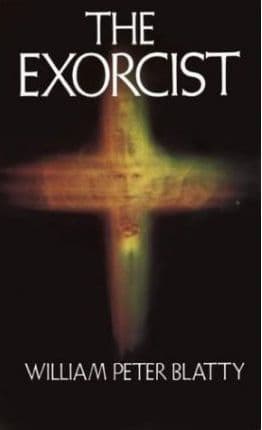
William Peter Blatty was an American author and screenwriter best known for his horror fiction. His most notable work, "The Exorcist," explores themes of faith and the supernatural, and has become a significant cultural touchstone since its publication. Blatty's writing often delves into the complexities of good and evil, reflecting his interest in theology and philosophy.
Similar books
- Rosemary's Baby
Ira Levin
4.0 (112k) average on GoodreadsThrillerFeatures a woman battling a sinister, supernatural force surrounding her child, with a strong sense of dread and paranoia.
- A Head Full of Ghosts
Paul Tremblay
3.8 (46k) average on GoodreadsThrillerExplores themes of demonic possession and mental illness, blurring the lines between the two, with a focus on family trauma.
- The Omen
David Seltzer
4.0 (60k) average on GoodreadsThrillerDeals with demonic forces targeting a child and the desperate fight against an ancient evil.
- The Haunting of Hill House
Shirley Jackson
3.8 (162k) average on GoodreadsThrillerBlatty's The Exorcist confronts the supernatural head-on, presenting demonic possession as a tangible, terrifying reality with clear theological underpinnings. Jackson's The Haunting of Hill House, in contrast, builds terror through ambiguity and psychological unraveling, leaving the source of the haunting largely unexplained and focusing more on the characters' internal states and their descent into madness within a haunted environment.
- Angels & Demons
Dan Brown
3.9 (2.7M) average on GoodreadsThrillerA Harvard symbologist races through Rome's ancient sites, deciphering cryptic clues to unmask the Illuminati and stop a vengeful plot to destroy the Vatican with a stolen antimatter weapon.
- Gone Girl
Gillian Flynn
4.1 (2.3M) average on GoodreadsThrillerA wife's sudden disappearance on her fifth anniversary reveals a web of lies and psychological warfare, exposing the secrets within a seemingly perfect marriage.



Enjoyed the summary?
A summary gives you the shape of the book. The book itself has the detail, the examples and the voice.
Find The Exorcist on AmazonAs an Amazon Associate, BookBrief earns from qualifying purchases. How we're funded