
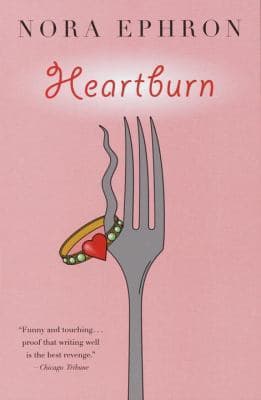
Synopsis
Covers the whole plot, including the ending.
- Difficulty
- Easy
- Pacing
- Moderate
- Mood
- Witty, Humorous, Melancholy, Cathartic, Observational
- Read it if
- You enjoy sharp, witty, and darkly humorous takes on heartbreak, infidelity, and divorce, with a strong voice and a love for food.
- Skip it if
- You prefer a straightforward narrative without digressions into recipes or a protagonist who isn't always likable.
Heartburn Plot Summary
Covers the whole plot, including the ending.
Unexpected News Shatters Rachel's World
Rachel Samstat, a cookbook writer, is seven months pregnant with her second child when her seemingly perfect life with her journalist husband, Mark Feldman, falls apart. At a dinner party in Washington D.C., a mutual friend, Arthur, tells Rachel that Mark is having an affair with Thelma Rice, a political consultant. The news affects Rachel strongly, leaving her in shock and disbelief. She tries to deny it, rationalizing Mark's recent odd behavior, but the truth is clear. This revelation ends her marriage and causes emotional turmoil as she deals with betrayal and the upcoming birth of her child.
Confrontation and Initial Attempts at Reconciliation
After the initial shock, Rachel confronts Mark about the affair. Mark, surprised, denies it at first but then admits to his relationship with Thelma. The conversation is painful and filled with accusations and justifications. Despite the betrayal, Rachel, still in love and heavily pregnant, tries to reconcile with Mark for their family. They go to therapy, and Mark promises to end the affair. For a short time, they try to fix things, even going on a second honeymoon to Antigua. However, Rachel remains suspicious and hurt, and the tension makes true reconciliation difficult.
The Antiguan Interlude and Lingering Doubts
Rachel and Mark attempt a 'second honeymoon' in Antigua, hoping to reconnect and move past the affair. Rachel wants it to work, believing that a new setting and time together might heal their wounds. However, the trip is full of unspoken tension and Rachel's constant suspicion. She watches Mark's behavior, looking for signs of his continued infidelity. The tropical setting and romantic gestures cannot hide the deep mistrust. Rachel's thoughts show her struggle to forgive and forget, as she constantly replays the betrayal. The vacation ultimately shows the damage to their marriage rather than fixing it.
The Affair Continues and Rachel's Breaking Point
Back in Washington D.C., Rachel's worst fears are confirmed when she finds that Mark has not ended his affair with Thelma Rice. She finds evidence, possibly a clue left by Mark or Thelma, confirming their continued relationship. This discovery destroys any hope Rachel had for reconciliation and pushes her past her limit. Feeling humiliated and betrayed, Rachel decides she cannot continue living with Mark. She packs her bags and, with her young son Sam and her unborn child, leaves their home. This starts the formal separation and the painful process of rebuilding her life without him.
Moving to New York and Giving Birth
After leaving Mark, Rachel moves back to New York City, seeking comfort and support from her friends and family. This move shows her attempt to regain independence and start anew. Soon after settling in, Rachel gives birth to her second daughter, Annie. The birth is an important moment, bringing new life and a renewed sense of purpose amid her personal difficulties. Despite the emotional pain of her divorce, Rachel finds strength and joy in her children, focusing on being a mother and beginning to navigate single parenthood and her career in a new environment.
Therapy, Friends, and Food as Coping Mechanisms
In New York, Rachel goes to therapy, group sessions, and often meets with her close friends. Her friends, like Arthur and Julie, offer support, listening to her talk about Mark's betrayal and giving their own thoughts. Food, her professional passion, also becomes a way to cope. She continues to write cookbooks and finds comfort and expression in cooking, often adding recipes to her story to process her emotions and connect with her identity beyond her failed marriage. These activities help her slowly put her life back together.
The Jewelry Heist and Mark's Return
While Rachel is trying to build her new life in New York, her apartment is burglarized. The thieves steal several pieces of jewelry, including a valuable necklace Mark gave her. This incident, while upsetting, brings Mark back into her life. He comes to New York to check on her and their children, showing concern that momentarily confuses Rachel. His presence brings up old feelings and unresolved emotions, showing the complexities of their relationship despite the separation. The robbery causes another, brief, meeting between them.
The Pie Incident and Public Humiliation
One of the most memorable and satisfying moments happens when Rachel, full of rage and humiliation, takes action. During a public event in Washington D.C., she sees Thelma Rice. In a spontaneous act of revenge and defiance, Rachel shoves a key lime pie into Thelma's face. This dramatic, public display of anger gives Rachel a temporary release. It is a moment of taking back control after her betrayal. While it is a short victory, it shows her refusal to be a passive victim and her desperate need to express her deep hurt and anger.
Mark's Attempts at Reconciliation (Again)
Despite Rachel's public revenge and her decision to leave him, Mark continues to try and win her back. He visits her in New York, says he loves her, and expresses regret for his actions. These attempts often include promises of change and a desire to rebuild their family. However, Rachel, having been hurt twice, is now cautious and cynical. She sees through his pleas, recognizing them as a pattern rather than genuine remorse. Her emotional wounds are too deep, and her trust is too broken to consider another reconciliation, strengthening her resolve to move forward independently.
Embracing Independence and Future Uncertainties
By the end of the novel, Rachel has embraced her independence and the challenges of single motherhood. She continues her work as a cookbook writer, finding satisfaction in her career and her children. While the pain of Mark's betrayal still exists, she has moved past the initial shock and despair. She thinks about love, marriage, and betrayal with new clarity and a wry sense of humor. The book ends not with a happy ending or a new romance, but with Rachel standing on her own, resilient and witty, ready to face an uncertain but self-determined future, having learned important lessons about herself and the world.
Principal Figures
Rachel Samstat
Protagonist
A witty cookbook writer grappling with her husband's infidelity during pregnancy.
Rachel is the sharp-witted, often neurotic, and deeply vulnerable narrator of the story. A successful cookbook author, she uses food and humor as coping mechanisms for the profound betrayal she experiences when her husband, Mark, has an affair while she's pregnant. She is highly observant and prone to detailed internal monologues, dissecting her emotions, Mark's actions, and the absurdities of life. Despite her pain, she maintains a fierce independence and a biting sense of humor. Her narrative voice is distinct, blending recipes, anecdotes, and raw emotional honesty.
Relationships: Mark Feldman (Husband, then ex-husband, who betrays her); Sam (Son); Annie (Daughter); Arthur (Close friend and confidante); Julie (Close friend); Thelma Rice (The 'other woman')
Mark Feldman
Antagonist/Supporting
Rachel's charismatic journalist husband who betrays her with an affair.
Mark is Rachel's charming and successful journalist husband, whose infidelity sets the entire plot in motion. He is portrayed as handsome, ambitious, and somewhat self-absorbed. While he initially appears to be the perfect husband, his affair with Thelma Rice reveals a deeper flaw in his character, a lack of commitment or an inability to resist temptation. He expresses regret and attempts reconciliation multiple times, but his actions consistently undermine his words, leaving Rachel unable to trust him. He represents the catalyst for Rachel's pain and subsequent journey of self-discovery.
Relationships: Rachel Samstat (Wife, then ex-wife); Sam (Son); Annie (Daughter); Thelma Rice (Mistress)
Thelma Rice
Supporting
The 'other woman' with whom Mark has an affair.
Thelma Rice is Mark's mistress, described by Rachel with a mix of disdain and detailed observation of her physical characteristics ('a neck as long as an arm and a nose as long as a thumb'). She is a political consultant, suggesting she is intelligent and successful in her own right. While she is never given a voice or deep characterization, she serves as the tangible embodiment of Mark's betrayal and Rachel's rival. Her primary role is to be the target of Rachel's anger and the catalyst for Rachel's most cathartic act of revenge: the pie in the face.
Relationships: Mark Feldman (Lover); Rachel Samstat (Rival, target of revenge)
Arthur
Supporting
Rachel's loyal friend who first informs her of Mark's affair.
Arthur is a close friend of Rachel and Mark, and it is he who delivers the devastating news of Mark's affair to Rachel. He remains a supportive and loyal friend throughout Rachel's ordeal, offering comfort, advice, and a listening ear. His presence highlights the importance of friendship in navigating personal crises. He is a reliable figure who genuinely cares for Rachel and her children, providing a grounded perspective amidst her emotional turmoil.
Relationships: Rachel Samstat (Close friend); Mark Feldman (Acquaintance)
Julie
Supporting
One of Rachel's New York friends, offering emotional support and humor.
Julie is part of Rachel's close circle of friends in New York City. She provides emotional support, a sounding board for Rachel's grievances, and often injects humor into the difficult situations. Her role is to represent the community of women who rally around Rachel during her divorce, offering solidarity and practical help. Julie's interactions with Rachel underscore the theme of female friendship and collective coping mechanisms in the face of marital breakdown.
Relationships: Rachel Samstat (Close friend)
Sam
Supporting
Rachel and Mark's young son, largely oblivious to the marital strife.
Sam is Rachel and Mark's first child, a young boy who is largely unaware of the marital discord unfolding around him. He represents the innocent party caught in the crossfire of his parents' divorce. Rachel's concern for Sam's well-being and her desire to protect him are powerful motivators for her actions. His presence reminds the reader of the broader impact of infidelity and divorce on a family, even if he doesn't fully comprehend it.
Relationships: Rachel Samstat (Mother); Mark Feldman (Father); Annie (Sister)
Annie
Supporting
Rachel and Mark's second daughter, born after their separation.
Annie is Rachel and Mark's second child, born after Rachel has left Mark and moved to New York. Her birth symbolizes new beginnings and Rachel's resilience. As a newborn, Annie represents hope and the future, providing Rachel with a renewed sense of purpose and joy amidst the pain of her divorce. Her existence is a testament to Rachel's ability to create life and find happiness despite profound personal setbacks.
Relationships: Rachel Samstat (Mother); Mark Feldman (Father); Sam (Brother)
George
Supporting
Rachel's therapist in New York.
George is Rachel's therapist in New York, whom she sees after her separation from Mark. He provides a professional outlet for Rachel to process her emotions, anger, and confusion. Rachel's descriptions of her therapy sessions, often infused with her characteristic wit, highlight her struggle to understand what happened and to move on. George represents the therapeutic process and the search for emotional healing.
Relationships: Rachel Samstat (Therapist/Patient)
Themes & Insights
Betrayal and Infidelity
The main theme is the deep betrayal Rachel experiences because of Mark's affair. This betrayal is not just sexual; it is a shattering of trust and their shared life and future. Rachel's thoughts constantly revisit the moment of discovery and her marriage's collapse, exploring how infidelity affects the victim. The affair with Thelma Rice starts the entire story, driving Rachel's emotional journey from heartbreak to a painful, but ultimately empowering, independence.
“Because if you can't be happy with a handsome, charming, successful man who loves you, then what kind of person are you? And if he doesn't love you, what kind of person are you then?”
Identity and Self-Discovery
Rachel's journey is about finding herself again outside her marriage. At first, her identity is closely tied to being Mark's wife and a mother. The divorce forces her to understand who she is as an individual, a single woman, and a professional. Her move to New York, her continued work as a cookbook writer, and her interactions with friends all help her rebuild her sense of self. This theme explores how a crisis can lead to a deeper understanding of one's own resilience and abilities beyond the expectations of a 'perfect' life.
“I can't believe I'm doing this, I thought. I can't believe I'm leaving my husband, seven months pregnant. But it wasn't a choice anymore.”
The Role of Food and Cooking
Food and cooking are not just Rachel's job but a constant idea throughout the novel. They are a metaphor for love, comfort, and control. Recipes are included in the story, often showing Rachel's emotional state or providing stability amid chaos. Cooking is a creative outlet, a source of comfort, and a way for Rachel to express herself and care for her family. It shows her ability to create and sustain, even when her personal life is falling apart, highlighting the connection between food, memory, and emotion.
“I love to cook. I love to eat. I love to feed people. It's the most primal way I know to express love.”
Humor as a Coping Mechanism
Despite the painful subject, the novel is full of Nora Ephron's humor. Rachel uses humor, often self-deprecating or sarcastic, to deal with her grief, anger, and humiliation. This theme shows how laughter can be a strong tool for survival, helping people process trauma and keep perspective. The comedic parts prevent the story from becoming too sad, showing Rachel's resilience and her ability to find absurdity even in heartbreaking situations, making the story relatable and engaging.
“Sometimes I think that all I want is to be a happy woman, but then I remember that all I really want is to be a happy woman with a really good story to tell.”
The Illusion of the Perfect Marriage
The novel examines the idea of the 'perfect marriage' and shows how fragile it is. Rachel initially believes she has an ideal life with Mark, only for it to be destroyed by his affair. This theme explores how appearances can be misleading and how problems can grow beneath a surface of domestic happiness. It questions the expectations placed on marriage and family, revealing the complexities and vulnerabilities in long-term relationships. The story shows the painful gap between idealized love and the messy reality of human mistakes.
“I thought we had a perfect marriage. I really did. I thought it was the kind of marriage everyone envied.”
Plot Devices & Literary Techniques
First-Person Narrative with Intrusive Thoughts
Rachel's direct, witty, and often stream-of-consciousness narration.
The entire novel is told from Rachel Samstat's highly personal, first-person perspective. This allows readers direct access to her unfiltered thoughts, anxieties, and cutting observations, creating an intimate and immediate connection. Her narration is characterized by its witty, often sarcastic tone, frequent asides, and self-deprecating humor. This device not only reveals her emotional state but also shapes the reader's perception of other characters and events, making her subjective experience the central focus of the story.
Recipes as Interludes
Actual recipes integrated into the narrative.
Throughout the book, Rachel intersperses full recipes for various dishes, from pot roast to key lime pie. This unique device serves multiple functions: it reinforces Rachel's identity as a cookbook writer, provides a sense of her professional life, and often subtly reflects her emotional state or the context of the story. For example, a recipe for a comforting dish might appear during a moment of distress. It grounds the abstract emotional turmoil in concrete, domestic reality and adds a distinctive, charmingly quirky element to the narrative.
Episodic Structure
A series of vignettes and anecdotes rather than a continuous, linear plot.
Instead of a strictly linear, continuous plot, "Heartburn" is structured as a series of interconnected vignettes, anecdotes, and reflections. Rachel recounts specific events, conversations, and emotional moments, often jumping between past and present as she processes her divorce. This episodic nature mirrors the fragmented experience of grief and memory, allowing the narrative to explore various facets of her emotional journey without being bound by a rigid timeline. It gives the story a conversational, almost memoir-like feel.
Thelma Rice's Physical Description
Rachel's recurring, specific, and often exaggerated description of her rival.
Rachel consistently describes Thelma Rice with the same memorable, slightly exaggerated physical characteristics: 'a neck as long as an arm and a nose as long as a thumb.' This recurring description serves as a powerful symbol of Rachel's fixation, anger, and dehumanization of her rival. It's a comedic yet bitter motif that highlights Rachel's inability to see Thelma as a fully formed person, instead reducing her to a caricature of the 'other woman.' This device illustrates Rachel's coping mechanism of externalizing and simplifying her pain.
Heartburn Quotes
“I'm a fairly good cook, and I'm a fairly good person. But I'm not a fairly good cook because I'm a fairly good person. I'm a fairly good person because I'm a fairly good cook.”
“If I had to live my life over again, I would make the same mistakes, only sooner.”
“You can't be friends with someone you're having an affair with. It's like trying to be friends with a shark.”
“I can't believe I'm still talking about this. I'm like a broken record, only the record is broken and I'm still talking.”
“The story of my life is that I married a man who had more affairs than I had hot dinners.”
“I don't understand why people want to get married. It's like voluntarily entering a boxing ring.”
“He was a good guy, but he was a terrible husband. It's a subtle distinction, but an important one.”
“I'm not saying I'm perfect, but I'm not saying I'm not perfect either. I'm just saying I'm me.”
“When you're a food writer, you're always thinking about food. It's like a curse, but a delicious one.”
“Everything is copy.”
“I could cry, but I won't. I'll just bake a pie.”
“Food is not just fuel. Food is about love, and it's about life.”
“I was a good wife. I was a good mother. I was a good cook. What else was there?”
“The only thing I ever learned from my mother was that you can never be too rich or too thin.”
Quiz
10 questions on the plot and the characters. Each answer comes with a short explanation.
Question 1
What is Rachel Samstat's profession?
- Journalist
- Cookbook author
- Therapist
- Restaurateur
Show answer
B. Cookbook author The book description explicitly states that 'Rachel writes cookbooks for a living,' explaining why food is often a consolation for her.
Question 2
How far along is Rachel in her pregnancy when she discovers her husband's infidelity?
- Three months
- Five months
- Seven months
- Nine months
Show answer
C. Seven months The synopsis clearly states, 'Seven months into her pregnancy, Rachel Samstat discovers that her husband, Mark, is in love with another woman.'
Question 3
Which of the following describes the physical appearance of 'the other woman' according to Rachel?
- Short hair and small hands
- A neck as long as an arm and a nose as long as a thumb
- Remarkably beautiful, almost perfect features
- A very tall stature and striking red hair
Show answer
B. A neck as long as an arm and a nose as long as a thumb Rachel's witty and somewhat bitter description of the other woman is quoted directly in the summary: 'a neck as long as an arm and a nose as long as a thumb and you should see her legs.'
Question 4
What is Rachel's husband's name?
- Michael
- Matthew
- Mark
- Martin
Show answer
C. Mark The summary identifies Rachel's unfaithful husband as Mark: 'Rachel Samstat discovers that her husband, Mark, is in love with another woman.'
Question 5
What literary device does Nora Ephron use to compare comedy and anguish, as well as proper gravy?
- Hyperbole
- Metaphor
- Simile
- Irony
Show answer
C. Simile The description states, 'comedy depends on anguish as surely as a proper gravy depends on flour and butter,' which is a simile, using 'as surely as' to draw a comparison.
Question 6
What specific dish is mentioned as being 'soul-satisfying' in the same way the novel is?
- Pot roast
- Mashed potatoes
- Perfect soufflé
- Gravy
Show answer
B. Mashed potatoes The final sentence of the description compares the novel to 'mashed potatoes and as airy as a perfect soufflé,' specifically calling mashed potatoes 'soul-satisfying.'
Question 7
Which of Nora Ephron's other works is mentioned to give context to her writing style?
- When Harry Met Sally...
- You've Got Mail
- Sleepless in Seattle
- Julie & Julia
Show answer
C. Sleepless in Seattle The description states, 'the creator of Sleepless in Seattle reminds us that comedy depends on anguish...', using this film to establish Ephron's comedic reputation.
Question 8
What key elements are listed as being part of the 'inspired confection' that makes up the novel?
- Travel, self-discovery, and new romance
- Adultery, revenge, group therapy, and pot roast
- Family drama, career struggles, and political satire
- Child-rearing, financial woes, and community activism
Show answer
B. Adultery, revenge, group therapy, and pot roast The summary explicitly lists these ingredients: 'For in this inspired confection of adultery, revenge, group therapy, and pot roast'.
Question 9
What is the central thematic contrast explored in 'Heartburn'?
- The conflict between career ambition and family life
- The juxtaposition of profound personal anguish with comedic storytelling
- The struggle between traditional values and modern relationships
- The healing power of nature versus urban stress
Show answer
B. The juxtaposition of profound personal anguish with comedic storytelling The description highlights this theme: 'comedy depends on anguish as surely as a proper gravy depends on flour and butter,' emphasizing how Ephron blends heartbreak with humor.
Question 10
How does Rachel cope with her emotional turmoil, according to the description?
- By withdrawing from society and seeking solitude
- By focusing on her career and avoiding personal conflict
- By indulging in food, trying to win Mark back, and wishing him dead
- By confronting her husband calmly and seeking professional counseling
Show answer
C. By indulging in food, trying to win Mark back, and wishing him dead The summary details her coping mechanisms: 'And in between trying to win Mark back and loudly wishing him dead, Ephron's irrepressible heroine offers some of her favorite recipes.' Food is a key part of her processing.
Heartburn FAQ
What is 'Heartburn' about?
'Heartburn' is a semi-autobiographical novel by Nora Ephron about Rachel Samstat, a cookbook writer, who discovers her husband, Mark, is having an affair while she is seven months pregnant with their second child. The story follows her emotional turmoil, attempts at revenge, and the eventual dissolution of their marriage, all interspersed with recipes.
Why should I read 'Heartburn'?
You should read 'Heartburn' for its unique blend of sharp wit, profound emotional honesty, and culinary interludes. Nora Ephron masterfully transforms personal heartbreak into a comedic and relatable narrative, offering insights into betrayal, love, and resilience, making it both entertaining and cathartic.
What is the background/setting of 'Heartburn'?
The novel is primarily set in Washington D.C., where Rachel and Mark live, and also features scenes in New York City. The backdrop is the late 1970s, a time when societal expectations around marriage and divorce were shifting, providing a poignant context for Rachel's personal crisis.
What are the most memorable quotes?
Some memorable quotes include Rachel's observation that 'If I had to live my life over again, I would have married a man with a smaller ego and a larger penis.' and her reflection that 'The story of my life is that I've been in love with a lot of people and I've been betrayed by a lot of people.'
What writing style does the author use?
Nora Ephron employs a distinctive, conversational, and witty first-person narrative style. Her prose is direct, often self-deprecating, and filled with precise observations and comedic timing, making the reader feel as if they are hearing the story directly from a close friend. The inclusion of recipes further personalizes the narrative.
What minor details add significant meaning?
The specific details of the recipes Rachel includes, from her famous Key Lime Pie to her pot roast, are not just culinary diversions but often reflect her emotional state or serve as a coping mechanism, grounding her in the tangible amidst her emotional chaos. For example, she uses a Key Lime Pie as a weapon against Mark's lover.
What are some subtle foreshadowing moments?
Early in the novel, Rachel's humorous, slightly cynical observations about marriage and relationships, even before discovering the affair, subtly hint at the fragility and potential for disillusionment that she later experiences. Her anecdotes about past relationships also suggest a pattern of vulnerability.
What unexpected character connections exist?
Beyond Rachel and Mark's direct conflict, there are unexpected connections through their therapy group, where Rachel finds a strange sort of camaraderie and shared experience with other struggling individuals. Her relationships with her friends also reveal a complex web of support and occasional exasperation, highlighting the varied ways people cope with life's upheavals.
What are unspoken character motivations?
Mark's unspoken motivation for the affair seems to stem from a desire for excitement or validation outside the domestic sphere, despite having what appears to be a 'perfect' family life. Rachel, while outwardly seeking revenge, also implicitly yearns for understanding and validation of her pain from Mark, even as she pushes him away.
What psychological complexities do characters exhibit?
Rachel exhibits a complex mix of vulnerability, anger, humor, and resilience. She grapples with identity beyond her role as wife and mother, and her struggle to reconcile her idealized vision of marriage with the painful reality of betrayal showcases profound psychological depth. Mark, though less explored, shows a disconnect between his public persona and private actions.
What are the major emotional turning points?
The initial discovery of Mark's affair is the seismic emotional turning point, shattering Rachel's world. Another key moment is her decision to move back to New York with her children, signifying her active choice to rebuild her life independently rather than passively waiting for reconciliation or further heartbreak.
How do relationship dynamics evolve?
The central relationship between Rachel and Mark devolves from an outwardly perfect, loving marriage into one defined by betrayal, anger, and ultimately, separation. Concurrently, Rachel's relationships with her friends and family deepen as they become her support system, highlighting the evolving dynamics of chosen family versus biological family.
Which parts remain ambiguous or open-ended?
The full psychological motivations of Mark are largely left ambiguous, as the story is told entirely from Rachel's perspective, leaving readers to interpret his actions. While Rachel finds a path forward, the long-term impact of the divorce on her children and the ultimate fate of Mark are not explicitly detailed, leaving some aspects open-ended.
What are controversial scenes or decisions?
Rachel's decision to throw a Key Lime Pie in Thelma Rice's face, Mark's lover, is a controversial yet iconic scene. While some might view it as an immature act of revenge, others see it as a cathartic and understandable expression of her raw pain and anger, embodying the 'sidesplitting' yet anguished tone of the book.
'Heartburn' ending explained: how it ends & what it means
The novel ends with Rachel having moved back to New York with her two children, having fully separated from Mark. She is still processing the heartbreak but is actively rebuilding her life, finding solace in her work, friends, and the simple act of cooking. The ending signifies her resilience and the beginning of a new, independent chapter, suggesting that while pain is real, life, and humor, continue.
About the author

Nora Ephron was an American author, screenwriter, and director known for her sharp wit and insightful commentary on relationships and life. Her novel "Heartburn" draws from her own experiences and explores themes of love and betrayal. Ephron's work often blends humor with personal narrative, making her a distinctive voice in contemporary literature.
Similar books
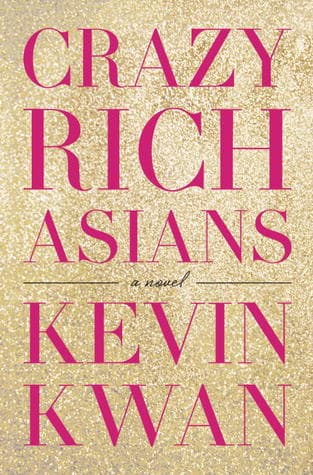
- Crazy Rich Asians
Kevin Kwan
3.9 (335k) average on GoodreadsRomanceFeatures a strong female protagonist navigating relationship drama amidst a backdrop of opulence and social commentary.
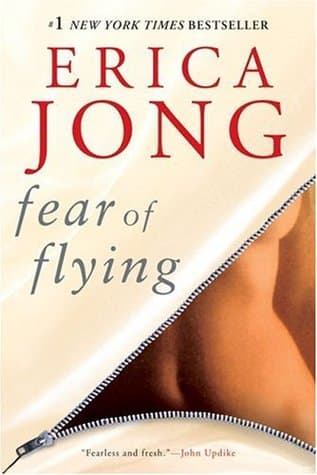
- Fear of Flying
Erica Jong
3.5 (19k) average on GoodreadsRomanceBoth are influential novels about female experience and liberation. However, Heartburn grounds its protagonist's crisis in the mundane details of daily life and culinary metaphors, while Fear of Flying is more explicit and overtly philosophical in its exploration of female sexuality and freedom.
- Nineteen Eighty-Four
George Orwell
4.2 (5.5M) average on GoodreadsFictionWinston Smith dreams of truth and rebellion in a world where Big Brother watches all, but he confronts the terrifying power of a regime that controls not just actions, but thoughts.
- The Frozen River
Ariel Lawhon
4.4 (600k) average on GoodreadsFictionIn 1789 Maine, a heroic midwife's diary helps her expose a murder and get justice in a town that wants to silence her.
- A Man Called Ove
Fredrik Backman
4.4 (569k) average on GoodreadsFictionA stubborn widower, who lives by strict rules, finds his quiet world changed by a lively new family next door, making him face his past and find happiness in human connection.
- The Art of Racing in the Rain
Garth Stein
4.2 (452k) average on GoodreadsFictionThrough the eyes of Enzo, a wise and observant dog, a race car driver's family navigates a journey of love, loss, and resilience, learning that life's most important lessons often come in the curves, not just on the straightaways.




Enjoyed the summary?
A summary gives you the shape of the book. The book itself has the detail, the examples and the voice.
Find Heartburn on AmazonAs an Amazon Associate, BookBrief earns from qualifying purchases. How we're funded