
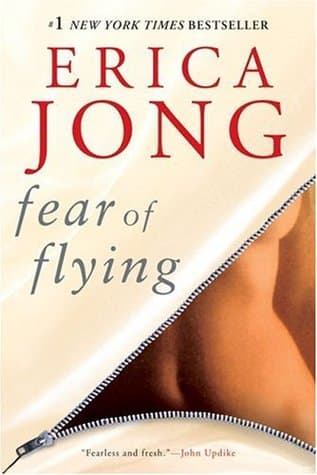
Synopsis
Covers the whole plot, including the ending.
- Difficulty
- Medium
- Pacing
- Variable
- Mood
- Witty, Provocative, Introspective, Liberating, Disillusioned
- Read it if
- You're interested in a raw, witty, and groundbreaking exploration of female sexuality, liberation, and identity in the 1970s.
- Skip it if
- You prefer traditional romance plots or are uncomfortable with explicit discussions of sex and psychological introspection.
Fear of Flying Plot Summary
Covers the whole plot, including the ending.
The Analysts' Conference and Marital Discontent
Isadora Wing, a poet and writer, travels to Vienna with her psychoanalyst husband, Bennett Wing, for a conference. Despite a seemingly stable five-year marriage, Isadora feels deep boredom and sexual unhappiness. She struggles with intense worries, especially a 'zipless fuck' fantasy – a desire for a completely uninhibited sexual encounter without emotional attachment. As Bennett focuses on the conference, Isadora feels more and more alone and restless, observing the many analysts and their wives with a cynical, yet hopeful, eye for something more. Her inner thoughts show a sharp wit and deep self-awareness, but also a paralyzing fear of truly breaking free from her conventional life.
Meeting Adrian Goodlove
At the conference, Isadora meets Adrian Goodlove, a charming and unusual British anti-psychiatrist. Adrian immediately draws Isadora in with his intellectual debates, his clear dislike for strict traditional psychoanalysis, and his appealing free spirit. He represents everything Bennett is not: spontaneous, passionate, and seemingly without societal burdens. Their first conversations are full of strong mutual attraction, and Isadora begins to fantasize about him, seeing him as a possible embodiment of her 'zipless fuck' ideal and a way to the freedom she wants. This meeting sparks a possibility in her stagnant life.
The Decision to Leave Vienna
Adrian suggests a spontaneous road trip through Europe, an idea that greatly excites Isadora. Surprisingly, Bennett agrees to join them, seemingly unaware of the growing chemistry between his wife and Adrian. The three plan to travel from Vienna to London, supposedly for Adrian's work and Bennett's continued conference circuit. For Isadora, however, this journey is a deliberate escape from her marriage and a desperate pursuit of Adrian. She sees the trip as her chance to finally experience the uninhibited passion and freedom she has only dreamed of, believing Adrian holds the key to unlocking her suppressed desires and true self.
The European Road Trip and Growing Intimacy
The road trip through Europe becomes the setting for Isadora and Adrian's growing affair. They travel through various scenic places, but Isadora focuses only on Adrian, whom she finds more and more appealing. Their stolen moments, lingering looks, and intellectual closeness quickly lead to physical intimacy, often behind Bennett's back or when he is unknowingly present. Bennett, though often lost in his own thoughts or work duties, begins to sense the change in his wife's feelings and the clear connection between Isadora and Adrian. The tension in the car grows thick with unspoken desires and betrayals, pushing Isadora further into her rebellious search for passion.
Bennett's Departure and Isadora's Reckless Freedom
Eventually, Bennett, perhaps sensing what is coming or needing to return to his own responsibilities, leaves Isadora and Adrian to continue their journey alone. With Bennett gone, Isadora feels a rush of exciting freedom, believing she has finally achieved her longed-for liberation. She and Adrian fully immerse themselves in their affair, traveling through Italy and France, enjoying passionate encounters and intellectual talks. However, the reality of her 'freedom' quickly feels less like liberation and more like an emotional freefall. Isadora starts to question whether Adrian is truly the answer to her desires or just another escape, and the 'zipless fuck' proves to be more complicated than she imagined.
The Reality of Adrian and Disillusionment
As the affair continues, Isadora begins to see Adrian less ideally. His initial charm gives way to a more possessive and emotionally distant personality. He is unreliable, prone to jealousy, and ultimately unable to offer the deep connection Isadora secretly wants, despite her 'zipless fuck' fantasy. She realizes that while he offers physical excitement, he is emotionally unavailable and perhaps even more detached than Bennett. The romantic illusion she built around him shatters, leaving her feeling more and more alone and disappointed. The freedom she sought with him now feels empty and unfulfilling, forcing her to face her own part in her unhappiness.
The Search for Meaning and Self-Discovery
Feeling completely lost and betrayed by Adrian, Isadora leaves him and continues her journey alone. This solo part of her trip becomes a crucial time for self-reflection. She thinks deeply about her marriage, her affair, her fantasies, and her understanding of herself. She confronts her own fears of intimacy, her expectations of men, and the societal pressures that have shaped her desires. This period is marked by raw honesty as she grapples with the complexities of female desire, the pursuit of freedom, and the elusive nature of happiness. She is no longer just seeking an outside solution but is beginning to look inside for answers.
The Return to London and Reconnection
Isadora eventually reaches London, where she has a brief, unexciting reunion with Adrian. The encounter confirms her growing understanding of his limitations and her own changing needs. She sees him clearly now, without the romantic ideas she had projected onto him. The reunion lacks the passion and excitement they once shared, confirming her realization that he is not the path to her fulfillment. This final interaction with Adrian closes that chapter of her life, allowing her to fully embrace her journey of self-discovery without the lingering pull of their affair.
A Moment of Solitude and Clarity
After leaving Adrian for good, Isadora finds herself in Paris, a city that represents both romance and independence. Here, among the beauty and anonymity, she experiences a moment of clarity and self-acceptance. She reflects on her entire turbulent journey, recognizing the illusions she chased and the truths she uncovered about herself. She begins to understand that true freedom does not come from a man or a 'zipless fuck,' but from within. This period is less about finding a new lover and more about finding a new relationship with herself, embracing her complexities and her newfound strength as an independent woman.
The Call to Bennett and Uncertain Future
Near the end of her journey, Isadora calls Bennett. The conversation is hesitant and emotional, showing a small hope for reconciliation, but also a significant shift in Isadora's perspective. She does not return to him as the same woman who left, but as someone who has changed greatly. The ending is open, suggesting that while she might return to her marriage, it will be on entirely new terms. Her journey has been one of self-discovery, and while the path forward is unclear, she has gained a vital understanding of her own desires and what true freedom means, which is not necessarily tied to any man.
Fear of Flying Characters
Isadora Wing
Protagonist
A witty, intellectual, and sexually frustrated poet searching for liberation.
Isadora Wing is a 29-year-old poet and writer, married to a psychoanalyst. She is fiercely intelligent, articulate, and possesses a sharp, often cynical, wit. Despite her intellectual prowess, she feels deeply unfulfilled, particularly sexually, and grapples with anxieties surrounding her identity as a woman, wife, and artist. Her primary drive is a yearning for true liberation, both sexual and emotional, which she often frames through her 'zipless fuck' fantasy. She is introspective and self-aware, constantly analyzing her own thoughts and desires, but also prone to self-deception and idealization.
Relationships: Bennett Wing (Husband; stable but sexually and emotionally unfulfilling.); Adrian Goodlove (Lover; initially seen as a liberator, later revealed to be emotionally unavailable and possessive.)
Bennett Wing
Supporting
Isadora's psychoanalyst husband, intelligent but emotionally reserved.
Bennett Wing is Isadora's husband, a respected psychoanalyst. He is intelligent, stable, and professionally successful, but often appears emotionally distant and somewhat oblivious to Isadora's profound unhappiness. He represents the conventional, intellectual world that Isadora simultaneously values and rebels against. His relationship with Isadora is built on intellectual companionship but lacks the passionate intimacy Isadora craves. He is a foil to Adrian Goodlove, embodying the security and predictability that Isadora tries to escape.
Relationships: Isadora Wing (Wife; intellectually compatible but sexually and emotionally disconnected.)
Adrian Goodlove
Supporting
A charismatic but ultimately flawed British anti-psychiatrist and Isadora's lover.
Adrian Goodlove is a British anti-psychiatrist whom Isadora meets in Vienna. He is charming, intellectually stimulating, and embodies a free-spirited, unconventional lifestyle that initially captivates Isadora. He is presented as the antithesis of Bennett, offering the promise of uninhibited passion and liberation. However, as their affair progresses, his true nature is revealed: he is possessive, emotionally unavailable, and ultimately unable to provide the deep connection Isadora unconsciously seeks. He is a manifestation of Isadora's 'zipless fuck' fantasy, which ultimately proves to be an illusion.
Relationships: Isadora Wing (Lover; intense initial attraction leading to disillusionment.)
The 'Zipless Fuck' Man (concept)
Mentioned
Isadora's fantasy of a purely physical, uninhibited sexual encounter.
The 'Zipless Fuck' is not a single character but a recurring fantasy and concept central to Isadora's desires. It represents her longing for a sexual encounter that is completely uninhibited, free from emotional baggage, societal expectations, and the complexities of commitment. It is her idealized vision of sexual liberation, a pure, anonymous release. While she initially believes Adrian might embody this fantasy, she ultimately learns that such an encounter, if it were even possible, does not bring true fulfillment. This concept drives much of her initial actions and reflections.
Fear of Flying Themes
Female Sexual Liberation and Identity
The novel explores female sexuality, desire, and the search for freedom in a patriarchal society. Isadora deals with the conflict between society's expectations for women (wife, mother) and her own intense, often rebellious, sexual urges. Her 'zipless fuck' fantasy shows her desire for uninhibited sexual freedom, without emotional ties, yet she constantly questions if such freedom is truly satisfying. Her journey through Europe, and her affair with Adrian, forces her to confront the complexities of her desires and to define freedom on her own terms, beyond purely physical acts. She learns that true freedom is an internal state, not an external goal, as seen when she feels most free alone in Paris, reflecting on her journey.
“I was looking for a man who would make me feel whole, but I ended up discovering that I was whole all along.”
The Nature of Marriage and Monogamy
Jong critiques traditional marriage as a potentially restrictive institution for women, especially intelligent and passionate ones. Isadora's marriage to Bennett, though stable and intellectually stimulating, is shown as sexually and emotionally stagnant, leading to her deep boredom and unhappiness. The novel questions if lifelong monogamy is possible and explores the internal and external pressures that keep people in unfulfilling relationships. Isadora's affair is not just about sex, but about breaking free from what she sees as a deadening marital structure. Her eventual return to Bennett, if it happens, would be on completely new terms, suggesting a redefinition of marriage itself.
“What did I want? To be free. To be myself. To be a wife and not a wife. To be a woman and not a woman.”
The Search for Self and Authenticity
Isadora's entire journey is a search for self-discovery and authenticity. She feels a deep disconnect between her inner self and the roles she plays (wife, intellectual). Her 'fear of flying' symbolizes her fear of truly embracing her authentic self and taking risks. Through her affair, her travels, and her inner thoughts, she tries to shed societal conditioning and understand her true desires, worries, and identity. Her disappointment with Adrian is a key turning point, as it forces her to realize that the answers she seeks are not in another person but within her own mind. Her moments of clarity, especially when alone, highlight the internal nature of this search.
“The only 'zipless fuck' was the one you had with yourself.”
Feminism and the Intellectual Woman
The novel is an important feminist text, exploring the challenges faced by intelligent, educated women in the 1970s. Isadora, a poet and intellectual, deals with societal expectations that often limit women to domestic roles, even while pursuing intellectual or professional lives. She expresses the frustrations of being a woman with a sharp mind and strong desires in a world still largely shaped by male perspectives. Her experiences reflect the broader feminist discussions of the era, advocating for women's right to sexual independence, emotional freedom, and self-definition apart from their relationships with men. Her inner thoughts are full of observations on gender dynamics and the societal pressures on women.
“Why do women always have to be the ones to make the compromises? Why is it always our needs that are negotiable?”
Plot Devices & Literary Techniques
Internal Monologue
Isadora's raw and unfiltered thoughts, providing deep insight into her psyche.
The novel is largely driven by Isadora Wing's extensive, often stream-of-consciousness, internal monologue. This device allows the reader direct access to her most intimate thoughts, fears, desires, and witty observations. It's through her internal voice that the novel's themes of female sexuality, identity, and the critique of societal norms are most powerfully expressed. This unfiltered perspective creates a strong sense of intimacy and allows for complex psychological exploration, making Isadora a relatable and multi-faceted character despite her often unconventional actions.
The 'Zipless Fuck' Fantasy
A symbolic ideal of pure, uninhibited sexual liberation without emotional attachment.
The 'zipless fuck' is a recurring concept and fantasy that Isadora articulates throughout the novel. It represents her longing for a purely physical, anonymous, and uninhibited sexual encounter, free from the emotional baggage and complexities of relationships. This device serves as a central metaphor for her desire for ultimate sexual liberation and escape from the stifling aspects of her marriage. Its evolution, from an idealized goal to a recognized illusion, is crucial to Isadora's character arc and the novel's commentary on the limitations of purely physical freedom.
The European Road Trip
A physical journey mirroring Isadora's internal quest for self-discovery.
The journey across Europe, initially with Bennett and Adrian, then with Adrian alone, and finally by herself, serves as a significant plot device. This physical journey directly mirrors Isadora's internal quest for liberation and self-discovery. Each stage of the trip (Vienna, Italy, France, London, Paris) corresponds to a different phase of her emotional and psychological development. The changing landscapes and interactions with new places and people provide a backdrop against which Isadora confronts her desires, illusions, and ultimately, her authentic self. It is a classic 'hero's journey' structure applied to a modern woman's search for identity.
Fear of Flying Quotes
“The only way to get over the fear of flying is to fly.”
“A woman is not a person until she is a mother.”
“The zipless fuck was the purest fuck.”
“Marriage is a series of small deaths.”
“All women are born with a internal censor.”
“Sanity is a compromise.”
“I was looking for a new self, a new identity, a new life.”
“The greatest danger for women is not that they will be raped, but that they will be bored.”
“Poetry is not a career, it is a way of life.”
“To be truly free, you have to be free from yourself.”
“The only thing worse than being alone is being with someone who makes you feel alone.”
“Every woman has a book in her.”
“I was looking for a man who would set me free, but what I really needed was to set myself free.”
Quiz
10 questions on the plot and the characters. Each answer comes with a short explanation.
Question 1
What is the primary reason Isadora Wing feels unfulfilled in her marriage at the beginning of the novel?
- Her husband is abusive and controlling.
- She desires uninhibited passion and freedom that her marriage lacks.
- They are struggling financially, causing marital strain.
- Her husband wants children, and she does not.
Show answer
B. She desires uninhibited passion and freedom that her marriage lacks. Isadora's central conflict revolves around her longing for sexual and personal liberation, which she perceives as absent in her five-year marriage.
Question 2
In what city does Isadora ditch her husband to begin her personal journey across Europe?
- Paris
- Rome
- Vienna
- London
Show answer
C. Vienna Isadora accompanies her husband to an analysts' conference in Vienna before deciding to strike out on her own.
Question 3
Which of the following best describes the 'zipless fuck' concept introduced by Isadora Wing?
- A spontaneous sexual encounter without emotional attachment or complications.
- A passionate affair with a long-term lover.
- A sexual act that requires no effort or desire from either party.
- A purely intellectual connection, devoid of physical intimacy.
Show answer
A. A spontaneous sexual encounter without emotional attachment or complications. The 'zipless fuck' is a fantasy of a perfectly spontaneous, uncomplicated, and mutually desired sexual encounter, free from the burdens of emotional baggage or commitment.
Question 4
What is Isadora's profession, which often influences her internal monologues and observations?
- Novelist
- Poet
- Journalist
- Painter
Show answer
B. Poet Isadora Wing is a poet, and her poetic sensibilities and struggles with her art are recurring themes throughout the novel.
Question 5
What is the primary emotional realization Isadora comes to understand about liberation and happiness by the end of her journey?
- They are synonymous and always found together.
- Liberation guarantees happiness, but happiness doesn't guarantee liberation.
- Liberation does not automatically equate to happiness; true happiness comes from within.
- Happiness is an illusion, but liberation is achievable.
Show answer
C. Liberation does not automatically equate to happiness; true happiness comes from within. The novel's summary explicitly states, 'But, as she comes to learn, liberation and happiness are not necessarily the same thing,' highlighting her journey toward this understanding.
Question 6
Which of the following literary movements or ideologies is 'Fear of Flying' most closely associated with, given its publication era and themes?
- Beat Generation
- Postmodernism
- Second-wave feminism
- Existentialism
Show answer
C. Second-wave feminism Published in 1973, 'Fear of Flying' became a landmark novel for its candid exploration of female sexuality and personal freedom, aligning it with second-wave feminism.
Question 7
What is the name of Isadora's husband at the beginning of the novel?
- Adrian
- Bennett
- Julian
- Marcus
Show answer
B. Bennett Isadora's husband is Bennett Wing, a psychoanalyst, whose profession provides a backdrop for much of the novel's psychological introspection.
Question 8
Isadora's internal monologues are characterized by a blend of wit, self-deprecation, and what other prominent style?
- Stoicism
- Clinical detachment
- Freudian analysis
- Social realism
Show answer
C. Freudian analysis Given her husband is a psychoanalyst and she herself is deeply introspective about her desires and neuroses, Isadora's thoughts are heavily influenced by Freudian concepts and psychoanalytic self-examination.
Question 9
Which specific European city is NOT explicitly mentioned as a destination or setting during Isadora's travels after leaving her husband?
- London
- Berlin
- Paris
- Zurich
Show answer
B. Berlin While Isadora crisscrosses Europe, visiting places like London, Paris, and Zurich (among others), Berlin is not one of the prominent cities she visits during her escapade.
Question 10
What is the approximate time frame of Isadora Wing's marriage before she reaches her 'crossroads'?
- Two years
- Three years
- Five years
- Ten years
Show answer
C. Five years The synopsis states, 'After five years, Isadora Wing has come to a crossroads in her marriage,' directly providing the duration.
Fear of Flying FAQ
What is the central conflict Isadora Wing faces at the beginning of 'Fear of Flying'?
Isadora Wing is deeply bored and unfulfilled in her five-year marriage to Bennett, a psychoanalyst. She grapples with the question of whether to stay married or seek a divorce, feeling a profound sense of entrapment and a longing for something more passionate and authentic than her current life offers.
How does Isadora's trip to Vienna serve as a catalyst for her journey?
Her trip to Vienna for an analysts' conference with Bennett provides the initial opportunity for Isadora to physically distance herself from her marital routine. It's there that she makes the conscious decision to abandon her husband and embark on her own quest across Europe, symbolizing her break from conventional expectations and her search for self-discovery.
Who are the key male figures Isadora encounters during her European travels?
During her travels, Isadora primarily encounters Adrian Goodlove, a charming but ultimately unreliable British writer, with whom she has a passionate affair. She also briefly interacts with other men, but Adrian is the main focus of her romantic and sexual exploration outside of her marriage.
What is the significance of the 'zipless fuck' concept Isadora muses about?
The 'zipless fuck' represents Isadora's ideal of uninhibited, consequence-free sexual encounters, devoid of emotional entanglement, performance anxiety, or societal judgment. It's a fantasy of pure, animalistic pleasure that she believes will liberate her, though she ultimately finds it elusive and not a true path to happiness.
How does the novel conclude regarding Isadora's marital status and personal growth?
Isadora ultimately returns to Bennett, her husband, suggesting that her journey, while transformative, did not lead her to a new romantic partner but rather to a deeper understanding of herself and her marriage. The ending implies a potential for renegotiation and a more honest relationship with Bennett, rather than a definitive separation.
What role do Isadora's psychoanalytic background and her husband's profession play in her internal monologues?
Isadora, despite not being an analyst herself, is deeply immersed in psychoanalytic thought due to Bennett's profession and her own past therapy. This manifests in her constant self-analysis, her use of Freudian concepts to dissect her desires and fears, and her often satirical commentary on the analytic world, which shapes her introspective narrative.
Are there any subtle indications that Isadora's quest for an 'uninhibited passion' is doomed from the start?
Yes, her own internal doubts and intellectualizing of desire often foreshadow her disillusionment. Her constant self-reflection and her tendency to overanalyze every encounter, even as she seeks spontaneity, suggest that her ideal of 'uninhibited passion' is more of a theoretical construct than a sustainable reality for her complex personality.
How does the author use humor and wit to address serious themes of feminism and sexual liberation?
Erica Jong employs biting satire, self-deprecating humor, and a highly conversational, often explicit, narrative voice. This wit allows her to tackle taboo subjects like female sexuality, marital dissatisfaction, and the hypocrisy of societal norms with a refreshing frankness that makes the challenging themes more accessible and engaging for the reader.
What is the underlying psychological reason for Isadora's fear of flying, beyond the literal interpretation?
Isadora's 'fear of flying' is a metaphor for her deeper anxieties about true liberation, vulnerability, and the unknown. It represents her fear of letting go, of truly abandoning societal expectations, and of embracing the boundless freedom and potential for both joy and pain that radical self-discovery entails.
How does Isadora's relationship with her father, mentioned in flashbacks, influence her romantic choices and self-perception?
Isadora's complex relationship with her artistic, somewhat distant father contributes to her search for validation and passion in men. Her desire for a man who can 'inspire uninhibited passion' might stem from an unresolved longing for a certain kind of intense, almost idealized connection that she perceived as missing or unattainable in her childhood.
Does Isadora truly achieve 'liberation' by the end of the novel, and what form does it take?
Isadora's liberation is not found in a new partner or complete independence, but rather in self-acceptance and a more honest relationship with herself and Bennett. She liberates herself from the illusion that external circumstances (like a new man) will solve her internal conflicts, achieving a more authentic, albeit imperfect, understanding of her own desires and limitations.
How does Isadora's journey reflect broader feminist struggles of the 1970s?
Isadora's quest for sexual and personal autonomy, her dissatisfaction with traditional marriage, and her open exploration of female desire directly mirror the concerns of second-wave feminism. She challenges the notion that a woman's fulfillment is solely tied to her husband or children, advocating for a woman's right to define her own happiness and sexuality.
Is Adrian Goodlove presented as a genuine alternative to Bennett, or merely a temporary distraction?
Adrian Goodlove is primarily presented as a temporary distraction and a catalyst for Isadora's sexual awakening, rather than a genuine, sustainable alternative to Bennett. While he offers the immediate passion she craves, his emotional unavailability and self-absorption ultimately highlight the superficiality of their connection, pushing her back towards a deeper self-reflection.
Some critics argue Isadora is self-indulgent. How might the novel defend her character against this accusation?
The novel might defend Isadora by portraying her self-indulgence as a necessary, albeit messy, part of self-discovery for a woman previously constrained by societal expectations. Her intense introspection and pursuit of personal truth, even if it appears selfish, is depicted as a vital step towards authentic liberation in a world that often denies women such agency.
What is the lasting legacy or impact of 'Fear of Flying' on literature and popular culture?
'Fear of Flying' is celebrated for its groundbreaking candor about female sexuality and dissatisfaction, establishing Erica Jong as a major feminist voice. It shattered taboos, inspired subsequent generations of writers to explore similar themes, and remains a touchstone for discussions on women's liberation, marriage, and the complexities of desire in modern society.
How does the novel's setting in Europe contribute to Isadora's psychological journey?
The European setting, particularly Vienna with its psychoanalytic history and the romanticized idea of travel, provides a sense of detachment from Isadora's everyday life and familiar constraints. It symbolizes her physical and mental journey into the unknown, allowing her to shed her inhibitions and explore new facets of her identity in an unrooted environment.
Beyond romance, what other forms of fulfillment does Isadora seek?
Isadora also seeks intellectual and creative fulfillment, often reflecting on her aspirations as a writer and poet. Her journey isn't solely about finding a man, but about finding her voice, purpose, and a sense of meaning that transcends her roles as a wife or sexual partner, indicating a broader search for self-actualization.
Isadora's marriage to Bennett is often depicted as intellectual and stable. What are its perceived strengths and weaknesses from her perspective?
From Isadora's perspective, the marriage offers intellectual companionship, stability, and a deep, if sometimes unspoken, understanding. However, its major weakness is a perceived lack of passionate spontaneity, emotional intensity, and sexual adventure, which she believes stifles her spirit and prevents her from experiencing true, uninhibited joy.
How does the novel challenge or reinforce traditional notions of female happiness?
The novel challenges traditional notions by asserting that marriage and motherhood are not inherently sufficient for female happiness, and that women have complex sexual and emotional needs beyond these roles. However, by ultimately returning to her marriage, it also subtly reinforces the idea that true happiness might involve integrating these desires within existing commitments, rather than always abandoning them.
About the author

Erica Jong is an American author known for her contributions to contemporary literature, particularly in the realm of fiction. Her notable work, "Fear of Flying," explores themes of female sexuality and identity, gaining significant attention since its publication. Jong's writing often addresses personal and societal issues, making her a prominent voice in discussions of women's experiences.
Similar books
- The Bell Jar
Sylvia Plath
4.0 (591k) average on GoodreadsPsychologyExplores a young woman's search for identity and mental struggles in a restrictive society.
- Portnoy's Complaint
Philip Roth
3.7 (59k) average on GoodreadsLiterary FictionFeatures a highly confessional, sexually explicit, and psychologically driven narrative.
- The Hunger Games
Suzanne Collins
4.3 (6.4M) average on GoodreadsFantasyIn a future where children fight to the death on live television, Katniss Everdeen volunteers for the arena, turning a death sentence into a fight for survival and a spark of rebellion.
- The Great Gatsby
F. Scott Fitzgerald
3.9 (3.8M) average on GoodreadsHistorical FictionIn the opulent Roaring Twenties, a mysterious millionaire's lavish parties hide his desperate, tragic pursuit of a lost love, exposing the emptiness within the American Dream.
- The Fault in Our Stars
John Green
4.2 (3.6M) average on GoodreadsYoung AdultA girl with a terminal illness finds her story rewritten when a charming boy with a similar past enters her life at a cancer support group, leading to a star-crossed romance.
- Pride and Prejudice
Jane Austen
4.3 (3M) average on GoodreadsHistorical FictionIn a society focused on status and money, Elizabeth Bennet navigates love and pride, challenging Mr. Darcy and social expectations to find true affection.





Enjoyed the summary?
A summary gives you the shape of the book. The book itself has the detail, the examples and the voice.
Find Fear of Flying on AmazonAs an Amazon Associate, BookBrief earns from qualifying purchases. How we're funded